
Corona (COVID 19): An Emerging Threat to Society
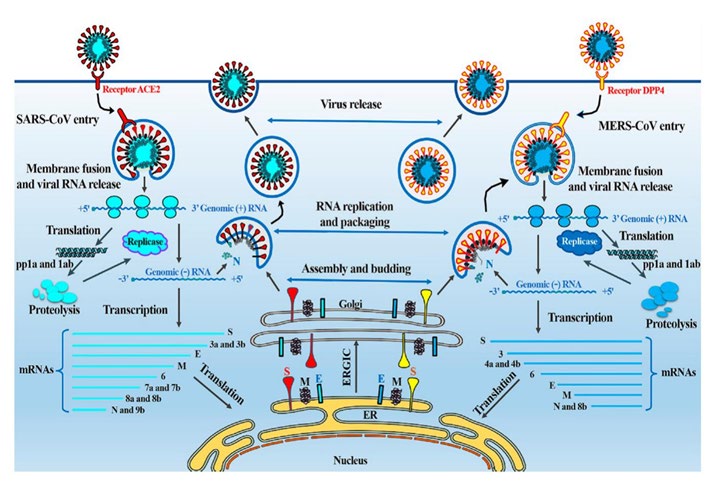
Coronavirus are pathogens that have severe effects on animal and human health. These are mostly responsible for respiratory and enteric ailments that can be dangerous for human wellbeing. For instance, these have been observed as a cause of Severe Acute Respiratory Syndrome (SARS) and Middle East Respiratory Syndrome (MERS) among people of all ages. However, irrespective of the knowledge about the severity of the conditions caused by outbreak of coronaviruses on human health and its subsequent monetary and cultural effects, the alternatives for its prevention and treatment remain restricted. This is what makes it important to enhance our knowledge regarding the spread and replication of the infection and their communication with the host. When compared with other +RNA infections, coronaviruses possess huge genome and make use of an intricate genome expression strategy. A large number of coronavirus proteins found in the infected cell is another factor after virus assembly and replication that leads to coronavirus host transmission. For example, these proteins associate with the host cells and make an ideal environment for the replication of coronavirus. They actually alter the host gene expression or counteract the antiviral defences of the host. These coronavirus–host interactions play a major role in the viral pathogenesis and will be the determining factor for the infections that result in the disease. It is because of the complexity of the proteome and the replication cycle associated with the coronavirus, that our knowledge regarding the host factors associated with coronavirus replication is still in its initial stages when compared to other +RNA viruses. Here is the summary of the current understanding linked with of coronavirus–host interactions at the infected cell level with special attention for the assembly and function of the viral RNA-synthesising machinery and the avoidance of cellular innate immune responses.
Introduction
COVID-19 is known as coronaviruses, because they look like a large family of RNA viruses, halos (known as coronas) when viewed under the electron microscope. The coronavirus is a single stranded RNA with 32 kilobases long. It is the largest known RNA virus genome. As far as today, Coronavirus has the highest frequency to recombine and replicate from any single positive RNA strand virus. This can be concluded that the virus multiples and changes at a very high rate causing potential threats and challenges for diagnosis and further treatment.
Coronaviruses have a 2 step replication process which is a different replication mechanism. Many RNA virus genomes contain a single open reading frame (ORF), which is defined as the continuous stretch of codons that begins with a starting codon and ends at a terminated codon. Usually, most of the RNA translated as single polyprotein that gets broken into smaller viral proteins catalytically. However, coronavirus can contain a maximum of 10 separate ORFs. Most of the ribosomes are observed to convert replicas of the biggest ones of the ORFs which are almost twice the size of many other RNA genomes. These replica genes thus formed encode series of enzymes in order to produce smaller set using the rest as templates. These overlap the messenger RNA and translate them into the structural protein which act like the building blocks of new viral particles [1].
Incubation Period
According to the current estimations, the median incubation period for COVID-19 is from five to six days with a range from one to 14 days. Also, a recent modelling study confirmed the incubation period of at least 14 days.
Viral Shedding
Through the course of the infection, the virus has been identified in respiratory tract specimens 1–2 days before the beginning of symptoms, and it can continue up to 8 days in moderate cases and up to 2 weeks in severe cases. The viral load profile of SARS-CoV-2 is similar to that of a flu that increases around the time of side effect beginning that is 5 to 6 days. This is in contrast to the SARS-CoV that is 10 days after the manifestation beginning and for MERS-CoV that increases in the second week of the beginning of side-effects. Older age has additionally been related with higher viral loads [6]. The high viral load near to symptom beginning proposes that SARS-CoV-2 can be effectively transmissible at an early stage of contamination [15]. After day 5 of the symptoms beginning and to a duration of 4 to 5 weeks the increase in the viral RNA is observed in moderate cases in the blood, saliva, urine, and serum. Also, prolonged RNA shedding is reported from nasopharyngeal swabs in among patients for up to 37 days. Also, it is observed in faeces for more than one month of disease in pediatric patients. The viral load can be a potentially valuable marker for assessing disease seriousness and prognosis: a recent study indicated that viral loads in severe cases were up to 60 times higher than in gentle cases [13].
Infection in Asymptomatic Individuals
At the time of laboratory confirmations asymptomatic infections were reported, which developed symptoms only at the later stages of infection [14, 15, 16, 17]. However, according to some reports, some of the cases suffering from Coronaviruses remain asymptomatic for the entire duration of laboratory and clinical monitoring [18, 19]. Viral RNA and infectious virus particles were detected in throat swabs from two German citizens evacuated from Hubei province on 1 February 2020 who remained well and afebrile seven days after admission to a hospital in Frankfurt [20]. A mother and her child (from a family cluster) who both tested positive by quantitative RT-PCR (nasopharyngeal swab samples) remained asymptomatic (including normal chest CT images during the observation period) [21]. Similar viral loads in asymptomatic versus symptomatic cases were reported in a study including 18 patients [22]. Persistent positivity of viral RNA in throat and anal swabs was reported in an asymptomatic female patient after 17 days of clinical observation and treatment [19].
Transmission in Pre-Symptomatic Stage of Infection
There is no significant difference in the viral load in asymptomatic and symptomatic patients that can indicate the potential of transmission of the infection from an asymptomatic patient [18, 22, 23]. Because of the lack of evidences regarding the transmission from the asymptomatic cases, the influence of pre-symptomatic transmission on the overall transmission dynamics of the pandemic remains uncertain. The rate of the pre-symptomatic transmission was estimated between 48% and 62% [24]. The Pre- symptomatic transmission was based on a shorter serial interval of COVID-19 that is for a duration of 4 to 4.6 days that means an incubation period that is 5 days. However, it has been indicated that many secondary transmissions might have occurred during his period of detection and isolation of symptomatic cases [25].
Immunity
Predicting the duration for the protective immunity response against SARS-COV-2 can be quiet a task. This will require complete longitudinal serological studies including the patient’s immunity history over an extended period of time [26]. However, according to the evidences gathered from the other coronavirus infections the immunity can last up to three years. This indicates that get infected with the same strain of coronavirus circulation is unlikely in the season to follow. The same is the case with SARS-COV-2 where evidences indicate the development of antibodies after the infection that can be taken as a shield for reinfection in short term [27].
Seasonality
The four coronaviruses that are endemic in human populations are responsible for 10–15% of common cold infections and display a marked winter seasonality in temperate climates, with a peak between December and April, but are hardly detected in the summer months [27, 28, 29, 30]. The seasonality of coronaviruses might be driven, in part, by environmental conditions and host susceptibility, because coronaviruses are more stable under low and midrange relative humidity (20–50%) when the defense mechanisms of the airways are suppressed [31, 32]. Based on the initial analyses of COVID-19 in China and other countries, large number of patients were observed not only in the dry and the cold districts but also in places like Guangxi and Singapore that are tropical districts with high absolute humidity [33]. No evidences indicate that the spread of COVID-19 marks winter seasonality like other human coronaviruses in the Northern hemisphere. These emphasizes the importance of taking intervention measures like isolation of the infected patients, school closures, and workplace distancing.
Survival in the Environment
Recent publications have evaluated the survival of SARS- CoV-2 on different surfaces. The stability of the SARS-COV-2 in the environment is different on different substance post aerosolization. This can be accounted to up to 3 hours in the air, 24 hours on the cardboard, for a duration of maximum 4 hours on copper and for up to 2 to 3 days on stainless steel and plastic [34]. However, these finding closely relate to and are comparable with results associated with environmental stability of SARS-CoV-1, these are entirely experimental and cannot be directly translated to fomite infectivity in the real world. The levels of environmental contaminations largely affect the inferences in case of COVID-19 infected patients’ rate. These range from 13 out of 15 positive samples before cleaning to 1 out of 13 samples after cleaning [34, 35]. In these studies, no samples were found positive in the air, however a sample from the exhaust outlet was detected to the positive that indicated, as per the author, travelling and displacement of the particles through air and their further deposition. According to a study conducted in a Chinese hospital on the environmental contamination during coronavirus outbreak, traces of SARS-COV-19 were detected in environmental samples from Intensive Care Units used for COVID-19 care. Also, traces of the SARS-COV-2 were observed on printers, and the keyboards used by the patients to print their exam results. In addition to this, the virus was detected on doorknobs, most commonly on gloves that is in almost 15.4% samples and on the eye protection devices that is 1.7% [36]. These reports indicate the role of transmission of SARS-COV-2 by fomites. However, the comparison of this route of transmission with the direct exposure to the respiratory droplets is unclear.
COVID - 19 Structure
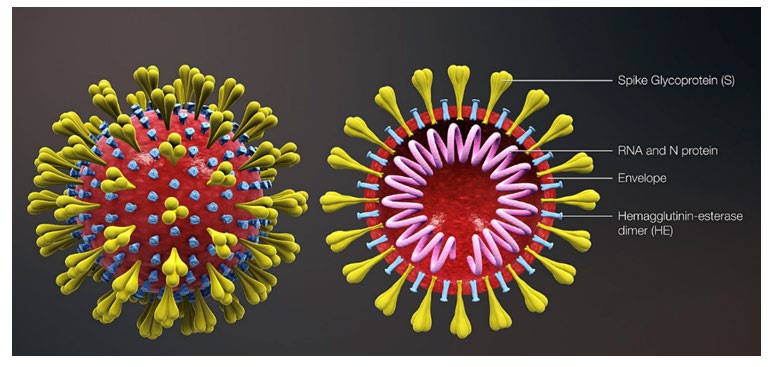
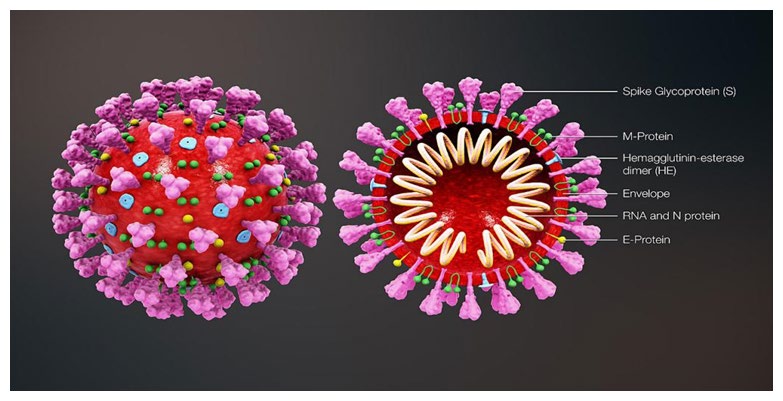
Sources of COVID-19
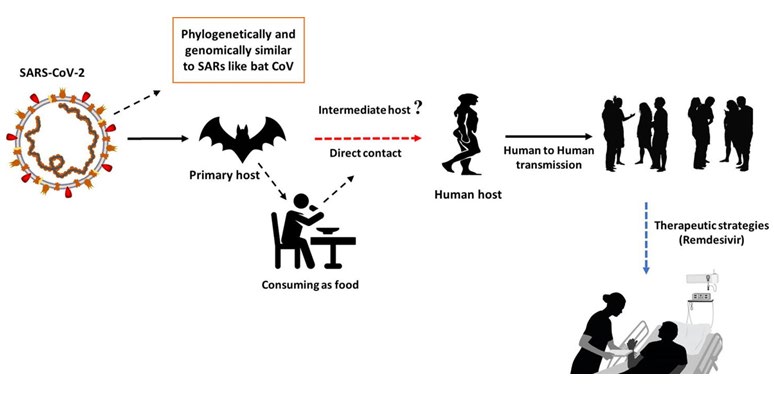
Scientists have said that a type of snake may be the original source of the Wuhan coronavirus. However, some other experts in the infectious disease claim bat to be the ultimate culprit for the same. According to a report produced by Chinese Centre for Disease Control at Wuhan the data pointed towards the spread of the virus from one bat to
COVID-19 Primary & Secondary Host
another and to other unknown wild animals subsequently reaching humans. It was stated that no findings indicate the selling of bats at the seafood market that is considered to be the centre of the outbreak. Also, as the first case due to COVID019 was reported in December, most of the bats in Wuhan hibernate in that season [37].
Effects of COVID-19
Novel virus has already been affecting and reframing our relationships with the government, and even with each other and with our outside world by keeping up restrained to our homes for months. The changes that might follow after the outbreak in the coming months might seem to be unfamiliar and even unsettling. This might lead to questions: Will touch become a taboo? For how long will the nations remain closed? What will be future of the restaurants and other public places?
But during this global crisis, new opportunities can be expected that include the flexible and sophisticated use of technology, an altogether new appreciation of the world outside and less polarization. It is completely unpredictable to know what shall follow, but one can expect the unexpected changes in healthcare, lifestyle, economy, governance, and more [38].
Effects of COVID-19 on Human Body Organs
Lungs
With COVID-19 the lungs are where ground zero is. The infection can be transmitted to a healthy individual via sneezing, coughing or coming in contact with the droplets from the infected person. Also, the infection starts with showing certain flu-like symptoms that include cough, fever, which in severe cases can progress to pneumonia. Lungs are the most infected organs with SARC through viral reproduction and immune hyper-reactivity. People suffering with SARS show three stages and is mainly a respiratory issue. However, COVID-19 indicates lesser symptoms in most of the cases and becomes severe in only critical cases [39].
Stomach
MERS and SARS virus that originated from animals usually showed symptoms like diarrhoea. To know whether diarrhoea is a part of the COVID-19 outbreak more studies need to be conducted. It is unusual to predict the cause of such symptoms as the people with pain in stomach and diarrhoea are less in number. SARS and MERS affected the digestive system inside the body resulting in leaking of fluids thereby causing diarrhoea. However, with diarrhoea as a part of COVID-19 can be due to the presence of the similar receptor [39].
Circulatory System
Due to the hyperactivity of the auto-immune systems, Coronaviruses affect the other systems in the body of the infected person. According to a study conducted in 2014, it has been observed that around 92% of the patients of MERS indicated signs of presence of coronavirus outside the respiratory system. This is one such way in which a coronavirus affects an individual without the complete knowledge of its working. The affect that the zoonotic coronavirus has on the body includes the lowering of the white blood cells count, higher the liver enzymes, and also the lowering of the blood pressure. In severe case it might lead to various kidney injuries and heart attacks that can be fatal [39].
Liver Damage
The normal functioning of the liver will include the release of beneficial enzymes in the blood and also the easy regeneration of the liver cells. Liver being a resilient organ is not easily affected. But, COVID-19 can attack the liver and cause severe complications leading to serious health issue [39].
Kidney
Due to the hyperactivity of the auto-immune systems, Coronaviruses affect the other systems in the body of the infected person. According to a study conducted in 2014, it has been observed that around 92% of the patients of MERS indicated signs of presence of coronavirus outside the respiratory system. This is one such way in which a coronavirus affects an individual without the complete knowledge of its working. The affect that the zoonotic coronavirus has on the body includes the lowering of the white blood cells count, higher the liver enzymes, and also the lowering of the blood pressure. In severe case it might lead to various kidney injuries and heart attacks that can be fatal [39].
Mode of Transmission of COVID-19
The understanding of the risks and the mode of transmission is not yet complete. According to the investigation conducted in Wuhan during the beginning of the outbreak, it is indicated that the initial group of infected people were in association with the seafood market which dealt with the selling of live animals [40]. It was observed that most of the patients had worked and visited these markets and the same has been shut for disinfection. However, with the further spread of the infection, human to human transmission became the major mode of spread.
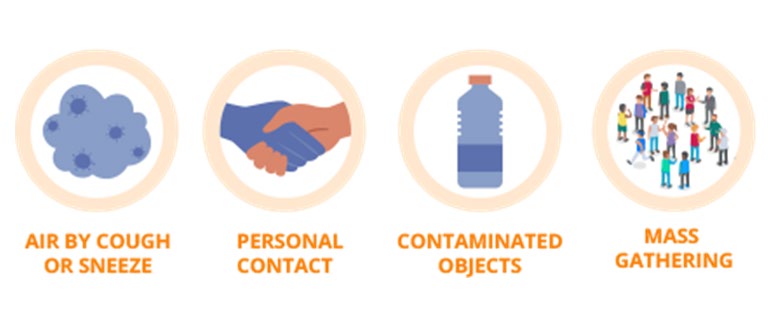
This person to person spread of the acute respiratory syndrome coronavirus is through coming in contact with respiratory droplets that resemble the spread of influenza. These respiratory secretions from the infected person through his cough, sneeze or talks can easily infect the other person if brought into direct contact. Another reason for the transfer of the infection can be through touching the infected surfaces and then touches the eyes, nose and mouth. These droplets cannot travel after a maximum distance of six feet that is approximately 2 meters and do not linger around in the air. However, in one instance SARS-COV2-2 remained in the aerosols under experimental conditions for a duration of three hours [34].
Because of the uncertainty of transmission mechanism of COVID-19, precautions for the usual airborne diseases are highly recommended in some countries and the setting up of certain high-risk procedures in some other [41, 42, 43].
In some cases, it has been observed SARC-COV-2 RNA in the blood and the stool of the infected person. However, according to the joint report by WHO-China, fecal-oral report is not a significant factor behind the spread [45].
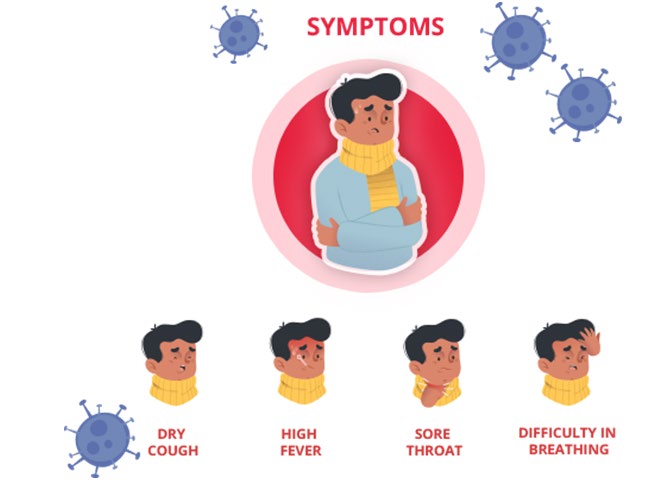
Signs and Symptoms of COVID-19
Signs and Symptoms of COVID-19 May Appear 2 to 14 Days after Exposure and Can Include
- Fever
- Cough
- Shortness of breath or difficulty breathing
Other Symptoms Can Include
- Tiredness
- Aches
- Runny nose
- Sore throat
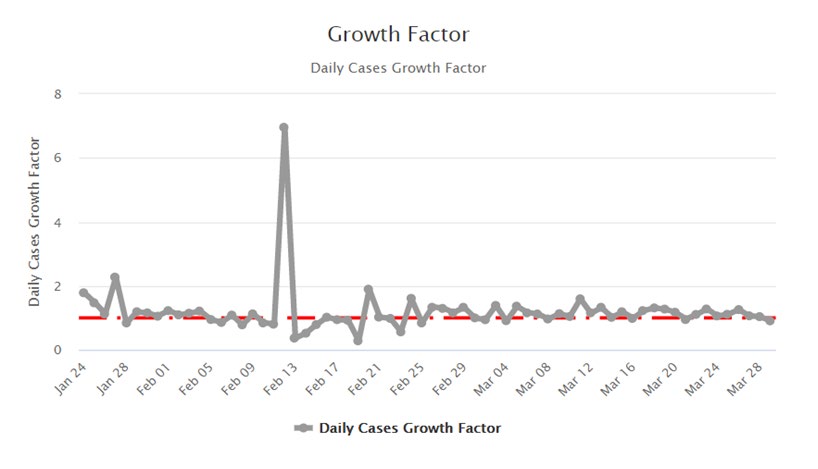
Growth Factor of Daily New Cases of COVID-19
The growth factor is the factor that indicates the multiplication of quantities by itself over time. This can be calculated as every day’s new cases / new cases on the previous day. For instance, if a quantity grows by 7% every period (here, daily) has a growth factor of 1.07.
Where a growth factor that is above 1 indicates an increase and that between 0 and 1 is a sign of decline that signifies a quantity eventually reaching zero. However, a factor that remains constantly above 1 signifies exponential growth.
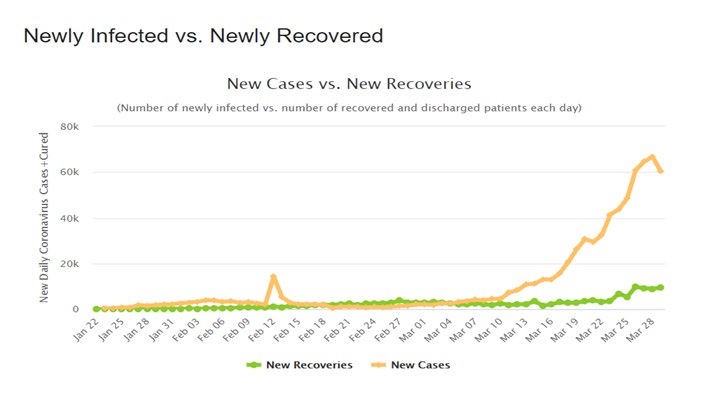
Newly Infected vs Newly Recovered of COVID-19
Active Cases
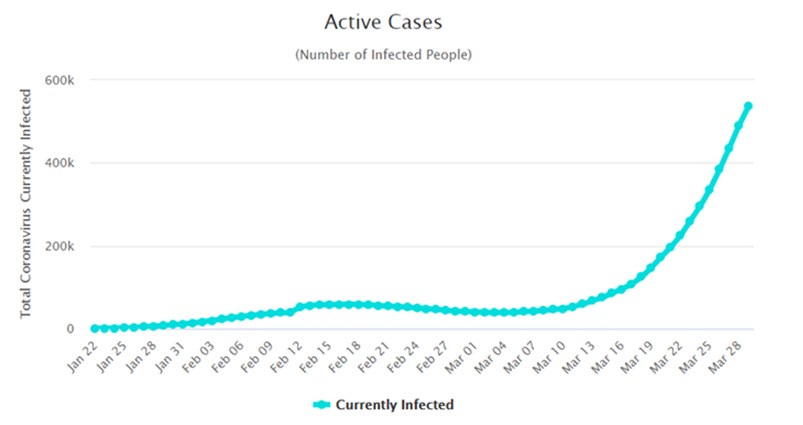
By removing deaths and recoveries from total cases, we get «currently infected cases» or «active cases» (cases still awaiting for an outcome)
Countries where COVID-19 has Spread
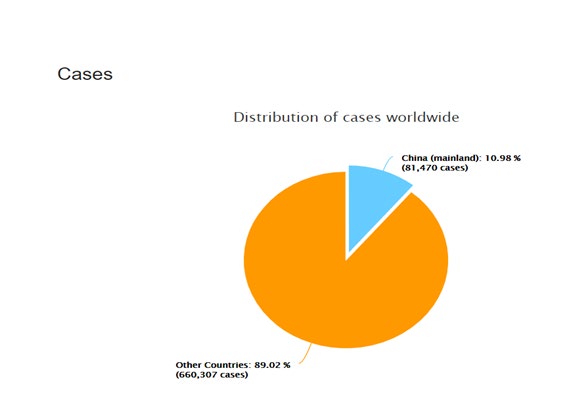
199 Countries and Territories around the world have reported a total of 741,907 confirmed cases of the coronavirus COVID-19 that originated from Wuhan, China, and a death toll of 35,337 deaths.
| Country | Cases | Deaths | Region |
| United States | 142,793 | 2,490 | North America |
| Italy | 97,689 | 10,779 | Europe |
| Spain | 85,195 | 7,340 | Europe |
| China | 81,470 | 3,304 | Asia |
| Germany | 63,929 | 560 | Europe |
| Iran | 41,495 | 2,757 | Asia |
| France | 40,174 | 2,606 | Europe |
| United Kingdom | 19,522 | 1,228 | Europe |
| Switzerland | 15,526 | 333 | Europe |
| Belgium | 11,899 | 513 | Europe |
| Netherlands | 11,750 | 864 | Europe |
| South Korea | 9,661 | 158 | Asia |
| Austria | 9,377 | 108 | Europe |
| Turkey | 9,217 | 131 | Asia |
| Portugal | 6,408 | 140 | Europe |
| Canada | 6,320 | 65 | North America |
| Norway | 4,393 | 31 | Europe |
| Israel | 4,347 | 16 | Asia |
| Brazil | 4,330 | 140 | South America |
| Australia | 4,245 | 18 | Australia/Oceania |
| Sweden | 4,028 | 146 | Europe |
| Czech Republic (Czechia) | 2,878 | 17 | Europe |
| Malaysia | 2,626 | 37 | Asia |
| Ireland | 2,615 | 46 | Europe |
| Japan (+Diamond Princess) | 2,578 | 64 | Asia |
| Denmark | 2,555 | 77 | Europe |
| Chile | 2,449 | 8 | South America |
| Luxembourg | 1,988 | 22 | Europe |
| Poland | 1,984 | 26 | Europe |
| Romania | 1,952 | 46 | Europe |
| Ecuador | 1,924 | 58 | South America |
| Russia | 1,836 | 9 | Europe |
| Pakistan | 1,650 | 20 | Asia |
| Philippines | 1,546 | 78 | Asia |
| Thailand | 1,524 | 9 | Asia |
| Saudi Arabia | 1,453 | 8 | Asia |
| Indonesia | 1,414 | 122 | Asia |
| Finland | 1,352 | 13 | Europe |
| South Africa | 1,280 | 2 | Africa |
| Greece | 1,156 | 39 | Europe |
| India | 1,071 | 29 | Asia |
| Iceland | 1,020 | 2 | Europe |
| Mexico | 993 | 20 | North America |
| Panama | 989 | 24 | North America |
| Singapore | 879 | 3 | Asia |
| Dominican Republic | 859 | 39 | North America |
| Peru | 852 | 18 | South America |
| Argentina | 820 | 22 | South America |
| Croatia | 790 | 6 | Europe |
| Serbia | 785 | 16 | Europe |
| Slovenia | 756 | 11 | Europe |
| Estonia | 715 | 3 | Europe |
| Colombia | 702 | 10 | South America |
| Hong Kong | 642 | 4 | Asia |
| Qatar | 634 | 1 | Asia |
| United Arab Emirates | 611 | 5 | Asia |
| Egypt | 609 | 40 | Africa |
| New Zealand | 589 | 1 | Australia/Oceania |
| Iraq | 547 | 42 | Asia |
| Morocco | 516 | 29 | Africa |
| Bahrain | 515 | 4 | Asia |
| Algeria | 511 | 31 | Africa |
| Lithuania | 484 | 7 | Europe |
| Armenia | 482 | 3 | Asia |
| Ukraine | 480 | 11 | Europe |
| Hungary | 447 | 15 | Europe |
| Lebanon | 446 | 11 | Asia |
| Latvia | 376 | 0 | Europe |
| Bosnia and Herzegovina | 354 | 8 | Europe |
| Bulgaria | 354 | 8 | Europe |
| Slovakia | 336 | 0 | Europe |
| Andorra | 334 | 6 | Europe |
| Costa Rica | 314 | 2 | North America |
| Tunisia | 312 | 8 | Africa |
| Taiwan | 306 | 5 | Asia |
| Uruguay | 304 | 1 | South America |
| Kazakhstan | 302 | 1 | Asia |
| North Macedonia | 285 | 7 | Europe |
| Azerbaijan | 273 | 4 | Asia |
| Kuwait | 266 | 0 | Asia |
| Moldova | 263 | 2 | Europe |
| Jordan | 259 | 4 | Asia |
| San Marino | 230 | 25 | Europe |
| Albania | 223 | 11 | Europe |
| Burkina Faso | 222 | 12 | Africa |
| Cyprus | 214 | 6 | Asia |
| Vietnam | 203 | 0 | Asia |
| Réunion | 183 | 0 | Africa |
| Oman | 179 | 0 | Asia |
| Faeroe Islands | 168 | 0 | Europe |
| Côte d’Ivoire | 165 | 1 | Africa |
| Senegal | 162 | 0 | Africa |
| Malta | 156 | 0 | Europe |
| Ghana | 152 | 5 | Africa |
| Belarus | 152 | 0 | Europe |
| Uzbekistan | 149 | 2 | Asia |
| Channel Islands | 141 | 2 | Europe |
| Cameroon | 139 | 6 | Africa |
| Cuba | 139 | 3 | North America |
| Honduras | 139 | 3 | North America |
| Venezuela | 129 | 3 | South America |
| Brunei | 127 | 1 | Asia |
| Sri Lanka | 122 | 2 | Asia |
| Afghanistan | 120 | 4 | Asia |
| State of Palestine | 115 | 1 | Asia |
| Nigeria | 111 | 1 | Africa |
| Mauritius | 110 | 3 | Africa |
| Cambodia | 107 | 0 | Asia |
| Guadeloupe | 106 | 4 | North America |
| Georgia | 100 | 0 | Asia |
| Bolivia | 96 | 4 | South America |
| Kyrgyzstan | 94 | 0 | Asia |
| Martinique | 93 | 1 | North America |
| Montenegro | 91 | 1 | Europe |
| Trinidad and Tobago | 82 | 3 | North America |
| Mayotte | 82 | 0 | Africa |
| DR Congo | 81 | 8 | Africa |
| Rwanda | 70 | 0 | Africa |
| Gibraltar | 65 | 0 | Europe |
| Paraguay | 64 | 3 | South America |
| Liechtenstein | 62 | 0 | Europe |
| Kenya | 50 | 1 | Africa |
| Aruba | 50 | 0 | North America |
| Bangladesh | 49 | 5 | Asia |
| Monaco | 46 | 1 | Europe |
| Isle of Man | 46 | 0 | Europe |
| French Guiana | 43 | 0 | South America |
| Madagascar | 39 | 0 | Africa |
| Macao | 38 | 0 | Asia |
| Guatemala | 36 | 1 | North America |
| Zambia | 35 | 0 | Africa |
| French Polynesia | 35 | 0 | Australia/Oceania |
| Jamaica | 34 | 1 | North America |
| Barbados | 33 | 0 | North America |
| Uganda | 33 | 0 | Africa |
| Togo | 30 | 1 | Africa |
| El Salvador | 30 | 0 | North America |
| Mali | 25 | 2 | Africa |
| Ethiopia | 23 | 0 | Africa |
| Niger | 22 | 3 | Africa |
| Bermuda | 22 | 0 | North America |
| Congo | 19 | 0 | Africa |
| Tanzania | 19 | 0 | Africa |
| Djibouti | 18 | 0 | Africa |
| Maldives | 17 | 0 | Asia |
| Guinea | 16 | 0 | Africa |
| Saint Martin | 15 | 1 | North America |
| New Caledonia | 15 | 0 | Australia/Oceania |
| Haiti | 15 | 0 | North America |
| Myanmar | 14 | 0 | Asia |
| Bahamas | 14 | 0 | North America |
| Cayman Islands | 12 | 1 | North America |
| Eritrea | 12 | 0 | Africa |
| Mongolia | 12 | 0 | Asia |
| Equatorial Guinea | 12 | 0 | Africa |
| Namibia | 11 | 0 | Africa |
| Dominica | 11 | 0 | North America |
| Greenland | 10 | 0 | North America |
| Syria | 9 | 1 | Asia |
| Grenada | 9 | 0 | North America |
| Saint Lucia | 9 | 0 | North America |
| Eswatini | 9 | 0 | Africa |
| Guyana | 8 | 1 | South America |
| Curaçao | 8 | 1 | North America |
| Seychelles | 8 | 0 | Africa |
| Mozambique | 8 | 0 | Africa |
| Laos | 8 | 0 | Asia |
| Libya | 8 | 0 | Africa |
| Suriname | 8 | 0 | South America |
| Angola | 7 | 2 | Africa |
| Zimbabwe | 7 | 1 | Africa |
| Gabon | 7 | 1 | Africa |
| Antigua and Barbuda | 7 | 0 | North America |
| Saint Kitts & Nevis | 7 | 0 | North America |
| Sudan | 6 | 2 | Africa |
| Cabo Verde | 6 | 1 | Africa |
| Benin | 6 | 0 | Africa |
| Holy See | 6 | 0 | Europe |
| Sint Maarten | 6 | 0 | North America |
| Nepal | 5 | 0 | Asia |
| Chad | 5 | 0 | Africa |
| Mauritania | 5 | 0 | Africa |
| Saint Barthelemy | 5 | 0 | North America |
| Fiji | 5 | 0 | Australia/Oceania |
| Montserrat | 5 | 0 | North America |
| Gambia | 4 | 1 | Africa |
| Nicaragua | 4 | 1 | North America |
| Bhutan | 4 | 0 | Asia |
| Turks and Caicos | 4 | 0 | North America |
| Central African Republic | 3 | 0 | Africa |
| Liberia | 3 | 0 | Africa |
| Somalia | 3 | 0 | Africa |
| MS Zaandam | 2 | 0 | |
| British Virgin Islands | 2 | 0 | North America |
| Belize | 2 | 0 | North America |
| Guinea-Bissau | 2 | 0 | Africa |
| Anguilla | 2 | 0 | North America |
| Timor-Leste | 1 | 0 | Asia |
| Papua New Guinea | 1 | 0 | Australia/Oceania |
| St. Vincent & Grenadines | 1 | 0 | North America |
Table 1: Covid-19 report.
Safety and Prevention Measures
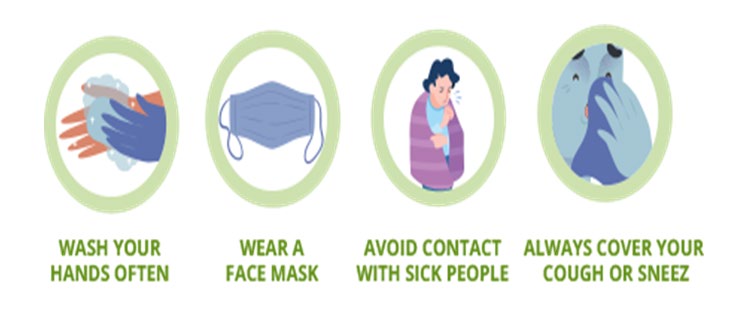
Washing of hands after coming into contact with surfaces in public. In case the hands are not visibly dirty, it is recommended to use hand sanitizers that contain at least 60 percent alcohol as an alternative. • Covering cough and sneeze to maintain respiratory hygiene.
- Avoiding frequent touching of face like the eyes, nose and mouth.
- Minimizing contact with ill individuals and avoiding poorly ventilated places as much as possible.
- Disinfecting the frequently touched places. Following the guidelines issued by CDC for disinfecting the home settings containing a list of EPA-registered products.
Discussion
The mode of transmission of the COVID-19 can be considered similar to the previous outbreaks due to coronavirus that is Middle East Respiratory Syndrome (MERS) and Sever Acute Respiratory Syndrome (SARS). These include human to human transmission through droplets, fomites and contact. To reduce the risk of transmission of acute respiratory infections the following basic principles can be followed, these include:
- Minimizing or avoiding the contact with people suffering from acute respiratory infections.
- Washing hands frequently, especially after coming in direct contact with ill people.
- Avoiding direct and unprotected contact with wild and farm animals.
- Practicing of cough etiquettes by infected people and people showing symptoms of respiratory infections. These include maintaining adequate distance, using tissue or clothing to cover coughs and sneezes and washing hands after frequent intervals.
- Also, the hospitals and other health care facilities should include facility and enhance the standards of prevention of infections especially in emergency departments.
- No specific health measures have been recommended by WHO for travelers. However, in case travelers observe symptoms of respiratory illness during or after the journey, shall seek medical assistance after sharing their complete travel history with the health care provider.
References
-
de Wilde AH, Snijder EJ, Kikkert M, van Hemert MJ (2018) Host Factors in Coronavirus Replication. Molecular Virology Laboratory, Department of Medical Microbiology, Leiden University Medical Center, Leiden, The Netherlands 419: 1-42.
-
WHO (2020) Director-General’s remarks at the media briefing on 2019-nCoV, World Health Organization.
-
Wenxiao T, Houlin T, Fangfang C, Yinong W, Tingling X, et al. (2020) Epidemic update and risk assessment of 2019 Novel Coronavirus. Chinese Center for Disease Control and Prevention 2(6): 83-86.
-
Backer JA, Klinkenberg D, Wallinga J (2020) Incubation period of 2019 novel coronavirus (2019-nCoV) infections among travellers from Wuhan, China, 20–28 January 2020. Eurosurveillance 25(5): 2000062.
-
ECDC (2020) Situation update worldwide. European Centre for Disease Prevention and Control.
-
To KK W, Tsang OT Y, Leung W S, Tam AR, Wu T C, et al. (2020) Temporal profiles of viral load in posterior oropharyngeal saliva samples and serum antibody responses during infection by SARS-CoV-2: an observational cohort study. The Lancet Infectious Diseases 20(5): 565-574.
-
Young BE, Ong SWX, Kalimuddin S, Low JG, Tan SY, et al. (2020) Epidemiologic Features and Clinical Course of Patients Infected with SARS-CoV-2 in Singapore. JAMA 323(15):1488-1494.
-
Chang L, Yan Y, Wang L (2020) Coronavirus Disease 2019: Coronaviruses and Blood Safety. Transfusion Medicine Reviews 34(2): 75-80.
-
Huang C, Wang Y, Li X, Ren L, Zhao J, et al. (2020) Clinical features of patients infected with 2019 novel coronavirus in Wuhan, China. The Lancet 395(10223): 497-506.
-
Peng L, Liu J, Xu W, Luo Q, Deng K, et al. (2020) 2019 Novel Coronavirus can be detected in urine, blood, anal swabs and oropharyngeal swabs samples. medRxiv.
-
Fei Zhou TY, Ronghui Du, Guohui Fan, Ying Liu, Zhibo Liu, et al. (2020) Clinical course and risk factors for mortality of adult inpatients with COVID-19 in Wuhan, China: a retrospective cohort study. The Lancet 395(10229): 1054-1062.
-
Cai J, Xu J, Lin D, Yang Z, Xu L, et al. (2020) A Case Series of children with 2019 novel coronavirus infection: clinical and epidemiological features. Clinical Infectious Diseases 71(6): 1547-1551.
-
Liu Y, Yan L M, Wan L, Xiang T X, Le A, et al. (2020) Viral dynamics in mild and severe cases of COVID-19. The Lancet Infectious Diseases 20(6): 656-657.
-
Ministry of Health Law (2020) Coronavirus disease 2019 (COVID-19) situation within and outside the country. Minstry of Health, Labour and Welfare, Japan.
-
Mizumoto K, Kagaya K, Zarebski A, Chowell G (2020) Estimating the asymptomatic proportion of coronavirus disease 2019 (COVID-19) cases on board the Diamond Princess cruise ship, Yokohama, Japan 25(10).
-
Ki Moran (2020) Epidemiologic characteristics of early cases with 2019 novel coronavirus (2019-nCoV) disease in Korea. Epidemiol Health 42: e2020007.
-
Dong XC, Li JM, Bai JY, Liu ZQ, Zhou PH, et al. The epidemiological characteristics of an outbreak of 2019 novel coronavirus diseases (COVID-19) in China. Nation Library Medicine 41(2): 145-151.
-
Cereda D, Tirani M, Rovida F, Demicheli V, Ajelli M, et al. (2020) the early phase of the COVID-19 outbreak in Lombardy, Italy.
-
Luo S H, Liu W, Liu ZJ, Zheng XY, Hong CX, et al. (2020) A confirmed asymptomatic carrier of 2019 novel coronavirus (SARS-CoV-2). Chinese Medical Journal 133(9): 1123-1125.
-
Hoehl S, Rabenau H, Berger A, Kortenbusch M, Cinatl J, et al. (2020) Evidence of SARS-CoV-2 Infection in Returning Travelers from Wuhan, China. New England Journal of Medicine 382: 1278-1280.
-
Pan X, Chen D, Xia Y, Wu X, Li T, et al. (2020) Asymptomatic cases in a family cluster with SARS-CoV-2 infection. The Lancet Infectious Diseases 20(4): 410-411,
-
Zou L, Ruan F, Huang M, Liang L, Huang H, et al. (2020) SARS-CoV-2 Viral Load in Upper Respiratory Specimens of Infected Patients. New England Journal of Medicine 382: 1177-1179.
-
Han Y, Yang H (2020) the transmission and diagnosis of 2019 novel coronavirus infection disease (COVID-19): A Chinese perspective. Journal of Medical Virology.
-
Ganyani T, Kremer C, Chen D, Torneri A, Faes C, et al. (2020) Estimating the generation interval for COVID-19 based on symptom onset data. medRxiv.
-
Nishiura H, Linton NM, Akhmetzhanov AR (2020) Serial interval of novel coronavirus (COVID-19) infections. International Journal of Infectious Diseases 93: 284-286.
-
Neil M Ferguson, Daniel Laydon, Gemma Nedjati-Gilani, Natsuko Imai, Kylie Ainslie, et al. (2020) Impact of non- pharmaceutical interventions (NPIs) to reduce COVID19 mortality and healthcare demand: Imperial College COVID-19 Response Team.
-
Zhang B, Zhou X, Zhu C, Feng F, Qiu Y, et al. (2020) Immune phenotyping based on neutrophil-tolymphocyte ratio and IgG predicts disease severity and outcome for patients with COVID-19. medRxiv.
-
Ambrosioni J, Bridevaux PO, Wagner G, Mamin A, Kaiser L (2014) Epidemiology of viral respiratory infections in a tertiary care centre in the era of molecular diagnosis, Geneva, Switzerland, 2011-2012. Clin Microbiol Infect 20(9): O578-O584.
-
Gaunt ER, Hardie A, Claas EC, Simmonds P, Templeton KE (2010) Epidemiology and clinical presentations of the four human coronaviruses 229E, HKU1, NL63, and OC43 detected over 3 years using a novel multiplex real-time PCR method. J ClinMicrobiol 48(8): 2940-2947.
-
Killerby ME, Biggs HM, Haynes A, Dahl RM, Mustaquim D, et al. (2018) Human coronavirus circulation in the United States 2014-2017. J ClinVirol 101: 52-56.
-
Moriyama M, Hugentobler WJ, Iwasaki A (2020) Seasonality of Respiratory Viral Infections. Annu Rev Virol.
-
Ijaz MK, Brunner AH, Sattar SA, Nair RC, Johnson- Lussenburg CM (1985) Survival Characteristics of Airborne Human Coronavirus 229E. Journal of General Virology 66(12): 2743-2748.
-
Luo W, Majumder MS, Liu D, Poirier C, Mandl KD, et al. (2020) The role of absolute humidity on transmission rates of the COVID-19 outbreak. medRxiv.
-
Van Doremalen N, Bushmaker T, Morris DH, Holbrook MG, Gamble A, et al. (2020) Aerosol and Surface Stability of SARS-CoV-2 as Compared with SARS-CoV-1. New England Journal of Medicine 382: 1564-1567.
-
Cheng VCC, Wong S C, Chen JHK, Yip CCY, Chuang VWM, et al. (2020) Escalating infection control response to the rapidly evolving epidemiology of the Coronavirus disease 2019 (COVID-19) due to SARS-CoV2 in Hong Kong. Infection Control & Hospital Epidemiology 41(5): 493-498.
-
Ye G, Lin H, Chen L, Wang S, Zeng Z, et al. (2020) Environmental contamination of the SARS-CoV-2 in healthcare premises: An urgent call for protection for healthcare workers. medRxiv.
-
Katie Hunt (2020) Bats, the source of so many viruses, could be the origin of Wuhan coronavirus, say experts. CNN health.
-
(2020) Lawmakers want delay in tax filing deadline amid coronavirus outbreak. POLITICO.
-
HNGN (2020) Coronavirus Effects: How it Harms Human Body Organs. Headlines & global news.
-
WHO (2020) Novel coronavirus situation report -2. World Health Organization.
-
CDC (2020) Interim Clinical Guidance for Management of Patients with Confirmed Coronavirus Disease (COVID-19). Centers for Disease Control and Prevention.
-
Tang A, Tong ZD, Wang HL (2020) Detection of Novel Coronavirus by RT-PCR in Stool Specimen from Asymptomatic Child, China. Emerg Infect Dis 26(9).
-
Chen W, Lan Y, Yuan X (2020) Detectable 2019-nCoV viral RNA in blood is a strong indicator for the further clinical severity. Emerg Microbes Infect 9(1): 469-473.
-
Wang W, Xu Y, Gao R (2020) Detection of SARS-CoV-2 in Different Types of Clinical Specimens. JAMA.
-
WHO (2020) Report of the WHO-China Joint Mission on Coronavirus Disease 2019 (COVID-2019). World Health Organization, pp: 16-24.
- Narcotics and Digital Forensics: Bridging Crimes in the Digital Age
- Ethics in Forensic Psychiatry: Principles, Dilemmas, and Human Rights
- Impact of Acute Stress on Attentional Orienting to Social Cues
- Head Injury and Intracranial Hemorrhage in Western Region of Libya
- A Forensic Study on Handedness: Examination of Handwriting Features in Right and Left Handed Writers
- Techniques for Latent Fingerprint Development Using Natural and Synthetic Powders: A Review