
Radiological Study of Permanent Second Molars: A Simpler Approach to Age Estimation in Adolescents
Aim: In view of rising legal cases involving adolescent crimes in India, it is becoming extremely important to determine the correct age of the adolescents. The present study was planned to determine the adolescent ages 14 and 16 years by radiological study of permanent mandibular second molars of the participants. Methods: Digitalized orthopantomographs of 434 subjects (246 males and 188 females) of age group 13-18 years, from North Indian population, were analysed to evaluate the open or closed root apex of mandibular second molar following Demirjian method. Results: Based on Receiver operating characteristic (ROC) analysis, 13 years 8 months was the cut-off age in males while 13 years 9 months was the cut-off age in females for the apex closure. Fairly good sensitivity was found in males (95.7%) and females (98.6%). Conclusion: This method is reasonably accurate, where the male subjects in whom the apical foramen is closed, were considered to be of age more than 13 years 9 months with an accuracy of 95.5% while female subjects who showed a closed apical foramen in the present study were estimated to be of age more than 13 years 9 months, with an accuracy of 95.7%.
Preeti Sharma* and Vijay Wadhwan
Introduction
‘Forensic Odontology’ is still in a developing stage in India, but with the recent advances and rapid strides in this field, Forensic Odontology has made a significant contribution in establishing accurate age of an individual. Age determination of living or deceased persons is a significant aspect of forensic sciences and is extremely crucial in routine medico-legal cases [1]. Various morphological, histological, biochemical and radiological methods aid in dental age determination. However, most of these methods are validated as destructive and unethical as they require extraction of teeth, which is not possible in living individuals. Thus, radiographic methods for age estimation are practical particularly in living individuals as they are simple, non-destructive and reliable as a means of investigation. Additionally, radiographs can also be used in the dead as well as in skeletal remains [2]. The word ‘Adolescent’ means ‘the transitional period between puberty and adulthood’ in human development, extending mainly over the teen years and terminating legally when the age of majority is reached, and essentially it is the period extending from age 13 years to 17 years [3, 4] Still, ages of 14 and 16 years are considered extremely significant in routine medico-legal cases. For example, they are most crucial in criminal courts concerning factory employment, child labour, riots, assault on women, theft, burglary, sexual offences, kidnapping, attempt to murder and murder. Numerous criminal acts are committed by individuals feigning to be below the age of majority. Therefore, in all such cases chronological age needs to be determined so that the minors can be handed over to their rightful parents and also so as to make provisions in case of unaccompanied minors [5].
Juvenile Justice (Care and Protection of Children) Act, 2015 by Parliament of India aims to replace the existing Indian juvenile delinquency law, Juvenile Justice (Care and Protection of Children) Act, 2000, so that juveniles in conflict with Law in the age group of 16–18, involved in reprehensible misdemeanours, can be treated at par with the adults in the court of Law. The Act came into force on 15 January 2016. It was passed on 7 May 2015 by the Lok Sabha amid intense protest by several Members of Parliament and then by the Rajya Sabha on 22 December 2015 [6].
Despite the skeletal radiology being used as the most popular method for age estimation in living individuals, new techniques have displayed great modifications in the X-ray processing of teeth. Earlier studies inspected radiographs manually by magnifying glass and calliper [7, 8, 9]. Recently advanced methods based on digitalization of panoramic radiographs and their computerized storage, are available as simpler and more accurate techniques [2].
Pubertal changes, advancement in skeletal ossification, time of eruption of teeth are unequalled means of evidence in the Court of Law, in determining the adolescent age. However, these parameters are unable to predict the exact age; therefore, new innovative techniques are required to assess the exact age [10, 11, 12]. Age estimation by analysis of mineralization of permanent teeth, excluding third molars, is reliable until the age of 13 years by radiographically observing the development of second molars [13, 14]. A pilot study was conducted on a selected population to determine the adolescent ages 14 and 16 years through radiological evaluation of permanent mandibular second molars. Root development and closure of apical foramina of permanent mandibular second molars in males as well as females were assessed. The accuracy of this method to determine the age in both genders was evaluated as there is paucity of research studies on this aspect in India as well as other parts of the world.
Material and Methods
Four hundred thirty four subjects (246 males and 188 females) with age range 13-18 years undergoing radiographic examination were selected randomly. Digital panoramic radiographs were retrieved from the Department of Oral Medicine and Radiology.
The criteria for the selection of radiographs were:
- Having permanent second molars, erupted completely in the lower jaw on both sides.
- Having pathoses, or showing gross destruction were excluded.
- Proper documentation of the age (Birth date is routinely recorded in the case history sheet of patients visiting the Dental hospital).
The subjects selected were categorized into 5 groups of distributed age at an interval of 12 months, which assisted in establishing the earliest age of closure of apical foramina. Table 1 shows the distribution of subjects in each age group, with 20.04% of the subjects selected in the age group of 13.1-14 years,18.89% between 14.1 and 15 years, 21.42 % between 15.1 and 16 years, 19.12 % between 16.1-17 years and 17.1-18 years included 20.5% of the total number of subjects analysed.
| Analysis of the study population | ||||
|---|---|---|---|---|
| Age group [in years] | No. of cases | Total | Percentage | |
| Male | Female | |||
| 13.1-14 | 45 | 42 | 87 | 20.05 |
| 14.1-15 | 51 | 31 | 82 | 18.89 |
| 15.1-16 | 60 | 33 | 93 | 21.43 |
| 16.1-17 | 39 | 44 | 83 | 19.12 |
| 17.1-18 | 51 | 38 | 89 | 20.51 |
| Total | 246 | 188 | 434 | 100% |
Table 1: Distribution of the study population according to age groups.
Digitalized Orthopantomograph
Each of the selected digitalized orthopantomographs (OPGs) were carefully analysed for root development and apical foramina closure. If any OPG posed a difficulty while analysing, the picture was zoomed on the computer and the finding was recorded.
Principle for Evaluating Complete Root Formation and Apical Closure
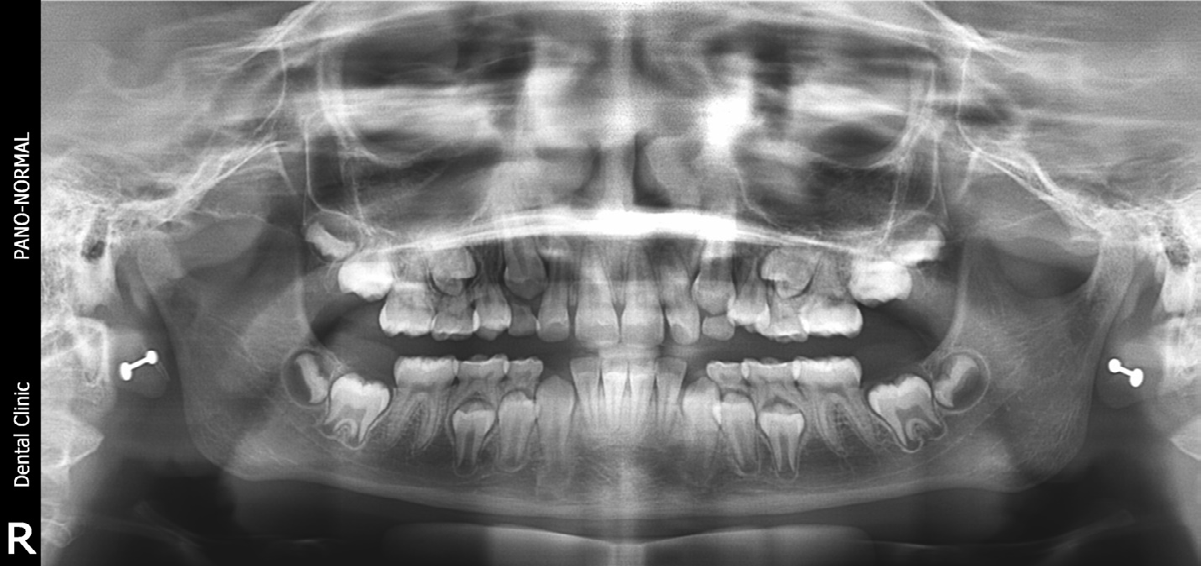
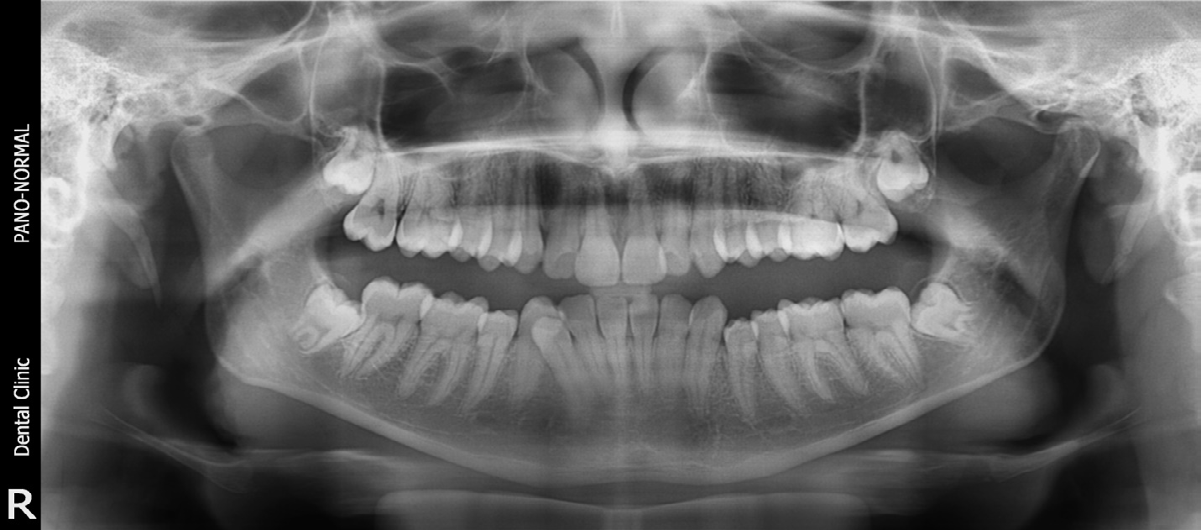
Chaillet and Demirjian [15] proposed a modified method in which stages of calcification of the teeth was divided into 10 stages and numbered ‘0’ to ‘9’. Stage 9- represents completion of tooth calcification (complete formation of root apex). Figure 1 and 2 show open and closed apical formation respectively. As the roots in majority of cases were completely formed, the age determination was restricted to the final stage. i.e. “Stage 9” by Demirjian, et al. i.e. apical closure only. To minimize the experimental error and bias, inter observer reliability was calculated based on the assessment of the radiographs by another dentist also. Thus, two observations were entered for each radiograph in the Microsoft excel sheet.
Statistical Analysis
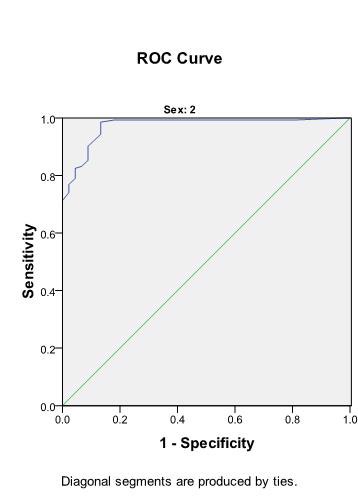
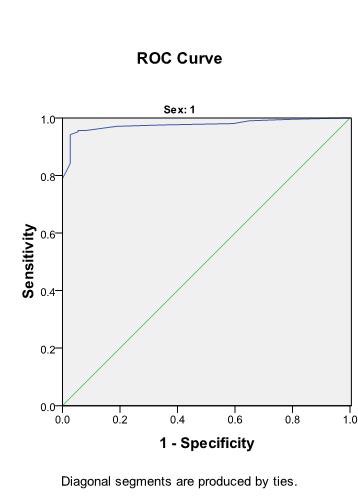
A receiver operating characteristic curve or ROC curve is a graphical plot that demonstrates the diagnostic ability of a binary classifier system as its discrimination threshold is varied. The ROC curve is created by plotting the true positive rate (sensitivity) against the false positive rate (specificity) at various threshold settings.
ROC analysis was carried out to find the cut-off value of age in both genders for the mandibular second molar apex closure. Sensitivity, specificity and percentage accuracy were calculated at 95% confidence interval.
Results
The data analysis was done with Microsoft Excel and the results were tabulated. The interobserver reliability was very good with Cronbach’s Alpha value calculated as 0.969 (CI: 0.962-0.974) and Kappa value = 0.939 (p < 0.001). Table 2 and Table 3 illustrate the observations of the present study where ROC curve shows the cut-off age at which the maximum number of root apex closure were seen in the present study i.e. 13 years 8 months in males (Figure 3) and 13 years 9 months in females (Figure 4).
| Age | Apical foramen | Total | Sensitivity (%) | Specificity (%) | Positive Predictive value (%) | Negative predictive value (%) | Accuracy (%) | |
|---|---|---|---|---|---|---|---|---|
| Open | Closed | |||||||
| <13 years 8 months | 35 | 9 | 44 | 95.7 | 94.6 | 99 | 79.6 | 95.5 |
| ≥ 13 years 8 months | 2 | 200 | 202 | |||||
| Total | 37 | 209 | 246 |
Table 2: Percentage accuracy of determining the exact age by radiological study of closure of apical foramen in permanent mandibu
| Age | Apical foramen | Total | Sensitivity (%) | Specificity (%) | Positive Predictive value (%) | Negative predictive value (%) | Accuracy (%) | |
|---|---|---|---|---|---|---|---|---|
| Open | Closed | |||||||
| <13 years 9 months | 39 | 2 | 41 | 98.6 | 86.7 | 95.9 | 95.1 | 95.7 |
| ≥ 13 years 9 months | 6 | 141 | 147 | |||||
| Total | 37 | 209 | 246 |
Table 3: Percentage accuracy of determining the exact age by radiological study of closure of apical foramen in permanent mandibu
Table 2 and Table 3 depict the sensitivity, specificity and percentage accuracy of the present study thus confirming the accurate age in males and females respectively. Table 2 depicts reveal a high sensitivity (95.7%) and specificity (94.6%) of the evaluation method. Age was predicted accurately in 235 out of 246 male participants, thus giving a significantly high accuracy of 95.5%.
Female participants of the study who showed a closed apical foramen in the present study were older than 13 years
9 months, with moderate sensitivity (98.6%) and specificity (86.67%). Age was correctly predicted in 180 out of 188 females, thus giving highly significant accuracy of 95.74% (Table 3).
The present study suggests that permanent second mandibular molar radiographs are a valuable tool in assessing the age because in our sample of population, we found that if the apical foramen is not closed, the exact age of the individual is below 13 years 9 months.
Discussion
Alarmingly increasing crime rates by the adolescents globally is quite a dreadful fact. It is equally disheartening to note that not only the crimes by the adolescents but also against them, shows a rising graph all over the world. There have been consistent reports of robbery, theft, rapes, attempt to murder and even murders by the minors and it becomes excruciatingly intimidating if not impossible to determine their exact age in the legal courts. Though several studies have focused on the age estimation in the age of majority, utilizing evaluation of the development of the third molar, its eruption and later by studying its mineralisation [9, 16, 17, 18], very few studies have addressed the need of an accurate age estimation method in young children in the age group of 13 to 17 years, so that it can be produced as a reliable evidence in the Court of Law and Justice. However, the harsh reality is that despite the presence of a number of reliable parameters for estimation of age upto12 years and above 18 years, the immensely crucial medico-legally important ages of 14 and 16 years still lack accurate parameters for age estimation. The permanent mandibular second molars erupt between 12 and 14 years and complete their root development by 14-16 years. Thus, it was selected as the” key tooth” in estimating the adolescent ages 14 and 16 years in the present study [19].
In the present study, the earliest closure of apical foramen in male subjects was observed at 13 years of age, and apical closure was noticed for maximum number of study subjects by the age of 13 years 8 months. Therefore, it is estimated that if a displays closed apical foramen, the age of the female in question can be implied as more than 13 years. Also, it is evident from this study that apical foramen is not open after fourteen years of age. Thus the present study justifies the fact that the methodology is reasonably precise in predicting the adolescent ages of 14-16 years. In the present study, percentage accuracy was high for male subjects as well as for female subjects. Nevertheless, extensive research comprising more number of subjects of either gender should be done in other populations also, so that this methodology is widely accepted in regular courts of law.
Though research studies have been undertaken determining the age by third molar maturity index, which is related to the measurement of the open apices of the third molar, very few studies have analysed the estimation of adolescent age group of 14 to 16 years [13].
A receiver operating curve (ROC) analysis was performed to evaluate the specific cut-off value of third molar maturity index (I3M) for predicting minimum age of criminal responsibility status in South Indian children [20].
Vilma Pinchi, et al. evaluated the diagnostic accuracy, sensitivity and specificity of four odontological methods (Demirjian, Haavikko, Willems and Cameriere) for age estimation in Italian children at the age threshold of 14 years using ROC curves [21].
A recent study applied Cameriere European formula for age estimation of 10-15 years legal threshold in South Indian population and formulated a population-specific linear regression formula; the researchers found this method to be fairly accurate [22].
Lesser reliable age estimation methods like tooth eruption, radiographs of wrist and elbow have been employed to estimate this medico-legally important age group [4, 10].
As per literature search, only one pilot study [23]
has been done on permanent mandibular second molars applying Demirjian’s age estimation method. There is paucity of studies globally using this method for age estimation in adolescents of age group of 14 to 16 years. Balaraj and Nithin [23] reported high degree of accuracy of 94% for male participants where the apical foramen was closed, when the age was more than 15 years 4 months. The female participants showed a highly significant accuracy of 97.4% with closed apical foramina in age above 14 years, though they analysed a small population of Southern India. In our study, larger sample size of North Indian population revealed fairly good accuracy in age prediction, in both males (95.5%) as well as females (95.7%). Furthermore, we observed an early apex closure in mandibular second molar nearly at the same time in males and females, which is in contrast to above mentioned study.
There are virtually no other biologic indicators available for the adolescent age interval, as third molars are sometimes used to judge the juvenile versus adult status of subjects who lack age documentation [9].
Multiple factors like pathology of teeth, environmental factors, and nutritional status can alter the accuracy calculated. Therefore, further studies are required to form a definite opinion on this methodology of age estimation in adolescents. Still, considering all the facts and figures, the methodology described in the present study stands out as it is a very simple technique, requiring no peculiar training or skill.
Hence, if the radiograph illustrates a closed apical foramen, the exact age can be inferred as more than 13 years 8 months in males and more than 13 years 9 months in females with sensitivity of 95.7% and 98.6% in males and females respectively.
Conclusion
Commonly, the ages of 7,10,12,14,16,18 and 21 years are considered of consequence in the Legal Courts. However, the ages 14 and 16 years are specifically crucial with regard to adolescent population, still the incongruity is that the medico-legal important ages of 14 and 16 years lack reliable parameters for exact age analysis. Demirjian, et al. [8] method was chosen to be applied on mandibular second molars in the present study because basic principles of root development from the stage of its formation till the apex closure remains consistent among all permanent dentitions. The technique used in the present study is reasonably precise and simple in analysing the adolescent ages of 14-16 years, thus must be accepted in routine medico legal practice. More studies involving the mandibular second molar apex closure as a criteria need to be done in other populations, with more number of subjects, so that it can be accepted as a reliable parameter for age estimation in the Court of Law.
References
-
Soomer H, Ranta H, Lincoln MJ, Pentilla A, Leibur E (2003) Reliability and validity of eight dental age estimation methods for adults. J forensic Sci 48(1): 149-152.
-
Willems G (2001) A review of the most commonly used dental age estimation techniques. J Forensic Odontostomatol 19(1): 9-17.
-
Mukharjee JB (1981) Forensic Medicine and toxicology. Academic Publishers 1: 97-98.
-
Ramchhods Ratanlal, Thakore Dhirajlal Keshavlal (1992) the Indian penal code (act XLV of 1860) with exhaustive notes, comments, case-law references, State amendments, etc, 27th (Edn.), Wadha and Company.
-
Sharma BR, Dhillon S, Bano S (2009) Juvenile delinquency in India-a cause for concern. J Indian Acad Forensic Med 31(1): 68-72.
-
(2016) The Juvenile Justice (Care and Protection of Children) Amendment Act 2016 (No. 2 of 2016). The Gazette of India, Ministry of Law, Justice and Company Affairs (Legislative Department), Government of India, India.
-
Demirjian A, Goldstein H, Tanner JM (1973) A new system of dental age assessment. Hum Biol 45(2): 211- 227.
-
Demirjian A, Goldstein H (1976) New systems for dental maturity based on seven and four teeth. Ann Hum Biol 3(5): 411-421.
-
Mincer HH, Harris EF, Berryman HE (1993) The A.B.F.O. study of third molar development and its use as an estimator of chronological age. J Forensic Sci 38(2): 379- 390.
-
Cameriere R, Ferrante L, Mirtella D, Cingolani M (2005) Carpals and epiphyses of radius and ulna as age indicators_._ Int J Legal Med 120(3)**:** 143-146.
-
Schmeling A, Grundmann C, Fuhrmann A, Kaatsch HJ, Knell B, et al. (2008) Criteria for age estimation in living individuals. Int J Legal Med 122(6): 457-460.
-
Cameriere R, Ferrante L, Ermenc B, Mirtella D, Strus K (2008) Age estimation using carpals: Study of a Slovenian sample to test Cameriere’s method. Forensic Sci Int 174(2-3): 178-181.
-
Cameriere R, Brkic H, Ermenc B, Ferrante L, Ovsenik M, et al. (2008) The measurement of open apices of teeth to test chronological age of over 14-year olds in living subjects. Forensic SciInt 174(2-3): 217-221.
-
Ambarkova V, Galic I, Vodanovic M, Biocina Lukenda D, Brkic H (2014) Dental age estimation using Demirjian and Willems methods: cross sectional study on children from the Former Yugoslav Republic of Macedonia_._ Forensic Sci Int 234: e1871-e1877.
-
Chaillet N, Demirjian A (2004) Dental maturity in South France; A comparison between Demirjian’s method and polynomial functions. J Forensic Sci 49(5): 1059-1066.
-
Olze A, Schmeling A, Taniguchi M, Maeda H, van Niekerk P, et al. (2004) Forensic age estimation in living subjects: the ethnic factor in wisdom tooth mineralization. Int J Legal Med 118(3): 170-173.
-
Mesotten K, Gunst K, Carbonez A, Willems G (2002) Dental age estimation and third molars: a preliminary study. Forensic Sci Int 129(2): 110-115.
-
Garn SM, Lewis AB, Bonne B (1962) Third molar formation and its developmental course_._ Angle Orthod 32(4): 270-279.
-
Cameriere R, Ferrante L, Cingolani M (2004) Precision and reliability of pulp/tooth area ratio (RA) of second molar as indicator of adult age. J Forensic Sci 49(6): 1319-1323.
-
Balla SB, Chinni SS, Galic I, Alwala AM, Machani P, et al. (2019) A cut-off value of third molar maturity index for indicating a minimum age of criminal responsibility: older or younger than 16 years? Journal of Forensic and Legal Medicine 65: 108-112.
-
Pinchi V, Pradella F, Vitale G, Rugo D, Nieri M, et al. (2015) Comparison of the diagnostic accuracy, sensitivity and specificity of four odontological methods for age evaluation in Italian children at the age threshold of 14 years using ROC curves. Med Sci Law 56(1): 13-18.
-
Gannepalli A, Balla SB, Pacha VB, Gandhi Babu DB, Vinay BH, et al. (2019) Applicability of Cameriere European formula for age estimation of 10–15 years legal threshold in South Indian population. J Forensic Dent Sci 11(2): 78- 83.
-
Balaraj BM, Nithin MD (2010) Determination of adolescent ages 14-16 years by radiological study of permanent mandibular second molars. J of Forensic and Legal Med 17(6): 329-332.
- Narcotics and Digital Forensics: Bridging Crimes in the Digital Age
- Ethics in Forensic Psychiatry: Principles, Dilemmas, and Human Rights
- Impact of Acute Stress on Attentional Orienting to Social Cues
- Head Injury and Intracranial Hemorrhage in Western Region of Libya
- A Forensic Study on Handedness: Examination of Handwriting Features in Right and Left Handed Writers
- Techniques for Latent Fingerprint Development Using Natural and Synthetic Powders: A Review