
FTIR Analysis for Identification of Semen in Mixed Biological Fluids
Introduction: Sexual assault and rape cases are one of the most common nefarious offenses and has become a major problem in India. The most worrisome issue is proving or disproving of assault. It is accomplished by the proper investigation of scene of crime, collection of evidences and their examination. Body fluids like semen, saliva, urine, vaginal secretion etc. are routinely found in mixed state in assaults cases and their separation and isolation is an intricate chore. Methodology: In present study biological fluids were collected and mixed with semen on a cotton cloth, taken as substrate. Preliminary analysis was performed by Acid phosphate test for all the samples, further presence of sperm was observed in all semen samples by appropriate slide preparation. FTIR analysis of all the samples were performed for identification of semen even in mixed samples. Result: Positive Acid Phosphate was observed in the semen samples and mixed samples containing semen as one of the biological fluids, with the highest intensity of purple color in semen samples followed by urine and saliva. In FTIR analysis, the peaks observed for semen were 1635.8 cm-1 and 1537.8 cm-1, corresponding peaks were observed in mixed samples of semen-saliva and semen-urine respectively. Conclusion: Acid phosphate can be used as a preliminary test in detection of semen, aids in providing a lead in an offence. FTIR (Fourier Transform Infrared) spectroscopy was conducted to identify semen from other biological fluids and found to be a confirmatory technique in identification of semen mixed with other body fluids.
Introduction
Forensic science is the application of all-natural sciences, in solving the mystery of a crime. Crime is any activity which leads to the breach of law. A crime scene can never be perfect as a criminal always left something at crime scene and take something from crime scene. This “something” become a crucial evidence which helps in solving the case. Some crucial evidence that are commonly found at crime scene are fingerprints, blood stain, biological fluids like semen: in case of assaults, hair, fibers, footprints etc. and has a great impact in forensic investigation. Biological evidences are mostly transfer evidences as they are transferred either from suspect to any possible place on crime scene or from victim such as blood stain can be found at bed, walls, floor etc., semen transferred from assailant to victim etc. The
major significance of these evidences is that these types of evidences are confirmatory in nature due to the presence of DNA [1].
In cases of assaults, rapes biological fluids are the most crucial evidence for identification of suspect and to prove that assault has taken place. During investigation and examination of body fluids like blood, semen plays a very important role in proving guilty or innocence in rape cases where it is very problematic to justify whether the assault has taken place or it’s just a false accusation for personal rivalry. There are various preliminary tests and confirmatory techniques are available for conforming the presence these body fluids at scene of crime. The biological fluids, such as seminal fluid, fluoresce under Ultra-Violet light, so it has become a practice to study bodily fluids under UV light and many researchers have buoyed this method [2]. Polilight with xenon arc lamp aids in detection of seminal stain on fabrics [3]. A study of Rehdorf, et al. [4] demonstrated that a forensic light source Lumatec superlite detects semen and saliva between an excitation range of 415-490nm.
Acid phosphatase is a lysosomal enzyme which works at an acidic pH by hydrolyzing organic phosphates [5]. It is present in body fluids and tissues such as serum, red blood cells, blood, vaginal secretion, urine, plasma, kidney, liver etc. but the concentration is highest in seminal fluid. The increased concentration of acid phosphatase in serum is used to detect various disease or abnormal functioning of tissues [6]. It is also present in urine where its concentration revealed glomular damage in adult females and children [7]. Periodontitis disease in human can be identified by increase in salivary acid phosphatase concentration. It is secreted by prostate gland in seminal fluid where its concentration is 400 times greater than other body fluids. The positive result of acid phosphatase test is used as screening test for identification of semen, also it fluoresces under UV light. Semen is secreted from male reproductive tract and contain sperm cells along with seminal plasma which keeps the sperms viable. There are about 200-300 million sperm count in each ejaculation and in each ejaculation 2-5 ml of semen is released. In appearance it looks like greyish white fluid with chlorine like smell. It has slightly alkaline pH ranges from 7-7.5. Raman spectroscopy prove to be a confirmatory technique in characterizing and discriminating many body fluids of forensic interest including semen [8]. In forensic investigations, detecting the types of biological fluids found on different evidences aids in determining if an offence was committed or not and can serve with the details for reconstructions of the sequence of events [9].
Semen is the most important evidence in case of sexual assaults as it helps in proving that whether the rape has actually occurred or not and also as DNA profiling can be performed by sperm which helps in identification of suspect. Seminal plasma consists of secretions originated from epididymis, seminal vesicles, the prostate, vasa-differentia, bulbourethral and urethral glands [10]. Sometimes it is found in mixed state with other biological fluids like saliva, urine, blood, vaginal fluid etc. The analysis of semen is also known as “Seminogram” which is the detection of ejaculated seminal stain received from a crime scene [11]. The role of forensic expert in solving the sexual assault cases is to prove any ciphers of sexual intercourse, by examining evidence of penetration and ejaculation which can be established by explicit constituent from the seminal fluid. The cellular constituent of semen that characteristically investigated is spermatozoa, whereas the components that contribute to plasma part are crystal choline and spermine, acid phosphatase, and zinc [12]. A valuable oral fluid, saliva is often taken for granted, but it proves to be very crucial in personal identification because of its noninvasive systemic sampling measure for medical diagnosis and research [13].
Fourier transfer infrared spectroscopy is the widely used form of infrared spectroscopy. FT-IR spectroscopy is an idyllic technique for the identification of possible bodily fluids as evidence prior to any expensive DNA analysis [14]. The infrared radiations passes through the sample some of it get absorbed and some is transmitted through the sample. The transmitted IR radiations reaches to the detector where the spectra are formed which is the molecular fingerprint of the sample. Thus, it is used as a confirmatory technique for identifying the biological fluids by their standard fingerprint pattern. Spectroscopic techniques provide the signature spectra of bodily fluids and present striking advantages such as fast results, solvents-free, cost-effective and easy-to-use [15]. ATR-FTIR is a label-free, non-destructive analytical technique used widely to study a vast type of different molecules in a range of different conditions [16].
Biological evidence with forensic aspect may be found in quite a lot of assault cases, being principally pertinent for sexually related ones [17]. Body fluids are one of the most common and crucial evidence found at scene of crime which helps in proving or disproving whether crime has actually taken place or not. These are mostly found in assault cases such as semen, urine, blood etc. There are various chemical tests for body fluids which serve the purpose of screening test such as acid phosphatase test for semen, luminol for blood, phabedas test for saliva etc. Positive results of presumptive test do not account for the confirmation of specific fluids as acid phosphatase test give positive result for semen as well as vaginal secretion, urine etc. To evade false positive test results, confirmatory tests like GC-MS, spectroscopic techniques are applied for detection. These body fluids are a good source of DNA and thus help in individualization and aid in solving criminal cases.
Materials and Methods
Sample Collection
50 samples of semen, urine and saliva were collected from unrelated college boys in accordance with ethical committee. Before collecting the samples, participants were informed about the whole study and their consent were taken on priority basis. All the applicants were given a 5ml vials for collection of each sample discretely. The participants were told to collect the semen sample after masturbation in the given vial. Urine and saliva samples were collected in their respective vials by urination and spitting method respectively. Samples were taken from the applicants who were not having any urine infection, kidney disease, kidney stone. People with braces and periodontal disease were excluded for saliva collection and saliva sample was collected at least after one hour of eating. All the samples were stored at 4°C.
Preparation of Seminal Fluid Slide
The vial containing seminal fluid was taken out from 40C to room temperature 30 minutes prior starting the procedure for slide preparation. 1 ml of sperm is diluted with PBS in a ratio of 1:10 and centrifuged for 10 min at 1000 rpm. Removed the supernatant and suspension is used for further experiment. A drop of sperm suspension was dropped on the glass slide using pipette. Air dried the slide. Put the slide cover and observe the slide under light microscope.
Semen, Urine and Saliva on Substrate
Cotton is one of the most common type of fabric found at crime scene. To feign authentic conditions of seminal fluid stains from the crime scene, cotton cloth was selected as substrate. A piece of cotton cloth with dimensions 4 X 3 (L X B) was taken and 45μl of each sample of semen, urine and saliva were deposited on the cloth. The substrate with samples were allowed to air dried at room temperature for 3 hours. Two replicas were made for each sample for chemical analysis and instrumentation.
Mixed Sample of Semen-Urine and Semen-Saliva on Substrate
A piece of cotton cloth with dimensions 4 X 3 (L X B) was taken. In mixed samples of semen-urine, first 45μl of semen was deposited on the cotton piece, followed by 45μl of urine. The substrate with semen-urine samples were allowed to air dried for 3 hours. Two replicas were made for each sample for chemical analysis and instrumentation.
A piece of cotton cloth with dimensions 4 X 3 (L X B) was taken. In mixed samples of semen-saliva, first 45μl of semen was deposited on the cotton piece, followed by 45μl of saliva. The substrate with semen-saliva samples were allowed to air dried for 3 hours. Two replicas were made for each sample for chemical analysis and instrumentation.
Chemical Analysis
Qualitative acid phosphatase (AP) test is used as a preliminary test for semen. α–Naphthyl phosphate is acted upon by the enzyme AP to yield α–naphthol, which then in combination with diazo blue B dye form a violet-colored complex. When Acid Phosphatase is not present, α–naphthyl phosphate is not able to combine with the diazo blue B compound and the reaction will remain colorless. AP is secreted by the prostate gland and occurs in seminal fluid at concentrations 20 to 400 times higher than that of other body fluids.
Acid Phosphate Test on All Substrate with Individual Samples and Mixed Samples
The stained area on the substrate samples were located by visual examination in day light. 2-4 μl of acid phosphatase working solution was dropped on the replica of all substrate samples (both individual and mixed samples), followed by dye. Observe the color change for 1 min.
Instrumentation
For further analysis, ATR FTIR (Fourier transform infrared spectroscopy – attenuated total reflectance) spectra of all the samples along with substrate were obtained by FTIR Perlin Elmer Spectrum Two. The spectra were obtained within the wavelength range of 4000cm-1 to 350cm-1. The spectrum of white cotton cloth was also recorded. Every time, before introducing a sample on surface of crystal, the ATR crystal was eviscerated with a pre-wetted ATR cleaning tissues, containing deionized water and isopropyl alcohols and let it dry entirely before recording spectra for another sample.
Result and Discussion
Microscopic Analysis
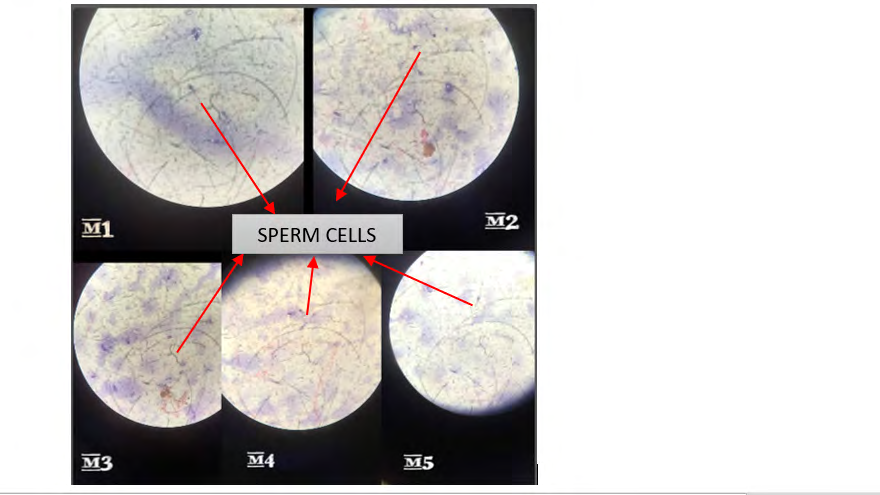
The presence of sperm cells in semen was confirmed by presence of sperm cells in semen samples of M1 to M50. The presence of sperm in seminal stain is clearly observed in Figure 1(Results of first five sample M1, M2, M3, M4 and M5). Detection of sperm and semen are the key factors for the enquiry procedure in cases of rape, sodomy, Bestiality, sexual murder etc., further presence of sperm is a reliable marker in confirming sexual assaults [18].
Acid Phosphate Analysis
Individual Samples
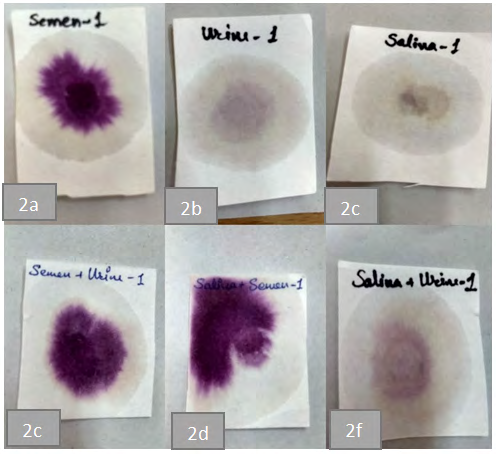
The positive result of acid phosphatase (AP) activity is shown by appearance of purple color in all the semen samples from M1 to M50. Figure 2 shows selected semen, urine and saliva sample on cotton fabric of male individual M1. Figure 2(a) represents high activity of acid phosphatase in semen sample which is established by the most fervid purple color as supported by studies of Sansbaugh [19], Saferstein [20], Miteva, et al. that AP is present in high concentration in semen due to its direct secretion from prostate gland.
Figure 2b shows the urine sample on cotton fabric of M1 moderate activity of AP which confirms the presence of acid phosphatase and same results were observed in all samples from M1 to M50 but with a bland purple color. The presence of acid phosphatase in urine is also given by Kramer, et al. [7] in their study on kidney and urine acid phosphatase. The study describes that kidney is a rich source of acid phosphatase and therefore AP is also present in urine and its concentration in urine can be used to identify glomular damage in children and adult females.
According to study of Dabra S, et al. [21] acid phosphatase is present in human saliva in very less quantity as minor enzyme but its quantity increased on periodontal disease or due to presence of some exogeneous material such as food, fruits, drugs etc. which supports the least purple color intensity or no purple color at all in saliva sample of all samples (M1 to M50) as interpreted from Figure 2(c) which signifies the result of acid phosphate activity in saliva sample of M1.
The comparison of all above said images with each other lead to the inference that as the most intense purple color is shown by semen sample on cotton fabric followed by urine and least by saliva sample on cotton fabric it means that the highest activity of acid phosphatase is found in semen as compared to urine and saliva, followed by urine and almost negligible in saliva.
This finding is in accordance with previous research of Saferstein [20], Singer, et al. [22] which concluded that acid phosphatase activity is highest in semen because in other fluids and tissue it is inhibited by tartaric acid.
Mixed Samples
Figures 2d and 2e shows the acid phosphatase activity of mixed samples of semen-urine and semen saliva with intense purple color of sample M1. This represents high activity of AP in mixed semen-saliva samples, semen-urine sample conforming the presence of semen in mixture whereas very less activity of acid phosphatase in mixed sample of urine-saliva due to absence of semen in it which is also observed in figure 2f showing partial or very less activity of acid phosphatase in mixed sample of urine-saliva in all individuals. Same results were observed in both the cases for all the samples from M1 to M50.
The mixed samples of semen-saliva and semen-urine produces dark intense purple color which proves that semen contain the maximum acid phosphatase enzyme i.e., its concentration is 200-400 times more than any other biological fluid. Thus, the acid phosphatase can be used as a screening test for semen in mixed samples to confirm the presence of semen in assault cases. Acid phosphatase can be used as an indicator even if the suspect is azoospermiac or there is no sperm found.
FTIR Analysis
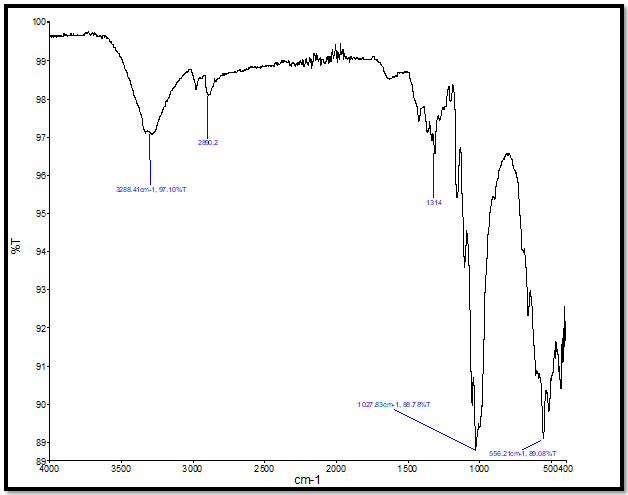
ATR FTIR spectra are obtained for all the samples (M1 to M50) and. Spectra for cotton fiber is considered as a positive control and is represented in figure 3 with main peaks at 3288.41 cm-1, 2890.2 cm-1, 1314cm-1,1027.83cm-1, 556.21cm-1.
The FTIR spectra of semen mixed with urine and mixed with saliva on cotton cloth are compared with spectra of individual body fluids, for identification of seminal peak.
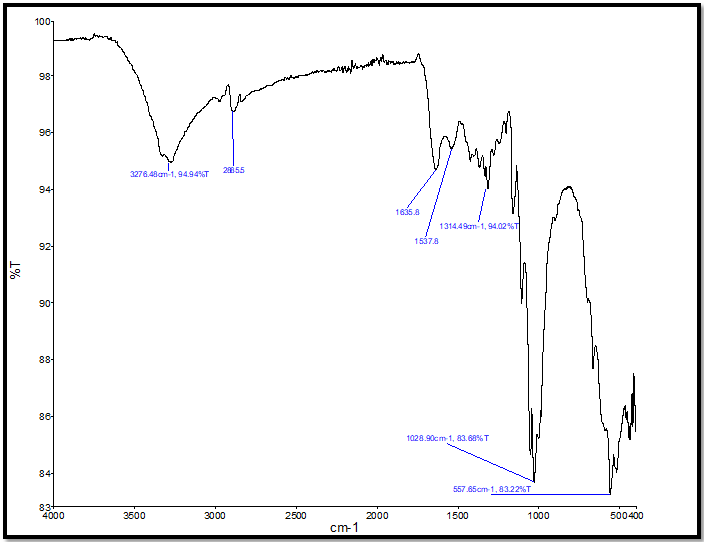
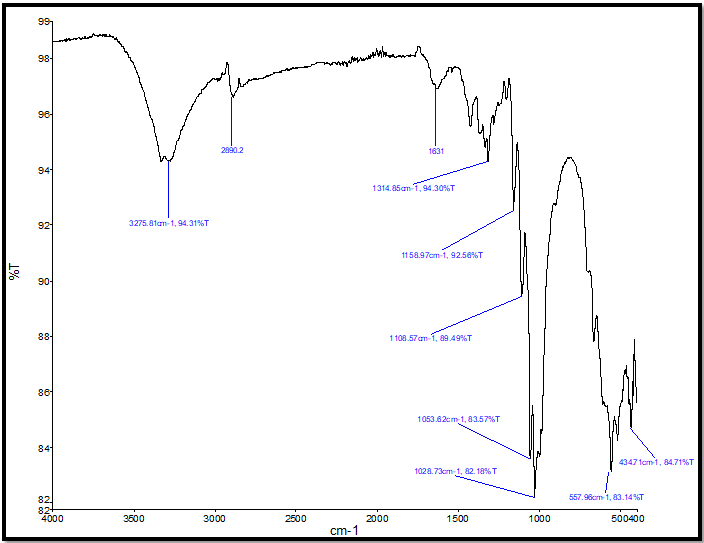
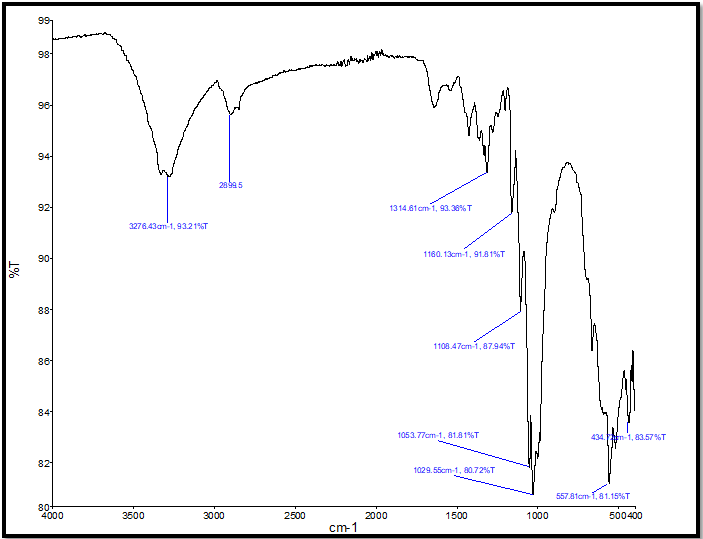
The spectra of seminal stain on cotton cloth for M1 show absorbance at wavelength 3276.48cm-1, 2885cm-1, 1635.8 cm-1, 1537.8 cm-1, 1314.49 cm-1, 1028 cm-1, 557cm-1, which are clearly illustrated in figure 4. Similarly, the spectrum of urine and saliva on cotton fabric for M1 shows multiple peaks at 3275.81cm-1, 2890.2cm-1,1631cm-1, 1314cm-1 ,115.8cm-1 ,1108.57cm-1, 1053.62cm-1,1028.73cm-1 ,434cm-1,557cm-1 and 3276.42cm-1,2899.5cm-1 ,1314cm-1 ,1160.13cm-1 ,1108.47cm-1, 1053.77cm-1 ,1029.55cm-1,434cm-1 ,557cm-1 respectively observed from figures 5 and 6.
| Sample | FTIR Peaks | Peaks after removing positive control. | |
|---|---|---|---|
| 1 | Cotton (Positive Control) | 3288.41cm-1, 2890.2 cm-1, 1314cm-1, 1027.83cm-1, 556.21cm-1 | |
| 2 | Semen | 3276.48cm-1, 2885cm-1, 1635.8 cm-1, 1537.8 cm-1, 1314.49 cm-1, 1028 cm-1, 557cm-1 | 2885cm-1, 1635.8 cm-1, 1537.8 cm-1 |
| 3 | Urine | 3275.81cm-1, 2890.2cm-1, 1631cm-1, 1314cm-1, 1158.97cm-1, 1108.57cm-1, 1053.62cm-1, 1028.73cm-1, 434cm-1, 557cm-1 | 1631cm-1,1158.97cm-1, 1108.57cm-1, 1053.62cm-1, 434cm-1 |
| 4 | Saliva | 3276.42cm-1, 2899.5cm-1, 1314cm-1, 1160.13cm-1, 1108.47cm-1, 1053.77cm-1, 1029.55cm-1, 434cm-1, 557cm-1 | 3276..42cm-1,1160.13cm-1, 1108.47cm-1, 1053.77cm-1, 434cm-1 |
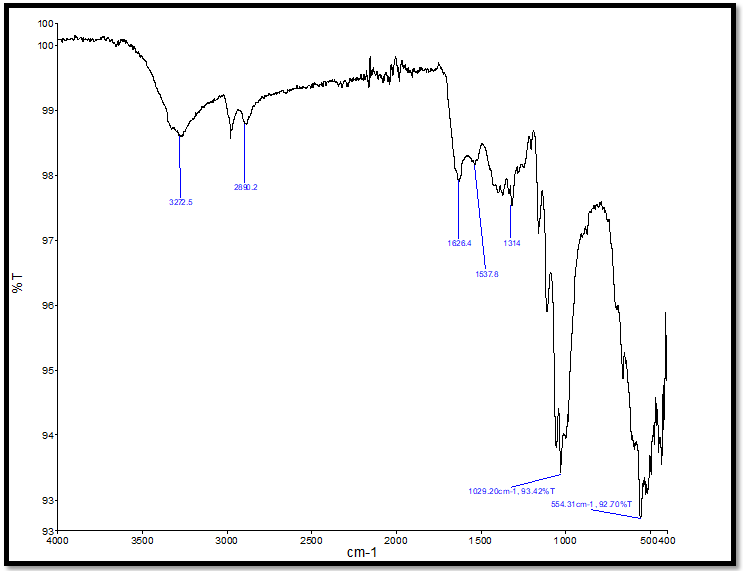
| 5 | Semen- urine on cotton cloth | 3272.5cm-1, 2890.2cm-1, 1626.4cm-1, 1537.8cm-1, 1314cm-1, 1029cm-1, 554.31cm-1 | 1626.4cm-1,1537.8cm-1, 1314cm-1. |
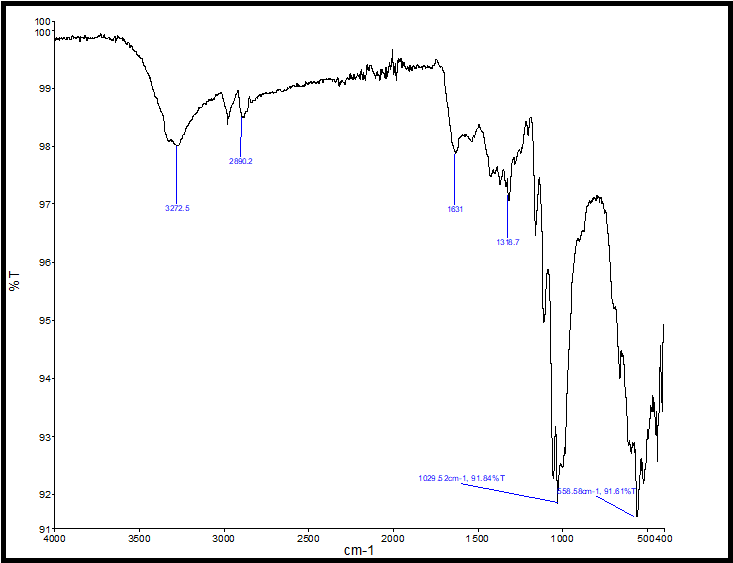
| 6 | Semen-saliva on cotton cloth | 3272.5cm-1, 2890.2cm-1, 1631cm-1, 1318.7cm-1, 1029.52cm-1, 558.58cm-1. | 3272.5cm-1,1631cm-1 |
Table 1: FTIR peaks of control, individual samples and mixed samples.
All the three body fluids have the unique characteristic spectra which can be used for their detection. This is in accordance with the recent work of Takakura, et al. [23] where they identify the five different biological fluids with their unique FTIR spectra. In the spectra of semen, excluding the wavelength of cotton fabric, the two wavelength 1635.8 cm-1 and 1537.8 cm-1 corresponds to Amide I band and Amide II band respectively, which is also proved by the study of Berthomieu C, [24] that peaks ranging from 1680cm-
1-1620cm-1 contribute to the (C=O) of peptide backbone forming the Amide I band and peak ranging from 1560cm-1- 1529cm-1 contributing to the (CN)+(NH) forming the Amide II band.
Figure 7 indicate the spectra of mixed sample of semen- urine on cotton fiber for M1 with absorbance at wavelength 3272.5cm-1, 2890.2cm-1, 1626.4cm-1, 1537554.31cm-1, 1314cm-1, 1029cm-1, and the mixed sample of semen- saliva on cotton fiber shown by figure 8 have the peaks at wavelength 3272.5cm-1, 2890.2cm-1, 1631cm-1, 1318.7cm-1, 1029.52cm-1, 558.58cm-1.
When the spectrum of mixed sample semen-urine on cotton piece are compared with the spectrum of semen on cotton fabric, urine on cotton fabric and cotton fabric then it is observed that peaks of cotton fabric are found in all spectrum but in mixed sample a peak observed at 1537.8cm-
1 is exactly as that of semen spectrum excluding peaks of cotton fabric, which confirms the presence of semen in the sample. The study of Zapata F, et al. [25] also proved that vaginal fluid, semen, and urine on fabrics can be identified and characterized by external reflection FT-IR, further comparison of the FT-IR spectra obtained, revealed that they were unique so this technology has interesting efficiency to detect stains of bodily evidences. Similarly, the spectrum of semen-saliva are compared with the spectra of cotton, semen and saliva and it is analyzed that in mixed sample the peak 1631cm-1 is close to the peak of semen spectrum which is 1635.8cm-1 and in this range no peak corresponds to the spectra of saliva which confirms the presence of semen on cotton with mixed stain of semen-saliva. So, it can be concluded that ATR FTIR can be used as a confirmatory technique for detection of semen mixed with other biological fluids.
Conclusion
The use of forensic science evidence such as semen in criminal justice systems can be considered to be, if not actually at a crossroads, then fast approaching one. Identification of biological fluids is an important aspect in forensic field, as it is a principal approach in a criminal investigation [26]. The past few decades have seen the use of this important and persuasive evidence attracting increasing criticism across many jurisdictions, not only over the way such evidence is admitted into courts but also regarding more fundamental doubts over the validity of the techniques, the probative value of the outcomes and the organizational structure of forensic market places. Now-a-days the crime against women is increasing at an alarming rate in all over the world. Crimes like sexual assaults, rapes, molestations occur in every one hour. The problem with investigation of these cases is collection and examination of evidences which are generally body fluids, present as a satin on fabric or sometimes gets mixed with each other such that their isolation and identification become a serious problem in solving the cases. The present study was commenced to address the question of distinguishing the seminal fluid from urine and saliva in mixed samples, further the main focus is on detection of semen mixed with urine and saliva. Fifty samples each of semen, urine, saliva and their mixed samples are first tested for activity of acid phosphatase and then FT-IR analysis are performed. The acid phosphatase shows its presence in all three concerned body fluids and mixed samples with highest degree of activity in semen, followed by urine and saliva respectively. The acid-phosphatase test produces the intense purple color if semen is present, have advantage of getting the result within 1-3 minutes, and can be directly performed on the spot, further helps in localization of seminal stain. The main disadvantage of the AP test is that it also gives false positive test for saliva and urine, but the intensity of color is very low in these two body fluids in contrary to the color intensity on semen samples. The intensity of purple color developed can be used to distinguish seminal stain with other stains, further it provides a lead for detection of seminal stain and can only be used as preliminary test. The main advantage of FTIR analysis is that it provides the fingerprint spectra of the substance which is to be studied and data can be obtained at multiple wavelengths simultaneously. The FT- IR spectra obtained for all samples and compared leading to the conclusion that ATR FT-IR can be used as a confirmatory technique for identifying seminal stain mixed with other body fluids. ATR FTIR spectroscopy has noteworthy advantages in that there are no expendable charges or chemical elements, rapid, and it is explicit in discerning biological materials [27]. It was proven that FT-IR spectroscopy is appropriate and efficient in distinguishing between body fluids and different substances which could be erroneous as body fluid [28]. The onuses and farm duties of a forensic expert in an investigation are very important as it encompasses the vigilant inspection of evidences whereas making firm that it is not meddled with anything. A countless pool of forensic souls and tools go in the enquiry of an offence [29].
We recommend that more extensive studies should be accomplished on validation parameters and pertinency of current methodology to evaluate the effects of environmental factors by feigning actual crime scene surroundings on body fluid investigation. In the future, researches on the pertinency of ATR FT-IR spectroscopy for the examination of other biological fluid traces with imitated criminal casework situations will be undertaken. All-embracing, this method has an enormous scope of application in body fluid analysis because of its prompt, confirmatory, non-destructive nature and requirement of nominal sample preparation [30, 31].
References
-
Piyush K, Pandey G, Tharmavaram M (2020) Biological Evidence and Their Handling. In: Rawtani D, Hussain CM (Eds.), Technology in forensic science: Sampling, Analysis, Data and Regulations, Chapter 3, WILEY‐VCH GmbH, Boschstr.
-
Santucci K, Nelson D, McQuillen K, Duffy S, Linkalis J (1999) Wood’s lamp utility in identification of semen. Pediatrics 140(6): 1342-1344.
-
Kobus H, Sileneiks E, Scharnberg J (2002) Improving the effectiveness of fluorescence for the detection of seminal stains on fabrics. Journal of Forensic Science 47(4): 819- 823.
-
Rehdorf J, Jordan L, Reinert A, Hilbers A, Stribl C, et al. (2008) Detection of semen (human and boar) and saliva on fabrics by using very high-power UV-Vis light source. Open Forensic Science Journal 7(1): 5-12.
-
Henneberry MO, Engel G, Grayhack JT (1979) Acid phosphatase. Urologic Clinics of North America 6(3): 629-641.
-
Bull H, Murray P, Thomas D, Fraser A, Nelson P (2002) Acid phosphatases. Journal of Molecular Pathology 55(2): 65-72.
-
Kramer HJ, Wight JE, Paul WL, Gonick HC (1970) Studies of human kidney and urine acid phosphatase. Enzymol Biol Clin 11(5): 435-449.
-
McLaughlin G, Landev IK (2015) In situ identification of semen stains on common substrates via Raman spectroscopy. Journal of Forensic Science 60(3): 595- 604.
-
Glynn L, Schlagetter T (2017) The effect of fabric type and laundering conditions on detection of semen stains. International journal of forensic science 2(2): 1456- 1472.
-
Ajay SR, Priyanka V, Hiren V, Priyanka M (2019) Study on Acid Phosphatase Enzyme Activity in Semen Mixed with Various Body Fluids. J Forensic Sci & Criminal Inves 11(5): 555823.
-
Jain B, Awasthi A, Mishra G (2020) Semen Stain Detection: A Study on the Different Fabrics for Effects of Washing. Int J Forens Sci 5(4): 000207.
-
Abdel Moawed DMN, Mousa AAH, Hamza MA (2020) The Use of Prostate Specific Antigen (PSA) for Detection of Seminal Stains before DNA Typing in Sexual Assault Cases: A Case Study. Int J Forens Sci 5(3): 000198.
-
Humphrey SP, Williamson RT (2001) A review of saliva: Normal composition, flow and function. Journal of Prosthetic Dentistry 85(2): 162-169.
-
Walton Williams L, Mountain H, Orphanaou CM, Casella J, et al. (2015) The detection and discrimination of human body fluids using ATR FT-IR. Forensic Science Institute 252: e10-e6.
-
Zapata F, Gregorio I, Gracia C (2015) Body Fluids and Spectroscopic Techniques in Forensics: A Perfect Match? Journal of Forensic Medicine 1(1): 1000101.
-
Glassford SE, Byrne B, Kazarian SG (2013) Recent applications of ATR FTIR spectroscopy and imaging to proteins. Biochimica et biophysica acta 1834(12): 2849- 2858.
-
Magalhães T, Dinis Oliveira RJ, Silva B, Corte Real F, Nuno Vieira D (2015) Biological Evidence Management for DNA Analysis in Cases of Sexual Assault. The Scientific World Journal 2015: 365674.
-
Harel VS, Khairkar SR, Kulkarni KV, Malve MK (2015) Detection of semen stains in rape cases by a high power uv-vis light source, facilitated conviction of accused. Journal of Forensic Research 6(4): 290.
-
Sensabaugh GF (1979) The quantitative acid phosphatase test. A statistical analysis of endogenous and postcoital acid phosphatase levels in the vagina. Journal of Forensic Sciences 24(2): 346-365.
-
Richard Saferstein (2001) Forensic Science handbook. 2nd (Edn.), Pearson.
-
Dabra S, Singh P (2012) Evaluating the level of salivary acid and alkaline acid phosphatase activities as biochemical markers for periodontal disease. Dental Research Journal 9(1): 41-45.
-
Singer R, Sagiv M, Allalouf D, Landau B, Segenreich E, et al. (1979) Acid phosphatase activity in human semen. Archives of Andrology 3(1): 89-90.
-
Takamura A, Watanabe K, Akutsu T, Ozawa T (2018) Soft and Robust Identification of Body Fluid Using Fourier Transform Infrared Spectroscopy and Chemometric Strategies for Forensic Analysis. Scientific Reports 8: 8459-8469.
-
Berthomieu C, Hienerwadel R (2009) Fourier transform infrared spectroscopy. Photosynthesis Research 101: 157-170.
-
Zapata F, Ossa MA, Gracia C (2016) Differentiation of body fluids stains on fabrics using external reflectance four9ier transform infrared spectroscopy and chemometrics. Applied Spectroscopy 70(4): 654-665.
-
Harbinson S, Fleming R (2015) Forensic body fluid identification: state of the art. Research and Reports in Forensic Medical Science 6: 11-23.
-
Elkins KM (2011) Rapid presumptive fingerprinting of body fluids and materials by ATR FTIR spectroscopy. Journal of Forensic Science 56(6): 1580-1587.
-
Mistek Ewelina, Lednev IK (2018) FT-IR spectroscopy for identification of biological stains for forensic purposes. Spectroscopy 33(8): 8-19.
-
Dave PY (2021) Review on Forensic Chemistry: An Important Field of Forensic Science. Int J Forens Sci 6(2): 000228.
-
Huggins C, Scott W (1942) Acid phosphatase activity of human urine, an index of prostate secretion. Journal of Endocrinology 30(1): 107-112.
-
Virkler, Lendev IK (2009) Raman spectroscopic signature of semen and its potential application to forensic science body fluid identification. Forensic Science International 193(1-3): 56-62.
- Forensic Implications of Adverse Drug Reactions in Schizophrenia A Case Series
- Narcotics and Digital Forensics: Bridging Crimes in the Digital Age
- Ethics in Forensic Psychiatry: Principles, Dilemmas, and Human Rights
- Impact of Acute Stress on Attentional Orienting to Social Cues
- Head Injury and Intracranial Hemorrhage in Western Region of Libya
- A Forensic Study on Handedness: Examination of Handwriting Features in Right and Left Handed Writers