
Characterization of the Autopsies Performed from Deaths of Foreigners in Medellín, 2010-2017
This paper is about a characterization of autopsies performed from deaths of foreigners from January 2010 to December 2017. To this end, an analytical observational study was carried out, assembled in a cohort of foreigners killed in Medellín recognized in the National Institute of Legal Medicine and Forensic Sciences by reviewing autopsy reports. The analysis of the variables studied shows that tourists who die meanwhile visiting Medellin are from North America (15.84%), the most frequent cause of death is trauma from a projectile from a firearm (14.36%), the most frequent manner of death is Homicide (23.76%), and the most common circumstances of the events are the reckoning and intoxication. In 22.8% of the cases, some psychoactive substance was identified in the blood, being cocaine the most frequent use. However, these types of substances were only sought in 50% of the cases studied, so it is recommended to strengthen the search for these substances in all foreign deaths subject to medical-legal autopsy.
Introduction
The deaths of foreign tourists are a concern that forces to evaluate the security guarantees offered to visitors within the different destinations they choose so that a pleasant life experience that encourages the local economies of a country does not become a tragic experience that affects the image of a region.
In a study on the death of foreigners carried out in Thailand between the years 1997 and 1999, they indicate that the most frequent causes of death among foreign tourists are accidental deaths [1], an Australian study found that this risk of dying abroad was probably similar to dying at home, but the risk varied by destination, with the most dangerous destinations for Australian tourists being Europe, Central and South America [2].
The high homicide rates that are recorded annually in Medellin are a concern of the various actors and institutions that have to do with citizen security, justice, health entities and other organizations responsible for addressing the impact that this problem brings to the community in general [3]. In 2010 in Medellin there were 2023 homicides [4] and in 2017 there were 1205 homicides [5] and foreign tourists are not exempt from being part of this statistics. Although there are many motivations to visit the city of Medellin, including the warmth of its people, culture, weather, landscapes, festivities and celebrations, there is also in the collective imagination of foreigners the conception that it is a city for the consumption of recreational drugs of good quality and low price. This has given way to drug tourism.
Narcotourism, understood as the trend of national and foreign tourists in search of destinations for drug use, is a growing phenomenon that is part of a criminal chain inherited from the illicit dynamics of drug trafficking, micro- trafficking and drug dealing that still persists in Medellin, the result of an imaginary extended by the history of cartels in the 1980s and 1990s, which has consolidated among some foreign tourists the figure of Pablo Escobar Gaviria as a lieutenant of a lawless territory in which production, marketing and consumption of drugs is openly tolerated. It is considered that a characterization of the deaths of foreigners in Medellin will allow establishing the circumstances of the events most frequently related to these deaths, which in turn will serve as input to generate security policies that benefit tourism and the safety of tourists in Medellin.
An assembled descriptive analytical observational study was carried out on a cohort of foreign tourists who were recognized in the basic unit of Medellín of the Northwest Region of the National Institute of Legal Medicine and Forensic Sciences from 2010 to 2017.
The data analyzes were performed through univariate descriptive statistics, and through bivariate statistics. Bias control will be taken into account.
Materials and Methods
It is a descriptive analytical observational study assembled on a cohort of deaths of foreign tourists that were identified in the Basic Unit of Medellin of the Northwest Region of the National Institute of Legal Medicine and Forensic Sciences of Colombia from 2010 to 2017.
Universe
It was carried out the analysis of the expert reports of autopsies of deaths of foreigners approached in the Medellín Basic Unit of the Northwest Region during the referenced period. Autopsies reports of deaths that were not from foreigners and those reports that did not have complete information were excluded.
Sample
All cases of deaths of foreigners whose autopsy was performed in the Medellin Basic Unit from 2010 to 2017 were entered, considering all forms of death (homicide, suicide, accidental, natural, under study, pending further investigation by law enforcement) in total of 202 cases. Expert reports of deaths other than foreigners were excluded.
Observation Unit
The units of analysis were the autopsy expert reports with their supporting documents and complementary analyzes of the deaths of foreigners with autopsies performed in the Medellin Basic Unit.
Definition and Measurement of Independent Variables
The independent variables are those that concern the characterization of the autopsy expert report, of the deaths of foreigners addressed in the Medellin Basic Unit from 2010 to 2017 within which they were contemplated Age, weight, height, nationality, circumstances of the event, manner of death, cause of death, topographic diagnosis (injured anatomical region), geographic location, setting and mechanism of injury.
Definition and Measurement of Dependent Variables
Those referring to the additional studies requested from support laboratories during the medicolegal necropsies. The following were considered: Toxicological analysis.
Results
The selected study universe comprises a representative sample of 202 cases of deaths of foreigners ina period from 2010 to 2017 in the Basic Unit of Medellín.
In Tables 1 and 2, the epidemiological and sociodemographic characteristics of the study population are illustrated. 88.12% corresponded to men, with an average age of 42.11 years (SD 16.73). Weight and height were on average 79.22 kg and 171.38 cm, respectively. For weight, there was one case in which the variable was not recorded in the autopsy report.
| Frequency | |
|---|---|
| Male | 178 |
| Feminine | 24 |
| Total | 202 |
Table 1: Sex of foreigners killed in Medellín during the period 2010-2017.
| Variable | n | Average | DE | Min | Max |
|---|---|---|---|---|---|
| Weight | 201 | 79.22 | 19.68 | 12 | 160 |
| Size | 202 | 171.38 | 11.02 | 90 | 200 |
| Age | 202 | 42.11 | 16.73 | 17 | 87 |
Table 2: Weight in kg and height in cm of dead foreigners in Medellín during the period 2010-2017.
Regarding nationality, it was found that the studied population belonged to 40 different nationalities, of which 57.43% (113) were from three countries: Brazil 32.76% (66), United States 15.84% (32) and Venezuela 8.91% (18). The rest belonged to 37 different countries (Table 3). However, it should be noted that the predominance of Brazilian nationality is explained by the deaths associated with the Chapecoense plane crash. This accident involved LaMia flight 2933 (LMI2933) that departed from Viru Viru International Airport (Bolivia) to José María Córdova International Airport (Colombia) with 68 passengers and 9 crew members, which crashed on 28 November 2016 at approximately 10:15 p.m. at the Municipality of Unión Antioquia. Among the passengers was the Brazilian soccer team Chapecoense, which were on their way to play the 2016 Copa Sudamericana final against Atlético Nacional. Therefore, considering the special circumstances for which Brazil contributes the highest number of deaths for this study, it can be considered that American tourists are the ones who most frequently visit the city of Medellin.
| Frequency | Percentage | Nationality | Frequency | Percentage | |
|---|---|---|---|---|---|
| Brazilians | 66 | 32.67 | Argentines | 2 | 0.99 |
| North americans | 32 | 15.84 | Djibouti | 1 | 0.5 |
| Venezuelans | 18 | 8.91 | Poles | 1 | 0.5 |
| Ecuadorians | 7 | 3.47 | Bulgarians | 1 | 0.5 |
| Curacaeans | 7 | 3.47 | Arubans | 1 | 0.5 |
| Spanish | 6 | 2.97 | Swedes | 1 | 0.5 |
| Dominicans | 6 | 2.97 | Hondurans | 1 | 0.5 |
| Germans | 5 | 2.48 | Puerto rican | 1 | 0.5 |
| Panamanians | 5 | 2.48 | Libyans | 1 | 0.5 |
| Canadians | 5 | 2.48 | Salvadorans | 1 | 0.5 |
| Swiss | 4 | 1.98 | Peruvian | 1 | 0.5 |
| Italians | 3 | 1.49 | Lebanese | 1 | 0.5 |
| ductch | 3 | 1.49 | Danish | 1 | 0.5 |
| Cubans | 3 | 1.49 | Japanese | 1 | 0.5 |
| Bolivians | 3 | 1.49 | Paraguayans | 1 | 0.5 |
| Chinese | 2 | 0.99 | Chileans | 1 | 0.5 |
| Lithuanians | 2 | 0.99 | Trinidad y Tobago | 1 | 0.5 |
| Mexicans | 2 | 0.99 | Irish | 1 | 0.5 |
| Australians | 2 | 0.99 | Finns | 1 | 0.5 |
| Total | 202 |
Table 3: Nationality of foreigners killed in Medellín during the period 2010-2017.
| Continent | Frequency | Percentage |
|---|---|---|
| America | 165 | 81.69 |
| Europe | 28 | 13.86 |
| Asia | 5 | 2.48 |
| África | 2 | 0.99 |
| Oceanía | 2 | 0.99 |
| Total | 202 | 100 |
| Circumstance of the fact | Frequency | Percentage |
| Plane crash | 72 | 35.64 |
| Revenge | 36 | 17.82 |
| Car accident | 18 | 8.91 |
| SPA poisoning | 13 | 6.44 |
| Hypertensive crisis | 10 | 4.95 |
| Hanging/strangulation | 10 | 4.95 |
| Fire burn | 8 | 3.96 |
| Pulmonary embolism | 6 | 2.97 |
| Heart attack | 6 | 2.97 |
| Fall into the void | 3 | 1.49 |
| Suicide | 2 | 0.99 |
| Intimate partner violence | 2 | 0.99 |
| Tuberculosis | 2 | 0.99 |
| Pneumonia | 2 | 0.99 |
| Aneurysm | 2 | 0.99 |
| No information | 1 | 0.5 |
| Bank robbery | 1 | 0.5 |
| Undocumented person | 1 | 0.5 |
| Antidepressant intoxication | 1 | 0.5 |
| Anaphylaxis | 1 | 0.5 |
| Malignant tumor | 1 | 0.5 |
| In prison | 1 | 0.5 |
| Common crime | 1 | 0.5 |
| Liver disease | 1 | 0.5 |
| Electrocution | 1 | 0.5 |
| Total | 202 | 100 |
| SPA: Psychoactive substances. |
Table 4: Continent of origin of foreigners killed in Medellín during the period 2010-2017.
Regarding the continent, 81.69% (165) belonged to America and 13.86% (28) Europe (Table 4).
Regarding the fact of death, the seven most frequent circumstances were: plane crash in 35.64% (72), settling accounts or revenge in 17.82% (36), traffic accident in 8.91% (18), intoxication due to the consumption of psychoactive substances in 6.44% (13), hypertensive crisis in 4.95% (10) and hanging-strangulation in 4.95%(10), (Table 5).
| Frequency | Percentage | |
|---|---|---|
| Polytrauma | 113 | 55.94 |
| Without injuries | 39 | 19.31 |
| Head | 21 | 10.4 |
| Chest | 12 | 5.94 |
| Neck | 6 | 2.97 |
| Abdomen | 4 | 1.98 |
| No information | 3 | 1.49 |
| Face | 1 | 0.5 |
| Superior members | 1 | 0.5 |
| Inferior members | 1 | 0.5 |
| Pelvis | 1 | 0.5 |
| Total | 202 | 100 |
Table 5: Topographic diagnosis of dead foreigners in Medellín during the period 2010-2017.
The most frequent topographical diagnoses were: Polytrauma in 55.94% (113), in the head in 10.40%(39), in the chest in 5.94%(12), in the neck in 2 .97% (6). In 19.31%(39) there were no injuries, which corresponds to natural deaths and intoxications, and in 1.49% there is no information (Table 6).
The most frequent causes of death were polytraumatism in 41.58% (84) and trauma by firearm projectile in 14.36% (29). See graph 1. The most frequent ways of death were accidental in 52, 97% (107), homicide in 23.76%(48) and natural in 14.36%(48) see graph 2. The most frequent mechanisms of injury were: Blunt in 45% (91), gun shot in 14.36% (29), asphyxiation generators in 6.93% (14) and toxic in 6.93% (14) see graph 3.
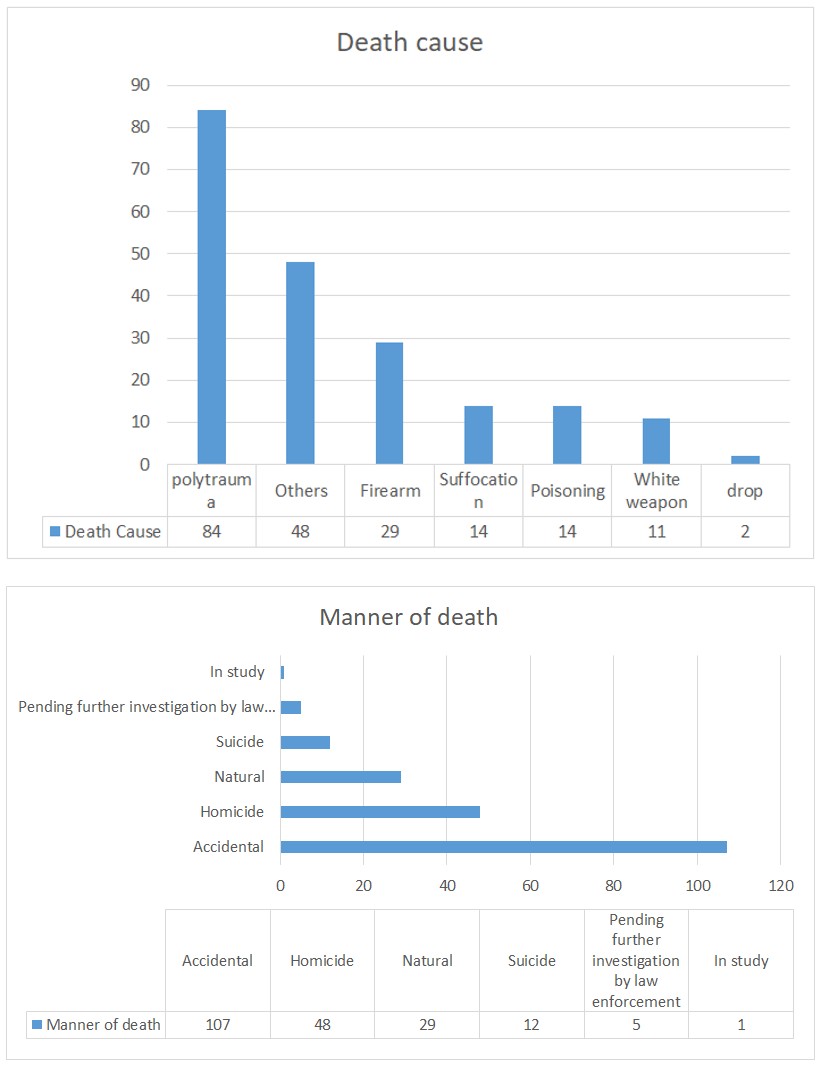
Graph 1: Cause of death of foreigners in Medellín during the period 2010-2017.
Graph 2: Manner of death of foreigners in Medellín during the period 2010-2017.
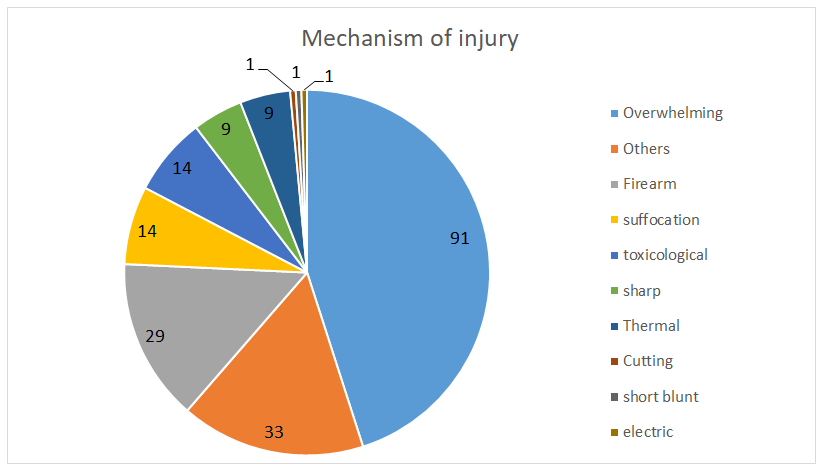
Graph 3: Mechanism of the injury of foreigners killed in Medellín during the period 2010-2017.
Regarding the place where the bodies were found, 65.84% (133) belonged to four localities: La Unión in 35.64% (72), El Poblado in 16.83% (34), La Candelaria in 7.92% (16) and Belén at 5.45% (11) see Table 7. Others include Guarne, La Gabriela, San Andrés, San Carlos, La Dorada. Being the most frequent scenarios: Forests, Barrens or paddocks in 37.13% (75), the Public road in 20.79% (42) and the house in 17.33% (35). There is no information on 8.42% (17) see table 8.
| Location | Frequency | Percentage | Location | Frequency | Percentage |
|---|---|---|---|---|---|
| La unión | 72 | 35.64 | San Pedro | 5 | 2.48 |
| El Poblado | 34 | 16.83 | Rionegro | 1 | 0.5 |
| La Candelaria | 16 | 7.92 | Amalfi | 1 | 0.5 |
| Belén | 11 | 5.45 | Aranjuez | 1 | 0.5 |
| Laureles – Estadio | 9 | 3.56 | Aruba | 1 | 0.5 |
| Sin información | 6 | 2.97 | Barbosa | 1 | 0.5 |
| Buenos Aires | 3 | 1.49 | Bolombolo | 1 | 0.5 |
| Caldas | 3 | 1.49 | Castilla | 1 | 0.5 |
| Guayabal | 3 | 1.49 | Turbo | 1 | 0.5 |
| Bello | 2 | 0.99 | Copacabana | 1 | 0.5 |
| Doce de Octubre | 2 | 0.99 | San Antonio de Prado | 1 | 0.5 |
| Itagüí | 5 | 2.48 | Envigado | 2 | 0.99 |
| Robledo | 2 | 0.99 | Manrique | 1 | 0.5 |
| San Cristóbal | 3 | 1.49 | Sabaneta | 1 | 0.5 |
| San Javier | 2 | 0.99 | Santo Domingo | 1 | 0.5 |
| Otros | 10 | 5 | |||
| Total | 202 |
Table 6: Geographical location of the deaths of foreigners in Medellín during the period 2010-2017.
| Frequency | Percentage | |
|---|---|---|
| Forest/Vacant/Pasture | 75 | 37.13 |
| Public road | 42 | 20.79 |
| living place | 35 | 17.33 |
| No information | 17 | 8.42 |
| Lodging | 13 | 6.44 |
| Farm | 3 | 1.49 |
| River | 3 | 1.49 |
| Restaurant | 2 | 0.99 |
| Mountain | 2 | 0.99 |
| Gas station | 2 | 0.99 |
| Vehicle | 1 | 0.5 |
| Pubs | 1 | 0.5 |
| Trade | 1 | 0.5 |
| Cruise | 1 | 0.5 |
| Hospital | 1 | 0.5 |
| Sidewalk | 1 | 0.5 |
| Geriatric Home | 1 | 0.5 |
| Prison | 1 | 0.5 |
| Total | 202 | 100 |
Table 7: Scenarios of the death of foreigners in Medellín during the period 2010-2017.
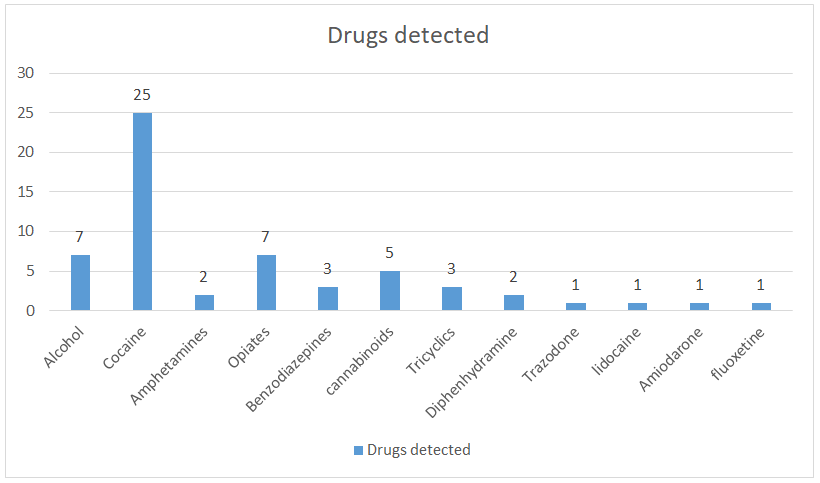
Graph 4: Blood toxicology findings.
Within the approach of the medical-legal process, only 29.21% (59 cases) were analyzed by toxicology tests, of these 27 cases some positive substance was detected, 11.86% (7) being positive for alcohol, 25.42 % (15) positive for Cocaine and derivatives, 3.38%(2) positive for amphetamines, 11.86%(7) positive for opiates, 5.08%(3) positive for benzodiazepines, 8.47%(5) positive for cannabinoids, 3.38%(2) positive for tricyclic antidepressants, 3.38%(2) positive for Diphenhydramine, 1.69%(1) positive for Trazadone, 1.69%(1) positive for lidocaine, 1.69%(1) positive for Amiodarone and 1.69%(1) positive for Fluoxetine (Graph 4).
When performing a bivariate analysis of the causes of death with the results of the toxicology laboratory, it can be established that in 100%(14) of the cases in which the cause of death waa associated with intoxication, toxicology laboratories were requested, in suffocation was requested in 50%(7) of the cases, in cases of firearm projectile only 24.13%(7) was requested, in cases of stabbing 63%(7), in cases of polytraumatism to 8.3%(7) and in the cases of precipitation from height, none of them were analyzed for toxicology laboratories (Table 9).
| Lab results | |||
|---|---|---|---|
| Death Cause | Without Blood tests | With Blood tests | Total |
| Firearm | 22 (10.89%) | 7 (3.47%) | 29 (14.36%) |
| White weapon | 4 (1.98%) | 7 (3.47%) | 11 (5.45%) |
| Suffocation | 7 (3.47%) | 7 (3.47%) | 14 (6.93%) |
| Polytrauma | 77 (38.12%) | 7 (3.47%) | 84 (41.58%) |
| Poisoning | 0 | 14 (6.93%) | 14 (6.93%) |
| height precipitation | 2 (0.99%) | 0 | 2 (0.99%) |
| Others | 31 (15.35%) | 17 (8.42%) | 48 (23.76%) |
| Total | 143 (70.79%) | 59 (29.21%) | 202 (100%) |
Table 8: Bivariate analysis cause of death and results of foreign toxicology laboratories killed in Medellín during the period 20
Discussion
Medellín, capital of the department of Antioquia, nicknamed “eternal spring” for its mild climate, is the third city in Colombia, after Bogotá and Cartagena, most visited by foreigners. The number of tourists who visit the city increases every year, according to Colombia [6] migration figures between the years 2012-2017 the total flow of foreigners in the country was 27,680,367 citizens. In 2017, the flow was 6,535,302 citizens, tourism being the main category of entry of foreigners to the national territory with 2,560,825 registrations, which is equivalent to a participation of 76.6%. The main lodging cities are: Bogotá 45.1%, Cartagena 13.1%, Medellín 11.1%, Cali 5.7%. By grouping the nationalities according to region for the year 2017, it is possible to identify trends in the arrival of foreigners to the national territory. South America is constituted as the subregion that concentrates the highest number of income, with 51.2%, of which Venezuelans have a 23.8% share. Similarly, North America constitutes 17.5%, ranking as the second region, followed by Europe (15.7%), Central America and the Caribbean (12.5%), Asia (2.3%), Oceania (0.6%) and Africa (0.1%), as those with the lowest participation.
In accordance with the deaths recorded in this study, it was found that 54.95% (111) of the deaths were contributed by South America, 18.32% (37) by North America and 13.86% (28) by Europe. However, it is noteworthy that for this period of time in particular, considering the special circumstances of the Chapecoense aircrashed accident that occurred in 2016, for which Brazil for this study contributes the highest number of deaths, it can be considered that they are the American tourists (second in frequency to visit the city) who contribute the highest number of foreign deaths to local statistics.
Although tourism is part of the economic engine of many regions of the country, Colombia is being seen as a destination for the drugs consumption, which are of high quality and low cost [7], this phenomenon is known as drug tourism or narco-tourism. According to the information recorded in the journalistic documentary La Ruta del Vicio, broadcast by Caracol Television’s Seventh Day Program in July 2008, foreigners said that they came to the country to use drugs, “party” and have sex.
In this study, although only 29.21% (59) of the cases were analyzed by toxicology tests since these were taken into account especially for 100% of the deaths in which the cause of death was suspected to be associated with a suspected intoxication as evidenced by bivariate analysis; A positive substance was detected in 27 cases, with 11.86%(7) positive for alcohol, 25.42% (15) positive for Cocaine and derivatives, 3.38%(2) positive for amphetamines, 11.86% (7) positive for opiates, 5.08%(3) positive for benzodiazepines, 8.47%(5) positive for cannabinoids, 3.38%(2) positive for tricyclic antidepressants, 3.38%(2) positive for Diphenhydramine, 1.69% (1) positive for Trazadone, 1.69%(1) positive for lidocaine, 1.69%(1) for Amiodarone and 1.69%(1) positive for Fluoxetine. The foregoing is not in opposition to the collective imagination that one of the main attractions for tourists is the consumption of psychoactive substances; however, it is considered that regardless of the cause of death that arises from the autopsy procedure, it is important to document pressence and quantity of psychoactive substances for all foreigners who die in Colombian territory and who require medico-legal autopsy.
In the study carried out by the UNODC [7] (United Nations Office on Drugs and Crime), it is stated that under the problem of drug tourism, there are two types of tourists who visit Medellin:
In the first place, we find the high-level tourist who visits the city for work or business, take their lodging plans in the El Poblado (Comuna 14) and Laureles (comuna 11) sectors and once their work objective is over, they dedicate the free time to search for sexual services that can extend to the consumption of psychoactive substances.
In the second place, they find the tourists who practice leisurely tourism, without haste, at low costs, called “backpackers” or “backpakers” and who regularly consume psychoactive substances during their visit.
In this study, the profile of deceased foreigners in Medellin subjected to medical-legal necropsy indicates that the majority are men with an average age of 42.11 years, from North America and Venezuela, found dead in El Poblado and the Candelaria, being the settling of scores, traffic accidents and intoxication by psychoactive substances the most frequent circumstances of the event (in the cases in which information is available). The most frequent cause of death was blunt polytraumatism and trauma by firearm projectile, the most frequent way of death was accidental followed by homicide.
These findings allow us to state that in the Medellin city there is the presence of this high-level tourist who dies due to the consumption of psychoactive substances within this panorama of drug tourism. That is usually of North American origin and that they stay in the El Poblado sector (a exclusive area of the city). But on the other hand, we can also show that South American tourist who, in a context of exodus, especially of Venezuelan citizens, due to political and economic instability in the neighboring country, die in violent contexts of settling scores in criminal circumstances. The exception is made in the case of a plane crash that involved the Brazilian soccer team Chapecoense, which were on their way to play the final of the 2016 Copa Sudamericana against Atlético Nacional.
Conclusion
Medellín, the capital of the department of Antioquia, nicknamed “the eternal spring” for its mild weather and the warmth of its inhabitants, the ‘paisas’, is the third city in Colombia, after Bogotá and Cartagena, most visited by foreigners. During the period between 2010 and 2017 in Medellín, there were 202 deaths, of which 6.44% were related to intoxication with psychoactive substances.
The profile of foreigners who died in Medellin subjected to medical-legal autopsy includes men with an average age of 42.11 years, from the North America and Venezuela, founded dead in El Poblado (an exclusive area of the city) and La Candelaria, being the settlement of accounts, traffic accidents and intoxication by psychoactive substances the most frequent circumstances of the event (in the cases in which information is available). The most frequent cause of death was blunt polytraumatism and gun shot wound, the most frequent manner of death was accidental followed by homicide.
The main places of origin were the South American continent, North America and Europe, but cases were presented from all continents.
The Chapecoense plane crash recorded in 2016 implied that the accidental death and the blunt polytrauma cause of death were the most frequent for this study.
The findings of the reports of government organizations such as the Medellín mayor’s office and the ONODC on the situation regarding criminal acts such as drug trafficking, sexual exploitation and human trafficking, which was published in 2013; are similar for the results of the present study where localities such as El Poblado and La Candelaria are the main geographical references where these acts are carried out.
There was a great diversity of substances consumed by foreigners, whose death was related to intoxication. This variety of substances consisted of alcohol, depressive and stimulant psychoactive substances; anesthetic drugs, antiarrhythmics, antidepressive, analgesics, anxiolytics and antihistamines.
The final data of the investigation indicate that cocaine and its derivatives were the main substances found in the blood tests of foreigners who died in Medellín during the period 2010-2017; present in 40% of the cases studied.
Screening for psychoactive substances is recommended in all deceased foreigners subjected to medico-legal necropsy regardless of the cause and manner of death.
Acknowledgment
We acknowledge Patricia Diaz for comments on this paper.
References
-
Leggata PA, Leggatb FW (2003) Reported fatal and non- fatal incidents involving tourists in Thailand, July 1997– June 1999. Travel Medicine and Infectious Disease 1(2): 107-113.
-
Prociv P (1995) Deaths of Australian travellers overseas. Med J Aust 163(1): 27-30.
-
Centro de Referencia Regional Sobre Violencia (2012) Regional Noroccidente. Lesiones fatales de causa externa en Medellin.
-
Centro de Referencia Regional Sobre Violencia (2010) Forensis datos para la vida.
-
Centro de Referencia Regional Sobre Violencia (2017) Forensis datos para la vida.
-
(2017) Ministerio de Relaciones Exteriores. Migración Colombia. Boletin anual de estadísticas.
-
(2013) Estudio exploratorio y descriptivo de la dinámica delictiva del tráfico de estupefacientes, la trata de personas y la explotación sexual comercial asociada a viajes de turismo en el municipio de Medellín, Colombia. Oficina de las Naciones Unidas Contra la Droga y el Delito, UNODC.
- Forensic Implications of Adverse Drug Reactions in Schizophrenia A Case Series
- Narcotics and Digital Forensics: Bridging Crimes in the Digital Age
- Ethics in Forensic Psychiatry: Principles, Dilemmas, and Human Rights
- Impact of Acute Stress on Attentional Orienting to Social Cues
- Head Injury and Intracranial Hemorrhage in Western Region of Libya
- A Forensic Study on Handedness: Examination of Handwriting Features in Right and Left Handed Writers