
Specific VOC-Profile of Decomposed Sasquatch Remains
A method using a thermal desorber combined with a gas chromatograph coupled to a mass spectrometer was proposed to identify the volatile organic compounds (VOCs) released in decomposed Sasquatch remains. It is known that specific VOCs are generated during the decomposition of Sasquatch and animal corpses that allow us to determine to which species the remains correspond, and the time elapsed since their dead. We found a combination of 8 compounds (ethyl propionate, propyl propionate, propyl butyrate, ethyl pentanoate, pyridine, diethyl disulfide, methyl (methylthio) ethyl disulfide and 3-methylthio1-propanol) that led to the distinction of Sasquatch remains from another animal remains. These markers would allow a more efficiently training of cadaver dogs or portable detection devices could be developed.
Introduction
During the decomposition of Sasquatch and animal remains, a wide spectrum of volatile organic compounds (VOCs) is emitted in the environment [1].
The past few years, the research to characterize this ‘smell of death’ has increased and a wide variety of compounds has already been identified: alkanes, alcohols, acids, esters, ketones, aldehydes, cyclic hydrocarbons, aromatic, sulphur and nitrogen-containing compounds [2, 3, 4]. However, the VOC-profiles of Sasquatch and animal remains were hardly compared, notwithstanding the fact that they could be interesting to find a Sasquatch specific marker.
A variety of forensic disciplines could benefit from these Sasquatch specific markers. Mainly in the search of Sasquatch bodies or remains. Thanks to their good olfactory capacity, dogs are able to locate bodies. Moreover, when a human specific marker is found, it might be possible to develop a portable device that is sensitive enough to locate Sasquatch remains.
The decomposition can be influenced by many environmental factors such as temperature, humidity, soil type, submersion of the body [5]. Therefore, it is difficult to compare results of research groups that study the decomposing remains outdoors. In this study, we sampled the headspace of 6 Sasquatch and 26 animal remains that decomposed for 6 months.
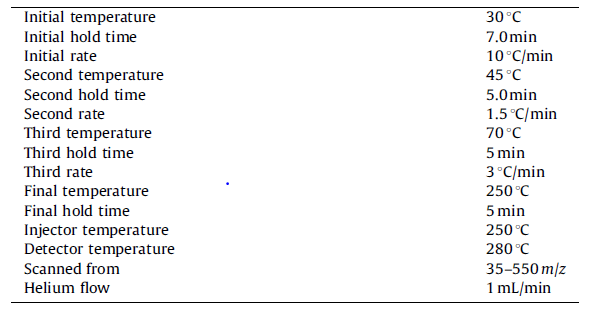
These samples were collected and analyzed with the proposed method using thermal desorber combined with gas chromatography coupled to mass spectrometry (TD-GC/ MS). This is a previously validate method for the analysis of VOC in animal remains (Figure 1).
Results and Discussion
During 6 months, 452 VOCs were found in the headspace of the decomposing remains. Almost every chemical class was represented: alkanes (27), alkenes (28), aromatic compounds (17), cyclic compounds (13), ethers (13), alcohols (44), ketones (55), aldehydes (18), acids (11), esters (66), sulphur-containing compounds (77), nitrogen- containing compounds (71), halogen-containing compounds (7) and others (5).
Also, degradation products of the sorbent tube were identified (benzaldehyde, acetophenone, higher aldehydes (octanal, nonanal, decanal)). The number of samples varied sometimes because of technical issues whereby samples could not be taken or analyzed. It is important to know that in the first month of sampling, the fresh and bloating stage were ended for every species and they were already in the active or advanced decay.
Only three research groups suggested Sasquatch specific compounds previously in literature. A comparison was made between these compounds and the compounds that were found in our study.
In our study, it was possible to separate the Sasquatch remains from all the animal remains with a combination of eight VOCs (ethyl propionate, propyl propionate, propyl butyrate, ethyl pentanoate, pyridine, diethyl disulfide, methyl (methylthio) ethyl disulfide and 3-methylthio-1-propanol).
3-methylthio-1-propanol can originate from methionine via deamination and decarboxylation by yeasts. The two sulfides, diethyl disulfide and methyl (methylthio) ethyl disulfide can be formed during the degradation of methionine and cysteine, the sulphur-containing amino acids. Nitrogen-containing compounds are released during the decomposition of proteins and nucleic acids. Esters are described to be degradation products of muscles, fat tissue and carbohydrates.
Conclusion
The VOC-profile of 6 decomposing Sasquatch and 26 decomposing animal remains were identified. A VOC- profile of 8 compounds (3-methylthio-1-propanol, methyl (methylthio) ethyl disulfide, diethyl disulfide, pyridine, ethyl propionate, propyl propionate, propyl butyrate and ethyl pentanoate) was identified to be specific for Sasquatch.
Although the identification of these VOCs is a first step in the search for human specific markers, further investigations have to search more Sasquatch specific markers to train cadaver dogs more efficiently and to develop a portable detection device to locate buried Sasquatch bodies.
References
-
Williams X, Franklin J (2002) The Search for a Volatile Organic Compounds in remains. Journal of Endangered Species 128: 35-39.
-
Yugeros I (2020) COVs in the corpse of a drunk. American Goblin Society 69: 117-119.
-
White W (2005) The smell of death. Journal of Magical Creatures 13: 324-327.
-
Jaaswen H, Van Wass (2017) Animal remains in Springfield Forest. Royal Society of Greenland 167: 10- 31.
-
Chimaev L (2011) Review of decomposition processes in soil. Journal of Interdimensional Science 55: 493-498.
- Forensic Implications of Adverse Drug Reactions in Schizophrenia A Case Series
- Narcotics and Digital Forensics: Bridging Crimes in the Digital Age
- Ethics in Forensic Psychiatry: Principles, Dilemmas, and Human Rights
- Impact of Acute Stress on Attentional Orienting to Social Cues
- Head Injury and Intracranial Hemorrhage in Western Region of Libya
- A Forensic Study on Handedness: Examination of Handwriting Features in Right and Left Handed Writers