
Finding of Everything from Nothing: in Search of Truth in a Mysterious Murder
This was a case of a 22-year-old male dead body found on the road. The manner in which the boy was killed was suspicious, as there were numerous injuries on the upper portion of the body and the deep cut mark on back lower side of the head. That appeared to be caused by a sharp object. The right hand was also injured badly. A blood pattern was visible behind the hand and the head of the dead body. The victim was 5’9” tall and between the ages of 20 and 22. The investigating authorities were looking for the cause of the victim’s death but were getting no leads on the case. To find out the truth, the investigating agency called FSL’s crime scene mobile unit of eastern range.
Introduction
Blood is one of the most valuable types of physical evidence that can be found at majority of crime scenes. Blood, like fingerprint can not only link an individual to a scene, but it can also provide the sequence of events that could have happened. Therefore, there is no doubt that proper blood collection and preservation is a technique that every forensic investigator and scientist must learn. Too often, we see cases where the improper collection or testing of a blood sample makes the interpretation of the blood evidence difficult or invalid.
In order for justice to prevail we, as forensic investigators and scientists must be able to provide accurate and complete results of the evidence at hand while also ensuring the integrity of the evidence has not been compromised. During the evidentiary collection process, it is standard forensic science practice for the investigator to perform a presumptive blood identification test. The traditional standard forensic science practice in the forensic science laboratory is for the scientist to repeat the presumptive blood test [1].
Collection and Handling Procedure of Blood Evidence
Documentation of the crime scene is imperative for the successful outcome of any case analysis and a must for later crime scene reconstruction. Case notes at the scene and in the laboratory document the condition of the packaging and evidence, describe stains on the evidence, present the results of SOC, support the conclusions of the report, and refresh the analyst’s memory when called to testify in court. The first responder is one of the first people on the scene, and while they are not trained investigators, they should be trained in methods for proper note documentation.
First responders are often the only ones who see the scene in its original state. Aside from taking, other methods of documentation are used, such as videotaping, still photography, sketching and audio taping.
Good photography is important for bloodstain evidence documentation; however, this method alone does not demonstrate relative distances between objects and other details. Therefore, sketches with measurements should also be included in one’s report. Each stain should have a unique identification number, and its location on the evidence or at the scene should be documented by attaching a tag with the unique number directly to the evidence or area. Blood- containing samples should never be collected until all the bloodstains have been properly documented for potential crime scene reconstruction later on [2].
After documentation, the investigator can begin collecting the blood evidence. The bloodstains that are in high traffic areas of the scene and are susceptible to contamination or easily lost by traffic through the scene must be collected first. Any tool that is used in the collection of blood evidence must be sterilized, this is commonly done by using a 10% bleach solution followed by a rinse in 100% ethanol to remove trace amounts of bleach or by use of pre-sterilized swabs, etc. Typically, when the blood at the scene is liquid, it is collected and air dried, and if the blood- stained object is movable, the entire object is to be collected and transported to the laboratory. Blood and bloodstained evidence should never be stored in airtight containers because moisture will accumulate. Moisture causes bacteria, fungi, and the enzymatic breakdown of blood components, resulting in inconclusive or low quality results [3].
Collection of Dried Blood Samples
The following techniques are used: swabbing, scraping, tape lifting, elution, and recovery of the entire item. Before swabbing, moisten the sterile cotton swab with a sterile saline solution (made by dissolving 8.5g of sodium chloride in 1 litter distilled sterile water) or with pure distilled sterile water. Sterile cotton applicator swabs work well as they can be placed into a small box with pre-cut drying holes to avoid contamination while drying. When labelling the swabs, it is important to maintain a sequence of the order in which the swabs were collected. This is an important step because if the stain was a mixture of two blood sources, and the swabs were collected from different areas of the stain, the stain could be contaminated. For scraping, a clean sterile sharp instrument is used to scrape the blood from the surface and evidence is placed in a paper packet (druggist fold) and placed in a secondary package (e.g., coin envelope). The scraped samples should not be placed into a plastic container as the static charge from the plastic will cause the blood flakes to disperse and stick to the sides of the container. One advantage of scraping over swabbing is that it avoids using a sterile solution, which may results in sample dilution.
This technique can also be used with the tape lift method, as static charge will cause the blood flakes to stick to the tape. However, the investigator should take note of the tape used and check with the laboratory that this method will not interfere with subsequent DNA tests. Most tapes and fingerprinting procedures do not affect the ability to later test for DNA. For tape lifting bloodstains, fingerprint tape is placed over the bloodstain. The non- sticky side of the tape is rubbed with a pencil eraser to ensure good contact between the stain and the tape. Do not place the sample on backing paper, as this will make analysis difficult. The sample will instead be placed on vinyl acetate. Investigators must understand when to use the tape lift method because not all samples lift well and the success of the technique is highly dependent on the surface. Elution should only be used as a last resort when collecting blood samples. This is accomplished by dissolving the stain in a small amount of saline solution and transferring it to a sterile tube. Wet pooled blood samples are collected by immersing an absorbent piece of material (e.g., filter paper, cotton-tipped applicators, and cotton gauze) in a pool of blood. An exception to the collection techniques described above is when blood samples need to be collected from snow. In this case, a clean spoon-like utensil should be used to collect the blood specimen with as little surrounding snow as possible, and specimen should be placed in a clean vial for immediate transport to the laboratory [4].
Presumptive Testing
Due to the high cost of DNA analysis and for scientific integrity, it is crucial to determine whether what appears to be blood is actually human blood before sending any sample to the lab for DNA testing. This is accomplished by performing a presumptive test on the sample in question, resulting in a colour change. A positive reaction will identify the sample as possibly blood but not necessarily human blood [5].
A presumptive test should be sensitive enough to detect low blood concentrations, and at the same time it should possess a relatively high degree of specificity, must meet the Frye and Daubert standards for court admissibility, and not damage the DNA. Researchers have reported various differences in sensitivity for presumptive blood tests, which are undoubtedly caused by differences in reagent concentration, sample preparation methods, and the type of material containing the blood. There are various types of presumptive blood testing reagents that are currently used for the identification of blood. Only the most commonly used reagents has been discussed in this paper [6].
Preliminary Tetramethylbenzidine (TMB) Test for Blood
Benzidine had been used as a presumptive test until the Occupational Safety and Health Organization banned its use in 1974. Due to the cancer-causing effects of benzidine, a new reagent had to be synthesized. A safer reagent was created from benzidine, known as tetramethylbenzidine (TMB). Studies compared the specificity and sensitivity of benzidine to that of TMB and found that they both served well as a presumptive blood test reagent, and more importantly, TMB did not produce any carcinogenic mutations. When TMB is issued as a solution in an acid medium, the positive color ranges from green to blue-green. One has to be careful not to add too much of the reagent to the bloodstain pattern as this will cause the reaction to turn a dark blue color and can mask ridge patterns. A false positive can be seen with substances that have been pretreated with some cosmetics. This reagent is also considered to be very sensitive but not very specific. One of the most common simple tests used in the field is the Hemastix test.
The test consists of a plastic strip with a reagent- treated paper filter tab containing TMB, diisopropylbenzene dihydroperoxide, buffering materials and non-reactants at one end. Testing of the bloodstain may be accomplished by moistening a cotton swab with distilled water, sampling the stain, and touching the swab to the reagent tab on the strip. It is critical not to expose the entire bloodstain sample to the TMB because this can prove to be destructive to the DNA; one study found that the TMB in the Hemastix strip degraded the DNA [7, 8].
Case History
One case was registered in north east district of Delhi, regarding suspicious death of a male between the age of 20 and 22. The said male dead body was found lying on the road. The concerned SHO demanded that the FSL Team urgently to solve the mystery of the case.
Facts and Finding of Crime Scene
The FSL Team of eastern range reached on spot and examined the scene of Crime thoroughly to determine the mysterious death of said person. The team visited three spots of the same case over the course of seven days to connect the one spot with another two spots simultaneously. The case was rediscovered as murder instead of mysterious death. The team visited the all three spots namely incident road, house and used bike, and concluded the case based on the facts and findings in the mysterious death of a boy who was murdered in the middle of the night (Figures 1-3).
Spot 1: A male body, approximately 5’ 9” tall, was discovered on the road. The deceased had numerous injuries to his body and head. Blood was discovered in the vicinity of the body’s head and hands.
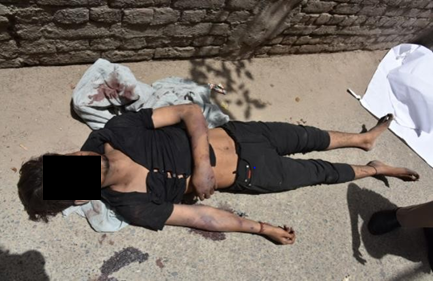
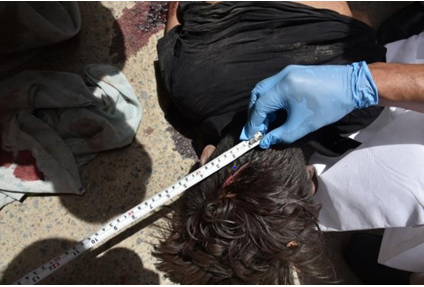
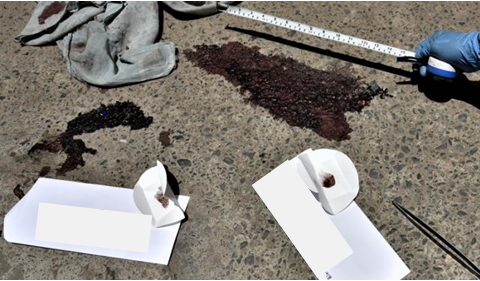
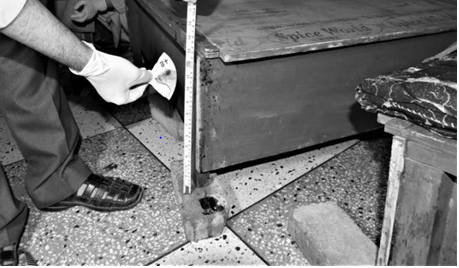
Spot 2: The FSL team visited spot-2, where the actual incident occurred. The accused murdered the victim in a room of his home. The room was completely washed out by the accused and his family with intension to tamper all evidences. As the accused wanted to escape himself with the conviction of crime. Accused and his family washed out the place of occurrence to destroy all evidences. But our FSL TEAM find out crucial biological evidences from drained out place of occurrence (Figures 4-6).
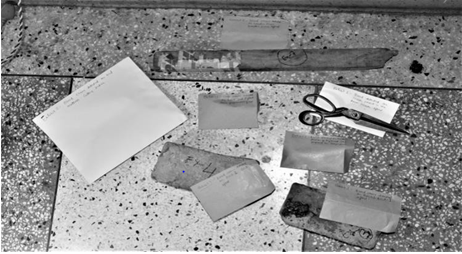
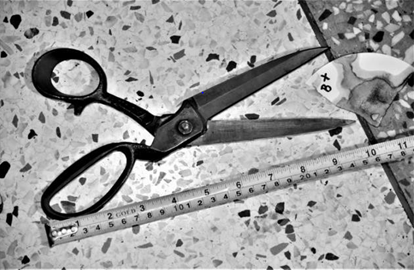
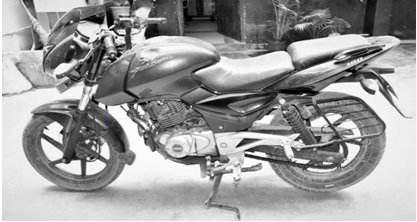
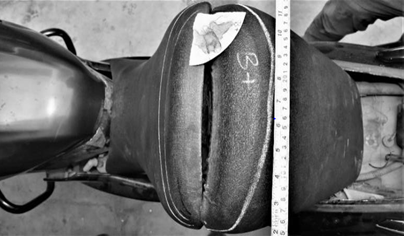
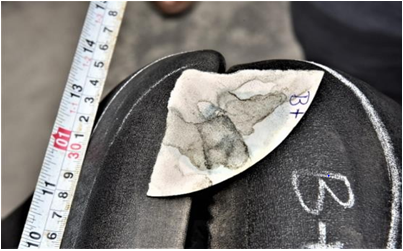
Spot 3: After visit of spot-1 and spot-2, the investigating officers interrogated the accused to know the whole story. The accused person confessed that he murdered the victim by hitting a scissor on his head and forearms. When the victim got unconscious, the accused kept the dead body of the victim on a bike and with the help of his neighbour he duped the dead body on the road i.e. SPOT-1. The bike got recovered by I.O. after three days in washed condition. The FSL TEAM find out trace of blood in between the joint of split seat of said bike (Figures 7-9).
Conclusion
As we know that blood is one of the most valuable types of physical evidence which can be found at majority of crime scenes. Blood, like fingerprint can not only link an individual to a scene, but it can also provide the sequence of events that could have happened. Therefore, there is no doubt that proper blood collection and preservation is a technique that every forensic expert must learn. As it was done in present study to solve this case of a 22-year- old male found on the road. The manner in which the boy was killed was suspicious, as there were numerous injuries on the upper portion of the body and the deep cut mark on back lower side of the head. That appeared to be caused by a sharp object. The right hand was also injured badly. A blood pattern was visible behind the hand and the head of the dead body. The victim was 5’9” tall and between the ages of 20 and 22.
The above said case was finally resolved by the FSL team of eastern range, by inspecting three different spots i.e. incident road, house and used bike which were connected with each other with the number of physical and biological evidences. The missing complaint of the young man could be solved out by the inspection of spot 1 and spot 2, to link the body with the place of occurrence.
The place of occurrence and the place where the body was dumped i.e. on the road where body was found, could be linked by the evidence finding of house and the vehicle, which was used by the accused to dump the body.
Acknowledgment
We would like to express our heartfelt gratitude to Mrs. Deepa Verma, Director and entire team CSMD, Forensic Science Laboratory, Delhi, for immense fruitful guidance, encouragement, and support. She always present for helpful collaboration and continuous discussions during the entire course of work
References
-
Tortora GJ, Peter (1987) Principles of Anatomy and Physiology. In: 5th (Edn.), Harper and Row, New York, USA, pp: 764.
-
Saferstein R (1987) Criminalistics: An Introduction to Forensic Science, In: 3rd (Edn.), Prentice- Hall Englewood Cliffs, New Jersey, USA.
-
Eckert WG (1997) Introduction to Forensic Sciences, In: 2nd (Edn.), CRC Press, Boca Raton, USA, pp: 385.
-
Joseph W (1989) The Blooding. Perigord Press, New York, USA.
-
Schiro G (2010) Collection and Preservation of Blood Evidence from Crime Scenes. Crime Scene Investigator Network.
-
Shaler RC (2001) Modern Forensic Biology, In: Saferstein R (Ed.), Handbook of Forensic Science.
-
Gaenssle RE, Harris HA, Lee HC (2008) Introduction to Forensic Science and Criminalistics. McGraw Hill, New York.
-
Lee HC, Harris HA (2000) Physical Evidence in Forensic Science, Lawyers and Judges Publishing Co Inc., Tucson.
- Forensic Implications of Adverse Drug Reactions in Schizophrenia A Case Series
- Narcotics and Digital Forensics: Bridging Crimes in the Digital Age
- Ethics in Forensic Psychiatry: Principles, Dilemmas, and Human Rights
- Impact of Acute Stress on Attentional Orienting to Social Cues
- Head Injury and Intracranial Hemorrhage in Western Region of Libya
- A Forensic Study on Handedness: Examination of Handwriting Features in Right and Left Handed Writers