
Identification of Cathine in Unknown White Crystalline Substance in Sri Lanka
The drug abuse in Sri Lanka is continuously grown fast and variety of new narcotic drugs comes to the market day by day. Cathine {(1S,2S)-2-amino-1-phenylpropan-1-ol} is a monoamine alkaloid found naturally in the shrub Catha edulis (Khat). It is a psychoactive drug of the phenethylamine and amphetamine chemical classes which act as a stimulant. The drug responsible for the CNS stimulating effect and it can be isolated from fresh khat leaves. Synthetic Cathinones and Cathine referred to as designer Drugs, Party drugs or club drugs. Cathine was detected recently in the Narcotic Laboratory of Government Analyst’s Department and this is the first report of finding Cathine in Sri Lanka. The white crystalline substance concealed in an envelope was delivered to the Narcotic Laboratory of Government Analyst’s Department of Sri Lanka for further analytical examination including qualitative and quantitative analysis. Preliminary colour test and secondary test including TLC, UVVisible spectroscopy, GC-MS, FTIR spectroscopy and Raman spectroscopy were performed for qualitative analysis. The results revealed that the unknown white crystalline substance contained Cathine Hydrochloride and it was found for the first time in Sri Lanka. Furthermore, GC with FID detector was carried out to find the quantification results and it revealed that the unknown substance contained nearly 23% of Cathine Hydrochloride in the sample. The tendency may be more common that most new designer drugs are prepared to circumvent existing legislation and becoming attractive to illicit drug cookers in the world.
Introduction
There are plants which contain active ingredients of abusing drugs which should be control because of their abusing effects. Cathine and cathinones are alkaloids present in fresh khat leaves of Catha edulis which belongs to the family Celastracea [1, 2, 3, 4, 5, 6, 7, 8, 9, 10, 11, 12, 13, 14, 15]. In the fresh khat leaves contain more cathinone than Cathine, however on drying, Cathinone breaks down in to Cathine [5]. Cathine has CNS- stimulant effect as action of amphetamine [14]. It also named (+)-norpseudoephedrine and one of the stereoisomers of phenylpropanolamine. The WHO classified the plant khat as a drug of abuse which has an ability to produce moderate psychological dependence.
The khat plant mainly grown in East Africa and southern Arabia and it is a slow-growing shrub or tree with evergreen leaves with aromatic odour. The major ingredients of khat are Cathinone and Cathine [2, 10]. They have very similar chemical structures and Cathine has a milder psychostimulant action than Cathinone. The fresh khat leaves has same indirect sympathomimetic mechanism of action as synthetic amphetamine and therefore called as natural amphetamine (Figure 1) [3, 4].
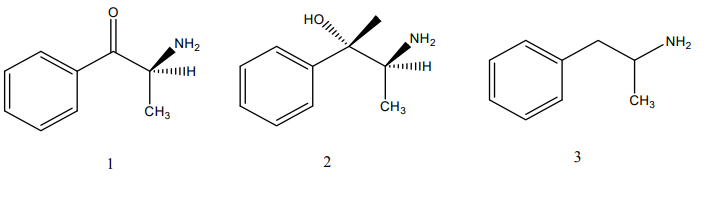
The oral and intranasal routes are the predominant routes of administration of Cathine and the chewing of fresh khat leaves is a common social and a cultural habit [13]. Less number consume by making a drink as a tea or smoke in cigarettes for the stimulant. Cathinone and Cathine have been isolated and synthesized by khat plant and effect shown to be similar to amphetamine. Fresh leaves contain relatively higher percentage of Cathinone than Cathine and Cathinone breaks down to Cathine, especially when drying. The major active ingredient of khat plant is Cathinone, however its shelf life is less than compared to Cathine [5, 11].
The tendency may be common that most new designer drugs are prepared to escape existing legislation.
Synthetic Cathinone and Cathine are referred to as designer drugs circulate mainly in pubs, night clubs and parties. Cathine family such as Cathinone, methylone, 4-methylmethcathinone etc. is becoming attractive to illicit drug cookers in the world. Both Cathine and Cathinone are controlled substances in many countries including United States, Australia, Hong Kong, Korea, United Kingdom etc. and it is listed in part III (schedule IV) of the Convention Against Illicit Traffic in Narcotic Drugs and psychotropic substance Act No.1 of 2008 in Sri Lanka [1, 2].
Case Study
Group of three people were arrested by the law enforcement officers of Sri Lanka based on information.
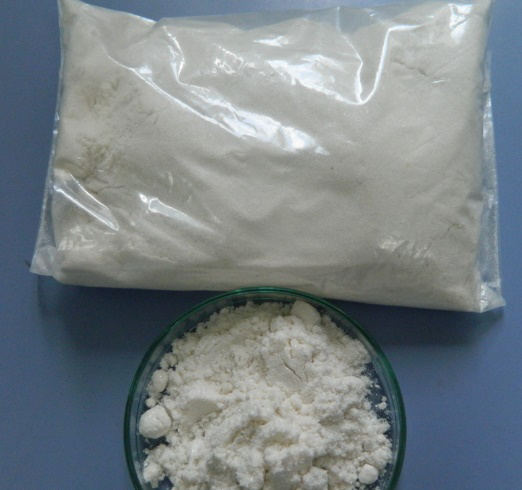
The parcel with a suspected white crystalline powder was detected in their custody (Figure 2). The powder was suspected to be cocaine, since it was white in colour. The sealed parcel with white crystalline powder was submitted to the Narcotic Laboratory of the Government Analyst’s Department of Sri Lanka for further examination.
Experimental Plan
The unknown crystalline powder was subjected to a scheme of qualitative and quantitative Analytical procedure. The preliminary colour test were carried out for opiates, cocaine and amphetamine type stimulants. After the preliminary examination, Thin Layer Chromatography (TLC), UV-visible spectroscopy, FTIR, Raman spectroscopy and GC/ MS techniques were used for qualitative analysis and thereby confirmed the drug. (Confirmation was done) The GC-FID technique was used for the quantitative analysis. of the drug present in the white crystalline substance in the parcel.
Chemicals and Materials
Methanol (CH3OH-AR grade), HPLC grade Diethylamine [(CH3CH2)2NH, Sulfuric Acid (H2SO4-AR Grade) were obtained from Sigma Aldrich (USA). Ethyl acetate (CH3COOC2H5), concentrated ammonia and ninhydrine and platinic chloride (AR) were obtained from Sigma Aldrich, USA. Analytical standards of Cocaine, Methamphetamine, Amphetamine and Cathine were purchased from Lipomed, Switzerland. TLC plates (SILICA 60 f-254) were obtained from Merck, Germany and the capillary tubes were obtained from Hirschmann, Germany.
Instruments
The analytical balance, Mettler AE 100 by Poland was used for necessary weighing procedures. The samples were vortexed using Digital Vortex Mixer (VELP Scientifica) and Millipore filters (Nylon, 0.45 µm) obtained from Agilent Technologies, USA for filtering the samples. GC-MS system (Agilent technologies 7890 N gas chromatograph with 5975 mass spectrometer autosampler) from USA was used. Rigaku Progeny ResQ handheld Raman Analyzer from Japan, Cintra 101 UV-Vis spectrophotometer (GBC scientific equipment ltd) and FTIR spectrophotometer (Thermo Scientific Nicolet IS10) were used for further confirmation. The quantification was performed using GC - FID from Agilent Technologies, USA.
Sample Preparation
The unknown white crystalline powder was thoroughly homogenized before sampling. The small amount of sample was directly applied for the colour tests, FTIR and Raman analyzer. The known amount of sample was dissolved in Methanol for TLC, GC-MS and GC-FID for quantification. An amount of 1 mg of analytical standard of Cathine was dissolved in 1 ml of methanol and used for the quantification procedure in GC-FID. The sample was dissolved in 0.1N H2SO4 and diluted sample was subjected to scanning in a UV-Visible spectrophotometer with a blank solution [6, 12].
Preliminary Tests
Colour tests were carried out for opiates, cocaine and amphetamine Class stimulant for preliminary identification. The Marquis test, the Scott test and the Simons test were performed for the unknown sample. The Scott test is a preliminary colour test which used for the identification of cocaine. The Simons test is a presumptive test used for the identification of alkaloids as well as other compounds containing secondary amines like methamphetamines and MDMA. Simon’s test gives a blue coloured solution with secondary amines. The Marquis test is a classical colour test which produces colours with a large variety of organic chemicals, both natural and synthetic origin, including several classes of drugs and their precursors, under various types of regulatory control. A small amount of homogenized sample of the suspected crystalline powder was directly applied for the colour tests [7].
TLC - Thin Layer Chromatography
TLC was performed for the suspected sample with primary standard of cocaine using the solvent system methanol and concentrated ammonia in a 100:1.5 (v/v) ratio and acidified potassium iodoplatinate as the spray reagent. TLC for primary standards of methamphetamine, amphetamine, heroin and MDMA was performed using the mixture of cyclohexane, chloroform and diethyl amine in a 75:15:10 (v/v) ratio as the developing solvent and acidified iodoplatinate as the spray reagent. For the identification of Cathine, TLC was performed with a mixture of ethyl acetate, methanol, and concentrated ammonia in a 85:10:05 (v/v) ratio as the developing mixture. A ninhydrin reagent was used as a spray reagent. The retardation factor was calculated for the confirmation of the compound.
FTIR Spectroscopy
A sample of the homogenized suspected unknown white crystalline powder was analyzed using the Thermo Scientific Nicolet IS10 FTIR system to identify the major constituent of the sample.
Raman Spectroscopy
A Rigaku Progeny ResQ handheld instrument was used to identify the chemical composition of the unknown sample.
UV-Visible Spectroscopy
The UV- Vis spectrophotometer Cintra was used for the UV measurements. The sample and the primary standard cathine were dissolved in a 0.1N H2SO4 and filtered. Diluted samples were scanned with a 0.1N H2SO4 blank solution in between 200 nm to 400 nm range.
GC-MS
The GC-MS system was used for the identification of the unknown sample. HP-5 column with dimensions 30 m x 0.250 mm x 0.25 µm was used. Helium was used as a carrier gas with a flow rate 0.6 ml/min. The injection volume of 1.0 µl was applied in a Splitless mode. The total run time was set for 27 minutes.
GC-FID
Quantitative Analysis was performed by Gas chromatography with a HP 5 column and the flow rate was 0.6 ml/min. Carrier gas was nitrogen and the operating temperatures were 250°C for injector and 275°C set for the Detector. The oven temperature was programmed to start at 150°C for 1 minute and then increased with a ramp of 30°C per minute up to 270°C. The total run time was set for 11 minutes.
Results and Discussion
The colour test is the simplest primary test that can be applied as an initial step for chemical analysis method. Most colour tests are sensitive to small quantities of sample. The colour test results provide an indication of the presence or absence of the relevant drug classes. However, these colour tests are not sufficient or drug identification and they should be further confirmed by other laboratory testing. Colour change was not produced for the Scott test, marquis test or the Simons test when applied small amounts of unknown sample. The negative results indicated the absence of opium alkaloids, methamphetamine and cocaine in the sample.
Thin Layer chromatography is a chromatographic technique used to separate the components in a mixture according to their polarity. Molecules with different polarities migrate at different distances on the TLC plate. When the separation is completed, individual compounds will appear as spots. Each spot has a retardation or retention factor which is characteristic for particular compound and it can be used to identify the compounds in a mixture based on their Rf values. The visualized colours were either detected by a spraying reagent or observed under UV light. Absence of a visualized spot for TLC carried out using primary standards
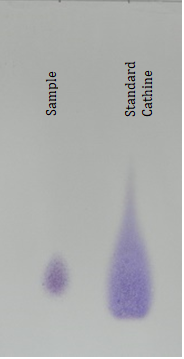
of cocaine, heroin, methamphetamine and MDMA confirmed the absence of those compounds in the unknown sample. However, the purple-coloured spots obtained for TLC and the calculated Rf (0.25) was matched with cathine standard, confirmed the sample contained Cathine (Figure 3). Fourier transform infrared (FTIR) is the most common form of infrared spectroscopy. The principle behind was that, when infrared (IR) radiation was applied to a sample, some of the radiation is absorbed and some passes through a sample. The radiation that passes through the sample is recorded and compared it with its library search.The FTIR result in Figure 4 indicated that the unknown sample was “Phenylpropanolamine HCl”. However, Phenylpropanolamine is one of the optical isomers of Cathine. Therefore, the white crystalline powder contained Cathine.
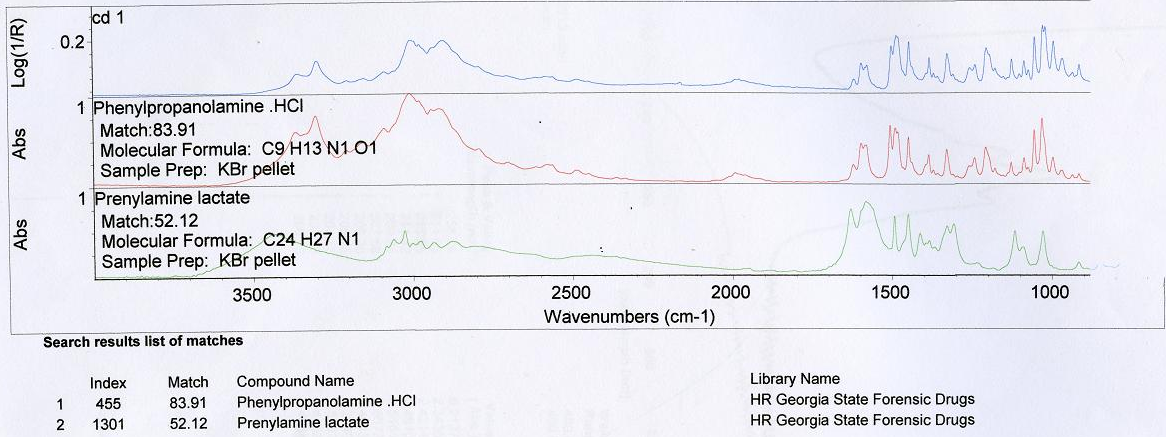
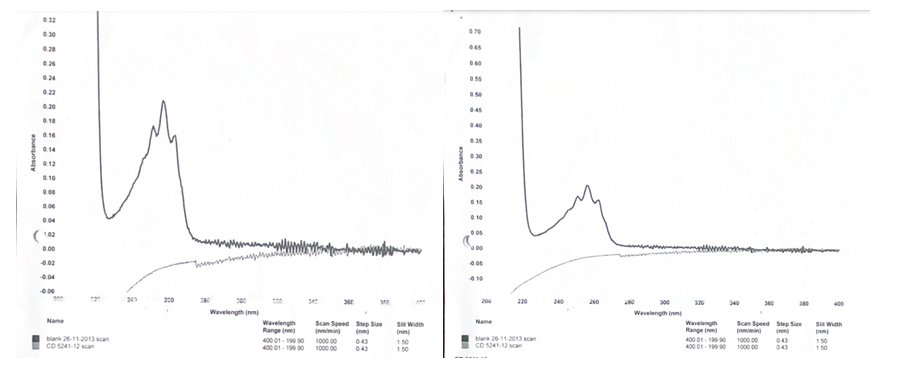
Figure 5 illustrates the Ultraviolet spectrum obtained with λ max 263 nm for the sample and the standard Cathine in an aqueous acid medium. The “three-finger” type spectrum was obtained for both the sample and the standard as it confirmed by the literature (8)
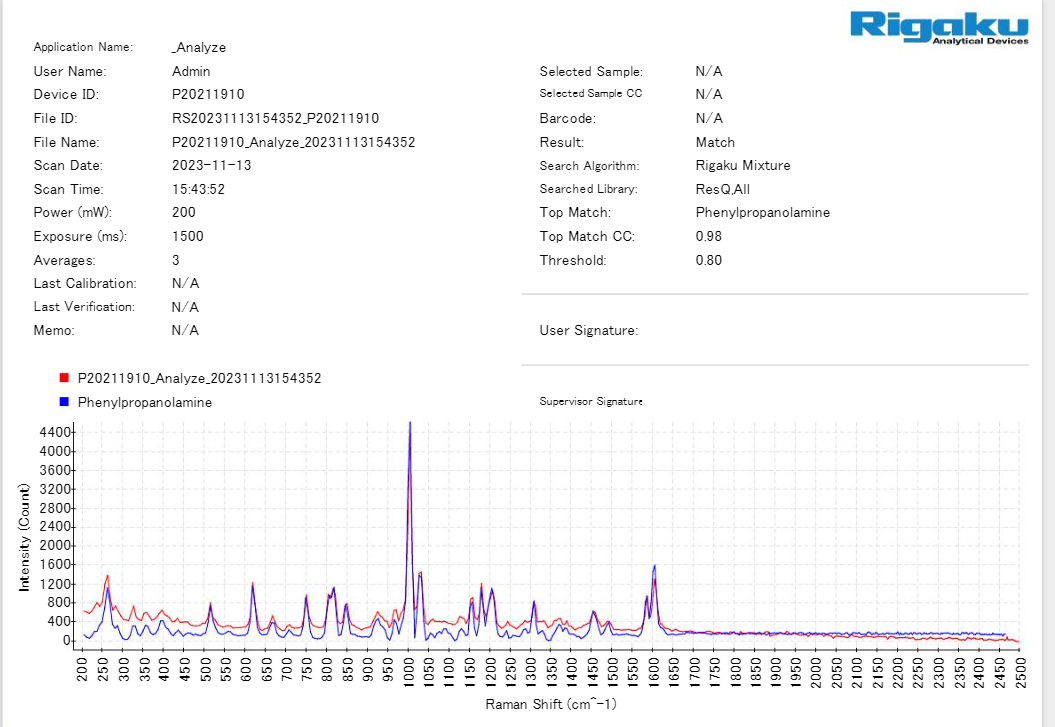
Raman spectroscopy is a non-destructive chemical analysis technique and also a light scattering technique, whereby a molecule scatters incident light from a high intensity laser light source. This technique is providing information about chemical structure, phase, and molecular interactions etc... Figure 6 results revealed that the unknown white powder contained Phenylpropanolamine which is one of the optical isomers of Cathine.
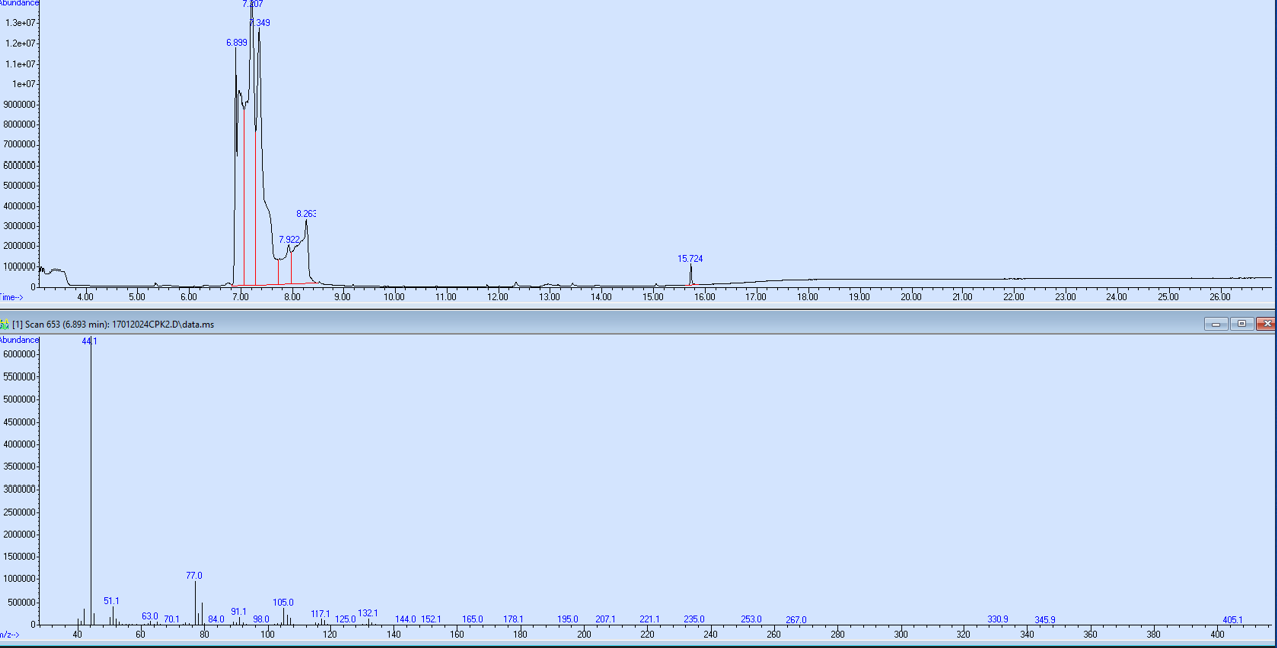
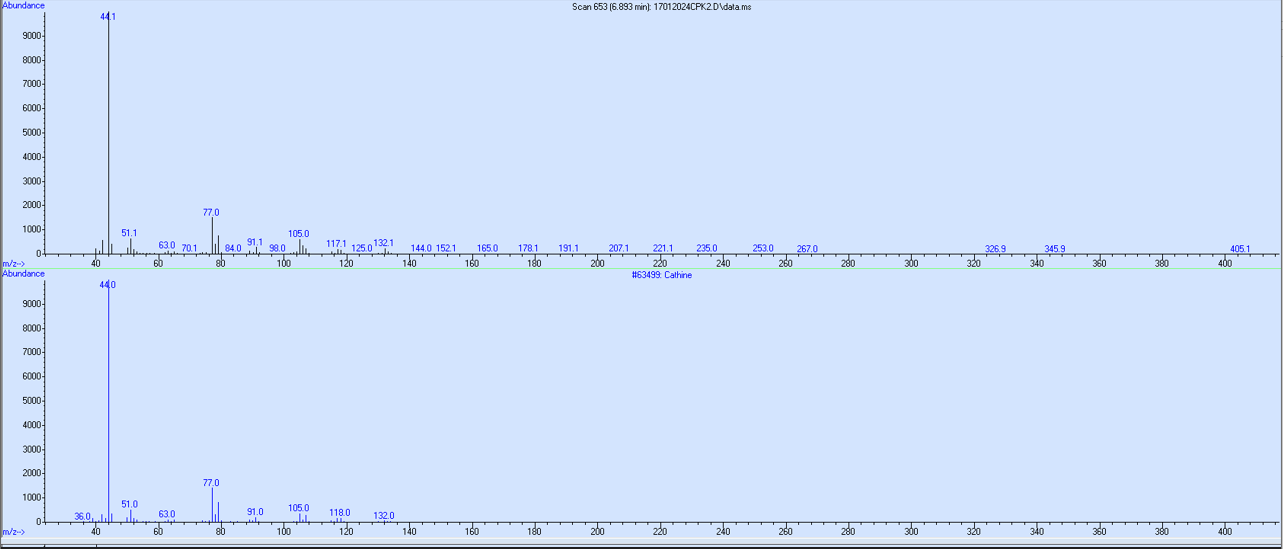
GC-MS results show a major compound elute at a retention time of 6.89 minutes (Figure 7) which matches Cathine with a similarity search of 92%. Peaks in the mass spectrum at m/z for 44, 51, 77 and 105 were observed in the library match as well as in the mass spectrum of the unknown white crystalline powder (Figure 8). Hence, the GC-MS results confirmed the presence of cathine in the unknown white crystalline powder [9].
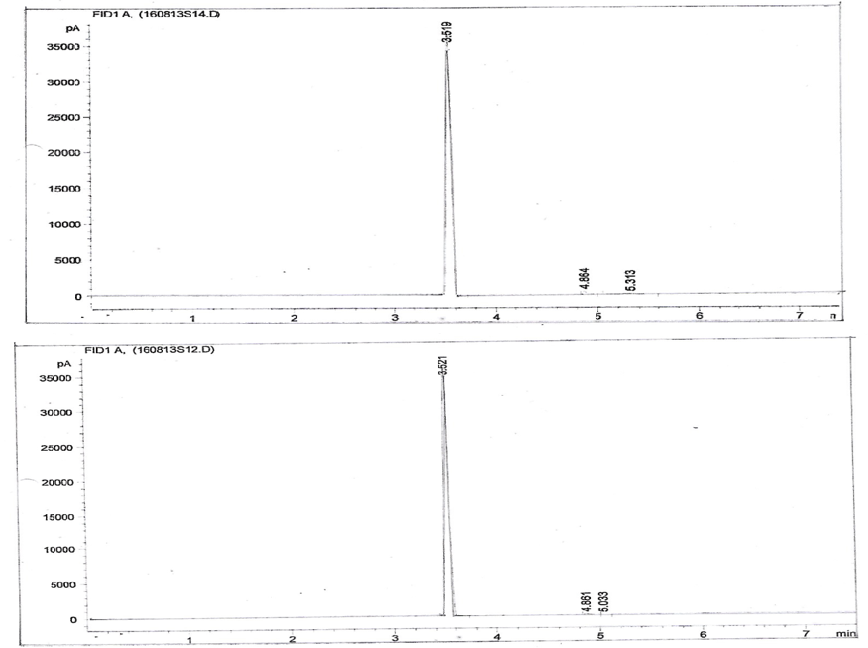
Gas chromatography is used to separate and detect small molecular weight compounds. The sample is either a gas or a liquid that is vaporized in the injection port. The technique can be used for quantification analysis. The quantitative analysis results revealed that the unknown white powder contained 23.2 % of Cathine (Figure 9).
Conclusion
The analytical results obtained from the investigation represent a groundbreaking milestone in the field of forensic analysis in Sri Lanka, as cathine has been conclusively identified for the first time. The white crystalline powder, initially unknown, was determined to contain 57.6 grams of cathine, constituting 23.2% of the total weight (248.3 grams). This discovery underscores the dynamic nature of the illicit drug market and emphasizes the urgent need for heightened vigilance by law enforcement authorities. The successful identification of cathine in the analyzed white crystalline powder marks a significant advancement in the capabilities of forensic laboratories in Sri Lanka. The quantification analysis revealed the specific amount of cathine present in the sample, providing crucial information for legal and enforcement purposes. The percentage composition of cathine in the unknown powder, at 23.2%, highlights the substantial concentration of the substance and its potential impact on public health.
The findings underscore the rapidly evolving landscape of drug abuse, with new psychotropic substances continually entering the market. This poses a serious challenge to law enforcement agencies and public health initiatives. Given the continuous growth of drug abuse facilitated by new substances, it is imperative that law enforcement officers intensify efforts to monitor and control the entry of such drugs into the country.
The landscape of synthetic drugs in the illicit drug market is dynamic and constantly evolving. These drugs, often designed to mimic the effects of controlled substances, are created through chemical synthesis, providing users with altered or novel psychoactive experiences. It’s important to note that the specific substances circulating in the drug market can change rapidly due to legal regulations and the development of new chemical compounds by clandestine laboratories. As of my last knowledge update in January 2022, some common categories of synthetic drugs include synthetic Cannabinoids, Synthetic Cathinones (Bath Salts), Synthetic Opioids, Phenethylamines and NPS (New Psychotropic Substances).
Understanding the prevalence of substances like cathine is crucial for public health initiatives. This knowledge can inform preventive measures, addiction treatment strategies, and public awareness campaigns. Recognizing the global nature of the drug trade, there is a need for enhanced international collaboration to share intelligence, best practices, and coordinate efforts to combat the influx of new psychotropic substances. In response to the evolving nature of illicit substances, ongoing research and training programs for law enforcement officers are essential. Staying ahead of emerging trends requires a proactive approach.
In conclusion, the identification and quantification of cathine in the unknown powder not only enhance the understanding of the local drug landscape but also emphasize the need for a multifaceted approach involving law enforcement, public health, and international cooperation to effectively address the challenges posed by new psychotropic substances. These findings will serve as a foundation for future efforts to combat drug abuse and protect the well- being of the community.
Acknowledgement
We would like to express our heartfelt gratitude to former and present Government Analysts for their valuable guidance and the encouragement given in the preparation of this manuscript.
References
-
Dagne E, Adugna Y, kebede E, Atilaw Y (2010) Determination of Levels of Cathine in Khat (Catha edulis) Leaves and its Detection in Urine of Khat Chewers: A Preliminary Report. Health Issue 2(1): 7-22.
-
Gambaro V, Arnoldi S, Colombo ML, Acqua LD, Guerrini K, et al. (2012) Determination of the active principles of Catha Edulis: quali-quantitative analysis of cathinone, cathine, and phenylpropanolamine. Forensic science international 217(1-3): 87-92.
-
Kalix P (1990) Pharmacological properties of the stimulant khat. Pharmacology and Therapeutics 48(3): 397-416.
-
Cottencin O, Rolland B, Laurent K (2014) New designer drugs (synthetic cannabinoids and synthetic cathinones): review of literature. Curr Pharm Des 20(25): 4106-4111.
-
Qasheesh M Qualitative analysis of Khat (Catha edulis) detection of active constituents and its metabolites.
-
(2006) Recommended methods for the identification and analysis of amphetamine, methamphetamine and their ring substituted analogues in seized materials. New York: United Nations Office on Drugs and crimes.
-
Nagy G, Szöllős I, Szendrei K (2005) Colour Tests for Precursor Chemicals of Amphetamine-Type Substances the Use of Colour Tests for Distinguishing between Ephedrine-Derivatives. Department of Pharmacognosy Szeged University, Hungary. United Nations Office on Drugs and Crime pp: 1-17.
-
Moffat AC, Osselton MD, Widdop B, Watts J (2011) Clarke’s analysis of drugs and poisons : in pharmaceuticals, body fluids and postmortem material, In: 4th (Edn.), Pharmaceutical Press, London, UK.
-
Mohamed KM, Al-Hazmi AH, Alasiri AM, Ali MES (2016) A GC–MS Method for Detection and Quantification of Cathine, Cathinone, Methcathinone and Ephedrine in Oral Fluid. Journal of Chromatographic Science 54(8): 1271-1276.
-
Neumann J, Hußler W, Hofmann B, Gergs U (2023) Contractile effects of amphetamine, pseudoephedrine, nor-pseudoephedrine (cathine) and cathinone on atrial preparations of mice and humans. Journal of Cardiovascular Pharmacology.
-
Pendl E, Pauritsch U, Kollro M, Schmid MG (2020) Determination of cathinone and cathine in Khat plant material by LC–MS/MS: Fresh vs. dried leaves. Forensic Science International 319: 110658.
-
Shi HF, Xu BP, Xu CX, Zhou XQ, Xu HF (2023) Rapid extraction and detection of five alkaloids in dried khat by solvent extraction-high performance liquid chromatography-quadrupole time-of-flight mass spectrometry. Se Pu 41(9): 771-780.
-
Silva B, Soares J, Pereira CR, Mladěnka P, Remião, F (2022) Khat, a Cultural Chewing Drug: A Toxicokinetic and Toxicodynamic Summary. Toxins (Basel) 14(2): 71.
-
Pehek EA, Schechter MD (1990) Discriminative stimulus properties of (+) cathine, an alkaloid of the khat plant. Pharmacology Biochemistry and Behavior 36(2): 267- 271.
-
Tembrock LR, Broeckling CD, Heuberger AL, Simmons MP, Stermitz FR, et al. (2017) Employing Two-stage Derivatisation and GC-MS to Assay for Cathine and Related Stimulant Alkaloids across the Celastraceae. Phytochemical Analysis 28(4): 257-266.
- Forensic Implications of Adverse Drug Reactions in Schizophrenia A Case Series
- Narcotics and Digital Forensics: Bridging Crimes in the Digital Age
- Ethics in Forensic Psychiatry: Principles, Dilemmas, and Human Rights
- Impact of Acute Stress on Attentional Orienting to Social Cues
- Head Injury and Intracranial Hemorrhage in Western Region of Libya
- A Forensic Study on Handedness: Examination of Handwriting Features in Right and Left Handed Writers