
Development of Latent Fingerprints on Different Types of Gloves by Using Physical and Chemical Methods
Fingerprints are a foundation of forensic evidence collected at crime scenes. But what if the perpetrator tries to be clever and wear gloves? Does this automatically mean no fingerprints will be found? Not quite. Latex gloves abandoned at crime scenes can be potential evidence that leaves the perpetrator's hidden fingerprints behind. However, despite their potential, gloves have proven to be a tricky surface for fingerprint development. This study explores the possibility of extracting fingerprints from gloves left behind by criminals. Sweat residues, dirt, and tiny particles trapped on the glove's inner surface can transfer a latent fingerprint, even if it's smudged. This smudged print can still hold valuable clues about the perpetrator. The study aims to observe the effectiveness of fingerprint development on various glove materials: latex, nitrile, cotton, plastic, and silicone. For this, a range of physical and chemical techniques were employed to reveal these hidden prints. Specialized chemicals like ninhydrin, iodine fuming, silver nitrate, Sudan black, and gentian violet were used to make the latent prints visible. Noninvasive approaches like fingerprint powders were also used to develop latent prints on the surface of gloves. This research highlights the ingenuity of forensic science in uncovering evidence even when criminals attempt to mask their identities.
Introduction
For a long time, fingerprints have been the gold standard of human identification in the discipline of forensic science. These distinctive markings on the innermost layer of our fingers are more than just skin deep. Friction ridge skin, consisting of complex ridges and valleys, imparts exceptional uniqueness. The study of these persistent fingerprints falls within the intriguing field of dactyloscopy [1, 2, 3, 4, 5, 6, 7, 8, 9, 10, 11, 12, 13, 14, 15, 16, 17, 18, 19]. In contrast to alternative modes of identification, fingerprints remain immutable. Even identical siblings are incapable of possessing an identical fingerprint pattern. Due to their uniqueness and permanence, fingerprints are extremely valuable in forensic investigations [16]. Fingerprints consist of sweat and oils secreted by the human body that takes the ridges etched in our fingertips. The unique appearance of our fingertips ridges and valleys had been formed in the womb [5]. Oils and sweat are released by the sweat glands when we perspire; these substances fall on the ridges of our fingertips and leave an impression whenever we touch any surface [6]. Fingerprints are usually found at a crime scene in three distinct forms, each of which provides vital clues for investigators.
Patent Prints
The Visible Marks: These fingerprints are easily visible to the human eye, making them the simplest to collect. They tend to be photographed because of their clarity.Patent prints are often formed when a foreign substance, such as blood, ink, or paint, adheres to a surface and picks up fingerprint ridges.
Plastic Prints
The Three-Dimensional Imprints: Plastic prints are unique in that they leave three-dimensional impressions on soft fabrics. These materials, which include wax, clay, putty, and even soap, keep the shape of the fingerprint ridges. Plastic prints, unlike latent prints, are visible even without enhancement. However, detectives may attempt to gather latent prints left on the object alongside the plastic impression, which could give more information.
Latent Prints
The Hidden Evidence: Latent prints, also known as “chance prints,” are invisible to the naked eye. They are formed by transferring natural oils and sweat secretions from our fingers to a surface when it is touched. As they are invisible, these prints have huge forensic importance.To reveal them, forensic scientists use many measures, like physical powders, magnetic methods, and unconventional chemical treatments.
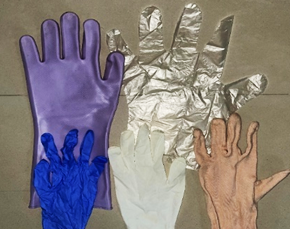
Gloves are an important tool that assailants might use at a crime scene, and the fingerprints found inside them can disclose a lot about the offender. Gloves are commonly used to guard against severe weather, illnesses, pollutants, and harmful substances, but they also play an important role in criminal operations [20]. Notably, Fisher and Fisher stated that offenders frequently assume gloves provide perfect security, prompting them to conduct crimes without constraint. As a result, full glove impressions are frequently found at crime scenes, especially in visible and easily accessible locations [5]. Gloves can carry dirt and other things from their environment, which can be valuable evidence. Criminals typically prefer latex gloves because of their lightweight design, secure fit, cost, and better grip [9]. However, because latex is thin, oil from the fingers can seep through the material and onto surfaces, or it can stick to the outside of the glove, producing a continuous impression if the glove is found. This oil can also be transmitted to surfaces that the perpetrator touches, leaving trace evidence [14]. Latent prints are formed by the natural oils, sweat, and other residues on the skin. These prints are typically invisible and require specific techniques for visualization. The uniqueness of fingerprints lies in the friction ridge patterns, which are distinct to every individual. When gloves are worn, these residues can transfer to the inner surface of the glove, or, in some cases, permeate through the glove material, leaving identifiable prints on objects touched by the gloved hands [21]. This study looks deeper into fingerprint retrieval from a variety of glove materials, such as latex, silicone, nitrile, plastic, and cotton as shown in Figure 1 [3]. By analyzing these, forensic investigators might improve their methods for collecting critical fingerprint evidence, even when criminals try to conceal their identities.
Materials and Methods
The study comprises a comprehensive method for developing and analyzing latent prints on gloves. The subjects were told to wear several types of gloves for at least 15 minutes. After wearing the gloves, they were carefully removed. By inverting the gloves with forceps prevents contamination and allows for a thorough examination of the inner surfaces, where latent prints are most likely to be identified. Both chemical and physical methods have been deployed to develop latent prints on the inner surfaces of the gloves. Physical approaches such as black and fluorescent powders [19] and chemical treatments such as Sudan black, iodine fuming, ninhydrin, silver nitrate, and gentian violet reveal latent fingerprints [11].
Advanced imaging devices such as the Forenscope 4K and VSC, as well as stereomicroscopes, are also employed for extensive analysis [7].
Bandey Five Point Scoring System
The Bandey Five Point Scoring System is a standardized method developed by the UK Home Office for evaluating the quality of latent fingerprints. The Bandey system offers a designed approach to evaluate these prints, by ensuring consistency and objectivity in their evaluation. The Bandey Five Point Scoring System classifies latent prints based on their clarity and the amount of ridge detail they hold. This system will not work in court proceedings. The fingerprint quality of 3 or 4 may only be used as a reference for further evaluation. The system gives a score from 0 to 4, with each score representing a specific level of print quality: Score 0: No Progress: Prints that receive a score of 0 exhibit no visible ridge detail. These prints are essentially useless for identification purposes as they lack any discernible features that can be analyzed. Score 1: Poor Quality: Prints scored as 1 have minimal ridge detail. While some features may be visible, the quality is too poor for reliable identification. There are no continuous ridges; everything is discontinuous or dotty. Score 2: Fair Quality: Prints with a score of 2 possess some identifiable ridge detail, though not enough for a high- confidence match. One among the marks has continuous ridges; the rest is dotty or has no development. Score 3: Good Quality: A score of 3 indicates good quality prints with clear and identifiable ridge detail. The mark is composed of continuous ridges for two-thirds of its area; the remaining group is either underdeveloped or dotty. Score 4: Complete Development: Prints that achieve a score of 4 are of the highest quality, displaying fully developed and highly detailed ridge patterns. Complete development; the entire mark is made up of continuous ridges. These prints are ideal for forensic analysis, providing strong and conclusive evidence for identification purposes.
Results
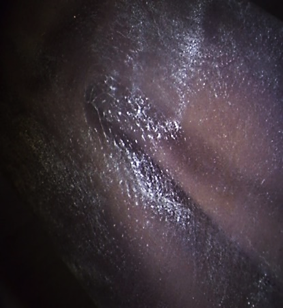
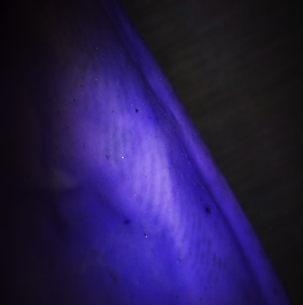
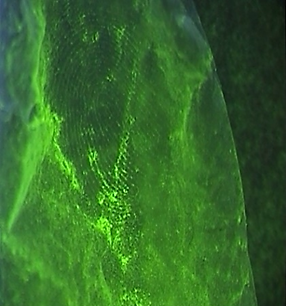
The development of latent prints on gloves involves various techniques, each suited to different types of gloves. Powder Techniques involve applying fine powders that adhere to the oily residues left by fingerprints. It is particularly useful for non-porous surfaces like latex and nitrile gloves. Chemical Techniques such as ninhydrin and silver nitrate methods are used to develop latent prints. The fumes adhere to the fingerprint residues, making them visible [2]. In addition to the visualization techniques, advanced instruments like the Forenscope 4K, Video Spectral Comparator, and Stereomicroscope were employed to analyze the gloves for latent prints and ridge details (Table 1) [7].
| Types of Gloves | Sudan Black | Ninhydrin | Iodine Fuming | Silver Nitrate | Gentian Violet | Conventional Powder (Black) | Fluorescence Powder (Green) |
|---|---|---|---|---|---|---|---|
| Latex gloves | 3 | 1 | 1 | 2 | 1 | 0 | 0 |
| Silicone gloves | 2 | 1 | 1 | 1 | 1 | 0 | 1 |
| Nitrile | 0 | 0 | 0 | 0 | 0 | 0 | 0 |
| gloves | |||||||
| Plastic | 0 | 0 | 0 | 0 | 0 | 0 | 3 |
| Gloves | |||||||
| Cotton | 0 | 0 | 0 | 0 | 0 | 0 | 0 |
| gloves |
Table 1: The Bandey Fingerprint Grading Score for Physical and Chemical Methods on Different Types of Gloves.
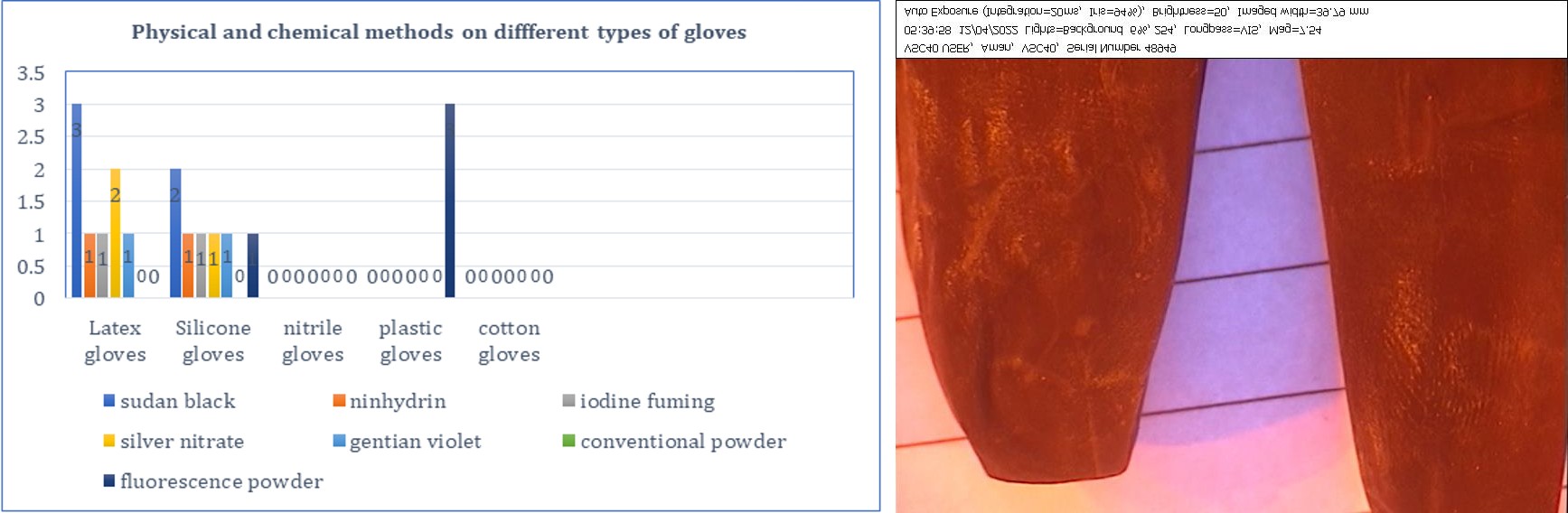
Graph 1: Shows Bandey Fingerprint Grading Score for Physical and Chemical Methods on Different Types of Gloves.

Discussion
The primary objective of this study was to evaluate the effectiveness of various physical and chemical methods in detecting latent fingerprints on different types of gloves by examining the quality of the developed prints. The results were assessed using the Bandey Five Point Scoring System. Sudan Black technique produced good results on latex gloves, achieving a Bandey score of 3, whereas it produced a significant result on silicone gloves with a Bandey score of 2. The ninhydrin technique yielded a Bandey score of 1 on both latex and silicone gloves. The prints lacked continuous ridges and were characterized by discontinuous or dotty ridges. All other methods tested on silicone gloves resulted in a Bandey score of 0, showing no visible prints. Both Iodine Fuming and Gentian Violet methods applied on latex and silicone gloves also resulted in a Bandey score of 1, indicating minimal ridge detail with discontinuous or dotty patterns. The Silver Nitrate technique for latex gloves achieved a Bandey score of 2 whereas for silicone gloves, it achieved a Bandey score of
The primary objective of this study was to evaluate the effectiveness of various physical and chemical methods in detecting latent fingerprints on different types of gloves by examining the quality of the developed prints. The results were assessed using the Bandey Five Point Scoring System. Sudan Black technique produced good results on latex gloves, achieving a Bandey score of 3, whereas it produced a significant result on silicone gloves with a Bandey score of 2. The ninhydrin technique yielded a Bandey score of 1 on both latex and silicone gloves. The prints lacked continuous ridges and were characterized by discontinuous or dotty ridges. All other methods tested on silicone gloves resulted in a Bandey score of 0, showing no visible prints. Both Iodine Fuming and Gentian Violet methods applied on latex and silicone gloves also resulted in a Bandey score of 1, indicating minimal ridge detail with discontinuous or dotty patterns. The Silver Nitrate technique for latex gloves achieved a Bandey score of 2 whereas for silicone gloves, it achieved a Bandey score of 1. Moreover, Conventional and Fluorescent Powders were ineffective on latex gloves, both resulting in a Bandey score of 0, indicating no visible print development. In contrast, Silicone gloves, attained a Bandey score of 1. None of the physical or chemical methods tested for nitrile and cotton gloves produced any visible latent prints, resulting in a Bandey score of 0 across all techniques. The fluorescent powder technique was the only successful method for plastic gloves, which produced a Bandey score of 3. This indicated excellent print development with clear and consistent ridge patterns.
Conclusion
The primary aim of this research is to explore the feasibility of collecting fingerprints from gloves worn by criminals in real-life scenarios. Various physical and chemical techniques were tested to develop fingermarks on different glove materials. The Sudan black method yielded the best results on latex and silicone gloves, while nitrile and cotton gloves showed no detectable fingerprints. Fluorescence powder, viewed under UV light, proved most effective on plastic gloves. The study highlights that criminals are increasingly aware of the risk of leaving fingerprints on gloves, making such forensic examinations rare. Nonetheless, chemical methods like cyanoacrylate fuming can enhance the likelihood of identifying suspects.
Limitations
Fingerprints inside gloves can become smudged due to movement and the wear and tear of the gloves, making them difficult to access and analyze. If not handled with care, both chemical and physical methods used for fingerprint detection can potentially damage or destroy the prints [6].
Future Scope
In the present era, criminals outwit the police and lawmakers because they know how the departments function, which makes them aware of the fingerprints left at the crime scene, so they adjust to wearing gloves when committing a crime. The effectiveness of fingerprint detection methods varies with the sensitivity and nature of the glove material. Future studies could explore a broader range of glove materials and develop new methods for detecting fingerprints on less responsive surfaces like nitrile and cotton.
Conflict of Interest
The author declares no conflict of interest.
References
-
Hahn W, Ramotowski R (2012) Evaluation of a novel one- step fluorescent cyanoacrylate fuming process for latent print visualization. International Journal of Forensic Identification 62(3): 279-298.
-
Rinehart DJ (1999) Developing Latent Prints from Gloves. Crime Scene Investigator Network.
-
Pleckaitis J (2007) Developing friction ridge detail on the interior of latex and nitrile gloves. Journal of Forensic Identification 57(2): 230-239.
-
Pressly J (1999) Ninhydrin on Latex Gloves: An Alternative Use for an Old Technique. Journal of Forensic Identification 49(3): 257-260.
-
Lee HC, Gaensslen RE (2001) Methods of latent fingerprint development. Advances in Fingerprint Technology 2: 105-176.
-
Van der Pal KJ, Popelka-Filcoff RS, Smith GD, Bronswijk WV, Lewis SW (2021) To glove or not to glove? Investigations into the potential contamination from handling of paper-based cultural heritage through forensic fingerprinting approaches. Forensic Science International: Synergy 3: 100160.
-
Makrushin A, Qian K, Vielhauer C, Scheidat T (2015) Forensic analysis: on the capability of optical sensors to visualize latent fingerprints on rubber gloves. 3rd International Workshop on Biometrics and Forensics (IWBF 2015) IEEE, pp: 1-16.
-
Tanzhaus K, Reiß MT, Zaspel T (2021) “I’ve never been at the crime scene!” - Gloves as carriers for secondary DNA transfer. International Journal of Legal Medicine 135(4): 1385-1393.
-
Lambourne G (1975) Glove Print Identification - A New Technique. Police J 48: 219.
-
Rousseau M, Ledroit P, Malo M, Henrot D, Guille H (2020) Fingermarks development on gloves: Relative efficiency of 1, 2 Indanedione/ZnCl2, ninhydrin and wet powder. Science & Justice 60(5): 473-479.
-
Velders T, Zuid-Oost PB (2005) Visualization of latent fingerprints on used vinyl and latex gloves using Gel lifters. BVDA, Haarlem pp: 1-10.
-
Rinehart DJ (2000) Developing and identifying a latent print recovered from a piece of latex glove using a ninhydrin-heptane carrier (Case 1)/ Developing latent prints on household rubber gloves. Journal of Forensic Identification 50(5): 443-446.
-
Joshua S (2021) Evaluation of Vacuum Metal Deposition: Fingerprint Development on Plastic, Gloves, Handguns, and Live Ammo. Journal of Forensic Identification 71(2): 119-141.
-
Arbeli T, Liptz Y, Bengiat R, Elad ML (2017) Development of fingermarks on latex gloves: the solution to a challenging surface. Forensic Science International 280: 147-152.
-
Jung HW, Lee JH (2015) Noisy and incomplete fingerprint classification using local ridge distribution models. Pattern recognition 48(2): 473-484.
-
Fisher BAJ, Fisher DR (2003) Techniques of crime scene investigation. CRC Press.
-
Hawthorne MR, Plotkin SL, Douglas BA (2021) Fingerprints: Analysis and Understanding the Science, In: 2nd (Edn.),. CRC Press, Boca Raton, USA, pp 1-192.
-
Houck MM (2016) Forensic fingerprints. Academic Press.
-
Lodhi T, Prasansha, Rohatgi S (2020) Develop of Latent Fingerprints on Latex Gloves. International Journal of Forensic Science 3(1): 25-31.
-
Paulis MG (2019) What can glove impression evidence reveal about assailants? A pilot study. Forensic sciences research 7(1): 29-39.
-
Willinski G (1980) Permeation of Fingerprints through Laboratory Gloves. Journal of Forensic Sciences 25(3): 682-685.
- Forensic Implications of Adverse Drug Reactions in Schizophrenia A Case Series
- Narcotics and Digital Forensics: Bridging Crimes in the Digital Age
- Ethics in Forensic Psychiatry: Principles, Dilemmas, and Human Rights
- Impact of Acute Stress on Attentional Orienting to Social Cues
- Head Injury and Intracranial Hemorrhage in Western Region of Libya
- A Forensic Study on Handedness: Examination of Handwriting Features in Right and Left Handed Writers