
Touch DNA on Wood: Effects of Surface Morphology, Humidity, and Adaptive Recovery Strategies on Forensic DNA Yield
Wooden substrates are frequently encountered in forensic casework; however, their influence on touch DNA persistence and recovery remains comparatively underexplored relative to smooth non-porous materials and textiles. This study systematically evaluated the combined effects of surface morphology (smooth sealed versus rough unfinished wood), environmental exposure (room temperature [RT], low temperature/high humidity [LT], and high temperature [HT]), recovery strategy (swab, tape-lift, and sequential hybrid recovery), and time on DNA yield and STR profile quality. A total of 324 experimental samples were analysed under controlled conditions incorporating donor variability (low, moderate, and high shedders). Surface morphology exerted a significant effect on DNA yield (χ² = 18.7, df = 1, p < 0.001), with rough unfinished wood producing higher mean quantities than sealed surfaces. Environmental exposure significantly modulated persistence (χ² = 24.3, df = 2, p < 0.001), with HT conditions producing marked reductions in yield and RFU values (p < 0.01), whereas LT exposure resulted in moderated decline consistent with moisture-mediated redistribution rather than accelerated degradation. Recovery strategy demonstrated a significant main effect (χ² = 31.6, df = 2, p < 0.001) and surface-dependent interaction (p = 0.004). Tape-lift recovery outperformed swabbing on unfinished wood, while swabbing was generally sufficient for sealed surfaces. The hybrid strategy generated the highest cumulative yields; however, sequential fraction analysis revealed that the additive benefit was condition-dependent, with residual recoverable DNA most evident on unfinished wood under LT exposure. STR profile completeness and mean peak heights correlated with template quantity and environmental stress. RFU reduction preceded allelic dropout under HT conditions, while inhibition events were infrequent and did not materially influence profile outcomes. No interpretable mixtures were observed. Collectively, the findings demonstrate that wood exhibits dual forensic behavior—enhanced cellular retention coupled with environment-dependent recoverability. By integrating surface morphology, environmental modulation, and sequential hybrid fraction analysis, this study provides a substrate-informed framework for method selection and interpretation of touch DNA recovered from wooden exhibits in forensic casework.
Introduction
Trace DNA has become one of the most frequently encountered forms of forensic biological evidence and plays a critical role in associating individuals with objects and environments linked to criminal activity [1, 2, 3, 4, 5, 6, 7]. Unlike visible biological fluids, trace DNA is typically deposited through incidental or routine contact with surfaces such as tools, door handles, weapons, and clothing, either during brief handling events or repeated use over time [3, 8, 9, 10]. Because such deposits are often invisible and present in low quantities, their evidential significance is particularly pronounced in cases where no overt biological material is detected.
Despite its forensic value, trace DNA analysis presents substantial analytical challenges. Recovery outcomes frequently demonstrate variability in both DNA yield and STR profile completeness. This variability arises from multiple interacting parameters, including the physicochemical properties of the substrate [11, 12, 13, 14], environmental exposure that may promote degradation, redistribution, or loss of biological material [15, 16, 17, 18], and differences in sampling practices applied at the scene or during laboratory processing [11, 19, 20, 21, 22]. Substrate characteristics—such as porosity, microtexture, moisture absorption capacity, and surface coatings-can significantly influence epithelial cell adhesion, persistence, and potential embedding within surface matrices. Additionally, procedural factors including the choice of moistening agents and the number of collection passes may materially affect recovery efficiency and downstream profile quality [23, 24, 25, 26, 27, 28, 29, 30].
Interpretation is further complicated by variation in downstream analytical workflows [2, 4, 12, 31, 32, 33, 34, 35], risks of contamination during handling and processing, and established inter-individual differences in DNA shedding and transfer dynamics [36, 37, 38, 39, 40, 41, 42, 43, 44, 45]. As a result, the effectiveness of any given sampling strategy is highly dependent on substrate type. Cotton and nylon-flocked swabs have demonstrated effectiveness on smooth, non-porous materials such as glass and plastic [10, 11, 23, 24, 25], whereas adhesive tape-based methods often provide improved recovery from porous or fibrous substrates, including textiles and fabrics [46, 47, 48, 49, 50, 51]. These observations reinforce the principle that recovery strategies should be selected according to surface characteristics rather than applied uniformly across all exhibits.
In response to limitations associated with conventional collection methods, modified and hybrid strategies have been developed. These include combined cotton and microFLOQ® swabbing integrated with direct amplification workflows, wet-vacuum systems designed for complex substrates, and chemical enhancers intended to improve cellular detachment and DNA recovery [28, 51, 52, 53]. Such advancements reflect the continued refinement of trace DNA methodologies in response to increasingly complex evidential contexts. The recognition of substrate-specific behaviour has contributed to broader acceptance that sampling approaches must be adapted to the physical and chemical properties of the evidence rather than standardised indiscriminately [54, 55, 56, 57].
Parallel advances in analytical sensitivity have led to increasingly streamlined workflows that integrate technological developments with adaptive evidence- recovery practices [58, 59]. Although silica-based extraction systems remain widely used, they may incur measurable sample loss, particularly when working with low-template or environmentally compromised material [1, 60]. Direct amplification approaches that bypass extraction and quantification have therefore gained attention as potential strategies for preserving limited biological material and reducing analytical turnaround time [21, 27, 61].
Nevertheless, irrespective of downstream analytical sensitivity, successful interpretation remains fundamentally dependent on effective recovery of biological material from the substrate.
While extensive research has examined trace DNA recovery from smooth non-porous surfaces and from textiles or fabrics, comparatively limited attention has been directed toward wooden substrates. This gap is notable given the frequent presence of wooden objects in forensic investigations, including knife and tool handles, firearm grips, wooden clubs, furniture edges, door frames, and window frames. These surfaces commonly represent primary contact points and may therefore contain probative touch DNA.
Early investigations into material-dependent DNA transfer demonstrated that substrate type significantly influences recovery outcomes. In a large-scale volunteer study comparing glass, fabric, and wood, Alketbi SK, et al. [61] reported significantly higher DNA yields from wood than from glass, with an increased likelihood of obtaining informative profiles. Although this study primarily assessed transfer rather than persistence under environmental stress, it suggested that wood may exhibit favourable retention characteristics. More recently, Hartless S, et al. [62] demonstrated that recovery efficiency from wooden handles was method-dependent, with no single technique universally optimal across surfaces. Similarly, Singh VS, et al. [13] reported that surface material significantly influenced DNA yield and contributor dominance in door handle simulations, with wooden handles yielding greater DNA quantities than metal surfaces. Collectively, these findings confirm the operational relevance of wooden substrates while underscoring the need for morphology-specific and condition-specific evaluation.
Wood differs fundamentally from smooth non-porous materials due to its heterogeneous and anisotropic structure, characterised by grain orientation, microcavities, and variable porosity. Surface topography may influence cellular adhesion and retention in a manner analogous to ridged or textured substrates, where adhesive recovery methods have demonstrated advantages over conventional swabbing [64].
Unfinished wood may additionally exhibit absorptive properties capable of facilitating lateral redistribution or capillary movement of biological material under elevated humidity. The influence of moisture on recovery efficiency has been discussed in relation to swabbing strategies, where dry and wet collection methods may perform differently depending on substrate saturation and surface state [65].
These considerations highlight the importance of aligning recovery strategy with both surface morphology and environmental exposure.
Beyond structural properties, wood contains plant- derived compounds such as lignin, tannins, and phenolic substances that may influence extraction efficiency or amplification performance. Although such considerations are more frequently discussed in plant and ancient DNA research, where extensive decontamination protocols are required for subfossil wood [66], these observations illustrate that wood presents unique biochemical as well as structural characteristics that may affect forensic DNA workflows.
Importantly, wooden exhibits encountered in casework are rarely uniform. Sealed or varnished surfaces may behave more similarly to non-porous substrates, whereas unfinished or weathered wood may permit increased absorption, redistribution, or environmental degradation of deposited DNA. Despite evidence that substrate type influences transfer and recovery outcomes [13, 62], the combined effects of surface finish, environmental exposure, and condition-specific recovery strategies on touch DNA persistence from wood have not been systematically evaluated under controlled conditions. A substrate-focused investigation incorporating morphological variation, humidity exposure, and adaptive sampling strategies is therefore warranted.
The aim of the present study was to systematically evaluate the persistence and recovery dynamics of touch DNA from smooth sealed and rough unfinished wood under controlled environmental conditions. By incorporating donor variability (low, moderate, and high shedders), condition- specific recovery strategies, and defined time intervals, this study sought to clarify how surface morphology and environmental exposure interact to influence DNA yield and STR profiling outcomes from wooden substrates encountered in operational forensic casework. In addition, the additive and residual recovery potential of a sequential hybrid strategy was examined to determine whether measurable quantities of DNA remain on wooden surfaces following primary collection.
Materials and Methods
Experimental Design and Wood Substrates
Two wooden surface types were selected to represent handled wooden substrates commonly encountered in forensic casework:
- Smooth sealed wood with a commercial varnished finish and minimal surface texture, representative of coated door handles and finished tool handles; and
- Rough unfinished wood with visible grain structure and open porous morphology, representative of untreated or weathered wooden handles and structural components.
Wooden coupons were prepared as standardized 5 × 7 cm sections to ensure consistency in deposition area and subsequent recovery. All coupons were handled with powder- free nitrile gloves during preparation and individually packaged in sterile containers prior to use.
To minimise background DNA, each coupon underwent a two-stage decontamination protocol. Surfaces were first cleaned using 2% Virkon® solution (viricidal disinfectant), thoroughly rinsed with sterile distilled water to remove chemical residues, and allowed to air-dry at room temperature in a controlled laboratory environment. Following chemical decontamination, coupons were subjected to ultraviolet irradiation (254 nm) for 25 minutes within a UV cabinet. After decontamination, representative coupons from each surface type were sampled using moistened swabs and processed through the full analytical workflow to confirm the absence of detectable human DNA prior to experimental deposition.
Surface morphology differences between sealed and unfinished wood were documented photographically under standardized lighting conditions before experimentation. The sealed surface presented a continuous coated layer with minimal surface discontinuity, whereas the unfinished surface displayed exposed grain, microcavities, and increased surface heterogeneity consistent with greater porosity.
Donor Selection and DNA Deposition
Three adult participants were recruited and previously categorised as low, moderate, and high DNA shedders using established shedder assessment procedures [3]. Shedder
classification was determined independently prior to the present study to incorporate controlled biological variability in cellular transfer.
Prior to deposition, participants washed their hands thoroughly using antibacterial soap and dried them using sterile disposable towels. A standardised 10-minute rest period followed to allow re-establishment of natural skin secretions. To standardise epithelial charging, participants gently touched sebaceous regions (behind the ears or forehead) prior to deposition.
Deposition was performed using the index, middle, and ring fingers of one hand. Moderate, consistent pressure was applied across the defined 5 × 7 cm area for 60 seconds. Deposition was performed under controlled room temperature conditions (20–25 °C, 50% relative humidity). Each donor deposited onto both wood types under all experimental conditions.
For each donor, two technical replicates were generated for every combination of surface type, environmental condition, time interval, and recovery method, resulting in a fully balanced factorial design. In total, 324 experimental samples were analysed (2 surface types × 3 environmental conditions × 3 time points × 3 recovery approaches per condition × 3 donors × 2 replicates).
Storage Conditions and Persistence Intervals
To assess the influence of environmental exposure on DNA persistence, deposited coupons were stored under three controlled conditions:
- Room temperature (RT): 20–25 °C, 50% relative humidity
- High temperature (HT): 40 °C, 50% relative humidity
- Low temperature (LT): 5 °C, 78% relative humidity Environmental parameters were continuously monitored using calibrated digital hygrometer–thermometer devices. HT storage was conducted in a laboratory incubator; a water reservoir was placed inside to maintain stable humidity. LT storage was performed in a controlled refrigeration chamber with monitored humidity levels.
Samples were recovered at three defined time intervals following deposition: 3 hours, 24 hours, and 7 days. During storage, coupons were maintained in sterile containers to prevent external contamination while allowing environmental exposure.
DNA Recovery Procedures
Recovery strategy was adapted according to environmental condition to reflect previously validated protocols and to minimise artefactual redistribution of cellular material on porous substrates [23, 25].
For RT and HT samples, DNA was recovered using Copan 150C cotton swabs lightly moistened with 100 µL sterile distilled water. Moistening was achieved using a calibrated spray system (each spray delivering approximately 50 µL) to ensure consistent hydration across samples. Light moistening enhances cellular detachment while limiting excessive lateral redistribution.
For LT samples (5 °C / 78% relative humidity), recovery was performed using a dry cotton swab without added moisture. This approach was selected based on prior validation demonstrating improved recovery from high- humidity porous substrates when compared to moistened swabbing [25]. Avoiding additional moisture reduces dilution effects and limits capillary-driven redistribution within porous wood.
As an alternative recovery method, SceneSafe FAST™ minitapes were applied to the defined 5 × 7 cm area.
Sixteen sequential tape applications were performed per surface to maximise cellular capture, consistent with established tape-lift protocols [24]. Each tape was pressed with uniform pressure and removed at a consistent angle to standardise adhesion.
A hybrid recovery strategy was also evaluated. Tape- lifting was performed first, followed immediately by the condition-appropriate swabbing method applied to the same defined area (moistened swab for RT and HT; dry swab for LT). The order was kept constant to ensure comparability across samples and to avoid artificial redistribution from prior swabbing.
All recoveries were performed by a single trained examiner to minimise operator variability. Samples were processed immediately following collection to reduce post- collection degradation. Collection blanks were included for each recovery type (dry swab blank, moistened swab blank, and tape blank). Gloves were changed between each sample, and working surfaces were decontaminated between handling events.
DNA Extraction, Quantification, and STR Profiling
All samples were processed using identical downstream analytical workflows to eliminate inter-method variability.
DNA extraction was performed using the PrepFiler Express™ Forensic DNA Extraction Kit on the AutoMate
Express™ Forensic DNA Extraction System according to manufacturer instructions. The entire swab head or adhesive portion of each tape was subjected to extraction. DNA was eluted in 50 µL of elution buffer for all samples. Extraction blanks were included in every batch and required to be negative before proceeding to amplification.
DNA quantification was conducted using the Qiagen Investigator Quantiplex Pro Quantification Kit on a QuantStudio™ 5 Real-Time PCR System. Quantification data were analysed using HID Real-Time PCR Analysis Software v1.3. Internal PCR control (IPC) signals were monitored to detect potential inhibition. Inhibition was defined as an IPC Ct shift beyond the manufacturer’s expected range and/or a software-generated inhibition flag, with confirmation by repeat quantification following dilution.
STR amplification was performed using the GlobalFiler™ PCR Amplification Kit on an ABI GeneAmp® 9700 Thermal Cycler with 29 amplification cycles. Amplification blanks were included in each batch. Capillary electrophoresis was conducted on an ABI 3500 Genetic Analyzer using a 36-cm capillary array and POP-4™ polymer.
Injection mixtures contained 1 µL PCR product, 9.6 µL Hi-Di™ formamide, and 0.4 µL GeneScan™ 600 LIZ® size standard. Allelic ladders were included on every 96-well plate.
Samples were denatured at 95 °C for 5 minutes and snap-cooled prior to injection. Injection was performed at 1.2 kV for 24 seconds. STR profiles were analysed using GeneMapper® ID-X v1.5 with an analytical threshold of 75 RFU. Extraction, reagent, and amplification blanks were required to be negative prior to interpretation.
Hybrid Fraction Processing
For samples subjected to hybrid recovery, tape and swab fractions were processed independently. Each fraction underwent separate extraction, quantification, and STR analysis. DNA quantities were recorded individually for each fraction.
For cumulative comparisons, hybrid yield was calculated as the sum of both fractions. For mechanistic evaluation of residual substrate-bound DNA (Figure 4), fractions were analysed separately to determine the proportion recovered during the primary tape-lift relative to the secondary swab.
Independent fraction processing allowed direct quantification of residual recoverable DNA and avoided indirect inference regarding substrate retention dynamics.
Statistical Analysis
Statistical analyses were conducted using RStudio (R version 4.3.1). DNA yield (ng/µL) served as the primary quantitative outcome variable. Secondary outcomes included profile completeness (% loci detected), mean peak height (RFU), dropout frequency, and inhibition incidence.
A linear mixed-effects model (lme4 package) was used as the primary analytical framework to account for repeated measurements and inter-individual variability. Surface type, environmental condition, time interval, and recovery strategy were treated as fixed effects. Donor was included as a random effect to account for shedding variability. Where appropriate, extraction batch was evaluated as an additional random effect.
Likelihood ratio tests were used to assess the significance of fixed effects. For comparability with prior literature, factorial ANOVA was additionally performed where applicable. Statistical significance was set at p < 0.05. Model assumptions were assessed by residual diagnostics and inspection of homoscedasticity.
Results
Overall Effect of Wood Surface Type on DNA Yield
DNA yield differed between smooth sealed and rough unfinished wood when pooled across environmental conditions, time intervals, recovery strategies, and donors (Figure 1). Rough unfinished wood produced consistently higher DNA quantities than smooth sealed wood. The overall mean DNA yield recovered from rough unfinished wood was 0.052 ng/µL, compared with 0.022 ng/µL for smooth sealed wood.
Linear mixed-effects modelling indicated a statistically significant main effect of surface type on DNA yield (χ² = 18.7, df = 1, p < 0.001). The effect remained significant after accounting for donor as a random factor, supporting an independent contribution of substrate morphology beyond donor-to-donor shedding variation. The estimated marginal mean difference between unfinished and sealed wood was 0.030 ng/µL (95% CI: 0.016–0.044 ng/µL).
In addition to higher mean yield, unfinished wood exhibited greater dispersion in DNA yield values than sealed wood, reflected by a broader distribution in Figure 1. This wider spread was most evident for the moderate and high shedder categories. Donor-level means showed consistent separation between surface types across all shedding categories, with unfinished wood yielding higher values for each donor.
Overall, these findings demonstrate that wood surface type significantly influences the quantity of recoverable touch DNA under otherwise equivalent experimental conditions, with rough unfinished wood yielding higher recoverable DNA than smooth sealed wood.
Effect of Environmental Exposure and Time on DNA Yield
Environmental condition and time interval significantly influenced DNA yield for both wood surface types (Figure
2). Across all conditions, DNA yield declined from 3 h to 1 week, although the magnitude of decline varied by exposure condition and surface type.
Mixed-effects modelling identified significant main effects of environmental condition (χ² = 24.3, df = 2, p < 0.001) and time interval (χ² = 31.8, df = 2, p < 0.001) on DNA yield. A significant surface × time interaction was also observed (χ² = 9.6, df = 2, p = 0.008), indicating that temporal persistence differed between sealed and unfinished wood.
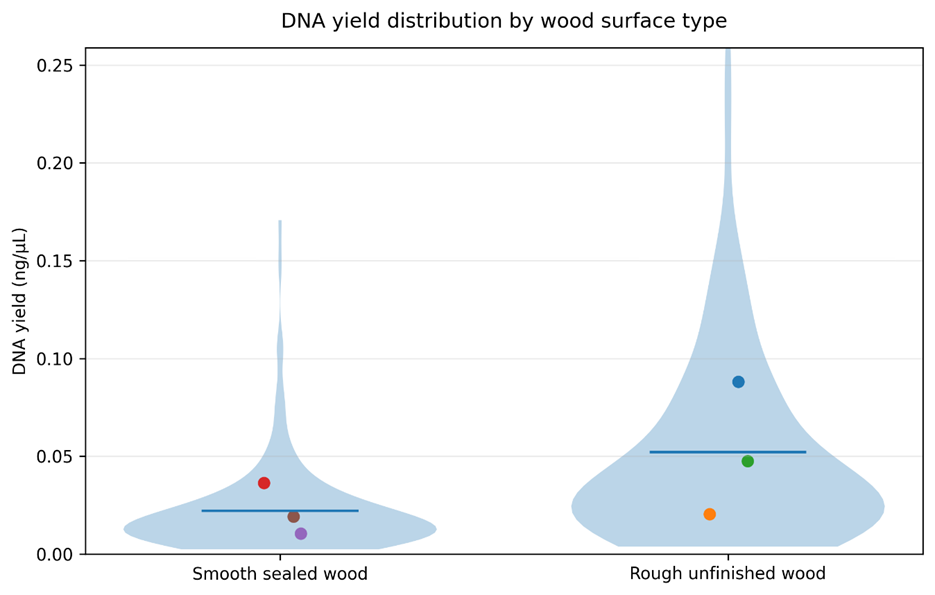
Figure 1: Overall Effect of Wood Surface Type on Touch DNA Yield (N = 324). Distribution of DNA Yield (Ng/µl) Recovered from Smooth Sealed Wood and Rough Unfinished Wood Pooled Across Environmental Conditions (RT, LT, HT), Time Intervals (3 H, 24 H, 1 Week), Recovery Strategies (MS/DS, TL, HY), and Donors (Low, Moderate, High Shedders; Two Technical Replicates Per Condition). Violin Plots Illustrate Distribution Density; Central Markers Indicate Mean Values. Linear Mixed-Effects Modelling Demonstrated a Significant Main Effect of Surface Type on DNA Yield (Χ² = 18.7, Df = 1, P < 0.001). Unfinished Wood Produced Significantly Higher Mean DNA Yield than Sealed Wood.
Under room temperature conditions, both surfaces showed a gradual decline over time. Mean DNA recovery from sealed wood decreased from 0.025 ng/µL at 3 h to 0.016 ng/µL at 1 week, whereas unfinished wood decreased from 0.055 ng/µL to 0.037 ng/µL over the same interval. Despite decline, unfinished wood maintained higher yields at all time points.
High temperature exposure produced the most pronounced decrease in DNA recovery. Sealed wood declined from 0.022 ng/µL at 3 h to 0.010 ng/µL at 1 week, while unfinished wood declined from 0.042 ng/µL to 0.021 ng/µL. The steeper reductions under elevated temperature were consistent with accelerated loss of recoverable material over time.
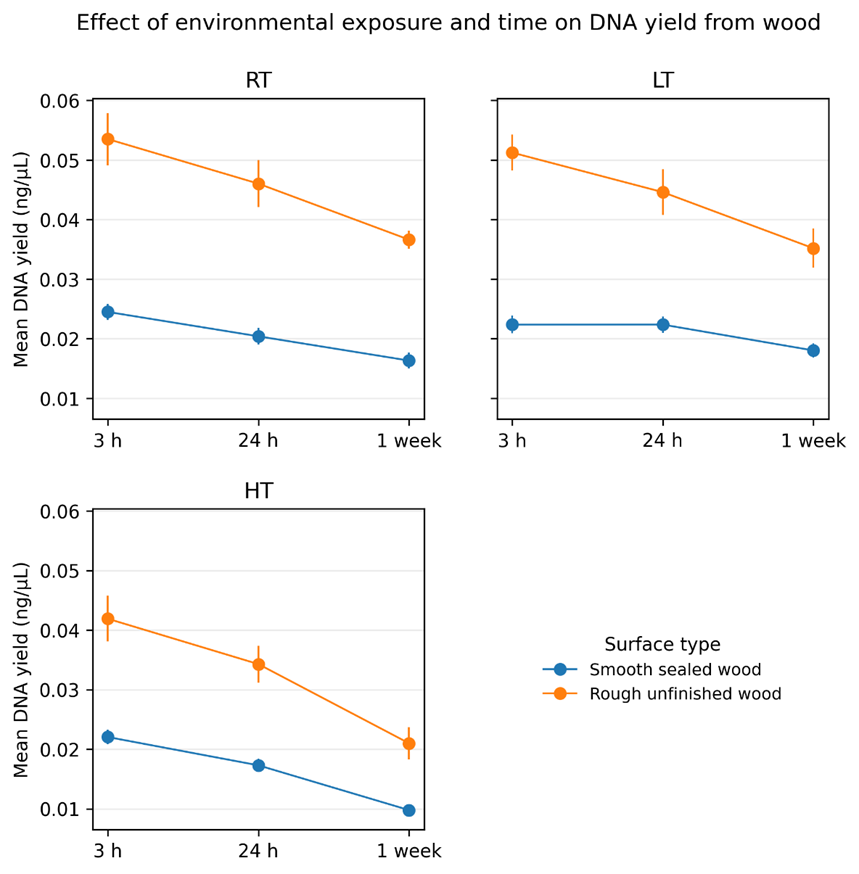
Figure 2: Overall Effect of Environmental Exposure and Time on DNA Yield by Surface Type (N = 324). Mean DNA Yield (Ng/ µl ± SD) Recovered from Smooth Sealed and Rough Unfinished Wood Under Room Temperature (RT), Low Temperature/ High Humidity (LT), and High Temperature (HT) Conditions at 3 H, 24 H, and 1 Week Post-Deposition. Data Represent Pooled Recovery Strategies and Donors (3 Donors × 2 Technical Replicates Per Condition). Linear Mixed-Effects Modelling Identified Significant Main Effects of Environmental Condition (Χ² = 24.3, Df = 2, P < 0.001) and Time Interval (Χ² = 31.8, Df = 2, P < 0.001), As Well as a Significant Surface × Time Interaction (Χ² = 9.6, Df = 2, P = 0.008). Error Bars Represent Standard Deviation.
In contrast, low temperature/high humidity exposure showed a more moderate decline. Sealed wood decreased from 0.023 ng/µL to 0.018 ng/µL between 3 h and 1 week, and unfinished wood decreased from 0.051 ng/µL to 0.035 ng/µL. Across all environmental conditions and time points, unfinished wood remained higher-yielding than sealed wood, reinforcing a consistent surface effect in addition to environmental influences. Collectively, these data show that DNA yield from wooden substrates is significantly affected by both exposure condition and persistence interval, with temporal change dependent on surface type and environmental context.
Effect of Recovery Strategy
DNA yield varied by recovery strategy, with method performance dependent on environmental condition and surface type (Figure 3). Across both wood types, the hybrid approach (HY) produced the highest cumulative DNA yields, tape-lift (TL) generally produced intermediate yields, and single-step swabbing (moistened swab [MS] under RT/HT; dry swab [DS] under LT) produced the lowest yields.
Under RT conditions, hybrid recovery from unfinished wood yielded a mean DNA concentration of 0.057 ng/µL, compared with 0.044 ng/µL for tape-lift and 0.031 ng/µL for moistened swabbing.
On sealed wood, yields were lower overall (HY: 0.041 ng/µL; TL: 0.034 ng/µL; MS: 0.028 ng/µL). Mixed-effects modelling confirmed a significant main effect of recovery strategy under RT (χ² = 22.1, df = 2, p < 0.001).
Under LT conditions (5 °C / 78% relative humidity), strategy differences were more pronounced on unfinished wood. Hybrid recovery yielded 0.050 ng/µL, compared with 0.039 ng/µL for tape-lift and 0.026 ng/µL for dry swabbing. On sealed wood, hybrid recovery yielded 0.038 ng/µL and tape-lift 0.032 ng/µL, while dry swabbing yielded 0.024 ng/ µL. A significant recovery strategy × surface interaction was observed under LT (χ² = 9.4, df = 2, p = 0.009), consistent with a greater incremental benefit of hybrid recovery on unfinished wood.
Under HT conditions, DNA yields decreased across all strategies. For unfinished wood, hybrid recovery yielded 0.044 ng/µL, compared with 0.035 ng/µL for tape-lift and 0.023 ng/µL for moistened swabbing. For sealed wood, hybrid and tape-lift were more closely aligned (HY: 0.033 ng/ µL; TL: 0.029 ng/µL), while moistened swabbing remained lowest (0.021 ng/µL). Although hybrid recovery remained highest overall, the magnitude of improvement over tape-lift was smaller under HT.
When all conditions were analysed together, mixed- effects modelling confirmed a significant main effect of recovery strategy (χ² = 31.6, df = 2, p < 0.001) and a significant recovery strategy × surface interaction (χ² = 11.2, df = 2, p = 0.004). Overall, tape-lift consistently outperformed single-step swabbing, particularly on unfinished wood, and the hybrid strategy maximised cumulative yield across conditions. The hybrid mechanism and residual recoverability are addressed in Section 3.4.
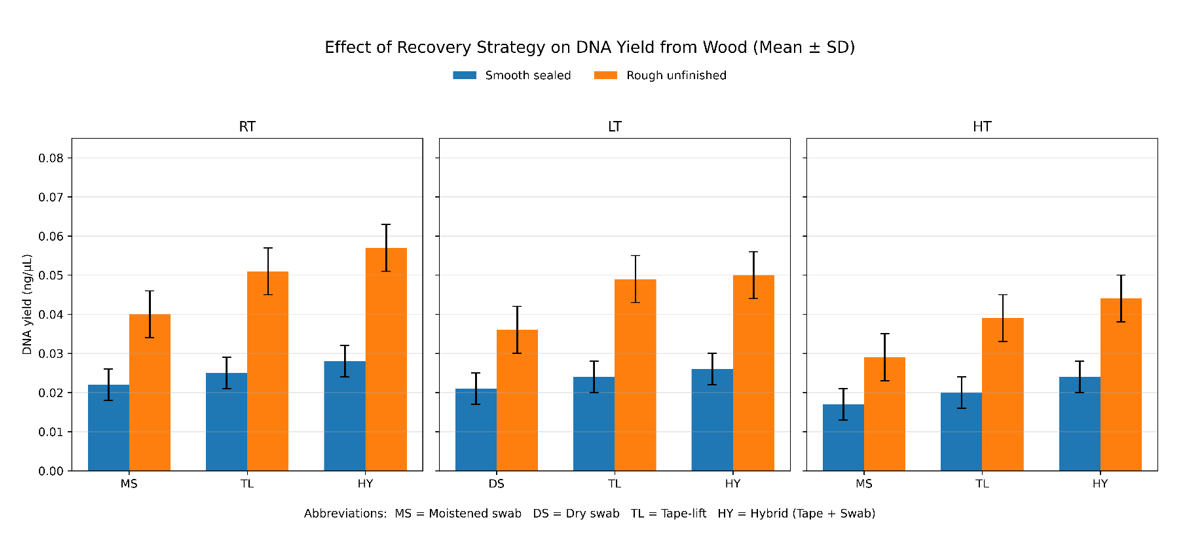
Figure 3: Effect of Recovery Strategy on DNA Yield Across Environmental Conditions and Surface Types (N = 324). Mean DNA Yield (Ng/µl ± SD) Recovered Using Moistened Swab (MS; RT/HT), Dry Swab (DS; LT), Tape-Lift (TL), and Hybrid Recovery (HY) from Smooth Sealed and Rough Unfinished Wood Under RT, LT, and HT Conditions (3 H–1 Week Pooled). HY Represents the Cumulative Yield from Sequential Tape-Lift Followed by Swabbing. Linear Mixed-Effects Modelling Demonstrated a Significant Main Effect of Recovery Strategy (Χ² = 31.6, Df = 2, P < 0.001) and a Significant Recovery Strategy × Surface Interaction (Χ² = 11.2, Df = 2, P = 0.004). Error Bars Represent Standard Deviation. Abbreviations: MS = Moistened Swab; DS = Dry Swab; TL = Tape-Lift; HY = Hybrid (Tape + Swab).
Mechanistic Evaluation of Hybrid Recovery Strategy
Because the hybrid strategy produced the highest cumulative yields (Section 3.3; Figure 3), a fractionation analysis was conducted to determine whether hybrid gains reflected exclusively improved first-pass recovery or additional DNA recovered during the second step. Hybrid samples from rough unfinished wood were separated into tape and subsequent swab fractions and analysed independently (Figure 4).
This fractionation analysis included 162 hybrid samples, representing 3 environmental conditions × 3 time points ×
3 donors × 2 technical replicates. Across all conditions, the tape fraction accounted for the majority of recovered DNA. Mean tape-derived yields were 0.044 ng/µL (RT), 0.039 ng/µL (LT), and 0.035 ng/µL (HT). However, measurable DNA was consistently recovered from the secondary swab fraction, indicating that the initial tape-lift did not exhaust recoverable biological material.
Environmental condition influenced the magnitude of the secondary fraction. Under LT exposure, the secondary swab fraction yielded a mean of 0.017 ng/µL, compared with 0.013 ng/µL under RT and 0.009 ng/µL under HT. Expressed as a proportion of total hybrid recovery, the secondary fraction represented approximately 34% under LT, compared with 23% under RT and 20% under HT.
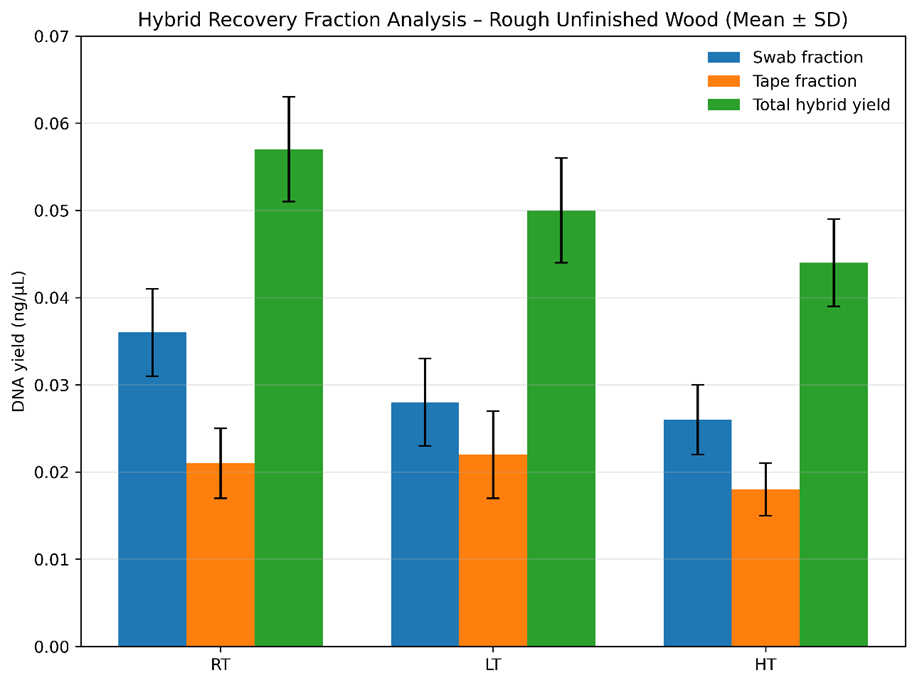
Figure 4: Fractionated Analysis of Hybrid Recovery on Rough Unfinished Wood (N = 162). DNA Yield (Ng/µl ± SD) Recovered from Rough Unfinished Wood Using the Hybrid Strategy, Fractionated into Primary Tape-Lift and Secondary Swab Components Under RT, LT, and HT Conditions (3 H–1 Week Pooled). The Dataset Represents 3 Environmental Conditions × 3 Time Intervals × 3 Donors × 2 Technical Replicates (Subset of Total Experimental Samples). Mixed-Effects Modelling Confirmed a Significant Main Effect of Fraction Type (Χ² = 26.4, Df = 1, P < 0.001) and a Significant Environmental Condition × Fraction Interaction (Χ² = 7.9, Df = 2, P = 0.019), Indicating Condition-Dependent Residual Recoverability. Error Bars Represent Standard Deviation.
Mixed-effects modelling confirmed a significant main effect of fraction type (tape vs secondary swab) on DNA yield (χ² = 26.4, df = 1, p < 0.001) and a significant environmental condition × fraction interaction (χ² = 7.9, df = 2, p = 0.019), consistent with greater residual recoverability under LT exposure. Total hybrid yields presented in Figure 3 correspond to the sum of the fractionated components shown in Figure 4, supporting internal consistency between analyses.
STR Profile Quality
STR profile quality trends mirrored quantification outcomes and are summarised in Figure 5. Profile completeness (percentage of loci above the analytical threshold of 75 RFU) varied significantly by environmental condition, surface type, and recovery strategy.
Under RT conditions, unfinished wood generally produced higher profile completeness than sealed wood across recovery strategies. Tape-lift and hybrid recovery yielded the highest completeness, with values typically exceeding ~95% at early time points on unfinished wood, whereas sealed wood showed lower mean completeness overall (approximately ~85–92%, depending on recovery strategy). Swab-only recovery produced lower completeness than tape-lift and hybrid strategies, most notably on sealed wood.
Under LT conditions, completeness remained comparatively stable over time. Unfinished wood maintained high completeness rates, particularly with tape-lift and hybrid recovery, whereas sealed wood showed greater sensitivity to recovery strategy, with lower completeness under dry swabbing compared with tape-lift and hybrid approaches.
Under HT conditions, the largest reductions in completeness were observed for both surfaces, with the most pronounced decreases on sealed wood at the 1-week interval. Tape-lift and hybrid recovery partially mitigated these reductions on unfinished wood, although HT profiles remained consistently less complete than those generated under RT and LT.
Mean peak height (RFU) exhibited parallel trends. Under RT and LT, unfinished wood generated higher mean RFU values (typically ~1,200–1,600 RFU for tape-lift and hybrid recovery at early time points) than sealed wood (~800– 1,200 RFU). Swab-only recovery yielded lower RFU across both surfaces, consistent with reduced DNA yield.
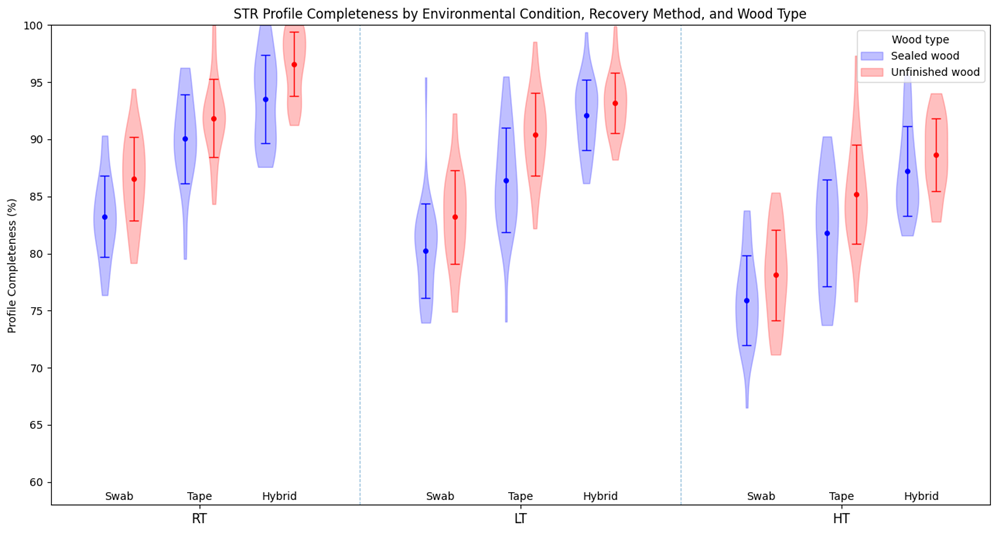
Figure 5: STR Profile Completeness by Environmental Condition, Surface Type, and Recovery Strategy (N = 324). Profile Completeness (% Loci Above 75 RFU Analytical Threshold; Mean ± SD) Generated from Smooth Sealed and Rough Unfinished Wood Under RT, LT, and HT Conditions Using MS/DS, TL, and HY Recovery Strategies (3 H–1 Week Pooled). Each Condition Represents 3 Donors with Two Technical Replicates Per Combination. Linear Mixed-Effects Modelling Demonstrated Significant Main Effects of Environmental Condition (Χ² = 44.8, Df = 2, P < 0.001), Recovery Strategy (Χ² = 31.5, Df = 2, P < 0.001), and Surface Type (Χ² = 19.6, Df = 1, P < 0.001), with a Significant Condition × Recovery Interaction (Χ² = 14.2, Df = 4, P = 0.007). Completeness Trends Corresponded with Mean RFU Variation Observed Across Conditions.
Under HT, RFU declined over time for both surfaces, with sealed wood showing a sharper decrease. At the 1-week HT interval, mean peak heights frequently approached lower stochastic ranges (~400–700 RFU), corresponding to increased locus dropout and reduced completeness.
Mixed-effects modelling identified significant main effects of environmental condition (χ² = 44.8, df = 2, p < 0.001), recovery strategy (χ² = 31.5, df = 2, p < 0.001), and surface type (χ² = 19.6, df = 1, p < 0.001) on profile completeness. Similar significant effects were observed for mean peak height (all p < 0.01). A significant condition × recovery interaction (χ² = 14.2, df = 4, p = 0.007) indicated that the relative benefit of tape-lift and hybrid recovery varied by exposure condition.
All profiles were consistent with single-source deposition. No interpretable mixed profiles were observed under the study’s mixture assessment criteria. Occasional low-level non-donor alleles consistent with stochastic drop- in occurred sporadically and did not affect overall donor attribution or completeness estimates. IPC performance did not show systematic differences between surface types (p > 0.05), supporting that inhibition was not a primary driver of STR performance variability.
Inhibition Assessment
Inhibition was assessed using the internal PCR control (IPC) metrics from Investigator Quantiplex Pro quantification. Inhibition was defined as an IPC Ct shift beyond the manufacturer’s expected range and/or a software inhibition flag, confirmed by repeat quantification following dilution of the extract.
IPC performance was generally stable across the dataset. IPC deviation occurred in approximately 4% of extracts and was concentrated in unfinished wood under HT exposure. Where deviation was observed, repeat quantification following a 1:5 dilution restored IPC values to within expected ranges, indicating mild inhibition rather than assay failure. Diluted extracts did not show disproportionate reductions in STR profile completeness beyond reductions attributable to lower template quantity under HT exposure.
No consistent inhibition patterns were associated with recovery strategy, and no batch-level IPC shifts were observed. Extraction blanks, reagent blanks, and amplification blanks remained negative throughout, supporting stable analytical performance.
Integrated Summary of Experimental Findings
Across the experimental factors evaluated, surface morphology, environmental exposure, and recovery strategy each significantly influenced touch DNA yield and STR outcomes from wood. Rough unfinished wood yielded higher DNA quantities than smooth sealed wood across conditions, and this surface effect persisted after accounting for donor variability in mixed-effects modelling.
Environmental exposure produced condition- dependent changes in both DNA yield and STR profile quality. RT conditions supported the most stable yields and STR performance. HT exposure resulted in the steepest reductions in DNA yield, RFU, and completeness over time. LT exposure showed intermediate behaviour, with comparatively stable completeness but evidence of increased residual recoverability during sequential hybrid processing on unfinished wood.
Recovery strategy significantly affected outcomes in a surface-dependent manner. Tape-lift outperformed swabbing on unfinished wood, while sealed wood showed smaller strategy-dependent differences. Hybrid recovery maximised cumulative yield; fractionation analysis demonstrated that a measurable residual fraction remained recoverable after initial tape-lift on unfinished wood, particularly under LT exposure. Across the dataset, profiles remained consistent with single-source deposition, and inhibition was infrequent, mild, and readily mitigated.
Discussion
Wood as a Forensic Substrate: Retention and Recoverability Dynamics
The present findings demonstrate that wooden substrates exhibit surface-dependent behaviour that cannot be adequately described using a generic classification such as “porous.” Rough unfinished wood consistently produced higher mean DNA yields than smooth sealed wood across environmental conditions and recovery strategies, indicating enhanced initial cellular retention. Surface physicochemical properties—including roughness, wettability, and surface free energy—are known to influence deposition and adhesion of biological material [67, 68]. The anisotropic grain architecture and microcavities characteristic of unfinished wood likely promote mechanical entrapment of epithelial cells, supporting earlier observations that wood can yield greater DNA quantities than smoother non-porous substrates under controlled transfer conditions [10, 11].
Importantly, increased retention did not uniformly equate to greater immediate recoverability. Sequential fraction analysis revealed that measurable DNA remained recoverable after primary collection, particularly on unfinished wood exposed to humidity. This observation indicates that a portion of deposited biological material may become partially redistributed or superficially sequestered within grain structures, thereby limiting complete removal during a single collection pass. The distinction between retention and recoverability provides a mechanistic framework for understanding why porous substrates may exhibit both higher yield potential and recovery method sensitivity. This interpretation aligns with broader multi- surface evaluations demonstrating substrate-dependent recovery efficiency [11, 22, 63].
Environmental Modulation of Persistence on Wooden Surfaces
Environmental exposure significantly influenced both DNA yield and downstream STR performance. Consistent with prior research indicating that time alone may exert limited impact under stable room temperature conditions, whereas combined temperature and humidity stress can substantially influence persistence [17], samples stored at RT
maintained relatively stable yield and profile completeness across surface types.
In contrast, HT exposure produced progressive reductions in mean RFU and increased allele dropout, consistent with environmentally accelerated degradation processes observed in challenged trace DNA contexts [16, 17]. Thermal stress likely promotes desiccation, molecular fragmentation, and reduced amplifiable template availability.
Under LT conditions (5 °C / 78% RH), yield reductions were moderate and did not proportionately reduce profile completeness, particularly on unfinished wood. Wood is inherently hygroscopic, and moisture-driven swelling, shrinkage, and internal gradient formation are well documented in wood science literature [69, 70, 71]. Although these investigations are not forensic in scope, they provide a plausible physical basis for redistribution of deposited biological material within grain structures under high humidity. Such redistribution may alter recoverability without immediately compromising DNA integrity. Environmental stress therefore appears to interact with surface morphology to shape persistence trajectories rather than exerting uniform effects across substrate types.
Recovery Strategy and Surface-Dependent Efficiency
Both cotton swabbing and adhesive tape-lifting proved effective for recovering trace DNA from wooden substrates; however, relative performance was surface-dependent. Tape- lift methods demonstrated modestly higher yields on rough unfinished wood, consistent with prior recommendations favouring adhesive collection for porous or textured substrates [11, 24, 48]. Adhesive lifting may enhance capture of cells lodged within superficial irregularities, aligning with method-comparison studies emphasizing substrate- informed sampling [22, 63].
Operational considerations remain central. Wooden exhibits encountered in forensic casework frequently involve irregular geometries—curved tool handles, carved grips, firearm stocks, or narrow structural edges—where flexible swabbing permits rotational movement, variable pressure, and access to recessed regions. In contrast, adhesive minitapes are advantageous for flat, accessible surfaces such as panels, frames, and broad handle regions where systematic repeated lifts can be applied [24, 48, 50]. Recovery strategy selection should therefore consider both substrate porosity and exhibit geometry.
The hybrid recovery strategy produced the highest cumulative yields; however, interpretation requires mechanistic clarity. Sequential hybrid recovery involves independent extraction of two fractions from the same defined area, and increased total yield reflects additive recovery rather than a fundamentally different capture mechanism. Fractionated analysis demonstrated measurable residual DNA following primary collection, particularly on unfinished wood under humidity exposure. This indicates that wooden substrates—especially untreated rough surfaces—may preserve recoverable biological material beyond the immediately accessible surface layer. The residual fraction was condition-dependent and reduced on sealed wood, suggesting that retention depth and recoverability are governed by surface architecture and environmental context. Hybrid recovery may therefore be strategically justified when maximal recovery is required, but its incremental benefit is substrate- and condition-specific rather than universal.
STR Profile Performance and Analytical Stability
STR profile outcomes closely paralleled quantification trends. Higher template quantities were associated with increased mean peak heights and greater profile completeness, whereas reduced yields under HT exposure were accompanied by progressive RFU decline and increased dropout frequency. This pattern is consistent with established low-template amplification dynamics, in which signal reduction precedes allele loss [60]. Under LT exposure, RFU decline was comparatively modest and completeness remained stable, reinforcing the distinction between redistribution and degradation effects.
No interpretable mixed profiles were observed, supporting the integrity of contamination control procedures and the controlled single-source deposition design. Robust contamination prevention remains fundamental in trace DNA workflows [38, 41, 42, 43], and the absence of mixture patterns strengthens confidence in analytical stability.
Inhibition assessment demonstrated minimal IPC deviation, and dilution-resolved shifts confirmed mild, non-persistent inhibition events. Although wood contains extractives—including phenolic and tannin-derived compounds—capable of influencing chemical interactions [67], these substances did not materially compromise amplification performance under the present extraction and quantification protocols. STR performance variability was therefore primarily attributable to template quantity and environmental exposure rather than inhibitory effects.
Operational Implications for Casework
The findings support a substrate-informed and condition-aware framework for recovery strategy selection in operational casework. Rough unfinished wooden surfaces may derive modest benefit from tape-based or hybrid recovery, particularly where humidity exposure is suspected. Smooth sealed wood can be effectively sampled using cotton swabs, with limited incremental gain from hybrid strategies. Under suspected HT exposure, timely collection is critical due to progressive template degradation.
Hybrid recovery may be justified where maximal yield is required from unfinished wood under humid conditions, recognising that its benefit derives from cumulative extraction of residual material rather than intrinsic superiority of the method. Method selection should therefore be guided by substrate morphology, environmental context, and evidential priorities rather than uniform application across surfaces.
Contextualization within Existing Literature
Previous investigations have established that substrate type influences DNA transfer and recovery efficiency [10, 11, 62], and that environmental factors interact with surface properties to affect persistence [17]. Method- comparison studies have emphasized the importance of tailoring recovery approaches to substrate characteristics [22, 63]. The present findings extend this body of work by resolving wooden substrates into distinct morphological categories and integrating environmental exposure with sequential recovery fraction analysis.
Recent substrate-focused investigations highlight the importance of physicochemical surface properties in governing deposition, retention, and recoverability [67, 68]. Studies examining handled knives and stored items further demonstrate the forensic relevance of optimizing recovery from wooden handles and similar exhibits [71, 72]. By integrating morphology, environmental modulation, and recovery fractionation within a controlled design, the current study provides a mechanistic synthesis that has not previously been systematically reported for wooden substrates.
Limitations and Future Directions
The controlled deposition model was necessary to isolate substrate- and environment-specific effects. Real- world casework involves variable contact pressure, repeated handling, secondary transfer events, and mixed contributors. Future investigations should assess repeatedly handled wooden tools, extended aging intervals, species-specific wood variability, mechanical abrasion effects, and interactions between environmental cycling and biological persistence.
Quantitative surface characterization—such as surface roughness measurement or microstructural imaging— integrated with DNA recovery metrics may further strengthen predictive modelling of recovery efficiency. Evaluation of direct amplification approaches on wooden substrates may also clarify whether extraction-associated template loss can be further minimized.
Conceptual Contribution
The present study demonstrates that wooden substrates exhibit morphology-dependent retention behaviour and environment-modulated recoverability that jointly influence DNA yield and STR performance. By distinguishing sealed and unfinished wood, incorporating controlled environmental exposure, and fractionating sequential hybrid recovery, the findings clarify how surface architecture and environmental context interact to shape trace DNA outcomes.
Rather than treating wood as a uniform porous material, the data indicate that wooden substrates display dynamic retention and recoverability behaviour that varies with surface finish and humidity exposure. This mechanistic framing provides an evidence-based basis for substrate- informed method selection and advances understanding of trace DNA behaviour on wooden objects encountered in forensic casework.
Conclusion
This study systematically evaluated the persistence, recovery, and downstream STR performance of touch DNA deposited on smooth sealed and rough unfinished wooden substrates under controlled environmental conditions. The findings demonstrate that wooden surfaces exhibit morphology-dependent behaviour in which cellular retention and analytical recoverability represent related but distinct processes.
Rough unfinished wood consistently produced higher DNA yields than sealed wood, supporting the role of microstructural grain features in enhancing initial cellular retention. However, environmental exposure significantly modulated recoverability. Stable room temperature conditions preserved both DNA quantity and profile completeness across surface types, whereas elevated temperature resulted in progressive reductions in peak height and increased allele dropout. In contrast, low- temperature high-humidity exposure influenced recovery dynamics without proportionate degradation, consistent with moisture-driven redistribution within porous structures rather than template destruction.
Both cotton swabbing and adhesive tape-lifting proved effective for recovering touch DNA from wooden substrates. Tape-lift methods demonstrated modest advantages on rough unfinished wood, consistent with porous surface behaviour, while swabbing remained operationally adaptable for irregular or contoured wooden exhibits. The hybrid recovery strategy generated the highest cumulative yields; however, fractionated analysis confirmed that this effect reflected additive sequential recovery rather than an intrinsically superior collection mechanism. Residual recoverable DNA following primary sampling was substrate- and condition- dependent, being most pronounced on unfinished wood under humidity-influenced exposure.
STR profile completeness and peak height trends were primarily governed by template quantity and environmental degradation rather than inhibitory effects, which were infrequent and readily mitigated. No interpretable mixed profiles were observed, supporting the analytical robustness of the experimental design and contamination control measures.
Collectively, these results provide a substrate-informed and condition-aware framework for touch DNA recovery from wooden exhibits encountered in forensic casework. Wooden substrates should not be treated as a homogeneous category; instead, surface morphology and environmental history should guide recovery strategy selection and evidential interpretation. By integrating surface finish, environmental modulation, and sequential recovery analysis, this study advances mechanistic understanding of trace DNA behaviour on wood and contributes practical insight for forensic application.
Acknowledgements
The authors gratefully acknowledge the institutional support that facilitated this research. Appreciation is extended to the participating volunteers whose contributions made this study possible. The successful completion of this work reflects the importance of collaborative efforts and interdisciplinary engagement in advancing forensic science research.
Conflict of Interest
The authors declare no financial or non-financial conflicts of interest that could have influenced this study. All aspects of the work were conducted independently to ensure objectivity and scientific integrity.
Ethics Statement
The study received approval from the institutional oversight committee of the General Department of Forensic Science and Criminology, Dubai Police. All participants provided informed consent, and procedures complied with established ethical standards for human research, biological material handling, confidentiality, and data protection.
Author Contributions
S.K.A. conceived and designed the study, supervised experimental execution, performed forensic DNA analyses, conducted statistical analysis, and led manuscript preparation and revision. R.B.C. contributed to laboratory processing, assisted with data generation, and provided critical scientific review and editorial input. Both authors reviewed and approved the final manuscript and accept responsibility for its content.
Data Availability Statement
Not applicable.
Funding
This research received no external funding.
References
-
Alketbi SK (2018) The affecting factors of touch DNA. J Forensic Res 9(3): 424.
-
Aidarous NI, Alketbi SK, Abdullahi AA, Alghanim HJ, Alawadhi HM, et al. (2025) Investigating Touch DNA success rates in vehicle sites for hit-and-run casework. Perspect Leg Forensic Sci 2(2): 10008.
-
Alketbi SK (2023) Analysis of Touch DNA. University of Central Lancashire, UK.
-
Burrill J, Daniel B, Frascione N (2019) A review of trace “Touch DNA” deposits: Variability factors and an exploration of cellular composition. Forensic Sci Int Genet 39: 8-18.
-
Alketbi SK (2023) The role of DNA in forensic science: A comprehensive review. Int J Sci Res Arch 9(2): 814-829.
-
Recipon M, Agniel R, Kunemann P, Ponche A, Carreiras F, et al. (2024) Detection of invisible biological traces in relation to the physicochemical properties of substrate surfaces in forensic casework. Sci Rep 14: 13271.
-
Alketbi SK (2024) Emerging technologies in forensic DNA analysis. Perspect Leg Forensic Sci 1(1): 10007.
-
Pfeifer CM, Wiegand P (2017) Persistence of touch DNA on burglary-related tools. Int J Legal Med 131: 941-953.
-
Alketbi SK (2020) Collection of Touch DNA from rotten banana skin. Int J Forensic Sci 5(4): 000204.
-
Daly DJ, Murphy C, McDermott SD (2012) The transfer of touch DNA from hands to glass, fabric, and wood. Forensic Sci Int Genet 6(1): 41-46.
-
Alketbi SK, Goodwin W (2019) The effect of surface type, collection, and extraction methods on touch DNA. Forensic Sci Int Genet Suppl Ser 7(1): 704-706.
-
Verdon TJ, Mitchell RJ, Van Oorschot RAH (2014) Swabs as DNA collection devices for sampling different biological materials from different substrates. J Forensic Sci 59(4): 1080-1089.
-
Singh VS, Alketbi SK, Sharma PA (2025) Influence of surface material, cleaning frequency, and swab type on touch DNA recovery from entrance door handles: A simulated study. Int J Forensic Sci 10(4): 000449.
-
Salleh HM, Alketbi SK (2026) Touch DNA recovery from edible surfaces: Forensic implications for crime scene evidence collection. J Forensic Allied Sci 2(1): 1-16.
-
Alketbi SK, Goodwin W (2019) The effect of sandy surfaces on Touch DNA. J Forensic Leg Investig Sci 5: 034.
-
Martin B, Kaesler T, Kirkbride KP, Linacre A (2022) The influences of dusty environments on the STR typing success of post-detonation touch DNA samples. Forensic Sci Int Genet 57: 102651.
-
Alketbi SK, Goodwin W (2019) The effect of time and environmental conditions on Touch DNA. Forensic Sci Int Genet Suppl Ser 7(1): 701-703.
-
Alketbi SK, Goodwin W (2025) Evaluating the impact of sandy surface contamination on trace DNA recovery from wearable fabrics: A comparative study of collection methods and extraction kits. World J Adv Res Rev 26(03): 2399-2410.
-
Comte L, Manzanera M (2019) Touch DNA collection- Performance of four different swabs. Forensic Sci Int Genet 43: 102113.
-
Alketbi SK, Goodwin W (2025) Enhancing trace DNA recovery from disposable face masks: Insights from the COVID-19 era and beyond. Int J Legal Med.
-
Alketbi SK, Goodwin W (2023) Collection methods for Touch DNA direct amplification. J Forensic Leg Investig Sci 9: 072.
-
Tozzo P, Mazzobel E, Marcante B, Delicati A, Caenazzo L (2022) Touch DNA sampling methods: Efficacy evaluation and systematic review. Int J Mol Sci 23(24): 15541.
-
Alketbi SK, Goodwin W (2019) Validating Touch DNA collection techniques using cotton swabs. J Forensic Res 10: 445.
-
Stoop B, Defaux PM, Utz S, Zieger M (2017) Touch DNA sampling with SceneSafe Fast™ minitapes. Legal Med 29: 68-71.
-
Alketbi SK, Goodwin W (2021) Touch DNA collection techniques for non-porous surfaces using cotton and nylon swabs. J Sci Tech Res 36(3): 28608-28612.
-
Aloraer D, Hassan NH, Albarzinji B, Goodwin W (2017) Improving recovery and stability of touch DNA. Forensic Sci Int Genet Suppl Ser 6: E390-E392.
-
Alketbi SK (2022) An innovative solution to collect Touch DNA for direct amplification. J Forensic Sci Crim Investig 16(1): 555928.
-
Schulte J, Rittiner N, Seiberle I, Kron S, Schulz I (2023) Collecting touch DNA from glass surfaces using different sampling solutions and volumes: Immediate and storage effects on genetic STR analysis. J Forensic Sci 68(4): 1133–1147.
-
Alketbi SK (2023) Collection techniques of touch DNA deposited on human skin following a strangulation scenario. Int J Legal Med 137: 1347-1352.
-
Alketbi SK, Carta L (2025) Uncovering the persistence of touch DNA on human skin and its implications for violent crime investigations. World J Biol Pharm Health Sci 21(03): 234-244.
-
Nimbkar PH, Bhatt VD (2022) A review on touch DNA collection, extraction, amplification, analysis, and determination of phenotype. Forensic Sci Int 336: 111352.
-
Francisco DO, Lopez LF, Gonçalves FT, Fridman C (2020) Casework direct kit as an alternative extraction method to enhance touch DNA samples analysis. Forensic Sci Int Genet 47: 102307.
-
Alketbi SK, Goodwin W, Alghanim HJ, Sanqoor SH, Alshehhi SA, et al. (2025) Comparing extraction and direct amplification methods for enhanced Touch DNA profiling. 30th Congress of the International Society for Forensic Genetics, Universidade de Santiago de Compostela, pp: 1035-1042.
-
Aljanahi NS, Alketbi SK, Almheiri MM, Alshehhi SA, Sanqoor AN, et al. (2025) Enhancing trace DNA profile recovery in forensic casework using the amplicon RX post-PCR clean-up kit. Sci Rep 15: 3324.
-
Alketbi SK (2023) An evaluation of the performance of two quantification methods for trace DNA casework samples. J Forensic Sci Crim Investig 16(5): 555950.
-
Mehta AA, Alketbi SK (2025) Touching without contact: Glove-mediated secondary DNA transfer in forensic casework. J Forensic Allied Sci 1(1): 56-72.
-
Alketbi SK (2023) Maintaining the chain of custody: Anti-contamination measures for trace DNA evidence. Int J Sci Res Arch 8(2): 457-461.
-
Ballantyne KN, Salemi R, Guarino F, Pearson JR, Garlepp D, et al. (2015) DNA contamination minimisation – finding an effective cleaning method. Aust J Forensic Sci 47(4): 428-439.
-
Alketbi SK (2024) Preventing DNA contamination in forensic laboratories: An illustrated review of best practices. Am J Biomed Sci Res 24(1): 7–16.
-
Khan AA, Alketbi SK (2025) Integrating DNA and chemical profiling to trace illicit drug manufacture and distribution. Perspect Leg Forensic Sci 2(2): 10009.
-
Alketbi SK (2024) DNA contamination in crime scene investigations: Common errors, best practices, and insights from a survey study. Biomed J Sci Tech Res 58(5): 50970-50982.
-
Basset P, Castella V (2019) Positive impact of DNA contamination minimization procedures taken within the laboratory. Forensic Sci Int Genet 38: 232-235.
-
Alketbi SK, Carta L (2025) Safeguarding DNA Integrity: The Critical Role of PPE in Preventing Contamination in Forensic Laboratories. J Forensic Sci Crim Investig 19(2): 556010.
-
Alketbi SK, Goodwin W (2024) Temporal assessment of DNA shedding from human hands after handwashing: Implications for touch DNA recovery. Biomed J Sci Tech Res 59(5): 51977-51985.
-
Szkuta B, Ballantyne KN, van Oorschot RAH (2017) Transfer and persistence of DNA on the hands and the influence of activities performed. Forensic Sci Int Genet 28: 10-20.
-
Alketbi SK (2022) The impact of collection method on Touch DNA collected from fabric. J Forensic Sci Crim Investig 15(5): 555922.
-
Alketbi SK, Goodwin W (2022) The impact of deposition area and time on Touch DNA collected from fabric. Forensic Sci Int Genet Suppl Ser 8(1): 45-47.
-
Verdon TJ, Mitchell RJ, Van Oorschot RAH (2014) Evaluation of tapelifting as a collection method for touch DNA. Forensic Sci Int Genet 8(1): 179-186.
-
Alketbi SK, Goodwin W (2022) The impact of area size and fabric type on Touch DNA collected from fabric. J Forensic Sci Crim Investig 16(1): 555926.
-
Kanokwongnuwut P, Kirkbride KP, Linacre A (2020) An assessment of tape-lifts. Forensic Sci Int Genet 47: 102292.
-
Alketbi SK, Alsoofi S (2022) Dual recovery of DNA and fingerprints using minitapes. J Forensic Sci Crim Investig 16(1): 555929.
-
Blackmore L, Cabral de Almada CH, Poulsen F, Prasad E, Kotzander J, et al. (2024) Evaluation of the microbial wet-vacuum system (M-Vac®) for DNA sampling from rough, porous substrates, and its compatibility with fully automated platforms. Forensic Sci Int 361: 112079.
-
Radgen-Morvant I, Curty C, Kummer N, Delémont O (2024) Effects of chemical and biological warfare agent decontaminants on trace survival: Impact on DNA profiling from blood and saliva. Forensic Sci Int 364: 112206.
-
Zaarour L, Padula M, Van Oorschot RAH, McNevin D (2025) Mass spectrometry-based proteomics for source- level attribution after DNA extraction. Forensic Sci Int Genet 74: 103168.
-
Bibbo E, Taylor D, Van Oorschot RAH, Goray M (2024) Air DNA forensics: Novel air collection method investigations for human DNA identification. J Forensic Sci.
-
Goray M, Taylor D, Bibbo E, Patel D, Fantinato C, et al. (2024) Up in the air: Presence and collection of DNA from air and air conditioner units. Electrophoresis 45(9- 10): 933-947.
-
Noor S, Akhtar S, Khan MF, Rehman RA, Salman M, et al. (2024) Preliminary study on mitochondrial DNA analysis from different sports items. Forensic Sci Int 361: 112077.
-
Alketbi SK (2024) A journey into the innovations and expertise of Dubai Police and the General Department of Forensic Science and Criminology. World J Adv Res Rev 22(2): 1391-1399.
-
Alketbi SK, Goodwin W, Alghanim HJ, Abdullahi AA, Aidarous NI, et al. (2025) Trace DNA recovery: Insights from Dubai Police casework. Perspect Leg Forensic Sci 2(1): 10001.
-
Barta JL, Monroe C, Teisberg JE, Winters M, Flanigan K, et al. (2014) One of the key characteristics of ancient DNA, low copy number, may be a product of its extraction. J Archaeol Sci 46: 281-289.
-
Alketbi SK, Goodwin W (2024) Evaluation of microFLOQ™ Direct Swab for Touch DNA recovery. Forensic Leg Investig Sci 10: 93.
-
Hartless S, Walton-Williams L, Williams G (2019) Critical evaluation of touch DNA recovery methods for forensic purposes. Forensic Sci Int Genet Suppl Ser 7: 379-380.
-
Williams G, Pandre M, Ahmed W, Beasley E, Omelia E, et al. (2013) Evaluation of low trace DNA recovery techniques from ridged surfaces. J Forensic Res 4: 4.
-
Hedman J, Jansson L, Akel Y, Wallmark N, Gutierrez Liljestrand R, et al. (2020) The double-swab technique versus single swabs for human DNA recovery from various surfaces. Forensic Sci Int Genet 46: 102253.
-
Lendvay B, Hartmann M, Brodbeck S, Nievergelt D, Reinig F, et al. (2018) Improved recovery of ancient DNA from subfossil wood – Application to the world’s oldest Late Glacial pine forest. New Phytol 217(4): 1737-1748.
-
Hughes DA, Szkuta B, van Oorschot RAH, Conlan XA (2024) The impact of substrate characteristics on the collection and persistence of biological materials, and their implications for forensic casework. Forensic Sci Int 356: 111951.
-
Larsen F, Ormarsson S, Olesen JF (2011) Moisture-driven fracture in solid wood. Wood Mater Sci Eng 6(1–2): 49- 57.
-
Fu Z, Chen J, Zhang Y, Xie F, Lu Y (2023) Review on wood deformation and cracking during moisture loss. Polymers 15(15): 3295.
-
Engelund ET, Thygesen LG, Svensson S, Hill CAS (2021) A review of the long-term effects of humidity on the mechanical properties of wood and wood-based products. Eur J Wood Wood Prod 79: 245-259.
-
Frihart CR (2016) Significance of wood extractives for wood bonding. Appl Microbiol Biotechnol 100(4): 1589- 1596.
-
Meakin GE, Butcher EV, van Oorschot RAH, Morgan RM (2015) The deposition and persistence of indirectly- transferred DNA on regularly-used knives. Forensic Sci Int Genet Suppl Ser 5: E498-E500.
-
Reither JB, van Oorschot RAH, Durdle A, Szkuta B (2023) DNA transfer to placed, stored, and handled drug packaging and knives in houses. Forensic Sci Int Genet 65: 102888.
- Forensic Implications of Adverse Drug Reactions in Schizophrenia A Case Series
- Narcotics and Digital Forensics: Bridging Crimes in the Digital Age
- Ethics in Forensic Psychiatry: Principles, Dilemmas, and Human Rights
- Impact of Acute Stress on Attentional Orienting to Social Cues
- Head Injury and Intracranial Hemorrhage in Western Region of Libya
- A Forensic Study on Handedness: Examination of Handwriting Features in Right and Left Handed Writers