
Exploring Diverse Techniques for Phytochemical Extraction from Plant Sources A Comprehensive Review
The extraction of bioactive compounds from plant materials is imperative within the pharmaceutical industry. The standardization of extraction procedures is directed at the elimination of undesirable constituents, facilitating the isolation of the most enriched bioactive fraction from herbs. This refined fraction, obtained through the application of diverse solvent systems, is designed to optimize therapeutic potential. Phytochemicals derived from various plant components function as direct sources of medicinal agents, providing a comprehensive characterization of the myriad secondary metabolic compounds inherent in plants. The extraction of bioactive compounds, coupled with their quantitative and qualitative evaluation, assumes significance in the identification of novel biomolecules applicable to the pharmaceutical and agrochemical sectors. This review predominantly concentrates on analytical methodologies, incorporating extraction methods and the analysis of bioactive compounds in plant extracts through diverse techniques. Prominent progress in modern green extraction methods, such as supercritical fluid, ultrasound, accelerated solvent, microwave, and enzyme-assisted extraction, is gaining recognition. The critical assessment of extraction conditions in this review elucidates both conventional solvent-based and robust modern and green extraction techniques. Numerous methods have been devised to extract phytochemicals with efficiency, ensuring high quality, purity, and cost-effectiveness while minimizing environmental impact. Molecular hydrogen (H2) has emerged as a promising catalyst for enhancing phytochemical extraction from plant materials, presenting an innovative avenue for improving extraction efficiency
Introduction
Plants harbor a diverse array of chemical compounds with therapeutic potential for treating chronic and infectious diseases [1]. Phytochemicals, biologically active secondary metabolites derived from plants, contribute to coloration and serve a vital role in plant defense mechanisms against pests and predators. The extraction of phytochemicals from plant materials is a pivotal process in natural product research, encompassing fields such as research, development, and pharmaceutical manufacturing. However, the selection of an appropriate extraction method is contingent upon factors such as product composition, the nature of phytochemicals, and laboratory budget constraints. The extraction of medicinal plants involves the separation of active components, including alkaloids, flavonoids, terpenes, saponins, steroids, and glycosides, from inert material using suitable solvents and extraction procedures. Phytochemical analysis, an evolving chemical discipline, rapidly explores the structure, biosynthesis, metabolism, and biological functions of organic compounds in plants. Medicinal plants are extracted and processed either for direct consumption as herbal or traditional medicine or for experimental purposes. The preparation for experimental purposes entails meticulous steps such as expert authentication, proper collection, adequate drying, grinding, extraction, fractionation, and isolation of bioactive compounds, including determination of their quantity and quality [2, 3, 4, 5].
There is an ongoing and persistent effort to enhance and uncover improved extractive methodologies characterized by enhanced efficiency and cost-effectiveness. This comprehensive review thoroughly examines a diverse spectrum of both conventional and contemporary extraction techniques, also recent innovative techniques, delving into their optimization conditions and providing a comparative analysis of their respective advantages and disadvantages. Furthermore, a critical evaluation of recent applications utilizing these techniques is presented. This literary analysis is anticipated to contribute to the progression of existing methodologies and the exploration of innovative extraction techniques.
Phytochemical extraction encompasses a series of sequential procedures aimed at isolating the pharmacologically active constituent from a plant or animal source through the application of a designated solvent. This process involves subsequent refinement and characterization of the separated crude component, which can then undergo quantitative validation [6, 7]. The resultant extract can be further subjected to processing and standardization for potential commercial utilization. Therefore, the standardization of extraction procedures plays a crucial role in determining the ultimate quality of the herbal drug. Consequently, the overall process of phytochemical extraction can be delineated into three fundamental steps:
- Procurement of plants
- Extraction of bioactive constituents
- Characterization of derived constituents
Procurement of Plants S
Purchasing or gathering plants or herbs for the extraction process is a crucial step that determines the extract’s quality and yield. In order to maximize separation and minimize variability, plants used for extract processing should come from a specific region, be roughly the same size, and belong to the same variety. The following lists the steps that go into choosing the plants to prepare an extract.
Collection of Plants
Parts of plants are gathered from woods or herbariums and examined for anomalies and abnormalities. Typically, identical variety samples with comparable traits are acquired. Forest-grown plants are often devoid of chemical pesticides, but they can still be infected with diseases and other poisons. As a result, the collected batch needs to be properly cleaned and decontaminated [8].
Cleaning of Collected Plants
The primary attention quickly switches to ensuring that the batch is clear of pathogens and insects after the collection process. Furthermore, the existence of dirt and other pollutants (such as animal feces, bird droppings, and other plant excreta) can interfere with characterisation methods and lower extract yields [8]. Step-by-step procedures like washing, chopping, and peeling leaves from stems are part of the cleaning process.
Drying of Plant Parts
The goal of drying is to totally remove all water from the plants so that they may be stored. Dried plant parts have a longer shelf life and prevent bacterial and fungal growth. Additionally, materials can be dried naturally that is, in the sun or with the help of a hot air oven [9]. Using an artificial drying source shortens the drying process and keeps the batches uniform. The Natural Drying Process The most popular natural approach is sun drying. The plant pieces are properly cleaned and washed before being stretched out onto large drying panels and exposed to the sun for a few days to produce a dry product. Sun drying has been used extensively and is a low-cost method [10]. Even so, the procedure takes time, and product variations may occur from batch to batch. Plants can also be dried naturally by being placed on drying stands and frames and allowed to air dry beneath the sheds. Both procedures are quite erratic and reliant on temperature and humidity [11].
Artificial or Mechanized Drying
This also applies to the energy-hungry use of air dryers. The product is dried uniformly since the drying time is greatly reduced. For medicinal plants, warm air drying is typically recommended. A blower is used to blow heated air onto plant pieces that have been laid out on plates in an air dryer [12]. It is possible to adjust and keep an eye on the process’s duration and temperature. Although preparation time is greatly reduced, production costs are increased. These techniques also involve a lot of laborers to manually load and unload the sample. The product’s fragility affects the drying time as well [13]. For flowers and leaves, time spans from minutes to hours, but for roots and barks, it is significantly longer.
Grinding into Powder
The dry materials are ground and crushed to create a uniform powder before solvent extraction. By grinding the particles, the product is made finer and the surface area of the particles is increased for effective extraction. Moreover, this powdering procedure may be mechanical or involve the use of automated shredders and grinders.
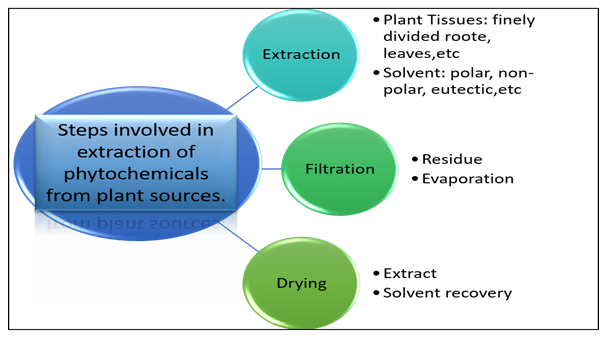
Solvents used in Extraction
The menstrum is another name for the solvent used in medicinal plant extractions. The type of plant, the portion of the plant to be extracted, the makeup of the bioactive chemicals, and the solvent’s availability all influence the choice of solvent. Polar chemicals are often extracted using polar solvents like water, methanol, and ethanol, while nonpolar compounds are extracted using nonpolar solvents like dichloromethane and hexane [13, 14]. The traditional method for liquid-liquid extraction is to choose two miscible solvents, such as ether, hexane, and water-dichloromethane. Water is present in every combination due of its strong polarity and organic solvent miscibility. To facilitate separation, the substance to be extracted using liquid-liquid extraction should dissolve in an organic solvent but not in water [15]. Additionally, the solvents employed in extraction are categorized based on their polarity, ranging from the least polar (n-hexane) to the most polar (water) [16, 17].
The 11 different extraction solvents listed below are grouped in increasing polarity order [18, 19]. The chosen solvent is added to the water during fractionation in an increasing polarity order, beginning with the least polar solvent, n-hexane, and ending with the most polar solvent, water. It is customary for a researcher to select two low- polarity solvents (n-hexane and chloroform), two medium- polarity solvents (dichloromethane and n-bu-tanol), and one high-polarity solvent (water) if they intend to use five solvents during fractionation.
Characteristics of the Extractions Solvent [20- 22]
Water: Many different polar molecules may be extracted using this solvent, which is the most polar of them. Benefits. It is inexpensive, highly polar, harmless, and dissolves a wide variety of compounds. Disadvantages. It may produce hydrolysis, encourages the growth of germs and mold, and concentrates the extract with a lot of heat. Drinking: Additionally, it has a polar character, is miscible in water, and has the ability to extract polar secondary metabolites. Benefits. When the concentration is higher than 20%, it becomes self-preserving. As little heat is needed to concentrate the extract, it is harmless at low concentrations. Disadvantages. It is volatile and combustible and does not dissolve fats, gums, or wax. Chloroform: It is a nonpolar solvent that works well for extracting substances including oils, lipids, terpenoids, and flavonoids. Benefits. It smells nice, is colorless, and dissolves in alcohols. Additionally, the body metabolizes and absorbs it well. Disadvantages. It is both carcinogenic and sedative. Ether: It is a nonpolar solvent that can be used to extract substances including fatty acids, terpenoids, alkaloids, and coumarins. Benefits. It has a low boiling point, is tasteless, and is miscible with water. It is also an extremely stable chemical that exhibits no metal, acid, or basic reactivity. Disadvantages. It is combustible and extremely volatile in nature. A Green Solvent Called Ionic Liquid: This particular extraction solvent is very polar and very heat stable. Even at 3,000 degrees Celsius, it can stay liquid, making it useful in situations where high temperatures are required. It is excellent for extracting polar chemicals because of its high miscibility with water and other solvents. Benefits. Because of its superior solvent properties, which both attract and transmit microwaves, it can be used for extraction with the use of microwaves. It is extremely polar, non-flammable, and helpful for liquid-liquid extraction. A drawback. It is not the best for making tinctures.
Factors to Consider While Selecting Solvents for Extraction
Selecting an extraction solvent requires careful consideration of the various aspects listed below [22, 23]: Selectivity: The capacity of a selected solvent to separate the inert material from the active constituent. Safety: A nontoxic, non-flammable extraction solvent is ideal. Price: It ought to be as affordable as feasible. Response Time: The extract and the appropriate extraction solvent shouldn’t react. Convalescence: It is imperative to promptly retrieve and isolate the extraction solvent from the extract. The Viscosity: Low viscosity is necessary to facilitate easy penetration. Temperature of Boiling: The boiling point of a solvent should be as low as feasible to avoid heat-induced deterioration.
Factors to Consider When Selecting an Extraction Method [23,24]
Heat Stability: Soxhlet extraction or microwave-assisted extractions are used to extract heat-stable plant material, while maceration or percolation are used to remove non- heat-stable plant material. The Solvent’s Nature: Maceration is a good technique if the extraction solvent is water; however, soxhlet extraction and percolation are better suited for volatile solvents. The Medicine’s Price: Maceration is used to extract inexpensive medications, while percolation is preferred for extracting expensive drugs. The Extraction’s Duration: While methods like microwave- or ultrasound-assisted extraction are employed for a shorter period of time, maceration is appropriate for plant material that needs to be exposed to the menstruum for an extended period of time. The Required Final Volume: Concentrated products are made by soxhlet extraction or percolation, while large volume products, such tinctures, are made by maceration. The Intended Application: Maceration is typically used to make extracts meant for human consumption, however alternative processes are also used to prepare products meant for experimental testing.
Methods for Extraction
Since different solvents are used under varied extraction circumstances, like temperature and time, plant extraction is an empirical endeavour. It is crucial to separate the bioactive components from co-extrivesives molecules as they are extracted from the plants. The extracted chemicals are further fractionated according to their molecular size, polarity, or acidity. Following the right extraction techniques after acquiring plants or herbs will increase the amount of active ingredients that are extracted from the plant. This usually calls for distinct chemical and physical methods. The next sections outline various methods for effective extraction [25, 26].
Conventional Method for Extraction
Homogenization
Numerous studies have examined the homogenization of plant extract in various solvents. To make a particular concentration solution, the plant parts are ground in a blender and added to a certain amount of solvent. Extract is available in liquid and dried forms. To ensure effective molecular movement, the mixture is agitated briskly or left for 24 hours, or until the active ingredient evaporatively dissolves into the solution from the extract. The extract is filtered after this procedure. With so many phytoconstituents in the filtrate, this extract has a wide range of applications. Additionally, it can be dried at high pressure; a lyophilizer makes this process easier [27]. Because of this drying process, extracts have a longer shelf life. This drying extends the shelf life of extracts, allowing them to be stored for extended periods of time. To find the concentration, the dried extract can alternatively be redissolved in a solvent. Centrifuging the filtered extract can also yield a clear solution.
Sequential Complete Extraction
It is one of the most used extraction techniques, utilizing a series of polar solvent extractions. This guarantees the extraction of a diverse range of phytomolecules with varying polarity. In certain investigations, a dried plant portion is extracted using a polar solvent using the soxhlet method. This approach is not appropriate for heat-labile chemicals because it uses heat [28].
Solvent Extraction Technique
Solvent extraction has lately made use of the Universal Extraction System (Buchi). Various plant parts, powdered and dried, are placed in a glass thimble and extracted using different solvents. The process modifies the temperature just below the boiling point of the corresponding solvents and is repeated ten times for each extract. In order to ascertain whether phytoconstituents are present, the resultant solvent extract is filtered, condensed in a vacuum concentrator, and utilized [29].
Cold Extraction Method
The different plants parts dried in an artificial environment at low temperature (50-60 °C) and dried powder then further used for extraction purpose using various solvents. Weigh the dried powder and added into conical flask with respective solvents and allow keeping at room temperature for thirty minute shaking after each twenty four hours for seven days. Finally filter the extract using whatman filter paper under vacuum and dry it at room temperature in watch glass dish. Note down the weight of each dish prior to drying of the extracts and after drying too. Calculate the weight of the extract from the difference [29].
The Maceration Process
A straightforward extraction technique called maceration is immersing the coarsely ground or powdered plant raw material in a suitable solvent for a minimum of three days at room temperature while stirring occasionally. This is an extraction process wherein a container is filled with coarsely powdered drug material (leaves, stem bark, or root bark), and menstruum is poured on top of the drug material until it is completely covered. After that, the container is sealed and left for a minimum of three days. To guarantee full extraction, the material is periodically shaken and stirred if it is placed inside a bottle. Filtration or decantation is used to separate the micelle from marc at the conclusion of extraction. The mixture is strained through sieves or a net with microscopic holes once the extraction process is finished. The marc is then crushed, and the liquid extract is allowed to stand before being cleaned by decantation or filtration. It is preferable to do maceration in a stoppered container in order to reduce solvent loss by evaporation. During the extraction process, the solvent should not evaporate and yield an extract that is already concentrated. The process of vacuum evaporation is commonly used to concentrate the product. Choosing the right solvent for the maceration is essential since it will identify the classes of phytochemicals that can be recovered from the samples. The extraction of thermolabile phytochemicals may also be made possible by the solvent [30].
The Digestive Process
Digestion is an extractive technique that involves a small amount of heat throughout the extraction process, much as maceration. However, care must be taken to prevent temperature changes from affecting the bioactive phytochemicals in the specific plant material. As a result, heat causes the extraction solvent to be used more efficiently. Temperatures are typically maintained between 35 and 40 °C, but they can be raised to a maximum of 50 °C for harder plant materials, like bark, and materials that contain poorly soluble phytochemicals. The chosen plant components are added to a container containing the suitable solvent that has been heated to the specified temperatures in order to begin the extraction process. Shaking the container at regular intervals helps maintain the ideal temperature for a duration that can vary from 30 to 24 hours [31].
The Infusion
This is a method of extraction similar to maceration. The drug substance is ground into a fine powder and then added to a sterile container. After that, the drug material is covered with the extraction solvent, either hot or cold, soaked, and stored for a brief while. This technique works well for extracting easily soluble bioactive components. Furthermore, it’s a suitable way to prepare fresh extract ahead of time. Generally speaking, the ratio of solvent to sample is either 4:1 or 16:1, depending on the purpose. It is defined as a diluted mixture of the plant material’s readily soluble components. This method of extraction involves submerging the plant material in a boiling solvent, usually water, and letting it stand in a stoppered container for approximately fifteen minutes. Afterwards, the extract (tea) is drained out and the marc is removed from the tea using a filter [32, 33].
The Percolation
Percolation is another intriguing technique that is more effective than maceration and comparable to infusion. It is the method most commonly used to prepare liquid extracts, such tinctures. The definition of percolation is “to pass a liquid through a solid material drop by drop.” In the process of percolation, a fresh solvent is supplied from the top and the solvent typically ethyl alcohol is gradually forced down while slowly passing through the plant material and gradually packed itself with phytochemicals [34]. The device employed in this procedure is known as a percolator. It is a glass container that is narrow and has openings on both ends. In a clean container, a dried, ground, and finely powdered plant material is soaked with the extraction solvent. After adding more solvent, the mixture is stirred and left for four hours. After that, the lower end of the percolator is closed and the content is placed inside. It is let to stand for a full day. Carefully shred the plant material, taking care not to shred the particles too fine, before adding it to the percolator. It will be more difficult to separate the tiny particles from the extraction solvent if the particles are too fine. As a result, there would be residue at the bottom of the percolator and a hazy extract. However, it is appropriate to use the extraction solvent to wet the plant matrix, allowing the plant cells to elongate and facilitate the smooth passage of phytochemicals into the extraction solvent [35].
A Decoction
This procedure uses a set amount of water as a solvent and entails continuous hot extraction. Plant material that has been dried, ground, and powdered is put into a sanitized container. After that, water is added and swirled. The extraction is then sped up by applying heat during the procedure. The procedure takes only a brief amount of time, often fifteen minutes. Solvent to crude drug ratios are typically 4:1 or 16:1. It is employed in the extraction of heat- and water-resistant plant material. This method of extraction works well for phytochemicals that don’t change or break down as the temperature rises. Plant material is cooked in water for 15 to 60 minutes during the decoction process. The type of plant tissues and the phytochemicals being extracted will determine how long the boiling process takes. Typically, vulnerable plant components like leaves, stems, blossoms, and roots are cooked for fifteen minutes. For example, decoction and infusion methods have been used to extract phenols and flavonoids from fruits, rhizomes, and leaves at 100 °C. Alternatively, you can boil hard plant materials for an hour, including tree bark and branches. Once the mixture has boiled, it is cooled, filtered, and then cold water is added to get the desired amount of solution. To acquire the liquid extract, the mixture is filtered once the decoction process is finished [36].
The Soxhlet Method
Another name for this procedure is continuous hot extraction. The glass-based device is known as a Soxhlet extractor. It is made up of an extraction chamber, a siphon tube, a condenser at the top, and a round-bottom flask. Plant material that has been dried, ground, and finely powdered is put inside a porous bag (thimble) that is made of sturdy filter paper or clean fabric and fastened shut [37]. The bottom flask is filled with the extraction solvent, and then the thimble is placed inside the extraction chamber. After that, the solvent is heated from the bottom flask, evaporates, and flows through the condenser before condensing and flowing down to the extraction chamber, where it comes into contact with the medication to extract it. Until the medication is fully extracted—that is, when a solvent exiting the extraction chamber leaves no residue behind—the entire procedure is repeated repeatedly. Plant materials that have insoluble contaminants or that are only partially soluble in the selected solvent can be treated with this technique. It is not a good technique for plant materials that are thermolabile, though. Benefits. Less solvent is needed to extract a larger volume of medication. Heat-stable plant materials can also be used with it. It is not necessary to filter, and a lot of heat could be used. Disadvantages. The approach is not appropriate for thermolabile materials, and regular shaking is not achievable [38, 39].
Sonication
Sonication is the process of agitating molecules with sound energy. The process involves the use of ultrasound waves with frequencies ranging from 20 kHz to 2000 kHz in order to extend the solvent molecules’ reach within the plant product and therefore boost cell wall penetration. Although this procedure is effective in increasing the rate of solvent distribution, it also raises production costs. The process’s relative degradation of the plant active chemicals as a result of high-energy ultrasonic waves, which produces free radicals and reduces the pharmacological activity, is another drawback [40].
Modern Extraction Techniques
Accelerated Solvent Extraction (ASE)
This technology has grown in popularity because to its advantages, such as low solvent demand, high production, and comparatively short processing time. The favorable state of the ASE processes is indicated by the increasing solvent temperature and pressure. Compared to maceration or soxhlet extraction, this method of solvent extraction is more reliable. Examples demonstrating notable ASE performance are available. For example, it was discovered that ASE outperformed Supercritical Fluid Extraction (SFE) in the recovery of lipophilic and hydrophilic phytochemicals from raspberry pomace. Compared to SFE, which had a 15% yield, ASE recovered 25% of its lipophilic and hydrophilic chemicals while dramatically reducing the effects of temperature and extraction time [40]. Using this method, the sample is placed into the stainless steel extraction cell, which is then filled with solvent and sandwiched between layers of inert silica and cellulose filter paper. For a predetermined amount of time, the system is heated to a higher temperature and pressure; this increases the diffusion coefficient and decreases viscosity, which promote extraction. After the extract is gathered in vials, the cell is cleaned by pumping nitrogen and new solvent. The plant matrix is kept from producing aggregates that could clog the system by the inert packing material [41].
Microwave-Assisted Extraction
Microwave extraction, or microwave-assisted extraction, is a relatively new method of extracting natural compounds that uses solvents and microwaves in the extraction process. The 300 MHz to 300 GHz microwave frequency band is used. Microwaves accelerate the kinetics of extraction by heating the plant tissue and solvent during the extraction process. The polar molecules in the sample are directly heated by the microwaves. Dipolar rotations are involved in the energy conversion process from microwave to heat. The liquids’ dielectric constant and heating are intimately correlated [42]. Because reduced viscosity promotes ion dispersion and solvation, the solvent’s viscosity has a major impact on the extraction process [43]. Diffusion of solvents into the sample, solute separation from the functional site, and last solute release into solvents are the steps in the extraction process. The method effectively maintains the biological activity of the extracts. The energy produced by the microwaves applied at a frequency of 2450 Hz ranged from 600 to 700 W. The method bombards an object with microwave radiation, which the object can absorb and transform into heat. The heat generated as a result makes it easier for the solvent to enter the drug matrix.
Ultrasound-Assisted Extraction, UAE (Sonication Extraction)
Electromagnetic waves that have frequencies greater than those that are audible to the human ear are called ultrasounds. The ultrasonic frequency range that is used is 20 kHz–2000 kHz. It moves in a medium that experiences expansions and contractions in a wave-like manner. The permeability of cell walls and the surface area of interaction between solvents and plant samples are both increased by the mechanical action of acoustic cavitation caused by ultrasonic waves. Cavitation is the term used to describe the development, expansion, and collapse of bubbles. According to certain research, the frequency at which a molecule is extracted from a sample can be altered and positively influenced [44]. Secondary metabolites will consequently be released. Plant material needs to dry completely before being ground into a fine powder and properly sieved using this procedure. After the sample is ready, it is combined with the proper extraction solvent and placed inside the ultrasonic extractor [45]. By lowering the need for heat, the high sound energy speeds up the extraction process. Benefits: Small samples can benefit from ultrasound-assisted extraction, which maximizes yield while cutting down on extraction time and solvent use [46]. Disadvantages: Replicating this procedure is challenging, as applying a lot of energy could cause free radicals to be created, which would destroy the phytochemical.
Supercritical Fluid Extraction (SFE)
Gases, typically CO2, are used in supercritical fluid extraction (SFE), which compresses the gas into a dense liquid. The material to be removed is then placed inside a cylinder and this liquid is pushed through it. Subsequently, the liquid containing the extract is pushed into a chamber designed to separate the extract from the gas and recover the gas for future use. Pressure and temperature changes allow for the manipulation and adjustment of CO2’s solvent characteristics. One benefit of SFE is that it totally evaporates CO2, leaving no solvent residues behind [47]. The commercial extraction of valuable molecules from diverse sources is a wider use of the SFE technology. The extraction of valuable chemicals from food products is a promising use of this technology. The shifts in temperature and pressure necessary to turn a gas into a liquid—where the two phases are indistinguishable—may be used to define the SFE. At its critical point, the physical properties of a supercritical fluid material are similar to those of gas and liquid phases [48]. Temperature and pressure define a supercritical fluid’s critical area. The gas and liquid phases blend together at the critical point, which is reached above the critical temperature (Tc) and critical pressure (Pc). The process entails separating and solubilizing compounds that can be extracted. As the solvent passes through the packed bed, it dissolves the compounds in the sample. After the solvent exits the extractor, the extract becomes solvent-free as a result of a rise in temperature and a fall in pressure.
Enzyme-Assisted Extraction (EAE)
In some plants, it is difficult to extract phytochemicals from the polysaccharide lignin network that is maintained by hydrogen bonding and hydrophobic interactions like van der wall forces. The solvent extraction technique does not make the phytochemicals in their matrices accessible; instead, they stay scattered in the cell cytoplasm. Pre-treating the plant material with particular enzymes successfully releases the bound phytochemicals in such samples at high yields. By dissolving cellular walls, these enzymes are added during extraction to increase phytochemical output. Moreover, these enzymes hydrolyze lipid bodies and other carbohydrates like cellulose. Particular enzymes including amylase, pectinase, and cellulase are employed. Enzyme-assisted cold pressing (EACP) and enzyme-assisted aqueous extraction (EAAE) are the two primary extraction techniques that make use of enzymes. The latter method has been utilized to hydrolyze the plant’s seed cellular wall, whilst the former method has mostly been employed to extract oils from various seeds. From sweet cherry fruits at the ideal temperature of 55°C, carotenoids from sunflower petals at 40°C, phenolics from citrus peels at 20 to 60°C, lycopene from tomato peels at 30 °C, flavonoids from grapefruit peels at 50°C, and anthocyanins from cacaohuacintle maize have all been extracted using EAE [49].
Pressurized Hot Water Extraction (PHWE)
Hot water extractant is used in this procedure at higher pressure. Because it is an environmentally friendly method that provides sizable yields, it has attracted a lot of attention as a potential substitute for traditional extractive techniques [50]. The method is predicated on the idea that pressure keeps water in its liquid state. A liquid water condition is determined to be between 100 and 250 °C at a pressure of 5 MPa. There are a few benefits that the PHWE offers over traditional methods. It is a less expensive solvent, allows for higher-quality extracts, and shortens the extraction time. This method has been used to extract a variety of types of chemicals, including saponins, phenolics, antioxidants, and avoparcine [51].
Innovative Extraction Methods
Using Deep Eutectic Mixtures as Extraction Solvents
Deep eutectic solvents (DESs) are a novel class of environmentally acceptable solvents that have just been introduced to the field of natural product research [52]. DESs are often made up of two or three inexpensive, nontoxic solid components, such as a donor and an acceptor of hydrogen bonds (HBD). DESs possess distinct physicochemical characteristics, including a potent solubility in protic compounds, a low vapour pressure, and water miscibility. Depending on the components’ characteristics, there are three distinct methods for preparing DESs with a few adjustments (heating time, temperature, etc.) [53]. Choline chloride (ChCl) is the HBD and glycerol, alcohols, amino acids, carboxylic acids, and sugars are the HBAs in the most often used DES mixes. A well-defined combination with the lowest melting point-that is, a melting point lower than the separate components-in the solid-liquid phase diagram is referred to as a DES. DESs provide a number of benefits over traditional organic solvents, including ease of manufacture, minimal volatility at room temperature, and miscibility with water. In addition, they have excellent biocompatibility, are very low in vapor pressure, are highly viscous, nontoxic, and are not flammable [54, 55].
Hydrogen-Rich Solvents (HRSs) Extraction
The Earth’s atmosphere contains molecular hydrogen (H2), a tasteless and colorless gas that is present at a concentration of roughly 0.53 parts per million.13 In addition, since it doesn’t interact with other molecules in biological systems, it is regarded as a chemically inert molecule [56]. One of H2’s special qualities is its rapid diffusion in air, tissues, and organic and non-organic polymers with mobility in biological materials and macromolecules. Its estimated diffusion rate in natural rubber and polyethylene is 1 mm/ min.15 H2 has a low solubility in water (1.6 ppm at 20C) compared to oxygen and carbon dioxide (43 and 1.7-103 ppm at 20C, respectively), which enables it to easily pass through biomembranes and tissues [57].
Option 1 [58-60]
- The HRS is made using the Mg method or hydrogen gas bubbling technique in an Erlenmeyer flask (or other suitable apparatus) as previously mentioned.
- The sample’s dry powder is put into an empty Schott bottle (or similar apparatus).
- The sample powder that has been put in the Schott container is covered with HRS.
- A hermetic high-performance liquid chromatography (HPLC)-style cap with tubing and an O-ring to guarantee a gas-tight seal closes the Schott container.
- To remove the air from the headspace, a brief burst of hydrogen gas is delivered into the Schott bottle (just during the HRS preparation step, not during the incubation phase).
Option 2 [58-60]
- The sample’s dry powder is put inside a Schott container that has tubing, a hermetic HPLC-style cap, and an O-ring to guarantee a gas-tight seal.
- The Schott bottle is filled with the solvent.
- There is a hermetically closed Schott bottle.
- Only during the HRS preparation step not during the incubation phase is the hydrogen gas fed through the gas tubing into the solvent containing the sample at the proper flow rate and timing.
- A shaking incubator is used to hold the Schott bottle at the necessary temperature, duration, and shaking rate.
- Compared to water, the HRS-sample solution is filtered as needed.
Conclusion
Research on medicinal plants has been conducted either to verify and validate a biological activity claim that has been made, or to replicate the traditional therapeutic uses of the plant based on ethnomedicinal surveys. Since the target compound(s) must be extracted from the raw material without distortion or damage, the extraction technique chosen is crucial to natural product research. Traditional extraction methods, including liquid-liquid extraction, maceration, percolation, and Soxhlet extraction, require a lot of time and energy, are inefficient at extracting valuable materials, and produce organic pollutants that are hazardous to both the environment and human health. Simplify extraction processes that are effective and environmentally friendly, like SFE, microwave, PEF, and UAE. Researchers, labs, and corporations will benefit from the HRS extraction approach, particularly those with tight budgets and resources. Phytochemicals can be efficiently extracted using the HRS extraction process, which eliminates the need to add more waste streams or spend a significant amount of money on new equipment. It’s an environmentally responsible method of getting the best results for the least amount of money.
Conflict of Interest
Not Interested.
References
-
Duraipandiyan V, Ayyanar M, Ignacimuthu S (2006) Antimicrobial activity of some ethnomedicinal plants used by Paliyar tribe from Tamil Nadu, India. BMC complementary and alternative medicine 6: 1-35.
-
Alara OR, Abdurahman NH, Ukaegbu CI (2021) Extraction of phenolic compounds A review. Current Research in Food Science 4: 200-214.
-
Waksmundzka HM, Sherma J, Kowalska T (2008) Thin layer chromatography in phytochemistry 1st(Edn.), CRC Press, Boca Raton, Florida, USA, pp: 896.
-
Ingle KP, Deshmukh AG, Padole DA, Dudhare MS, Moharil MP, et al. (2017) Phytochemicals Extraction methods identification and detection of bioactive compounds from plant extracts. Journal of Pharmacognosy and Phytochemistry 6(1): 32-36.
-
Azwanida NN (2015) A review on the extraction methods use in medicinal plants, principle, strength and limitation. Med Aromat Plants 4(3): 1-6.
-
Pandey A, Tripathi S (2014) Concept of standardization extraction and pre phytochemical screening strategies for herbal drug. Journal of Pharmacognosy and Phytochemistry 2(5): 115-119.
-
Doughari JH (2012) Phytochemicals extraction methods, basic structures and mode of action as potential chemotherapeutic agents. In: Venketeshwer R, et al. (Eds.), Phytochemicals - A Global Perspective of Their Role in Nutrition and Health, IntechOpen, Canada, pp: 1-31.
-
Sasidharan S, Chen Y, Saravanan D, Sundram KM, Latha LY (2011) Extraction isolation and characterization of bioactive compounds from plants extracts. African journal of traditional complementary and alternative medicines 8(1): 1-10.
-
Vats S, Kamal R (2016) Identification of flavonoids from plant parts and callus culture of Gymnema sylvestre R Br An antidiabetic plant. Current Bioactive Compounds 12(4): 264-268.
-
Asma E, Naiima B, Fethia H (2015) Antifungal activity of Citharexylum quadrangulare Jacq. Extracts against phytopathogenic fungi. Afr J Microbiol Res 9(29): 1764- 1769.
-
Addie RD, Balluff B, Bovée JVMG, Morreau H, Mcdonnell LA (2015) Current state and future challenges of mass spectrometry imaging for clinical research. Anal Chem 87(13): 6426-6433.
-
Cvetanović A, Švarc GJ, Mašković P, Savić S, Nikolić L (2015) Antioxidant and biological activity of chamomile extracts obtained by different techniques perspective of using superheated water for isolation of biologically active compounds. Ind Crop Prod 65: 582-591.
-
Eriksson C, Masaki N, Yao I, Hayasaka T, Setou M (2013) MALDI imaging mass spectrometry a mini review of methods and recent developments. Mass Spectrom 2: S0022.
-
Jamila N, Khairuddean M, Khan SN, Khan N (2014) Complete NMR assignments of bioactive rotameric (3 → 8) biflavonoids from the bark of Garcinia hombroniana. Magn Reson Chem 52(7): 345-352.
-
Maksimovic S, Tadic V, Skala D, Zizovic I (2017) Separation of phytochemicals from Helichrysum italicum: an analysis of different isolation techniques and biological activity of prepared extracts. Phytochemistry 138: 9-28
-
Pandey A, Tripathi S (2014) Concept of standardization, extraction and pre phytochemical screening strategies for herbal drug. Journal of Pharmacognosy and Phytochemistry 2(5): 115-119.
-
Sasidharan S, Chen Y, Saravanan D, Sundram KM, Latha LY (2011) Extraction, isolation and characterization of bioactive compounds from plants’ extracts. African journal of traditional complementary and alternative medicines 8(1): 1-10.
-
Altemimi A, Lakhssassi N, Baharlouei A, Watson DG, Lightfoot DA (2017) Phytochemicals Extraction isolation and identification of bioactive compounds from plant extracts. Plants 6(4): 42.
-
Majekodunmi SO (2015) Review of extraction of medicinal plants for pharmaceutical research. Merit Res J Med 3: 521-527.
-
Das K, Tiwari RKS, Shrivastava DK (2010) Techniques for evaluation of medicinal plant products as antimicrobial agent: Current methods and future trends. Journal of medicinal plants research 4(2): 104-111.
-
Tiwari P, Kumar B, Kaur M, Kaur G, Kaur H, et al. (2011) Phytochemical screening and extraction a review. Internationale pharmaceutica sciencia 1(1): 98- 106.
-
Cowan MM (1999) Plant products as antimicrobial agents. Clinical microbiology reviews 12(4): 564-582.
-
Bhan M (2017) Ionic liquids as green solvents in herbal extraction. Int J Adv Res Dev 2(1): 10-12.
-
Eloff JN (1998) Which extractant should be used for the screening and isolation of antimicrobial components from plants. Journal of ethnopharmacology 60(1): 1-8.
-
Azwanida NN (2015) A review on the extraction methods use in medicinal plants principle strength and limitation. Med Aromat Plants 4(3): 1-6.
-
Jamila N, Khairuddean M, Khan SN, Khan N (2014) Complete NMR assignments of bioactive rotameric (3 → 8) biflavonoids from the bark of Garcinia hombroniana. Magn Reson Chem 52(7): 345-352.
-
Maksimovic S, Tadic V, Skala D, Zizovic I (2017) Separation of phytochemicals from Helichrysum italicum: an analysis of different isolation techniques and biological activity of prepared extracts. Phytochemistry 138: 9-28.
-
Herborne JB (1998) Phytochemical methods A guide to modern techniques of plant analysis. 3rd(Edn.), Springer Dordrecht, 2: 5-11.
-
Ingle KP, Deshmukh AG, Padole DA, Dudhare MS, Moharil MP, et al. (2017) Phytochemicals Extraction methods, identification and detection of bioactive compounds from plant extracts. Journal of Pharmacognosy and Phytochemistry 6(1): 32-36.
-
Ujang ZB, Subramaniam T, Diah MM, Wahid HB, Abdullah BB, et al. (2013) Bioguided fractionation and purification of natural bioactives obtained fromalpinia conchigera water extract with melanin inhibition activity. Journal of Biomaterials and Nanobiotechnology 4(3): 265-272.
-
Awuchi CG (2019) The biochemistry toxicology and uses of the pharmacologically active phytochemicals alkaloids terpenes polyphenols and glycosides. Journal of Food and Pharmaceutical Sciences 27: 1-2.
-
Sharif R, Ahmad SW, Anjum H, Ramzan N, Malik SR (2014) Effect of infusion time and temperature on decaffeination of tea using liquid liquid extraction technique. Journal of Food Process Engineering 37(1): 46-52.
-
Cittan M, Altuntaş E, Çelik A (2018) Evaluation of antioxidant capacities and phenolic profiles in Tilia cordata fruit extracts A comparative study to determine the efficiency of traditional hot water infusion method. Industrial Crops and Products 122: 553-558.
-
Harborne AJ (1998) Phytochemical methods a guide to modern techniques of plant analysis. 3rd(Edn.), springer Dordrecht, pp: 1-302.
-
Doughari JH (2012) Phytochemicals extraction methods basic structures and mode of action as potential chemotherapeutic agents. Phytochemicals - A Global Perspective of Their Role in Nutrition and Health, pp: 1-34.
-
Sabine BJ (2013) Imaging of metals in biological tissue by laser ablation inductively coupled plasma mass spectrometry LA-ICP-MS state of the art and future developments. J Mass Spectrom 48(2): 255-268.
-
Kryževičiūtė N, Kraujalis P, Venskutonis PR (2016) Optimization of high pressure extraction processes for the separation of raspberry pomace into lipophilic and hydrophilic fractions. The Journal of Supercritical Fluids 108: 61-68.
-
Rahmalia W, Fabre JF, Mouloungui Z (2015) Effects of cyclohexane/acetone ratio on bixin extraction yield by accelerated solvent extraction method. Procedia Chemistry 14: 455-464.
-
Bagade SB, Patil M (2021) Recent advances in microwave assisted extraction of bioactive compounds from complex herbal samples a review. Critical reviews in analytical chemistry 51(2): 138-149.
-
Kaufmann B, Christen P (2002) Recent extraction techniques for natural products microwave assisted extraction and pressurised solvent extraction. Phytochemical Analysis 13(2): 105-113.
-
Bhan M (2017) Ionic liquids as green solvents in herbal extraction. Int J Adv Res Dev 2: 10-2.
-
Machado APDF, Sumere BR, Mekaru C, Martinez J, Bezerra RMN, et al. (2019) Extraction of polyphenols and antioxidants from pomegranate peel using ultrasound Influence of temperature frequency and operation mode. International Journal of Food Science & Technology 54(9): 2792-2801.
-
Patil PS, Shettigar R (2010) An advancement of analytical techniques in herbal research. Journal of Advanced Scientific Research 1(01): 8-14.
-
Calderón OM, Ponce AE (2021) Environmentally friendly techniques and their comparison in the extraction of natural antioxidants from green tea, rosemary clove and oregano. Molecules 26(7): 1869.
-
Domínguez RG, Marina ML, Plaza M (2021) Enzyme assisted extraction of bioactive non-extractable polyphenols from sweet cherry Prunus avium L. pomace. Food Chemistry 339: 128086.
-
Li BB, Smith B, Hossain MM (2006) Extraction of phenolics from citrus peels II. Enzyme-assisted extraction method. Separation and purification technology 48(2): 189-196.
-
Zuorro A, Fidaleo M, Lavecchia R (2011) Enzyme assisted extraction of lycopene from tomato processing waste. Enzyme and microbial technology 49(6-7): 567- 573.
-
Vilet NZ, Gué E, Servent A, Delalonde M, Wisniewski C (2020) Filtration-compression step as downstream process for flavonoids extraction from citrus peels Performances and flavonoids dispersion state in the filtrate. Food and Bioproducts Processing 120: 104-113.
-
Fernandez AF, Hernandez VL, Aguilar OG, Arrieta BD, Navarro OA (2019) Extraction and identification of anthocyanins in corn cob and corn husk from Cacahuacintle maize. Journal of food science 84(5): 954- 962.
-
Curren MS, King JW (2001) Ethanol modified subcritical water extraction combined with solid- phase microextraction for determining atrazine in beef kidney. Journal of Agricultural and Food Chemistry 49(5): 2175-2180.
-
Ju ZY, Howard LR (2003) Effects of solvent and temperature on pressurized liquid extraction of anthocyanins and total phenolics from dried red grape skin. Journal of Agricultural and food Chemistry 51(18): 5207-5213.
-
Chemat F, Vian MA, Cravotto G (2012) Green extraction of natural products Concept and principles. International journal of molecular sciences 13(7): 8615-8627.
-
Zhang Q, Vigier KDO, Royer S, Jérôme F (2012) Deep eutectic solvents syntheses properties and applications. Chemical Society Reviews 41(21): 7108- 7146.
-
Durand E, Lecomte J, Villeneuve P (2016) From green chemistry to nature The versatile role of low transition temperature mixtures. Biochimie 120: 119-123.
-
Smith EL, Abbott AP, Ryder KS (2014) Deep eutectic solvents (DESs) and their applications. Chemical reviews 114(21): 11060-11082.
-
Alwazeer D, Liu FFC, Wu XY, LeBaron TW (2021) Combating oxidative stress and inflammation in COVID-19 by molecular hydrogen therapy Mechanisms and perspectives. Oxidative Medicine and Cellular Longevity 2021: 5513868.
-
Alwazeer D (2023) Hydrogen‐rich solvent method in phytochemical extraction: Potential mechanisms and perspectives. Phytochemical Analysis, pp: 1-17.
-
Fukai Y (2020) Molecular hydrogen for medicine. 1st(Edn.), The art of ancient life revived, Springer Nature, pp: 11-179.
-
Kingston J, Leek H, Buica A, Öhlén K, Proctor K, et al. (2022) Application of preparative SFC in the pharmaceutical industry. Separation Science and Technology 14: 133- 165.
-
Jáuregui HUJ, Pardillo FEJ, Wilhelm AM, Delmas H (2004) Solubility of hidrogen and carbon monoxide in water and some organic solvents. Latin American applied research 34(2): 71-74.
- Potential Medicinal Herbs and Secondary Metabolites in Combating Corona Virus
- Monkeypox and its Clinical Implications in Pregnancy
- Pharmacognostical Analysis of the Leaves of Important Nervine Medicinal Plant: Strychnos Nux-Vomica L
- Assessment of Antibacterial Activity of Various Solvent Extracts of Dictyota Dichotoma Against Multidrug Resistant Bacterial Strain
- An Insights of Bioactive Elements on Malignancy: Mechanistic Avenues
- Advances and Future Directions in Pharmacognosy and Chinese Medicine