
In Situ Evaluation of the Anthelmintic Effect of the Aqueous Extract of Syzygium aromaticum (L) Merr and Perry on Bovine Strongyles
Cattle farming in tropical and subtropical countries is negatively affected by unavailability of feed resources and high prevalence of gastrointestinal nematodes. The use of synthetic anthelmintics has led to the emergence of parasite strains resistant to most molecules. Research has shown that these pesticides, even when present in faecal matter, are toxic to the environment. Plant resources are alternatives to synthetic anthelmintics in tackling these parasites and are environmentally friendly. We studied anthelmintic properties by comparing quantities and numbers of health indicators (egg content of fecal matter, load reduction, treatment efficacy, average daily gain, haematological parameters). The anthelmintic effect of the aqueous extract of clove was thus demonstrated in situ on bovine strongyles with satisfactory results. In particular, a drop in egg load in fecal matter of bovine Gastro-Intestinal Parasites expressed as Eggs Per Gram of fecal matter (from 700.00 ± 86.60 to 100.00 ± 50. 00 with 5mg/kg inclusion level; from 816.67 ± 57.74 to 300.00 ± 50.00 with 50 mg/Kg inclusion level and from 300.00 ± 86.60 to 116.67 ± 28.87 with 300 mg/kg inclusion level); resulting in; the reduction rate between 45 and 86%; he efficacy rate of 92.54% (5 mg/kg), 81.16% (50 mg/kg), and 69.07% (300 mg/kg); the average daily gain of; 2800g/d (5 mg/kg), 6800g/d (50 mg/kg), and 5800g/d (300 mg/kg); and restoration of physiological parameters (drop in white blood cells, increase in platelets, increase in red blood cells, and haemoglobin). The restoration of certain hematological parameters to normal levels and the reduction in the parasite egg load in dung demonstrated that Syzygium aromaticum cloves have anthelmintic properties.
Introduction
Agropastoral development policies and research themes are increasingly oriented towards a sustainable development. Even though intensive agropastoral practices have considerably increased productivity worldwide, more than 820 million people still suffer from hunger, particularly in Africa, Latin America and West Asia, and two billion people are food insecure [1]. Faced with problems of inadequate animal nutrition and management practices, farmers resorted to conventional veterinary products and self-medication [2] to reduce cost and maximize profits, contributing to the development of anthelmintic resistance. These practices fuel a series of biological and chemical hazards on food, as well as on the environment, including pollution, the destruction of coprophagous insects and significant greenhouse gas emissions. By 2050, the world’s population is expected to reach 9.8 billion, with food demand set to rise by over 50%, and even by more than 70% for animal products [3]. In order to meet this demand and reduce the harmful consequences, one alternative would be to develop a control method that is accessible to farmers and is environmentally friendly. As integral part of our dietary habits, spices have traditionally been used since many years ago to preserve food products, as they have antiseptic and disinfectant properties [4]. Syzygium aromaticum has long been used by traditional Ayurvedic healers in India to treat respiratory and digestive ailments [5, 6]. Also considered a rich source of bioactive antimicrobial compounds [7], the effect of this spice on diseases and hematological parameters in cattle has not been the subject of any literature material to date, based on our findings. Given these rich and historic characteristics, this study aims to evaluate in situ the effect of Syzygium aromaticum on helminth parasites using hematological, weight and fecal parameters in cattle.
Materials and methods
Study site
The study was conducted at the Agricultural Research Centre in Wakwa, Ngaoundere, specifically at the Centre’s farm and veterinary laboratory. The centre is located on the following coordinates: 7 ° 15’908 ‘North and 13 ° 32’912’’
East at an Altitude of 1143 m in Ngaoundere I sub Division.
Plant material
Cloves purchased at the Ngaoundere urban market were cleaned and dried in an airy room away from dust and sunlight, then ground to powder, and stored in black jars until use.
Preparing the extract
100g of clove powder was mixed with 1000 mL of distilled water, boiled for 10 minutes and filtered through No.1 Wattman paper after cooling. Heating the filtrate in an oven at 40°C for 72 hours helped to remove any solvent before storing the extract obtained at 4°C. We weighed the extract prior to storing and calculated the yield using the formula E R= 100 MS× Where; R is the extraction yield; E the quantity of extract; MS the quantity of dry matter in the product.
Animal material (equipment and criteria)
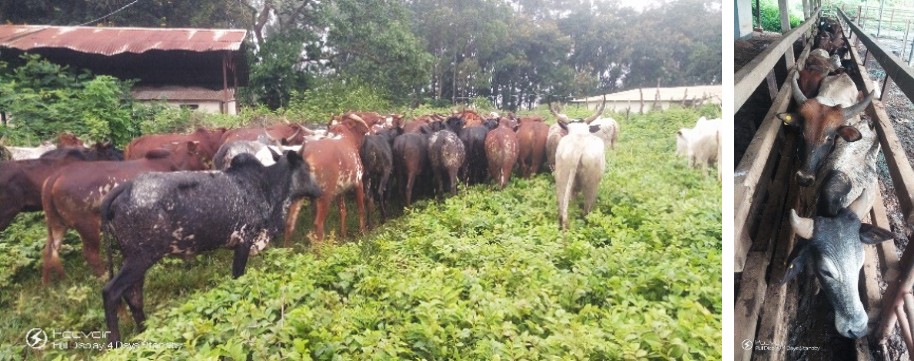
The animals selected for this study had access to natural pasture (Figure 1a). They had not received any antiparasitic treatment six months prior to the experiment. Their general condition was good, with no signs of disease. All experimental and control animals lived in the same environment throughout the experimental period and were randomly divided into five batches of 3 animals each (Figure 1b).
a b Figure 1: images showing animals on natural pasture (a) and different batches in a crush (b)
Collecting faecal Samples
Faecal samples collected followed this procedure: the animal stood upright restrained by two shepherds, the collector stood behind the immobilized animal wearing gloves and lifted the animal’s tail with one hand, then skilfully inserted fingers of the second hand in the shape of a cone into the animal’s rectum collecting 50 to 100 g of dung into a plastic bag. Faecal sample labelled with identification numbers were packed in a cooler for transportation to the laboratory and stored at 4°C if analyses were not immediate.
Blood sampling
The collector applied compression by hand on the jugular vein, then inserted the needle perpendicularly to the animal to pierce the skin, and inclined at an angle of around 30oas it penetrated the vein until blood was collected to the desired volume (2-5 mL). Pressure applied with cotton wool against the punctured skin prevented bleeding [8, 9].
Parasitological follow-up
An initial quantitative coproscopy was performed on 25 animals from the Wakwa Agricultural Research Center farm in order to select candidates. 24 hours before each treatment, we carried out; faeces and blood analyses and weighing to record eggs per gram of faecal matter, haematological parameters and weights to determine the corresponding concentration per subject. We determined the number of eggs per gram of faeces using Willis solution. In conjunction with quantitative pre- and post-treatment coproscopy [10, 11], blood samples and weights recorded enabled various parameters to be evaluated.
Repairing the saturated NaCl solution
We dissolved 40% sodium chloride in pure water (40g of salt per 100g of water). A density meter was used to check the concentration of salt in the solution.
Effect of Clove Aqueous Extract on infestation intensity
This was evaluated based on the number of eggs per gram of dung used (OPG) as described by Thienpont et al. (10) using the following formula:
n1+n2 OPG= ×100 2 Where; n1 is the number of eggs counted in cell 1 n2 the number of eggs counted in cell 2. Since the McMaster slide has two compartments or cells, the total number of eggs is equal to the sum of the eggs in the two cells divided by 2 and then multiplied by 100, or the sum of the eggs in two cells simply multiplied by 50.
The effect of Aqueous Clove Extract on reducing the parasite load between samples
At the start of the trial, the presence of strongyles eggs in the dung were noted in all batches. The reduction in the rate (R) of egg excretion in dung, made it possible to evaluate the variation in the level of parasite egg load at a given time (t) compared with the previous situation. This rate was calculated according to the following formula by Bauer et al. [12]:
( ) Initial OPG - OPG at time t R % = ×100 Initial OPG
Where; R (%): reducing the parasite load OPG: number of eggs per gram
Treatment efficacy
Treatment efficacy (E%) was calculated using President’s method [13], which considers the average Opg before and after treatment, according to the following formula:
( ) ( ) E%= 1 - T1/T2 C2/Cl ×100 Where; E% = efficacy rate T1 = Opg on nth day after treatment T2 = initial Opg of treated batch CI = Opg on nth day after treatment of control batch C2 = initial Opg of control batch.
Effect of Aqueous Clove Extract on average weight gain (AWG) after treatment
Weighing was carried out early in the morning before departure for grazing. Average daily gains were calculated using the formula proposed by Lhoste et al, [14].
( ) 1000 GMQ= Wf - Wi × ÄT
Where; GMQ = average daily gain (g/d) Wf = final live weight (kg) Wi = initial live weight (kg) ∆T = time between two weighings in days.
The effect of Aqueous Clove Extract on hematological parameters in cattle
An automatic counter (Mindray BC 20s flow cytometer, whose simplicity, speed, precision, and reliability are commendable), helped in analyzing several hematological parameters, including white blood cells, red blood cells, hemoglobin, hematocrit, mean corpuscular hemoglobin content, mean corpuscular hemoglobin concentration, mean corpuscular volume and platelets [15, 16, 17].
Statistical analysis
Data from hematological, fecal and weight were first processed in Excel version 2016 while the Statistical Package for Social Sciences (SPSS) was used to determine significance differences between treatments through analysis of variance Effect of extract on excretion, (ANOVA) )and to do comparison tests.
Results and discussion
Yield
The aqueous extract of clove yielded around 20.50%. This percentage is considered high due to the polarity of the solvent used (water). These results are in line with those of Amina et al. [18], who found a yield of 19.8% using aqueous extraction.
| OPG/EACG | Jo | J5 | J10 | J15 | J20 | J25 |
|---|---|---|---|---|---|---|
| 5 mg / kg | 700.00±86.60a | 100.00±50.00ab | 316.67±28.87ab | 383.33±76.38abc | 166.67±76.38ac | 166.67±76.38ac |
| 50 mg / kg | 816.67±57.74a | 300.00±50.00ab | 166.67±28.87ac | 850.00±50.00bc | 1016.67±76.38abc | 983.33±28.87abc |
| 300 mg / kg | 300.00±86.60a | 316.67±76.38b | 250.00±50.00 | 116.67±28.87abc | 366.67±28.87c | 400.00±50.00c |
| TN | 200.00±50.00 | 383.33±57.74 | 216.67±28.87 | 250.00±50.00 | 133.33±28.87 | 616.67±28.87 |
| TP | 333.33±28.87 | 116.67±28.87 | 400.00±86.60 | 183.33±28.87 | 83.33±28.87 | 750.00±50.00 |
Table 1: Effects of aqueous clove extract on bovine Gastro-Intestinal Parasites egg load in dung .
Table values are presented as mean ± standard deviation. Small letters compare means on rows. Means containing the same letter indicate a significant difference between them at the 5 % threshold. OPG: Eggs per Gram; EACG: Aqueous Clove Extract; TN: Negative Control; TP: Positive Control.
Apart from the negative control, which did not induce a significant reduction in parasite egg load in dung, all three doses and the positive control in Table 1 induced a significant drop (P<0.5) at different times during the trials. observations made 5 days after treatment with different doses revealed reduction in egg load as follows; 5mg/kg dose (700.00 ± 86.60 to 100.00 ± 50.00) and 50mg/Kg (816.67 ± 57.74 to 300.00 ± 50.00) This drop was brought below the threat threshold (<200) with each dose.
Compared with the positive and negative control batches, the reduction in egg load of bovine Gastro-Intestinal Parasites in dung caused by the aqueous extract of clove was significant (p<0.05) with doses of 5 and 50 mg/kg. The
Reduction in oviposition
desired effect, achieved with small doses, demonstrated the efficacy of Syzygium aromaticum in combatting gastro- intestinal parasites. These results concur with those of Hounzanbé-Adoté et al. [20] and Abladam et al. [21], who respectively showed that papaya seeds reduced infestation in sheep to a relatively low levels, and that the smaller doses (5 and 50 mg/kg versus 300 and 1000 mg/kg) induced a significant (p<0.05) drop in egg density below 250 up to day 20. This work also corroborated the work of numerous authors who recognized clove’s acaricidal [22], antifungal, antibacterial, antiviral and anesthetic properties [23, 24].
The increase in egg load from D15 (50 mg/kg) and D20 (300 mg/kg) suggests the efficacy might drop with time. Hounzanbé-Adoté et al. [20], suggested that the reduction in egg load observed in vivo is due either to adult worm mortality or a drop in female worm prolificacy. Nfi et al. [25] also showed that the ineffectiveness of certain plants in the treatment of gastro-intestinal parasites of ruminants could be attributed to pastures constantly harbouring parasites.
| Doses | J5 | J10 | J15 | J20 | J25 |
|---|---|---|---|---|---|
| 5 mg / kg | 85,71 | 54,86 | 45,29 | 76,29 | 76,29 |
| 50 mg / kg | 63,24 | 79,66 | -4,17 | -24,51 | -20,47 |
| 300 mg / kg | -5,33 | 16,67 | 61,33 | -22 | -33,33 |
| TP | 65,17 | -20,12 | 45,05 | 75,08 | -125,23 |
Table 2: Oviposition reduction rates of bovine gastrointestinal parasites after treatment with aqueous clove extract.
The values in the table are presented as percentages. TP: Positive Control. Table 2: Oviposition reduction rates of bovine gastrointestinal parasites after treatment with aqueous clove extract.
Table 2 shows a reduction rate over the whole trial period (ranged from 45 to 86% in the 5 mg/Kg dose and over two trials notably to 63 and 80% in the 50 mg/Kg dose, 5 and 10 days after treatment, respectively.
Oviposition reduction rates ranged from 45 to 86% and 63 and 80% respectively in 5 and 50 mg/Kg doses significantly (p<0.05) demonstrated the effect of aqueous clove extract in reducing oviposition of bovine gastrointestinal parasites, even without repeated treatment. These results are comparatively more appreciable than those obtained with albendazole (75.08%) . in the work of Hounzanbé-Adoté et al. [20], according to which papaya seeds reduced the level of egg load of gastrointestinal parasites in sheep by up to 60% on D13. This is similar with the same doses of 5 and 50 mg/kg of the aqueous extract of Carica papaya seeds, which respectively gave 86.67 and 84.21% reduction in oviposition of bovine gastro-intestinal parasites [21]. Nevertheless, these results, in agreement with those of many authors as stated above, are in contradiction with those of Nguessan et al. [26], according to whom the reduction rates from Annona senegalensis extracts during the first few days after treatment were lower than those of albendazole. This contradiction is also seen in the results of Githiori et al. [27], who found that herbal remedies in most cases had lower parasitism level reductions than synthetic anthelmintics in vivo control tests.
Treatment efficacy
Table 3 shows a treatment efficacy of 81.81% for the control (albendazole) and 92.54% (5mg/kg), 81.16% (50mg/kg) and 69.07% (300mg/kg) for the experimental units.
| Doses | J5 | J10 | J15 | J20 | J25 |
|---|---|---|---|---|---|
| 5 mg / kg | 92,54 | 58,20 | 56,23 | 64,34 | 92,31 |
| 50 mg / kg | 80,80 | 81,16 | 16,67 | -87,23 | 60,89 |
| 300 mg / kg | 44,99 | 22,84 | 69,07 | -83,46 | 56,71 |
| TP | 81,81 | -11,22 | 56,04 | 62,52 | 26,88 |
Table 3: Treatment efficacy with aqueous clove extract Compared with the efficacy of albendazole (81.81%) found, Table 3 shows a
The values in the table are presented as percentages. TP: Positive Control Table 3: Treatment efficacy with aqueous clove extract Compared with the efficacy of albendazole (81.81%) found, Table 3 shows a higher efficacy of treatment with aqueous clove extract at the lowest dose of 5 mg/kg (92.54%). This higher rate with the lowest dose is in line with that obtained by Abladam et al. [21] showing that the aqueous extract of clove eliminates gastrointestinal parasites Weight gain in cattle even in small quantities. On the other hand, these results disagree with those of Yonwa et al. [28], who showed that the efficacy of treatment with Senna italica extract on Haemonchus contortus is concentration-dependent in vitro, Implying that efficacy increases with concentration.
| GMQ (g / j) EACG | J5 | J10 | J15 | J20 | J25 |
|---|---|---|---|---|---|
| 5 mg / kg | 2800 | -1400 | -3400 | 600 | 2000 |
| 50 mg / kg | -1600 | 200 | -2800 | -2600 | 6800 |
| 300 mg / kg | 3000 | -3000 | -6800 | 400 | 5800 |
| TP | 2400 | 800 | 2800 | -5800 | 1000 |
| TN | 4200 | -400 | 1400 | -5600 | 2200 |
Table 4: Average daily weight gain of cattle after treatment .
Table values are given in g/d. ADG: Average Daily Gain; AECG: Aqueous Clove Extract Table 4: Average daily weight gain of cattle after treatment .
With the exception of the 50 mg/kg animals, which showed gains from D10 onwards, all animals in the other batches (positive control, negative control, 5 and 300 mg/kg) showed average daily gains ranging from 2400 to 4200g/d from D5 onwards.
The average daily gain after treatment with aqueous clove extract showed significant temporal variability (p<0.05) in results both between individuals in the same batch (5 mg/ kg: 2800g/d at D5, 600g/d at D20 and 2000g/d at D25) and between batches (6800g/d with 50 mg/kg at D25 and
5800g/d with 300 mg/kg at D25). This variability in average daily weight gain was also observed by Yonwa et al. [33] in their work evaluating in vivo the anthelmintic activity of Effect of extract on haematological parameters Callistemon rigidus on Haemonchus contortus. This gain can be attributed to the low parasite load caused by the aqueous extract, helping animals to maximise nutrients.
| 5 mg / kg | ||||||
|---|---|---|---|---|---|---|
| Jo | J5 | J10 | J15 | J20 | J25 | |
| GB (109/l) | 10,70 | 10,33 | 9,23 | 7,20 | 6,90 | 7,63 |
| Gran (103/µL) | 4,57 | 3,47 | 3,13 | 1,23 | 1,70 | 2,10 |
| Gran (%) | 43,57 | 33,37 | 33,80 | 31,10 | 24,70 | 27,03 |
| GR (106/µL) | 4,89 | 4,90 | 5,63 | 4,26 | 4,32 | 4,69 |
| HGB (g/dL) | 10,90 | 10,60 | 11,50 | 9,60 | 8,90 | 9,17 |
| HCT (%) | 28,73 | 27,33 | 31,87 | 28,17 | 26,63 | 29,50 |
| VGM (µ3) | 58,00 | 55,73 | 56,83 | 42,80 | 62,53 | 63,60 |
| TCMH (pg) | 22,33 | 21,57 | 20,17 | 21,33 | 21,33 | 19,83 |
| CCMH (g/dL) | 38,87 | 38,87 | 35,77 | 34,23 | 34,03 | 31,23 |
| PLT (103/µL) | 165,33 | 157,33 | 187,33 | 125,33 | 280,67 | 370,67 |
| 50 mg / kg | ||||||
| Jo | J5 | J10 | J15 | J20 | J25 | |
| GB (109/l) | 11,40 | 13,50 | 11,53 | 13,30 | 9,17 | 10,63 |
| Gran (103/µL) | 4,43 | 4,60 | 3,23 | 3,47 | 2,83 | 2,93 |
| Gran (%) | 39,00 | 35,23 | 27,03 | 30,73 | 31,13 | 27,77 |
| GR (106/µL) | 4,70 | 4,43 | 4,54 | 4,77 | 4,47 | 4,88 |
| HGB (g/dL) | 10,27 | 9,43 | 8,80 | 9,47 | 9,03 | 9,17 |
| HCT (%) | 27,27 | 24,03 | 26,00 | 28,00 | 25,80 | 28,80 |
| VGM (µ3) | 60,27 | 54,37 | 56,93 | 58,50 | 57,40 | 58,60 |
| TCMH (pg) | 21,77 | 21,30 | 19,23 | 19,77 | 20,37 | 18,70 |
| CCMH (g/dL) | 36,877 | 39,33 | 33,93 | 33,87 | 35,67 | 32,07 |
| PLT (103/µL) | 177,33 | 147,00 | 174,00 | 280,00 | 760,33 | 107,33 |
| 300 mg / kg | ||||||
| Jo | J5 | J10 | J15 | J20 | J25 | |
| GB (109/l) | 13,23 | 12,47 | 11,00 | 10,10 | 8,53 | 8,00 |
| Gran (103/µL) | 5,93 | 4,10 | 3,77 | 3,27 | 3,07 | 2,17 |
| Gran (%) | 44,57 | 33,40 | 34,37 | 32,27 | 34,93 | 28,57 |
| GR (106/µL) | 5,88 | 4,89 | 5,57 | 5,20 | 5,18 | 5,37 |
| HGB (g/dL) | 13,07 | 10,73 | 11,33 | 10,57 | 10,87 | 10,37 |
| HCT (%) | 33,53 | 27,30 | 32,77 | 30,37 | 30,60 | 31,63 |
| VGM (µ3) | 55,40 | 55,83 | 58,57 | 58,20 | 58,70 | 58,97 |
| TCMH (pg) | 22,03 | 21,90 | 20,30 | 20,33 | 21,13 | 19,30 |
| CCMH (g/dL) | 38,77 | 39,37 | 34,87 | 35,13 | 36,40 | 32,83 |
| PLT (103/µL) | 164,00 | 178,00 | 386,33 | 214,67 | 428,33 | 155,33 |
Table 5: Effect of aqueous clove extract on bovine complete blood count.
Table 5 shows, on the one hand, a decrease in white blood cell count with each of the three doses 5 mg/kg (43.57 to 24.70%), 50 mg/kg (39.00 to 27.03%) and 300 mg/kg (39.00 to 27.03%). Platelet counts increased from 165.33 to 370.67x10³/µL at 5 mg/kg, from 177.33 to 760.33x10³/ µL at 50 mg/kg and from 164.00 to 428.33x10³/µL at 300 mg/kg. Similarly, an increase in red blood cell count from 4.89 (D0) to 5.63 (D10) and haemoglobin from 10.90 (D0) to 11.50 (D10) was observed at the 5mg/kg dose.
The significant downgrading (p<0.05) of the leukocyte count from D0 (43.57%, 39.00% and 44.57%) to almost half (24.70%, 27.03% and 28.57%) in the three doses respectively, would result from low levels of chemotactic factors that usually trigger their production during an infestation.
When the cause of their production fades, following the possible elimination of the infestation by the aqueous extract of clove,, and as their half-life is only about ten hours, the white blood cells decreases (neutropenia and eosinopenia) through apoptosis. These observations are in line with those of Drieu [34] and Abladam et al. [21], who respectively demonstrated that when granulocytes perform their function, they can disappear in a controlled, programmed manner, and granulocyte levels drop significantly after the anthelmintic action of the aqueous extract of papaya seeds. Nevertheless, all these observations stand in contrast to those of Kouadio et al. [35], according to whom Ficus sycomorus leaf extracts revealed a significant increase in the white blood cell and platelet levels of treated rats.
Crucial for characterizing circulating erythrocytes in the blood, Wintrobe erythrocyte indices reveal macrocytic anemia from D20 (5 mg/kg) and normocytic anemia from D5 to the end of the experiment (50 mg/kg). The normocytic anemia in the batch receiving 50 mg/kg throughout the test period could be due to the balance of the aqueous clove extract.
The aqueous extract of clove restored normochromic anemia, with values for Mean Corpuscular Hemoglobin Concentration returned to the reference range from D5 (5 mg/kg) and D10 (50 and 300 mg/kg), as well as values for Mean Corpuscular Hemoglobin Content from D5 in all treated batches.
Despite the absence of data highlighting the effect of plants on bovine hematology, the results confirm the anthelminthic activity of this plant species in restoring the animal’s physiological equilibrium, and corroborate those of Amina et al. [18], in which the nematotoxic effect of aqueous and hydroethanolic extracts of Calotropis procera and Faidherbia albida leaves, bark and roots were evaluated in vitro on Onchocerca ochengi (microfilariae and adults) and the resistant free-living nematode Caenorhabditis elegans with LC50s of 0.13 and 0.18 mg/mL.
Conclusion
Clove has proven to be an attractive alternative in the fight against strongyles. It restores blood parameters to normal levels for cattle, reduces the excretion of parasite eggs in feces and promotes weight gain. The buccal administration of its aqueous extract yields promising results in the elimination of digestive strongyles from cattle. Further trials involving incorporation of the extract into cattle feed would determine in vivo alicament quantities relative to animal masses.
Conflicts of interest
The authors declare that they have no conflicts of interest.
Author contributions
ADE: technical manipulations, data collection and analysis, drafting of article; DNE: technical manipulations, data collection and analysis; MHF: article writing; ND: study conception and article writing.
Acknowledgements
We would like to thank the senior management of the institute of agricultural research for development (IRAD) for making the animals available to us. We acknowledge the staff of the veterinary and food technology laboratories of the Wakwa Agricultural Research Centre (Ngaoundéré) respectively for their contributions to sampling/analysis and extract preparation.
References
-
FAO, IFAD, UNICEF, WFP and WHO (2019) The State of Food Security and Nutrition in the World 2019. Safeguarding against economic slowdowns and downturns. Rome, FAO. Licence: CC BY-NC-SA 3.0 IGO.
-
Abladam DE, Djedoubouyom NE, Hassanu FM, Yonwa and Ndjonka D (2024a) Ethno-veterinary treatment of digestive parasites of cattle in the Vina division, Adamawa region, Cameroon. Int. J. Biol. Chem. Sci. 18(6): 2127-2144.
-
Searchinger TD, Beringer T, Holtsmark B, Kammen DM and Lambin EF et al. (2018) Europe’s renewable energy directive poised to harm global forests. Nature Communications 9: 3741.
-
De Krishna De MA and Banerjee AB (1999) Screening of spices for antimicrobial activity. Journal of Spices and Aromatic Crops 8(2): 135-144.
-
Agbaje EO (2008) Gastrointestinal effects of Syzigium aromaticum (L.) Merr. & Perry (Myrtaceae) in animal models. Nig. Quart. J. Hosp. Med. 18(3): 137-141.
-
Aggarwal BB and Shishodia S (2006) Molecular targets of dietary agents for prevention and therapy of cancer. Biochemical Pharmacology 71(10): 1397-1421.
-
Menghani E, Rana A, Saraswat P and Pareek A (2014) Antibacterial potentials of two Indian spices. 5(3): 666- 672.
-
Schalm OW, Feldman BF, Zinkl JG and Jain NC (2000) Schalm’s Veterinary Hematology. 5th ed. Blackwell Scientific Editions, 1344p.
-
Chuzel T (2003) Le frottis sanguin : ses apports et ses limites. Le Point Vétérinaire 23: 28-35.
-
Thienpont D, Rochette F and Vanparijs OFJ (1995) Diagnostic de verminoses par examen coprologique. Jansen Research Fondation, Beerse, Belgique, 205p.
-
Sacramento TI, Ategbo JM, Mensah GA and Adote- Hounzangbe S (2010) Effet antiparasitaire des graines de papaye (Carica papaya) chez l’aulacode (Thryonomys swinderianus Temminck, 1827) d’élevage : cas des aulacodicultures du Sud-Bénin. Int. J. Biol. Chem. Sci. 4(6): 2280-2293.
-
Bauer C, Merkt JC, Janke-Grimm G and Bürger H (1986) Prevalence and control of benzimidazole-resistant small strongylus on German Thoroughbred studs. Vet. Parasitol. 21: 189-203.
-
Presidente PJA (1985) Methods for detection of resistance to anthelmintics. In: Anderson N and Waller PJ (Eds.), Resistance in nematodes to anthelmintic drugs. Melbourne, Australia, CISRO Division of Animal Health, Australian Wool Corporation Technical Publication, pp. 13-28.
-
Lhoste P, Dollé V, Rousseau J and Soltner D (1993) Manuel de zootechnie des régions chaudes: les systèmes d’élevage. Collection Précis d’élevage, Ministère de la Coopération, France, 281p.
-
Dawson H, Hoff B, Grift E, Tvedten H and Shoukri M (2000) Validation of the Coulter AcT Diff hematology analyzer for analysis of blood of common domestic animals. Veterinary Clinical Pathology 29(4): 132-136.
-
Holsteg M, Failing K, Doll K and Moritz A (2002) Advanced red cell evaluation in cattle using a new laser- based multiparameter hematology. Proceedings of the XXII World Buiatrics Congress, Hanovre.
-
Weiss DJ (2002) Application of flow cytometric techniques to veterinary clinical hematology. Veterinary Clinical Pathology 31(2): 72-82.
-
Amina M, Younoussa L, Fanta YSA, Nguezeye Y and Okah- Nnane NH et al. (2023) In vitro nematocidal potential of hydro-ethanolic and aqueous extracts of Calotropis procera (Aiton) W.T. Aiton, 1811 (Apocynaceae) and Faidherbia albida (Delile) A. Chev., 1934 (Fabaceae) against Onchocerca ochengi and Caenorhabditis elegans. Heliyon 9: 1-14.
-
Falleh H, Hafsi C, Mohsni I and Ksouri R (2021) Évaluation de différents procédés d’extraction des composés phénoliques d’une plante médicinale : Verbena officinalis. Biologie Aujourd’hui 215: 133-142.
-
Hounzangbe-Adote MS, Attakpa EY, Zinsou E, Hounkpe V and Hoste H (2008) Effets antiparasitaires de la graine de papaye sur les strongles gastro-intestinaux de petits ruminants au Sud-Bénin. Bull. Rech. Agro. pp. 13-18.
-
Abladam DE, Djedoubouyom NE, Etchu KA, Eva L and Ndjonka D (2024) In vivo anthelmintic activity of aqueous extract of Carica papaya seeds on gastrointestinal nematode parasites of cattle in Cameroon. Afr. J. Bio. Sc. 6(14): 4743-4761.
-
Fichi G, Flamini G, Zaralli LJ and Perrucci S (2007) Efficacy of an essential oil of Cinnamomum zeylanicum against Psoroptes cuniculi. Phytomedicine 14(2-3): 227- 231.
-
Chaieb K, Hajlaoui H, Zmantar T, Kahla-Nakbi AB and Rouabhia M et al. (2007) The chemical composition and biological activity of clove essential oil, Eugenia caryophyllata (Syzigium aromaticum L. Myrtaceae): A short review. Phytother. Res. 21: 501-506.
-
Lee S, Najiah M, Wendy W and Nadirah M (2009) Chemical composition and antimicrobial activity of the essential oil of Syzygium aromaticum flower bud (clove) against fish systemic bacteria isolated from aquaculture sites. Front. Agric. China 3(3): 332-336.
-
Nfi A, Ndi C, Bayemi PH, Rjwe R and Tchoumboue J et al. (1999) The anthelmintic efficacy of some indigenous plants in the northwest province of Cameroon. Rev. Elev. Méd. Vét. Pays Trop. 52: 103-106.
-
Nguessan CB, Koutouan FP, Wandan EN, Yapo MY and N’din NS et al. (2017) Évaluation in vivo des propriétés anthelminthiques des extraits aqueux d’Annona senegalensis Pers. (Annonaceae) chez les ovins Djallonkés. Journal of Animal & Plant Sciences 32(2): 5111-5119.
-
Githiori JM, Athanasiadou S and Thamsborg SM (2006) Use of plants in novel approaches for control of gastrointestinal helminths in livestock with emphasis on small ruminants. Veterinary Parasitology 139(4): 308- 320.
-
Yongwa G, Belga FNFN and Ndjonka D (2020a) In vitro anthelmintic activity of aqueous and ethanolic extract of Senna italica (Caesalpiniaceae) on three stages of Haemonchus contortus. JPRI 32(3): 25-34.
-
Dorosso AM (2002) Compositions chimiques d’huiles essentielles extraites de plantes aromatiques de la zone soudanienne du Burkina Faso : valorisation. Thèse de Doctorat PhD, Université de Ouagadougou, 264p.
-
Kaloustian J and Hadji-Minaglou F (2012) La connaissance des huiles essentielles : Qualitologie et aromathérapie : entre science et tradition pour une application médicale raisonnée. Collection Phytothérapie pratique, Springer- Verlag, Paris, France, 210p.
-
Goetz P and Le Jeune R (2010) Syzygium aromaticum (L.) Merr. & Perry (Myrtaceae) Giroflier. Phytothérapie 8: 37-43.
-
Tariq S, Wani S, Waseem R, Khusboo S and Muzzaffar AB et al. (2019) A comprehensive review of the antibacterial, antifungal and antiviral potential of essential oils and their chemical constituents against drug-resistant microbial pathogens. Microb. Pathog. 134: 103580.
-
Yongwa G, Ndjonka D and Belga FNFN (2020b) In vivo anthelmintic activity of Callistemon rigidus ethanolic extract on Haemonchus contortus in goats. African Journal of Biological Sciences 2(3): 103-112.
-
Drieu C (2009) Hématologie en médecine bovine et application à la réalisation d’une transfusion. Thèse de Doctorat Vétérinaire, Alfort, 134p.
-
Kouadio AL, Gnahoue G, Kple MKT, Abizi G and Kone SD et al. (2022) Effet des extraits des feuilles de Ficus sycomorus sur les paramètres hématologiques et biochimiques des rats Wistar. Int. J. Biol. Chem. Sci. 16(2): 680-694.
- Successful in Vitro Embryo Production with Oocytes Aspirated from Live White-Tailed Deer (Odocoileus Virginianus Texanus) Donors under Captivity in Northeast Mexico
- Bangladeshi Finches with their Evolutionary Thoughts (Aves: Passeriformes)
- Note on the Survival Status of Przewalski’s Horse, Equus ferus przewalskii (Perissodactyla: Equidae)
- In-Situ and Ex-Situ Protection of White-Breasted Waterhen (Amaurornis Phoenicurus) (Pennant, 1769) (Aves: Rallidae)
- Meat Examination in the Laboratory, the Acceptability and the Human Health
- Mutations in the GDF8 Gene in Double-Muscled Cattle: Mechanisms of Action and Relevance for Livestock Production