
A Comprehensive Survey of Population Ecology in Insects
Population ecology focuses on studying populations and their relationship with the environment, including parameters such as birth, death, migration, density, and age distribution. Population ecology involves laboratory work, field observations, and the use of mathematical and statistical models to study groups of organisms. By studying populations, researchers gain insights into population dynamics, growth, distribution, density, and age structure. Insects play a vital role in population ecology by influencing ecosystems and human societies. They contribute to ecological processes such as decomposition, pollination, and nutrient cycling. In addition, some insects produce valuable substances, and predatory insects help control pests. Understanding population dynamics and interactions is crucial for conserving and managing natural resources effectively. Population ecology is a branch of ecology that focuses on studying the lives of organisms within populations and their interactions with the environment and other populations. Different species have developed various strategies to deal with organisms of their species or other species. Some species compete directly with individuals of the same species, while others form social groups and cooperate to secure resources. Population ecologists examine complex interactions between organisms and their environment, which lead to different selective pressures for animals that compete with individuals of the same species. Humans, for example, have been successful in part because of their social nature and ability to cooperate to obtain vital resources. The field of population ecology seeks to answer questions about the carrying capacity of the environment, the optimal population size, the causes and mechanisms of population growth, and population distribution. Insects play a significant role in biodiversity, accounting for 64% of the world's biodiversity. They have diverse functional roles in ecosystems, including herbivores, hunting, parasitism, decomposition, and pollination. Various factors influence the number, population, and survival of insects, including insect diversity, abundance, evolution, and habitats. Population ecology studies these factors to understand the survival and current population dynamics of insects. The distribution of insects is an important indicator of species diversity and is influenced by factors such as time, conditions, and food resources. For example, the leopard beetle Cicindela longilabris is found at higher latitudes and elevations, with populations ranging from northwestern Canada to the coastal states of eastern Canada. Ecologists believe that historical climate changes, such as the last Ice Age, have influenced the current distribution of this species. In studying insect populations, ecologists use sampling techniques to estimate population size and abundance. Statistical methods, such as the rarefaction method, are employed to compare species abundance in different areas and estimate the number of species present in a sample. Understanding changes in insect population density over time is important, and ecologists study population life cycles and population explosions to gain insights into these fluctuations. By comprehending and predicting changes in insect populations, ecologists can mitigate potential damage and obtain valuable information about insect abundance. Certain species of locusts, including the desert locust, migratory locust, tree locust, and Australian locust, experience periodic population eruptions. In South America, various species of desert locusts are also significant pests. Climatic factors play a significant role in the formation and migration of locust swarms. Locust eggs can remain dormant in the soil until rain triggers their hatching. The rainy season is optimal for egg development, and rainfall also promotes the growth of green plants, which serve as food for nymphs and adult grasshoppers. The El Nino phenomenon, characterized by periodic changes in flight patterns, has a significant impact on locust populations, causing substantial damage every few years. Satellite imagery is commonly used to identify locust groups by detecting areas of new plant growth following rain. Once the nymphs have exhausted their food sources, the locust swarm enters the migratory phase, guided by wind direction. These swarms can persist for months or even years under favorable weather conditions, but population declines occur when dry weather or significant temperature drops occur. In conclusion, population explosions in migratory locusts are primarily influenced by density-independent factors like climate change, rather than density-dependent factors.
Introduction
Throughout history, living creatures have coexisted and interacted with each other, being influenced by a wide range of factors such as living and non-living elements, environmental cycles, various phenomena, and events. These factors are interconnected and have a significant impact on each other, shaping everything from the erosion of rocks by organisms to the effects of non-native species on native ones. Planet Earth is home to millions of animal and plant species. As different species often inhabit the same areas and compete for resources, they interact with each other in various ways. These interactions play a crucial role in the lives of organisms and the environment. For instance, the wind affects plant dispersal and insect pollination, weather conditions influence transportation, and the presence of similar or different species can lead to biological relationships. Organisms, both within their species and with other species, experience complex relationships. These interactions create selective pressures that drive natural selection and the evolution of species populations. Ecology encompasses the study of these forces, their origins, and the intricate connections between organisms, as well as their interactions with other organisms and the non-living environment.
Population ecology, a branch of ecology, focuses on the study of populations and their relationship with the environment. Its objective is to describe populations in terms of birth, death, migration, and other parameters such as density, spatial distribution, and age distribution. A population is defined as a group of individuals belonging to the same species, living in a shared area at the same time. Members of a population utilize the same resources and interact with one another. The boundaries of a population can be either natural, such as fish in a lake, or defined by researchers. Research in population ecology encompasses laboratory work, field observations, and the use of mathematical and statistical models to study groups of organisms. Insects are of great importance in population ecology due to their significant impact on the lives of humans and other creatures. Their sheer abundance and population size make them key players in ecosystems. These effects can be both beneficial and harmful, and cannot be overlooked. For example:
- Insects are not only additional creatures and pests, but if they were to disappear suddenly, it would create immense challenges for all creatures, including humans, and pose a major threat to their survival.
- Certain insects produce valuable substances like honey and beeswax, silk from silkworms, and lacquer from lacquer insects.
- Insects, such as bees, are crucial for pollination, contributing to agricultural products worth millions of dollars in the United States alone.
- Many predatory insects, like tiger beetles, aphid- munching ants, wasps, and cobbler beetles, help control harmful insects. Insects also serve as a food source for other organisms. Insect parasites play a vital role in regulating populations of numerous harmful insects. Additionally, the larvae of certain fly species quickly consume dead animals, aiding in decomposition. Forensic entomology uses the sequence of insects found on a corpse to estimate its age, providing investigators with valuable information about the time of death [1, 2].
Population ecology focuses on the study of populations of organisms and their interactions with the environment. It aims to understand population dynamics, including growth, distribution, and other parameters such as density and age structure. A population refers to a group of individuals of the same species residing in a specific area simultaneously. These individuals share resources and interact with one another. The boundaries of a population may be naturally defined, such as a school of fish in a lake, or assigned by researchers for study purposes. Research in population ecology involves various methods, including laboratory investigations, field observations, and the use of mathematical and statistical models. By studying populations, researchers can gain insights into the factors influencing population size and dynamics, such as birth rates, death rates, migration patterns, and interactions with other species. In conclusion, insects play a significant role in population ecology due to their high numbers and diverse species. Their effects on ecosystems and human societies can be both beneficial and detrimental. Insects are commonly viewed as pests because they can cause harm to crops, structures, and human health. However, the sudden disappearance of all insects would have disastrous effects on the entire ecosystem, including humans. Insects play a vital role in crucial ecological processes such as decomposition, pollination, and nutrient cycling. In addition to their ecological contributions, some insects produce valuable substances that are beneficial to humans. Bees, for example, produce honey and beeswax, silkworms produce silk, and lacquer insects produce shellac, which is used in various products. Of particular importance is the role of insects in pollination, with bees being key contributors.
By transferring pollen from male to female flower parts, they enable the fertilization and reproduction of numerous plant species. This process is essential for the production of fruits, seeds, and crops. Bee pollination alone is estimated to be worth billions of dollars in the United States. Moreover, predatory insects play a crucial role in controlling populations of harmful insects. They act as natural enemies, preying on pests and helping to maintain ecological balance. For instance, ladybugs consume aphids, wasps parasitize other insects, and beetles feed on pest larvae. Furthermore, insects serve as a vital food source for other organisms in the food chain, contributing to energy flow and nutrient cycling. By studying populations and their dynamics, population ecology provides valuable insights into the complex interactions between organisms and their environment. Researchers can gain a better understanding of the factors that shape ecosystems and the consequences of population changes. This knowledge is essential for effectively conserving and managing natural resources [2].
Population Ecology
Due to the existence of a wide variety of life on the planet, different species have developed different strategies to deal with organisms of their species or organisms of other species. Some species compete directly with organisms of the same species, while other organisms form close-knit social groups and cooperate with other organisms to secure resources. A branch of ecology called population ecology studies the lives of organisms such as bees and wolves that work together to form colonies and populations. Complex interactions between these organisms and the existing environment lead to different selective forces for animals that compete with organisms of the same species. Scientists hypothesize that the increased success (chance of survival) in human society may be because humans live socially and cooperate to secure their vital resources. “Population Ecologist” studies the population of organisms and their complex interactions with the environment and other populations. The concept of population ecology seeks to answer questions related to the carrying capacity of the environment, the optimal size of the population, the causes and mechanisms of the increase in size, including population distribution, etc [3, 4].
Ecology of Insect Population
Undoubtedly, insects are a major part of biodiversity. Biodiversity is defined as the transformation and changeability of living organisms in various environments, including land, sea, and other aquatic ecosystems and ecological complexes. Insects make up 64% of the world’s biodiversity. In addition to being diverse, insects have numerous functional roles in the ecosystem, such as herbivory, hunting, parasitism, decomposition, pollination, etc. Many factors affect the number, population, and survival of insects. Factors such as diversity of insects, abundance, evolution and habitats, etc. All these factors together have caused the survival and the current population of insects, and population ecology studies these factors [5].
Distribution of Insects
The existence of a wide variety of life on the planet has led to the development of different strategies among different species when it comes to interacting with organisms of their species or organisms of other species. Some species directly compete with organisms of the same species, while others form close-knit social groups and cooperate with other organisms to secure resources. Population ecology, a branch of ecology, focuses on studying organisms like bees and wolves that work together to form colonies and populations. The complex interactions between these organisms and the environment result in different selective forces for animals that compete with organisms of the same species. Scientists hypothesize that the increased success (chance of survival) in human society may be attributed to the fact that humans live socially and cooperate to secure vital resources. Population ecologists study the population of organisms and their complex interactions with the environment and other populations. The concept of population ecology aims to answer questions related to the carrying capacity of the environment, the optimal size of a population, the causes and mechanisms of population growth, and population distribution, among other factors.
Ecology of Insect Population
Insects are undeniably a major part of biodiversity, which refers to the variety and adaptability of living organisms in
different environments, including land, sea, and other aquatic ecosystems and ecological complexes. Insects account for 64% of the world’s biodiversity. Besides their diversity, insects play numerous functional roles in ecosystems, such as herbivores, hunting, parasitism, decomposition, and pollination. Many factors influence the number, population, and survival of insects. Factors such as insect diversity, abundance, evolution, and habitats all contribute to the survival and current population of insects, which are studied by population ecology. The distribution of insects is an indicator of species diversity and involves studying the environment’s local density and ecological characteristics. The distribution of insects in an environment depends on factors such as time, conditions, and food resources. For example:
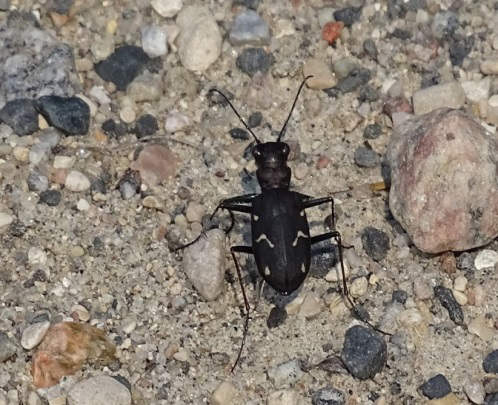
The leopard beetle Cicindela longilabris (Figure 1) is found at higher latitudes and elevations, similar to other North American leopard beetle species. C. longilabris ranges from the head of the Yukon in northwestern Canada to the coastal states of eastern Canada.
| Moorish fir | Moorish birch | Knapdale fir | Knapdale birch | |
|---|---|---|---|---|
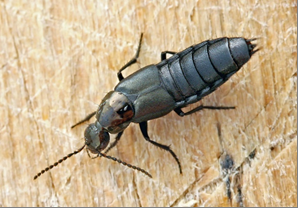
| Philonthus decorus (Figure 2) | 0 | 246 | 0 | 39 |
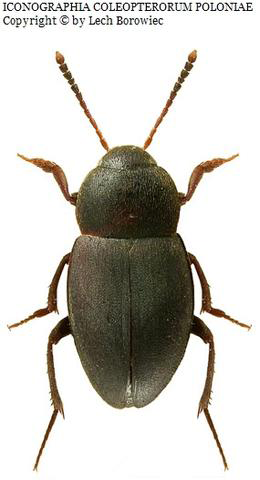
| Catops nigrita (Figure 3) | 15 | 12 | 1 | 2 |
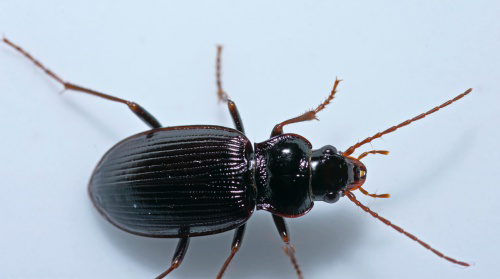
| Nebria brevicollis (Figure 4) | 2 | 149 | 0 | 0 |
| Calathus Micropterus (Figure 5) | 4 | 38 | 0 | 0 |
| Catops teristis | 3 | 13 | 1 | 1 |
Table 1: Species diversity index of ground beetles in four forests-Moorish fir, Moorish birch, Knapdale fir, and Knapdale birch [
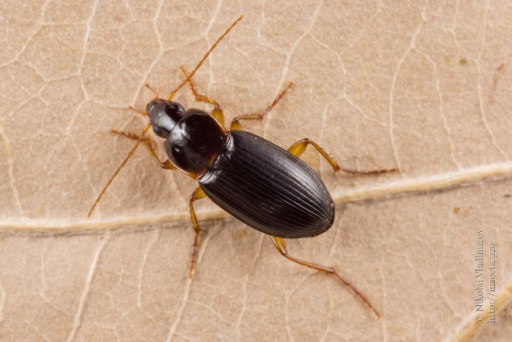
This northern band of beetle populations coincides with North America’s distribution of northern temperate and boreal forests. C. longilabris also inhabits areas as far south as Arizona and New Mexico. However, these southern populations are limited to high mountains, where C. longilabris is restricted to mountain pine forests with a climate similar to that of North America’s boreal forests. Ecologists believe that during the last Ice Age, C. longilabris inhabited areas further south than its current range, and then the leopard beetles sought more favorable climates further north and higher in the mountains of western North America. As a result, the southern part of this species now exists as isolated mountain populations. Species diversity is not the sole factor determining the success of insects; their abundance also plays a significant role. Sampling is a method used to estimate the population and abundance of insects. Ecologists employ statistical techniques to determine the frequency of sampling by collecting samples from various locations and habitats, comparing them, and creating graphs on multiple occasions.
There are several methods for comparing species abundance in different areas. If there is a significant difference in the total number of individuals sampled in different regions, the rarefaction method can be used to estimate the number of species present in those samples. The rarefaction method is a statistical technique for estimating the expected number of species from a randomly selected set of individuals in a sample. Essentially, the rarefaction method allows for species estimation when a smaller number of samples are taken. Its primary objective is to enable direct comparison of communities based on the number of species in the sample. The rarefaction method has been employed in numerous studies. For example, Wllie, et al. used data from herbaceous plants to apply the rarefaction method and eight species richness estimators. They concluded that an accurate assessment of species richness is possible when samples are collected accurately and within limited areas [7].
Insect Population Changes
Ecologists find it intriguing that insect population density fluctuates over time. To investigate these changes, they have explored some fundamental ecological processes. However, interpreting these patterns and processes still poses challenges for ecologists. Significant changes in insect population density occur due to two phenomena: population life cycles and population explosions [8]. Life cycles repeat periodically, with predictable peaks followed by a rapid decline. In contrast, invasive populations spend extended periods at low densities before experiencing a sudden outbreak. If such an explosion occurs abruptly, it may endure for a considerable duration. By predicting and accurately anticipating these changes, significant damage can be avoided, and valuable information about insect abundance can be obtained [8, 9, 10].
Population Explosion
Population explosion occurs when environmental conditions directly or indirectly stimulate rapid growth in insect populations. However, the impact of this growth on reproduction is not always clear due to unpredictable environmental conditions. Grasshoppers are a classic example of this phenomenon. Certain species of locusts, such as the desert locust Schistocerca gregaria, the migratory locust Locusta migratoria, the tree locust Anacridium melaviorhooden, and the Australian locust Chortoicetes terminifera, experience periodic population eruptions [11]. In South America, various species of desert locusts are also significant pests [12]. Climatic factors largely influence the formation and migration of locust swarms [8]. Locust eggs can remain dormant in the soil for months until rain triggers their hatching. The rainy season is optimal for egg development depending on soil type. Rainfall also promotes the growth of green plants, which serve as food for nymphs and adult grasshoppers [9].
The El Nino phenomenon, characterized by periodic changes in flight patterns, has a significant impact on locust populations, causing substantial damage every few years. For example, in 1983, Peru experienced heavy rainfall due to El Nino, leading to a sudden increase in locust numbers. Satellite imagery is commonly used in international programs to identify locust groups by detecting areas of new plant growth following rain. Once the nymphs have exhausted their food sources, the locust swarm enters the migratory phase, guided by wind direction [13, 14]. Under favorable weather conditions, these swarms can persist for months or even years. Population declines occur when dry weather or significant temperature drops occur [13, 14]. In conclusion, population explosions in migratory locusts are primarily influenced by density-independent factors like climate change, rather than density-dependent factors.
References
-
Cleveland H, Larry R, Larsen A (2018) Zoology: Vertebrates. Burhan School Cultural Institute, Translator: Hossein Daneshfar, pp: 915.
-
Hickman KP, Roberts LS, Larson A (1996) Hickman’s Comprehensive Principles of Zoology. Translator of Biology House Translators Group 1.
-
Campbell N, Mitchell L, Rees J (2006) Biology, Priya Pouyan, House of Biology, In: Bahram M (Ed.), Mostafa Pouyan-Pahnehkalai, pp: 612.
-
Linder H (2016) Biology, translated by Hoshang Garman. Iran Technical Publishing Company, Iran.
-
Manual C, Molles (2013) Ecology, concepts and applications. EBook, Salekan, Iran.
-
Abadis dictionary.
-
Valadi G, Rad EJ, Zrgaran MR (2018) Application of numerical indices “Rarefaction and Jackknife” to evaluate oak forest plant richness. Plant Research Journal 31(3): 606-616.
-
Spaith MR (2013) Ecology of Insects Concepts and Applications Ahmad Ashuri. Tehran University Press, Iran.
-
Hannan MT, Freeman J (2013) Organizations. American Journal of Sociology 82(5): 929-964.
-
Minorsky PV, Jackson RB (2014) Campbell Biology. Pearson’s Introduction to Population Ecology. John Wiley.
-
Wright DE (1986) Economic assessment of actual and potential damage to crops caused by the 1984 Locust Plague in South-eastern Australia. Journal of Environmental Management 23: 293-298.
-
Hunter DM, Cosenzo EL (2009) The origin of plagues and recent outbreaks of the South American locust, Schistocerca cancellata (Orthoptera: Acrididae) in Argentina. Bulletin of Entomological Research 80(3): 295-300.
-
Camuffo D, Enzi S (1991) Locust Invasions and Climatic Factors from the Middle Ages to 1800. Theor Appl Climatol 43: 43-73.
-
Hunter D (1989) Ttemperature Thresholds for Development in Diapausing Eggs of the Australian Plague Locust, Chortoicetes terminifera (Orthoptera: Acrididae). Journal Environmental Entomology 18(2): 213-215.
- Plant Diversity, Regeneration Dynamics, and Socio-Ecological Impacts at the Forest-Savanna Transition Zone, Cameroon
- Bird Community, Feeding Guilds and Habitat Associations Along the Proposed River Dibombe Hydropower and Transmission Line Project in Nkam and Moungo Divisions, Cameroon
- Plant Diversity and Carbon Storage Potential Across Different Land Use Types in Infrastructure Development Landscapes in Cameroon: Implications for no Net Loss of Biodiversity
- Optimization and Modelling for the Remediation of Brilliant Green Dye and Ni2+ ions from Water Using Advanced gC3N4/PVA@ Alginate Bio-Polymeric Hydrogel Beads
- The Negative Implications of Using Cell Phones on Human Health and Environment
- Evaluation of Coiled Tubing Limitations to Drill Out Frac Plugs