
Famous World Anatoms in the Reflection of Ukrainian Philately
The article presents the results of the study on reflection, exclusively, in the phylatelicual materials of Ukraine of different years, postage stamps, envelopes, small vintage sheets dedicated to world-famous anatomists. Illustrative materials of the article are supplemented with the necessary text comments to them. The textual and illustrative materials have been divided by the author into different historical periods, beginning with the presentation of the scientific activities of anatomists in ancient Greece, in the Arab East, in the periods of the middle Ages and the Renaissance, and further, including the period from the 17th to the 20th century. In addition, all the illustrative philatelic material presented in this article is actively supplemented by textual biographical data, containing brief information about the scientific and practical activities of each of the scientists and anatomists represented in the article.
Introduction
The anatomy of the human body is a basic and mandatory medical discipline, which is an integral part of the knowledge of a doctor of any medical specialty. It is not surprising that the means of collecting, especially philately and numismatics, in the reflection of postage stamps, envelopes, post blocks, commemorative coins and medals, quite vividly and informatively tell about this. In various information sources, you can find very interesting collection items that tell about the scientific and practical activities of anatomist scientists from different countries and different periods of time. Also, in the reflection of collectibles, the advantage in the means of philately, you can find a lot of interesting specimens, which show the anatomy of various internal organs of a person.
The importance of this study lies in the fact that the author, for the first time, not only thematically presented a large selection on the history of world anatomy, presented in a variety of philatelic media, but also in the fact that all the collection materials presented in this article, in different years were issued only by one country - Ukraine. Of course, there are a number of wonderful research articles devoted to some of the world’s famous anatomists and episodes involving them, in the formation of world medical science. But there are not many of them, and they are all represented by philatelic and other available collectibles (numismatic, faleristic, etc.). The uniqueness of this article is that it is quite large in volume, covering information about 31 world- renowned anatomical scientists from different countries of the world and different time periods.
The uniqueness of the illustrative materials is that all their diversity is the largest in the world, to date, and immortalized in the world philately only one country - Ukraine. In addition, all the illustrative and textual material of this article is one more page in the annals of the world history of medicine and, its most important, fundamental part, the history of world anatomy. These materials can be actively used, as an important and exclusive material, in the education of medical students, in the study of such important disciplines as “Anatomy” and its history, as well as the discipline “History of World Medicine.
Aim
Present to the interested reader and all lovers of the history of medicine and enthusiastic collectors new data concerning the reflection of world anatomy in the reflection of philatelic and numismatic materials of Ukraine.
Material and Methods
In carrying out this research work, such means were used as the method of literary-critical analysis of available sources of information on the issue related to the ongoing

research, using such available media as reference books, encyclopedias, catalogs of various collectibles, specialized periodicals, the Internet -resources on the subject under study.
Result and Discussion
Starting my story, I would like to note that famous world anatomists are represented in the philately of many countries of the world, but no other country in the world has such a number of world anatomists as in Ukrainian philately! The variety of Ukrainian philatelic materials surprises! These are colorful postage stamps, first-day envelopes, postage blocks, small stamp sheets, special cancellation postmarks. In Figure 1, a postal block and a series of postage stamps of Ukraine, dedicated to the anatomists and doctors of ancient Greece - Herophilus and Erasistratus, who actively engaged in the structure of the body of a person [1, 2, 3].
Next, in Figure 2, presented postal blocks and brands of Ukraine, which are devoted to medical, incl. and the anatomical activity of the two great doctors of the Arab East- Avicenna and Ibn Al-Nafis [1, 2, 3].



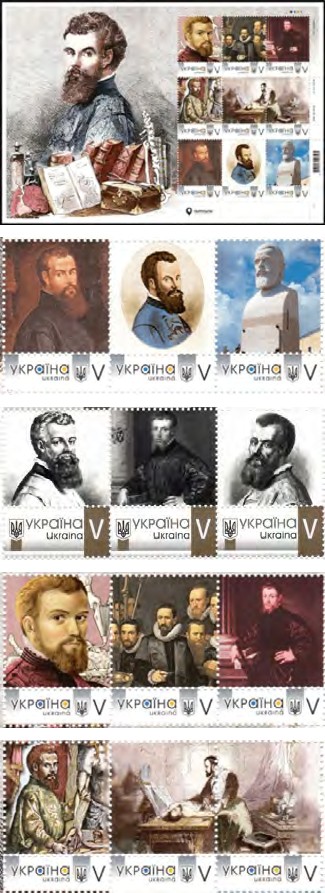
To begin, I would like the most ancient anatomists, such as Andrei Vesalius and Ambroise Pare. On Figure 3 presents Ukrainian philatelic materials dedicated to Andrey Vesalius. These are postage stamps and postal blocks of Ukraine [1, 2, 3, 4].
A small selection of phylathemical materials of Ukraine, dedicated to the well-known an anodya and a surgeon of Europe, Ambrois Pare is presented in Figure 4 [1, 2, 3, 4].
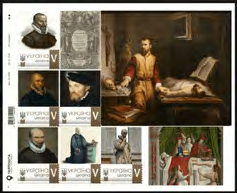
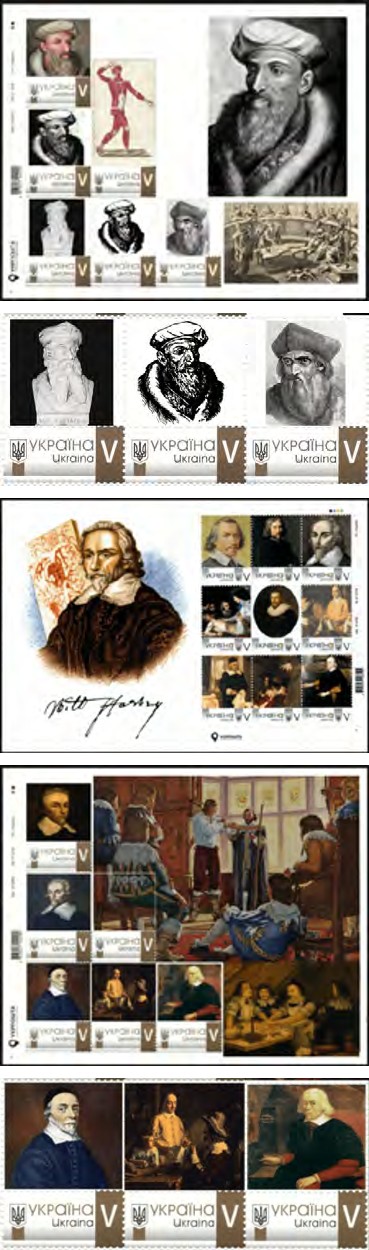
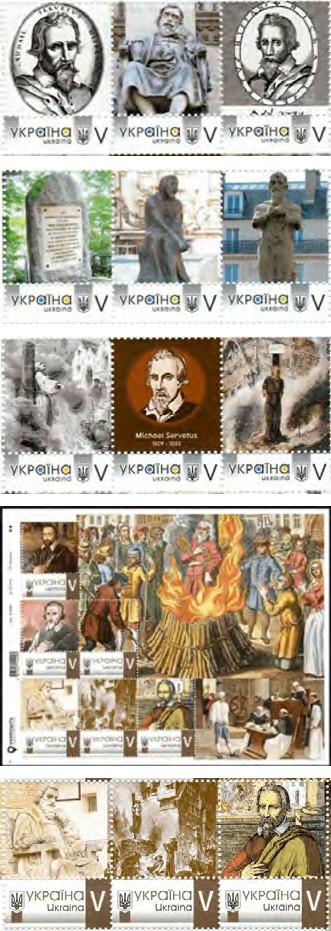
![Figure 7: Postage stamps dedicated to William Harvey. A selection of philatelic materials, presented in Figure 8, dedicated to the famous Spanish anatomist, physician and theologian, Miguel Servet (1511-1553) [1-3].](/fulltextimages/8771/fig_7.png)

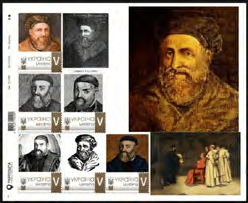
In Figure 5, presented a selection of philatelics materials of Ukraine (postal block and postage stamps) dedicated to the well-known Italian anatomist and doctor, Gabriele Fallopius [1, 2, 3].
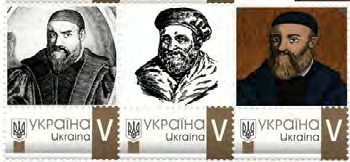
A small selection of philatelic materials presented in Figure 6, dedicated to the famous physician and anatomist - Bartolomeo Eustachio (1510-1574), Italian physician and
anatomist, who was the papal physician and professor of anatomy at the Roman school of Sapienza [1, 2, 3].
A selection of philatelic materials of Ukraine (postage stamps and blocks), which is presented in Figure 7, dedicated to the world famous English anatomist, physiologist and physician - William Harvey [1, 2, 3].

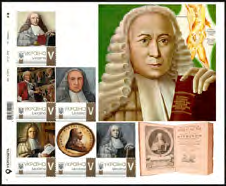
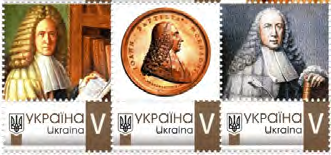
On Figure 9 presents a selection of Ukrainian philatelic materials dedicated to Morgagni, Giovanni Battista (1682– 1771), an Italian anatomist and doctor [1, 2, 3]. He became famous for his research in the field of anatomy, the results of which he outlined in the Anatomical Notes (Adveraria anatomica omnia, 1719). Conducting autopsies, he described numerous pathologies, anomalies, tumors of various organs. He sought not only to state the basics of pathological processes, but also to provide information about the pathogenesis, symptoms and diagnosis of the corresponding diseases. The fruit of his many years of research was the work On the location and causes of diseases identified by the anatomist (De sedibus et causis morborum per anatomiam indigatis, 1761), which outlines the foundations of pathological anatomy as a science. Morgagni first described many of the anatomical structures later named after him [1, 2, 3].
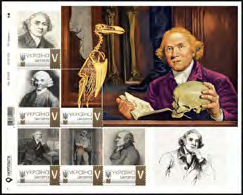
On Figure 10 presents a selection of Ukrainian philatelic materials dedicated to Marchello Malpighi (1628-1694), Italian physician, physiologist and anatomist, one of the creators of microscopic anatomy [1, 2, 3].
The next collection is dedicated to the famous Scottish obstetrician, anatomical scientist, one of the founders of modern anatomy, William Hunter (1718-1783). He is the older brother of the renowned Scottish anatomist and surgeon, John Hunter (1728-1793) [1, 2, 3].
Figure11: Postage stamps dedicated to brothers William and John Hanter.
On Figure 12 presents a selection of Ukrainian philatelic materials dedicated to Marie François Xavier Bichat (French Marie François Xavier Bichat (1771-1802) - French anatomist, physiologist and physician. He is one of the founders of modern thanatology [1, 2, 3, 4].
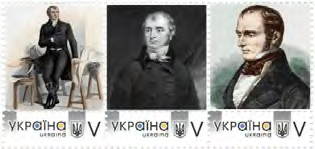
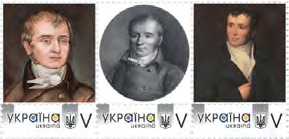
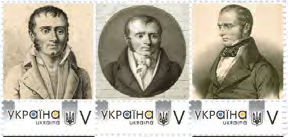
Figure12: Postage stamps dedicated to French anatomist Xavier Bichat.
On Figure 13 presents a selection of Ukrainian philatelic materials dedicated to Nicholas van Tulp (1593-1674) - Dutch surgeon and mayor of Amsterdam, who became world famous for Rembrandt’s painting: “A lesson in the anatomy of Dr. Tulp.” The canvas depicts Tulip conducting an anatomy lesson. The painting is now housed in the Maurice Museum in The Hague [1, 2, 3].
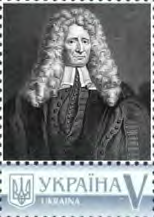
The next postage stamp of Ukraine, representation in Figure 14, dedicated to the famous Dutch anatomist and naturalist, favorite of Tsar Peter I, longtime physician of the tsar and director and creator of the exposition of the St. Petersburg Anatomical Kunstkammer - Frederik Ruysch (1638-1731) [2, 3].
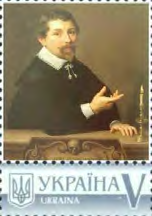
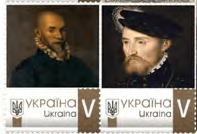
The next postage stamp of Ukraine (2020), presented in Figure 15, dedicated to the Dutch anatomist and physiologist Regnier de Graaf (1641-1673) [2, 3]. His name has left its mark on world anatomy. So, for example, in his honor, received the name (graaf’s bubbles) - follicles in ovaries.
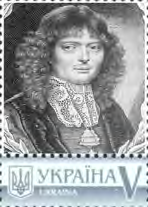
On Figure 16 presents a selection of Ukrainian philatelic materials dedicated to Dutch scientist - anatomist, physiologist, biologist, Albrecht Von Haller (1708-1777) [2, 3].
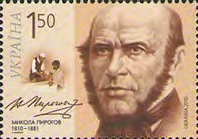
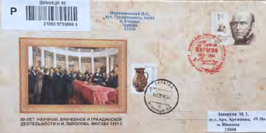
In Figure 17, presents a large selection of various philatelic materials of Ukraine, different years of issue, dedicated to the world-famous anatomist and surgeon - Nikolai Ivanovich Pirogov (1810-1881) [1, 2, 3, 4, 5].
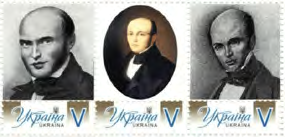
![Figure 26: Postage stamps dedicated to Friedrich Gustav Jakob Henle. In Figure 27, presents postage stamps of Ukraine, dedicated to John Banester (1532/3-1559) - England anatomist and surgeon [2,3].](/fulltextimages/8771/fig_26.png)
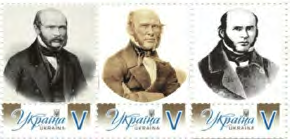
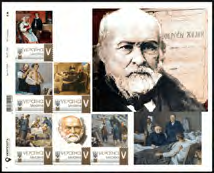
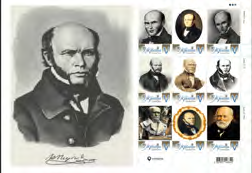
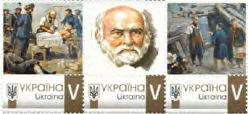
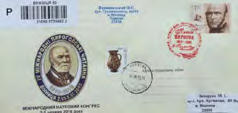
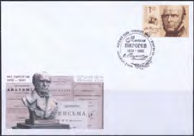
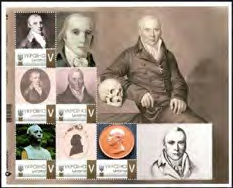
The next postage stamp, in Figure 18, is dedicated to the famous Austrian anatomist and physiologist Josef Hyrtl (1810-1894). At the age of 26, he became a professor of anatomy at Charles University in Prague, and then taught anatomy in Vienna.
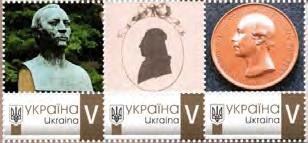
The next collection of philatelic materials is dedicated to the German anatomist Johann Christian Reil (1759-1813), who worked in the period of the 18-19th centuries [1, 2, 3].
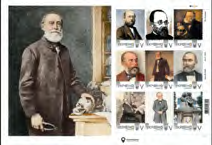
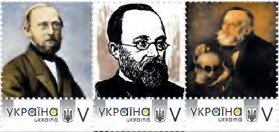
In Figure 20, presents postage stamps of Ukraine, dedicated to the world-famous anatomist famous Austrian doctor and scientist, anatomist, pathologist - Karl von Rokitansky (1804-1878) [2, 3].
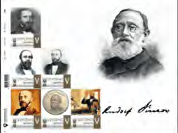
In Figure 21, presents postage stamps of Ukraine, dedicated to the world-famous German anatomist - Rudolf Ludwig Karl Virchow (1821-1902) [1, 2, 3].
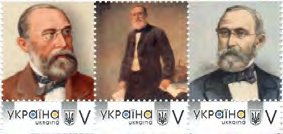
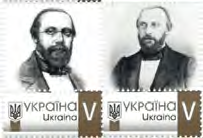
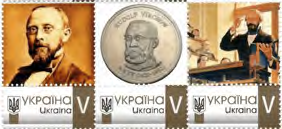
The next large anatomical postage stamp, shown in Figure 22, dedicated to the famous French surgeon, scientist- anatomist, anthropologist Paul Broca (1824-1880) [2, 3].
In Figure 23, presents postage stamps of Ukraine, dedicated to famous Cheh scientist-anatomist, Jan Evangelist Purkyne (1787-1869) [2, 3].
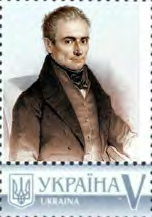
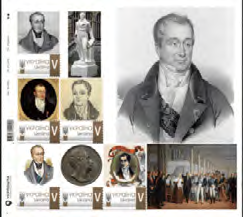
The next postage stamps collection set, shown in Figure 24, dedicated to the famous French anatomist, surgeon, Baron Guillaume Dupuytren (1777-1835) [1, 2, 3, 4].
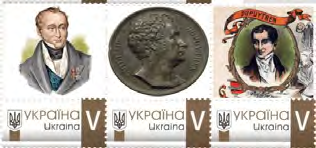
Also, in the history of anatomy, an honorable place is occupied by a famous English anatomist, histologist and surgeon, ophthalmologist – William Bowman (1816-1892)-Figure 25 [1, 2, 3]. He is widely known in scientific circles for his study of human organs using a microscope [1, 2, 3]. So, he owns the discovery of Bowman’s capsules, an important component in the structure of the renal nephron, and the theory of urine formation by the process of renal filtration.
On Figure 26, a well-known German scientist is represented - anatomist, pathologist, pathologist – Friedrich Gustav Jacob Henle (1809-1885) [2, 3]. He entered the history of world medicine, thanks to the discovery of the loop of Henle and the study of the structure of the renal nephron.
In Figure 28, presents postage stamps of Ukraine, dedicated to Austrian physician, anatomist and founder of the discipline of “phrenology” Gall Franz Josef (1757-1828) [2, 3].
This concludes another article dedicated to reflecting the history of anatomy and famous world anatomists, reflecting the means of Ukrainian philately. The author is preparing for publication his new research on the history of anatomy in the reflection of numismatics, faleristics and, also traditionally, world philately.
Presenting in his article a number of famous world anatomists and a brief history of world anatomy, exclusively in the means of philately of Ukraine, different years of issue, the author, on the one hand, has significant limitations concerning the presentation, only of philatelic materials, and only of that country - Ukraine. A small part of this material has already been presented by the author, as part of another article, it is worth acknowledging. But! The main goal of this research work, was exactly to present all, 100% philatelic material of only one country, Ukraine! Removing a small number of postal thumbnails, which could only be seen by a limited number of interested readers, would make the article poorer, incomplete, thereby depriving new readers of all the informational completeness of the data presented in the article.
Conclusion
- The result of the study, which was reflected in the presented article, convincingly showed that the Post Office of Ukraine issued the largest number of postage stamps in the world, the plot of which is dedicated to world famous anatomists.
- Philatelic materials, in all their diversity, are able to colorfully, informatively and creatively present topics on the history of world anatomy and world-famous anatomists.
- This article proves quite convincingly that information limited to one “narrow” topic, such as anatomy, and to one country only, as in this case, Ukraine, gives a remarkable result, revealing such a difficult topic as the history of famous scientists - anatomists and world anatomic science, in reflection, exclusively by philatelic means.
References
-
Bugaevsky KA (2021) History of Anatomy in the Reflection of Collecting Media. J Human Anat 5(1): 000154.
-
Ukraine, Europe, Stamps, Page 9.
-
Andorra Postes (2021) Homenatge esforços tothom davant COVID-19-Timbre, sello, stamp COIN DATÉ Date postmark.
-
Bugaevsky KA, Bugaevskaya NA (2018) Surgery and foreign surgeons in philately, faleristics, numismatics and bonistics. Bulletin of SMUS74 2(21): 4-14.
-
Bugaevsky KA, Bugaevskaya NA (2016) Pirogov NI on postcards, postcards and envelopes from different countries. Bulletin of SMUS74 3(14): 8-16.
- Pattern of Breast Lesions in Ovu Inland, Delta State, South Southern Nigeria
- Morphometric Analysis of the Human Femur: Exploring Platymetric and Robusticity Indices Among the Nigerian Population
- Anatomical Variation of Arteria Lusoria: Clinical Implications for Dysphagia Lusoria and Surgical Risk
- Morphometric Study of the Vertebral Body and Pedicle of Typical Cervical Vertebrae Using Radiological Image
- Epigenetic Mechanisms Driving Human Evolutionary Changes
- Neuroprotective Effects of Ginkgo Biloba Extract on Bilateral Common Carotid Artery Ischaemic Stroke Induced in Wistar Rat