
Pesticidal Effects of Hyoscyamus aureus L
Serial dilutions of Hyoscyamus aureus L extract were tested on three kinds of organisms; they are cockroach, red spiders and ants. The result showed that the minimum killing concentration was 62.5 mg/ml where at this concentration; the extract killed all the organisms. The experiments showed that the tropane alkoides contents in this plant have significant pesticidal effects.
Introduction
Botanical insecticides and pesticides are plant materials or products extracted or derived from plants, botanical insecticides may be crude precreation of plant parts ground to produce a dust or powder that may be full-strength or diluted. Crude botanical insecticides are used for several centuries [1]. Today several researches in the field of plant biotechnology and phytochemistry are occurring to achieve more safe biological pesticides to avoid the chemical which still have several impacts on human, animal, and the environment. The main idea of using the plant materials as pesticidal is the alkaloid contents and secondary metabolites which plant produce as a kind of defense systems. The increase in the content of secondary metabolites in plant organs is a common effect of pest invasion, and it can be said that plants use these compounds as chemical weapons. The strategies vary; these compounds can lower the attractiveness of a plant to insects, make a plant unpalatable, or attract insects to poison them, as a result in all cases a reduction in the attractiveness of plants to insects [2]. Resistance and toxicity problems derived from synthetic insecticides have made it necessary to find more effective and healthier alternatives. Presently, plant extracts are the most commonly tested alternative products [3]. In this short article, Hyoscyamus aureus L are tested in few insects and pests, mainly the cockroach and red spider. Genus Hyoscyamus is well-known for the production of pharmaceutically and economically important plant secondary metabolites. These are secondary metabolites produced by a few genera of the family Solanaceae, such as Atropa, Datura, Duboisia and Hyoscyamus. Tropane alkaloids are esters of tropic acid and tropine derivatives. Tropine is derived from ornithine and/or arginine, whereas tropic acid is synthesized from phenylalanine [3]. Scopolamine, a 6,7- epoxide of hyoscyamine. Hyoscyamine and scopolamine, commercially important anesthetic and antispasmodic drugs, are the two most important Solanaceae alkaloids produced in roots and then translocated to the aerial parts of the plant where they accumulate in the cell vacuoles at high levels [4].
Material and Method
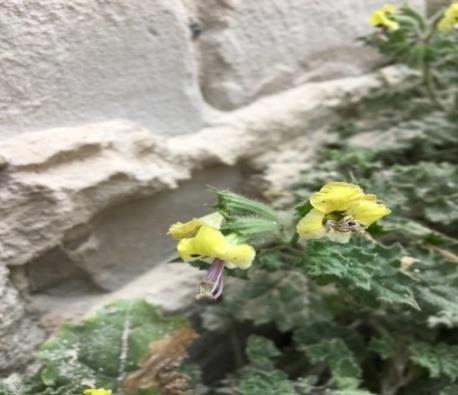
Plant material used in the experiment were collected from Leaves and top flowers of Hyoscyamus aureus L between the end of May and the beginning of June from the ancient square of Gaza strip, where this plant grows mainly in the limestones and walls [5].
Extraction of Plant Material
The plant samples were identified based on a collection of the poisonous flora in the Gaza strip [5].
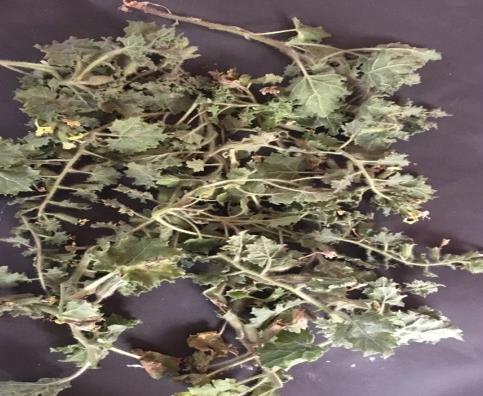
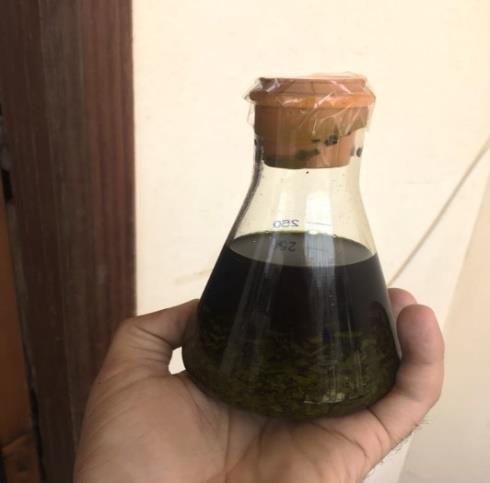
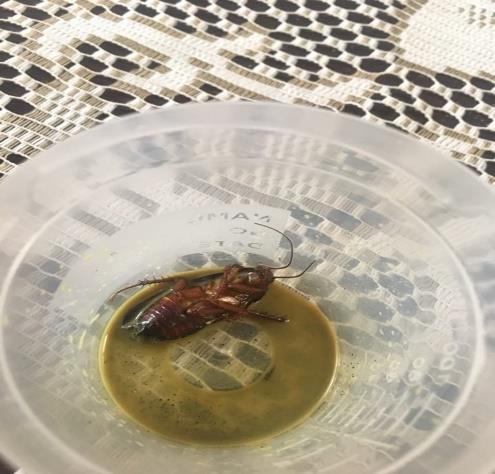
Fresh leaves and top flowers were dried under indoor conditions one week. The dried plant material was grounded. Plant materials (30 g each) were extracted with 250 mL of ethanol (70%conc.) using a Soxhlet extractor at room temperature for 2 days. After filtration the liquid portion of the extract is left to the atmosphere for four days to evaporate the solvent. 1 gm of the extract and 2ml of distilled water was used to prepare stock solution with concentration of 500 mg /ml, and three other solutions were prepared through the serial dilution which based one taking 1 ml of the stock solution and transferring to another test tube have only 1 ml distilled water and the same for the others until three main solutions are ready for the experiment. The lowest one is 62.5mg/ml, then 125mg/ml and the highest one is 250mg/ml. Another extract from Nicotine glauca leaves were done using the same technique, and another concentration by mixing extracts from both plants were prepared with concentration of 31mg/ml. The concentrations starting from the lowest one (62.5mg/ml) for the two plants were tested on 20 individual of adult cockroach, 3 individuals of red spiders, and population of adult ants though direct exposure with drops of 0.5ml of the extract (Figures 1-4).
Results
| Organism | C | Hyoscyamus | n | g C | Nicotiana | m n | Synergism conc. (31mg/ml) |
|---|---|---|---|---|---|---|---|
| extract | lauca Graha | ||||||
| oncentratio | oncentratio | ||||||
| (62.5mg/ml) | (62.5mg/ml) | ||||||
| Cockroach | + | - | - | ||||
| Spiders | + | - | - | ||||
| Ants | + | - | - |
Table 1: Hyoscyamus extract Concentration in different organism.
Discussion
The experiments showed that the concentration of (62.5mg/ml) of Hyoscyamus aureus L is considered the minimum concentration with poisonous effects on the three organisms and this is may due to the tropane alkaloids in the leaves and top of flowers. The effect of anabasine [5] which is the main active principle in Nicotiana glauca Graham did not affect any of the three animals in all concentrations starting from the lowest until the highest one, this is may be because this plant without tropane alkolides and have mostly anabasine and nicotine, the synergism concentration also has no effect in all concentrations, that may be because the phytochemicals in Nicotiana glauca Grahamhas has antagonism effect on the phytochemicals in Nicotiana glauca Graham. The experiments showed that the Hyoscyamus aureus L extracts has strong effect on the mentioned organism, and there are potential to use this extract as biopesticides, more research and accurate work have to be done on more large scale and using other formulations.
References
-
Weinzierl RA (2000) Botanical insecticides, soaps, and oils. Biological and biotechnological control of insect pests, pp: 101-121.
-
Chowanski S, Adamski Z, Marciniak P, Rosinski G, Buyukguzel E, et al. (2016) A review of bioinsecticidal activity of Solanaceae alkaloids. Toxins 8(3): 1-60.
-
Abbasipour H, Mahmoudvand M, Rastegar F, Hosseinpour MH (2011) Bioactivities of jimsonweed extract, Datura stramonium L.(Solanaceae), against Tribolium castaneum (Coleoptera: Tenebrionidae). Turkish Journal of Agriculture and Forestry 35(6): 623-629.
-
Besher S, AL-Ammouri Y, Lawand S (2012) Determination of tropane alkaloids in golden henbane (Hyoscyamus aureus L) in vitro. BICHNK 10(2): 331- 336.
-
Atalla A, Dardona A (2019) Poisonous and Narcotic Flora in the Gaza Strip-Palestine/A Review. European Journal of Medicinal Plants, pp: 1-12.
- Management of Ear Keloid with Ksharsutra: A Case Study
- Yoga and Global Sustainability: A Holistic Path to One Earth, One Health
- Autoimmune Diseases in Ayurveda: A Narrative Review with Classical and Modern Perspectives
- Management of Cluster Headache Associated with Pituitary Apophysitis by CERT (Chakrasiddh Energy Release Technique): A Case Report on Energy Rebalancing
- Zygophyllum Geslini Coss : Biochemicals and Antioxidant Activity
- Observations of a Beginner Vaidya