
Yoga and Global Sustainability: A Holistic Path to One Earth, One Health
Background: Yoga, an ancient Indian practice rooted in the Sanskrit term yuj (to unite), has evolved into a global movement for health and sustainability. Recognized officially by the United Nations through the International Day of Yoga since 2015, yoga is increasingly acknowledged as a tool for promoting harmony between humans, animals, and the environment. The theme for the 11th IDY in 2025, “One Earth, One Health,” aligns with Ayurvedic and global public health philosophies that emphasize interconnected well-being. Objective: To explore how yoga promotes natural and holistic health, in line with global health goals and the eco-friendly theme of IDY 2025. Methods: This review is based on contemporary evidence, and national and international policy reviews. It draws on classical Ayurvedic concepts, scientific literature on yoga’s therapeutic benefits, government initiatives, and community case studies. Results: Yoga has evolved from a personal health practice to a tool for global health diplomacy and sustainable development. Yoga's institutional acceptance is demonstrated by its incorporation into medical education, development as a competitive sport, and support from standardized frameworks like the Common Yoga Protocol. Several scientific researches have shown its importance in chronic disease, stress and depression management, emotional resilience, and ecological awareness. Government and CSR-driven programs have made it easier for people to use it on the ground. Yoga is also becoming more common in schools, hospitals, and foreign cultural exchanges, which shows how important it is to the One Health concept. Conclusion: Yoga represents a holistic approach to health that takes into account the well-being of the individual, society, and planetary health. As reflected in the IDY 2025 theme, “One Earth, One Health,” yoga promotes integrative, broad, and sustainable living. With its scientific basis, ancient knowledge, and contemporary compliance, yoga is placed as a vital contributor to the health of humans and global sustainability.
Abbreviations
IDY: The International Day of Yoga; MDNIY: Morarji Desai National Institute of Yoga; HPA: Hypothalamic Pituitary Adrenal; CSR: Corporate Social Responsibility; CYP: Common Yoga Protocol; PIB: Press Information Bureau.
Introduction
Yoga, derived from the Sanskrit word “yuj,” meaning “to unite,” is an ancient practice from India that seeks to harmonize body, mind, and spirit [1]. The International Day of Yoga (IDY) was declared by the United Nations on June 21st [2]. Since then, it has grown into a global health movement [3]. The theme for the 11th IDY on June 21, 2025, is “One Earth, One Health” [4]. This theme emphasizes how important it is for humans, animals, and our planet to be healthy. Yoga today is not just a way to improve our own health; it also helps the environment and living in a way that is good for the planet. It plays an important role in global diplomacy, education, healthcare, sports, and culture. Yoga has been shown to be good for people and communities through government programs and scientific research.
Aim
This paper explores how yoga fits into the superior picture of global health, sustainability, and fairness, with insights into its history, contemporary relevance, and the wider vision of IDY 2025.
Materials and Methods
Detailed information has been collected from a few traditional Ayurvedic literature, ancient texts on yoga, scientific publications, government policy documents, research studies of Yoga on health benefits, and programs by the Ministry of Ayush, WHO, and United Nation and official reports from national and international health organizations. Information was also taken from case studies of yoga in communities and awareness campaigns.
Tracing the Journey of International Yoga Day: Key Events and Milestones
The United Nations officially declared June 21st to be the International Day of Yoga (IDY) on December 11, 2014 [5]. This occurred following a suggestion made by Indian Prime Minister Mr. Narendra Modi on September 27, 2014, at a speech to the UN General Assembly. He emphasized in his address how yoga promotes harmony among people, society, and the environment. With 173 countries [6] supporting the petition, the notion garnered significant international support, demonstrating the global acceptance of yoga’s message.
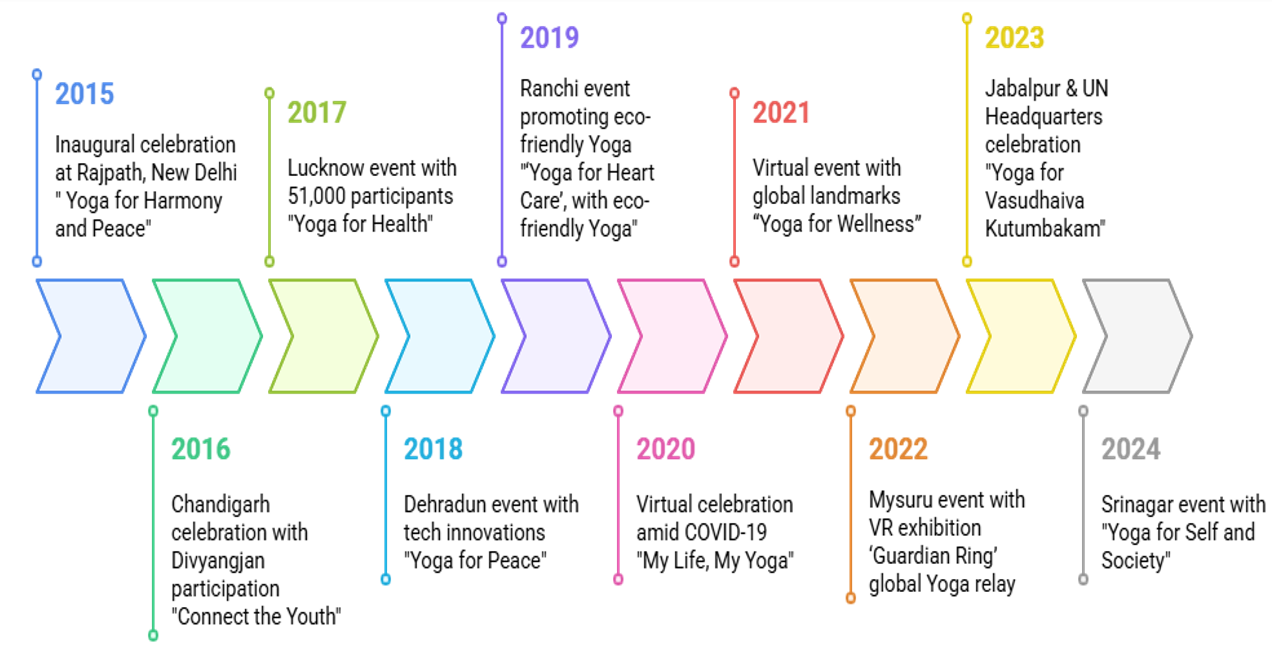
The selection of June 21st holds symbolic significance as it marks the summer solstice, the longest day of the year in the Northern Hemisphere. This day is traditionally associated with light, vitality, and transformation, aligning with the philosophical underpinnings of Yoga that advocate for inner illumination and renewal. The inaugural celebration of IDY took place on June 21, 2015, at Rajpath, New Delhi, where approximately 35,985 participants including dignitaries, armed forces personnel, and school children performed Yoga in unison. This event set two Guinness World Records: one for the largest yoga session and another for the most nationalities participating in a single Yoga event. Since from 2015, the International Day of Yoga (IDY) has evolved into a large-scale global movement, promoting holistic health and wellness through the ancient discipline of Yoga. Each annual celebration has marked significant advancements in public health outreach and global participation (Figure 1).
Conceptual Understanding of the Theme: ‘One Earth, One Health
Ayurvedic philosophy holds that the individual (microcosm) is a reflection of the universe (macrocosm), a concept expressed in the aphorism “What is in the body is in the universe”,[8] “As is the individual, so is the universe.” This profound interrelationship suggests that all elements and forces present in the external environment are mirrored within the human being. Accordingly, any disturbance or imbalance in nature cause to be ecological degradation, climate change, or societal disharmony i.e. inevitably influences human health and well-being. Ayurveda therefore emphasizes the need for harmony among the individual, and the environment. Health is perceived not as an isolated personal state, but as a dynamic equilibrium shaped by both ecological and social factors. This holistic worldview aligns closely with the 2025 International Day of Yoga theme, “One Earth, One Health,” advocating for integrative approaches like Yoga and Ayurveda that promote the well-being of both
Ten important unique events to direct activities towards the International Day of Yoga 2025
humanity and the planet [7].
The theme also reflects the “One Health” approach, supported by global organizations like WHO and UN, which recognizes that the health of people, animals, and the environment are all linked. In today’s world, where climate change, loss of biodiversity, and new diseases are growing problems, this holistic view is especially important. Yoga, is not just a form of exercise but is a way of life that builds awareness, discipline, and compassion. These qualities inspire people to live more responsibly, care for nature, and make choices that support a healthier planet. The theme of 11th IDY also echoes India’s G20 motto, “Vasudhaiva Kutumbakam” that is “The world is one family” that encouraging global cooperation. By combining the wisdom of Ayurveda and Yoga with modern health systems, we can create a more balanced, healthy, and sustainable future for all living beings on Earth (Figure 2).
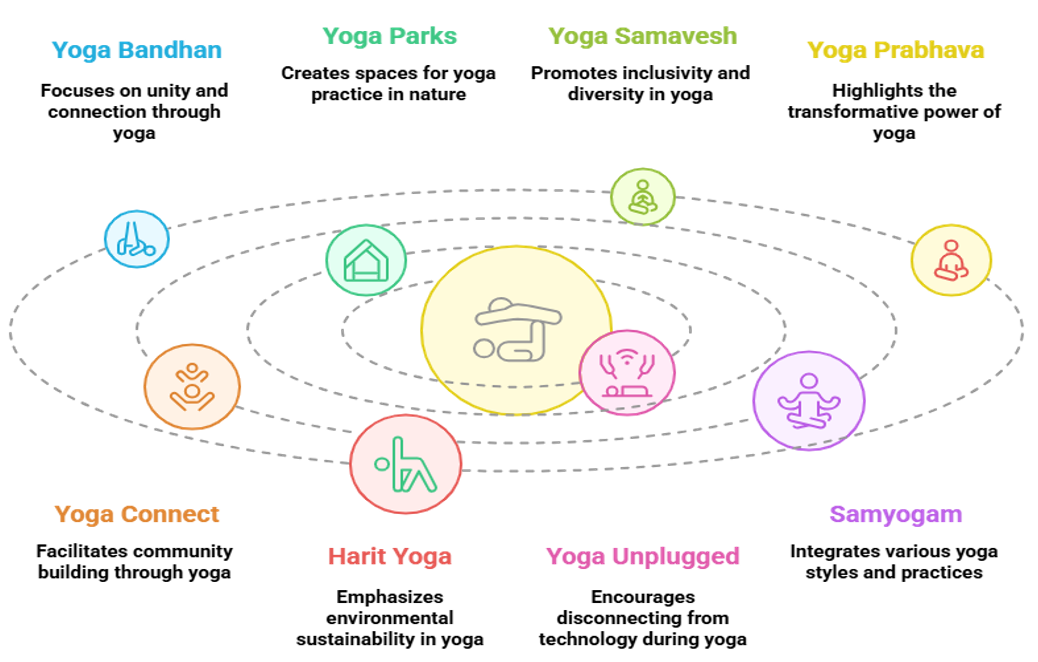
1. Yoga Sangama (Flagship event): ‘Yoga Sangam’ is the key event of International Day of Yoga (IDY) 2025, featuring a synchronized mass yoga session using the Common Yoga Protocol at 1,00,000 locations across India on 21st June, from 7:00 to 7:45 AM. The main event will be led by the Hon’ble Prime Minister in Visakhapatnam.
Government and private organizations, educational and cultural groups, and citizens will take part. Organizers can register at yoga.ayush.gov.in/yogasangam and receive certificates from the Ministry of Ayush. The initiative promotes nationwide unity through yoga for health and well-being and also aiming for a world record [7, 9]. 2. Yoga Bandhan: Yoga Bandhan is a global initiative that connects people and institutions through yoga, promoting its health benefits, cultural significance, and strengthening India’s ties with other countries. As part of this, global partnerships with 10 countries will host yoga sessions at iconic landmarks. Anyone can organize a Yoga Bandhan event before June 21, 2025, without registration, to support peace, wellness, and global unity [10]. 3. Yoga Parks: Yoga Park is a special IDY 2025 initiative to turn public parks into wellness zones for daily yoga. With help from local authorities, parks in Panchayats and Municipalities will be upgraded. Trained instructors will guide yoga sessions open to all. No registration is needed, and events can be held any time before June 21, 2025 [11]. 4. Yoga Samavesh: Yoga Samavesh is an IDY 2025 initiative to make yoga accessible for underserved and special groups. It focuses on 10 target areas like diabetes, asthma, mental health, children (3–6 years), women (12–35 years), elderly, and drug de-addiction. A 10-day yoga training will be given by partner organizations to meet their specific needs. Events need no registration and can be held anytime before June 21, 2025 [12]. 5. Yoga Prabhava: Yoga Prabhava is a study to assess the impact of 10 years of International Day of Yoga (IDY) on public health and well-being in India. The report will guide future wellness policies, highlight achievements, and suggest ways to strengthen yoga’s role in healthcare. It will be released on June 14, 2025, at Yoga Connect [7]. 6. Yoga Connect: Yoga Connect is a global online yoga summit on June 14, 2025, bringing together yoga experts, health specialists, and policymakers worldwide. It will be held in hybrid mode, live-streamed globally, and feature top yoga institutions and gurus [7]. 7. Harit Yoga: Harit Yoga is an IDY 2025 initiative that blends yoga with eco-friendly activities like tree planting, beach clean-ups, and yoga at natural sites, supporting the theme “One Earth, One Health.” It aims to promote both personal wellness and environmental sustainability [13]. 8. Yoga Unplugged: Yoga Unplugged is an IDY 2025 initiative to make yoga fun and exciting for youth. It includes festivals, cultural events like dance and music, and student volunteer programs. Online contests such as quizzes, essays, e-posters, photography, comics, and tech challenges are also being held through MyGov. Social media activities will further engage young people [14]. 9. Yoga Maha Kumbh: Yoga Maha Kumbh is a week-long yoga festival from June 15 to 21, 2025, held in 10 cities across India. It aims to bring yoga closer to people through large-scale events organized with partner institutions [7]. 10. Samyoga: Samyoga is a 100-day IDY 2025 initiative that integrates yoga with modern healthcare for holistic wellness. Supported by Ayush research councils and institutions, it will feature one-day events where experts share success stories, best practices, and build a resource bank for public health use. Events will be held in the lead-up to June 21, 2025 [15].
Yoga and Global Sustainability: Merging Tradition, Science, and Social Impact for One Earth, One Health
1. Incorporation of Yoga into Medical Curriculum: A major advancement in the formal recognition of Yoga is its inclusion in medical education. The implementation of a compulsory 10-day Yoga training module for MBBS students represents a key step in incorporating Yoga as a supportive therapy alongside modern medicine. This initiative aims to familiarize future physicians with the therapeutic potential of Yoga, encouraging its use in comprehensive, patient-centered care [16]. 2. From Spiritual Discipline to Athletic Expression: The Changing Face of Yoga: The transformation of Yoga from a classical spiritual discipline to its contemporary adaptations reflects its dynamic evolution. One significant development is the emergence of Yogasana as a structured competitive sport. This shift includes the formulation of standardized rules and the promotion of events such as the Yogasana Super League, which seek to institutionalize and globalize Yoga by increasing its appeal to wider and more diverse audiences. Additionally, the role of Sukshma Vyayama that is a series of gentle, micro-muscular movements is gaining attention for its contributions to physical flexibility, joint mobility, and general well-being. According to Shri Amit Sharma of the Morarji Desai National Institute of Yoga (MDNIY), these subtle practices complement traditional Yoga techniques and enhance accessibility, making Yoga suitable for individuals across all age groups and physical capacities. This inclusive and scientific approach supports Yoga’s growing recognition as both a wellness practice and a structured physical activity [17]. 3. Holistic Health and Scientific Basis of Yoga: Extensive research confirms that Yoga offers a wide range of health benefits. On a physical level, it improves flexibility, muscle strength, heart health, and metabolism. From a neurological perspective, Yoga helps regulate the stress response by balancing the hypothalamic-pituitary- adrenal (HPA) axis, leading to lower cortisol levels and reduced sympathetic nervous system activity [18]. Psychologically, Yoga has been shown to reduce stress, anxiety, and depression by enhancing vagal tone,[19] supporting brain adaptability (neuroplasticity),[20] and improving emotional control [21]. A meta-analysis by Cramer et al. (2013) found that Yoga is effective in managing chronic pain and various mental health conditions [22]. Key practices like pranayama (breath control), asana (physical postures), and dhyana (meditation) work together to stabilize hormone levels [23] and strengthen the immune system [24] making Yoga a valuable tool in preventive healthcare and public health promotion. 4. Yoga for Sustainable Living and Ecological Consciousness: Yoga is seen not just as a way to stay fit but as a complete lifestyle that supports the health of the body, mind, and soul [25]. This well-rounded approach encourages people to be more aware of and caring toward the environment. The theme “Yoga for One Earth, One Health” highlights this connection by promoting habits that are good for both people and the planet. Events like the Yoga celebration in Leh and real-life stories from practitioners show how Yoga can positively change everyday life [26]. These experiences reveal how Yoga helps improve physical health, build mental strength, and boost confidence, showing its power to support both personal growth and community well-being. 5. Global and National Relevance of Yoga: Yoga is increasingly recognized worldwide as a comprehensive approach to health that integrates physical fitness, mental well-being, and inner balance. The theme for the 2025 International Day of Yoga (IDY), “Yoga for One Earth, One Health,” announced by Prime Minister Narendra Modi, highlights the role of Yoga in linking individual health with the health of the planet. This theme reflects the scientific understanding that human well-being is deeply connected to the state of the environment and ecosystems [27]. 6. The Government of India has actively advanced the promotion of Yoga at both national and international levels. Programs like “Yoga Samavesh [14]” are designed to foster inclusivity by extending the benefits of Yoga to various sections of society, including individuals with disabilities and chronic health conditions. Furthermore, innovative initiatives such as the ‘Yog Geet’ jingle [28] contest aim to increase public engagement particularly among youth by using music and media to make Yoga more accessible and appealing. 7. The Ministry of Ayush, in collaboration with the Morarji Desai National Institute of Yoga (MDNIY), has launched impactful initiatives such as the “100 Days, 100 Cities, 100 Organizations” campaign to promote Yoga at the grassroots level [29]. Yoga has been systematically introduced across various settings, including schools, correctional facilities, workplaces, and the armed forces, highlighting its wide applicability. Corporate Social Responsibility (CSR) programs by Indian and global companies have adopted Yoga-based approaches to manage workplace stress and support mental health, especially in the post-pandemic context. Additionally, Yoga is being integrated into national health initiatives such as the Fit India Movement, AYUSH Health and Wellness Centers, and the School Health Program under Ayushman Bharat, emphasizing its role in preventive and promotive healthcare. 8. Standardization of Yogic Practice: The Common Yoga Protocol and Its Scientific Basis [30]. The Common Yoga Protocol (CYP), developed over the last ten years, offers a standardized and scientifically backed approach to Yoga. It combines physical exercises, breathing techniques, and meditation to support overall health and well-being. By providing a uniform structure, the CYP helps ensure that Yoga is practiced safely and consistently around the world. Research has shown that the CYP and other Yoga methods are effective in improving physical fitness, mental clarity, and emotional balance. This growing scientific evidence has helped establish Yoga as a reliable and supportive health practice, leading to its wider use in places like schools, hospitals, and community programs. 9. International Participation and Cultural Convergence in Yoga Practice: Yoga is gaining increasing popularity worldwide, with countries like Japan [31], Vietnam, Algeria, and Denmark [32] enthusiastically taking part in International Day of Yoga events. These celebrations promote cultural exchange and demonstrate Yoga’s universal value in supporting health and inner balance. In India, Yoga has been formally integrated into educational systems and research institutions, reflecting its widespread acceptance. For example, the Mind Lab at IIT Delhi conducts scientific studies on how Yoga influences brain function and mental well-being, adding to the growing body of evidence on Yoga’s health benefits. 10. Personal Journeys and Community Level Influence of Yogic Practice: Yoga teachers like Neetu Saini exemplify how Yoga can lead to deep personal transformation. Their experiences highlight the positive effects of Yoga on physical health, emotional strength, and social upliftment. By sharing their journeys, these practitioners inspire others and serve as ambassadors of Yoga, promoting it as a holistic practice that supports overall well-being and meaningful life change.
Discussion
The 2025 International Day of Yoga (IDY) theme ‘One Earth, One Health’ represents a historic convergence of traditional knowledge and modern science and emphasizes the important role of Yoga in the holistic, all- encompassing approach to human health and the health of the planet. Originating as a spiritual practice, Yoga itself has been largely resourced on empirical evidence of its ability to alter the HPA axis, increase vagal tone, and optimize neuroplasticity, with restorative and therapeutic assistance in chronic diseases and mental health states. The application of the CYP is intended to bring evidence-based standardized practice of yoga globally. Government driven initiatives such as Yoga Samavesh and Samyogam are examples of yoga embedded in public health, medical education and community outreach and innovations such as Yogasana as a Sport help in attracting larger cross section of society. This focus on the subject also resonates well with the ecological philosophy of Atharveda (“yat piṇḍe tat brahmāṇḍe”) and is in synergy with the global One Health approaches advocated by WHO-UNEP.
Conclusion
Yoga stands out as a vital practice for enhancing both individual health and planetary well-being, aligning closely with the 2025 International Day of Yoga theme, “Yoga for One Earth, One Health.” Its integration into education, healthcare, sports, and international collaboration reflects a comprehensive strategy to maximize its benefits for public health and global harmony. The continuous evolution of Yoga practices supported by scientific evidence and inspiring personal narratives underscores Yoga’s enduring relevance and transformative potential in addressing modern-day challenges.
Financial Support and Sponsorship
Nil.
Conflicts of Interest
There are no conflicts of interest.
References
-
Kanojia A (2022) Yoga, Overview. InHinduism and Tribal Religions. Dordrecht: Springer Netherlands, pp: 1808- 1814.
-
(2025) United Nations. International Day of Yoga. New York: United Nations.
-
Ranade R, Nikam J (2024) The Impact of International Yoga Day Worldwide 17(2).
-
Manjunath NK (2023) The Transformative Impact of the International Day of Yoga. International Journal of Yoga 16(1): 1-4.
-
(2025) Press Information Bureau, Government of India. Yoga for Self and Society – Nine Years of IDY.
-
(2025) Press Information Bureau (PIB), Government of India. ‘Yoga for One Earth, One Health’ – Theme for IDY 2025: PM in ‘Mann Ki Baat’.
-
Rao AV (2002) Mind in ayurveda. Indian J Psychiatry 44(3): 201-211.
-
(2025) University Grants Commission. Celebration of International Day of Yoga 2025.
-
(2025) Press Information Bureau, Government of India. Indian Yoga Association joins for celebration of International Day of Yoga.
-
(2025) News On Air. AIIA’s “Yoga Samavesh” workshop kicks off today.
-
(2025) Press Information Bureau, Government of India. ‘Harit Yoga’ nurtures both personal and planetary health: Union Minister Shri Prataprao Jadhav.
-
(2025) Press Information Bureau, Government of India. “Yoga Unplugged” the youth centric initiative for International Day of Yoga (IDY) 2025 gets a boost with leading Yoga institutions joining the program.
-
(2025) Press Information Bureau, Government of India. Shri Pratap Rao Jadhav inaugurates the Yoga Mahotsav 2025, a Grand Prelude to International Day of Yoga 2025 in New Delhi today.
-
Bhavanani AB (2017) Integrating yoga in health professional education: The SBV experience. Journal of Education Technology in Health Sciences 4(2): 42-46.
-
Deshmukh L, Janghel U, Sonkuwar A, Thakur R (2024) Exploring the Synergy between Yoga and Mindfulness Sport Practices: Enhancing Mental and Physical Well- Being. Indian Journal of YOGA Exercise & Sport Science and Physical Education, pp: 26-32.
-
Aggarwal A (2020) Hypothalamo-pituitary-adrenal axis and brain during stress, yoga and meditation. Int J Health Clin Res 3(9): 96-103.
-
Gard T, Noggle JJ, Park CL, Vago DR, Wilson A (2014) Potential self-regulatory mechanisms of yoga for psychological health. Frontiers in human neuroscience 8: 770.
-
Naragatti S (2025) A Comparative Analysis of Yoga Practices and their Effects on Autonomic Nervous System Functionality.
-
Gautam S, Arora T, Dada R (2024) Psycho-neuro-immune modulation by yoga. InNeuroscience of Yoga: Theory and Practice. Singapore: Springer Nature Singapore, pp: 1-15.
-
Cramer H, Lauche R, Langhorst J, Dobos G (2013) Yoga for depression: a systematic review and meta-analysis. Depress Anxiety 30(11): 1068-1083.
-
Naragatti S (2025) The Role of Yoga in Balancing Hormones: A Comprehensive Research Review 7(1).
-
Varne SR, Balaji PA (2023) A systematic review on molecular, bio-chemical, and pathophysiological mechanisms of yoga, pranayama and meditation causing beneficial effects in various health disorders. Indian Journal of Integrative Medicine 3(4): 87-96.
-
Raghunath RM (2024) Yoga as a Sustainable Lifestyle for Social and Ecological Harmony-A Heartfulness Perspective. Vidhyayana-An International Multidisciplinary Peer-Reviewed E-Journal 10(s1): 468- 481.
-
(2025) Reach Ladakh Correspondent. Yoga Mahakumbh begins in Leh as 100 Day countdown to IDY 2025 kicks off. Leh: Reach Ladakh.
-
(2025) Times of India. The global journey of International Yoga Day. New Delhi: Times of India.
-
(2025) Ministry of Ayush, Government of India. Join the ‘Yog Geet’ Jingle Contest for IDY 2025.
-
(2025) Press Information Bureau, Government of India. Ministry of Ayush to celebrate ‘Yoga Mahotsav’ on the World Health Day.
-
Manjunath NK (2023) The Transformative Impact of the International Day of Yoga. International Journal of Yoga 16(1): 1-4.
-
Jain AR (2020) Peace love yoga: The politics of global spirituality. Oxford University Press.
-
Jacobsen KA (2014) Hinduism and globalization: gurus, yoga and migration in northern Europe. InRoutledge Handbook of Religions in Asia. Routledge, pp: 359-372.
- Management of Ear Keloid with Ksharsutra: A Case Study
- Autoimmune Diseases in Ayurveda: A Narrative Review with Classical and Modern Perspectives
- Management of Cluster Headache Associated with Pituitary Apophysitis by CERT (Chakrasiddh Energy Release Technique): A Case Report on Energy Rebalancing
- Zygophyllum Geslini Coss : Biochemicals and Antioxidant Activity
- Observations of a Beginner Vaidya
- Assays for Anti-Cancer Screening of Medical Plants: A Review