
Management of Cluster Headache Associated with Pituitary Apophysitis by CERT (Chakrasiddh Energy Release Technique): A Case Report on Energy Rebalancing
This case report presents the holistic way of management of cluster headaches (CH) utilizing siddha energy balancing protocol in a 42-year-old male radiologist suffering from severe unilateral left frontal pain, ocular redness, lacrimation, and autonomic symptoms for over two years. MRI findings indicated inflammatory changes near the pituitary gland, suggestive of apophysitis, along with minor maxillary sinus involvement, a cause for his severe headache. Despite multiple conventional neurological and endocrinological treatments, including hormonal therapy and analgesics, only temporary relief was achieved with relapsing episodes after discontinuation of medications. Based on traditional insights of Siddha, the condition was interpreted as neurovascular imbalances, a disturbance in cranialenergy flow. A targeted manual energy therapy protocol CERT (Chakrasiddh Energy Release Therapy) was initiated using neuro-myofascial pressure point stimulation (aligned with siddha pressure principles), focused on the cranial and upper cervical regions along with gut points. The patient underwent five energy sessions of 45 minutes each, twice weekly. Clinical outcomes were measured using Visual Analogue Scale (VAS), Cluster Headache Impact Questionnaire (CHIQ), and Pittsburgh Sleep Quality Index (PSQI). Post-intervention, the patient reported substantial reduction in headache severity and frequency, better sleep, improved screen tolerance, emotional balance, and reduced dependence on medication. This case underscores the potential of non-pharmacological energy-based CERT as a safe and effective adjunct or alternative for managing chronic headache syndromes, particularly those associated with neuroinflammatory conditions like pituitary apophysitis.
Sindhuja BS¹*, Sankar I² and Shweta T³
¹Patron, Dept of Siddha Medicine, Chakrasiddh Holistic Healing and Research centre, Hyderabad, India ²Chief Healer, Department of Siddha Medicine, Chakrasiddh Holistic Healing and Research centre, Hyderabad, India ³Consultant Doctor, Department of Siddha Medicine, Chakrasiddh Holistic Healing and Research centre, Hyderabad, India episodes after discontinuation of medications.
Keywords: Cluster Headache; Pituitary Apophysitis; Siddha Energy Medicine; Holistic Therapy
Abbreviations
Cluster Headache (CH), Chakrasiddh Energy Release Therapy (CERT) Visual Analogue Scale (VAS) for pain intensity, Cluster Headache Impact Questionnaire (CHIQ), Pittsburgh Sleep Quality Index (PSQI), Complementary and Alternative Management (CAM)
Introduction
Cluster headache (CH) is widely recognized as one of the most intense and debilitating primary headache disorders yet it occurs very rarely, making it difficult to study and fully understand. It is a leading cause of neurological disability worldwide and often described by patients as “suicide headaches” due to the unbearable severity of pain [1, 2]. Historically, approximately 46.2% of adults experience some form of headache, with almost 4.5% suffering from cluster headaches having a male dominance as compared to females [3]. These attacks typically present with sudden, sharp unilateral pain around the orbital or temporal region, often accompanied by autonomic symptoms such as conjunctival infection (eye redness), lacrimation (tearing), nasal congestion, ptosis, and an overwhelming sense of agitation or restlessness [4]. The underlying mechanism of CH has been associated with activation of the posterior hypothalamic gray matter, which is involved in autonomic control and regulation [5]. Although CH is usually considered a primary headache, clinical evidence suggests that similar headache presentations termed symptomatic or secondary CH can result from identifiable structural or inflammatory causes [6]. One such emerging cause is pituitary apophysitis, a rare inflammatory condition affecting the pituitary gland. This inflammation may alter hypothalamic-pituitary interactions and lead to neurovascular disturbances, particularly the trigeminal- autonomic reflex arc, potentially triggering headache or CH-like symptoms [7, 8].
Neuroimaging, particularly contrast-enhanced MRI, is recommended for patients with atypical symptoms, late onset, abnormal examination findings, or treatment resistance as pituitary apophysitis can be missed unless specifically investigated [9, 10]. Pituitary gland can respond to specific treatments like dopamine agonists; options include both abortive and prophylactic approaches [11]. Conventional treatments for CH ranging from high-dose steroids, anti-epileptics, and even surgical interventions offer symptomatic relief, but often fail to address the underlying triggers with overlapping inflammatory or endocrine conditions [12]. Moreover, long-term pharmacological therapy comes with risks of dependency, side effects, and diminishing efficacy, prompting many patients to explore integrative and complementary approaches. Also, the economic burden of this disorder is substantial, including direct medical costs and indirect costs related to lost productivity, thereby creating a demand for effective and tolerable treatments [13, 14]. Alternative therapies are increasingly used in headache or migraine management, either alone or in combination with pharmacological treatments, and may be particularly suitable for patients with contraindications or poor response to conventional drugs [15, 16]. Recent trends have seen growing interest in non-invasive, traditional therapies such as Ayurveda, Siddha, energy therapies, acupuncture, and craniosacral therapy, particularly among patients seeking long-term holistic healing [16, 17].
Siddha medicine, traditional system from South India, places strong emphasis on the balance of three humors and believes that headache syndromes arise due to disruption in these elemental energies or neurovascular imbalances in modern science, a disturbance in cranial energy flow [18]. As per Siddha principles, unhealthy food habits and life choices blocks gut-based energy channels leading to imbalance between Vatham and Pitham; playing a significant role in leading to cranial pressure, vascular hypersensitivity, and emotional imbalances [18, 19].
Siddha Therapy and CERT
Chakrasiddh Spine Expert Therapy (CSET), developed by Chakrasiddh, is an integrative Siddha-based treatment protocol that includes energy realignment process, personalized yoga practices, and tailored dietary interventions [17, 19]. It is a unique modality rooted deep in the Siddha tradition, designed to release stored emotional, physical, and energetic blockages within the body’s subtle energy systems. CERT works on the foundational belief that health is maintained when pranic energy (life force) flows freely through the nadis (energy channels) and chakras (energy centers), and that disruptions in this flow contribute to disease. During a CERT session, specific marma/varmam points and chakra zones are activated using gentle touch, guided breathwork, and intention-driven therapeutic energy transmission to realign the biofield. This process not only supports parasympathetic activation and stress reduction but also stimulates self-regulatory mechanisms, enhancing immune function, digestion, cellular repair, and mental clarity [20].
This case report presents the holistic way of management of cluster headaches utilizing siddha energy balancing protocol CERT. It highlights the therapy’s effectiveness, safety, and cost-efficiency as a modality for managing severe headache disorders, particularly in patients who have shown limited response to conventional pharmacological treatments. The results suggest that manual cranial energy modulation and lifestyle correction may offer substantial symptom relief and improved quality of life in chronic headache conditions linked with pituitary inflammation.
Case presentation
A 42-year-old male radiologist from Karnataka, India, presented to the Chakrasiddh Holistic Healing Centre OPD with complaints of recurrent severe headaches over the past two years. Despite being on prescribed NSAIDs, endocrine modulators, and preventive migraine therapy, the patient found only temporary relief. Frustrated with the limited efficacy of pharmacologic options and concerned about their long-term side effects, the patient turned to Siddha-based interventions, seeking a non-invasive, holistic solution for his chronic condition.
History of Present Illness
The attacks were diagnosed as cluster headaches by a neurologist after ruling out other causes of primary headaches. A previous MRI brain taken two years back revealed signs of pituitary gland apophysitisa rare inflammatory condition that can trigger neurovascular headaches. He was prescribed triptans and steroids, which gave temporary relief but caused gastrointestinal discomfort and mood disturbances. He had Covid in 2022 and steroid induced Achilles tendon rupture surgery six months ago due to which he was suffering some limping in his right leg. Family history was non-contributory, and he had no relatives who had any pituitary gland disorders.
On taking detailed history of present issue, the patient described the onset of sudden, unilateral, episodes of intense, stabbing pain localized to the left frontal region, typically occurring in clusters lasting for 3-5 days, gradually increasing in frequency and severity. Each episode was marked by redness in the left eye, watery discharge, and nasal congestion, along with restlessness and irritability during the attacks.
The headache occurs suddenly, peaks within minutes, and severely impacted his ability to focus on work or sleep. Over the past six months, the patient reported that the frequency of these attacks had increased 3-times, often triggered by stress, workload, or irregular sleep patterns. A recent MRI of the brain showed inflammatory changes near the pituitary gland, suggesting pituitary apophysitis for which he was on medications and had shown improvement in size of the gland. Due to his severe headaches, he had previously consulted neurologists and endocrinologists, who diagnosed him with cluster headache associated with pituitary apophysitisa condition likely contributing to his autonomic symptoms and heightened neural sensitivity.
Clinical Examination Findings (Siddha Assessments)
- General examination: Conscious, alert, but visibly distressed during attacks
- All parameters like BP, Pulse, Palor were normal
- Eyes: Conjunctival infection (redness) of the left eye, Lacrimation (watery discharge) from the left eye
- Nose: Nasal congestion and irritability
- Face: Mild periorbital edema observed
- No ptosis or miosis appreciated at the time of examination
- Neurological: Cranial nerves intact but marked tenderness around the supraorbital and temporal areas [20].
Diagnosis (Siddha evaluation system)
According to Siddha literature “Oruthalai vatham” has been described as one among the 80 Vatha diseases resembling the symptoms closer to Migraine/headache; characterized by unilateral head ache, lacrimation, nasal congestion, rhinorrhea, difficulty in breathing, cough, restlessness, agitation, piloerection, fever etc [10, 19].
- There is derangement of Vatham and Pitham
- Nadi/Pulse Diagnosis: Vali > Azhal >> Iyyam
- Energy blockages noted in following regions: Utchipathappa Kaalam (Crown Chakra region), Nangunapottu Varmam (Sacral point), Saramudichi (Occipital base) and Thavalaik Kaalam (Upper thoracic nerve energy point) [Figure -1]
- Abnormal Varmam energy flow near frontal and pituitary marma zones
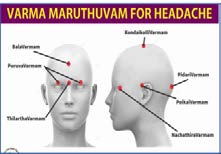
Investigations
- MRI Brain: Swelling and inflammation of the pituitary gland suggestive of apophysitis, DNS13
- Visual field test: Normal
- CBC, ESR: Moderate elevation of inflammatory markers
- Hormonal profile: Normal pituitary hormone levels
Assessment Measures
The assessment was analysed based on pre and post therapy scores of different baseline values gathered from in-house symptom tracking questionnaires and standard clinical tools built on following scales-
- Visual Analogue Scale (VAS) score for pain that was recorded at 9/10, indicating excruciating intensity.
- Functional impact was assessed using the Cluster Headache Impact Questionnaire (CHIQ), where he scored 28 out of 30, suggesting a substantial impairment in quality of life and daily functioning [21, 22].
- Sleep quality was severely compromised due to nocturnal attacks and anxiety associated with recurrence; his Pittsburgh Sleep Quality Index (PSQI) score was 17, denoting poor sleep quality and disrupted rest [23].
Therapeutic Intervention
1. CERT (Chakrasiddh Energy Healing Sessions)
At Chakrasiddh, the practitioner has designed CERT sessions for manipulation of energies of patients [24, 25].
As part of the therapeutic care plan, five specialized energy release sessions were administered during the three weeks of treatment (twice weekly) with a duration of 45 minutes at Chakrasiddh Holistic Healing Centre, Hyderabad; focusing on neuro-myofascial pressure point (as per Siddha key Varmam points) stimulating the cranial and upper cervical regions along with gut-based energy points. Also, activation of traditional nasal energy points (such as Mooku Varmam) was done to help in relieving nasal blockage and improving respiratory flow, indicating effective sinus pressure regulation through energy-based intervention. [Table-1, 2].
Using gentle circular hand movements, tapping, and light vibrational stimulation on the occipital base (Saramudichi), crown region (Utchipathappa Kaalam), and sacral points, the therapy aimed to reset disrupted energy flow pathways. Additionally, lower abdominal energy points were activated to support detoxification, reduce gut-induced neural sensitization, and improve autonomic stability. The pressure techniques used were Amarthal (gentle pressure) and Thadaval (circular stroking/massage) for energy clearance and balancing [26, 27].
| Neuro-facial Points | Location | Purpose/effect |
|---|---|---|
| Utchipattai Varmam | vertex of the skull | for central cranial energy circulation |
| Thilartha Kalam | midpoint between eyebrows | to calm mental agitation |
| Kanpugaichal Varmam | behind the ear | to reduce vascular tension |
| Nethikkaalam | around the eyes | for visual sensitivity and eye strain |
| Kazhuthu Varmam | base of the neck | to relax cervical pressure |
| Kundalini Varmam | upper cervical spine | for releasing blocked pranic flow |
| Muppin Varmam | lateral to the nostrils | improving pituitary balance |
| Mooku Varmam | Inside nostrils | Reducing nasal pressure, correcting the nasal bone |
Table 1: Energy Points for Cluster headache [28].
| Location | Purpose/effect | |
|---|---|---|
| Nangunapottu Varmam | Lower abdomen, near pelvic/sacral region | Regulates Pitham-Vatham in the gut; relieves abdominal tension linked to migraine triggers |
| Neerkuri Kaalam | Located above the navel, central abdomen | Clears toxins (Ama), aids digestion and balances gut-fire (Agni) |
| Peevani Varmam | Just below the navel (connected with gut-brain axis) | Stimulates peristalsis, relieves constipation, and reduces bloating-induced migraine |
| Nadu Kaalam | Mid-point between navel and chest | Supports liver/gall bladder energy flow and hormonal balancing |
| Kundalini Kaalam | Pelvic base (also linked to Mooladhara chakra) | Reduces base energy stagnation, supports detox |
| Category | Avoid | |
| Fermented/Reheated foods | Leftover idli, dosa batter, cheese, vinegar, canned foods | |
| Sour foods | Orange, pineapple, grapes, curd at night | |
| Highly spicy items | Green chillies, excess black pepper | |
| Fried items | Pickles, papads or other deep-fried things | |
| Processed foods | Bakery, white sugar, junk food, instant noodles, processed meat, high-fat cheese | |
| Beverages | Tea, coffee, alcohol, energy drinks | |
Table 2: Key Gut-Related Energy Points for Cluster Headache.
2. Dietary Regulation
A strict diet plan inclusive of gut friendly products and avoiding some food category was designed by in-house dietician to avoid triggers and worsen gut inflammation [29] [Table 3].
3. Routine Breathing Exercises:
Certain breathing exercises like Naadi Suddhi and Agni Kriya are taught to stimulate gut-based vagal response which plays a major role in gut-brain regulation [30, 31].
Result and Outcome
Post-intervention, the patient reported significant reduction in headache frequency and intensity, better tolerance to screen time and light, improved emotional stability, enhanced sleep quality and energy levels. Notably, he experienced improved concentration and reduced dependency on analgesics. Following these sessions, the patient reported a perceptible reduction in cranial pressure, improved bowel regularity, and enhanced emotional resilience. The persistent redness of the left eye and watery discharge was reduced; even congestion and irritation in nasal cavity improved a lot. patient himself complemented of improved shape of nose suggesting some correction in nasal septum. He could sense enhanced airflow through the nasal passages and breathing was clear. The Feedback after each session for the improvement in sleep quality and decline in frequency and severity of headache episodes, suggested that the mind-gut-energy axis played a crucial therapeutic role in this case. Patient resumed his duty in hospital, no irritation was noticed on more screen view, was able to do physical tasks which showed improvement in his quality of life and overall well-being. He felt more energized due to proper sleep and came out of the depression mood.
The assessment based on values gathered from in-house symptom tracking questionnaires on different evaluation scales exhibited mark improvement; VAS score reduced to 3/10 from 9/10, indicating effective pain relief post-therapy. Functional disability related to headache, evaluated using the CHIQ, improved notably from 28/30 to 10/30, reflecting enhanced daily functioning and better quality of life. The patient also reported better sleep outcomes, with the PSQI score dropping from 17/21 to 6/21, suggesting improved sleep patterns and reduced nocturnal distress and more energy [Table-4].
| Assessment tool | Pre-therapy score | Post-therapy score | Interpretation |
|---|---|---|---|
| VAS (0-10) | 9/10 | 3/10 | Significant pain reduction |
| CHIQ (0-30) | 28/30 | 10/30 | Good quality of life |
| PSQI (0-21) | 17/21 | 6/21 | Considerable improvement in seep quality |
Table 3: Pre and Post Therapy Scores of Various Scales.
The initial MRI demonstrated pituitary enlargement consistent with inflammatory apophysitis. Post-therapy MRI reports taken after 3 months of treatment reflected marked reduction in soft tissue swelling of the pituitary gland with no evidence of acute inflammation or enhancement which aligned with the patient’s symptomatic improvement and decreased VAS and CHIQ scores. Midline structures well- aligned, DNS persists but without sinus congestion.
The laboratory tests: Hb value improved from 12.2 g/ Dl to 13.4 g/dL, ESR & CRP values reduced from 32 mm/ hr and 4.5mg/L to 12 mm/hr and 1.2 mg/L subsequently; confirming reduction in systemic inflammation markers post-therapy, suggestive of subsiding inflammatory process.
Discussion
Cluster headache (CH) is recognized as a neurovascular primary headache disorder with a strong association with hypothalamic and pituitary dysfunction, such as pituitary apophysitis. In a study done in Canada, CH was found predominantly in males aging between 30-50 years as compared to females, leading to more stress, anxiety, insomnia and depressions among the individuals affecting their socio-economic life [32, 23]. Many of them managing their headaches with pharmacological approaches such as triptans, NSAIDs, and ergotamine. However, these medications can be associated with side effects, contraindications, or the risk of medication-overuse, highlighting the importance of exploring non-pharmacological alternatives for acute and preventive management of headaches and to reduce the economic burden [1, 14]. Also, these offer short-term relief, they often fall short in chronic or atypical presentations, especially when underlying endocrine or structural abnormalities are involved. Use of several alternative medicine modalities such as acupuncture, Ayurveda, craniosacral therapy, and biofield energy healing have demonstrated potential in managing chronic headache syndromes by targeting the root cause of underlying systemic imbalances or energetic dimensions of headache syndromes with minimal adverse effects [34, 35].
The Siddha system, one of the oldest traditional Indian medical sciences, offers a unique blend of mind-body approach that focuses on humors through varmam therapy (neuro-pressure stimulation) and energy balancing sessions [19]. In this case, Siddha-based CERT focused on targeted specific cranial, cervical, nasal, and abdominal points associated with energy flow disruptions. These are similar in philosophy to chakra balancing and myofascial release in Western CAM, with a focus on restoring the Vatham-Pitham- Kapham balance believed to be disturbed in such neurological conditions [15]. Manual stimulation of abdominal varmam points such as Nangunapottu (sacral) and Peevani (pelvic) helped regulation of Vatham responsible for fluid and energy movement. This mirrors the enteric nervous system’s role in headache modulation, now well-acknowledged in modern medicine via the gut-brain axis [22]. Specific cranial and cervical energy points such as Utchipathappa Kaalam (crown region), Saramudichi (occipital junction), and Thavalaik Kaalam (upper thoracic nerve points) were manually stimulated using techniques similar to acupressure and craniosacral manipulation. These points correspond to TCM meridians associated with liver and gallbladder (often linked to migraines) and chakra points associated with emotional regulation and hormonal balance [2].
In a study where 50 correspondents who went through Magdalena energy healing sessions, which believe that all subtle “energy”, particularly human thoughts and emotions, affects the emotional, mental health of an individual, showed tremendous improvement in all aspects [36]. Likewise, in this case, during the energy release technique, the practitioner identified significant energetic blockages related to past traumas hindering in cranial and gut functioning, particularly around the left frontal zone (linked to cranial pressure) and lower abdominal zones corresponding to Nangunapottu Varmam and Peevani points. After two energy releasing sessions, the patient felt relieved and sensed lighter in head with lesser episodes of headache in sync with the theory of mind-body synchronization. The gut-related blocks were interpreted as reflective of Pitha-Vatha imbalance, contributing to both emotional fluctuations and episodic vascular tension common precursors in chronic headache patterns as per mentioned in many other studies [37]. Practices like abdominal massage in Ayurveda, or Hara work in Shiatsu, aims at detoxifying and decongesting the visceral area, helping relieve tension and emotional stagnation often reflected in migraine-prone individuals. Notably, this biofield modulation in Siddha through energy sessions also overlaps conceptually with practices like Reiki, pranic healing, and therapeutic touch, which aim to clear energetic obstructions and results into observable improvements in pain, sleep, and emotional stability [38, 6]. The patient also reported reduced dependency on analgesics and enhanced quality of life outcomes consistent with those seen in integrative care models globally [39].
The blockages in nasal area and deviations were addressed by gently stimulating nasal varmam points and using steam inhalation (containing eucalyptus, camphor) akin to nasya therapy in Ayurveda or essential oil inhalation in aromatherapy [40]. This helped improve pranic flow and sinus drainage, supporting the upper respiratory channel’s role in neurovascular balance. A similar trend was seen when a cohort study was performed in 500 Koreans which proved the fact that more than half of people had severe headaches due to nasal deviation [33]. Generally, many studies have proposed that headaches are sensitive to diet and that some dietary ingredients trigger these attacks especially chillies, milk products and, based on this a diet strategy has been introduced to avoid severity [41, 42]. In align with this thought that unhealthy food habits and lifestyle choices can disturb the balance of Vatha; for this patient, a siddha- aligned diet was prescribed to pacify aggravated Vatham and Pitham, both of which are linked to inflammatory responses, digestive dysfunction, and emotional reactivity in chronic headache patterns40. This mirrors various studies done on dietary protocols in Ayurveda and other CAM systems, where balancing the doshas and stabilizing gut function is central to managing neurovascular and emotional symptoms [15, 39]. Mild joint-loosening exercises and breath-centered movement practices (such as Siddha yoga kriyas or gentle pranayama) were introduced to improve circulation and calm neurovascular excitability [26, 27]. On comparing to other yoga-based protocols and traditional CAM practices, which emphasize breath-movement synchrony; similar benefits have been observed related to headaches and autonomic balance [43, 30 & 31].
A randomized controlled study on 100 patients demonstrated improved symptoms and tolerance to triggers on performance of neurostimulation techniques for 10- days have emerged as a promising avenue for headache management, demonstrating improved efficacy and tolerability compared to pharmacological treatments [44]. The patient confirmed substantial reduction in headache severity and frequency, better sleep, improved screen tolerance, emotional balance, and reduced dependence on medication which aligns with the reduction in pituitary size on follow-up MRI supporting treatment efficacy of Chakrasiddh Energy Release Technique including siddha energy sessions and anti-inflammatory approaches. It provided objective radiological evidence of improvement, complementing subjective scales like VAS, CHIQ, and PSQI which implies siddha therapy as a promising adjunct in cases of cluster headache related to pituitary apophysitis.
This case supports the hypothesis that CERT-energy interventions, can offer a non-invasive, mind-body holistic alternative for managing chronic migraine syndromes linked to pituitary involvement especially in patients seeking relief beyond pharmacological or surgical options.
Conclusion
This case-based exploration highlights the therapeutic potential of CERT and pressure point interventions in managing complex neurovascular headache syndromes, such as cluster headaches associated with pituitary apophysitis. While conventional treatments often offer symptomatic relief, this approach suggests that addressing underlying energetic and systemic imbalances may lead to sustained improvement in pain, sleep, and quality of life. Although the outcomes from this single case are promising, further large- scale, controlled clinical trials are essential to scientifically validate the safety, and long-term efficacy of CERT in neuroendocrine-linked headache disorders. Such evidence may position Siddha as a valuable complementary strategy within multidisciplinary neurological care.
Patient perspectives
Patient self-reported that he was very much satisfied with the treatment and had no episodes of headache attacks during the tentative cluster headache months after the course of our treatment. This in turn improved his quality of life by considerable reduction in his mental stress. Patient could perform all his professional duties without any fear of impending headache attacks.
Conflicts of Interest
The authors declare no conflict of interest, as all the authors are in-house employees of Chakrasiddh Holistic healing centre and it was a co-effort of all in the choice of patient and in the writing of the manuscript or in the decision to publish the results. The analysis and writing choices were made independently by the researchers. References
1. Burish MJ, Pearson SM, Shapiro RE, W Zhang, LI Schor (2021) Cluster headache is one of the most intensely painful human conditions: results from the International Cluster Headache Questionnaire. Headache 61: 117-124.
2. Edvinsson L (2018) Headache advances in 2017: a new horizon in migraine therapy. Lancet Neurol 17(1): 5-6.
3. Fischera M, Marziniak M, Gralow I, S Evers (2008) The incidence and prevalence of cluster headache: a meta analysis of population based studies. Cephalalgia 28: 614-618.
4. Lipton RB, Pavlovic JM, Buse DC (2017) Why Migraine Forecasting Matters. Headache 57(7):10231025.
5. Kreitschmann Andermahr I, Siegel S, Weber Carneiro R, Maubach JM, Harbeck B, et al. (2013) Headache and pituitary disease: a systematic review. Clin Endocrinol (Oxf) 79(6): 760.
6. Wei DY, Goadsby PJ (2021) Cluster headache pathophysiology - insights from current and emerging treatments. Nat Rev Neurol 17: 30.
7. Gubbi S, Hannah Shmouni F, Verbalis JG, Koch CA (2019) Hypophysitis: an update on the novel forms, diagnosis and management of disorders of pituitary inflammation. Best Pract Res Clin Endocrinol Metab 33(6): 101371.
8. Moller M, May A (2019) The unique role of the trigeminal autonomic reflex and its modulation in primary headache disorders. Curr Opin Neurol 32: 438.
9. Grangeon L, O’Connor E, Danno D, Ngoc TMP, Cheema S, et al. (2021) Is pituitary MRI screening necessary in cluster headache? Cephalalgia 41: 779-788.
10. Janani L (2017) Review on Diagnostic methods in Siddha system of medicine. In: European Journal of Biomedical and Pharmaceutical Sciences 4(5): 188193.
11. Peng KP, Burish MJ (2023) Management of cluster headache: Treatments and their mechanisms. Cephalalgia 43(8).
12. Barbanti P, Aurilia C, Egeo G, Proietti S, D’Onofrio F, et al. (2024) Ultra late response (> 24 weeks) to anti CGRP monoclonal antibodies in migraine: a multicenter, prospective, observational study. J Neurol 271(5): 24342443.
13. D’Amico D, Raggi A, Grazzi L, Lambru G (2020) Disability, quality of life, and socioeconomic burden of cluster headache: a critical review of current evidence and future perspectives. Headache 60: 809818.
14. Eltrafi A, Shrestha S, Ahmed A, Mistry H, Paudyal V, et al. (2023) Economic burden of chronic migraine in OECD countries: a systematic review. Health Econ Rev 13: 43.
15. Karakurum Goksel B, Coskun O, Ucler S, Karatas M, Ozge A, Ozkan S (2014) Use of complementary and alternative medicine by a sample of Turkish primary headache patients. Clin Trials 26(1): 17.
16. Peres MF, Silberstein S, Moreira F, Corchs F, Vieira DS, et al. (2007) Patients’ preference for migraine preventive therapy. Headache 47(4): 540545.
17. Rezvani M, Yaraghi A, Mohseni M, Fathimoghadam F (2014) Efficacy of Yamamoto new scalp acupuncture versus Traditional Chinese acupuncture for migraine treatment. J Altern Complement Med 20(5): 371.
18. Roshni KP (2018) Comparative analysis of pitta dosha in Ayurveda and Siddha. World J Pharm Res 7(15): 272.
19. Mahendiran M, Gowri V (2019) Parallel analysis of Oruthalai Vaatham in Siddha literature with migrainous neuralgia. World J Pharm Res 8(7): 550.
20. Manzoni GC, Camarda C, Genovese A, Quintana S, Rausa F, et al. (2019) Cluster headache in relation to different age groups. Neurol Sci 40: 913.
21. Kaviyarasi NS, Stalin A, Naveena DE (2019) Nadi Pariksha: An ancient diagnostic technique. Int J Med Sci Diagn Res 3(1): 41.
22. Abu Bakar N, Torkamani M, Tanprawate S, Lambru G, Matharu M, et al. (2016) The development and validation of the Cluster Headache Quality of life scale (CHQ). J Headache Pain 17: 79.
23. Kamm K, Straube A, Ruscheweyh R (2022) Cluster Headache Impact Questionnaire (CHIQ)-a short measure of cluster headache related disability. J Headache Pain 23: 37.
24. Ran C, Jennysdotter Olofsgard F, Steinberg A, Sjostrand C, Waldenlind E, et al. (2023) Patients with cluster headache show signs of insomnia and sleep related stress: results from an actigraphy and self-assessed sleep study. J Headache Pain 24: 114.
25. Reddy MS, Maheshwari R (2020) Siddha Medicine and Health: A Holistic Perspective. J Complement Med Res 12(1): 76.
26. Sindhuja BS (2024) Siddha and Energy Healing: A Novel Concept to Holistic Well Being. Public H Open Acc 8(1): 000292.
27. Lavekar GS, Menon TV, Bharati G (2018) A Practical Handbook of Panchakarma Procedure. Reprint, Central Council of Research in Ayurveda and Siddha, India.
28. Ramasamy P, Krishnan M, Selvaraj S, Kumar R (2015) Clinical evaluation of Siddha Varmam therapy in the management of musculoskeletal disorders: A pilot study. J Res Tradit Med 1(3): 120.
29. Ramamurthy V, Bupesh G, Gopalakrishnan V (2016) Siddha Therapy: The Forgotten Science. Int J Pharm Sci Res 7(8): 31333141.
30. Chinthala R, Baghel AS, Shubhangi K, Bhagavathi NNL (2023) A case control study for exploring the association of Prakriti with Rheumatoid Arthritis. J Ayurveda Integr Med 14(5): 100789.
31. Pal PK, Sharma R, Shukla VD (2017) Scientific evaluation of Effect of Yogic practices over Ardhavabhedaka (Migraine). Int J Res Ayurveda Pharm 8(1): 62.
32. Sharma VM, Manjunath NK, Nagendra HR, Ertsey C (2018) Combination of Ayurveda and Yoga therapy reduces pain intensity and improves quality of life in patients with migraine headache. Compl Ther Clin Pract 32: 85.
33. Arsovska B, K Kozovska, Velkovska J, Zhu J (2022) CASE REPORT - Acupuncture treatment in cluster headache. Eur J Biomed Pharm Sci 9(10): 13.
34. Chaibi A, Tuchin PJ, Russell MB (2011) Manual therapies for migraine: a systematic review. J Headache Pain 12(2): 127133.
35. Lee KI, In SM, Kim JY, Hong JY, Han KD, et al. (2021) Association of nasal septal deviation with the incidence of anxiety, depression, and migraine: A national population-based study. PLoS One 16(11): e0259468.
36. Brueggemann AD, Ekwonye AU (2023) Perceived Benefits of Magdalena Energy Healing Sessions: An
Exploratory Study of Clients’ Perspectives. Healthcare (Basel) 11(23): 3087.
37. Rogers L, Phillips K, Cooper N (2021) Energy Healing Therapies: A systematic review and critical appraisal. Health Psychol Rev 2: 162.
38. Vergo MT, Pinkson BM, Broglio K, Li Z, Tosteson TD, et al. (2018) Immediate symptom relief after a first session of massage therapy or Reiki in hospitalized patients: A 5 year clinical experience from a rural academic medical center. J Altern Complement Med 24: 801.
39. Prakash G, Sharma D, Pandey S (2024) Evidence basis study of migraine in Ayurveda: “Ardhavbhedaka”. Int J Med Pub Health 14(4): 103107.
40. Pathan MJ, Shaikh S, Ansari MS (2024) Nasya therapy in the management of Ardhavabhedaka (Migraine): a review of Ayurvedic perspectives and modern insights. Afr J Biomed Res 27(4S): 15.
41. Gazerani P (2020) Migraine and Diet. Nutrients 12(6): 1658.
42. Osadchiy V, Martin CR, Mayer EA (2019) The gut brain axis and the microbiome: mechanisms and clinical implications. Clin Gastroenterol Hepatol 17: 322.
43. Hammond NG, Orr SL, Colman I (2019) Early life stress in adolescent migraine and the mediational influence of symptoms of depression and anxiety in a Canadian cohort. Headache 59(10): 16871699.
44. Wang YF, Wang SJ, Huang YH, Chen YT, Yen YC et al. (2023) Treatment pattern and health care resource utilization for Taiwanese patients with migraine: a population- based study. Front Neurol 14: 1222912.
- Management of Ear Keloid with Ksharsutra: A Case Study
- Yoga and Global Sustainability: A Holistic Path to One Earth, One Health
- Autoimmune Diseases in Ayurveda: A Narrative Review with Classical and Modern Perspectives
- Zygophyllum Geslini Coss : Biochemicals and Antioxidant Activity
- Observations of a Beginner Vaidya
- Assays for Anti-Cancer Screening of Medical Plants: A Review