
Physicochemical Characterization and Assessment of Bioactive Chemical Compounds of Persea Americana (Avocado) Seed
The use of Extracts from the seed of Persea americana Mill (Lauraceae) for ethnotherapy of diseases including cancer, hypertension, blood pressure regulation, diabetes etc, is on the increase in Nigeria, inadequate knowledge of the bioactive compounds in the seeds remains a challenge and this concern gave birth to the present study. In this study, the physicochemical properties and bioactive compounds of avocado seed were determined using standard tests and experiments. The analysis was done in three replicates. The yield of the oil was about (6.9±0.04) %, The results obtained for the physical properties of avocado pear are: Physical state (liquid), Odour (fruity), Colour (dark brown/ brownish red), pH (6.2±0.01), Relative density (0.945±0.02), Electrical conductivity (000uscm-1), Cloud point (8 ± 0.02 oC), Melting point (12 ± 0.02 0C), Smoke point (167± 0.05oC), Flash point (180± 0.02 oC), Fire point (241± 0.02 oC), the result of chemical properties of Avocado Pear seed oil assayed include: Acid value (11.78± 0.96 mgKOH/g), Free fatty acid (5.89± 0.96 mgKOH/g) , Peroxide value (43.00± 0.04 mgð‘‚2/Kg), Saponification (m231.41± 1.18gKOH/g). The physico-chemical characteristics of the oil show that it has industrial potentials. 8 major bioactive compounds were detected in the GCMS analysis and they include 2-aziridinyl-ethyl amine, Hydroxylurea, Epinephrine, Benzene ethanamine-3-flouro-β, 5 – dihroxyl-N-methyl, Dextroamphetamine, P,α-dimethylphenylethylamine, Cathine and 2-amino-1-propanol. Some of the compounds justify the use of the seed for some ethnomedical therapy. Furthermore, no toxic compound was detected from the analysis; but the inadequate knowledge on the concentration of the compounds present in theses seeds can pose serious health threat on consumers.
Introduction
In Nigeria, use of plant materials as source of medicine has been a cultural heritage which declined with the birth of western civilization into West Africa. The use of plant parts (seeds, leafs, bark, fruits and stems) for medicinal purposes rekindled in the millennium as research and reports into natural products reveal high concentration of bioactive compounds in plants coupled with the cheapness, availability and accessibility of these natural medicines and also recent belief that medicines from plants are free from side effects [1, 2]. This belief brought about the noticeable increase in use of the plant parts for medicinal purposes with attention focused on the possible therapeutic potentials and less attention paid on assessment of probable health threats of most medicinal plants. It is pertinent that safety assessments should be conducted on natural products for which certain medicinal uses have been scientifically validated [3, 4]. One of these plants utilized for various medicinal purposes is the avocado plant.
The avocado plant “Persea americana“(known as ube
oyibo in igbo language) belongs to the family of Lauraceae with a variety of species and it is grown majorly in the tropical and subtropical regions of the world [5]. The fruit is made up of a mesocarp and edible pulp and a hard nut shape seed located in its nucleus. The edible fruit pulp is characterized for high lipid content and as an excellent source of monounsaturated oleic acid [6, 7, 8]. Studies has shown that it is highly rich in proteins, fats and oils, vitamin C and vitamin B6, contains minerals such as copper, potassium and iron, it is a source of dietary fibre and also contains low in sugar [9]. It also contains important lipid-soluble antioxidants and phytochemicals such as carotenoids, chlorophylls, polyphenols, tocopherols, and phytosterols [6, 10]. The monounsaturated fatty acids present in the pulp are believed to modify the fatty acid contents in cardiac and renal membranes and enhance the absorption of α/βcarotene and lutein [9, 11]. The carotenoid content has been reported to play significant role in cancer risk reduction [7, 11].
Other parts of the plant have been reported to possess medicinal properties; for example, the aqueous leaf extract has analgesic and anti-inflammatory, anticonvulsant, hypoglycaemic and hypocholesterolaemic, as well as vasorelaxant and blood pressure reducing activities when assayed in animal studies [1]. Studies carried on the seed has reported the use of seeds as good source of activated carbon [12], natural food dye (it produces orange color when mixed with water) [13], and as protection of oils and fats from oxidation [14, 15]. Reports have it that the seed contain more antioxidant properties and polyphenol content than the pulp [16, 17]. Phytochemical studies on avocado seeds have identified various classes of natural compounds such as phytosterols, triterpenes, fatty acids, furanoic acids, abscisic acid, proanthocyanidins, and polyphenols [17, 18]. With the so much ongoing research on the medicinal properties of the avocado seed, the demand for these previously discarded seed has increased. In Nigeria, it is being utilized for the treatment of hypertension, diabetes [19] and high blood pressure, by mixing the powdered seed with soups, pap and puddings. Furthermore, avocado seed preparations are known to have local anesthetic effects that decrease muscle pain, also it has been for prescribed as a remedy for cancer. On the other hand many of the acclaimed medicinal values have not been scientifically evaluated and their safety profiles remain uncertain.
Thus, this study was warranted and aimed at characterizing the seed extracts for physicochemical properties and exposing the bioactive compounds present in avocado pear seed in order to detect the therapeutic and toxic compounds the results obtained from the study will provide the basis for its possible dietary or industrial use and justification for its ethno-medicinal use.
Experimental
Sample collection
The avocado fruits obtained from a farm in ubahanneri village, Aji, Oru west Local government area, Imo state, Nigeria were left to ripen for 8-9 days at a room temperature after which they were manually deseeded; they were cut to particle size of 1 mm by using a chopper, then air/sun dried for two weeks and ground to dust using a mortal. Finally, the ground and dried seeds were stored in dark until use.
Chemicals and Reagents
Petroleum ether, Hydrochloric acid, Sodium thiosulphate, Starch solution, Ethanol, Potassium hydroxide , Di-ethyl ether, Potassium iodide, Acetic acid, Chloroform, Distilled water, Phenolphthalein. All reagents were of analytical grade.
Extraction procedure
Extraction from the plants involved a series of exercise utilizing a mixture of two solvents. The sample was soaked in a mixture of n-hexane and pet-ether (1:1) for 24 hours after which the solvent was decanted and other part of the sample was extracted using a soxhlet extractor. The aqueous extracts were combined and were concentrated in a rotary evaporator thereby allowing the solvent to escape and stored prior analysis.
Analysis
Physical and chemical parameter; Determining the yield of the oil The percentage yield was calculated using this equation.
% 100 weight of oil yield weight of sample = ×
Saponification Value Determination
AOAC [20] method was used to determine the saponification value of the oil. 2 g of oil was weighed into a conical flask and 25 ml of 0.5 N alcoholic KOH were added. A blank was also prepared by taking 25 mL of alcoholic KOH in a similar flask. Reflux condensers were fitted to both flasks and the contents were heated in a water bath for one hour, swirling the flask from time to time. The flasks were then allowed to cool a little and the condensers washed down with a little distilled water. The excess KOH was titrated with 0.46 N HCl acid using phenolphthalein as indicator. The saponification value was calculated using the equation ( ) 28.05 average Blank titre averagesampletitre SV massof sample − × =
Acid Value Determination
Acid value was determined using the method described by Association of Official and Analytical Chemists [20], (slightly modified).1g of the oil was transferred into a clean conical flask, 20ml of the lipid solvent was added to dissolve the oil while shaking. Two drops of phenolphthalein indicator was added and titrated against standardized KOH. The titration was repeated for concordant values and that for blank. The acid value was calculated using this equation.
$$Acid value = \frac{(sample titre - blank titre) \times 0.1 \times 56.1}{mass of sample}$$
The ester value = saponification value – acid value. The ester value was obtained by the difference between the Saponification value and the acid value;
Determination of Peroxide Value
Peroxide value of the oil was assayed as described by the method. 2 g of oil sample was weighed into a 500 mL conical flask and 10 ml of chloroform was added to dissolve the sample. This was followed by addition of 15 ml of acetic acid and 1ml of freshly prepared saturated potassium iodide solution. The flask was immediately closed, stirred for about 1 minute and kept at room temperature away from light for exactly 5 minutes. About 75 ml of distilled water was added to the content of the flask and then shaken vigorously. Few drops of starch solution were added as indicator. The liberated iodine was titrated against 0.01N sodium thiosulphate solution. The same procedure was carried out for blank and the peroxide value (PV) expressed in millilequivalent of active oxygen per kilogram of sample was calculated using this equation.
$$Peroxide value = \frac{1000(V1 - V2) \times M}{mass of sample}$$
Where; $V_1$ = volume of sample titre; $V_2$ = Volume of blank titre; $M$ = Molarity of thiosulphate
Determination of the Relative Density/ Specific Gravity
The Density bottle was washed and weighed $(M_1)$. The bottle was filled with freshly boiled and cooled water then placed on water bath until the temperature of water reaches 25°C. The weight of bottle and water was taken $(M_2)$. Water was poured out and the bottle dried after which the bottle was filled with the oil samples at the temperature of 60°C ± 0.2°C. This was allowed to stand for 30 minutes in water bath and the content weighed after cooling to 25°C $(M_3)$.
$$S.G = \frac{(M3 - M1)}{(M2 - M1)}$$
Determination of pH
This was done using a pH meter, the pH electrode was standardised with buffer solution and the electrode was immersed into 2g of the oil sample and the pH value was read and recorded.
Melting Point / Pour Point
10ml of oil was pours into a pour point beaker and kept in a refrigerator to freeze before inserting a thermometer into the beaker. The oil was exposed to sunlight and the temperature at which the oil started to melt was recorded.
Cloud Point
10ml of oil sample was poured into a beaker and placed in a refrigerator, once the oil starts to freeze, a thermometer was inserted into the beaker and the temperature was read and recorded.
Smoke Point, Flash Point and Fire Point
This determination is done in a fume cupboard, 10ml of oil sample was poured into the beaker and a constant heat was applied, the moment there was constant smoke the thermometer is inserted and the temperature was read, this is the smoke point, the heating continues, lighter is used to ignite light every 2 seconds to check when the vapour or smoke will be ignited, the temperature when this happens was also recorded as the flash point and the heating continues until the oil begins to burn and that temperature at which the oil catches fire is also recorded as the fire point.
Chromatographic Analysis
Chromatographic analysis was done using agilant 7890A GCMS of the halden company portharcourt, Rivers state, Nigeria which was carried out according to the GC Acq-method.
Statistical Analysis
Statistical analysis was done using the Microsoft excels; the analyses were performed in their triplicates and the Mean concentrations and standard deviations were calculated for each parameter.
Results and Discussions
The physical and chemical characteristics of oil from persea Americana seed extracts are presented in Tables below.
| Parameter | Value |
| Oil yield | (6.9±0.04) % |
| Physical state | liquid |
| Odour | fruity |
| Colour | dark brown/ brownish red |
| pH | 6.2±0.01 |
| Relative density | 0.945±0.02 |
| Electrical conductivity | 000uscm^{-1}$ |
Table 1: Physical Characteristics (1).
The physical parameters of avocado seed oil assayed in this study are presented in Table 1a above. The fruity odoured seed oil is a liquid at room temperature with a brownish-red colour, this colour is similar to that reported by Akubugwo, et al. and Banji Adaramola, et al. [21, 22]. The percentage oil yield obtained from the seed was 6.9±0.04 which is slightly lower than results obtained by Banji Adaramola, et al. [22] who reported a value of (8.10 ± 0.07), Oluwole, et al. [23] also reported values (9.27±0.02%) for unripe and (9.47±0.00%) for ripe seeds, while it was higher in contrast to value 3% reported by Dagde KK [24]. According to reports made by Akinoso and Raji [25] who quotes FAO’s statements that, seeds must contain oil yield greater than 17% to be considered as oil seeds. Therefore, avocado pear seed is not recommended for the purpose of edible oil generation and biodiesel production due to the very low oil yield. However, variation in oil yield may be due to the differences in species of plant, ecological factors affecting the seeds in different geological locations, differences in laboratory practices (extraction methods) or the type of solvent used for the extraction [26, 27]. Results obtained for the pH value determination was (6.2± 0.01) compared to values reported for the pulp oil (5.7) reported by B. A. Orhevba and AO Jinadu [28]. The electrical conductometer gave no reading i.e. a value of 000uscm was observed when the electrical conductivity was determined, which implies that the oil is not good of conductor electricity and cannot serve as an electrolyte. Values obtained for relative density revealed 0.94±0.02 for Persea americana seed oil. This is comparable with 0.91±0.02 and 0.912 reported by Adaramola, et al. [22] and Dagde KK [24] respectively. The result implied that avocado seed oil is less dense than water and could therefore be useful in cream production as this will make the oil spread easily on the skin.
| Parameter | Value |
| Cloud point | 8±0.02℃ |
| Melting point | 12±0.02℃ |
| Smoke point | 167±0.05℃ |
| Flash point | 180±0.02℃ |
| Fire point | 241±0.02℃ |
Table 3: Physical Characteristics (2).
Table 2 depicts the results of the analysis of the temperature dependant physical properties of the Avocado seed oil. It highlights that the cloud point of the oil was 8±0.02 0C and the melting point (12±0.02), smoke point (120±0.05), flashpoint (180±0.02) and fire point (240±0.02) all measured in degree Celsius. Comparing melting point values with values reported for three varieties of the pulp oil by JC Nnaji and OB Okereke [27]; Brogdon, (21.72±0.04 oC), Russel (20.64±0.060C), and Choquette varieties (21.33 ±0.19°C) respetively. The avocado seed oil is seen to have lower melting point compared to that report. The value for the cloud point was in range with the value (120C) reported by Dagde KK [24] while the flash point was higher than the value report by Dagde (99oC), The high flash point implied that the oil should be properly handled because of its volatility. the higher the smoke point of the oil, the more suitable it becomes for cooking at high temperature, The values for the smoke point was compared with values of the three varieties of pulp oil reported by JC Nnaji and OB Okereke [27]; (178.89, 181.33 and 187.33). The values gotten in the analysis was lower. Moreover, the higher the smoke point, the higher the heat it can with-stand. Therefore this oil has limited ability to withstand high temperature compared to the pulp oil. The fire point value is high enough which means that although the oil smokes quicker than the pulp oil, it with-stands combustion over a long range of temperature.
| Value | |
|---|---|
| Acid value (mgKOH/g) | 11.78±0.96 |
| Free fatty acid (mgKOH/g) | 5.89±0.96 |
| Peroxide value (mgO2/Kg) | 43.00±0.04 |
| Saponification (mgKOH/g) | 231.41±1.18 |
| Ester value (mgKOH/g) | 219.60±0.22 |
Table 2: Chemical Characteristics.
The result tabulated in Table 2 depicts values for the chemical characterization of the oil, from this Table 3, it can be seen that acid value was 11.78±0.96 and free fatty acid value was 5.89± 0.96. The Acid values measure the extent of decomposition of glyceride present in the oil and other actions such as light and heat and also measures the susceptibility of the oil to rancidity. There’s also a relationship between with acid value and free fatty acid. The lower the acid value of oil, the fewer free fatty acids it contains which makes it less susceptible to rancidity. The value obtained in this analysis was higher than the value (4.51±0.08 mgKOH/g) reported by Banji Adaramola, et al. [22] but lower than the acid value (16.80mgKOH/g) reported by Akpabio, et al. This value is very close to the acid value (11.44±0.44 mgKOH/g) reported for unripe pear seed oil by Oluwole, et al. [23]. The acid value obtained for avocado seed oil in this study, therefore, suggests that the oil is not edible and might be susceptible to rancidity compared to most edible oils; therefore it should not serve as cooking oil. The free fatty acid of 5.89± 0.96 obtained for avocado seed oil in this study which is high in comparison with (2.26±0.08) reported by Banji Adaramola, et al. [22], (1.68) reported by Dagde KK and also high compared to values (1.58±0.04) (1.54±0.02), (1.30±0.11) reported for three varieties of pulp oil by JC Nnadi, et al. [27]. High FFA content of the oil is an indication of poor resistance to enzymatic hydrolysis and could be a disadvantage when compared with oils having low free fatty acids value which makes this oil to become off-flavor during storage [29] and the lower the quality of the oil especially in terms of its edibility. Peroxide value is a measure of the content of hydroperoxides in oil [30] which are the primary reaction product formed in the initial stages of oxidation of oil and therefore indicates the likely occurrence of the process of lipid peroxidation. The peroxide value of (43.00± 0.04mgO2/Kg) was reported in this work. The value is high in comparison with (3.30meq/1000g) reported by Dagde KK [24] and (2.40±0.57mgO2/Kg) reported by Banji Adaramola, et al. [22]on the seeds. The high peroxide value of the oil is indicative that the oil is unstable against oxidation. [31, 32]. avocado oil should exhibit a high rate of oxidation due to its high content of unsaturated fatty acids. Unsaturated fatty acids easily react with oxygen to form peroxides. On the other hand, the iodometric method might fail to adequately measure low Peroxide Value because of difficulties encountered in the determination of the titration endpoint [32, 33]. The Avocado seed oil had saponification values of 231.41± 1.18 which is good when compared with 231.6±1.40 previously reported by Pushkar, et al. [34] and a little higher than (187.18) reported by Dagde KK [24]. The relatively high saponification value of this oil implies that it is very suitable for the production of soaps and detergents as earlier stated. Ester value represents the number of milligrams of potassium hydroxide required to saponify the esters present in 1g of the oil. It is obtained as the difference between the saponification value and the acid value. Ester value of (219.60± 0.22mgKOH/g) was obtained for the avocado seed oil. This is higher than 31.26±0.03mgKOH/g reported by Banji Adaramola, et al. [22] for avocado seed oil. This higher value was expected because of the high saponification value.
| s/n | Compound name | Molecular Weight | Molecular Formula | structure | Retention time/min | % Content | Base peak | Compound Peak |
|---|---|---|---|---|---|---|---|---|
| 1 | (2-Aziridinylethyl Amine) | 86 | C H N 4 10 2 | HN 2 N | 29.033 | 85 | 32 | 6 |
| 2 | Hydroxylurea | 76 | CH N 0 4 2 2 | NH NH 2 HO O | 26.391 | 22.9 | 152 | 46 |
| 3 | Epinephrine | 183 | C H NO 9 13 3 | CH3 HN HO HO OH | 27.001 | 32.5 | 88 | 12 |
| 4 | Benzene ethanamine,3- flouro-β, 5– dihroxyl- N-methyl | 185 | C H FNO 9 12 2 | OH HO NH CH 3 F | 27.83 | 29.1 | 48 | 16 |
| 5 | Dextroamphetamine | 135 | C H N 9 13 | NH 2 CH 3 | 31.338 | 11.6 | 55 | _ |
| 6 | P,α-dimethyl phenyl ethylamine | 149 | C H N 10 15 | CH3 NH2 CH3 | 35.189 | 9.39 | 31 | _ |
| 7 | Cathine | 151 | C H NO 9 13 | NH2 HO CH3 | 34.97 | 3.44 | 84 | _ |
| 8 | 2-amino-1-propanol | 75 | C H NO 3 9 | NH 2 OH H C 3 | 28.209 | 15.2 | 121 | 21 |
Table 4: The Results of GCMS Analysis.
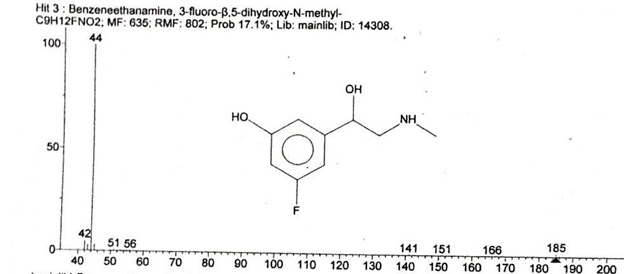
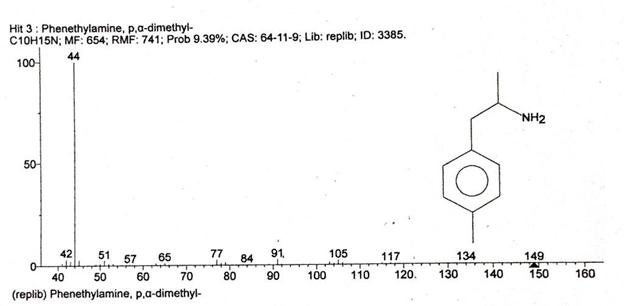
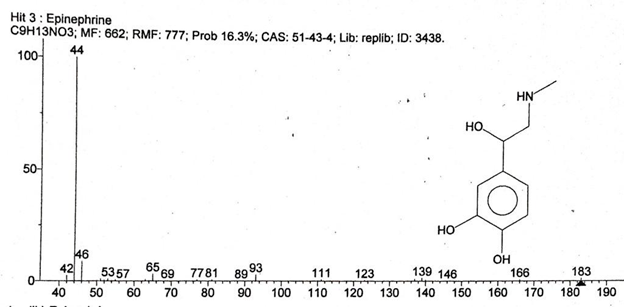
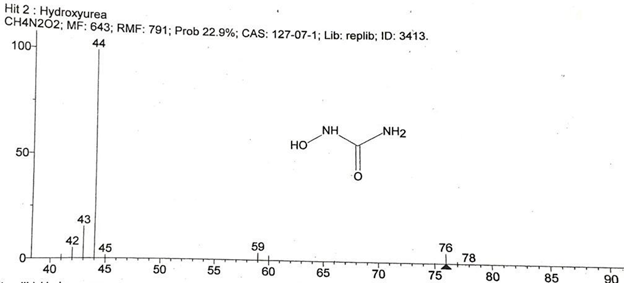
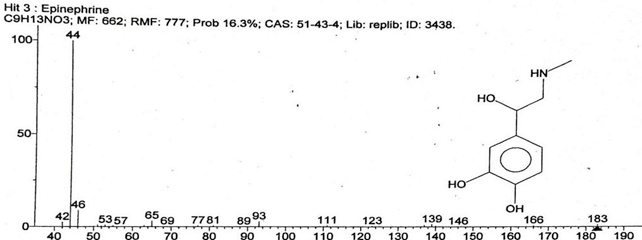
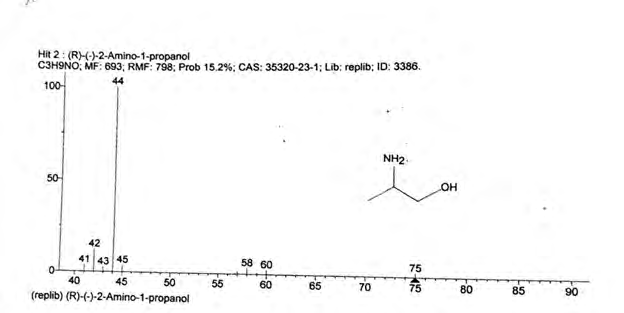
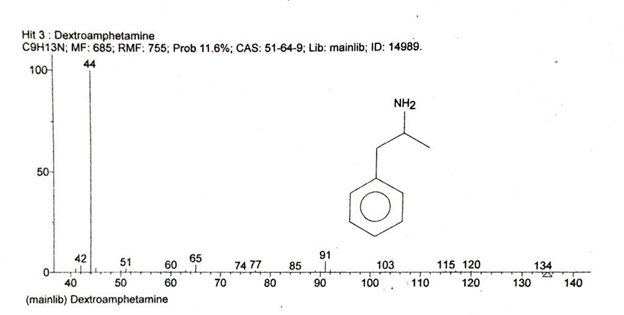
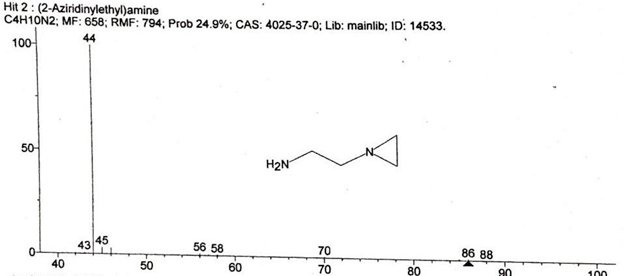
The result of the gas chromatography-mass spectroscopy is tabulated in Table 4 above, 8 predominant compounds were detected in analysis, the compounds are 2-aziridinyl-ethyl amine, Hydroxyurea, Epinephrine, Benzene ethanamine, 3-fluoro-β, 5–dihydroxy-N-methyl, Dextroamphetamine, P,α-dimethyl phenylethylamine, Cathine, and 2-amino- 1-propanol. The most abundant being 2-aziridinyl- ethylamine While the least abundant on the Table was identified as cathine. according to available literature, the medicinal properties of some the bioactive compounds found showed that Dextroamphetamine present in the compound is used to treat attention deficit hyperactivity disorder (ADHD) and narcolepsy (a sleep disorder) it also serves as a remedy for depression and obesity [35]. Long- term exposure to amphetamine at high doses in some animal species has been observed to release abnormal dopamine system development and nerve damage, [36] but, in humans, pharmaceutical amphetamines appear to improve brain development and nerve growth [37]. Hydroxyurea, on the other hand, is an antineoplastic (anti-cancer) agent used to treat melanoma, chronic myelocytic leukemia and recurrent cervical cancer and carcinomas of the head and neck [38, 39]. This justifies the anticancer uses of avocado seed by ethno medical practitioners although there’s been a longstanding concern that hydroxyurea itself carries a leukemia risk, large studies have shown that the risk is either absent or very small. Another major bioactive compound is Epinephrine; the most common uses of epinephrine are to relieve respiratory distress due to bronchospasm, to provide rapid relief of hypersensitivity reactions to drugs, animal serums, and other allergens, and to prolong the action of infiltration anesthetics [40, 41]. In addition to the above functions, epinephrine is the primary drug administered during cardiopulmonary resuscitation (CPR) to reverse cardiac arrest [42, 43, 44]. Cathine is a psychoactive drug of the phenethylamine and amphetamine chemical classes that act as a stimulant [45, 46]. cathine acts as a norepinephrine releasing agent (NRA). It also acts as a dopamine releasing agent (DRA) to a lesser extent and which makes it be banned by the world anti-doping agency (Figures 1-8).
Conclusion
The results of present study showed that Persea Americana seed had low oil yield (< 10%). Results of the physicochemical analysis showed that the oil is more suitable for industrial purposes than domestic purposes and because of its possession of bioactive compounds; it may also be useful for pharmaceutical formulations. Although the bioactive compounds account for some of its ethno medical uses and no toxicological compound was detected. There’s still risk of overdose due to knowledge gap on concentrations and the drug interactions of the bioactive compounds. This can lead to fatal medical problems. Future studies are recommended to evaluate the bioactivity of the compounds, determining the dosage and drug interactions.
Conflicts of Interest
The authors declare that they have no conflicts of interest
References
-
Ozolua RI, Anaka ON, Okpo SO, Idogun S (2009) Acute and sub-acute toxicological assessment of the aqueous seed extract of Perseaamericana mill (lauraceae) in rats. Afr J Trad 6(4): 573-578.
-
Kunow MA (2003) Plants with uses similar to roys. In: Kunow MA, Maya medicine: traditional healing in Yucatan. Albuquerque: University of New Mexico Press, pp: 128.
-
Ernst E (2005) The efficacy of herbal medicine-an overview. Fundam Clin Pharmacol 19(4): 405-409.
-
Ihenetu SC, Enyoh CE, Inyamah PC, Enyoh EC (2019) Physicochemical properties, phytochemicals and fat soluble vitamin of seed oil extracts from Sesamum Indicu L. International Journal of Chemical and Biological Sciences 1(4): 8-12.
-
Qin X, J Zhong J (2016) A Review of Extraction Techniques for Avocado Oil. J Oleo Sci 65(11): 881-888.
-
Pieterse Z (2003) Avocados(monounsaturated fatty acids), weight loss and serum lipids. Energy 26: 65-71.
-
Ortiz MA, Dorantes AL, Gallndez MJ, Cardenas SE (2004) Effect of a novel oil extraction method on avocado (Perseaamericana Mill) pulp microstructure. Plant Foods Hum Nutr 59(1): 11-14.
-
Ifesan BOT, Olorunsola BO, Ifesan BT (2015) Nutritional Composition and Acceptability of Candy from Avocado Seed (Persea Americana. International Journal of Agriculture Innovations and Research 3(6): 2319-1473.
-
Salazar MJ, El Hafidi M, Pastelin G, Ramírez-Ortega MC, Sanchez-Mendoza MA (2005) Effect of an avocado oil- rich diet over an angiotensin II-induced blood pressure response. J Ethnopharmacol 98(3): 335-338.
-
Boyadzhieva SS, Georgieva SS, Angelov G (2018) Optimization of the extraction of natural antioxidants from avocado seeds, Bulgarian Chemical Communications 50: 80-84.
-
Lu QY, Arteaga JR, Zhang Q, Huerta S, Go VL, Heber D (2005) Inhibition of prostate cancer cell growth by an avocado extract: role of lipid-soluble bioactive substances. J Nutr Biochem 16(1): 23-30.
-
Rodrigues LA, da Silva MLCP, Alvarez-Mendes MO, dos Reis Coutinho A, Thim GP (2011) Phenol removal from aqueous solution by activated carbon produced from avocado kernel seeds. Chem Eng J 174(1): 49-57.
-
Arlene AA, Prima AK, Utama L, Anggirini AS (2015) The Preliminary Study of the Dye Extraction from the Avocado Seed Using Ultrasonic Assisted Extraction. Procedia Chem 16: 334-340.
-
Wang W, Bostic TR, Gul L (2010) Antioidant capacities, procyanidins and pigments in avocados of different strains and cultivars. Food Chem 122(4): 1193-1198.
-
Gomez FS, Sanchez SP, Iradi MGG, Azman NAM, Almajano MP (2014) Antioxidants 3: 439.
-
Leite JJG, Brito EHS, Cordeiro RA, Brilhante RSN, Sidrim JJC, et al. (2009) Chemical composition, toxicity and larvicidal and antifungal activities of Persea americana (avocado) seed extracts. Rev Soc Bras Med Trop 42(2): 110-113.
-
Soong YY, Barlow PJ (2004) Antioxidant activity and phenolic content of selected fruit seeds. Food Chem 88(3): 411-417.
-
Ding H, Chin YW, Kinghorn AD, D’Ambrosio SM (2007) Chemopreventive characteristics of avocado fruit. Semin Cancer Biol 17(5): 386-394.
-
Pandey KB, Rizvi SI (2009) Oxid Med Cell Longev 2: 270.
-
AOAC (1995) Official Method of Analysis. Association of Official Analytical Chemists, Arlinton VA 16(4): 1-45.
-
Akubugwo IE, Chinyere GC, Ugbogu AE (2008) Comparative Studies on Oils from Some Common Plant Seeds in Nigeria. Pakistan Journal of Nutrition 7(4): 570- 573.
-
Adaramola B, Onigbinde A, Shokunbi O (2016) Physiochemical properties and antioxidant potential of Persea Americana seed oil. Chemistry International 2(3) 168-175.
-
Oluwole S, Yusuf K, Fajana O, Olaniyan D (2013) Qualitative Studies on Proximate Analysis and Characterization of Oil from Persea Americana (Avocado Pear). Journal of Natural Sciences Research 3(2): 68-73.
-
Dagde KK (2019) Extraction of Vegetable Oil from Avocado Seeds for Production of Biodiesel, J Appl Sci Environ Manage 23(2): 215-221.
-
Akinoso R, Raji AO (2010) Optimization of Oil Extraction from Locust Beans using Response Surface Methodology. European Journal of Lipid science and Technology 113(2): 245-252.
-
Marfo EK, Oke OL, Afolabi OA (1986) Chemical composition of papaya (Carica papaya) seeds. Food Chemistry 22(4): 259-266.
-
Nnaji JC, Okereke OB (2016) Proximate composition and physico-chemical properties of three avocados (Persea americana) Varieties in Umuahia, Nigeria, Journal of Applied Chemical Science International 5(4): 195-200.
-
Orhevba BA, Jinadu AO (2011) Determination of physico-chemical properties and nutritional contents of avocado pear (persea americana m.). Academic Research International 1(3): 372-380.
-
Bailey EA (1954) Industrial Oil and Fat Products. 3rd [Edn.], Interscience Publishers, London.
-
Werman M, Neeman I, Mokady S (1991) Avocado oils and hepatic lipid metabolism in growing rats. Food Chem Toxicol 29(2): 93-99.
-
Moigradean D, Poiana MA, Gogoasa I (2012) Quality characteristics and oxidative stability of coconut oil during storage. J Agroaliment Process Technol 18(4): 272-276.
-
Indriyani L, Rohman A, Riyanto S (2016) Physico- Chemical Characterization of Avocado (Persea americana Mill.) Oil from Three Indonesian Avocado Cultivars, Research Journal of Medicinal Plants 10(1): 67-78.
-
Shahidi F, Wanasundara U (2008) Methods for Measuring Oxidative Rancidity in Fats and Oils. In: Food Lipids: Chemistry, Nutrition and Biotechnology, Akoh CC, et al. [Eds.], 3rd [Edn.], CRC Press.
-
Pushkar SB, Narendra N, Rosalynd VM, Marcal QP, (2001) Characterization of the oils from the pulp and seeds of avocado (cultivar: Fuerte) fruits. Grasasy Aceites 52(3- 4): 171-174.
-
Heal DJ, Smith SL, Gosden J, Nutt DJ (2013) “Amphetamine, past and present-a pharmacological and clinical perspective”. J Psychopharmacol 27(6): 479-496.
-
Carvalho M, Carmo H, Costa VM, Capela JP, Pontes H, et al. ( 2012) “Toxicity of amphetamines: an update”. Archives of Toxicology 86(8): 1167-1231.
-
Hart H, Radua J, Nakao T, Mataix-Cols D, Rubia K (2013) “Meta-analysis of functional magnetic resonance imaging studies of inhibition and attention in attention- deficit/hyperactivity disorder: exploring task-specific, stimulant medication, and age effects”. JAMA Psychiatry 70(2): 185-198.
-
Rustin MH (2012) “Long-term safety of biologics in the treatment of moderate-to-severe plaque psoriasis: review of current data”. Br J Dermatol 167(Suppl 3): 3-11.
-
Harrison CN, Campbell PJ, Buck G (2005) “Hydroxyurea compared with anagrelide in high-risk essential thrombocythemia”. N Engl J Med 353(1): 33-45.
-
van der Poll T, Coyle SM, Barbosa K, Braxton CC, Lowry SF (1996) Epinephrine inhibits tumor necrosis factor- alpha and potentiates interleukin 10 production during human endotoxemia. J Clin Invest Feb 97(3): 713-719.
-
Shao H, Li CS (2017) Epinephrine in Out-of-hospital Cardiac Arrest: Helpful or Harmful? Chin Med J (Engl) 130(17): 2112-2116.
-
Otto CW, Yakaitis RW, Blitt CD (1981) Mechanism of action of epinephrine in resuscitation from asphyxial arrest. Crit Care Med 9(5): 364-365.
-
Yamashima T (2003) Jokichi Takamine, the samurai chemist, and his work on adrenalin. J Med Biogr 11(2): 95-102.
-
Callaway CW (2013) Epinephrine for cardiac arrest. Curr Opin Cardiol 28(1): 36-42.
-
Toennes SW, Harder S, Schramm M, Niess C, Kauert GF (2003) “Pharmacokinetics of cathinone, cathine and norephedrine after the chewing of khat leaves”. British Journal of Clinical Pharmacology. 56 (1): 125-130.
-
Hoffman R, Al’Absi M (2010) “Khat use and neurobehavioral functions: suggestions for future studies”. Journal of Ethnopharmacology 132(3): 554-63.
- Management of Ear Keloid with Ksharsutra: A Case Study
- Yoga and Global Sustainability: A Holistic Path to One Earth, One Health
- Autoimmune Diseases in Ayurveda: A Narrative Review with Classical and Modern Perspectives
- Management of Cluster Headache Associated with Pituitary Apophysitis by CERT (Chakrasiddh Energy Release Technique): A Case Report on Energy Rebalancing
- Zygophyllum Geslini Coss : Biochemicals and Antioxidant Activity
- Observations of a Beginner Vaidya