
Pharmacognostic Evaluation of Shadanga Ghrita Herbs
Efficacy of any formulation depends on their genuineness of herbs used. The present investigation was carried out to characterize the Ayurvedic preparation Shadanga Ghrita, a polyherbal formulation comprising of 6 ingredients, viz, Kutaj (Holarrhena antidysenterica Wall), Daruharidra (Berberis aristata DC), Pippali (Piper longum Linn), Shunthi (Zingiber Officinale Rosc), Katuka (Picrorhiza kurroa Royle ex Benth), Laksha (Laccifer lacca Kerr.) On the basis of the pharmacognostic parameters such as preliminary pharmacognostical study (color, odor, taste, appearance, texture and fracture), extractive values, ash values, moisture contents, foreign organic matter, microscopy (histology and powder microscopy) to confirm their identity, quality and purity, pharmacognosy study was carried out. To the best of my knowledge, there is no published report on the scientific analysis of Shadanga Ghrita till date, hence the present work was evaluated to develop the quality control parameters of Shadanga Ghrita ingredients to confirm their purity and identity.
Introduction
As per American Society of Pharmacognosy, Pharmacognosy is defined as “the study of the physical, chemical, biochemical and biological properties of drugs, drug substances or potential drugs or drug substances of natural origin as well as the search for new drugs from natural sources [1]. Most of the herbal formulations are polyherbal and contains many ingredients. For such type of formulations, it is very difficult to established parameter for identity and purity. Pharmacognostic investigation is an important aspect for establishing the identity, purity and quality of drugs. There are various methods for the standardization of polyherbal formulations. They include Macroscopic and Microscopic evaluation and physicochemical analysis. Macroscopic identity of herbal drug is based on sensory evaluation parameters like shape, size, colour texture, odour and taste while in microscopic investigation comparative microscopic inspection of powdered herbal drug, ash values, extractive values, loss on drying, and physical characteristics of polyherbal formulations is evaluated. Shadanga Ghrita is an important Ayurvedic polyherbal formulation depicted by Acharya Chakrapanidutta in his renowned text Chakradutta [2] for the treatment of diarrhoea.
Materials and Methods
Samples of Kutaj (Holarrhena antidysenterica Wall) seed, Daruharidra (Berberis aristata DC) root bark, Pippali (Piper longum Linn) fruit, Shunthi (Zingiber Officinale Rosc) rhizome, Katuka (Picrorhiza kurroa Royle ex Benth) root, Laksha (Laccifer lacca Kerr.) resin, were collected from Shri Hans Ayurved Bhawan, Premnagar Ashram, Haridwar, India and identified by Prof. D.C.Singh, HOD and professor, Department of dravyaguna, Rishikul Campus Haridwar.
Preparation of Powder
Crude drug has taken and roasted in a stainless steel pan at low temperature till it becomes free from Moisture. The genuine sample of Kutaj (Holarrhena antidysenterica Wall), Daruharidra (Berberis aristata DC), Pippali (Piper longum Linn), Shunthi (Zingiber Officinale Rosc), Katuka (Picrorhiza kurroa Royle ex Benth) and Laksha (Laccifer lacca Kerr.) were powdered in a pulverizer and pass through sieve number 80 ≠ and then packed separately in tightly closed containers to protect from light and moisture.
Pharmacognostic Evaluation
1.1.1. Preliminary pharmacognostical study: The collected sample of Kutaj (Holarrhena antidysenterica Wall), Daruharidra (Berberis aristata DC), Pippali (Piper longum Linn), Shunthi (Zingiber Officinale Rosc), Katuka (Picrorhiza kurroa Royle ex Benth) and Laksha (Laccifer lacca Kerr.) were studied organoleptically with naked eye and magnifying lens, to assess the color, odour, taste, appearance and texture of the drugs.
Physio-chemical Analysis
Determination of foreign matter [3]: Foreign matter is a material consisting of parts of the medicinal plant materials other than those named, any organism, part of product of an organism, other than that named in specification and description of the plant material concern. Foreign matter consists of mineral admixtures adhering to the medicinal plant materials, such as soil, stones, sand and dust. Known quantity of sample was weighed and spread in a thin layer and the foreign matter was sorted into groups either by visual inspection or with the help of magnifier. The sorted foreign matter was weighed and expressed as % foreign matter.
Moisture Content
Moisture content is water holding capacity of sample, higher moisture content in sample shows that it may decrease stability; no variation of weight was recorded. Moisture content was determined by placing weighed sample of 5 g of drug in oven at 105°C for 5 hours and calculated weight of sample for every 30 minute, until the weight of the sample came out to be constant, no variation of weight was recorded. This sample was allowed to cool at room temperature in a desiccator for 1 hour before weighing. Moisture content was calculated by using following formula and recorded [4].
− = × ( ) Wt.of drug before drying wt. of drug after drying Loss on drying % 100 Wt. of raw drug taken
Determination of Extractive Values
Extractive values of crude drugs are useful for their evaluation, especially when the constituents of a drug cannot be readily estimated by any other means. Further, these values indicate the nature of the constituents present in a crude drug. 5g accurately weighed coarsely powdered air dried drug, was macerated with 100 ml of Distilled water in stoppered flask for 24 hours separately, frequently shaking of flask was carried out during first six hours. Then the mixtures were filtered through Whatmann No.1 filter paper into a 50 ml measuring cylinder. After the filtrate has obtained, it was transferred into a weighed china disc, then the obtained extract was dried at 105°C by keeping filtrate for complete evaporation of solvent [4].
The extractive value in percentage was calculated by using following formula and recorded ( ) Weight of dried extract Extractive value % 100 Weight of raw drug taken × =
Determination of Ash Values
3g of the sample was taken accurately in a previously ignited and tarred silica crucible. Material in crucible was spread evenly and ignite in a muffle furnace at 8500C until it is white, indicating the absence of carbon. Crucible was kept in a desiccator until cooling and weighed [5]. Percentage of total ash of the sample was calculated by using formula given below.
( ) Weight of ash Percentage of total ash % ×100 Weight of sample taken =
Determination of Acid- insoluble Ash
To the china disc containing the total ash, 25 ml 2N Hydrochloric Acid was added, boiled gently for 5 min and filtered. The insoluble matter was collected on an ash less filter paper and washed with hot water, and dried. The filter paper containing the insoluble matter was transferred to the silica crucible, dried and ignited to constant weight. After complete incineration, the silica crucible was placed in a desiccator for cooling and then weighted [5]. The percentage of Acid insoluble ash of material was calculated ash.
( ) Weight of ash Percentage of acid insoluble ash % 100 Weight of sample taken × =
Determination of Water Soluble Ash
To the china disc containing the total ash, 25 ml distilled water was added, boiled gently for 5 min and filtered. The insoluble matter was collected on an ash less filter paper and washed with hot water, and dried. The filter paper containing the insoluble matter was transferred to the silica crucible, dried and ignited to constant weight. After complete incineration, the silica crucible was placed in a desiccator for cooling and then weighted [5]. The percentage of Water soluble ash of material was calculated as:
− = × ( ) Weight of total ash wt. of acid insoluble ash Percentage of water soluble ash % 100 Weight of sample taken
Microscopic Evaluation
For microscopic study, 5 g of the powder of above mentioned drugs were taken separately. The powdered material was taken on a 85 mesh sieve and allowed in slow running water for washing away the minerals. Then the microscopic slides were prepared either by soaking a pinch of fine powder in distilled water for 1 hour and staining in saffranin for 2-4 minutes, followed by addition of 1-2 drops of conc. HCl, then observed characters under microscope and figures were drawn with the help of mirror type camera lucida.
Results and Discussion
The studies were performed on the sample of Kutaj
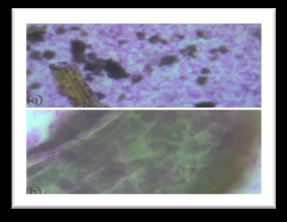
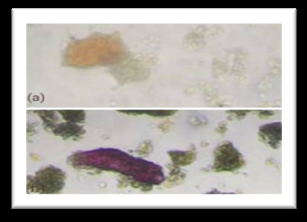
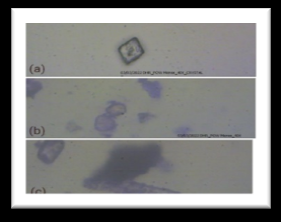
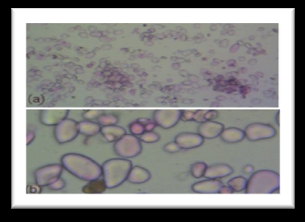
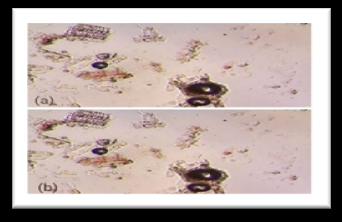
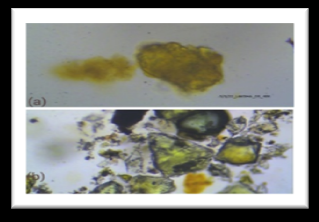
(Holarrhena antidysenterica Wall), Daruharidra (Berberis aristata DC), Pippali (Piper longum Linn), Shunthi (Zingiber Officinale Rosc), Katuka (Picrorhiza kurroa Royle ex Benth) and Laksha (Laccifer lacca Kerr.). Initially their organoleptic characters such as color, odour, taste, texture, and appearance were noted and finding are reported in Table 1. After the study of organoleptic properties, Physico-chemical analysis was done to determine the quality, purity & safety assurance of the crude drug. The drugs were subjected for moisture content analysis, water extractive value, total ash value and acid insoluble values and the results of these studies are shown in Table 2. Foreign matter content was found maximum in sample of Daruharidra i.e, 1.5 %. Moisture content is a water holding capacity of sample, higher moisture content in sample show that it may decrease stability. Moisture content in sample of Pippali was found to be maximum i.e, 11.90 %. Extractive value shows soluble content present in sample. Water soluble content in Kutaki was found maximum i.e, 24%, which shows better solubility in water & it was found minimum in Shunthi i.e, 14%. Total ash is a quantity analysis technique to determine the Siliceous Material & inorganic substance in sample. Higher total ash content was found in genuine sample of Kutaki & less value of total ash was found in Shunthi. Acid insoluble ash shows Siliceous Material & heavy Metals. Acid insoluble ash content was found maximum in genuine sample of Daruharidra & minimum in Pippali. Water soluble ash value gives an estimation of inorganic content. Water soluble Ash value was found maximum in Pippali & minimum in Daruharidra. After that, the drugs were subjected for powder microscopy and the findings of powdered microscopy of the respective drugs are reported in Table 3 and the pictures of powdered microscopy of the sample drugs are reported in Figures 1-6.
| Characters | Kutaj | Daruharidra | Kutaki | Pippali | Shunthi | Laksha |
| Color | Yellowish brown | Pale yellowish | Greyish brown | Grayish black | Light brownish | Brownish black |
| Odor | Odor less | Not distinct | Pleasant | Aromatic | Agreeable and aromatic | Not distinct |
| Taste | Bitter | Bitter | Bitter | Bitter and acrid | Agreeable, pungent | Bitter |
| Appearance | Barley shaped | Hard, cylindrical | Elongated, tubular, zigzag | Cylindrical with small petiole | Knotted rough | Gummy type |
| Texture | Rough, | Smooth | Rough | Rough | Smooth | Rough, brittle |
| Fracture | Powder | Hard, fibrous | Short | Fibrous | Short | Powder |
| Parameters | Kutaj | Daruharidra | Kutaki | Pippali | Shunthi | Laksha |
| Foreign matter | 1% | 1.50% | 0.50% | 0% | 0% | |
| Moisture content | 2.64% | 8.99% | 7.09% | 11.90% | 2.58% | 2.24% |
| Total ash | 5% | 4% | 6.66% | 5% | 3% | - |
| Water soluble ash | 3.60% | 1.30% | 6% | 4.60% | 2% | - |
| Acid insoluble ash | 1.30% | 2.60% | 0.60% | 0.40% | 1% | - |
| Water extractive Value | 20% | 19% | 24% | 18% | 14% | - |
Table 1: Showing Organoleptic Characteristics.
| Table 2: Showing Physicochemical Analysis. | ||||||
|---|---|---|---|---|---|---|
| Findings | Kutaj | Daruharidra | Kutaki | Pippali | Shunthi | Laksha |
| Cork cell | + | - | + | - | + | - |
| Stone cells | + | + | - | + | + | + |
| Calcium oxalate crystals | + | + | - | + | + | + |
| Patches of fibre | + | - | - | + | + | - |
| Vessels of elements | + | + | - | - | + | - |
Table 2: Showing Microscopic characteristics.
Conclusion
The results of organoleptic evaluation, Powder microscopy, Physico-chemical parameters like ash values, extractive values, moisture content, showed significant similarity in their values.
References
-
Sarker SD (2012) Pharmacognosy in Modern Pharmacy Curricula, Pharmacogn Mag 8(30): 91-92.
-
Tripathi ID (2010) Vaidya Prabha Hindi Commentary on Chakradatta of Chakrapanidatta. Chaukhambha Sanskrit Bhawan, Varanasi, Edition Version 3/92-93.
-
API (2007) Homoeopathy. Government of India, Ministry of Health and Family Welfare, Department of Ayurveda, Yoga and Naturopathy, Unani, Siddha, Part 2, 2: 159.
-
API (2007) Homoeopathy. Government of India, Ministry of Health and Family Welfare, Department of Ayurveda, Yoga and Naturopathy, Unani, Siddha, Part 2, 2: 161.
-
API (2007) Homoeopathy. Government of India, Ministry of Health and Family Welfare, Department of Ayurveda, Yoga and Naturopathy, Unani, Siddha, Part 2, 2: 160.
- Management of Ear Keloid with Ksharsutra: A Case Study
- Yoga and Global Sustainability: A Holistic Path to One Earth, One Health
- Autoimmune Diseases in Ayurveda: A Narrative Review with Classical and Modern Perspectives
- Management of Cluster Headache Associated with Pituitary Apophysitis by CERT (Chakrasiddh Energy Release Technique): A Case Report on Energy Rebalancing
- Zygophyllum Geslini Coss : Biochemicals and Antioxidant Activity
- Observations of a Beginner Vaidya