
Usability of Web Tools and its Impact on Healthcare Literacy in Qatar
Patient portals are becoming more popular among healthcare organizations. Using patients’ portal is not considered only as a technological transformation in the medical field or an adoption of a latest technology, it is a tool that ensures partnership of patients with care providers and their responsibility in taking decisions pertaining to their own healthcare. The study “Usability of Web Tools and its impact on Healthcare Literacy in Qatar” was conducted to explore community attitude towards portal utilization and its impact in improving health literacy and decision making in Hamad Medical Corporation - Qatar. The study used the quantitative research design to investigate the effect of web tools on healthcare literacy. A questionnaire was developed by researchers where data was collected from 385 end users including 345 patients and 40 professionals through telephone calls. The study showed that the utilization of the web portal among patients is considerably low. Determinants such as level of education, endorsement of the portal’s benefits by the healthcare providers, difficulties in interpreting the portal results and the need for the decisions of the care providers are all contributed in having less utilization. The study presented a significant relationship between the utilization of the portal and the ability to take decisions pertaining to healthcare which ultimately impacting the individuals’ healthcare literacy. The study recommends that the portal’s features need to be revaluated, additional functionalities require to be added, the steps for enrolling on the portal to be simplified and then re-assess the portal utilization. Future researches can study the patient’s portal impact on the clinical outcomes of the patients, on utilization and on the clinician – patient communication after optimizing the portal’s features and functionalities.
Introduction
Applying technological innovations within the healthcare industry resulted in transforming practice. Among the transformation is a mechanism provided for patients to have an instant access to their health information. Instead, still patient health data access can be complicated. If the patient is not fully engaged or lacking health literacy might prefer to assign the responsibility of taking decisions to healthcare providers [1]. Many evidences provided emphasis on patients who are more actively engaged in their health care and have accessibility to their health records are having better health outcomes and more empowerment to decide on their health, in addition to less expenses [2, 3].
Furthermore, studies reflected that engaging patients and enhancing their adoption to have an access to health information promotes the interaction between with healthcare providers in addition to improved adherence to treatment, reduced medical errors and adverse drug reactions, better communication between the patient and provider, perceived improvement in care quality, and an increased sense of autonomy, although these findings are not consistent across studies [4, 5, 6, 7].
The mobility concept makes the healthcare industry targets web applications to provide public with a timely access to health information. Those applications have witnessed an increased utilization recently.
Patient portal, as a web application tool, has evolved as an important technological means to support patient-centered care and became popular among healthcare organizations. It is typically a web-based application that allows access to all or part of the health institution’s electronic medical record (EMR). While most online patient portal are still in their development phase, the overall advantage that they provide will need to be benchmarked, not only to determine how to improve information, but also to make the patients have tools that enable them to take part in their care.
Recent studies have shown how patient portals can improve the quality of care by allowing patients 24-hour access to their personal health information. Health systems have added more convenience features such as prescriptions refills and appointment scheduling. Consequently, consumer adoption of patient portals is becoming increasingly critical for receipt of quality health care including interactions with health providers outside of clinical visits and quick access to one’s personal health information [8, 9, 10].
Despite the availability of the web tools for patient that provide access to electronic health records, the adoption rate varies according to the demographical constitution of the participants and area of application [11].
Studies showed that web tools adoption linked to perceived ease of use and perceived usefulness—was associated with higher health literacy [1, 12]. Health literacy is linked to literacy and entails people’s knowledge, motivation and competences to access, understand, appraise, and apply health information in order to make judgments and take decisions concerning health care, disease prevention and health promotion to maintain or improve quality of life during the life course as defined by Sorensen, et al. [12]. The benefits of being health literate include greater patient safety, less hospitalizations, a greater ability to care for oneself, and a greater cost savings to the healthcare system [13]. Health literacy research seems to lack a consensus on what aspects to include into literacy in the context of health and on how to operationalize these concepts for measurement purposes [14, 15]. Patient health literacy if improved can be the key success factor in improving patient engagement in care delivery. They are directly connected, and any strategies adopted to improve one can be used to improve the other.
With the present evidence, researchers concluded that improving healthcare outcomes will be attained through the ability to help diverse end users and patients to become more informed and knowledgeable about their health and activated in addressing their health concerns [16, 17].
The significant impact of limited health literacy on health outcomes makes health literacy a crucial area for healthcare providers and IT professionals concerned with healthcare technological solutions. Several computerized health interventions have now been developed for patients with low health literacy providing information using audio, video or graphical displays along with text in a touch screen input or Interactive voice response (or phone-based) to minimize the literacy level required of users [18].
Although EHR access through patient portal, being patient-centered, can provide a way for the patient to be informed and involved in their health care decision still not many studies provided evidences between the association of web portals utilization and the improved health literacy of patients.
Research Background
Health organizations started to have more attention on improving patients’ engagement with their care providers by using health web tools which if properly utilized can have better outcomes and improve patients’ engagement, satisfaction, health decisions and consequently improve health literacy. Now and with the implementation of the Clinical Information System in Qatar, the need to adopt web tools to ensure patient engagement became a high priority in Hamad Medical Corporation which introduced the Patient Portal on March 2018. It provides secure access to an online view of the health record, showing one single record of information, regardless of the location where the patient was seen.
Problem Statement
Patients’ concern is not to increase the portal’s utilization or promote for a technological transformation, instead they focus on improving their health knowledge and having guidance for any health decision they might take. Currently, patients are not fully confident that the portal can provide this. Most patients in Qatar being introduced to the portal perceive that it doesn’t offer enough information to satisfy their needs or could be of value in their health decisions; this minimizes the interest to utilize the portal.
Moreover, patients are not initiating self-enrollment in the portal unless they have been directed by the providers. The limited registration is due to the lack of the public’s awareness about the portal and how it can benefit them. This creates a challenge in improving patient portal usability especially with the increased availability of online information about healthcare, including quality ratings and patient comments.
The problem addressed in this study is mainly focusing on how portal’s utilization impacts the healthcare literacy among patients and affects their health decisions.
Significance of the Study
Recently web tools are recognized as an important health information source and a promising mechanism to support patient engagement that lead to an improvement in the patients’ ability to make competent and well-informed decisions. Patient portal is considered as a primary access point for personal health records in Qatar. It can lead to a better interaction with healthcare providers and can enrich their knowledge about their health status.
Despite that it can improve the health outcomes and reduce risks evolved due to less awareness about health condition especially in chronic cases, but still there is limited evidence on the association between health literacy and utilization of health web tools.
Objectives
The study aims to; Explore community attitude towards portal utilization and the impact in improving the health literacy.
- Primary: Evaluate the portal usability and patients’ involvement in their care delivery
- Secondary: 1. Evaluate the effectiveness of the information provided in the portal 2. Evaluate the potential of the portal as a tool to disseminate healthcare information to patients 3. Identify the factors impacting patients’ satisfaction and awareness
- Methodology
- Study Design A quantitative descriptive research design is used to investigate the effect of web tools on enhancing Healthcare Literacy among the population in Qatar.
- Study Setting The study was conducted in the Outpatient Department in Hamad Medical Corporation – Qatar in the National Center for Cancer Care and Research (NCCCR) and Heart Hospital (HH).
- Population & Sampling The population was the total patients visiting the outpatient departments and healthcare providers in HH and NCCCR. Random sampling technique is used where 385 patients and healthcare providers was considered.
- Sample Size The required sample size was a) Patients: 90% from outpatient department in Hamad Medical Corporation (90% of 385 ≃ 345), the total sample was divided among the two facilities where the targeted sample for Heart Hospital and NCCCR were 199 and 146 patients respectively. b) Other Users: physicians, nurses, Informatics, HICT technical team will be chosen upon their approval to participate in the study. (10 % of 385 ≃ 40) The inclusion and exclusion criteria were set as the following:
- Inclusion All adult patients scheduled for follow up appointments, or conducting laboratory test, ultrasound, mammogram, x-rays…. etc. in addition to the professional categories which included physicians, nurses, HICT technical team and other professions
- Exclusion All patients below 15 years old, long-term hospitalized patients, patients with mental illness, patient scheduled for their first appointment, non-residents patients or patients unable to respond to survey questionnaire (English and Arabic) due to language barrier.
- Study Tool A survey questionnaire was developed based on references review to study patients’ attitude towards the utilization of web tools and its impact on healthcare literacy [19, 20, 21, 22]. It is constituted of three sections; demographic data, patients’ related questions and professionals’ related questions. The questions were measured on a 5-points Likert scale.
Results
In this study, the researchers have studied the utilization, awareness, effectiveness, adoption of patient portal and its impact on enhancing the healthcare literacy among patients and how this affects their health decision.
Table 1 shows the demographic details of the participants. The patients with age group 40-59 years old constituted 49% and patients above 60 years old constituted 26% (out of 345). Considering the nature of the implementation sites, heart and oncology, this will explain why 75% of the patient’s population age is ranging from 40 and above.
The findings also shown that 78% (out of 345) were experienced using the internet, but this wasn’t considered as a factor to impact utilization due to the educational background. 48% of the sample was with low qualification level (38.5% without a degree and 9.5% with diploma) which can also be a barrier of utilization especially with having the English interface with no audio interaction. This is supported with 26.4% from the population were Qataris where their main language is Arabic.
Clarke MA, et al. [23] has studied sociodemographic differences and factors affecting patient portal utilization where they found correlation between sociodemographic differences and patient portal utilization. In this study the level of education affected patient portal utilization where the educated participants were able to use it and accessed it more frequently with a statistically significance (p<0.006).
| Demographic Variable | Frequency (N= 345) | % | |
|---|---|---|---|
| Age (years) | 15-20 | 4 | 1.1 |
| 21-39 | 83 | 24 | |
| 40-59 | 169 | 49 | |
| >=60 | 89 | 26 | |
| Gender | Female | 148 | 42.9 |
| Male | 197 | 57.1 | |
| Level of Education | No Degree | 133 | 38.5 |
| Associate/ Diploma Degree | 33 | 9.6 | |
| Bachelor’s Degree | 157 | 45.5 | |
| Postgraduate Degree | 22 | 6.4 | |
| Nationality | Qatari | 91 | 26.4 |
| Non-Qatari | 254 | 73.6 | |
| Experience using Internet | Yes | 269 | 78 |
| No | 75 | 21.7 | |
| No answer | 1 | 0.3 |
Table 1: Demographic Data.
For identifying the different sources of accessing health information by the patients, Figure 1 shows that the patients consider the healthcare provider as the primary source for health information. The internet medical sites came as the secondary source with 28.7%. This might impose some risk if those sites are without evidence based medical information. It is the responsibility of healthcare providers to direct the patients towards using more trusted sources for health information.
Moreover, colleague and family members were 5% and 4.2% respectively. The patient portal was the least with 1.2 % among the sources to access health information which might be due to; lack of awareness, limitation of health information in the portal, difficulties of access or navigation and language barriers.
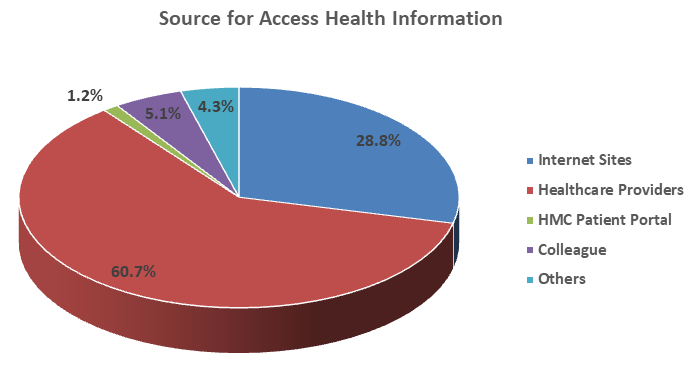
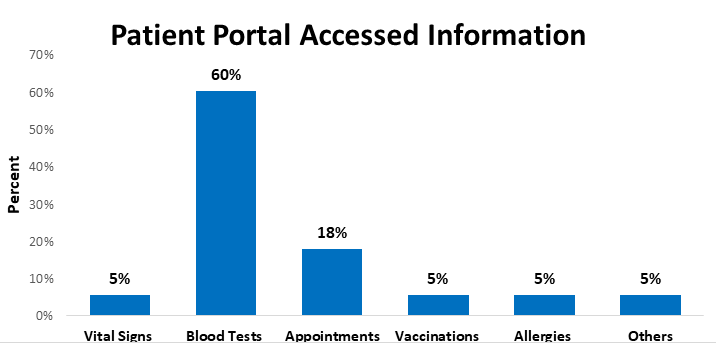
Figure 2 illustrates the different drives why patients are accessing the patient portal. Blood test with the highest rate 60% as stated by patients followed by the appointments’ information with 19 %. The others were approximately equally rated. This can be due to the primitive or lack of information of the other features which is not encouraging for use.
| Variable | Strongly Disagree | Disagree | Undecided | Agree | Strongly Agree | Total | |
|---|---|---|---|---|---|---|---|
| Awareness | Self-Enrollment | 7 (2.0%) | 258 (74.7%) | 9 (2.6%) | 64 (18.5%) | 7 (2.0%) | 345 |
| Instruction Provided for Portal Usability | 12 (3.4%) | 292 (84.6%) | 3 (0.86%) | 34 (9.8%) | 4 (1.1%) | 345 | |
| Utilization | Easy to browse and navigate | 2 (2.7%) | 7 (9.7%) | 26 (36.1%) | 30 (41.6%) | 7 (9.7%) | 72 |
| Accessed frequently | 2 (2.8%) | 12 (16.9%) | 20 (28.1%) | 35 (49.2%) | 2 (2.8%) | 71 | |
| Effectiveness | Clarity of Information | 2 (4.5%) | 10 (22.7%) | 2 (4.5%) | 28 (63.6%) | 2 (4.5%) | 44 |
| Decision in Timely Manner | 1 (2.2%) | 16 (36.3%) | 1 (2.2%) | 22 (50%) | 4 (9.0%) | 44 | |
| Satisfaction | Patient’s needs and expectations | 0 (0%) | 12 (27.9%) | 2 (4.6%) | 27 (62.7%) | 2 (4.6%) | 43 |
| Security and confidentiality | 0 (0%) | 0 (0%) | 3 (6.9%) | 34 (79%) | 6 (13.9%) | 43 | |
| Adoption | Confidence in using the portal | 1 (2.2%) | 6 (13.3%) | 2 (4.4%) | 32 (71.1%) | 4 (8.8%) | 45 |
| Decision Making | Comparison of Lab results | 0 (0%) | 8 (17.7%) | 3 (6.6%) | 30 (66.6%) | 4 (8.8%) | 45 |
| Discussion of Condition | 0 (0%) | 14 (31.1%) | 3 (6.6%) | 25 (55.5%) | 3 (6.6%) | 45 | |
| The portal as reference | 0 (0%) | 19 (42.2%) | 6 (13.3%) | 19 (42.2%) | 1 (2.2%) | 45 | |
| Preference | The portal should be interactive | 0 (0%) | 3 (6.6%) | 2 (4.4%) | 29 (64.4%) | 11 (24.4%) | 45 |
| Face-face with healthcare provider | 0 (0%) | 4 (8.8%) | 4 (8.8%) | 31 (68.8%) | 6 (13.3%) | 45 | |
| Interpretation of content | 0 (0%) | 7 (15.5%) | 2 (4.4%) | 30 (66.6%) | 6 (13.3%) | 45 | |
| Recommendation to others | 0 (0%) | 7 (15.5%) | 1 (2.2%) | 31 (68.8%) | 6 (13.3%) | 45 | |
| Challenges | Language and vocabulary | 1 (2.2%) | 8 (17.7%) | 2 (4.4%) | 31 (68.8%) | 4 (8.8%) | 45 |
Table 2: Patients’ related response.
The total number of patients surveyed was 345. The fact that the care providers provided guidance or properly communicated the benefits of the patient portal as a trusted source has been disagreed or strongly disagreed by 88% of the respondents in the awareness section of the survey Table 2. According to the unavailability of this guidance, 265 out of the 345 (76.7%) are not agreeing that they can do a self- enrollment in the portal. The awareness about the portal is the major factor that ensures the proper utilization and ultimately enhance decision making pertaining to the health condition and in the study this factor is impacted negatively. Powell, Kimberly R, et al. [24] study findings showed wide- ranging portal designs; patients’ privacy concerns and lack of encouragement from providers were among portal adoption barriers while information access and patient-provider communication were among facilitators. Kelly MM, et al. [25, 26] stated that patients and caregivers expressed interest The findings revealed that the adoption and satisfaction of patients are positively correlated. Both clarity of information and the ability of the patients to take decision related to their health, as component of the effectiveness variable, are having significant correlation with the satisfaction and adoption in using portals to communicate with health care staff.
Hoogenbosch B, et al. [27] Cross-Sectional Study of Use and the Users of a Patient Portal identified 36.6% (161/439) as being nonusers and not aware of the existence of the portal. This supported the findings in this study that the low awareness impacted the utilization. This can be due to the portal features, language barriers or lack of educational aids. The researchers have computed the variables utilization, effectiveness, satisfaction, information adequacy, adoption, decision making, preference and challenges associated with the portal from the patients who were able to access and use the patient portal, they constituted 71 out of 345 (20.5%). Interestingly found a high propensity to adopt patient portals does not necessarily imply more frequent use of portals as only 45 out of 71 were able to respond to more detailed questions about the portal.
as well (Table 3). These results indicate that if the portal is properly endorsed to the users, they will be satisfied using it as a tool to provide health information and support decision making and can easily adopt to it.
| Variables | Utilization | Decision Making | ||||
|---|---|---|---|---|---|---|
| Easy to browse | Frequent access | Comparison of Lab results | Discussion of Condition | The portal as reference | ||
| Easy to browse | Correlation Coefficient | 1 | .477** | 0.25 | 0.24 | 0.202 |
| Sig. (2-tailed) | . | 0 | 0.106 | 0.121 | 0.194 | |
| N | 72 | 70 | 43 | 43 | 43 | |
| Frequent Access | Correlation Coefficient | .477** | 1 | .538** | .465** | 0.25 |
| Sig. (2-tailed) | 0 | . | 0 | 0.001 | 0.101 | |
| N | 70 | 71 | 44 | 44 | 44 | |
| Comparison of Lab results | Correlation Coefficient | 0.25 | .538** | 1 | .641** | 0.065 |
| Sig. (2-tailed) | 0.106 | 0 | . | 0 | 0.671 | |
| N | 43 | 44 | 45 | 45 | 45 | |
| Discussion of Condition | Correlation Coefficient | 0.24 | .465** | .641** | 1 | .470** |
| Sig. (2-tailed) | 0.121 | 0.001 | 0 | . | 0.001 | |
| N | 43 | 44 | 45 | 45 | 45 | |
| The portal as reference | Correlation Coefficient | 0.202 | 0.25 | 0.065 | .470** | 1 |
| Sig. (2-tailed) | 0.194 | 0.101 | 0.671 | 0.001 | . | |
| N | 43 | 44 | 45 | 45 | 45 |
Table 3: The correlation between the patient portal utilization and decision making related to health condition.
**. Correlation is significant at the 0.01 level (2-tailed) Table 3: The correlation between the patient portal utilization and decision making related to health condition.
A systematic review study finding revealed that patients’ privacy and confidentiality and lack of encouragement from health care providers were among portal adoption barriers while information access and patient-provider communication were among facilitators. In addition, patients were willing to use portals for communicating with their health care teams [27].
The utilization of the portal and decision making have shown significant correlation in this study which emphasized that the patient portal could be used to make decisions related to health condition and that is positively impacting health literacy among patients (Table 3). This finding is supported by a systematic review study in United States of America showed that ninety percent (90%) of health care systems are offering patient portals to access electronic health records (EHRs) in the United States, but only 15% to 30% of patients use these platforms.
Stating their preferences, 80-89% of the respondents agreed that the portal need to have more interactive features, recommends the face to face communication with healthcare providers more than using the portal and stated that portal contents need interpretation (Table 2). Contradicting to this result, an approximately equal percentage of the same sample stated that they can recommend the portal to be used by others. Zhong X, et al. [28] conducted a research on characteristics of patients using different patient portal functions and the impact on primary care service utilization and appointment adherence interestingly found a high propensity to adopt patient portals does not necessarily imply more frequent use of portals. In particular, the number of active health problems one had was significantly negatively associated with portal adoption but was positively associated with portal usage.
The language and vocabulary used in the portal have been identified as a challenge by ≃ 70% of the respondents. This is among the factors that directly impacted the utilization and hence the decision-making pertaining to the patients’ health condition.
Web portal should enhance the communication with health care providers and permits patients’ engagement. To engage patients should be aware, the results of the study had shown a low awareness about the portal which is considered as a main barrier of enrollment. The patients who knew about the web portal were either from their contacts or a message received from Ministry of Public Health due to COVID19 Pandemic where they are considerably few.
Where the utilization has been impacted by the awareness and language barriers, the portal features was a factor as well. The features need to be revaluated and additional functionalities require to be added such as rescheduling outpatients’ appointments and adding interactive feature (Figure 3).
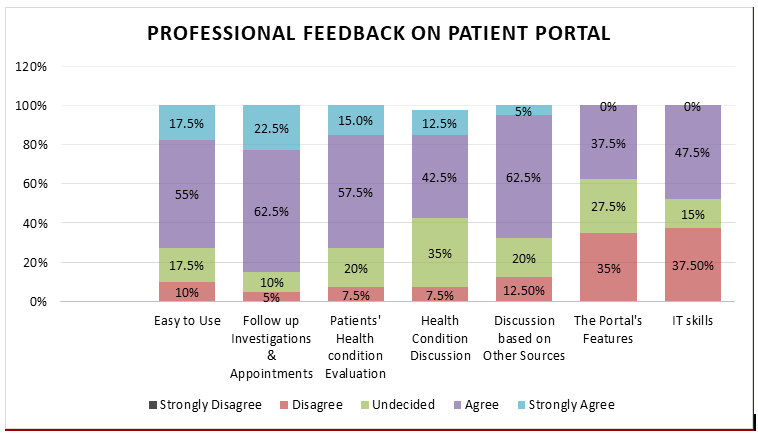
The researchers have taken the feedback of 40 professionals 70% (28 out of 40) were clinical staff.
The professional feedback on patient portal showed that 35 % of them could not decide and 7.5% disagreed that the portal enables health condition discussion with the patients on the contrary they agreed by 62.5 % that they discuss the patient health condition based on other sources (Figure 3). This indicates a risk as they are considered the primary source for health information as stated by patient (Figure 1). In addition, there are no guidelines particularly on the patient portal to direct the public to enroll in the portals and use it efficiently. Sherine El Toukhy, et al. [29] have found that having a primary care clinician, patient’s educational attainment, were factors associated with Patient portal access and use.
Patient portal is an effective tool for engaging the patients in managing their healthcare plan and facilitating engagement. It is the responsibility of healthcare providers to assist patients in utilizing this tool and gain the upmost benefits. Findings showed although the clinical staff is using the portal, yet no proper communication or endorsement of its importance to the patients.
Recommendation
Despite the increasing potential of technology adoption and ongoing interest in web tools applications in healthcare, there is still lack in understanding its concept. This is affecting the utilization and impacting the decision on what are the best and necessary features need to be available in patient’s portals and its impact in improving health literacy. This is mainly attributed to the fact that adopting such tools is rather new and just beginning to take its place as an alternative method of a face to face interaction with healthcare providers. Patient portals have the potential of becoming a dominant alternative for accessing health records soon.
Based on the findings of the study conducted on Hamad Medical Corporation - Qatar, and as most of the respondents declared that the portal is not user friendly, it is recommended to consider taking the following initiatives in order to increase the patient portal utilization which in turn to improve the healthcare literacy among the population
- To add additional enhancement; o The portal should be displayed in English and Arabic languages as most of the population are Arabic speakers. The English interface in the portal-imposed obstacles in interacting with it. o As 38.5% of the sample size is without an educational degree, it is recommended to add interactive features that can enable patients to navigate the portal and browse their health records. o Health information is complicated, and some results might need an instant discussion with the healthcare providers. For the patients to be engaged in taking decisions, it is recommended to add an online chat window between the patients and healthcare providers as many respondents indicated its importance. o To add medication renewal and online payment features through the portal rather than scheduling a physical visit which might take a long time. o Request medical reports approved by the health provider through the portal.
- The patients who are not enrolled in the portal were ≃ 77% of the total sample and 9% undecided. The communication strategies adopted to introduce the portal either for the public or for the patients visiting the hospitals are not effective and need to be revised and enhanced to ensure patients’ engagement; o Orienting the patients about the portal’s benefits and how to use it must be a complementary step in the treatment journey and it should be included within the competency of healthcare providers to ensure proper delivery of the information. o The technical teams should make an analysis to understand the low portal adoption rates and investigate why still there is low utilization.
- The portal can include patients’ educational materials to improve health literacy.
- To enhance utilization, the study recommends not only reevaluating the portal features and functionalities, but to simplify the enrollment steps and develop engagement strategies to recruit the patients and endorse the benefits of the portal.
- Developing a mobile application for the patient portal having advanced features to facilitate the utilization of patient portal.
A huge part of the patient population was not adequately represented in this sample, which might influence the results. Future researches should include different facilities independently as they might have different needs regarding their patient portal utilization. It is recommended to study the patient’s portal impact on the clinical outcomes of the patients, on utilization and on the clinician–patient communication after optimizing its features and functionalities.
Further studies can also be conducted to address the information needs of patients who are chronically ill to assess whether it can improve perceived usability and feasibility.
References
-
HIMSS Dictionary of Health Information Technology Terms, Acronyms, and Organizations. In: 4th (Edn.).
-
Patient Engagement HIT (2019) How Patient Health Data Access Drives Patient Engagement.
-
Tomsik E, Briggs B (2013) What is Patient Engagement. Empowering patients through advanced EMR use. The role of patient education and health literacy in patient portals. Health Manag Technol 34(3): 14-15.
-
Chambers D, Thompson S (2009) Empowerment and its application in health promotion in acute care settings: nurses’ perceptions. Journal of Advanced Nursing 65(1): 130-138.
-
Mobility in Healthcare- Why it Matters.
-
Ammenwerth E, Buchauer A, Bludau B, Haux R (2000) Mobile information and communication tools in the hospital. International Journal of medical informatics 57(1): 21-40.
-
Kruse CS, Bolton K, Freriks G (2015) The effect of patient portals on quality outcomes and its implications to meaningful use: a systematic review. J Med Internet Res 17(2): 44.
-
Morris A (2007) E-literacy and the grey digital divide: a review with recommendations. JIL 1(3): 13-28.
-
Turner AM, Osterhage K, Hartzler A, Joe J, Lin L, et al. (2015) Use of patient portals for personal health information management: the older adult perspective. AMIA Annu Symp Proc 2015: 1234-1241.
-
De Lusignan S, Mold F, Sheikh A, Majeed A, Wyatt JC, et al. (2014) Patients’ online access to their electronic health records and linked online services: a systematic interpretative review. BMJ Open 4(9).
-
Graetz I, Gordon N, Fung V, Hamity C, Reed ME (2016) The digital divide and patient portals: internet access explained differences in patient portal use for secure messaging by age, race, and income. Med Care 54(8): 772-729.
-
Sørensen K, Van den Broucke S, Fullam J, Doyle G, Pelikan J, et al. (2012) Health literacy and public health: A systematic review and integration of definitions and models. BMC Public Health 12(80): 1-13.
-
Eysenbach G, Keken AV, Winters P, Keefer MC, Sanders M, et al. (2013) Barriers and facilitators of online patient portals to personal health records among persons living with HIV: formative research. Journal of Medical Internet Research 2(1): 8.
-
Delbanco T, Gerteis M (2014) A patient-centered view of the clinician-patient relationship.
-
Farmanova E, Bouchard L (2018) Organizational Health Literacy: Review of Theories, Frameworks, Guides, and Implementation Issues. The Journal of Health Care Organization, Provision, and Financing 55: 1-17.
-
Bardram JE, Bossen C (2005) Mobility Work: The Spatial Dimension of Collaboration at a Hospital. Computer Supported Cooperative Work (CSCW) 14: 131-160.
-
McDonald M, Shenkman LJ (2018) Health Literacy and Health Outcomes of Adults in the United States: Implications for Providers. The Internet Journal of Allied Health Sciences and Practice 16(4).
-
Coughlin SS, Stewart JL, Young L, De Leo G (2018) Health Literacy and Patient Web Portals International Journal of Medical Informatics 113: 43-48.
-
Lauren McCormack, VeronicaThomas Megan A, Lewis (2017) Improving low health literacy and patient engagement: A social ecological approach. Patient Education and Counseling 100(1): 8-13.
-
Irizarry T, DeVito DA, Curran CR (2015) Patient portals and patient engagement: a state of the science review. J Med Internet Res 17(6): e148.
-
Furukawa M, Vibbert D, Swain M (2009) Health Information Technology for Economic Clinical Health Act.
-
Kaplan L (2013) The Medicaid electronic health record incentive program. The Nurse Practitioner 38(4): 7-8.
-
Clarke MA, Lyden ER, Ma J (2020) Sociodemographic Differences and Factors Affecting Patient Portal Utilization. J Racial and Ethnic Health Disparities 8: 879- 891.
-
Powell, Kimberly R (2017) Patient-Perceived Facilitators of and Barriers to Electronic Portal Use: A systemic review. Computers Informatics Nursing 35(11): 565- 573.
-
Kelly MM, Coller RJ, Hoonakker PL (2018). Inpatient portals for hospitalized patients and caregivers: a systematic review. J Hosp Med 13(6): 405-412.
-
Hoogenbosch B, Postma J, de Man van Ginkel JM, Tiemessen NA, Van Delden JJ, et al. (2018) Use and the Users of a Patient Portal: Cross-Sectional StudyJ Med Internet Res 20(9): e262.
-
Dendere R, Slade C, Burton Jones A, Sullivan C, Staib A, et al. (2019) Patient Portals Facilitating Engagement with Inpatient Electronic Medical Records: A Systematic Review. J Med Internet Res 21(4): 12779.
-
Zhong X, Park J, Liang M, Shi F, Budd PR, et al. (2020) Characteristics of Patients Using Different Patient Portal Functions and the Impact on Primary Care Service Utilization and Appointment Adherence: Retrospective Observational Study J Med Internet Res 22(2): 14410.
-
Toukhy SE, Méndez A, Collins S, Pérez Stable EJ (2020) Barriers to Patient Portal Access and Use: Evidence from the Health Information National Trends Survey the Journal of the American Board of Family Medicine 33 (6): 953-968.
- Capacity Constraints in Pediatric Inpatient Psychiatric Care: A Cross-Sectional Analysis of Bed Availability and Geographic Access in North Carolina
- Why Healthcare Analytics Still Optimizes the Wrong Things
- Coding, Coverage, and Care: The Infrastructure of Transgender Health Inequities
- The Effect of Classroom Attendance on Academic Achievement of Management and Leadership Discipline of Nursing Students at Instituto Superior Cristal and Universidade de Dili, Timor-Leste, 2024: A Case Study
- The Role of Social Bonds in Facilitating Shared Investments and Resource Allocation: Addressing the “Wrong Pocket Problem” in Public Health and Healthcare
- Social-Cultural Factors Contributing to Antimicrobial Resistance in Livestock Farmers and Community Households in Kayonza District, Rwanda