
Factors Associated with Prevalence of Occupational Injuries among Workers in Informal Recycling Businesses at Kiteezi Landfill Wakiso District, Uganda
There is increasing global concern on the prevalence of occupational injuries among workers in informal recycling in developing countries and especially those in sub-sahara Africa. This is arising due partly to the poor methods of waste management. This was observed in the eastern African countries and in particular in Uganda. The study focused on the Kiteezi Land fill site in Wakiso District central Uganda, and investigated the prevalence of occupational injuries among workers in informal recycling businesses, the factors (individual and institutional) influencing the prevalence of these injuries and the association between these factors. The study employed quantitative research approach using a cross-sectional research design, and collected data from 112 participants who were selected by stratified sampling technique. This data was collected using structured questionnaire and was analyzed at univariate, bivariate and multivariate levels. The results show that the prevalence of occupational injuries was 55.4% and the only significant factor was accessibility to sanitation facilities (AOR= 0.38; 95%CI: 0.16-0.94, P = 0.05). There is therefore a high prevalence of occupational injuries among workers in this informal recycling unit which if not addressed will inevitably contribute to the increase of the disease burden in the country. This study therefore strongly recommends the need for not only education and awareness for the workers but also provision of all the essential personal protective equipment and processes and relevant accessible sanitary facilities.
Introduction and Background
Occupation-Related Injuries (ORIs) and sicknesses continue to be of major public health concerns requiring serious and urgent action [1]. Today over 400 million health challenges directly related to occupation occur annually and the impact on economy, development and welfare is astronomical every year [2]. On a daily basis, a fatal injury occurs every two (2) hours, which results in disabling injury every eight (8) hours [3].
The incidence rate of occupational injuries varies by the type of occupation with the management of solid waste ranking sixth among the hazardous occupations with a rate of 35.5 per 100,000, after fishing, while loggers, pilots and flight engineers, iron and steel workers, ranchers and farmers follow in descending order [4]. While solid waste recycling has historically been treated as a private good in most countries, in the past two decades industrialized countries have slowly changed their perspective on environmental awareness, thus recognizing that everyone benefits from recycling as a public good [5]. It is argued that through recycling, foreign exchange is saved, natural resources are conserved, industrialization is promoted, and waste disposal is minimized [1]. However, the solid waste recycling business activities come along with a number of occupational risks that result in injuries among the waste recyclers [1].
The global burden of occupational injuries and sicknesses were reported to be at least two to five times higher among developing economies as compared to developed ones [2]. The region of the Sub-Saharan Africa however records the greatest occurrence of occupational injuries followed by Asia [6]. Occupational injuries occur during solid waste management. Several studies have reported high prevalence of occupational injuries sustained by Municipal Solid Waste Collectors in Sub Saharan Africa [7]. Although waste recycling was contributing greatly to protecting human health by reducing the risk of several infectious diseases, workers are at high risk of fatal and non-fatal injuries [8].
Several studies showed that socio demographic factors, job related conditions and individual behavioral characteristics were some of the factors that lead to occupational injuries sustained by solid waste recyclers [7, 9, 10]. These factors directly or indirectly caused occupational injuries. The direct factors included Solid Waste Management activities, lack of Health and Safety training for Solid Waste Collectors, duration of exposure and the nonavailability, inadequacy and under-utilization of Personal Protective Equipment [9]. Individual behavioral characteristics such as sleep disturbances, job satisfaction, job related stress, substance abuse like tobacco and alcohol also account for direct factors resulting in occupational injuries sustained by solid waste recyclers [7]. Variables such as age, level of education, marital status are part of the indirect factors that account for occupational injuries [10]. However, none of the above studies was carried out from Kiteezi landfill in Uganda, where the populations involved in the informal recycling business were on the rise.
Solid waste recycling in this Uganda landfill is done manually, which requires repeated heavy physical activities such as lifting, carrying, pulling, and pushing [11]. Kiteezi landfill, which is the only authorized landfill in Kampala is commonly referred to as a dumping site mainly used for disposal of waste from the Kampala Capital City and other neighboring towns (Kampala Capital City Authority (KCCA) [12]. Informal recycling was highly practiced at the landfill as many people have turned into waste scavengers [11]. The condition of this landfill is reported to be so alarming due to occupational related injuries and sanitation threat that the landfill poses to the waste recyclers [13]. The waste awaiting recycling at Kiteezi landfill was readily available to insects, rodents, and scavenging animals, which were potential carriers of enteric pathogens. The waste recyclers are less protected in all efforts of refuse recycling and the recyclers were exposed to various health risks, which cause injuries, but associated factors are less studied in this subsector. More accurate information to policy makers to improve the working conditions of informal waste recyclers was limited. This study sought to determine the prevalence of occupational injury and its associated factors among workers in informal recycling businesses at Kiteezi landfill, in Wakiso District so that policies are made that decrease the occupational injuries and contribute towards the improvement of working conditions in this informal recycling sector.
In Uganda although waste recycling contributed greatly to human health by reducing the risk of several infectious diseases, workers at Kiteezi landfill are at high risk of fatal and non-fatal injuries like cuts and burns. Byonanebye, et al. [13] reported that several informal waste pickers acquire several injuries at their workplace. These include injuries like cuts, fractures and dog/mice bites which unfortunately are not fully and properly treated. Some other private clinics around the landfill report that 30% of the cuts were from broken glass and metal pieces, more than 23.1% of the piercings were from sharp objects like nails and needles and long-term back and knee pains account for 54.7% injury rate [13]. This was much higher compared to the 35% of chemical burns and 33% with physical injuries like burns and cuts that occur in the rest of the other informal sectors within Kampala Uganda [14].
The Kiteezi landfill, solid waste recycling process raises a lot of concern as solid waste recyclers are exposed to a number of health hazards leading to injuries [15]. The manual tasks like waste picking, loading/off-loading and carrying are the approaches employed at the landfill and in informal recycling businesses exposes the workers to several occupational injuries. This challenges both the workers and their employers [16]. Scientific and contextual research also show individual and job-related factors are associated with occupational injuries, job related conditions and individual behavioral characteristics were some of the factors that led to occupational injuries sustained by solid waste recyclers [7] being left out the informal recycling sector of Uganda. Workers in the informal recycling business face occupational injuries that lead to drastic results due to diseases like Hepatitis B&C, result in cancers increasing the burden to the health sector due to rampant morbidity and mortality.
Therefore, this research sought to determine the burden of occupational injuries and its associated factors among solid waste recyclers in Uganda with specific reference to Kiteezi landfill informal waste recyclers to create awareness and provide reliable evidence-based information to relevant agencies and hence contribute to decreasing the occupational injuries and improve working conditions in this informal recycling sector.
Therefore, the general objective of this study was to determine the factors associated with the prevalence of occupational injuries among workers in this informal recycling businesses at Kiteezi landfill Wakiso district, Specifically the objectives were to:
- Establish the prevalence of occupational injuries among workers in informal recycling businesses at Kiteezi landfill Wakiso District.
- Establish the factors (Individual and institutional) influencing the prevalence of occupational injuries among workers in informal recycling businesses at Kiteezi landfill Wakiso District.
- Determine the association between the influencing factors (individual and institutional factors) and the prevalence of occupational injuries among workers in informal recycling businesses at Kiteezi landfill Wakiso District.
Theoretical and Conceptual Framework
This study was informed by the Socio-Ecological theory of health promotion [17] emphasizing the dynamic interplay between situational and personal factors rather than focusing exclusively on environmental and biological determinants of health.
Using the above theoretical background, a conceptual framework found most suitable was identified to be the one compounded by several authors Boldero J, et al. [18, 19] outlines in Figure 1 below. The independent variables are individual and institutional factors associated with the prevalence of occupational injuries in the informal recycling business while the dependent variables are the nature of occupational injuries that affects the informal recycling sector. This model assumed that prevalence of occupational injuries in this sector are as a result of the business not being formally registered, coordinated and / or regulated (Figure 1).
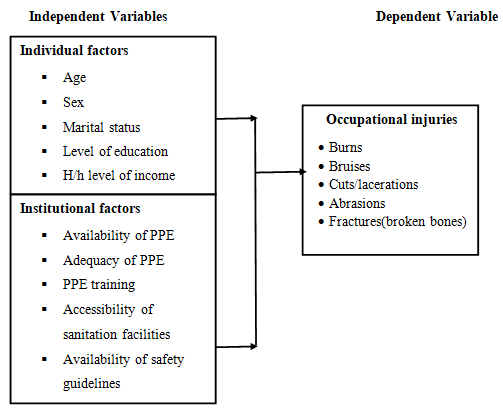
Source: Modified from Boldero [18]; Warshaw, et al. [19]. Figure 1: Conceptual Framework.
Literature Review
Several researchers Melaku HS, et al. [5, 20, 21, 22, 23, 24, 25, 26, 27, 28, 29] have identified the following individual and institutional factors as being associated with the prevalence of occupational injuries and they include age, knowledge, attitude, level of income, smoking status, personal hygiene, alcohol consumption, provision of personal protective equipment (PPE), on-job training and access to sanitation facilities. However, while the above-mentioned scholars put out the individual and institutional related factors associated with the prevalence of occupational hazards in the informal recycling establishments, they have geographical gaps in that they were conducted in other settings other than at or near Kiteezi landfill in Wakiso district, Uganda. In addition, there was limited link of the identified variables with injuries among the solid waste recyclers that was a knowledge gap [30, 31, 32]. There is also unclear methodological approaches for example qualitative statements that lacked scientific approach [20, 31, 33]. The current study addressed these gaps by conducting the study in informal recycling businesses at Kiteezi landfill.
Methods
This study used cross sectional design applying quantitative strategies of data collection and an analytical cross-sectional approach was adopted. This enabled the researcher to generalize the inferences between the factors that are associated with and the prevalence of occupational injuries in this informal recycling business.
The study was conducted in two villages Lusanja A and B near Kiteezi landfill, Wakiso District. These two villages were identified due to having the largest population of informal waste recycling businesses.
The target population was the 800 workers in the informal recycling businesses belonging to three community-based organizations (Kiteezi Landfill Salvagers, 280 Members; Teeka Sente Wolaba Waste Dealers, 200 members; Women’s Development & Farmers Group, 320 members). This population was chosen because it has the highest exposure to injuries at this site (Kampala City Council Authority, 2017).
The sample size was then calculated using the Yamane
[34] formula to be 294.
Stratified sampling procedure was used to identify the workers who participated in the study according to the organization they belonged to as follows: 103 from Kiteezi Landfill Salvagers; 74 from Teeka Sente Wolaba Waste Dealers; and 117 from the Women’s Development & Farmers Group.
The study employed 2 research instruments namely: the questionnaire- collected data from the workers in this land fill, while the key informant interview guide was used to seek deeper explanations to the issues being investigated from the leaders of the organizations involved in this work and health personnel of Kampala City Council Authority.
Before the collection of data the Mulago Hospital Ethics Committee provided authorization in writing for this research to be conducted as required by the laws and regulations in Uganda. The use of PPE and standard operating procedures to avoid Covid 19 as set by the Uganda Ministry of Health were fully complied with.
Data was analyzed using the SPSS version 2020. Descriptive statistics (frequencies and percentages) was used to respond to objective one and two and chi square analysis was used to analyze objective 3 of the study in order to determine the association between the organizational factors, individual factors and the prevalence of occupational injuries. Factors which were significant were then analyzed further to ordinal logistic regression to derive crude odds ratios (COR) and corresponding 95% confidence interval to establish the relationship.
Results and Discussion
The results showing individual characteristics of the workers is presented in Table 1 below.
| Individual Characteristics | Percentage (%) | ẋ ± sd | |
|---|---|---|---|
| Age in Years | 18-29 | 66.1 | 28.05(5.6) |
| 30 and above | 33.9 | ||
| Sex | Male | 63.4 | |
| Female | 36.6 | ||
| Marital status | Single | 53.6 | |
| Married | 30.4 | ||
| Divorced | 13.4 | ||
| Widowed/Widower | 2.7 | ||
| Education Level | Never went to school | 33 | |
| Completed Primary | 34.8 | ||
| Level | |||
| Completed | 22.3 | ||
| Secondary Level | |||
| Above secondary | 7.1 | ||
| Still in school | 2.7 | ||
| Level of income (US $) | 14.3 – 28.6 | 50.9 | |
| 28.8 – 57.2 | 25.9 | ||
| 57.4 – 85.7 | 13.4 | ||
| 86.0 – 114.3 | 8.9 | ||
| Above 114.3 | 0.9 | ||
| Smoking | Yes | 56.3 | |
| No | 43.8 | ||
| Alcohol consumption | Yes | 57.1 | |
| Attitude towards PPE | No | 42.9 | |
| Poor | 21.4 | ||
| Good | 78.6 | ||
| Knowledge | Inadequate | 26.8 | |
| Adequate | 73.2 |
Table 1: Individual Characteristics of the Workers in Informal Recycling Businesses at Kiteezi Landfill.
The results Table 1 above show that most (66.1%) were aged 18 to 29 years indicating that most of the workers here are youth. Melaku, et al. [20] reported that in Addis Ababa, Ethiopia, 48.1% of the waste pickers were between the ages of 30 – 39 years. This clearly indicates a growing number of youths being employed in the informal sectors especially in urban areas in developing economies in Africa.
In this kiteezi landfill, most (63.4%) of the workers are males. This could be attributed to the need for men to provide a source of living and survival for their families even if they may not necessarily be heads of the families. However, most (53.6%) of the respondents were single (not married). This result is similar to findings by Tomita, et al. [22] who reported that 49.0% of people that lived near waste landfills had never been married. This can be clarified by the fact that most are young adults as indicated earlier.
The study findings Table 1 above further show that majority (57.1%) of respondents had gone up to primary and or up to secondary level of education. These are basically school drop outs who have not attained any skills for any particular job and are not aware of the potential occupational injuries in the work they are involved in.
On levels of income, the results Table 1 above show that the majority (50.9%) of the workers earned the equivalent US $ 14.3 – 28.6 per month. This is extremely low income resulting in workers undertaking their activities everyday basically without rest and ignoring injuries they may get as they work.
Most (56.3%) of the respondents do smoke cigarettes. The smoking of cigarettes has also been reported among waste recycling workers in Addis Ababa, Ethiopia by Melaku, et al. [20]. The reason given for this is the awful bad smell of the waste in the landfill and peer pressure to fit in with the crowd.
Similarly, a larger percentage (57.1%) of the respondents Table 1 above consume alcohol which is a very important factor in relationship to getting accidental injuries when intoxicated. Melaku, et al. [20] reported similar results of the majority of the respondents (58.8%) started drinking alcohol after joining the informal recycling business in Addis Ababa, Ethiopia.
In relationship to having a positive attitude towards use of personal protective equipment (PPE), most of the workers (78.6%) indicated they had a good attitude. This is important in the process towards reducing injuries while at work and is also an indication that once the relevant PPEs are provided, they will be used. In a similar study by Melaku, et al. [20] despite the positive attitude and provision of full body suit, 72.9% did not use the protective clothing exposing them to injuries like chemical burns, cuts and piercings from sharp objects. The positive attitude at Kiteezi could be related to the continuous health education conducted by Kampala City Council Authority.
On knowledge of the waste recycling business, the results in Table 1 above show that the majority of respondents (73.2%) reported having adequate knowledge of doing informal recycling. This is very important because having this knowledge tends to reduce habits that may expose workers to injuries and increases levels of awareness. This is important as reported by Tomita, et.al. [22] that 48.2% of informal recycling workers suffered from avoidable injuries due to their knowledge gap.
The Institutional Characteristics Surrounding Informal Recycling Businesses at Kiteezi Landfill Wakiso District
The findings of institutional characteristics are presented in Table 2 below. On availability of personal protective equipment (PPE) (which included items like cap/head cover, heavy utility gloves, safety boots, masks and eye glasses and overall coats), most of the respondents (90.2%) reported that these were not available. Similar studies by Melaku, et al. [20] and Gugssa [32] reported that most workers in informal recycling were not regularly provided with PPE.
| Institutional Characteristics PPE | Percentage (%) | |
|---|---|---|
| PPE Available | Unavailable | 90.2 |
| Available | 9.8 | |
| PPE Adequate | Yes | 42.9 |
| No | 57.1 | |
| PPE training received | Yes | 36.6 |
| No | 63.4 | |
| Sanitation Facilities present | Yes | 50.9 |
| No | 49.1 | |
| safety guidelines available | Yes | 36.6 |
| No | 63.4 |
Table 2: The institutional Characteristics surrounding informal recycling businesses at Kiteezi landfill Wakiso district.
A large percentage (57.1%) also reported that the PPE was inadequate. Schenck, et al. [25] had also earlier reported that temporary workers like waste pickers lacked adequate protective wear. This might have been influenced by the lack of enough resources to procure the required PPE [35, 36].
The results Table 2 above further show that most of the respondents (63.4%) had not received any training about the use of PPE. An earlier study by Valencia, et al. [37] in Addis Ababa, Ethiopia reported that of all the respondents only 18.9% of the waste collectors had training about the use of PPE and occupational safety. About half of the respondents (50.7%) have access to sanitation facilities. While this is low some other reports from South Africa [25] in a similar study reported that 72% of the waste pickers had access to ablution/wash facilities. There seem to be low coverage of sanitary facilities in the informal recycling sector in a number of developing economies.
Finally on safety guidelines, the majority (63.4%) of the respondents reported absence of these guidelines Earlier in 2013, UNEP when investigating the health and safety guidelines for waste pickers in South Sudan, noted the absence of guidelines and the need to have them and enforce them as well. It was also noted that this may be due to absence of relevant technical staff to provide the guidelines and to enforce them as well.
Prevalence of Occupational Injuries among Workers in Informal Recycling Businesses at Kiteezi
On the prevalence of occupational injuries among the workers at this landfill, 55.4% reported existence of various injuries. Earlier studies in private clinics around land-fills show similar prevalence of occupational injuries [35] Additionally, there have also been reports [14] of 35% informal recycling workers with chemical burns and 33% with physical injuries within Kampala city in Uganda. The implication of the above results is that more than half of the workers in informal recycling businesses at Kiteezi landfill are at risk of developing further ill health related complications.
On the types of injuries reported the results are presented in Figure 2 below.
![Figure 2: Types of Occupational Injuries among Workers in Informal Recycling Businesses at Kiteezi Landfill Wakiso District. The major forms of occupational injuries sustained were reported as cuts (45.5%), pierces (46.4%) and bruises (43.8%) Figure 2 above. The other injuries included fractures (28%), Burns (16.1%) and other injuries (4.5%) Figure 2 above. Most of these injuries arose mainly due to absence or not using relevant PPEs. This is similar to a study done in Nigeria by Ali, et al. [35] who reported that several informal waste pickers got several injuries at the workplace like cuts and fractures.](/fulltextimages/10148/fig_2.png)
Figure 2: Types of Occupational Injuries among Workers in Informal Recycling Businesses at Kiteezi Landfill Wakiso District. The major forms of occupational injuries sustained were reported as cuts (45.5%), pierces (46.4%) and bruises (43.8%) Figure 2 above. The other injuries included fractures (28%), Burns (16.1%) and other injuries (4.5%) Figure 2 above. Most of these injuries arose mainly due to absence or not using relevant PPEs. This is similar to a study done in Nigeria by Ali, et al. [35] who reported that several informal waste pickers got several injuries at the workplace like cuts and fractures.
Association between Influencing Factors and the Prevalence of Occupational Injuries among Workers in Informal Recycling Businesses at Kiteezi landfill Wakiso District
To establish the association between the influencing factors and the prevalence of injuries, the chi-square analysis was undertaken and the results are presented in Table 3 below.
| Variable | Occupational Injuries | |||||
|---|---|---|---|---|---|---|
| Yes | No | χ2 | df | p - Value | ||
| Individual Characteristics | (%) | (%) | ||||
| Age in years | 18-29 | 58 | 42 | 0.668a | 1 | 0.43 |
| 30 and above | 50 | 50 | ||||
| Sex | Male | 52 | 48 | 0.826a | 1 | 0.432 |
| Female | 61 | 39 | ||||
| Marital status | Single | 50 | 50 | 2.984a | 1 | 0.1 |
| Married | 68 | 32 | ||||
| Education Level | At most Primary | 50 | 50 | 2.746a | 1 | 0.108 |
| Post Primary | 67 | 33 | ||||
| Level of income (US$) | 14.3 – 28.6 | 46 | 54 | 4.459a | 1 | 0.039** |
| > 28.8 | 66 | 35 | ||||
| Smoking | Yes | 51 | 49 | 1.213a | 1 | 0.339 |
| No | 61 | 39 | ||||
| Alcohol consumption | Yes | 55 | 45 | 0.027a | 1 | 1 |
| No | 56 | 44 | ||||
| Attitude towards using PPE | Yes | 63 | 38 | 0.631a | 1 | 0.492 |
| No | 53 | 47 | ||||
| Knowledge | Inadequate | 50 | 50 | 0.476a | 1 | 0.525 |
| Adequate | 57 | 43 | ||||
| Institutional Factors | ||||||
| Availability of PPE | Unavailable | 57 | 43 | 1.781a | 1 | 0.214 |
| Available | 36 | 64 | ||||
| Adequacy of PPE | Yes | 44 | 56 | 4.579a | 0.037** | |
| No | 64 | 36 | ||||
| PPE training | Yes | 39 | 61 | 6.981a | 1 | 0.011** |
| No | 65 | 35 | ||||
| Accessibility of sanitation facilities | Yes | 40 | 60 | 10.577a | 1 | 0.001** |
| No | 71 | 29 | ||||
| Availability of safety guidelines | Yes | 39 | 61 | 6.981a | 1 | 0.011** |
| No | 65 | 35 |
Table 3: Pearson Chi-Square Results for the Association between Influencing Factors and the Prevalence of Occupational Injuries a
**Significant at 5% Table 3: Pearson Chi-Square Results for the Association between Influencing Factors and the Prevalence of Occupational Injuries among Informal Recycling Business Workers.
The results in Table 3 above indicated only the following five variables were significantly associated with occupation injuries: Level of income (χ2 =4.459, P=0.039); Adequacy of PPE (χ2=4.579 p=0.037); Availability of PPE training (χ2 =6.98, p=0.011); Accessibility of sanitation facilities (χ2=10.577, p=0.001); and Safety guidelines χ2= 6.98, p=0.011). These results show that according to the respondents, the level of income, PPE availability and adequacy, Sanitation facility accessibility and safety guidelines are the most important factors in the prevalence of injuries.
In order therefore to establish which of them had the highest level of association to prevalence of injuries, the above five variables were further subjected to multivariate logistic analysis. The results are given in Table 4 below.
| Variable | Occupational Injuries | |||||
|---|---|---|---|---|---|---|
| Individual Characteristics | Yes | No | COR(95%CI) | p - Value | AOR(95%CI) | p - Value |
| (%) | (%) | |||||
| Monthly Income (US $) | ||||||
| 14,3 -28.6 | 46 | 54 | 0.44(0.21-0.95) | 0.036 | 0.79(0.32-1.97) | 0.625 |
| > 28.8 | 66 | 35 | 1 | - | 1 | - |
| PPE Adequate | ||||||
| Yes | 44 | 56 | 0.44(0.20-0.94) | 0.034 | 1.07(.39-2.89) | 0.894 |
| No | 64 | 36 | 1 | - | 1 | - |
| PPE Training | ||||||
| Yes | 39 | 61 | 0.35(0.16-0.77) | 0.009 | 0.645(.23-1.82) | 0.407 |
| No | 65 | 35 | 1 | - | 1 | - |
| Accessibility to Sanitation Facilities | ||||||
| Yes | 40 | 60 | 0.28(0.13-0.61) | 0.001 | 0.38(.16-.94) | 0.035** |
| No | 71 | 29 | 1 | - | 1 | - |
| Availability of Safety guidelines | ||||||
| Yes | 39 | 61 | 0.35(0.16-0.77) | 0.009 | .55(.21-1.42) | 0.214 |
| No | 65 | 35 | 1 | - | 1 | - |
Table 4: Multivariate Logistic Results for the Association between Influencing Factors and the Prevalence of Occupational Injurie
**Significant at 5%; COR = Crude Odds Ratio, AOR = Adjusted Odds Ratio. Table 4: Multivariate Logistic Results for the Association between Influencing Factors and the Prevalence of Occupational Injuries among Informal Recycling Business Workers.
The results in Table 4 above shows that all the five factors are significantly associated with occurrence of occupational injuries among the workers in this informal recycling business at Kiteezi land fill before controlling for confounding: Level of income COR=0.44; 95%CI: 0.21- 0.95; p=0.036; PPE Adequacy COR=0.44; 95%CI: 0.20-0.94; p=0.034; PPE training COR=0.35; 95%CI: 0.16-0.77; p=0.009; Accessibility to sanitation facilities COR=0.28; 95%CI: 0.13- 0.61; p=0.001; and safety guidelines COR=0.35; 95%CI: 0.16- 0.77; p=0.009.
However, after controlling for confounding, level of monthly income was found to be insignificant in the occurrence of occupational injuries among these workers (AOR=0.79; 95%CI: 0.31-1.97; p=0.625). Workers in the informal recycling business that have a better monthly income are 0.44 times less likely to have occupational injuries compared to those that have low monthly income. This finding is contrary to what was earlier reported by Wilson, et al. [11] and Tomita [22] that both before and after confounding income earned greatly influences the prevalence of occupational injuries in informal recycling.
The adequacy of PPE was also found to be insignificantly associated with occurrence of occupational injuries after controlling for confounding (AOR=1.07; 95%CI: 0.39-2.89; p=0.894). However, workers with adequate PPE are 0.44 less like to have occupational injuries than those that do not have adequate PPE at their work stations. Ayikoru, et al. [24] reported that available and adequate PPE is fundamental in reducing injuries at work places which is in agreement with this last result. The finding in this study is contrary to what was earlier found by Nguyen, et al. [36] and Mock, et al. [33]. This could be due to the fact that employers in this sector do not provide the complete set of PPE for their workers. Just like adequacy of PPE, training in PPE also becomes insignificantly associated with injury occurrence after controlling confounding (AOR=0.645; 95%CI: 0.25-1.82; p=0.407). This finding is contrary to what was earlier reported by Valencia M [37] that PPE training was one way of preventing occupational injuries like chemical burns especially from waste pickers. This result is also contrary to what was reported by UNEP [30] that waste pickers are at higher risks to lose their fingers due to minor cuts and piercings due to lack of PPE training and use. This may be attributed to the limited or no training of employees in PPE.
However, after controlling for confounding, accessibility to sanitation facilities remained significant to the occurrence of occupational injuries among workers in informal recycling businesses at the landfill (AOR=0.38; 95%CI: 0.16-0.94; p=0.035). Workers who have access to sanitation facilities are 0.38 times less likely to have occupational injuries compared to those that do not have access to sanitation facilities. This finding is similar to what was earlier found by Schenck, et al. [25] that lack of access to ablution/wash facilities greatly increased the risk of mortality and injuries. This result is similar to a situation analysis by MGLSD Uganda and UNICEF [23] that many waste pickers lacked access to proper sanitation and this increased the risk of injury. This emphasizes that availability and accessibility of sanitation facilities for majority of the workers in informal recycling greatly reduces the risk of occupational injuries.
After controlling for confounding however, safety guidelines also lost significance in the occurrence of occupational injuries among workers (AOR=0.55; 95%CI: 0.21-1.42; p=0.214). Workers that know and observe safety guidelines at the workplace are 0.35 less likely to have/be affected by occupational injuries than their counterparts that do not have/know safety guidelines. This result is contrary to what was reported by UNEP [30, 37, 38, 39] that safety controls and guidelines should be emphasized in order to prevent workplace injuries. This may be explained by the fact that employers do not link occupational injuries to absence of safety guidelines at the workplaces and this widens the employee knowledge gap.
Conclusion and Recommendation
In conclusion there is generally a high prevalence of occupational injuries among workers in informal recycling. If this remains unattended to, the disease burden and related consequences may lead to increased disability and mortality. This will in turn lead to low productivity of the workers and create a high burden to health centers and other health service providers. Disruption in access to sanitation facilities predisposes the workers in informal recycling businesses to increased incidences of occupational injuries.
This study therefore strongly recommends the need for not only education and awareness for the workers but also provision of all the essential PPEs and relevant accessible sanitary facilities for them.
Acknowledgements
The authors wish to thank the support given by Bugema University School of Graduate Studies for the time and resources to research and write up of this paper. Also appreciated is the top management of Bugema University for meeting the publishing costs for this paper.
References
-
Olorunnishola OA, Kidd-Taylor A, Byrd L (2010) Occupational injuries and illnesses in the solid waste industry: a call for action. New Solutions: A Journal of Environmental and Occupational Health Policy 20(2): 211-223.
-
ILO (2021) International Labour Standards on Occupational Safety and Health.
-
Gyekye S (2006) Workers’ Perceptions of Workplace Safety: An African Perspective. International journal of occupational safety and ergonomics 12(1): 31-42.
-
Jayakrishnan T, Jeeja MC, Bhaskar R (2013) Occupational health problems of municipal solid waste management workers in India. International Journal of Environmental Health Engineering 2(1): 42.
-
Jerie S (2016) Occupational risks associated with solid waste management in the informal sector of Gweru, Zimbabwe. Journal of Environmental and Public Health 2016: 14.
-
Lette A, Ambelu A, Getahun T, Mekonen S (2018) A survey of work-related injuries among building construction workers in southwestern Ethiopia. International Journal of Industrial Ergonomics 68: 57-64.
-
Eskezia D, Aderaw, Z, Ahmed KY (2016) Prevalence and associated factors of occupational injuries among municipal solid waste collectors in four zones of Amhara region, Northwest Ethiopia. BMC Public Health 16(862): 2-7.
-
Kuijer PP, Sluiter JK, Frings-Dresen MH (2010) Health and safety in waste collection: Towards evidence- based worker health surveillance. American journal of industrial medicine 53(10): 1040-1064.
-
Ahlijah LA (2016) Respiratory Symptoms and Dermatological Conditions in Municipal Solid Waste Workers in Tema: The Case of Zoomlion Ghana Limited. Thesis (MSc) University of Ghana.
-
Bogale D, Kumie A, Tefera W (2014) Assessment of occupational injuries among Addis Ababa city municipal solid waste collectors: a cross-sectional study. BMC Public Health 14(169): 1-8.
-
Wilson DC, Velis C, Cheeseman C (2006) Role of Informal Sector Recycling in Waste Management in Developing Countries. Habitat International 30(4): 797-808.
-
Kampala Capital City Authority (2017) Solid Waste Management Strategy Report. Kampala Waste Treatment and Disposal PPP, Kampala, Uganda: Republic of Uganda. pp: 1-11.
-
Dathan MB, Jackline N, Irene A, Brian B (2022) Occupational Injuries and use of Personal Protective Equipment among Casual Municipal Solid Waste Workers in the Informal Sector in Kampala: A Cross- Sectional Study. Journal of Health Research 3(3): 1-10.
-
Kevin NU (2019) The Occurrence of Workplace Hazards among selected workers in informal sector Kampala Uganda. Scientific Research 7(4): 1-12.
-
Katusiimeh MW, Mol APJ, Burger K (2012) The operations and effectiveness of public and private provision of solid waste collection services in Kampala. Habitat International 36(2): 247-252.
-
Matovu M (2017) The state of internal quality assurance systems in ugandan universities: issues, opportunities and challenges. European Journal of Education Studies 3(8): 1-26.
-
Stokols D (1996) Translating social ecological theory into guidelines for community health promotion. American journal of health promotion 10(4): 282-298.
-
Boldero J (1995) The prediction of household recycling of newspapers: The role of attitudes, intentions, and situational factors. Journal of Applied Social Psychology 25(5): 440-462.
-
Warshaw PR, Davis FD (1985) Disentangling behavioral intention and behavioral expectation. Journal of Experimental Social Psychology 21(3): 213-228.
-
Melaku HS, Tiruneh M A (2020) Occupational Health Conditions and Associated Factors Among Municipal Solid Waste Collectors in Addis Ababa, Ethiopia. Risk management and healthcare policy 13: 2415-2423.
-
Mukama T, Ndejjo R, Musoke D, Musinguzi G, Halage AA (2016) Practices, Concerns, and Willingness to Participate in Solid Waste Management in Two Urban Slums in Central Uganda. Journal of Environmental and Public Health 2016: 7.
-
Andrew T, Cuadros DF, Burns JK, Tanser F, Slotow R (2020) Exposure to waste sites and their impact on health: a panel and geospatial analysis of nationally representative data from South Africa, 2008–2015. Lancet Planet Health 4: e223-234.
-
UNICEF (2015) Situation Analysis of Children in Uganda.
-
Ayikoru M, Ddamulira C, Mutekanga DR (2019) Determinants of Employee use of Personal Protective Equipment, The case of Spedag Interfreight Uganda Limited, Kampala. Journal of Environmental Sciences and Public health 3(2019): 419-434.
-
Schenck CJ, Blaauw PF, Viljoen JM, Swart E (2019) Exploring the Potential Health Risks Faced by Waste Pickers on Landfills in South Africa: A Socio- Ecologica2021l Perspective. International Journal of Environmental Research and Public Health 16(11): 2059.
-
Oates Environmental (2021) Ways to Manage and Reduce Industrial Waste.
-
Contreras M, Kasaija PD, Merino O, Cruz-Hernandez NI, Gortazar, et al. (2019) Oral Vaccination With a Formulation Combining Rhipicephalus microplus Subolesin With Heat Inactivated Mycobacterium bovis Reduces Tick Infestations in Cattle. Front Cell Infect Microbiol 9: 1-9.
-
Warsame HN, Kizza SD, Ddamulira C, Mutekanga DR (2022) Prevalence of needle stick and sharp injuries among healthcare workers in Edna Adan Maternity Hospital, Hargeisa, Somalia. Int J Adv Multidiscip Res 9(12): 285-301.
-
Osman A, Mutekanga DR, Ddamulira C, Katamba P (2022) Factors influencing use of personal protective equipment among health workers in St. Francis Hospital Nsambya Makindye division Kampala, Uganda. Abdirahman Mohamed Osman, David R. Mutekanga, Christopher Ddamulira, Paul Katamba. Int J Adv Multidiscip Res 9(12): 302-316.
-
United Nations Environment Programme (2013) Health and Safety Guidelines for Waste Pickers in South Sudan.
-
Hannah AL, French DP, Joanna M (2020) Optimising the value of the critical appraisal skills programme (CASP) tool for quality appraisal in qualitative evidence synthesis. Research Methods in Medicine & Health Sciences 1(1): 31-42.
-
Gugssa BT (2012) The Cycle of Solid Waste: A Case Study on the Informal Plastic and Metal Recovery System in Accra (Dissertation): Uppsala University. Pp-84.
-
Charles NM, Nugent R, Kobusingye O, Smith KR (2017) Injury Prevention and Environmental Health, 3rd edition. Disease Control Priorities 7.
-
Taro Y (1967) Statistics, An Introductory Analysis. In: 2nd (Edn.), New York: Harper and Row.
-
Ali AF, Yusuf FI (2021) Prevalence of injuries among waste pickers. A case study in Nigeria. 17: 89-96.
-
Nguyen LH, Drew DA, Graham MS, Joshi AD, Guo CG, et al. (2020) Corona Virus Pandemic Epidemiology Consortium Risk of COVID-19 among front-line health- care workers and the general community: a prospective cohort study. The Lancet. Public health 5(9): e475-e483.
-
Valencia M (2019) Informal Recycling Sector (IRS), Contribution to the Achievement of the SDGs, and a Circular Economy. In: Filho L, Azul W, et al. (Eds.), Responsible Consumption and Production. Encyclopedia of the UN Sustainable Development Goals. pp: 1-18.
-
Mutekanga DR (2020) The Use of Personal Protective Equipment (PPE) during the Covid 19 Pandemic: Developed and Developing Country Review. Journal of Quality in Healthcare and Economics 3(6): 000194.
-
WHO (2022) Protecting workers health.
- Capacity Constraints in Pediatric Inpatient Psychiatric Care: A Cross-Sectional Analysis of Bed Availability and Geographic Access in North Carolina
- Why Healthcare Analytics Still Optimizes the Wrong Things
- Coding, Coverage, and Care: The Infrastructure of Transgender Health Inequities
- The Effect of Classroom Attendance on Academic Achievement of Management and Leadership Discipline of Nursing Students at Instituto Superior Cristal and Universidade de Dili, Timor-Leste, 2024: A Case Study
- The Role of Social Bonds in Facilitating Shared Investments and Resource Allocation: Addressing the “Wrong Pocket Problem” in Public Health and Healthcare
- Social-Cultural Factors Contributing to Antimicrobial Resistance in Livestock Farmers and Community Households in Kayonza District, Rwanda