
Fungal Biodegradation of Polycyclic Aromatic Hydrocarbons (PAHs)
For many years, PAHs have been the subject of intense controversy throughout the world, due to their high toxicity and their presence in almost all environmental media. Their hazardous nature has given rise to a number of legal requirements throughout the world aimed at effectively reducing their content in foodstuffs and certain everyday consumer products. However, technologies for remediating PAH-contaminated soils use chemical and mechanical approaches that are extremely costly and not very environmentally friendly. That's why research is currently focusing on biological approaches that can provide effective, low-cost treatment for PAH-contaminated soils, and avoid environmental repercussions as far as possible. The aim of this paper is to shed light on a biological approach to the treatment of PAHs that is still in its infancy, but which is already showing great promise: biodegradation by fungi, which differ from other organisms in that they secrete enzymes that give them the ability to feed in environments inaccessible to other kingdoms, and to absorb toxic PAH chemicals from the soil and transform them into less harmful compounds
Introduction
Long regarded as the unconditional and unlimited “garbage chute” for our household and industrial waste, soil has been the subject of belated but growing concern in recent years, as the heyday of industry and advances in science and technology have highlighted the impact of human activity in soil degradation, and more generally in ecosystem degradation. Today, we know that a single tablespoon of healthy soil is home to more living beings than there are humans on the planet, and that the exploitation of the various fossil resources necessary for human activity is undoubtedly the main source of soil pollution over the last century. The products of the hydrocarbon industry, which can never be completely eliminated, adhere to and persist on the surface of soils, causing widespread pollution. This growing awareness of the importance of soils and the seriousness of their degradation by pollutants of all kinds, in particular PAHs, highlighted the need to implement remedial measures. As physico-chemical techniques have shown their limitations in both environmental and financial terms, we naturally turned our attention to biological approaches, including the use of fungi, which is the subject of this article.
Description and Properties of PAHs
Polycyclic aromatic hydrocarbons, often abbreviated to PAHs, are molecules made up exclusively of carbon and hydrogen [1], and form a family of chemical compounds containing at least two fused aromatic rings. This family includes hundreds of different substances of two main origins: either they are produced by radical reactions during the incomplete combustion of organic matter (pyrolytic origin), or they are naturally present in crude oil or certain petrochemical products [2]. The common structural characteristics of PAH compounds are illustrated in (Scheme 1).
![Figure 1: White-rot Fungi Eat All the Components of the Wood They Decompose [26].](/fulltextimages/12386/fig_1.png)
Scheme 1: Common structural features of PAH compounds [3].
Origin of PAHs
PAHs mainly come from the pyrolysis-pyrosynthesis of organic matter (fossil fuels, wood, etc.), as well as from unburned matter. The phenomenon of PAH emissions from unburned organic matter is to be expected, given the quantities of PAH already present in the various fuels. Pyrolytic PAHs are mainly emitted into the atmosphere from urban areas. These PAHs include diesel and gasoline engine exhausts, the combustion of coal, fuel oil, wood and gas (residential heating systems), and oil refining. Petrogenic PAHs, on the other hand, are generally emitted more directly (without passing through the atmosphere) into the environment, whether through the road network, the spreading of used oil or the spreading of sludge from wastewater treatment plants [4]. PAHs are therefore highly heterogeneous, linked to the different types of human activity, and can be local, diffuse, chronic, accidental or residual. They are emitted into the environment via natural phenomena and via anthropogenic activities, the latter having been estimated as the main sources [5, 6].
Health Risks of PAHs
The adverse effects of PAHs on health vary according to a number of factors, such as their quantity, duration of exposure, age and state of health. The symptoms associated with PAH contamination vary according to the degree of exposure. Low levels of exposure can lead to skin irritation, allergic reactions or inflammation [7]. High exposure, on the other hand, can cause more serious illnesses due to the organic compounds in these PAHs, as well as organ damage [8]. It can also have genotoxic and reprotoxic effects [9], i.e. harmful effects on DNA and fertility.
Population Exposed to PAHs
First of all, it should be emphasized that the entire population is exposed in one way or another to Polycyclic Aromatic Hydrocarbons (PAHs), whatever the route of exposure (oral, pulmonary and cutaneous).However, the main source of PAH exposure is food [10]. PAHs are deposited on agricultural raw materials, fruit and vegetables during periods of atmospheric pollution [11], or are formed when food is cooked. Inhalation of tobacco smoke is also an important route of contamination [12].
Fungi and Biodegradation of PAHs
The fungal kingdom has capacities that enable fungi to degrade complex natural molecules, in particular the ability to degrade lignin, a polymer with a complex, random structure containing aromatic nuclei. Fungi are ubiquitous chemoorganotrophic (heterotrophic) organisms [13, 14], including micromycetous soil fungi, which are capable of degrading aromatic compounds via two types of metabolic pathway [15]. Firstly, there are the lignolytic fungi, which excrete three types of soluble enzymes: lignin peroxidases, manganese peroxidases and hydrogen peroxide-producing enzymes. These enzymes are involved in the degradation of lignin, a polymer made up of phenolic structures [16]. Lignin is made up of monomers or “monolignols”, each containing a benzene ring. Due to their low substrate selectivity, the extracellular enzymes produced by lignolytic fungi are efficient at degrading lignin by producing oxidizing agents that will chemically react with the substrates and degrade the lignin.
Then there are the non-lignolytic fungi, which use cytochrome P450-type mono-oxygenases to insert an oxygen atom into an aromatic ring and form a highly reactive epoxide. After a highly complex process, these fungi can indirectly generate phenolic compounds, tetralones, quinones or diol-epoxides, which are themselves highly reactive and potentially toxic [17, 18, 19]. Fungi are capable of absorbing organic and inorganic pollutants, particularly when it comes to treating sites contaminated by hydrocarbons such as oil, diesel and petroleum products [20] (Table 1), making them a valuable tool for decontaminating PAH-soiled soil and water.
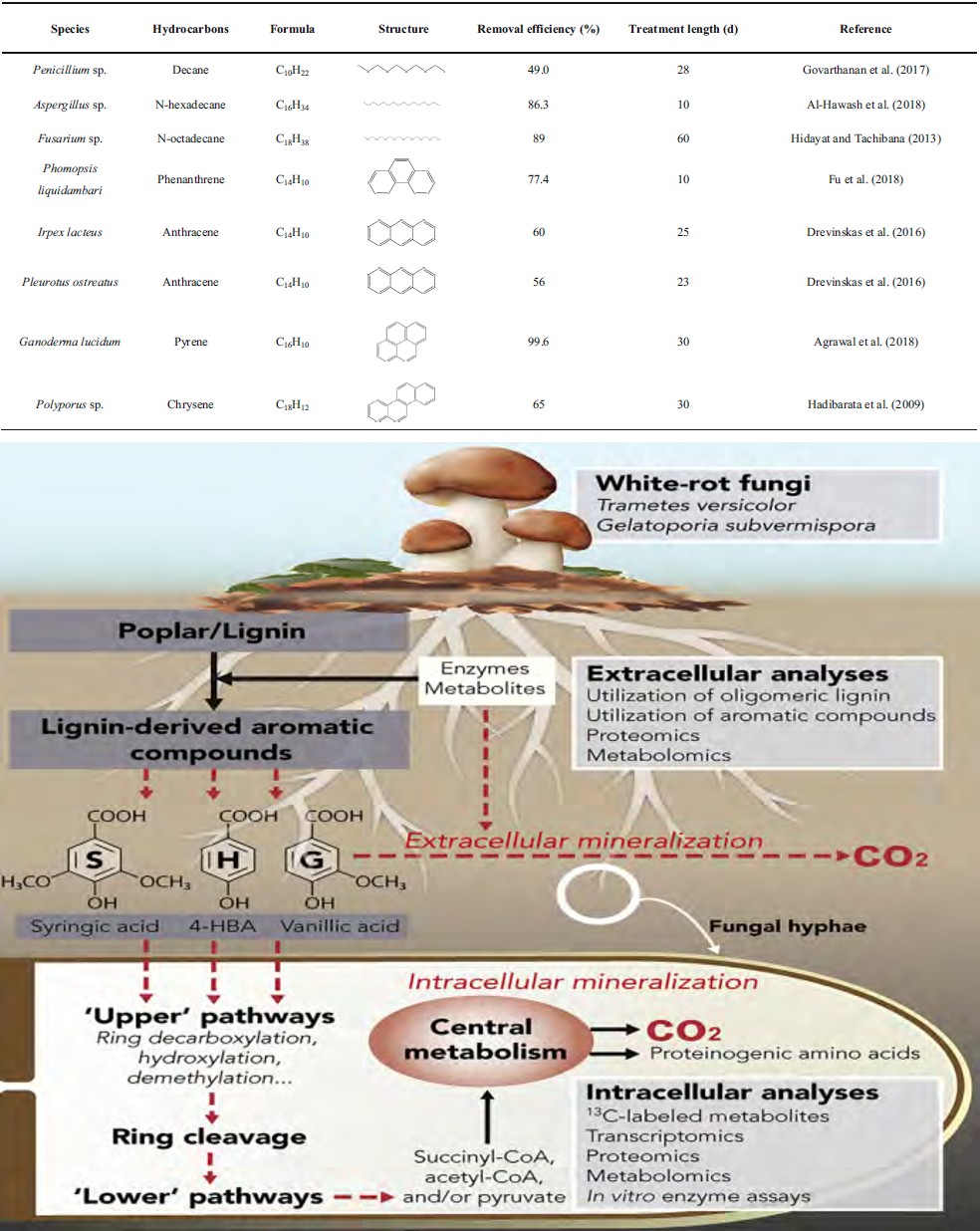
Fungi therefore play a key role in the major biogeochemical cycles [21], but their capacities remain largely unexplored, as the vast majority of these fungi are poorly understood [22, 23]. As previously mentioned, it is only known that soil fungi of the micromycete type are capable of degrading aromatic compounds through two types of metabolic pathways [24, 25]. Firstly, there are the lignolytic fungi (lignivores) illustrated in Figure 1 [26], which excrete three types of enzymes involved in the degradation of lignin, a polymer made up of phenolic structures [15], and then there are the non-lignolytic fungi (non-lignivores), which use cytochrome P450-type mono-oxygenases to insert an oxygen atom into an aromatic ring and form a highly reactive epoxide [27]. After a highly complex process, these fungi can indirectly generate phenolic compounds, tetralones, quinones or diol-epoxides, which are themselves highly reactive and can be toxic [17, 18, 19].
The biodegradation of PAHs using fungi is therefore an innovative method that remains to be explored, especially as it offers innumerable advantages. Indeed, it is an effective method for the decontamination of hydrocarbons and heavy metals such as lead, mercury, cadmium and chromium; moreover, it is considered an environmentally-friendly method, as it does not produce toxic residues or other harmful waste, nor does it require the use of aggressive chemicals, and can also be applied on a large scale; and finally, the fungi used are easy to cultivate and maintain, while improving soil quality by increasing its organic matter content. As a result, this method not only reduces the contamination of the contaminated site, but also improves its overall quality, making it a cost-effective option for the decontamination of polluted sites.
However, it’s important to note that although PAH biodegradation has been documented in many microorganisms, the advantage of working with fungi rather than other microorganisms with this biodegradation capacity, or vice versa, depends on a number of factors such as the ecosystem, the technique used, the physico- chemical properties of the contaminated medium, the PAH content and the age of the contamination. For example, it is sometimes more advantageous to use other autochthonous microorganisms in biodegradation than fungi, as these autochthonous microorganisms are often better adapted to specific local environmental conditions than are fungi or even any other allochthonous microorganisms, making them more ecological and efficient.
Conversely, biodegradation based on microorganisms other than fungi may require the addition of specific compounds to stimulate microbial assemblages, specific microbial taxa that exhibit useful biodegradation/ detoxification capacity, nutrients and other compounds that affect metabolic reactions. In this case, the use of fungi is recommended. And although less studied than bacteria or other microorganisms in the field of biodegradation, fungal is more interesting in some cases due to fungi’s ability to degrade certain high molar masses PAHs, as well as the metabolic capacities of the fungal kingdom to degrade contaminants whose bioavailability limits access to other microorganisms competent in their biodegradation.
Cultivation of Fungi for PAH Biodegradation
In absolute terms, there are no “standard” conditions for fungal decontamination work. The conditions fungi need to degrade contaminants - in this case, pH, temperature, oxygen content and nutrient type - depend primarily on the physico- chemical properties of the contaminated environment. It is these properties that condition the life of the fungi that reside there and their ability to degrade contaminants. As for the method of growing fungi, there are two:The first is to grow them on site from a specially formulated substrate containing nutrients essential for their growth. Once planted, they begin to absorb organic and inorganic pollutants from the soil or water.The second is to grow them in the laboratory from a substrate containing compost or wood. When they reach a certain size, they are transplanted to the polluted site and applied directly to the contaminated surfaces to accelerate the biodegradation process.
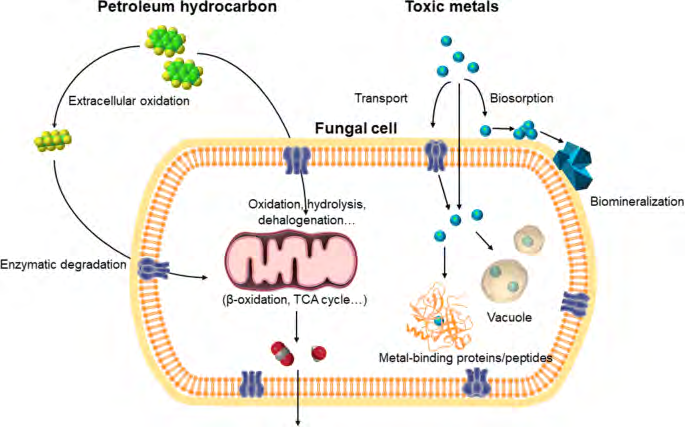
It should be pointed out that whatever the cultivation method, fungi absorb toxic chemicals from the soil and transform them into less harmful compounds after degradation [20] (Figure 2), which is particularly effective for treating PAH-polluted sites, as it reduces PAH concentration by up to 99% [10].
Risks of PAH Biodegradation by Fungi
It’s important to note that, although the use of fungi to treat PAH-contaminated sites is a promising, effective and economical method, it is nonetheless risky and needs to be assessed: This assessment involves identifying the potential risks associated with the use of fungi, such as cross-contamination between treated and untreated sites, the transfer of contaminants to other environmental sources, and the risk that fungi may not survive under certain environmental conditions. Once these risks have been identified, it is essential to take steps to reduce or even eliminate them. And finally, regular monitoring after the fungi have been used to ensure that they are effective and have not caused other environmental problems is essential.
Comparison Between Traditional and Organic Methods
There is a significant difference between traditional methods and the new method of biodegrading PAHs using fungi. Indeed, the advantages of fungi over traditional methods are numerous. Firstly, the fungi method is much cheaper to use because it doesn’t require the use of chemicals or expensive machinery, whereas traditional methods, such as mechanical or chemical cleaning, are very costly. Secondly, the fungi method is environmentally friendly, whereas traditional methods can disperse contaminants into the air and water.
Lastly, the fungi method is more effective in that it allows large quantities of contaminants to be absorbed in a short time and on a large scale, unlike traditional methods.
Conclusion
The use of fungi in the biodegradation of PAHs is proving to be a promising method offering an effective, sustainable and economical means of treating contaminated soils. It also enables a significant reduction in PAH concentrations in the soil, without dispersing these toxic substances into the air or water. Fungal biodegradation is therefore very promising, due to the very diverse enzymatic capacities of fungi, the most important of which is the biodegradation of even the most complex PAH components. The extracellular enzymes produced by lignolytic fungi enable oxidizing agents to react chemically with PAH components, making these fungi highly efficient biodegraders, mainly through co-metabolism mechanisms. However, before adopting this method of PAH biodegradation, a full assessment of the risks associated with its use must be carried out, followed by appropriate measures to reduce or eliminate these risks.
References
-
Loening K (1990) Polynuclear Aromatic Hydrocarbons Nomenclature Guide. Zubal Books, Battelle Press, Cleveland, Ohio, United States of America, pp: 87.
-
Lindstedt G, Soollenberg J (1982) Polycyclic Aromatic Hydrocarbons in the Occupational Environment: with special reference to benzo[a]pyrene measurements in Swedish industry. Scand J Work Environ Health 8(1): 1-19.
-
Huang M, Penning TM (2014) Processing Contaminants: Polycyclic Aromatic Hydrocarbons (PAHs), Elsevier Science & Technology, Encyclopedia of Food Safety 2: 416-423.
-
Botta F, Albinet A, Ughetto E, Leoz-Garzandia E (2014) Review of source identification methods applicable to the water sector and first choice of appropriate characteristic profiles. (Ineris, Onema), Paris, France, pp: 46.
-
Eisler R (1987) polycyclic aromatic hydrocarbon hazards to fish, wildlife and invertebrates: a synoptic review. US Department of the Interior, Fish and Wildlife Service, Patuxent Wildlife Research Center Laurel, MD 20708 85(1.11): 1-90.
-
Baek SO, Field RA, Goldstone ME, Kirk PW, Lester JN, et al. (1991) A review of atmospheric polycyclic aromatic hydrocarbons: sources, fate and behavior. Water, Air and Soil Pollution 60 (3-4): 279-300.
-
Abdel-Shafy HI, Mansour MSM (2016) A review on polycyclic aromatic hydrocarbons: Source, environmental impact, effect on human health and remediation. Egyptian Journal of Petroleum 25(1): 107- 123.
-
Kim KH, Jahan SA, Kabir E, Brown RJ (2013) A review of airborne polycyclic aromatic hydrocarbons and their human health effects. Environment International 60C:71-80.
-
Bolden AL, Rochester JR, Schultz K, Kwiatkowski CF (2017) Polycyclic aromatic hydrocarbons and female reproductive health: A scoping review. Reprod Toxicol 73: 61-74.
-
ALCOR (2023) Mushrooms that eat soil pollution.
-
OMS (2000) Air Quality Guidelines for Europe 2nd edition. World Health Organization, Regional Office for Europe, Copenhagen, Denmark, pp: 273.
-
Van Rooij JGM, Veeger MM, Bodelier-Bade MM, Scheepers PTJ, Jongeneelen FJ (1994) Smoking and Dietary Intake of Polycyclic Aromatic Hydrocarbons as Sources of Interindividual Variability in the Baseline Excretion of 1-Hydroxypyrene in Urine. Int Arch Occup Environ Health 66(1): 55-65.
-
Gadd GM (2008) Fungi and their role in the biosphere. Encyclopedia of ecology, Amsterdam, Netherlands, pp: 1709-1717.
-
Gadd GM (2017) Geomicrobiology of the built environment. Nature Microbiology 2(4): 16275.
-
Martin F (2011) Exploration of bacterial biodiversity in soil polluted by hydrocarbons: analysis by isotopic marking of the metabolic potential and dynamics of the communities involved in degradation. Laboratory of Chemistry and Biology of Metals, University of Grenoble, France, pp: 279.
-
Haritash AK, Kaushik CP (2009) Biodegradation aspects of Polycyclic Aromatic Hydrocarbons (PAHs): a review. J Hazard Mater 169(1-3): 1-15.
-
Cerniglia CE (1997) Fungal metabolism of polycyclic aromatic hydrocarbons: Past, present and future applications in bioremediation. J Ind Microbiol Biotechnol 19(5-6): 324-333.
-
Meulenberg R, Rijnaarts HH, Doddema HJ, Field JA (1997) Partially oxidized polycyclic aromatic hydrocarbons show an increased bioavailability and biodegradability. FEMS Microbiol Lett 152(1): 45-49.
-
Sutherland JB (1992) Detoxification of polycyclic aromatic-hydrocarbons by fungi. Journal of Industrial Microbiology 9(1): 53-61.
-
Li Q, Liu J, Gadd GM (2020) Fungal bioremediation of soil co-contaminated with petroleum hydrocarbons and toxic metals.Appl Microbiol Biotechnol 104(21): 8999- 9008.
-
Gadd GM (2007) Geomycology: biogeochemical transformations of rocks, minerals, metals and radionuclides by fungi, bioweathering and bioremediation. Mycol Res 111(Pt 1): 3-49.
-
Hawksworth DL, Mound LA (1991) Biodiversity databases: The crucial significance of collections. (Hawksworth DL), CAB International, Wallingford, UK, 17-29.
-
Hawksworth DL (2002) The magnitude of fungal diversity: the 1.5 million species estimate revisited. Mycological Research 105 (12): 1422-1432.
-
Cerniglia CE (1992) Biodegradation of polycyclic aromatic hydrocarbons. Biodegradation 3: 351-368.
-
Peng RH, Xiong AS, Xue Y, Fu XY, Gao F, et al. (2008) Microbial biodegradation of polyaromatic hydrocarbons. FEMS Microbiol Reviews 32(6): 927-955.
-
Beckham GT, Johnson CW, Karp EM, Salvachúa D, Vardon DR (2016) Opportunities and challenges in biological lignin valorization. Curr Opin Biotechnol 42: 40-53.
- Spectrophotometric Determination of Lanthanum (III) and Some Rare Earths with Xylenol Orange
- Introduction and Sources of Molluscicides
- Trimetazidine: An Antianginal Drug and Not Only!
- Nature Inspired Discovery and Development of Antibacterials: An Update
- Recent Approaches of Impurity Profiling in Pharmaceutical Analysis: A Concise Review
- Next Generation Tools in mRNA Purification: The Role of Continuous Raman Spectroscopy Testing with Pretreatment of the Sample