
Practice Empathy!
I have been thinking about the role empathy plays in our ability to develop resilience. I consider empathy as a quality, an ability we need to embrace especially in times of crisis. It helps us cope in the process of helping others.
Opinion
I have been thinking about the role empathy plays in our ability to develop resilience. I consider empathy as a quality, an ability we need to embrace especially in times of crisis. It helps us cope in the process of helping others. To say it in another way. We all benefit from empathy. We all lived the COVID-19 pandemic. Everyone experienced it, took it, lived it, and reacted in different ways. As we say from a cognitive approach, we all experienced the impact, each one took it according to their own experiences. Every person felt different emotions. Each one reacted in a unique way. Some reactions were very hard to understand. Empathy has been crucial in all social encounters.
Defining Empathy
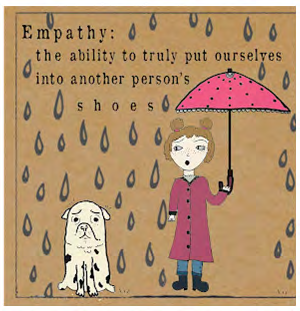
Empathy is defined by the Cambridge English Dictionary, as “the ability to share someone else’s feelings or experiences by imagining what it would be like to be in that person’s situation”. This means you can identify and understand another individual’s feelings and motives without having to Opinion share their experience.
Understanding Empathy
So, if we use the definition above, we understand empathy as this human skill that allows us to see things from another person’s perspective. It is easy to be comprehensive or compassionate when we share the same values, culture, perspectives. The hard part is when the other one is dramatically different. Has different values. Different mindset. Empathy is about understanding, respecting their viewpoint. Empathy is about not judging. Empathy implies recognizing that there are many ways of thinking, living, believes that make us feel and therefore act or respond in certain ways even under the same circumstance. Our belief system is only ours. If we can understand someone else’s feelings, we might be able to react differently. If we can comprehend that we all are affected by things differently according to our own life experiences, we might be able to be more supportive and less judgmental. When we are at work, when we deal with coworkers or employees, it is essential to develop empathy only then we can regulate our reactions.
Empathy doesn’t always lead to action. According to Paul Ekman and Daniel Goelman, there are three types of empathy.
- Cognitive empathy. This means to understand someone’s else’s feelings
- Affective or emotional empathy. This means to feel another person’s emotions
- Compassionate empathy. Is a combination of cognitive and emotional empathy. You understand another person’s emotions and feel them. This one makes you move to help.
Compassionate empathy makes us move to action and that action stimulate hormones in our body that make us feel pleasure, good, that is why we say that we all benefit with When we are at work, when we deal with coworker’s or employees, it is essential to develop empathy only then we can regulate our reactions. Empathy exists on a spectrum. Some people due to illness or trauma may have low empathy. Levels of empathy vary due to many conditions. Because empathy is, as far as we know, a learned behavior, if we didn’t experience empathy while growing up we might not be as empathic.
We all Benefit from Empathy
Empathy is an ability so can be developed, increased It is a skill that can be cultivated, the act of having an emphatic response makes us feel good and that it self-pushes us to be more empathic and comprehensive towards others, to say it in different words, less judgmental, less self-focused. Empathy is a fundamental part of building meaningful social connections Empathy empowers resilience. Empathy is strength and an asset towards surviving and thriving in any environment. Remember we all benefit from Empathy.
Look for Professional Help
If you feel you’re having a challenging time understanding people, connecting with other people’s emotions, if you sense that you have a low level of empathy and you want to develop it, seek the support of a mental health professional who can work with you practicing a few techniques that may help.
- Systematic Review and Meta-analysis Investigating the Prevalence of Depression, Anxiety, Loneliness and Help seeking among International Students
- Family Experiences and their Interpretations as a Source of Adaptive Behaviour in Young Adults: A Qualitative Model of Adaptive Behaviour
- The Development of Responsibility in Teenage Mothers: A Qualitative Model
- Post-Truth Reality: Worldwide Infodemia and Mental Health Concerns during and Post COVID-19 Pandemic Scenarios
- Psycho-Emotional Rehabilitating Means of Overcoming Extreme and Stressful Impact
- The Paradox of Humbleness, Arrogance and the Concept of Fluid Individuality