
Family Experiences and their Interpretations as a Source of Adaptive Behaviour in Young Adults: A Qualitative Model of Adaptive Behaviour
This article presents a theory-generating model of adaptive functioning among young adults, developed through the idiographic analysis of their early family experiences and the meanings attributed to them. Applying the Process Transformation Reconstruction (PTR) strategy, the study combines qualitative case analysis with data-driven modelling techniques to reconstruct the internal differentiation of adaptive behaviours. The life paths of 122 participants were analysed to identify distinct behavioural variants, understood as structured constellations of actions, meanings, and developmental mechanisms. The C4.5 decision tree algorithm was used within the PTR framework to explore hidden regularities in the data and model the internal logic of behavioural differentiation. This approach, rooted in the paradigm of explainable artificial intelligence (XAI), made it possible to identify empirically grounded variants of adaptive functioning-ranging from flexible, autonomous coping strategies to rigid, defensive modes of response. Each variant reflected specific constellations of early family experiences, patterns of interpretation, and developmental trajectories. The proposed model contributes to developmental theory by showing how subjective meaning-making processes mediate the long-term effects of family history on adaptation in adulthood. It also has practical implications for psychological assessment, counselling, and education-offering a structured framework for understanding the diversity of young adults’ functioning and for tailoring interventions to their developmental profiles.
Contemporary Context and the Role of Family Experiences
The modern world appears to be full of possibilities; it offers the availability of goods, which can be used just for a short amount of time when they are needed, and lack of obligations; it promotes the fulfilment of one’s needs and allows for a prolonged period of emerging adulthood. At the same time, it is a world of loosening family ties, instrumentalisation of close relationships, lack of stable points of reference, and information noise in the media. Young adults have a wide access to goods, social consent to individualism and exposing their own needs; at the same time, the media and the market create a number of needs, which imposes an obligation on young people to satisfy them, as well as to follow the patterns observed there.
The clash of social expectations and pressures with young people’s unrealistic notions and requirements makes them often perceive the world as threatening [1, 2]. Unsure of their future [3], unable to clearly define the purpose in life [4], feeling compelled to make perfect choices [5], they postpone the moment of entering the job market, starting a family, taking full responsibility for themselves and others [2, 6, 7].
The family, which is the basic environment of development, participates in building children’s experiences and their direct or indirect interpretations. Despite the contemporary tendency to loosen family ties, the family still constitutes a specific active context - the family environment is perceived differently by the subject depending on their developmental and personal characteristics, and at different stages of the subject’s development it triggers different behaviours-for the functioning of young adults [8].
Problems with functioning in adulthood may be rooted in experiences both within and outside the family of origin [9]. Co-occurring problems within and outside the family may cause a greater disturbance of proper functioning than problems in only one area [10], and positive experiences outside the family do not eliminate negative family experiences, including feelings of rejection by parents and family dysfunction [11]. Identifying the mechanisms that explain the relationship between negative childhood experiences and the risk of impaired functioning in the future is essential to understanding the diversity of adaptive and maladaptive ways in which modern young adults function. Due to the variety of experiences of contemporary young adults, learning about the mechanisms that govern their functioning involves not only tracing life paths, but also the ways in which they interpreted what they encountered in their journey.
Theoretical Framework and Study Focus
The aim of the article is to present the adaptive behaviours of young people considered in the context of acquisition and interpretation of family experiences. It was assumed that early family experiences may be a potential source of anxiety which, by influencing subjective interpretations of oneself, one’s behaviour and the world, modifies the acquisition of further experiences. As a result, activities undertaken by young people contribute both to consolidating or generating new adaptive behaviours, and to deepening non-adaptive ones. The family environment plays an important role in shaping the adaptability of behaviour, defining the space of experiences and the framework for their interpretation. It was also assumed that young people’s adaptive behaviours are unique and complex in nature, and that family environments are the source and/or context of experiences changing over time and their interpretations. The adoption of these assumptions led to focusing the research on a detailed recognition of the internal differentiation of adaptive behaviours, the mechanisms of their formation and their origins [12].
When choosing the study paradigm, the researchers rejected theoretically well-founded hypothesis testing focused on selected (fragmentary) relations between, e.g., family characteristics, acquired experiences, interpretations of experiences, experienced anxieties, and triggered adaptive behaviours, typically investigated through standardised tools. Such approaches dominate in studies on parental attitudes and children’s difficulties in adapting [13]; control of emotions, compliance with social norms, and domestic violence and aggression; the sense of autonomy and parents’ consent to children being autonomous [14]; childhood depression as an effect of limiting positive emotions in the parent-child relationship [15]; or faulty beliefs and models of action as effects of negative patterns of behaviour in the family.
The assumption of the diversity of adaptive behaviours focused the research on the ways they are formed, including their relation with the quality of family experiences. The study employed a processual approach based on the reconstruction of empirical data. First, the life paths of individual young adults were reconstructed (including their individual experiences and interpretations of them, experienced fears and adaptive behaviours) and considered against the background and in relation to the family context. The analysis focused on identifying internal differentiation in adaptive functioning and the structural relationships between individual and family experiences. This approach allowed for the empirical identification of diverse variants of adaptation and the mechanisms behind their formation. The analytical tools employed draw on contemporary developments in artificial intelligence research, particularly in the area of interpretable data-driven modelling.
The theoretical starting point for empirical explorations was to recognise how family environments determine the framework for a child’s activity, their experience of themselves and their actions, the way they build close relationships, and how the nature of parental care influences the fulfilment of children’s needs and experienced emotions. However, we cannot say that there are simple relationships between these factors. Raising a child constitutes a way of exerting pressure on him or her with their development in view. Even potentially pro-developmental pressure does not always lead to proper functioning and adaptive behaviour in adulthood.
Early Family Experiences and their Connection with Functioning in Adulthood
In the adopted study paradigm, which assumes that the researchers reject formulating hypotheses in favour of empirically reconstructing the internal diversity of the phenomenon, the theoretical part of the article plays a specific role. It is a starting point for the initial conceptualisation of the research problem, and at the same time it determines the area of reference for discussing empirically selected adaptive behaviours. The classic conceptualisations of parental attitudes and attachment styles presented below are treated as a framework that delineates the area of diverse childhood experiences and their relations to functioning in adulthood.
Parental Attitudes: The literature on the subject includes a number of theoretical studies that propose various classifications and descriptions of parental attitudes. Ultimately, they accentuate the way of caring for a child, pointing to models of parent-child relations and their supportive or threatening nature, describing them in a static way (e.g. democratic, authoritarian, liberal attitudes) [16] or in a dynamic way (e.g. “helicopter” style of parenting in which the imposition of control aimed at protecting the child coexists with parents’ supportive involvement in his or her development [17].
At the same time, researchers point to the diversity of the relationships between the quality of parents’ attitudes and the subsequent functioning of young adults. Parental attitudes may be supportive or pose a threat to the child’s proper development. They can also constitute a set of seemingly contradictory actions (control combined with caring-helicopter parenting) or play various roles at subsequent stages of development, e.g. supporting at an earlier, threatening at a later stage of development (e.g. if a child is protected at the first stage of development, he or she may not form appropriate coping skills at later stages of development, as long as this protection continues) [18].
A democratic attitude is characterised by warmth and care shown to the child; it is based on balanced control as well as positive feelings and family ties and constitutes support for the proper development of the child. It contributes to the creation of adaptive ways of functioning in adulthood [19]. Authoritarian and liberal attitudes may prove to be a threat to a child’s global development. The former is characterised by parental domination, strictness and reserve towards the child, the second-by positive ties based on love combined with lack of control. Both attitudes make it difficult to shape the child’s autonomy, fostering a feeling of being lost and causing difficulties in setting boundaries (liberal parents), or lead to a feeling of helplessness and shame due to excessive external control (authoritarian parents). In turn, prohibitions and requirements, or the opposite-the lack of them, may favour the emergence of incorrect adaptive behaviour in adulthood.
The actions of “helicopter” parents may be perceived by children as either positive (the child feels cared for and loved) [20] or negative (the child feels restricted) [21, 22]. They can also be felt as non-problematic when positive feelings dominate in the family, or problematic when family difficulties arise [22]. Problems in children’s functioning generally arise when the balance between showing warmth to the child and exercising psychological control over the child is disturbed [23, 24, 25]. Parental overprotection, regardless of its subjective importance for the child, may inhibit the development of his or her independence, as well as limit the opportunities to undertake activities that are necessary for building future competences [14]. Adult children of “helicopter parents” may have lower self-worth and self-efficacy [17, 26, 27]. Moreover, depression and anxiety as well as conflicts with parents are more common among them [22].
Attachment Styles: The way of caring for a child affects the quality of his or her bonds (attachment styles) with his or her loved ones, and thus the fulfilment of needs, ways of regulating emotions and the ability of mentalisation (reflection), as well as the development of autonomy and exploratory behaviour. These and other factors determine children’s experience of themselves and the world, and shape the patterns of social relationships, especially those with the persons closest to them [28, 29].
Researchers propose different classifications of attachment styles [30, 31, 32] and indicate the connections of these styles with functioning in adulthood. The search for connections between attachment styles and the functioning of young adults most often focuses on relationships with romantic partners [33, 34, 35].
Attachment, understood here as a permanent specific bond between people, based on two-way activity understood as a self-regulating system [30, 31], significantly influences emotional regulation, autonomy, and relationship-building. Secure attachment is based on the emotional involvement of the parents and the adequate satisfaction of the child’s needs. Insecure attachment styles, especially anxious-avoidant and ambivalent, are accompanied by generalised anxiety disorders, which are manifested in the form of lack of a basic sense of security, fear of rejection, experiencing deprivation of needs, lack of trust, and in the processes of shaping the autonomy and quality of child’s exploratory behaviour. They take the form of early non-adaptive behaviour patterns [36].
In adulthood, they may be revealed in: a tendency to exhibit negative reactions to everyday situations; dysfunctional patterns of reactions to potential threats (including selective focus on negative stimuli, distortion of processed information, not recognising and thus underestimating one’s resources); difficulties in understanding other people’s emotions, regulating one’s own emotions and in building relationships based on trust [37, 38].
Early childhood attachment is characterised by relatively high stability; however, it does not determine behaviour in adulthood. A change in the behaviour of parents, an improvement in the situation of the family, or relationships with other people important to the child can have a protective effect-help the child create a safe bond. Both positive and difficult life events can lead to a change in attachment patterns, altering the nature of previously adaptive or non-adaptive behaviours (e.g. relationships with important people or experiencing positive situations in life allow to create adaptive forms of functioning parenthesis; [39, 40].
Interpretation of Experiences and Adaptability of Behaviour in Early Adulthood
Even in the case of people who had a happy childhood, there may be fears resulting from the lack of or insufficient training in coping with difficulties or the inability to reconcile the requirements of the environment: direct (social expectations) and indirect (one’s beliefs formed by the people from one’s environment and affecting individual needs, plans and methods of action). They may be accompanied by fears of taking responsibility for the consequences of one’s actions.
What turns out to be important is not what can be considered an objectively favourable or threatening situation, but rather how young adults perceive it and what emotions they will ultimately ascribe to it [41, 42, 43]. Objectively difficult situations may be perceived positively or negatively, depending on the meaning ascribed to them. In the same situations, some will experience an “extremely strong sense of threat” [44], while others will remain completely indifferent. Perceiving a situation as threatening may cause fears of its recurrence [45], both in the case of its ambiguous nature [46, 47] and the lack of justification for the existence of a threat [48].
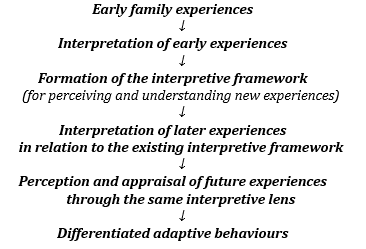
Sometimes young people may not be aware of the difficulties [49], or the situation may not be really taking place and may only be the result of assumptions about reality. The occurrence of such-real or not-circumstances may, on the other hand, cause the persistence or excessively long duration of other chronic tensions, and thus increase the feeling of constant tension [50, 51]. The experiences acquired by young adults and the ways of interpreting them correspond to the entirety of family experiences, including fears and concerns about themselves and the people close to them, generated in childhood and subject to further transformation. Early family experiences are the basis for the formation of the first framework for the reception and interpretation of new experiences, which will determine the ways of perceiving and interpreting oneself and the world. They will become relatively constant over time. What is worth paying special attention to is the fact that a once developed framework is difficult to break, as it is formed along with the child’s mental development and constitutes his or her integral part. How a young adult perceives and interprets reality affects the quality of his or her experiences, which supports or hinders the development of various forms of adaptive behaviour. This, in turn, facilitates or hinders the correction of inadequate frameworks that distort the reception and interpretation of experiences.
The diagram below allows us to trace the process of shaping the hypothetical framework for interpretation of family experiences, which plays a significant role in the current functioning of young adults (Figure 1).
On the one hand, the aforementioned adaptive behaviours are the end result of various experiences throughout the life of young adults; on the other, they are an expression of their ways of perceiving the environment and concerns about how they are perceived by the environment. For the purposes of this article, it was assumed that adaptivity of behaviour can be described as a specific spectrum: from non-adaptive behaviour when a lack of resources, skills or the rigidity of action patterns does not allow one to cope with a difficult situation, through ad hoc, situationally triggered, but correct, action patterns, to patterns which are relatively stable, but take into account the situational context. This spectrum reflects modifications of behaviours that are perfected as a result of experiences and applied in subsequent activities. Experiencing difficult situations in the period of entering adulthood perpetuates or intensifies long-term states of chronic tension, increasing the feeling of constant tension [51]. Problems with mental health and well-being may overlap or be correlated [52, 53], suggesting that the prognosis concerning adaptive behaviour in one area will not always translate into other areas [11]. Hence the need to get to know the specificity of the functioning of young adults, taking into account the ways they interpret their actions as well as the contexts in which they take place, and finally-to understand the mechanisms underlying the adaptability of their behaviour.
Methods
Research Assumptions and Objectives
The processual approach adopted in this study assumes by definition the complexity, internal diversity, and variability of the analysed phenomenon, understood as emerging from the organisation of individual experiences over time. This approach allows for the empirical reconstruction of the phenomenon’s internal structure and its possible variants (i.e., the spectrum of its forms).
The main aim was to reconstruct and analyse how young adults interpret their experiences within the family of origin and how these interpretations transform their functioning in adulthood. Key questions included:
What is the structure of young adults’ life paths? How did they function in their families of origin? How do they interpret their past, present, and future experiences?
What are the mechanisms underlying these interpretations? How do these young people function across different life domains in the context of socio-cultural changes?
Given the exploratory nature of the research, no hypotheses were formulated in advance. This ensured openness to meanings and data often overlooked in traditional research frameworks.
Participants and Data Collection
The study involved 122 individuals (87 women, 35 men) aged 20–35 (M = 25.8; SD = 5.08), representing diverse personal, professional, and relational situations. Their characteristics were systematically included in the research database. To fully capture the complexity of the studied phenomenon, the study employed an exploratory qualitative interview and a supplementary biographical questionnaire [54]. These tools were designed to gather data potentially significant for identifying overlooked dimensions of the phenomenon.
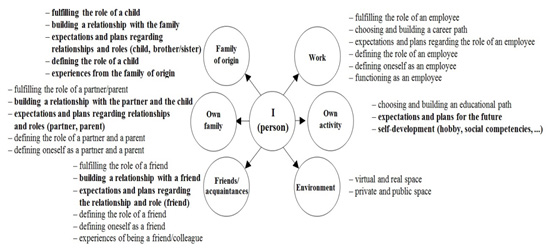
The interview was guided by a content map (see Figure 2) outlining key areas relevant to the emergence and manifestation of anxiety. The researcher posed open-ended questions and followed the respondent’s narrative, allowing insight into their interpretations, judgments, and dilemmas.
Each interview lasted 2-3 hours, was conducted individually, and recorded with consent. Participants were informed of their right to withdraw at any time.
Snowball sampling was used, and the transcribed data were anonymised and secured using alphanumeric codes.
Data Analysis Strategy: Strategy for the Process Transformation Reconstruction
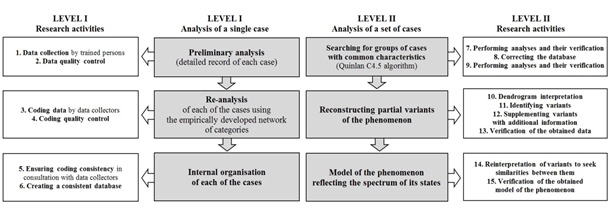
The research employed the Process Transformation Reconstruction (PTR) strategy [55, 56], which facilitates the empirical reconstruction of internal differentiation within a phenomenon based on idiographic case analyses. Unlike approaches based on predefined theoretical categories, PTR allows for the discovery of latent structures and transformations not captured by standard models.
The PTR strategy is focused on the empirical reconstruction of the phenomenon in its diversity, while maintaining the initial characteristics of the studied individual cases at each stage of the analysis. Idiographic analysis of individual cases (case study) is the basis for formulating generalisations: creating a multi-variant model of the phenomenon that reveals its internal diversity (Figure 3).
Level I-Single Case Analysis
The first analytical stage focused on reconstructing individual life paths, taking into account varying levels of personal involvement and contextual shifts. The steps included:
- Detailed reconstruction and transcription of each narrative.
- Thematic structuring and preliminary analysis.
- Recoding of data using a network of empirically derived analytic categories.
This resulted in a collective database describing all 122 participants across 112 attributes-encompassing characteristics of the individual, their actions, and contextual factors.
Level II-Analysis of a Set of Cases: Comparative Analysis and Model Construction
At the second level, researchers aimed to identify internal differentiation and reconstruct a hypothetical model of the phenomenon. This stage included:
- Identifying case groups with shared characteristics.
- Reconstructing partial variants of the phenomenon.
- Integrating these into a spectrum-based model.
To identify sets of cases sharing common constellations of characteristics-hereafter referred to as clusters (used here in a conceptual, not statistical, sense)-the C4.5 decision tree algorithm was used. This data-mining tool reveals hidden patterns in complex datasets that may elude standard statistical analysis [57].
The application of the C4.5 algorithm places this study within a broader methodological framework increasingly associated with contemporary artificial intelligence (AI). Specifically, C4.5 is part of a family of interpretable machine learning methods widely used in data mining, where the goal is not only prediction, but also understanding the structure and logic of decision-making processes [58]. In the present study, its use supports the empirical identification of distinct behavioural patterns, grounded in idiographic data, and the reconstruction of their internal logic. Such an approach corresponds with the principles of explainable AI (XAI) [59], which emphasize transparency, interpretability, and meaningful explanations-values that are also fundamental in qualitative psychological research.
This integration highlights how data-driven methodologies, grounded in AI research, can be productively applied to explore the diversity and complexity of human development, going beyond conventional hypothesis-testing frameworks.
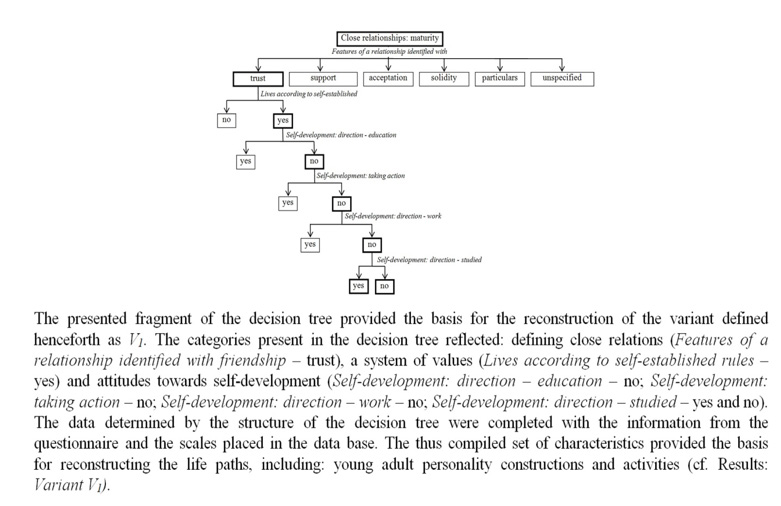
The researcher prepares a database and selects the (criterion) for classification: Maturity in building close relationships, a derivative of personal development that translates into the way of subjective interpretation of oneself and the world in the context of relationships, including relationships within the family and the related experiences. As a result of using the algorithm, a decision tree is developed.
The decision tree and the reconstructing of partial models (variants) of the phenomenon. The article proposes an original way of interpreting the decision tree. Attributes and corresponding values are treated as criteria for classification, making it possible to identify groups of subjects with common characteristics. Figure 4 shows a fragment of the decision tree which was the basis for reconstructing Variant V1.
From a methodological standpoint, this interpretive use of the decision tree is aligned with conceptual modelling rather than automated classification. Rather than relying solely on algorithmic outcomes, the researcher interprets the hierarchical structure of decisions as a reflection of how particular experiential constellations give rise to specific adaptive behaviours. This analytic step demonstrates how machine learning can serve not only predictive but also theory-generating functions, especially when embedded in idiographic strategies such as the Process Transformation Reconstruction (PTR) framework.
Credibility and Reliability
The study’s credibility was evaluated at two levels: - single case level: ensured through independent coding by trained analysts and verification of coding consistency. - cross-case level: assessed via: error rate of the decision tree (15.6%; well below the 25% acceptability threshold), and coherence of each variant and the overall model’s internal organisation.
Results
The adoption of the processual approach by definition oriented the analyses toward identifying relationships- generated at various stages of life-between family experiences, anxiety, and adaptive behaviours. The first stage of the analyses aimed to reconstruct the individual life paths of the respondents, examined in the context of diverse family backgrounds. Each reconstructed path took the form of a complex structure reflecting how the satisfaction of children’s needs and the accompanying experiences, anxieties, and behaviours transformed into adaptive functioning in young adulthood, as interpreted through the lens of earlier experiences and fears.
Ultimately, the goal was to explore how varied childhood experiences and their interpretations-shaped by parental attitudes and attachment styles-relate to adaptive behaviour in adulthood. For this purpose, sets of characteristics were identified using Quinlan’s algorithm, which enabled the reconstruction of four distinct pathways to adaptive behaviour. These adaptive strategies emerged as derivatives of both early and current experiences of young adults and were linked to specific patterns of anxiety and internal tension: V1: Dependency-Based Quasi-Adaptation-behaviours aimed at reducing the fear of acting independently or losing access to others’ resources; V2: Compliance-Oriented Adaptation-temporary behaviours that reduce anxiety through apparent conformity;
V3: Transitioning to Internal Regulation-a gradual shift from external validation to internal standards V4: Integrated and Competence-Based Adaptation- flexible behaviours rooted in a sense of competence and coherent goal integration.
These behavioural patterns were grounded in diverse family dynamics, including:
- emotional distancing disguised by material care;
- involvement in chronic conflict, demanding appearances of normalcy;
- active but controlling engagement, steering development rigidly; and
- consistent yet autonomy-supportive parenting.
The reconstructed time- and relation-based activity models, showing connections among experiences, fears, and adaptive behaviours, were categorised into these four variants: V1, V2, V3, and V4.
The following Table 1. summarises the key features of each adaptive behaviour variant:
| Variant | Parenting Style | Emotional Climate | Dominant Fear | Key Mechanism | Relational Strategy | Adaptation Type |
|---|---|---|---|---|---|---|
| V1 | Material support, emotional absence | Cold, disengaged | Fear of failure, fear of loss of support | Avoidance with manipulation | Dependency or detachment | Quasi- adaptation |
| V2 | Surface control, emotional chaos | Conflict-avoidant, masked tension | Fear of judgment | Conformity + impression management | Strategic compliance | Defensive, fragile adaptation |
| V3 | Supportive but over-controlling | High expectations, performance focus | Fear of disappointment | Transition to self-regulation | Cautious openness | Evolving adaptation |
| V4 | Structured autonomy, emotional availability | Fair, warm, consistent | Identity tension (autonomy vs. intimacy) | Competence with integration | Mutual support, relational flexibility | Mature, flexible adaptation |
Table 1: summarises the key features of each adaptive behaviour variant:
V1: Dependency-Based Quasi-Adaptation
Variant V1 illustrates a strategy of apparent adaptation that emerges in response to emotionally distant but materially supportive family environments. It reflects the early development of entitlement, avoidance, and manipulation rather than internalised responsibility.
Family and early experiences: Respondents representing this variant came from materially secure homes. Their parents believed they were providing adequate care, but in reality, they were preoccupied with work or leisure, emotionally distancing themselves from their children. The children, while materially supported, were emotionally neglected. They perceived their parents’ efforts as lacking genuine engagement and emotional presence. While parents substituted attention with material goods or activity opportunities, they failed to recognize and respond to their children’s emotional needs. In retrospect, the respondents criticised the permissiveness and lack of clear expectations, control, and emotional connection in their upbringing.
“I never had to think what to do. I always got what I wanted. Now? I always have my parents close at hand.” (man, 24) “It would be enough for me if my old man hired me [in his own company] and I could work for him. Or not work. It
depends on what I would have to do.” (man, 22)
Family and entering adulthood: Young adults in this group struggle to recognise and respond to social expectations. They remain self-centred and dependent on continued parental support. When parents begin withdrawing that support, the young adults experience confusion and insecurity. Accustomed to external protection and having their needs met, they have not developed strategies for independent problem-solving or long-term planning. Their coping strategies involve manipulating others to meet their needs or withdrawing from effortful tasks. They do not invest in building long-term relationships and show little initiative in shaping their futures. Their view of adulthood is shaped more by avoidance and dependency than by growth or autonomy.
“Am I in a relationship? You could say so. I am and I am not. It depends who’s looking. If it’s my girl, not necessarily.” (man, 26) Nature and origins of adaptive behaviour: These individuals developed a keen ability to identify challenging situations and secure external support, but without internalising responsibility or effort. Their behaviours are quasi-adaptive: situational, manipulative, and aimed at minimising effort and maximising resource access. As parents withdraw support, the resulting insecurity and fear of unmet expectations intensify. These fears fuel behaviours that mimic adaptation but ultimately hinder growth, such as instrumentalising relationships or feigning involvement while avoiding responsibility.
V2: Compliance-Oriented Adaptation
Variant V2 demonstrates how young adults adapt through strategic compliance, shaped by families marked by silent conflict and emotional inaccessibility. Their adaptation serves primarily to reduce anxiety and maintain fragile relational stability.
Family and early experiences: These respondents grew up in families marked by long-term but unspoken conflict, often rooted in financial struggles, helplessness, or marital discord. Parents expected children to uphold a façade of family normalcy while emotionally distancing themselves from their children’s concerns. Expression of conflict was discouraged, and emotional needs were ignored. Respondents recall their childhoods as emotionally cold and marked by the suppression of problems and feelings.
“We never spoke about it [the problems]. Everyone had their place at home. Me and my sister in our room. Mom in the kitchen, dad in the garage.” (woman, 30) Family and entering adulthood: As adults, V2 individuals remain entangled in manipulative family dynamics. Although materially dependent on their parents, they attempt to assert boundaries and protect themselves from emotional entanglement. They participate in maintaining appearances while simultaneously resisting parental control. Outside the family, these dynamics manifest as difficulty forming authentic relationships and a heightened sensitivity to others’ opinions. Social anxiety, fear of judgment, and a need for external approval dominate their interactions.
“I don’t like making friends with new people. I have the feeling that I have to be someone other than I am when I meet them.” (woman, 23) Nature and origins of adaptive behaviour: Young V2 learned to reduce anxiety by conforming to perceived expectations. Their behaviours are protective, not proactive- they aim to ensure safety by securing approval. Constant self- monitoring, fear of criticism, and low self-esteem hinder their independence. When expectations shift or become unclear, their anxiety increases. This variant reflects a reactive form of adaptation that prioritises short-term self-preservation over genuine engagement or growth.
V3: Transitioning to Internal Regulation
Variant V3 reflects a dynamic developmental shift-from external control and overregulation to emerging internal autonomy. This pattern is driven by parental over-involvement and later tension between dependence and self-definition.
Family and early experiences: V3 respondents were raised by parents with positive life trajectories, who set high standards and tightly organised their children’s development. While emotionally warm and materially supportive, these parents maintained control, often preventing children from facing real-life challenges. Respondents gained many competencies but lacked opportunities to apply them independently. They describe their childhoods as structured but over-directed.
“My whole childhood was spent doing extra-curricular activities, music school. I wasn’t allowed to say that I didn’t feel like doing something.” (woman, 22) Family and entering adulthood: In adulthood, V3 individuals experience internal conflict. They crave autonomy but remain sensitive to their parents’ expectations. Efforts to act independently are often clouded by anxiety and fear of disappointing others. Social interactions are shaped by a desire for approval, and respondents describe withdrawing, self-censoring, or over-adapting in unfamiliar situations. However, exposure to accepting relationships outside the family can trigger a shift toward internal standards and more authentic functioning.
“I enrolled at the University of Technology because my mother wanted me to. I regret it a little now, but I won’t tell my parents. They’d be disappointed.” (woman, 22) Nature and origins of adaptive behaviour: This variant is marked by a transitional adaptive pattern. Respondents initially rely on external validation but gradually develop internal standards through positive non-familial experiences. Their adaptation is dynamic and evolving: they are moving from over-regulated compliance to self-directed autonomy. Emotional ambivalence, especially toward parents, is central, but so is the potential for constructive transformation.
V4: Integrated and Competence-Based Adaptation
Variant V4 captures mature forms of adaptive behaviour grounded in internalised competence, emotional security, and the integration of autonomy with connectedness. It represents a developmental culmination of supportive but demanding upbringing.
Family and early experiences: The V4 group experienced a balance between structure and autonomy. Parents upheld clear rules but allowed children to explore, make mistakes, and learn independently. Emotional security and parental availability coexisted with consistent expectations. Respondents recall their upbringing as strict but fair, marked by unconditional support and room for self- development.
“Yes, I have this feeling that I owe a lot to my parents. I’m not like them, but I took a lot from them. (...) A lot of conviction that what I do depends on me.” (woman, 28) Family and entering adulthood: As adults, V4 individuals appreciate their upbringing and maintain supportive but non-intrusive relationships with their parents. They demonstrate confidence in navigating new roles and environments. Their independence is rooted in internalised competence and realistic self-assessment. While they may experience tensions between self-realisation and commitment in close relationships, they possess the emotional maturity to negotiate these challenges.
“Home, family, work. This arrangement suits me, although I didn’t always manage to grasp it. It’s better now. I’ve managed to put it together slowly.” (woman, 30) Nature and origins of adaptive behaviour: V4 respondents exhibit flexible, integrated adaptation. They are capable of goal integration, long-term planning, and establishing meaningful relationships. While societal pressures may challenge their equilibrium, their stable value system and internal coherence support effective coping. Their behaviours are proactive and reflect a mature balance between autonomy and connectedness.
Discussion and Interpretation of Results
The young respondents enter adulthood equipped with beliefs and life attitudes shaped by their early family experiences. These experiences-ranging from neglect and unmet needs (V1), through manipulative or emotionally distorted relationships (V2), to pressure to meet high parental expectations (V3)-leave lasting imprints that influence how young people form adaptive strategies in adulthood [9, 11].
The proposed Qualitative Variant Model of Adaptive Behaviour illustrates the link between specific types of family environments and the diverse mechanisms of adaptation observed among young adults. It reveals that not the mere presence of negative or positive family experiences, but their interpretation-shaped through early and later developmental stages-determines the trajectory of adaptive or quasi-adaptive behaviour.
Family experiences and their interpretations
While some participants recall difficult or emotionally impoverished childhoods, others describe stable and supportive family backgrounds. Yet even positive early experiences do not guarantee successful adaptation if the adult environment becomes incompatible with prior expectations (e.g., V4). In contrast, individuals with early deficits (V1, V2) may struggle to develop autonomy or stable relationships, particularly when their current context reinforces old patterns.
Respondents representing each variant constructed different narratives about their family life-interpreting parenting behaviours, attachment dynamics, and their own emotional experiences in varied ways [41, 42]. These interpretive frameworks, formed in childhood, serve as lenses through which present and future challenges are anticipated and responded to [60]. “I always have my parents close at hand.” (V1) “We never talked about the problems.” (V2) “I enrolled because my mother wanted me to.” (V3) “I owe a lot to my parents, even if I’m not like them.” (V4) Table 2 below synthesises family experiences across childhood and adulthood phases:
| Variants | ||||||
|---|---|---|---|---|---|---|
| Variant V Quasi-adaptive 1 behaviours | Variant V Temporary 2 adaptive behaviours | Variant V Transformations 3 of adaptive behaviour | Variant V Flexible 4 adaptive behaviours | |||
| S t a g e s o f d e v e l o p m e n t | C h i l d h o o d | parents | – children “outside” the centre of their parents’ activity – care equated with providing material conditions – excessive and inadequate satisfaction of the material needs of the child | – involving children in parents’ conflict relations – feigning correct relations – lack of interest or ignoring children’s needs | – involvement in raising children that offers them support, but with simultaneous marking out the path of development and controlling whether it is followed | – conscious involvement that offers children support, understanding the child’s needs, clear requirements, leaving the child a margin of freedom of choice |
| child | – feeling that they are never shown affection, being aware of lack of requirements and control, parents’ leniency – accustomed to receiving help | – dragged into their parents’ conflict, forced not to disclose needs and to behave in a way that cuts them off from real feelings – feeling a lack of acceptance and security | – having a safe home with good conditions for development – encouraged to be successful, but protected and restricted in independent experiences | – a sense of liberty, acceptance and support, but also awareness of the rules and the consequences of not following them – searching for solutions, learning from mistakes – building boundaries | ||
| A d u l t h o o d | parents | – expecting independence, withdrawing from supporting, setting requirements | – controlling adult children – conflicts and manipulative behaviour | – stating expectations in an unclear way and controlling whether they are met – indirect “participation” in the life of children through the patterns they have taken over | – parents as partners and friends of adult children – they do not impose themselves, but support children if needed; no expectation of gratitude | |
| child | – parents: expect support from parents while avoiding independence – task situations: involving others in solving their problems; avoidance, withdrawal from difficult situations – relationships: poor understanding of the expectations of the environment; unaware of their entitlement | – parents: cutting off from parents or consenting to contacts only under certain conditions (self-interest) – task situations: ignoring problems or effectively manipulating others thanks to the recognition of the expectations of the environment – relationships: creating an image of oneself and feigning actions (consolidating the inability to read intentions, suspicion, fear of judgement, defensive attitudes) | – parents: discomfort in the event of discrepancy between own behaviour and parents’ expectations – task situations: the need for success and effectiveness in activities; withdrawal in situations in which they feel inexperienced; proving their competence despite being uncertain of it – relationships: sensitive to being assessed; seeing the image of oneself and relationships one builds in a more objective and realistic way | – parents: convinced of parents’ unconditional love that combines strictness with advice and help; appreciating the parents’ participation in their development (gathering experiences, testing one’s capabilities, responsibility, building boundaries and internal control) – task situations: awareness of one’s abilities and of the effectiveness of actions – relationships: engaging in close relationships while maintaining autonomy; over time, combining deepening the relationship with self- realisation; building “we” together with the partner |
Table 2: Family experiences: family relationships in childhood and adulthood.
In V1 and V2, parental withdrawal or emotional conflict created insecure foundations and compensatory mechanisms aimed at avoiding responsibility or controlling others. These young adults tend to perceive adult life as a continuation of past threats, and their strategies-while sometimes effective in the short term-rarely lead to real developmental progress [17, 27, 60, 61].
In contrast, V3 respondents reveal an internal conflict between over-learned dependency and emerging autonomy. Their functioning is driven by high expectations and anxiety, yet they begin to test their internal capacities and seek alternative forms of support beyond their parents. Meanwhile, V4 individuals-benefiting from structured autonomy and emotional security-build more stable identities and demonstrate flexibility in negotiating relationships and goals. The role of support is also interpreted differently across variants. For V1 and V2, support often meant material provision or imposed control; for V3, it meant help embedded in expectations; for V4, it involved availability without pressure and the freedom to explore and fail [62, 63, 64, 65, 66].
Adaptive Behaviours: Characteristics and Mechanisms
Adaptive behaviours among young adults fall along a spectrum. At one end lies quasi-adaptation (V1), focused on securing safety through avoidance or manipulation; at the other, flexible integration (V4), where self-realisation and relational closeness are harmonised. The intermediate forms-compliance-oriented (V2) and transitional adaptation (V3)-highlight ongoing processes of negotiation and personalisation of strategies. Table 3 provides an overview of these behaviours and mechanisms.
| Variants | |||||
|---|---|---|---|---|---|
| Variant V Quasi-adaptive 1 behaviours | Variant V Temporary 2 adaptive behaviours | Variant V 3 Transformations of adaptive behaviour | Variant V Flexible 4 adaptive behaviours | ||
| B e h a v i o u r s | C h a r a c t e r i s t i c s | – instrumentalising relationships in order to use the resources of others – undertaking activities that simulate one’s involvement – avoiding difficult situations | – following someone else’s expectations – when threatened with failure, directing actions towards self- protection (passivity, implementing someone else’s ideas to gain acceptance) | – building solutions by undertaking various, often inconsistent activities accompanied by increasing anxiety – moving from creating protective behaviours to perceiving one’s actions and relationships in a more objective and realistic way | – coping with problems on the basis of a coherent system of values and a stable picture of the world – tensions between the pursuit of mutually exclusive goals: self- realisation and deepening close relationships |
| M e c h a n i s m | generalised fear of not meeting external expectations reduced by using other people’s resources or avoiding taking action | reduction of anxiety and self-protection by complying with the requirements, which is based on feigned or adequate actions while maintaining control over the environment | effective search for solutions by modifying the organisation of one’s own actions: moving from regulation based on external assessments to internal regulation | sense of competence and integration of goals: modifying goals or ways of achieving them; building balance between self- realisation and deepening the relationship |
Table 3: Adaptive behaviours and mechanisms.
V1 and V2 participants demonstrate short-term regulation strategies centred around protection and impression management. Their behaviours are often reactive, shaped by fear of rejection, uncertainty, or internalised inadequacy [67, 68, 69]. Even when they appear active, such as by enlisting others or presenting a socially acceptable self, these actions serve primarily to reduce anxiety.
“Sometimes I just give myself a break.” (V1) “I have to be someone else when I meet new people.” (V2) V3 individuals begin to construct more proactive strategies, balancing social expectations with emerging self- definition. Their adaptation is often anxious but dynamic, particularly when relationships beyond the family (e.g., peers, partners) offer affirmation and space for growth.
V4 participants exemplify a stable foundation for adaptation: they integrate responsibility, autonomy, and emotional depth in their actions. They also reflect on internal tensions-such as between self-realisation and relational intimacy-without becoming immobilised by them. “I didn’t always know how to balance work and home, but it’s getting better.” (V4)
Theoretical Implications and Synthesis
The findings affirm that adaptive behaviour is a relational and interpretive construct: it is shaped by past experiences but not determined by them. The meaning attributed to early relationships-especially in emotionally charged or structurally inconsistent contexts-guides how young adults interpret challenges, anticipate threats, and mobilise resources. Figure 5 visualises this process by linking family experience types to adaptive strategies.
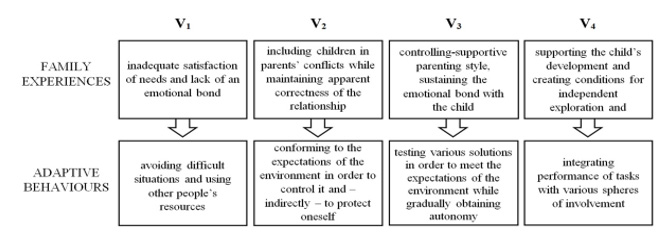
This model does not only identify static categories but captures transitional forms and emergent patterns. It allows for both idiographic forecasting (what path an individual may follow) and analytic generalisation (how types of experiences correlate with behavioural mechanisms).
Strengths and Limitations
The use of a processual qualitative strategy enabled the reconstruction of detailed developmental trajectories that reveal hidden diversity within adaptive functioning. The application of a data-mining algorithm (C4.5) within a qualitative framework also demonstrates how empirical typologies can be derived from complex, context-rich data.
Nevertheless, this approach is methodologically demanding, requiring significant analytical sensitivity and iterative interpretation. It privileges depth over breadth and is not designed to yield generalisable statistical conclusions. Instead, it opens the way for hypothesis generation and further exploration-qualitative or quantitative.
Conclusion
In a rapidly changing cultural and technological landscape, family remains a critical foundation for young people’s adaptive functioning. This study underscores that early family experiences-and their interpretations- contribute significantly to the emergence of diverse adaptive strategies in adulthood. Quasi-adaptive, compliance-based, transitional, and integrated forms of adaptation reflect both the challenges and resources that young adults bring into new life contexts. The findings illuminate not only what young people do in response to developmental demands, but also why they do it, and how early relationships shape their interpretation of risk, responsibility, and relational dynamics. These insights provide a basis for both diagnostic reflection and intervention design, supporting young adults in developing more coherent and context-appropriate strategies for adulthood.
References
-
Robinson VMJ (2008) Forging the links between distributed leadership and educational outcomes. Journal of Educational Administration 46(2): 241-256.
-
Arnett JJ (2000) Emerging adulthood: A theory of development from the late teens through the twenties. American Psychologist 55(5): 469-480.
-
Damon W (2009) The path to purpose: How young people find their calling in life. Simon and Schuster.
-
Bendit R (2006) Youth sociology and comparative analysis in the European Union member states. Papers: Revista de Sociología 79: 49-76.
-
Schwartz SJ, Côté JE, Arnett JJ (2005) Identity and Agency in Emerging Adulthood: Two Developmental Routes in the Individualization Process. Youth & Society 37(2): 201-229.
-
Arnett JJ (2004) Emerging adulthood: The winding road from the late teens through the twenties. Oxford University Press, New York, NY, USA.
-
Whitton SW, Kuryluk AD (2012) Relationship satisfaction and depressive symptoms in emerging adults: cross-sectional associations and moderating effects of relationship characteristics. Journal of Family Psycholology 26(2): 226-235.
-
Rzechowska E (2004) Potentiality in development: a microanalysis of knowledge construction in children’s peer interactions. Wydawnictwo KUL, Lublin, Poland.
-
Herman JL (2000) Violence. Psychological trauma and recovery. GWP, Gdansk, Poland.
-
Hazel N, Oppenheimer C, Technow J, Young J, Hankin B (2014) Parent relationship quality buffers against the effect of peer stressors on depressive symptoms from middle childhood to adolescence. Developmental Psychology 50(8): 2115-2123.
-
Richards JS, Hartman CA, Jeronimus BF, Ormel J, Reijneveld SA, et al. (2019) Beyond not bad or just okay: social predictors of young adults’ wellbeing and functioning (a TRAILS study). Psychological Medicine 49: 1459-1469.
-
Rzechowska E (2021) On the nature of qualitative research in process transformations: the changing man in the changing world. In: Rezaei N (Ed.), Integrated Science: Science without border, Springer, 1: 59-77.
-
Chen X, Liu M, Li D (2000) Parental warmth, control, and indulgence and their relations to adjustment in Chinese children: A longitudinal study. Journal of Family Psychology 14(3): 401-419.
-
Wołpiuk-Ochocińska A, Marmola M (2016) Family relationships and life satisfaction in adolescents at different stages of education. Kwartalnik Naukowy Fides et Ratio 1(25): 149-165.
-
Hipwell A, Keenan K, Kasza K, Loeber R, Loeber MS, et al. (2008) Reciprocal influences between girls’ conduct problems and depression, and parental punishment and warmth: A six year pro-spective analysis. Journal of Abnormal Child Psychology 36(5): 663-677.
-
Ziemska M (2009) Parenting attitudes. Wiedza Powszechna, Warszawa, Poland.
-
Luebbe AM, Mancini KJ, Kiel EJ, Spangler BR, Semlak JL, et al. (2018) Dimensionality of Helicopter Parenting and Relations to Emotional, Decision-Making, and Academic Functioning in Emerging Adults. Assessment 25(7): 841- 857.
-
Lythcott Haims J (2018) The trap of overprotectiveness. Are we doing harm to our children by trying too hard?. In: Rewilak A (Trans.), Dobra Literatura, Słupsk, Poland.
-
Schaffer HR (2006) Social Development. Jagiellonian University Publishing, Krakow, Poland.
-
Padilla Walker LM, Nelson LJ (2012) Black hawk down?: Establishing helicopter parenting as a distinct construct from other forms of parental control during emerging adulthood. Journal of Adolescence 35(5): 1177-1190.
-
Rousseau S, Scharf M (2015) “I will guide you” the indirect link between overparenting and young adults’ adjustment. Psychiatry Research 228(3): 826-834.
-
Burke SEL, Sanson AV, Van Hoorn J (2018) The Psychological Effects of Climate Change on Children. Current Psychiatry Reports 20(5): 35.
-
Stattin H, Kerr M (2000) Parental monitoring: A reinterpretation. Child Development 71(4): 1072-1085.
-
Nelson LJ, Padilla Walker LM, Nielson MG (2015) Is Hovering Smothering or Loving? An Examination of Parental Warmth as a Moderator of Relations Between Helicopter Parenting and Emerging Adults’ Indices of Adjustment. Emerging Adulthood 3(4): 282-285.
-
Padilla Walker LM, Son D, Nelson LJ (2019) Profiles of helicopter parenting, parental warmth, and psychological control during emerging adulthood. Emerging Adulthood 9(2).
-
Ganaprakasam C, Davaidass KS, Muniandy SC (2018) Helicopter Parenting And Psychological Consequences Among Adolescent. International Journal of Scientific and Research Publications 8(6): 7849
-
Schiffrin HH, Liss M, McLean HM, Geary KA, Erchull MJ, et al. (2014) Helping or Hovering? The Effects of Helicopter Parenting on College Students’ Well-Being. Journal of Child and Family Studies 23: 548-557.
-
Marganska A, Gallagher M, Miranda R (2013) Adult attachment, emotion dysregulation, and symptoms of depression and generalized anxiety disorder. American Journal of Orthopsychiatry 83(1): 131-141.
-
Sroufe LA, Egeland B, Carlson E, Collins WA (2020) The development of the person: The Minnesota Study of Risk and Adaptation from birth to adulthood. Guilford Press, New York, USA.
-
Bowlby J (1953) Child care and the growth of love. Pelican Books, Baltimore, USA.
-
Bowlby J (2007) Attachment. PWN, Warsaw, Poland.
-
Ainsworth MDS, Blehar MC, Waters E, Wall S (1978) Patterns of attachment. A psychological study of the strange situation. Lawrence Erlbaum Assocites Publishers, Hillsade.
-
Liberska H, Suwalska D (2011) Attachment style and peer relationships in early adulthood. Psychologia Rozwojowa 16(1): 25-39.
-
Gleeson G, Fitzgerald A (2014) Exploring the Association between Adult Attachment Styles in Romantic Relationships, Perceptions of Parents from Childhood and Relationship Satisfaction. Health 6: 1643-1661.
-
Jurczyk M (2018) Relations between aggressiveness and a feeling of tension, social control and contacts in crime peer environment among high school students. Educational Psychology 56: 42-62.
-
Young JE, Klosko JS, Weishaar ME (2014) Schema Therapy. A practitioner’s guide. GWP, Sopot, Poland.
-
Stoltenborgh M, Bakermans Kranenburg MJ, van Ijzendoorn MH (2013) The neglect of child neglect: a meta-analytic review of the prevalence of neglect. Social Psychiatry and Psychiatric Epidemiology 48(3): 345-355.
-
Reece RM, Hanson RF, Sargent J (2014) Treatment of child abuse: Common ground for mental health, medical, and legal practitioners. Johns Hopkins University Press, New York, USA.
-
Fraley RC, Heffernan ME, Vicary AM, Brumbaugh CC (2011) The experiences in close relationships- Relationship Structures Questionnaire: A method for assessing attachment orientations across relationships. Psychological Assessment 23(3): 615-625.
-
Konieczny P, Cierpiałkowska L (2020) Positive and negative life experiences and changes in internal working models of attachment-a comparative study. Psychiatry Poland 193: 1-20.
-
Lazarus R, Folkman S (1984) Stress, Appraisal, and Coping. Springer, New York, USA.
-
Trzebińska E (2008) Positive psychology. Academic and Professional Publishers, Warsaw, Poland.
-
Mullet E, Girard M, Bakhshi P (2004) Conceptualizations of Forgiveness. European Psychologist 9(2): 78-86.
-
Czajkowski W (2014) Psychological mechanisms of action under security threat. Apeiron. Krakow, Poland.
-
Carretta CM, Ridner SH, Dietrich MS (2014) Hope, hopelessness, and anxiety: a pilot instrument comparison study. Archives of Psychiatric Nursing 28(4): 230-234.
-
Mathews A, Mackintosh B (1998) A cognitive model of selective processing in anxiety. Cognitive Theraphy and Research 22(6): 539-560.
-
Dotson VM, Szymkowicz SM, Kirton JW, McLaren ME, Green ML, et al. (2014) Unique and interactive effect of anxiety and depressive symptoms on cognitive and brain function in young and older adults. Journal of Depression & Anxiety Suppl 1: 22565.
-
Carson RC, Butcher JN, Mineka S (2003) The psychology of disorders. GWP, Gdansk, Poland.
-
Kilichowski L (1994). Anxiety, fear, panic. Causes and prevention. Printer, Poznan, Poland.
-
Bochwic TM (1991) Anxiety in a child. PZWL, Warsaw, Poland.
-
Reed Fitzke K, Withers MC, Ferraro AJ, Lucier Greer M, Duncan JM (2019) Growth curve analysis of self-esteem and depressive symptomatology throughout emerging adulthood: The role of family. Emerging Adulthood 9(2): 91-103.
-
Kinderman P, Tai S, Pontin E, Schwannauer M, Jarman I, et al. (2015) Causal and mediating factors for anxiety, depression and well-being. The British Journal of Psychiatry 206: 456-460.
-
Patalay P, Fitzsimons E (2016) Correlates of mental illness and wellbeing in children: are they the same? Results from the UK Millennium Cohort Study. Journal of the American Academy of Child & Adolescent Psychiatry 55: 771-783.
-
Rzechowska E, Krawiec B (2016) Young adults: life paths in the context of transition. Department of Developmental Psychology, Catholic University of Lublin, Poland.
-
Rzechowska E (2023) Young women’s transition to motherhood: relations with partners and visions of motherhood. Fides et Ratio Scientific Quarterly 3(55): 41-57.
-
Rzechowska E, Szymańska A (2017) Using the Process Transformation Reconstruction strategy to build a psychological scale. In: Paluchowski WJ (Ed.), Diagnosing-Challenges and Contexts, Scientific Publishing House of the Faculty of Social Sciences, Adam Mickiewicz University, Poznan, Poland, pp: 31-58.
-
Nisbet R, Miner G, Elder J (2009) Handbook of Statistical Analysis and Data Mining Applications. Academic Press, Cambridge, MA, USA.
-
Witten IH, Frank E, Hall MA, Pal CJ (2011) Data Mining: Practical Machine Learning Tools and Techniques. In: 3rd (Edn.), Morgan Kaufmann.
-
Gunning D, Aha D (2019) DARPA’s Explainable Artificial Intelligence (XAI) Program: A Retrospective. AI Magazine 40(2): 44-58.
-
Harding S, Read UM, Molaodi OR, Cassidy A, Maynard MJ, et al. (2015) The Determinants of young Adult Social well-being and Health (DASH) study: diversity, psychosocial determinants and health. Social Psychiatry and Psychiatric Epidemiology 50: 1173-1188.
-
Nelson SK, Lyubomirsky S, Kushlev K (2014) The pains and pleasures of parenting: when, why, and how is parenthood associated with more or less well-being?. Psychological Bulletin 140(3): 846-895.
-
Bartholomew K, Horowitz LM (1991) Attachment styles among young adults: a test of a four-category model. Journal of Personality and Social Psychology 61(2): 226- 244.
-
Bradley Geist JC, Olson Buchanan JB (2014) Helicopter parents: An examination of the correlates of over- parenting of college students. Education & Training 56(4): 314-328.
-
Breiman L (2001) Statistical modeling: The two cultures. Statistical Science 16(3): 199-231.
-
Grupp H, Linstone HA (1999) National Technology Foresight Activities Around the Globe: Resurrection and New Paradigms. Technology Forecasting and Social Change 60(1): 85-94.
-
Jarosz E (2001) A home that hurts. Silesia Publishing House, Kielce, Poland.
-
Palitsky D, Mota N, Afifi TO, Downs AC, Sareen J (2013) The association between adult attachment style, mental disorders, and suicidality: findings from a population- based study. The Journal of Nervous and Mental Disease 201(7): 579-586.
-
Pietromonaco PR, Beck LA (2019) Adult attachment and physical health. Current Opinion in Psychology 25: 115- 120.
-
Sirsch U, Dreher E, Mayr E, Willinger U (2009) What does it take to be an adult in Austria? Views of adulthood in Austrian adolescents, emerging adults, and adults. Journal of Adolescent Research 24: 275-292.
- Systematic Review and Meta-analysis Investigating the Prevalence of Depression, Anxiety, Loneliness and Help seeking among International Students
- The Development of Responsibility in Teenage Mothers: A Qualitative Model
- Post-Truth Reality: Worldwide Infodemia and Mental Health Concerns during and Post COVID-19 Pandemic Scenarios
- Psycho-Emotional Rehabilitating Means of Overcoming Extreme and Stressful Impact
- The Paradox of Humbleness, Arrogance and the Concept of Fluid Individuality
- Psychological Self-Help in Conditions of Bombing of Ukraine