
Psychological Self-Help in Conditions of Bombing of Ukraine
The article highlights common and distinctive features of situations of restrictions for children and adults, threats and dangers associated with the COVID-19 pandemic and the full-scale war of Russia against the United States of America and other Western countries on the territory of Ukraine. It was noted that the epidemic and the war have a lot in common, although they differ in the nature of the threat. First, both epidemic and war threaten life, and secondly, in both cases, people's lifestyles are changed to escape threats and dangers, forcing them to stay in shelters, bomb shelters, or to evacuate to other areas. As a result, anxiety states, depression, traumatic and post-traumatic manifestations became epidemic. Russian missile attacks on residential buildings in Ukrainian cities pose mental health risks for those residents who survived. Both in Ukraine and in other countries, this necessitates the development, practical testing and application of psychological self-help methods for children and adults in long-term or acute situations of restrictions caused by the pandemic and the Russian war against the collective West in Europe. Methods of teaching children through adult’s methods and techniques of psychological self-help, which is the basis of prevention of acute stress reactions to the traumatic factors of the Russian war against Ukraine, are revealed. It has been confirmed that in the conditions of war, children grow up quickly, and images of real situations of possible dangers become important stimulus material for modeling versions of future behavior for the sake of saving life. In this regard, children need psychological help in developing the ability to self-regulate in unexpected and threatening situations, in expressing their emotions and understanding the emotions of other people, reducing tension and anxiety. It is stated that the realization of a child's basic need for security can overcome manifestations of distress, anxiety, fear, etc., and the formation of this security requires the necessary psychological training. The most important psychological content of these trainings is the formation of children's ability to psychological self-regulation, maintaining confidence in mutual support in conditions of space and communication limitations.
Boltivets S¹*, Rashkovska I¹ and Sebalo L²
¹State Institute of Family and Youth Policy, Ukraine ²Dragomanov Ukrainian State University, Ukraine
Epidemic and War
The situation of restrictions related to the epidemic of COVID-19 worsened in connection with the full-scale Russian war against Ukraine. The war did not leave a single safe place on the territory of Ukraine, where there was no danger of Russian bombardments, and in front-line areas, there was no danger of artillery shelling. Epidemic and war have a lot in common, although they differ in the nature of the threat. First, both epidemic and war threaten life, and secondly, in both cases, people’s lifestyles are changed to escape threats and dangers, forcing them to stay in shelters, bomb shelters, or to evacuate to other areas. Anxiety states, depression, traumatic and post-traumatic manifestations have become epidemic. Russian missile attacks on residential buildings in Ukrainian cities pose mental health risks for those residents who survived. New York Times international correspondent Megan Specia first encountered Kyiv’s emergency psychologists at the site of a missile strike in October 2022. Their work so moved her that she has been tracking them ever since. APA continues to support and stand in solidarity with psychologists on the ground in Ukraine and those who have fled the country, as well as international relief efforts. See “APA Supports Ukrainian Psychologists” [1].
Public health experts like Dr. Jarno Habicht, the head of the World Health Organization’s office in Ukraine, have warned of the war’s long-term and widespread effects on mental health. In an interview, he said that an estimated 10 million people would most likely develop some form of mental health condition because of Russia’s invasion [1].
Recent studies show the importance of timing of an intervention in the prevention of mental health disorders followed by exposure to traumatic experiences and lend further support to the concept of the “golden hours”. On the second day of the war escalation in Ukraine, a psychological first aid (PFA) digital intervention was launched aimed at promoting the well-being of the population at risk. Chatbot ‘Friend’ provided psychoeducation and self-help guidance on how to cope with war-related stress. About 50,000 users interacted with the Chabot from March 2022 until the end of May 2022 [2, 3].
There are psychological centers in Kyiv and Kharkiv to support children affected by the war, which provide free psychological counselling to children and their parents and their substitutes. These are children who directly suffer from violence, traumatic events and emotional stress, which has a profound psychological impact on their development and future well-being. One of the most tangible consequences of war for children is the loss of close relatives, parents, and friends. Many children remain orphans or are forced to live in destroyed and disorganized conditions, as well as face the danger of explosions, shelling, and minefields. They are forced to live in constant fear for their lives and safety, receive physical or psychological injuries, and some even become disabled as a result of hostilities [4].
The fight against the COVID-19 pandemic coincided with the largest military conflict in Europe since World War II, namely Russia’s full-scale attack on Ukraine. Two studies examined the relationship between anxiety about COVID-19 and war-related anxiety on mental health in the Finnish population. Thus, Finnish participants who reported higher anxiety related to COVID-19 and Russia’s war against Ukraine experienced greater psychological distress [5]. Both in Ukraine and in other countries, this necessitates the development, practical testing and application of psychological self-help methods for children and adults in long-term or acute situations of restrictions caused by the pandemic and the Russian war against the collective West in Europe.
Psychological Self-Help before the Arrival of Rescue Teams
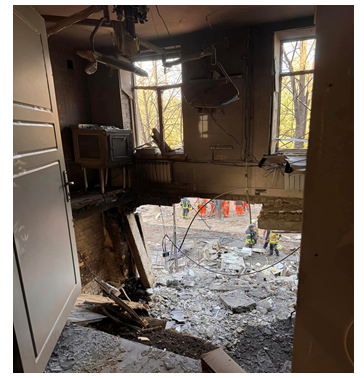
Teaching children, through adults, methods and techniques of psychological self-help is the basis of preventing acute stress reactions to the traumatic factors of the Russian war against Ukraine: bombardment with ballistic missiles, guided aerial bombs, attack drones, rocket and other artillery, etc. A typical reaction of most children and adolescents is to seek protection from adults, to try to hide behind them or with them in situational available shelters: in the basements of residential buildings or between two of the most massive walls. In anticipation of bomb, missile, or other strikes, and especially between explosions, children and adults who have remained alive show pronounced psychophysiological reactions to distress. Such reactions of the body include strong tremors, partial or complete disorganization of consciousness, motor disinhibit ion or vice versa - numbness, nausea and vomiting, increased urge to urinate or urinary incontinence, etc. If adults are not at home, children look for them on the phone, need to be in constant contact, and in case of loss, they may experience panic attacks, the memory of which remains for the whole future life. In this regard, familiarizing adults and their children with methods of psychological self-help includes understanding the possibilities and limits of physical security during war: evacuation rules from the combat zone; behavior of parents with children during evacuation; rules of conduct in case of detection of explosive objects, etc. The regularity of the prevention of excessive psychogenic reactions is that the closer the simulated situation is to the real one, the more mental resources both the child and the adult have to overcome the unusual and therefore unexpected in real conditions. As an example, we present a real picture of the destruction of a hospital in the city of Sumy with the collapse of the ceilings, but the preservation of the walls, which allowed to save part of the patients who were near them. The configuration of the consequences of the Russian bombing of a hospital in the city of Sumy is shown in Figure 1.
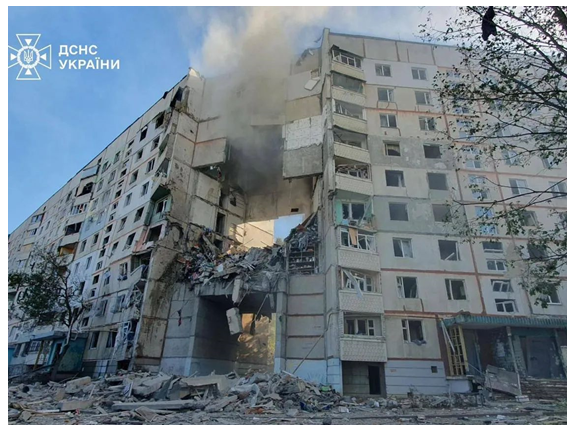
The clinical practice of the rescue teams that arrive to unblock people from under the rubble and provide psychological and medical assistance to those who remained alive testifies to the effectiveness of the elements of art therapy for simulating possible threats and the subsequent overcoming of their consequences. Art therapy exercises, including isotherapy, fairy-tale therapy, phototherapy, image therapy, music therapy, theatre therapy, have a special preventive value for children. A powerful and effective method of art therapy is a preventive game, which is used to simulate self-rescue options in the event of a stay in a residential building in situations of possible collapse, limited space, and impossibility to independently exit the emergency room, blockage, etc. The real situation of a Russian ballistic missile hitting an apartment building in the city of Kharkiv is presented in Figure 2.
Post-traumatic art therapy of the experienced event is effective for reducing anxiety, objective localization of obsessive images of the distressing event, restoration of the usual self-perception and well-being. With the help of game images, the child has the opportunity to regulate his emotions and understand the emotions of others increase his own self-esteem, improve relationships with peers and adults. Most art therapy tools have no age restrictions, are quite easy to use, bring both children and adults together at the same time. In particular, the most important psychological property of the resilience of relationships between children and adults is complete mutual understanding in critical situations, the ability to instantly coordinate actions and deeds. In the conditions of war, children grow up quickly, and images of real situations of possible dangers become important stimulus material for modelling versions of future behavior in order to preserve life. Thus, Figure 3 shows the results of the destruction by the explosion of the Russian ballistic missile of the stairs leading to the exit from all floors.
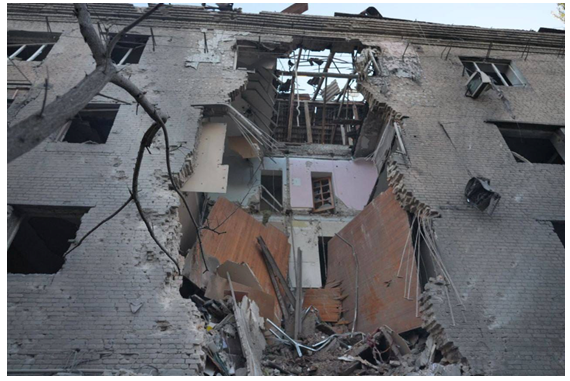
Children, together with their parents, consider and discuss possible models of rescue from the upper floors of a dilapidated building. At the request of the children, the ways of exiting the building can be depicted in a theatrical form.
Saving a Child Alone
The psychological readiness to master a situation in which a person has never been before is characteristic of most war situations and is especially emotionally significant for children. Since Russia is waging a war for the total destruction of all Ukrainians, children’s facilities, which include kindergartens, schools, hospitals, residential buildings of families with children, are priority targets for Russian forces. In this regard, children need psychological help in developing the ability to self-regulate in unexpected and threatening situations, in expressing their emotions and understanding the emotions of other people, reducing tension and anxiety. If the child’s basic need for security is fulfilled, he is able to overcome manifestations of distress, anxiety, fear, etc. To form this security, we applied the necessary psychological trainings. Basic psychological training for adults together with children included following instructions:
- take a comfortable position in space, preferably with a fixed support;
- Restore even breathing. If possible, perform the exercise standing on the floor to better feel the space through the body. 1. Concentrate on your own body. Estimate how much space it currently occupies in space, demonstrate it with free movements of arms and legs. 2. Slowly raise your hands up, stretch. Spread your arms to the sides, straighten your shoulders. Keeping your hands at your sides, raise your hands as if you are resting your palms on an invisible support. Make several right-left turns. Keep your attention on the palms that outline the circle. 3. Estimate the dimensions of the room in which you are. Draw an imaginary square in the air with your hands, such that it completely protects your body.
It is important to keep everything within arm’s reach of each training participant. For this, the participants extend their hands and connect their personal protective spaces, gaining confidence in mutual support, which from now on will be preserved in everyone’s feelings for the future.
Breathing techniques, which have many varieties, are of important psychophysiological importance for the formation of resilience techniques in the conditions of an emergency situation with limited space. In their application, it is important to take into account individual indicators and capabilities.
- Option 1. Take a deep breath through your nose, hold your breath and mentally count to three. Then slowly exhale through your mouth. Watch the tension decrease with each breath. Repeat 7-8 times.
- Option 2. Inhale, slowly exhale. Then slowly inhale deeply and hold your breath for three seconds, exhale. Repeat six times - and you will be sure that you have become calmer.
- Option 3. Breathe deeply - put one hand on your stomach and the other on your chest. Inhale slowly and deeply into your stomach, trying to raise your hand on your stomach as if you were blowing up a balloon or ball. Try not to move your hand on your chest, breathe only with your stomach. Exhale slowly, feeling the hand on the stomach slowly lower like a balloon or ball deflating.
- Option 4. Breathing to the count of 1-2-3: inhale slowly, counting to three. Then hold your breath for a while and exhale slowly and gently. The result should be a slowing down of the breathing rate while maintaining a sufficient depth of it and a corresponding relaxation of the body.
Training the Protective Properties of Children’s Imagination
Exercise “Bird”. Lower your arms down and imagine that both arms are filled with energy for flight. Slowly, clench your hands into fists as hard as possible. Feel how tense they are. Now imagine that you are spreading your wings. Imagine that you are a bird whose wings have been folded and pressed firmly against its body. Bring your shoulder blades together, strain your back as hard as you can. You feel the tension. Now slowly, without haste, release your muscles. Your wings spread, become strong and light, weightless. You feel relaxed. Repeat the exercise 5-7 times.
Exercise “Pleasant Calm” Sit comfortably, close your eyes. Breathe in and out calmly. Imagine that you are sailing in a boat. You are far from home. All problems and worries remained there, and here you feel free, there is no burden of responsibility. Your boat is calmly carried by the waves. You enjoy the calmness, rising and falling with the wave. You feel the pleasant warmth of the sun’s waves. You are calm and relaxed. You feel your breathing: inhalation, exhalation... Warm, soft peace spreads throughout your body. You become freer... The gaze stops on a small island. You are attracted by the appearance of the island, you want to find peace, protection, comfort there. The boat approaches him. And here you go ashore. Feet feel the warmth of sand - soft and pleasant. You lie down, relax. You look at the clouds and feel the warmth of the sun’s rays. This is your haven. Enjoy your sensations. Remember that you can return here at any time. This place will give you a feeling of confidence, strength, and security. Now say goodbye to this place, it’s time to come back to reality. Slowly open your eyes.
The given breathing techniques and exercises do not require any equipment. Who cannot be next to the child in an extreme situation? This accustoms her to physical self- sufficiency, the ability to concentrate on her own capabilities, and not to rely on other people, access to which will be impossible in conditions of blockage, destruction of house structures or shelter.
Psychological Perspectives on Children’s Ability to Self-Regulate
Children need psychological help in forming the ability to self-regulate in unexpected and threatening situations, in expressing their emotions and understanding the emotions of other people, reducing tension and anxiety. For the formation of this security, the necessary psychological trainings are used, among which the most important is the formation of the ability to psychological self-regulation, maintaining confidence in mutual support in conditions of space and communication limitations. The given psychological trainings accustom children to physical self-sufficiency, the ability to concentrate on their own capabilities, and not to rely on other people, access to which will be impossible in conditions of congestion, destruction of house structures or shelters.
Conclusion
The Great War of Russia against the United States of America, which began on February 24, 2022 with the Russian attack on Ukraine, has the officially declared aggressive goal of denazification of the Ukrainian nation, i.e. the destruction of all Ukrainians, and demilitarization, i.e. depriving the Ukrainian State of its ability to defend itself. In the context of the COVID-19 pandemic, the Russian military invasion of Ukraine led to significant casualties among adults and children who did not believe in the possibility of a full-scale war in Europe in the 21st century, and hoped for the mercy of Russian soldiers and officers. But these hopes turned out to be in vain after mass shootings of Ukrainian adults and children, their destruction with automatic weapons, artillery, mortars, as well as daily bombardments, rocket and drone attacks on residential buildings of families with children, hospitals, kindergartens, schools and other places where adults from children All this necessitated the development and practical testing of methods of psychological self-help for children and adults in long-term or acute situations of restrictions caused by the pandemic and the Russian war against the collective West in Europe. Teaching children through adults methods and techniques of psychological self-help is the basis of prevention of acute stress reactions to the traumatic factors of the Russian war against Ukraine.
References
-
Specia M (2023) When missiles strike Ukraine’s capital, these psychologists race to help. American Psychological Association 54(7): 1-22.
-
Lahutina S, Frankova I, Gruen M, Vermetten E, Zohar J, et al. (2024) A digital self-help tool to promote mental well-being for Ukrainians affected by war-Assessing predictors of stress. Neuroscience Applied 3: 104089.
-
Guz U (2023) Kyiv opens psychological center to support war-affected children. Ukrainian solutions media, Rubryka.
-
Celuch M, Savolainen I, Oksa R, Oksanen A (2023) Psychological Distress and Perceived Stress Outcomes of Anxieties Related to COVID-19 and Russia’s Attack on Ukraine. Journal of Loss and Trauma 29(1): 1-26.
- Systematic Review and Meta-analysis Investigating the Prevalence of Depression, Anxiety, Loneliness and Help seeking among International Students
- Family Experiences and their Interpretations as a Source of Adaptive Behaviour in Young Adults: A Qualitative Model of Adaptive Behaviour
- The Development of Responsibility in Teenage Mothers: A Qualitative Model
- Post-Truth Reality: Worldwide Infodemia and Mental Health Concerns during and Post COVID-19 Pandemic Scenarios
- Psycho-Emotional Rehabilitating Means of Overcoming Extreme and Stressful Impact
- The Paradox of Humbleness, Arrogance and the Concept of Fluid Individuality