
The Development of Responsibility in Teenage Mothers: A Qualitative Model
A case study analysis was conducted to develop a comprehensive empirical model of transitions in adolescent development, essential for understanding teenage mothers’ responsibility. Data used to reconstruct individual life trajectories were collected through exploratory interviews and questionnaires and analyzed using the Strategy of Process Transformation Reconstruction (PTR). PTR is an innovative methodological tool that integrates qualitative case analysis with Quinlan’s C4.5 algorithm to enable generalizations. The resulting empirical model identifies six distinct variants of teenage motherhood, each reflecting specific transformations in the sense of responsibility. These transitions are shaped by cognitive and emotional development, influencing both identity formation and caregiving behaviors. In Variants M1-M2, teenage mothers internalize their role, integrating responsibility for both themselves and their child through proactive caregiving, future-oriented planning, and emotional bonding. These stages reflect the emergence of reflective responsibility, where decision-making is guided by an evolving sense of self-efficacy and attachment to the child. In Variants M3-M4, responsibility becomes more segmented, driven by external expectations rather than intrinsic motivation. While personal accountability and caregiving duties are acknowledged, decision-making often lacks long-term planning and emotional investment, reflecting a more task-focused approach. Finally, Variants M5-M6 represent a stage of rejecting motherhood, characterized by an avoidance of responsibility and delegation of childcare to others, often due to emotional distress, cognitive overload, or overwhelming social pressures. This model highlights the dynamic nature of responsibility development in teenage mothers, illustrating how cognitive and emotional processes shape their caregiving roles. By recognizing these diverse trajectories, the study provides valuable insights into intervention strategies that support teenage mothers in fostering both personal development and stable caregiving practices.
Introduction
Adolescence is a transformative period characterized by rapid physical, cognitive, and social changes that shape an individual’s sense of self and place in the world. It is a stage of exploration, where emerging autonomy, evolving identity, and increasing responsibilities intersect in complex ways [1]. For most adolescents, this process unfolds gradually, allowing time for self-reflection and adaptive decision- making [2]. However, teenage mothers experience a unique and often accelerated trajectory of development, as they must navigate both their transition to adulthood and the immediate demands of parenthood.
Becoming a mother at a young age intensifies developmental challenges, requiring teenage mothers to assume caregiving responsibilities while simultaneously shaping their identity and future aspirations. This dual process introduces tensions between personal growth and maternal obligations, making the development of responsibility a central aspect of their experience. Understanding this dynamic necessitates an examination of the foundational elements of adolescent development - identity formation, autonomy, and responsibility-and their interaction within the context of teenage motherhood. The following section provides a theoretical overview of these developmental constructs, emphasizing their significance in shaping teenage mothers’ experiences and setting the stage for a deeper exploration of responsibility as a key component of their transition into adulthood.
Dynamics of Developmental Changes in Adolescence
Adolescence represents a pivotal stage in human development, marked by profound biological, psychological, and social transformations. These changes create a dynamic interplay of factors that shape an individual’s sense of identity, relationships, and future trajectories [3]. This section explores the foundational aspects of adolescent development, emphasizing their role as a backdrop to the challenges of teenage motherhood and the evolving construct of responsibility. Identity Development, Autonomy, and Responsibility. Adolescence is a period of significant self-exploration, during which individuals work to establish a sense of identity. This stage involves integrating past experiences with future aspirations and social expectations [4, 5].
This process involves experimentation with roles, values, and beliefs, which can manifest as both opportunities for growth and sources of internal conflict. The fluidity of identity during this period underscores the importance of supportive environments that allow adolescents to explore and refine their self-concept [2, 6].
Autonomy, closely tied to identity development, emerges as adolescents seek to assert independence and make decisions that reflect their evolving self-concept [1]. This quest for autonomy often results in tension with authority figures, such as parents and teachers, as adolescents challenge established norms and expectations [7]. However, the successful negotiation of autonomy fosters a sense of competence and self-efficacy, critical components of responsibility [8]. Responsibility is a multifaceted construct that begins to crystallize during adolescence [9]. It encompasses accountability for one’s actions, the ability to make informed decisions, and a commitment to fulfilling personal and social obligations. The development of responsibility is shaped by a combination of intrinsic factors, such as cognitive maturity and emotional regulation, and extrinsic influences, including familial expectations, cultural norms, and peer feedback. Adolescents’ engagement in activities that require accountability, such as part-time jobs or caregiving roles, can further reinforce this developmental trajectory. Importantly, the process of taking responsibility also interacts with the adolescent’s growing autonomy and identity, as these elements collectively shape their transition into adulthood [10, 11, 12].
In the case of teenage mothers, responsibility takes on a unique dimension. Entering the role of a parent often requires young women to accelerate their maturation process while simultaneously addressing developmental tasks typical of their age, such as identity formation, autonomy, and future planning. The simultaneity of these processes leads to a redefinition of priorities and accelerated development of a sense of responsibility, which can serve as both a source of growth and a burden [9, 13].
In the context of teenage motherhood, the process of responsibility formation becomes particularly pronounced. The necessity of making decisions that impact both the mother’s and the child’s future accelerates the development of responsibility. Teenage mothers are often required to prioritize caregiving tasks over personal aspirations, which can lead to a profound redefinition of their identity and goals [14]. This process highlights the intricate connection between identity, autonomy, and responsibility, as young mothers must manage the dual demands of self-discovery and caregiving.
Forming Future Developmental Plans. Adolescents begin to envision their future by creating aspirations related to career paths, educational achievements, and personal relationships. These developmental plans require self- discipline, resilience, and an emerging sense of responsibility [1, 2, 15]. The ability to envision and strive toward these goals is influenced by both individual capacities and external support systems, which play a crucial role in their success.
Teenage Motherhood: A Complex Intersection
Building on this developmental foundation, teenage motherhood introduces additional layers of complexity.
Adolescents typically experiment with different roles, values, and aspirations, gradually integrating these elements into a coherent self-concept. Teenage mothers, however, face an accelerated identity transition, where caregiving responsibilities redefine their priorities and future outlooks [16]. Cognitive and Emotional Dimensions of Responsibility Development. The development of responsibility in adolescence is deeply intertwined with emotional regulation and cognitive capacities. Emotional engagement plays a crucial role in the ability to sustain responsibility, as teenage mothers must balance stress, uncertainty, and attachment to their child while making critical life decisions. Cognitive maturity, including the ability to anticipate long-term consequences and make strategic decisions, also influences the depth and stability of responsibility. When these cognitive and emotional aspects are underdeveloped, responsibility may become fragmented or externally imposed rather than internalized [17]. The interplay of cognition and emotion affects how responsibility is perceived and enacted. Teenage mothers who demonstrate stronger emotional resilience and problem-solving skills are more likely to internalize responsibility, making caregiving decisions based on long- term well-being rather than immediate survival needs. Conversely, those who experience high stress, emotional exhaustion, or cognitive overload may struggle to sustain a proactive approach to caregiving, resulting in inconsistent or fragmented responsibility [18].
The Role of Social Support in Responsibility Development. Family and peers play a pivotal role in shaping the development of responsibility in teenage mothers [5]. Supportive families provide emotional reinforcement, financial assistance, and caregiving guidance, allowing for smoother transitions into maternal responsibility. However, excessive parental control or over-reliance on external caregivers may inadvertently delay the development of independent caregiving responsibility [19, 20]. Peer relationships can serve as both a positive and negative influence. Supportive peer groups encourage responsible caregiving behaviors and shared experiences, reinforcing a sense of maternal identity [21]. Conversely, environments that prioritize adolescent social norms over parental roles may lead to disengagement from caregiving responsibilities.
Diverse Experiences of Pregnancy and Caregiving. Teenage mothers experience pregnancy and caregiving in varied ways, shaped by familial support, cultural expectations, and individual coping strategies [22]. For some, pregnancy may offer a sense of purpose, while others face feelings of shame, fear, or isolation [23, 24]. Similarly, caregiving can range from being a source of personal growth to a significant burden, depending on the availability of resources and social support [25]. Maternal Responsibility in Context. Maternal responsibility becomes a central challenge for teenage mothers as they balance their developmental needs with caregiving demands. This dual role requires advanced emotional regulation, decision-making, and long- term planning. While some young mothers embrace these challenges as opportunities for personal growth, others may struggle, particularly in the absence of adequate support systems [26]. The ability to manage these responsibilities profoundly influences their sense of identity and autonomy.
The formation of maternal responsibility is deeply intertwined with identity development [27]. Teenage mothers often redefine their self-concept through caregiving, adopting new priorities and values that reflect their parental responsibilities. For many, this process accelerates their sense of maturity, as they confront complex decisions impacting both themselves and their children. However, this rapid transition can also create tension, as the demands of caregiving often conflict with their own developmental needs and aspirations [28]. In the context of teenage motherhood, the sense of responsibility assumes a critical role as a compensatory mechanism for addressing the challenges of simultaneously fulfilling developmental and parental roles. Studies suggest that young mothers who develop a sense of agency and accept responsibility for their situation are better equipped to handle the pressures of motherhood, fostering their continued growth and adaptation.
The Interplay of Adolescent Development and Teenage Motherhood
Teenage mothers must simultaneously balance their own developmental tasks and the demands of parenthood, which often reshape their trajectories in profound ways. The intersection of adolescent developmental tasks - identity formation, autonomy, and responsibility - with the realities of teenage motherhood creates a unique set of challenges [29]. Teenage motherhood often accelerates the development of responsibility and identity, as young mothers must juggle both self-discovery and caregiving demands. This dual role can foster emotional and cognitive growth but may also heighten stress and vulnerability [30].
For some teenage mothers, the responsibilities of motherhood provide a sense of purpose and identity, enabling them to redefine their priorities and establish long-term goals. Conversely, the overlapping pressures of adolescence and parenthood can amplify feelings of inadequacy and dependency, particularly without adequate social and financial support [31]. Autonomy, a key developmental task, is often renegotiated, with young mothers balancing their desire for independence against practical caregiving needs [32].
This interplay also affects the developmental outcomes of the child, as the mother’s ability to balance her growth with caregiving responsibilities influences the quality of parenting. Support systems, including family, community resources, and educational opportunities, play a critical role in mediating these challenges and fostering positive outcomes for both the mother and child [16]. This discussion highlights how teenage motherhood intersects with adolescent developmental processes, providing a nuanced understanding of responsibility within this context. These insights set the stage for examining the construct of responsibility as it pertains to teenage mothers and their children.
Methodology
The Problem of Shaping Responsibility in Teenage Mothers
The intersection of adolescent developmental tasks and the transformative experience of motherhood highlights the complexity of shaping the sense of responsibility in teenage mothers. This dual process requires young mothers to navigate the integration of normative developmental milestones-such as identity formation and autonomy- with the unique demands of caregiving and maternal responsibilities.
Key questions emerge: How is the sense of responsibility shaped and what transformations does it undergo in teenage mothers during pregnancy, childbirth, and caregiving? What are the internal variations in the processes of shaping responsibility in teenage mothers? How do teenage mothers reconcile their developmental needs with the responsibilities of motherhood?
Given the absence of a unified theory that comprehensively explains the variability in responsibility formation, this study seeks to address this gap. By identifying internal variations and corresponding patterns of teenage motherhood, this research aims to construct a qualitative model that illustrates the diverse processes through which responsibility develops in teenage mothers. Positioned within the broader framework of adolescent development and motherhood, this model provides insights into the unique challenges and opportunities faced by teenage mothers. Such research possibilities are enabled by a processual approach (see below: the PTR Strategy [33]).
Data Collection
Research Group. The study involved 86 girls who gave birth between the ages of 15 and 19 (mean age at childbirth: 17.49 years, mode: 17). The fathers’ mean age was 20.91 years (mode: 19). At the time of the study, the children were between 1 and 4 years old. The participants constituted a diverse group regarding educational status, family circumstances, and relationship status, with varying characteristics of their partners. These attributes were integral components of the dataset. Scope of Inquiry. In processual research, the direction of inquiry is defined by:
- defining the research subject: constructing individual life paths and, within their context, the experiences of teenage motherhood. Life paths were reconstructed based on detailed analyses of personal development (including visions of the future) and references to oneself and the child, analyzed within the context of close relationships and areas of activity during the pre- pregnancy period, pregnancy, and post-birth caregiving;
- dimensions defining the space of constructing life paths and experiencing teenage motherhood, including: (1) developmental and personal characteristics describing the adolescent’s activity as expressed in her actions or declarations (e.g., goals, plans, visions of the future, values, assessments, interpretations), and (2) characteristics reflecting experiences related to pregnancy, references to the child, and assuming the maternal role, such as bodily experiences, early relationships, the pregnancy itself, caregiving tasks, and building bonds with the child.
Research Tools: Interview and Questionnaire. Idiographic data about participants were collected using exploratory interviews (referred to as “trailing interviews”) and personal questionnaires providing standard biographical data [34, 35, 36, 37]). Both tools aimed to collect as much potentially significant information as possible from the researcher’s perspective. The trailing interview, an exploratory approach, focused on capturing the unique experiences of teenage mothers. It enabled participants to express themselves freely, revealing their subjective understanding of their responsibility for themselves and their child. The term “trailing interview” refers to a semi-structured interview method in which the researcher allows the participant to guide the discussion’s flow while maintaining focus on key themes. Often, participants initiated new topics themselves, lending the conversation a natural, often therapeutic character. The responses allowed for the identification of manifestations of responsibility in teenage mothers for themselves and their child and tracking the changes in these manifestations over time.
Research Procedure: The research was conducted individually at a location chosen by each participant. With their consent, the sessions were recorded. Participants were recruited using the snowball sampling method. The interviews were conducted by developmental psychology seminar students trained and supervised by Rzechowska and her research team. The study protocol conformed to the ethical and data security standards for psychological research. Respondents’ anonymity was further secured by coding the data with letters and numbers.
The PTR Strategy: Data Analysis and Its Levels
The processual research approach adopted in this study enabled the development of the Reconstruction of Process Transformations (PTR) Strategy [34, 35, 36, 37]. This strategy allows researchers to move beyond hypothetical dependencies formulated within existing theories and theoretical models. It is particularly useful in cases where knowledge about a phenomenon is incomplete and where there are challenges in satisfactorily conceptualizing a complex problem, thereby enabling access to its origins and mechanisms. The PTR Strategy is focused on empirically reconstructing the phenomenon in its diversity, while preserving the original properties of the studied subjects at each stage of analysis.
The analysis framework is presented in Figure 1. The central part of the framework consists of two levels of data analysis: the level of single cases (case study) and the level of case sets. The outer sections of the framework include information about the operations performed by researchers at each level.
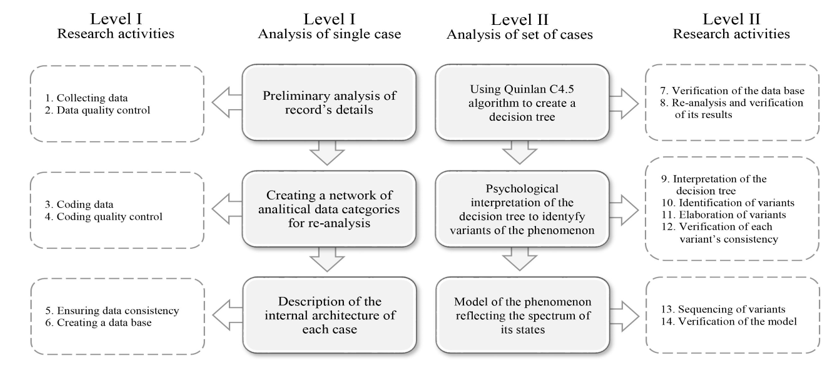
Idiographic analysis of single cases (Level I) serves as the foundation for formulating generalizations and constructing a multi-variant model of the phenomenon, revealing its internal diversity (Level II). Level I: An Analysis of a Single Case. The analysis aimed to uncover the internal architecture of respondents’ life paths (pre-pregnancy period, pregnancy, and caregiving period), including: their approach to current activities, plans, values, motivations, and interpretations, as well as building references to themselves and their child in the context of shaping responsibility for both themselves and their child. The idiographic analysis encompassed the following steps: • Transcription of interviews and preliminary analysis of details in the records. The interviews were transcribed, and the transcripts were supplemented with interviewers’ comments on non-verbal reactions from participants (e.g., pauses before answering, sighing, speaking in a hushed tone, avoiding eye contact, etc.), which were instrumental in categorizing responses.
- Developing a network of analytical data categories for re-analysis. The data were reviewed multiple times, categorized, and organized based on empirically established criteria. During this process, some categories were merged, while new ones were created as needed. This iterative analysis resulted in the creation of a comprehensive grid of analytical data categories.
- Describing the internal architecture of each case. Each transcript was recoded using the network of analytical data categories - empirically defined attributes and their values. This standardization of records enabled objective comparisons between cases.
Level II: An Analysis of Sets of Cases. The analysis aimed to facilitate the creation of a model of the phenomenon under study. The following actions were undertaken:
- Using Quinlan’s C4.5 algorithm to create a decision tree. The cases were classified into groups based on the similarity of their characteristics using the C4.5 algorithm, one of the data mining methods [38]. This algorithm operates on the assumption that a large dataset may contain latent knowledge that conventional statistical methods cannot uncover. Consequently, a decision tree can reveal patterns that are neither predicted by theory nor initially apparent to the researcher [39].
- Psychological interpretation of the decision tree to identify variants of the phenomenon. The interpretation of the decision tree in this study involved classifying teenage mothers with shared characteristics, as determined by the structure of the tree, to reconstruct different ways in which their sense of responsibility for themselves and their child developed.
- Constructing a model of the phenomenon. Based on the above approach, six variants of respondents were identified (M1-M6) and compared with one another, allowing for an analysis of their internal structures. These variants were then analyzed and organized to construct a model that illustrates the course of the phenomenon (e.g., increasingly mature relationships with partners and evolving visions of motherhood), its internal diversity, and contextual influences.
Assessment of Research Credibility. The credibility of the research was ensured through: (1) verification by independent judges who assessed the data coding, structuring, and interpretation (Level I), and evaluation of the decision tree’s accuracy (error rate: 6,5%, significantly below the acceptable threshold of 25%) and internal consistency (each variant was assessed for coherence, along with the overall organization of the constructed model) (Level II).
Results
The empirical analysis identified six distinct variants of responsibility formation among teenage mothers. These variants reflect the dynamic nature of responsibility development and its manifestations across three critical periods: before pregnancy, during pregnancy, and after childbirth. Each variant underscores different strategies for integrating responsibility into the identities of teenage mothers.
Combined Responsibility for Oneself and the Child Integrated into Life Plans (Variants M1-M2)
Variant M1: A Subjective Relationship with the Child. Integrated Responsibility for Oneself and the Child within the Context of Proactive Life Planning.
Before Pregnancy: Teenagers categorized as M1 reflected on their future, prioritizing employment and viewing education as a path to career goals. They maintained warm, conflict- free family relationships and naturally engaged in household duties. Their partnerships were stable.
During Pregnancy: Pregnancy prompted M1 mothers to prioritize health, ensuring the child’s safe development by seeking medical care, following doctors’ recommendations, and avoiding substance use. Early on, they felt responsible for the unborn child and recognized the obligations that parenthood would bring. They aimed to secure favorable living conditions, including financial stability, and considered employment. Even during pregnancy, they integrated anticipated childcare into career plans, aligning work-related goals with child-focused actions to provide a livelihood. Education remained a priority - they attended school regularly and fulfilled academic obligations. Their family of origin became increasingly significant, shifting their earlier career-centered focus. They also felt responsible for transforming their relationship with the child’s father into an independent family unit.
After Pregnancy: After childbirth, M1 teenagers thoughtfully considered their future, feeling a broad sense of responsibility for their decisions and consequences. They formulated long-term plans that integrated career-building, childcare, and maintaining a stable partnership. They took increasing responsibility for their child’s development, safety, and material well-being while ensuring proper maternal care. Establishing an independent household with the child’s father became a key goal. Their integrated approach to life was evident in their continued commitment to education, seeing it as essential for future employment. While holding specific career aspirations, they recognized these as long- term goals, with their immediate focus on securing a job, particularly for financial stability.
Variant M2: The Child as the Object of Maternal Care Engagement. Responsibility for Oneself and the Child as Fulfilling the Child’s Needs Integrated with Meeting One’s Own Needs. Adaptation of Life Plans.
Before Pregnancy: M2 teenagers had a realistic outlook on the future, prioritizing school as a step toward career goals while actively participating in family life and household duties. They were in informal partnerships.
During Pregnancy: M2 mothers systematically monitored their health, engaging in self-care to support the child’s well- being. They sought knowledge about prenatal development and pregnancy-related bodily changes, demonstrating commitment to both their health and the child’s. However, they did not take steps to secure material resources for childcare.
Their prenatal bonding included singing, stroking, and “conversations” with the unborn child, forming an early subjective connection. Their sense of responsibility centered on creating favorable developmental conditions. Pregnancy led to a shift in priorities-while they remained diligent in school, family gained new significance. Previously, home and family were linked to daily chores, but now they reflected on their deeper role, recognizing its growing importance.
After Pregnancy: After childbirth, M2 mothers felt supported by their families and adapted to motherhood while living in their family homes. They maintained relationships with the child’s father but did not establish independent households. They prioritized proper childcare and favorable developmental conditions, fully embracing their maternal role. Their responsibilities included hygiene, caregiving, and ensuring the child’s well-being, alongside reflecting on long- term parenting goals.
Motherhood became a catalyst for personal growth, fostering maturity and responsibility. These teenagers saw it as an opportunity for self-development and a turning point for seriously considering their future. Education remained important, and a newfound awareness of material needs emerged, reinforcing their sense of financial responsibility for the child and family.
Responsibility as Bearing Consequences, Based on a Sense of Duty (Variants M3-M4)
Variant M3: Focus on Oneself and Personal Independence with a Task-Oriented Approach to the Child and Efficient Care. Responsibility for Oneself Linked to a Sense of Duty and Bearing the Consequences of One’s Actions.
Before Pregnancy: M3 teenagers focused on their future careers, viewing school as essential for maturity and material success. They felt responsible for their education and were committed to academic work. Their pre-pregnancy narratives centered on schooling, and they reported no significant changes in family relationships during pregnancy or early motherhood. They often emphasized helping their families rather than relying on them.
During Pregnancy: School remained their primary focus, with health seen as self-care rather than concern for the child’s well-being. Their approach to motherhood was task- oriented, guided by a sense of duty rather than emotional bonding. They planned to independently care for their child and actively sought information on childcare, but without emphasis on seeking external support or fostering an emotional connection with the child.
M3 teenagers asserted they took responsibility for their actions from the moment of pregnancy, reinforcing their pragmatic approach. They acknowledged concern for the child’s future but framed it in terms of financial security, expressing an early desire to find employment. However, they reported experiencing their first real sense of responsibility only at childbirth. Their post-birth narratives notably lacked references to the child itself.
After Pregnancy: M3 teenagers competently fulfilled their maternal duties, prioritizing hygiene, safety, and time spent with the child. They expressed concern for the child’s development, upbringing, and happiness but emphasized employment as the key to independence. Work was not only a financial necessity but also a source of personal satisfaction and social interaction.
School became even more significant post-birth, aligning with their career aspirations. They defined personal development in terms of financial stability and securing a favorable future for themselves and their child.
Variant M4: Focus on Pregnancy-Related Discomforts and Limitations. Childcare as a Burdensome Duty and the Necessity of Bearing the Consequences of One’s Actions. Declaring Responsibility.
Before Pregnancy: M4 teenagers described their education in immediate terms-attending classes, preparing for lessons, and completing homework-without long-term career planning. While they mentioned future employment, their focus remained on the present. Family members appeared in their narratives as figures primarily fulfilling their needs.
During Pregnancy: M4 teenagers’ accounts centered on personal experiences, emphasizing pregnancy-related discomforts and limitations. They recognized early obligations tied to their condition, such as maintaining their health (implicitly including the child’s health) and avoiding substances. However, direct references to the child were scarce, and pregnancy was framed as bearing the consequences of their actions rather than preparing for motherhood. They declared a sense of responsibility and independence but primarily in relation to self-protection and personal well-being.
Education was perceived as an obligation rather than a means to an envisioned future. They also expressed a vague desire for independence and employment but without concrete plans. The child remained a peripheral element in their narratives.
After Pregnancy: Post-birth, M4 teenagers claimed responsibility for the child’s health and safety, but their narratives continued to emphasize personal effort and burdensome childcare duties. They framed motherhood as a necessity rather than an engagement, linking it to accepting the consequences of their actions. Only after childbirth did they begin to describe family members in a more positive light.
While they vaguely referenced independence and employment as concerns for the child’s future, their aspirations remained unclear. Some discontinued their education, signaling a weaker commitment to long-term planning.
Rejection of the Child’s Birth and Avoidance of Motherhood. Delegating Responsibility to Others (Variants M5-M6) Variant M5: Dissociated Personal Behaviors: Sabotaging Pregnancy While Simultaneously Seeking Information. The Child as “Something That Is Not Me” and an Imposed Burden. Uninvolved Care and Delegating Responsibility to Others. Rejection of Responsibility for the Child.
Before Pregnancy: M5 teenagers centered their narratives on themselves, declaring responsibility for their behavior and choices. They claimed to consider their future and employment, as evidenced by their school attendance.
During Pregnancy: Their behaviors were dissociated-while neglecting their health and not feeling responsible for their actions, they simultaneously sought childcare information and claimed a sense of responsibility for supporting the child. However, their statements lacked direct personal references to the child.
When considering their future during pregnancy (implicitly including the child), they focused on securing employment to support themselves, despite being in partnerships. They equated this with responsibility but did not specify to whom or how it should be fulfilled.
After Pregnancy: Post-birth, M5 teenagers described actions toward the child as demonstrations of responsibility, despite previous emotional detachment. They signaled concern for the child’s upbringing but framed responsibility as an imposed burden, referring to the child as “something that is not me.” Since they did not identify with motherhood, they expected assistance, particularly from their own mothers, whom they frequently relied on.
Despite their detachment, they often declared intentions to pursue education and employment to secure a good future for the child and a happy family life.
Variant M6: Lack of Identification with Motherhood and Avoidance of Caregiving Behaviors. Delegating Childcare to Others. Lack of Responsibility.
Before Pregnancy: M6 teenagers vaguely described their pre-pregnancy state, mentioning school attendance, future aspirations, and employment plans focused on material benefits. Family was absent from their narratives.
During Pregnancy: Their self-care was minimal, limited to abstaining from substance use, with greater concern for physical appearance. They gathered general information about childcare but made inconsistent declarations, stating they wanted to “meet the child’s desires” or “focus on their career” without taking concrete steps. They expressed a vague intent to “support the child” while simultaneously aiming for a “high standard of living” for themselves.
After Pregnancy: After childbirth, the child disappeared from their narratives, replaced by discussions of “earning money” for support. They prioritized social activities with peers, frequently delegating childcare. Responsibility was not addressed directly, and when asked, they described it as “a peculiar burden stemming from the maternal role,” treating it as something external to themselves.
The Formation of Responsibility in Teenage Mothers
Responsibility Model in Teenage Mothers
The proposed interpretations of Variants M1-M6 illustrate the nuanced development of responsibility and accountability in teenage motherhood. These variants, representing different levels of identity integration, outline a trajectory from reflective responsibility and proactive integration (M1-M2), through task-focused accountability and functional independence (M3-M4), to superficial accountability and delegation to others (M5-M6). Each category reflects a distinct degree of responsibility internalization, emotional engagement, and autonomy in caregiving (Table 1).
The progression through Variants M1 to M6 highlights the diverse ways teenage mothers integrate responsibility into their identities. In M1 and M2, this transformation is marked by proactive engagement and relational bonding, supported by a strong family environment and clear aspirations.
The analysis reveals a continuum of responsibility transformation, later conceptualized as the Responsibility Model in Teenage Mothers (Figure 2).
| Variant | Before Pregnancy | During Pregnancy | After Childbirth | Essence of Responsibility |
|---|---|---|---|---|
| Variants M1-M2: Reflective Responsibility and Proactive Integration | ||||
| M1 | Focus on education, career, and family stability; active in household duties. | Health and child’s well-being prioritized; career goals aligned with caregiving. | Balances education, career, and childcare; builds independent family unit. | Reflective responsibility combining aspirations with caregiving. |
| M2 | Engaged in education and family life, creating a relational foundation. | Emphasis on emotional bonding and child’s developmental needs; less material focus. | Fully embraces caregiving, relying on family support; explores independence. | Relational responsibility centered on caregiving and emotional bonds. |
| Variants M3-M4: Task-Focused Accountability and Duty-Driven Adaptation | ||||
| M3 | Practical focus on education and career for material stability; task- oriented. | Prioritizes personal health; limited focus on bonding or nurturing. | Efficient in childcare tasks; lacks emotional connection; seeks independence. | Task-focused accountability prioritizing independence over relational aspects. |
| M4 | Focus on immediate educational needs; weak family relationships. | Centers on personal challenges; views childcare as a duty. | Sees maternal duties as burdensome; unclear goals for independence. | Obligatory responsibility lacking relational and emotional integration. |
| Variants M5-M6: Superficial Accountability and Delegation to Others | ||||
| M5 | Self-centered focus, declared responsibility for choices, lack of detailed plans. | Dissociated behaviors - neglecting health while simultaneously seeking child-related information, lack of personal reference to the child. | Declared concern for the child, but perceived as an imposed obligation, delegating duties to others. | Superficial accountability perceived as an imposed burden, lack of identification with the maternal role. |
| M6 | Vague employment plans, material motivation for work, no references to family. | Minimal health care, contradictory declarations about the future, self-focused. | Child disappears from the narrative, motherhood seen as a burden, priority given to social interactions. | Avoidance of responsibility, disengagement from maternal duties. |
Table 1: Responsibility Patterns in Variants M1-M6.
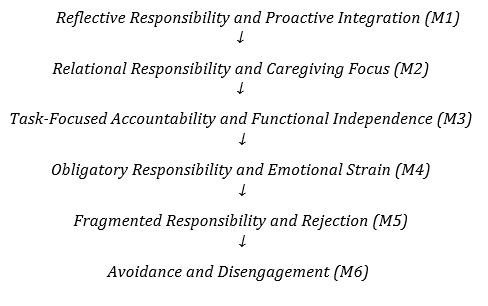
This model highlights the fluid and multidimensional nature of responsibility development among teenage mothers [7, 8, 9]. A separate publication will be dedicated to the theoretical analysis of the model and its theoretical implications.
Emotional and Cognitive Dimensions of Responsibility Development
The responsibility transformation among teenage mothers is not solely a behavioral or structural process; it is deeply intertwined with emotional engagement and cognitive shifts. The emotional-cognitive interplay significantly influences how responsibility is perceived, internalized, and enacted across different stages of the model [17, 18].
Reflective Responsibility and Proactive Integration (M1). At the highest level, this stage represents the full internalization of caregiving, seamlessly incorporated into the adolescent mother’s broader life goals. Strong emotional engagement fosters a sense of meaning in caregiving, while cognitive reflection allows for long-term planning and integration of motherhood into personal aspirations. Emotional resilience and secure attachment to the child reinforce a proactive approach, balancing caregiving responsibilities with personal growth. Cognitive flexibility enables the mother to anticipate challenges and develop problem-solving strategies that align with both caregiving and self-development [30, 31].
Relational Responsibility and Caregiving Focus (M2). As responsibility becomes more relational, caregiving is anchored in strong emotional bonds within a supportive family environment. Emotional involvement plays a central role in sustaining caregiving efforts, yet autonomy in decision-making remains limited. Cognitive processes are still externally guided, with responsibility largely shaped by interactions with caregivers and social support networks. Teenage mothers in this category experience caregiving as emotionally fulfilling but may struggle with independent problem-solving and self-directed decision-making.
Task-Focused Accountability and Functional Independence (M3). A shift towards a functional and task- oriented approach occurs at this stage, where caregiving is perceived as a duty-driven responsibility. Emotional engagement begins to diminish, with a greater focus on practical efficiency in caregiving tasks. Teenage mothers in this stage prioritize financial stability, structured routines, and tangible caregiving responsibilities over emotional bonding. Cognitive resources are directed toward managing day-to-day challenges, often emphasizing problem-solving skills over emotional responsiveness [14]. The cognitive effort required to maintain caregiving efficiency can sometimes lead to emotional exhaustion or detachment.
Obligatory Responsibility and Emotional Strain (M4). This stage marks a pivotal transformation where caregiving is experienced as a burdensome duty rather than a meaningful commitment. Emotional strain, frustration, and stress increase, creating internal conflict between personal aspirations and caregiving demands. Cognitive dissonance may emerge, as teenage mothers struggle to reconcile the perceived burden of responsibility with societal expectations. Decision-making is often reactive rather than proactive, and emotional well-being may decline due to the persistent feeling of being overwhelmed.
Fragmented Responsibility and Rejection (M5). As responsibility becomes increasingly fragmented, caregiving is seen as an imposed duty rather than a self- driven commitment. Emotional detachment is evident, with teenage mothers distancing themselves from the maternal role. Cognitive disengagement manifests as avoidance of caregiving-related decisions, reliance on external caregivers, and decreased motivation to develop parenting strategies. This stage highlights the risk of passive caregiving, where responsibility is neither fully accepted nor actively rejected but remains superficial and externally controlled [23].
Avoidance and Disengagement (M6). At the lowest stage, caregiving is actively avoided and fully delegated. Emotional disengagement reaches its peak, with teenage mothers prioritizing personal interests and social interactions over maternal responsibilities. Cognitive processing is minimal in relation to caregiving, as responsibility is neither internalized nor consciously evaluated. A lack of future-oriented thinking and decision- making capacity regarding the child’s well-being becomes evident, potentially leading to neglect or disengagement from parental roles altogether.
The Role of Social Support in Responsibility Development
Family, peers, and community networks play a crucial role in shaping the development of responsibility in teenage mothers. Supportive families provide emotional reinforcement, financial assistance, and caregiving guidance, allowing for smoother transitions into maternal responsibility [22]. Peer networks can serve as both positive and negative influences - while supportive peer groups encourage responsible caregiving behaviors, unsupportive environments may reinforce disengagement [5]. Community programs, such as parenting workshops, mentorship initiatives, and accessible childcare services, contribute to the strengthening of both emotional engagement and cognitive decision-making abilities [40, 41]. Future interventions should prioritize enhancing these support structures to facilitate sustained responsibility development.
Implications for Interventions
This model highlights the fluid and multidimensional nature of responsibility development among teenage mothers. Emotional and cognitive factors play a crucial role in shaping caregiving engagement. As responsibility transitions from full internalization (M1) to complete disengagement (M6), targeted interventions become essential: • M1-M2: Strengthening self-sufficiency and decision- making autonomy through mentorship programs, career planning workshops, and structured parenting education initiatives. These interventions should focus on long-term goal setting, improving confidence in independent caregiving decisions, and reinforcing a proactive caregiving mindset. • M3-M4: Encouraging emotional engagement and stress management strategies by providing group therapy sessions, peer support networks, and mindfulness training. Additionally, interventions should include practical workshops on emotion regulation, cognitive reframing techniques, and parenting strategies that emphasize meaningful caregiving rather than obligation- driven actions. • M5-M6: Implementing strategies to reestablish cognitive and emotional ties to maternal identity through structured caregiving activities, one-on-one mentoring programs, and gradual exposure to independent caregiving tasks. Support networks should include experienced caregivers or social workers to guide reintegration, fostering motivation to reclaim caregiving responsibilities while addressing fears and uncertainties [26, 41, 42].
Future Research Directions
To deepen the understanding of responsibility development in teenage mothers, future research should focus on longitudinal studies tracking the progression of responsibility transformation over time. Investigating how different intervention programs influence responsibility retention and maternal engagement can provide valuable insights for refining support strategies. Additionally, exploring cultural variations in responsibility formation and the impact of digital support platforms could expand the applicability of the responsibility model across diverse contexts. By addressing both emotional and cognitive dimensions of responsibility, along with social support structures and future research avenues, this model provides a more comprehensive framework for understanding the challenges and developmental trajectories of teenage mothers in their caregiving roles.
Conclusion
The transition to motherhood accelerates key developmental processes, intertwining responsibility with identity formation, autonomy, and emotional-cognitive adaptation. Teenage mothers must navigate caregiving demands while balancing personal aspirations and negotiating accountability within social structures. This model differentiates between reflective responsibility, accountability, and empirically identified responsibility patterns, offering a nuanced perspective on how teenage mothers manage their roles. While accountability reflects external pressures, reflective responsibility highlights internal cognitive and emotional processes that drive long-term decision-making. Recognizing distinct forms of responsibility-reflective, task-focused, and fragmented- enables the development of targeted intervention strategies aligned with each mother’s developmental stage and caregiving capacity.
The long-term implications of adolescent responsibility formation extend to both the mother and child. Teenage mothers who develop reflective responsibility-characterized by internalized caregiving commitments and proactive planning-are more likely to achieve stability in their parenting roles and personal development. In contrast, fragmented or externally imposed responsibility may lead to challenges in maintaining caregiving consistency, educational attainment, and economic independence.
Effective intervention programs should go beyond immediate parenting skills to foster future-oriented thinking, emotional resilience, and self-efficacy. Initiatives that promote long-term planning, provide mentorship, and integrate emotional regulation strategies can significantly enhance the successful internalization of responsibility, ultimately improving developmental outcomes for both mother and child.
Declaration of Conflicting Interests The author(s) declared no potential conflicts of interest with respect to the research, authorship and/or publication of this article.
Funding The author(s) received no financial support for the research, authorship and/or publication of this article.
References
-
Pfeifer JH, Berkman ET (2018) The Development of Self and Identity in Adolescence: Neural Evidence and Implications for a Value-Based Choice Perspective on Motivated Behavior. Child Development Perspectives 12(3): 158-164.
-
Branje S, de Moor EL, Spitzer J, Becht AI (2021) Dynamics of Identity Development in Adolescence: A Decade in Review. Journal of Adolescent Research 31(4): 908-927.
-
Arnett JJ (2000) Emerging adulthood: a theory of development from the late teens through the twenties. American Psychologist 55: 469-480.
-
Erikson E (1968) Identity: Youth and Crisis. Norton, New York, USA.
-
Ragelienė T (2016) Links of Adolescents Identity Development and Relationship with Peers: A Systematic Literature Review. Journal of the Canadian Academy of Child and Adolescent Psychiatry 25(2): 97-105.
-
Ruiz WDG, Yabut HJ (2024) Autonomy and identity: the role of two developmental tasks on adolescent’s wellbeing. Frontiers in Psychology 15: 1309690.
-
Beyers W, Soenens B, Vansteenkiste M (2024) Autonomy in adolescence: a conceptual, developmental and cross- cultural perspective. European Journal of Developmental Psychology pp: 1–21.
-
Ryan RM, Deci EL (2017) Self-determination theory: Basic psychological needs in motivation, development, and wellness. Guilford Press.
-
Wray Lake L, Syvertsen AK, Flanagan CA (2016) Developmental change in social responsibility during adolescence: An ecological perspective. Developmental Psychology 52(1): 130-142.
-
Wei X (2020) The Development Characteristics of Adolescents’ Responsibility and Educational Countermeasures. Conference: 5th International Conference on Contemporary Education, Social Sciences and Humanities - Philosophy of Being Human as the Core of Interdisciplinary Research (ICCESSH 2020).
-
Mergler A, Shield P (2016) Development of the Personal Responsibility Scale for adolescents. Journal of Adolescence 51: 50-57.
-
Watson K, Van Der Laan L, Imran S (2021) Personal Responsibility and the Role of Self-Identity in Adolescents; A Female Regional Australian Perspective. International Journal of Humanities and Social Science 11(9): 14-23.
-
Mangeli M, Rayyani M, Cheraghi MA, Tirgari B (2018) Iranian mothers’ experiences of the outcomes of early motherhood: A qualitative study. Social Work in Public Health 33(3): 163-172.
-
Bidzan M (2013) Nastoletnie rodzicielstwo. Perspektywa psychologiczna. Harmonia Universalis, Gdańsk.
-
Leung H, Wu FKY, Shek DTL (2016) Hope, Aspirations, and Resilience in Children and Adolescents: A Review of Research on Measurement and Related Antecedents. International Journal on Disability and Human Development 16(4): 351-358.
-
Hoseini ASS, Maleki M, Mardani A, Abbasi S (2024) Developing the concept of maternal in teenage mothers: a hybrid model. Frontiers in Psychology 14: 1246882.
-
Miller CL, Miceli PJ, Whitman TL, Borkowski JG (1996) Cognitive readiness to parent and intellectual-emotional development in children of adolescent mothers. Developmental Psychology 32(3): 533-541.
-
Konowitz L, Lund T, Chia SWC, Reed M, Wood W, et al. (2023) The Powerful Role of Mothers in Adolescent Purpose Development. Journal of Psychological Research 5: 1-16.
-
Pérez JC, Huerta P, Rubio B, Fernández O (2021) Parental Psychological Control: Maternal, Adolescent, and Contextual Predictors. Frontiers in Psychology 12: 712087.
-
Ricks N (2016) The Strengths Perspective: Providing Opportunities for Teen Parents and their Families to Succeed. Journal of Family Strengths 15(1): 11.
-
Brown BB, Larson J (2009) Peer relationships in adolescence. In: Lerner RM, Steinberg L (Eds.), Handbook of Adolescent Psychology, Contextual influences on adolescent development. In: 3rd (Edn.), John Wiley Sons, Inc, pp: 74-103.
-
Bałdyga AB, Pilewska Kozak AB, Dobrowolska B (2022) The correlation between social support and attitudes of teenage girls towards their pregnancy and childbirth. Medical Studies 38(1): 44-53.
-
Ellis Sloan K (2014) Teenage Mothers, Stigma and Their ‘Presentations of Self’. Sociological Research Online 19(1): 16-28.
-
Whitehead E (2001) Teenage pregnancy: on the road to social death. International Journal of Nursing Studies 38(4): 437-446.
-
Weed K, Nicholson JS (2015) Differential social evaluation of pregnant teens, teen mothers and teen fathers by university students. International Journal of Adolescence and Youth 20(1): 1-16.
-
Ross Leadbeater BJ (2014) Growing up fast: Re-visioning adolescent mothers’ transitions to young adulthood. Psychology Press.
-
Salerno A, Tosto M, Raciti I, Merenda A (2024). Self- Differentiation and Parenting Stress in Adolescent Mothers. An Exploratory Study. Frontiers in Developmental Psychology 2: 1-11.
-
Hodgkinson S, Beers L, Southammakosane C, Lewin A (2014) Addressing the mental health needs of pregnant and parenting adolescents. Pediatrics 133(1): 114-122.
-
Bakiera L, Szczerbal J (2018) The Experience of Teenage Motherhood and Selected Aspects of Adult Women’s Functioning. Polish Psychological Forum 23(1): 102- 121.
-
Mangeli M, Rayyani M, Cheraghi MA, Tirgari B (2017) Exploring the Challenges of Adolescent Mothers From Their Life Experiences in the Transition to Motherhood: A Qualitative Study. Journal of Family and Reproductive Health 11(3): 165-173.
-
Żelazkowska M (2018) Maturity to motherhood of teenage mothers from a psychosocial perspective. Pedagogical Review 1: 36-45.
-
Collins B (2010) Resilience in teenage mothers: a follow- up study. Ministry of Social Development, Wellington, New Zealand.
-
Rzechowska E, Szymańska A (2017) Using the Reconstruction Transformation Process strategy to build a psychological scale. In: Paluchowski WJ (Ed.), Diagnosing, Challenges and Contexts, UAM Publishing House, Poznań, Poland, pp: 31-58.
-
Rzechowska E (2010) How to protect people aged 50+ from social exclusion: research methodology. In: Rzechowska E (Ed.), Mature employee on the labor market. How to protect people over 50 from social exclusion?. Lublin LBS Publishing House, Poland, pp: 55- 71.
-
Rzechowska E (2021) On the nature of qualitative research in process transformations: the changing man in the changing world. In: Rezaei N (Ed.), Integrated Science: Science without borders, Springer 1: 59-77.
-
Rzechowska E (2023) Young women’s transition to motherhood: relations with partners and visions of motherhood. Quarterly Journal Fides et Ratio 3(55): 41- 57.
-
Rzechowska E, Krawiec B (2023) Young Adults in Subjectively Difficult Situations. A Qualitative Research of the Ways of Confronting Problems in the Work Environment. Annals of the Maria Curie-Skłodowska University. Section J. Pedagogy-Psychology 36(4): 95- 114.
-
Quinlan JR (1993) C4.5: Programs for machine learning. Morgan Kaufman Publishers, San Mateo, USA.
-
Nisbet R, Miner G, Elder J (2009) Handbook of Statistical Analysis and Data Mining Applications. Academic Press, USA.
-
Schrag A, Tieszen AS (2014) Social support networks of single young mothers. Child and Adolescent Social Work Journal 31: 315-327.
-
A framework for supporting teenage mothers and young fathers (2019) Public Health England. Local Government Association.
-
Jones C, Hayter M, Seymour J, Whitfield C (2019) Other Girls: a qualitative exploration of teenage mothers views on teen pregnancy in contemporaries. Sexuality & Culture 23: 760-773.
- Systematic Review and Meta-analysis Investigating the Prevalence of Depression, Anxiety, Loneliness and Help seeking among International Students
- Family Experiences and their Interpretations as a Source of Adaptive Behaviour in Young Adults: A Qualitative Model of Adaptive Behaviour
- Post-Truth Reality: Worldwide Infodemia and Mental Health Concerns during and Post COVID-19 Pandemic Scenarios
- Psycho-Emotional Rehabilitating Means of Overcoming Extreme and Stressful Impact
- The Paradox of Humbleness, Arrogance and the Concept of Fluid Individuality
- Psychological Self-Help in Conditions of Bombing of Ukraine