
A Study to Assess Knowledge Regarding Hemophilia among Parents of Hemohilic Children in New Civil Hospital, Surat
Hemophilia was thought to be a uniform entity for several centuries. The discovery that the coagulation defect in the blood of one hemophilic could be normalized by infusion of blood from another hemophilic in 1940 led to finding that there were two types of hemophilia: hemophilia A, due to deficiency of coagulation factor Ⅷ and Hemophilia B, caused by the reduction of coagulation factor Ⅸ. Hemophilia was divided into three different degrees of severity: severe, moderate and mild. In severe hemophilia, the plasma content of coagulation factor activity is less than 1% of normal, compared with 1 to 4% in moderate hemophilia and 5 to 40% in mild cases.
Introduction
Children suffering from hemophilia. About 400 babies are born with hemophilia each year in world. Hemophilia affects 1 in 5,000 male births. The current number of males with hemophilia living in the United State is estimated to be between 30,000 and 33,000. The estimated prevalence of hemophilia in the United States is 12 cases per 100,000 U.S. males for hemophilia A and 3.7 cases per 100,000 U.S. males for hemophilia B. The estimated incidence of hemophilia among U.S. births is 1 birth per 5,617 male births for hemophilia A and 1 birth per 19,283 male births for hemophilia B [1].
Objective
- To assess the knowledge regarding hemophilia among parents of hemophilic children in new civil hospital, Surat.
- To find out association between knowledge scale with selected sociodemographic variables.
Assumption
Parents of hemophilic children may have some knowledge regarding haemophilia (Figure 1).
Conceptual Framework
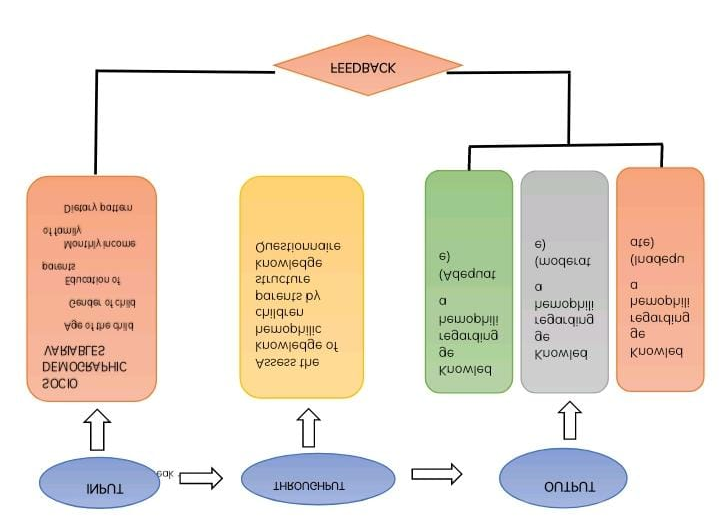
Methodology
Research methodology indicates the general pattern of organizing the procedure for gathering valid and reliable data for an investigation. The content of this chapter [2] includes research approach and its rationale, description of setting and population, sampling technique, sample population, description of sample, tool selection, construction, description and rational of the tool, procedure of data collection, data analysis and statistical method to be used.
Research Approach
Quantitative research approach
Research Design
Descriptive survey research design.
Research Variable
Knowledge regarding Hemophilia.
Demographic Variable
- Age
- Education
- Occupation
- Dietary pattern
- Bad habits (Smoking, Alcohol)
- Number of child
- Family Income, etc.
Research Setting
The present study was conducted in the selected urban area of the Surat district.
Target Population
In this study, the target population is consisted of the Parents of hemophilic children who are getting treatment in new civil hospital, Surat.
Criteria for Sample Selection
- Parents of hemophilic children.
- Parents of hemophilic children who were available at time of data collection.
- Parents of hemophilic children who were willing to participate.
- Parents of hemophilic children who understand Gujarati Language.
Sample Size
Parents of Hemophilic Child.
Sampling Technique
Non-probability convenient sampling technique.
Delimitation of the Study
- This study is delimited to any one parent mother or father.
- This study is delimited to Parents of hemophilic children only.
- This study is delimited to 100 Samples [3, 4].
Major Findings of the Study: The data were analysed and interpreted in terms of objectives of the study. Descriptive and inferential statistic were utilised for the data analysis. After analysis the data major findings of the study (Table 1).
| Mean | Median | Standard Deviation | Range | No.of Questions | Mean % |
|---|---|---|---|---|---|
| 13.4 | 13.5 | 4.875 | 18 | 30 | 13.4 |
Table 1: Shows Mean, Median, Standard deviation of parents knowledge score.
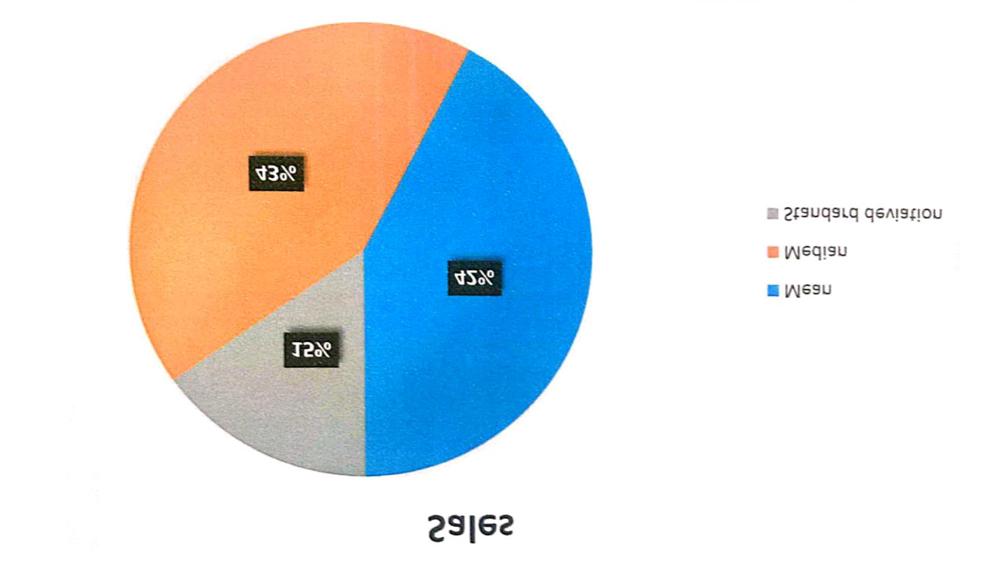
Parents overall Mean was 13.4, Parents overall Median 13.5, Parents overall standard deviation was 4.875, Parents overall range was 18 (Figure 2).
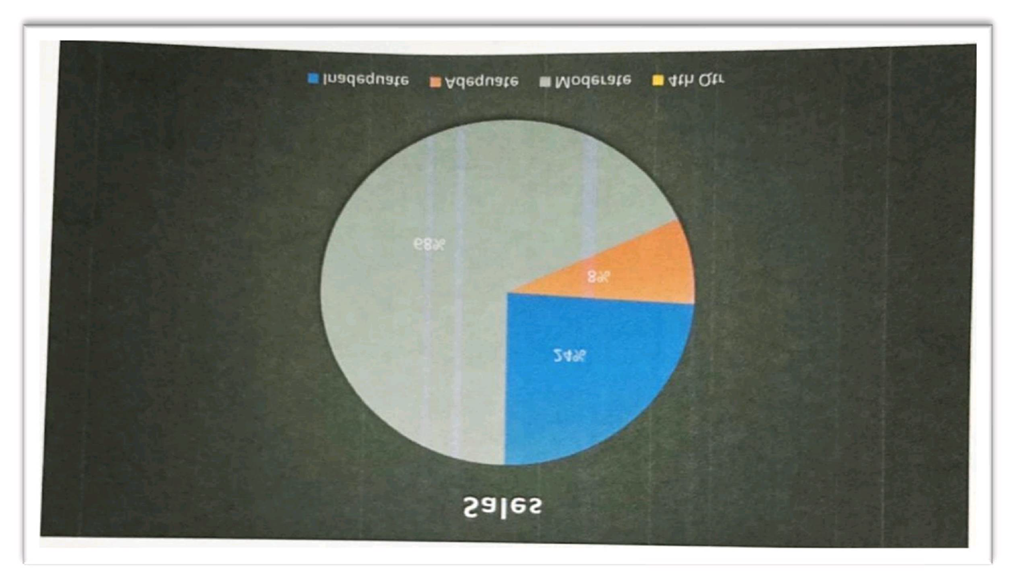
In Table 2, Majority 68(68%) of parents has moderate knowledge regarding haemophilia 24(24%) of parents have Inadequate knowledge regarding haemophilia 08(08%) of parents have adequate knowledge regarding haemophilia (Figure 3).
| Level of Knowledge | Score | Frequency | Percentage |
|---|---|---|---|
| Inadequate | 1-10 | 24 | 24% |
| Moderate | 11-20 | 68 | 68% |
| adequate | 21-30 | 8 | 8% |
| Total | 100 | 100% |
Table 2: Shows knowledge regarding Hemophilia among Parents of Hemophilic Children as Inadequate, Moderate, adequate score.
In present study, Association of socio-demographic variables with the total scores. The chi square value show that there is adequate knowledge in adolescence with Their socio-demographic variables such as age, gender, education, residence, types of family occupation of father, occupation of mother, monthly family income. In this study tabulated value is <0.05 that compare with chi square value like age: 4.38, gender: 0.38, education: 6.51, types of family: 6.81, occupation of father: 6.65, monthly family income: 4.62, chi square value is a less than the table value at 0.05 levels of significance. Hence the null hypothesis was accepted for this study.
Recommendation for Further Study: On the basis of findings the following recommendation were made:
Conclusion
The conclusion was drawn based on the finding of study. The present study concluded that the assess the knowledge regarding haemophilia among parents of hemophilic children. The current study show that we have find mean. Median, standard deviation, chi-square test to assess the knowledge score [8, 9, 10] of adolescence regarding internet addiction. There is significant association between knowledge score with their selected socio demographic variables. Now a day’s most of parents of hemophilic children have adequate knowledge regarding hemophilia. Providing knowledge and counselling is necessary to increase the knowledge of hemophilia. This study will help adolescence regarding internet addiction.
References
-
Datta P (2018) Pediatric Nursing. In: 4th (Edn.), Jaypee Brothers Publication.
-
Sharma R (2017) Essentials of Pediatric Nursing. In: 2nd (Edn.), Jaypee Brothers Publication.
-
Sudhakar A (2017) Essentials of Pediatric Nursing. Jaypee Brothers Medical Publisher.
-
Sharma SK (2011) Nursing Research & Statistics. India Elsevier Publications.
-
Koul P (2022) Textbook of Nursing Research & Statistic. Japee Brothers medical Publisher.
-
Padmaja A (2016) Textbook of Chilid Health Nursing. In: 1st (Edn.), Published by Jaypee Brothers.
-
Hermans C (2021) European Association for Haemophilia and Allied Disorder and Hemostasis and Thrombosis Research Society.
-
Michel D, Gibb DM, lefkowitz C, Gerber JM, Linda M (2014) Haemophilia: The Official Journal of The World Federation of Haemophilia.
-
High K (2011) Journal of Thrombosis and Hemostasis.
-
Franchini M, Gandini G, Paolantonio TD, Mariani G (2005) Acquired Hemophilia A: A Concise Review. American Journal of Hematology 80(1): 55-63.
- Teaching Cognitive Behavioral Therapy to Graduate Psychiatric Mental Health Nurse Practitioner Students: Utilizing A Mixed Methods Course Evaluation
- The Role of Pharmacogenetic Testing in Clinical Practice: A Path toward more Effective, Personalized and Cost-effective Care
- Implementing Screening with the GAD-7 in an Outpatient Mental Health Setting: A Quality Improvement Project
- Social Media and Health Promotion
- Impact of Covid-19 Pandemic on the Academic Performance and Attitude of Nursing Students towards E-Learning
- A Study to Assess the Knowledge Regarding Ill Effects of Tobacco Consumption on Health among Adolescents in Selected Higher Secondary School in Nadiad City