
A Study to Assess the Knowledge Regarding Ill Effects of Tobacco Consumption on Health among Adolescents in Selected Higher Secondary School in Nadiad City
Introduction: Tobacco use is a leading preventable cause of death globally, resulting in around four million deaths annually, with the situation expected to worsen, particularly in developing countries. The study revealed that many adolescents lacked a comprehensive understanding of tobacco’s harmful consequences. Aim: To assess the knowledge of adolescents in selected higher secondary schools in Nadiad city on the ill effects of tobacco consumption on health. Objectives: 1. A Study to assess knowledge regarding ill effects of tobacco consumption on health. 2. To find out association between knowledge score with selected socio-demographic variables. Methodology: The non-experimental descriptive research design conducted on 100 adolescents which were collected through non-probability purposive sampling technique at selected higher secondary school in Nadiad city. The tool use for data collection was structured knowledge questionnaire to assess knowledge of adolescents regarding ill effects of tobacco consumption on health. Results: The level of knowledge regarding ill effects of tobacco consumption on health among adolescents. Out of 100 adolescents, 4 (4%) had inadequate knowledge, 87 (87%) had moderate knowledge, and 9(9%) had adequate knowledge about the ill effects of tobacco consumption. Chai Square analyses which was used to bring out the association between the level of knowledge and demographic variables of the group. The analytical report of the table explains demographic variables (previous knowledge) obtained χ2 the value below the level of tabulated value at the level of 0.05, so there is significant association. The demographic variables (age, gender, monthly income, stream of study, source of information) obtained the χ2 value above the level of tabulated value at the level of 0.05, so there is NO significant association. Conclusion: Most adolescents had moderate knowledge of tobacco’s health risks, highlighting the need for targeted educational programs to improve awareness and reduce tobacco use among this age group.
Introduction
Adolescence is the unique stage of life of human development and an important time for laying the foundation of good health. It is transitional phase of growth and development between childhoods to adulthood [1]. It’s normal for teenagers to be moody and to show some disrespect and defiance as they go through hormonal changes in this age and it is also a period of brain development during puberty [2].
Today’s generation are so much influence by new trends of smoking, drinking, substance abusers and etc. They are influence by the influencers of social media that make content that shows that smoking is cool and normalizing that it is ok to consume any substance like gutka, cigarette, pan-masala etc. And the teenagers that are in their developing stage they influence by them. Even not only social media influencers but some big celebrities also promote this type of tobacco related products.
Tobacco consumption has been found to harm nearly bodily organ and organ system in the body and diminished a person’s overall health. Tobacco products are the primary cause of preventable cancer deaths in the U.S., responsible for around 30% of all cancer fatalities [3]. Tobacco is leading cause of cancer and ENT related inflammations and infections. It causes cancer of lungs, oesophagus, larynx, stomach, oral cancer, this can also cause colon and rectum, throat, and other types of diseases. Every year hundreds or thousands of people around the world die from disease caused by smoking cigarettes smoking kills, tobacco smoke also contributes to increasing a number of cancers mixtures of nicotine and carbon monoxide in each cigarette increase heart rate and blood vessels. This can lead to heart attacks and stroke [4].
Tobacco use is a major cause of preventable deaths worldwide, particularly in developing countries. In India, almost 10% of adolescents aged 13-15 have smoked cigarettes at some point, and nearly half of them began using tobacco before the age of 10 [5]. The early initiation of tobacco use highlights the critical need for intervention to shield this vulnerable group from addiction. Globally, tobacco use is a leading cause of preventable deaths, with an even greater impact in developing countries. India faces a unique challenge due to the wide range of tobacco products available for both smoking and smokeless consumption [6].
Smoking of cigarette particularly bidi and chewing tobacco is an age-old practice in India. There are only a few studies on prevalence and initiation of smoking and smokeless tobacco used among children in our country. Osteoporosis is accelerated with tobacco use. Tobacco use is also associated with higher risk of spontaneous miscarriages. The risk of tobacco use is highest among those who start early and continue use for a long period. The early age of initiation underscores the urgent need adolescence and continues into adulthood given the early age of initiation of smoking. Tobacco consumption among adolescents has escalated to pandemic proportions. According to the World Bank, between 82,000 and 99,000 adolescents worldwide start smoking every day. If these trends persist, tobacco use is projected to cause the deaths of nearly 250 million of today’s adolescents. India, the second most populous country is the third largest producer and consumer of tobacco globally. The nation has a long history of tobacco use, which is not just a social and cultural issue but also a complex problem with biomedical, economic, and geopolitical dimensions [7].
Tobacco consumption is a global practice and remains the leading cause of death worldwide as research continues to reveal the harmful effects of tobacco on health. The list of related conditions and the number of affected individuals have grown. Tobacco is anticipated to become largest single cause of death and the greatest burden of disease in the 21st century. Tobacco use creates health disparities across different socio-economic groups and genders, with smokeless tobacco being more common among the poor and less educated. The prevalence of tobacco consumption varies by type and geographic location. India with approximately 267 million tobacco users is the world’s second-largest consumer of tobacco products. Among these users 100 million are smokers, while over 199 million use smokeless tobacco [8].
Tobacco is a leading preventable cause of premature death and major risk factor for non-communicable diseases. To combat the tobacco epidemic effectively it’s crucial to prevent young individuals from starting to use and becoming addicted to tobacco products. Research from various countries has shown that smoking typically begins in youth and that efforts to reduce smoking rates among young people have had inconsistent results [9].
Objectives
1. A Study to assess knowledge regarding ill effects of tobacco consumption on health. 2. To find out association between knowledge score with selected socio-demographic variables
Assumption
1. There may be less knowledge regarding ill effects of tobacco consumption among higher secondary school students.
2. There may be a significant relationship between the knowledge score and the socio demographic variables.
Review of Literature
According to Kaundal P, et al. [10] a Quasi experimental study to evaluate the effectiveness of structured teaching program on knowledge regarding hazards of tobacco among adolescent boys at selected schools of district Mandi. A total 60 adolescent boys were enrolled into this study by using purposive sampling technique. The structure one ended questionnaire was used to assess the knowledge of adolescent boys regarding hazards of tobacco.
The objective of the study was to assess pre-test and post-test knowledge of adolescent boys in selected school of Mandi. The targeted sample is between the age of 14- 19 adolescent boys. The result shows there was difference between pre-test and post-test level of knowledge. The result shows that the majority of adolescent boys 57 (95%) had good knowledge, 3 (5%) had average knowledge and none of them had poor knowledge regarding hazards of tobacco use. The result revealed that there is no significant difference between score level and socio-demographic variables [10].
According to Lakhute SV, et al. [11], a cross sectional study was conducted on adolescents of 13 to 18 years from northern India. The objective is to assess their knowledge, attitude practice of usage of alcohol and tobacco. This study seeks to identify the incidence of underage smoking and drinking in northern India and the multiple risk factors associated with this exposure. This study was conducted using semi structural questionnaire for interview purposes and analyzed.
The mean age of participants was 16.15 years, of which 65.74% are males and 34.26% are females.18.25% of students stay in hostel. There are 108 participants; about 24.07% of students have tried their first cigarette before 18 years of age. 28.70% of students have a people in their homes, and 41.67% have friends who use tobacco. Among the 108 respondents, 26.85% of students have tried or used alcohol before 18 years of age [11].
According to Lairikyengbam, et al. [12], an exploratory study to assess the knowledge regarding I’ll effect of Cigarettes smoking and its prevention among boys and girls in selected school of Pune city.” objective of the study is to determine how well -informed adolescent boys &girls are about the negative effects of smoking and how to prevent them. To associate the findings with selected demographic variables. Method: Research adopted descriptive research design. Techniques: The study carried out on 300 samples non probability purposive sampling technique was used to collect data. Results findings shows majority 54% have average knowledge, 32 have poor knowledge, 14% have good knowledge towards I’ll effect of smoking. Age [12].
Materials and Methods
Research Approach: Quantitative research approach Research Design: Descriptive Research Design Research Variables: Knowledge regarding ill effects of tobacco consumption on health among the higher secondary students. Demographic Variables: Age, Gender, monthly income, Stream of education, previous knowledge, source of information. Place of Study: The study was conducted in a selected higher secondary school in Nadiad city. Sources of Data: Adolescents Target Population: Adolescents of selected higher secondary school in Nadiad city Sample Size: 100 Adolescents Sampling Technique: Non-probability purposive sampling technique
Sampling Criteria
Inclusion Criteria 1. Higher secondary students who are willing to participate in the study. 2. Higher secondary students who are available at the time of data collection.
Exclusion Criteria 1. Those who are less than 13 years of age. 2. Those who are above 18 years of age.
Tool for Data Collection
The tool consists of following 2 sections: Section 1: The demographic data are to be analyzed in term of frequencies percentage. it will have presented in the form of table.
Section 2: The data from structured knowledge questions are to be analyzed in terms of mean and will be presented in the form of table and graph.
Results
Section 1: Data on Demographic Variables of Adolescents in Selected Higher Secondary School in Nadiad City (2024).
| Demographic Variable | Frequency (Score) | Percentage% | |
|---|---|---|---|
| 1 | Age | ||
| 1 | a. 13-15 | 75 | 75% |
| 1 | b. 16-18 | 25 | 25% |
| 2 | Gender: - | ||
| 2 | a. Male | 50 | 50% |
| 2 | b. Female | 50 | 50% |
| 2 | c. Transgender | 0 | 0% |
| 3 | Monthly Family Income | ||
| 3 | (In rupees): - | ||
| 3 | a. Below 10,000 | 16 | 16% |
| 3 | b. 10,001-20,000 | 29 | 29% |
| 3 | c. 20,001-30,000 | 20 | 20% |
| 3 | d. Above 30,000 | 35 | 35% |
| 4 | Stream of Education | ||
| 4 | a. Science | 29 | 29% |
| 4 | b. Commerce | 41 | 41% |
| 4 | c. Arts | 0 | 0% |
| 4 | d. Other | 30 | 30% |
| 5 | Previous Knowledge Regarding Ill Effects of Tobacco Consumption | ||
| 5 | a. Yes | ||
| 5 | b. No | 57 | 57% |
| 5 | 43 | 43% | |
| 6 | Rely on Source for Information about Risk of Tobacco Use | ||
| 6 | a. School | ||
| 6 | b. Internet | 18 | 18% |
| 6 | c. Family | 51 | 51% |
| 6 | d. Other | 20 | 20% |
| 6 | 11 | 11% | |
Table 1: Frequency and Percentage Distribution of Demographic variables among the Adolescents [N=100].
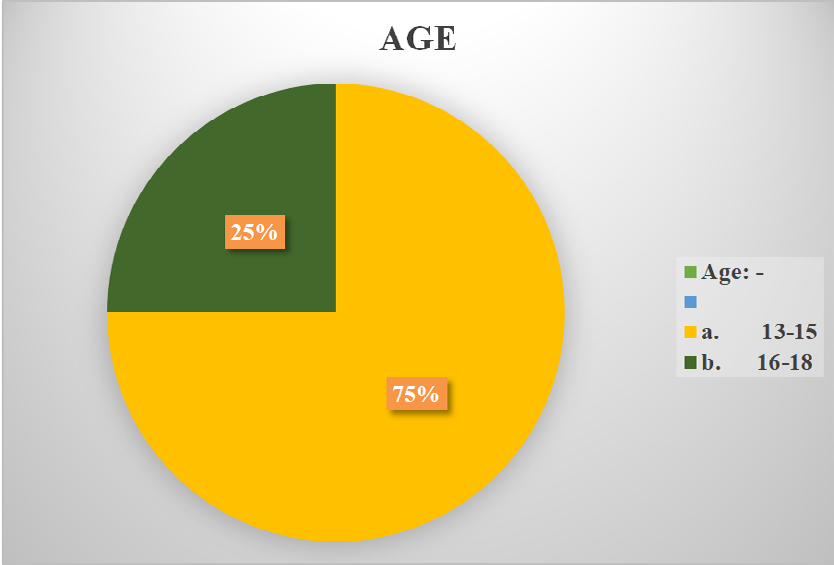
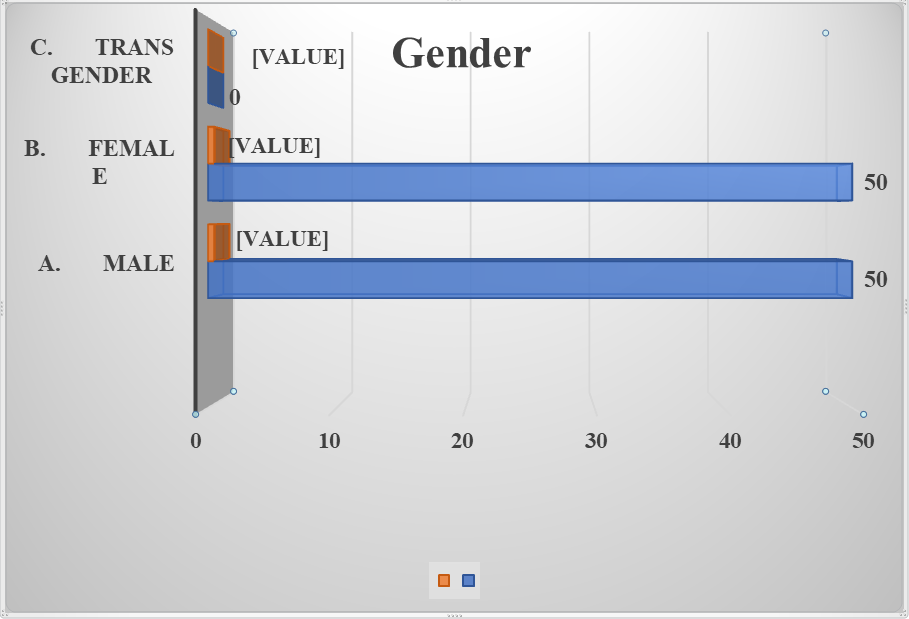
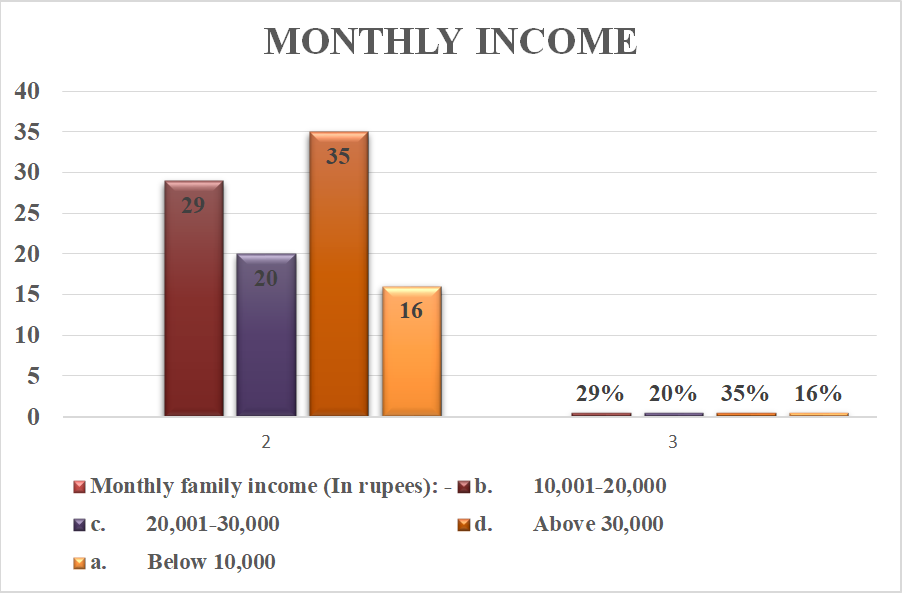
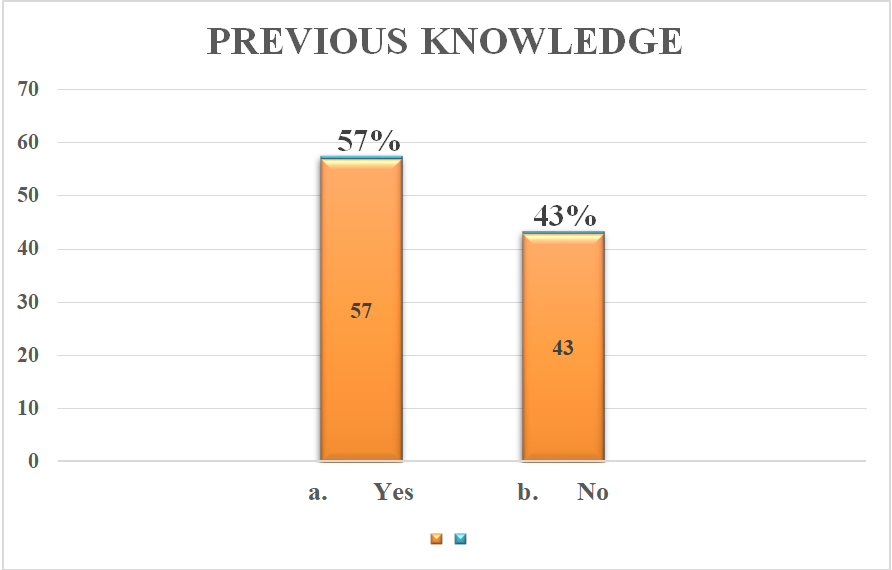
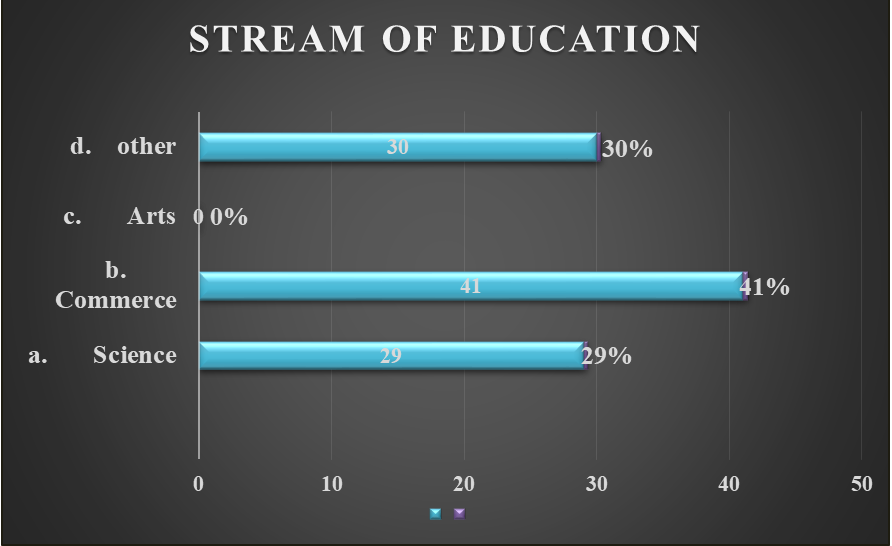
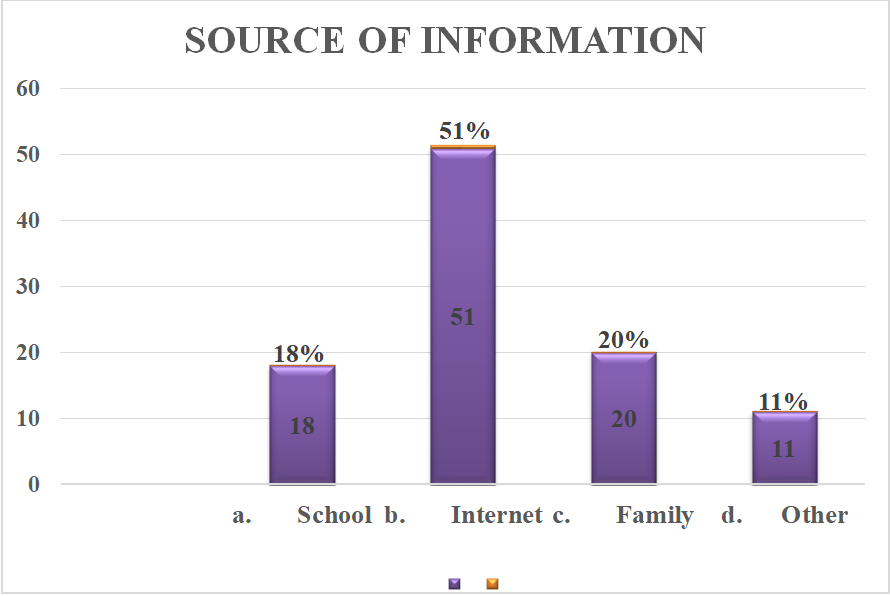
Table 1 revealed that the distribution of sample by age has in two categories in which age between13 to 15 is 75 (75%) and in 16 to 18 are 25 (25%). Gender of the students out of 100 samples, 50 (50%) were male and 50 (50%) were females. Family monthly income out of 100 samples, 16 (16%) were below 10,000, 29 (29%) were 10,001- 20,000, 20 (20%) were 20,001-30,000, 35 (35%) were above 30,000. Stream of education out of 100 samples, 29 (29%) were science students, 41 (41%) were commerce students, 0 (0%) were arts students, 30 (30%) were other stream students. Previous knowledge out of 100 samples, 57 (57%) were Yes and 43 (43%) were No Source of information out of 100 samples, 18 (18%) were School, 51 (51%) were Internet, 20 (20%) were Family, 11 (11%) were other (Figures 1-6).
Section 2: Data on Knowledge Regarding Ill Effects of Tobacco Consumption on Health among Adolescents in Selected Higher Secondary School in Nadiad City.
| Score | Frequency | Percentage% |
|---|---|---|
| Inadequate (0 to 9) | 4 | 4% |
| Moderate (10 to 18) | 87 | 87% |
| Adequate (19 to 27) | 9 | 9% |
| Total | 100 | 100% |
Table 2: Frequency and percentage Distribution of knowledge among adolescents of selected higher secondary school students [N=100
| MEAN | STANDARD DEVIATION | RANGE | |
|---|---|---|---|
| Level of knowledge | 14.23 | 2.9693 | 13 |
Table 3: Frequency and percentage Distribution of knowledge among adolescents of selected higher secondary school students [N=100
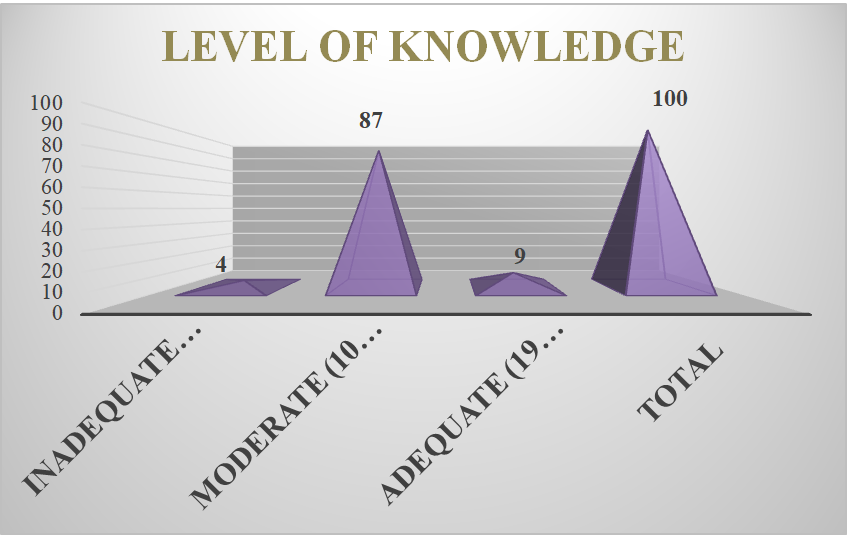
The above Table 2 shows the level of knowledge regarding ill effects of tobacco consumption on health among adolescents. Out of 100 adolescents 4(4%) of them had inadequate knowledge, 87 (87%) of them had moderately adequate knowledge and 9 (9%) of them had adequate knowledge. It is inferred that among adolescent’s majority of them had moderate knowledge regarding ill effects of tobacco consumption on health. The mean value was 14.23 standard deviation of 2.9693 (Figure 7).
Section 3: Data on Association between the Knowledge Score of Adolescents with Their Socio-Demographic Variables.
| Demographic Variable | Level of Knowledge | Total | Chi2/DF | (χ2) P value | |||
|---|---|---|---|---|---|---|---|
| Inadequate | Moderate | Adequate | |||||
| 1. Age in years | 13-15 years | 3 | 65 | 7 | 75 | 0.727 [2] | 0.6952 >0.05 NS |
| 16-18 years | 1 | 23 | 1 | 25 | |||
| 2. Gender | Male | 1 | 47 | 2 | 50 | 4.341 [2] | 0.3618P>0.05 NS |
| Female | 3 | 40 | 7 | 50 | |||
| Transgender | 0 | 0 | 0 | 0 | |||
| 3. Monthly Income | Below 10,000 | 0 | 13 | 3 | 16 | 7.316 [6] | 0.2926P> 0.05 NS |
| 10,001-20,000 | 2 | 24 | 3 | 29 | |||
| 20,001-30,000 | 2 | 17 | 1 | 20 | |||
| Above 30,000 | 0 | 33 | 2 | 35 | |||
| 4. Stream of Study | Science | 1 | 25 | 3 | 29 | 0.333 [4] | 0.9993P> 0.05 NS |
| Commerce | 1 | 37 | 3 | 41 | |||
| Arts | 0 | 0 | 0 | 0 | |||
| Other | 1 | 26 | 3 | 30 | |||
| 5. Previous Knowledge | Yes | 0 | 48 | 9 | 57 | 10.982 [2] | 0.0041P< 0.05 S |
| No | 3 | 40 | 0 | 43 | |||
| 6. Source of Information | School | 0 | 17 | 1 | 18 | 6.545 [6] | 0.3649P> 0.05 NS |
| Internet | 2 | 42 | 7 | 51 | |||
| Family | 2 | 18 | 0 | 20 | |||
| Other | 0 | 10 | 1 | 11 |
Table 4: Association between knowledge score of among adolescents with their selected socio-demographic variable [N=100].
Table 3 Envisages the substantive summary of chi- square analysis, which was used to bring out the association between the level of knowledge and demographic variables of the group. The analytical report of the table explains the demographic variables (previous knowledge) obtained (x2) P value below the level of tabulated value at the level of 0.05, so there is significant association. Demographic variables (age, gender, monthly income, stream of study, source of information) obtained (x2) P value above the level of tabulated value at the level of 0.05, so there is no significant association.
Discussion
A descriptive study was carried out in selected higher secondary school in Nadiad city. Consent taken from the adolescents who were willing to participate in research study and data were collected through structured knowledge questionnaire. On analysis it was found that out of 100 adolescents 4% had inadequate knowledge, 87% had moderate knowledge, and 9% had adequate knowledge about the ill effects of tobacco consumption on health. It is inferred that among the adolescent’s majority of them had moderate knowledge.
Recommendations
Based on findings the following recommendation is prepared for the further nursing research.
- A similar study can do on nurses to find out their knowledge about tobacco consumption and its ill effects on health.
- A comparative study can be conducted between government and private college students regarding tobacco consumption and its ill effects on health.
- A similar study can be under taken in different setting.
Consent and Ethical Approval
Ethical approval for the present study was obtained from institutional Ethics Committee for Human Research of Maganbhai Adenwala Mahagujarat University, Nadiad. (Approval No: MAM Uni/IECHR/2024/53) (Ref. No: IEC- MAM Uni/2023-24/53). Consent taken from the sample population regarding this research study.
Acknowledgement
Special thanks to all the participant’s adolescents, the faculty who validated the tool, the higher secondary school in Nadiad for allowing us to conduct the study and the research guide for their constant support and guidance.
Limitation
Since the study focuses only on 100 adolescents from specific selected higher secondary school in Nadiad city, the findings may not be applicable to adolescents in other regions or general population. The study is limited to those who are under the age of 13 to 18 years. The study is limited to those adolescents who are willing to participate in study.
Conclusions
This study deals with analysis and interpretation of data collected from 100 samples, on assessment of knowledge regarding ill effects of tobacco consumption on health among adolescents in selected higher secondary school in Nadiad city. Results showed that 4% had inadequate knowledge, 87% had moderate knowledge, and 9% had adequate knowledge. Significant association was found between prior knowledge and awareness levels, but no link was observed with variables like age, gender, family income, stream of study, or source of information. The study underscores the importance of enhancing awareness of tobacco’s health risks among adolescents.
References
-
Sivagurunathan C, Umadevi R, Rama R, Gopalakrishnan S (2015) Adolescent Health: Present Status and its Related Programmes in India. Are we in the Right Direction? J Clin Diagn Res 9(3): LE01-LE06.
-
Mihalyi C (2024) Adolescence. Encyclopaedia Britannica.
-
Hecht SS (1997) Tobacco and Cancer: Approaches using Carcinogen Biomarkers and Chemoprevention. Ann N Y Acad Sci 833: 91-111.
-
Sreevani R (2016) A Guide to Mental Health and Psychiatric Nursing. 4th (Edn.), Jaypee Brothers Medical Publishers (P) Ltd, India, pp: 253-354.
-
Sinha DN, Reddy KS, Rahman K, Warren CW, Jones NR, et al. (2006) Linking Global Youth Tobacco Survey (GYTS) Data to the WHO Framework Convention on Tobacco Control: The Case for India. Indian J Public Health 50(2): 76-89.
-
Ibrahim A, Mathew SB, Arekal SS, Swathi, Santhosh, et al. (2016) A Study to Assess the awareness of ill Effects of Tobacco among Adolescents and Young Adults of Mangalore. Nitte University Journal of Health Science 6(3): 21-23.
-
Thakur N, Sharma R (2020) Descriptive Study to Assess the Knowledge Regarding the ill Effects of Smoking among Adolescents in Selected School, in Jalandhar, at Punjab. International journal of Nursing Education & Research 8(1).
-
Tata Institute of Social Sciences (TISS) (2022) Global Adult Tobacco Survey: India 2016-2017 Report. Ministry of Health and Family Welfare, Government of India.
-
Reitsma MB, Flor LS, Mullany CE, Gupta V, Hay SI, et al. (2021) Spatial, Temporal, and Demographic Patterns in Prevalence of Smoking Tobacco use and Initiation among Young People in 204 Countries and Territories, 1990-2019. The Lancet Public Health 6(7): e472-e481.
-
Kaundal P, Sharma P, Sharma R, Choudhary R, Peridurachi K, et al. (2023) Assess the Effectiveness of Structured Teaching Programme on Knowledge Regarding Hazards of Tobacco use among Adolescent Boys (14-19 year). TNNMC Journal of Ment Health Nursing 11(1): 26-34.
-
Lakhute SV, Rathod H, Ray S, Lijhara T, Agarwal KA, et al. (2023) Tobacco and Alcohol use among Adolescents in Northern India. Ind Psychiatry J 32(1): S64-S67.
-
Lairikyengbam, Devi LS, Mane P, Nikam S, Natkar A (2023) An Exploratory Study to Assess the Knowledge Regarding ill Effects of Cigarette Smoking and its Prevention among Adolescent Boys and Girls in Selected Schools of Pune City. Shu Ju Cai Ji Yu Chu Li/Journal of Data Acquisition and Processing 38(4): 696-702.
- Teaching Cognitive Behavioral Therapy to Graduate Psychiatric Mental Health Nurse Practitioner Students: Utilizing A Mixed Methods Course Evaluation
- The Role of Pharmacogenetic Testing in Clinical Practice: A Path toward more Effective, Personalized and Cost-effective Care
- Implementing Screening with the GAD-7 in an Outpatient Mental Health Setting: A Quality Improvement Project
- Social Media and Health Promotion
- Impact of Covid-19 Pandemic on the Academic Performance and Attitude of Nursing Students towards E-Learning
- A Study to Assess the Effectiveness of Video Assisted Teaching Programme on Knowledge and Practice Regarding Adult Cardiopulmonary Resuscitation among School Teachers of Selected Schools of Kheda District