
Impact of Covid-19 Pandemic on the Academic Performance and Attitude of Nursing Students towards E-Learning
Background: COVID-19 has interrupted the normal academic program very much. Education is an area that is never to be interrupted at any cost, but COVID-19 was a devastating pandemic that confronted human survival, hence all the systems were focused on survival and the routine education system was interrupted and taken a step to adopt E-teaching and learning platform for students for the first time. Hence the researcher aimed to identify the impact of COVID-19 on academic performance and their attitude towards E-learning. Materials and Methods: A quantitative research study was carried out by using a simple random sampling technique by considering every sample. The descriptive research design was adopted. The study was accomplished at selected nursing colleges in Guntur (Dt), Andhra Pradesh. Hundred (n =100) subjects of 3rd year B.Sc.N students and hundred (n=100) subjects of 4th year B.Sc. N students were selected. A semi-structured questionnaire was developed to collect the sociodemographic data and assess the impact of COVID-19 pandemic on academic performance and attitudes towards E-learning by using Likert scales. The data collected was analyzed using descriptive and inferential statistics. Results: Among the respondents majority (46%) of students in group I belong to the lower middle class whereas 39% of the students in group II belong to the upper middle class. Most (84%) of the students in group I and in group II had used the smart phone for e-learning and more than half (53%) of the students felt that e-learning was less expensive in the nursing field. The mean score of Attitude towards e-learning was (33.38±0.84) in group I and in group II (29.948±0.29). The results showed that there was a significant difference between attitude and academic performance. Conclusion: Though technology has improved the various E-learning platforms nursing education is more of hands-on skill training and demonstrations are needed. Hence the respondents had felt that the students were unable to learn nursing procedures adequately through E-learning.
Abbreviations
WHO: World Health Organization; SARSCoV-2: Severe Acute Respiratory Syndrome Coronavirus 2; COVID-19: Coronavirus Disease 2019.
Introduction
Coronavirus disease 2019 (COVID-19) was potentially severe and acute respiratory infection caused by the novel severe acute respiratory syndrome coronavirus
2 (SARSCoV-2) [1]. Education and awareness are major determinant factors in improving the quality of life to limit human interaction and help minimize the covid-19 spread. World Health Organization (WHO) in March 2020 termed it a pandemic. The pandemic of covid-19 had disrupted the global educational system as most countries around the world implemented a closure of all educational institutions in an attempt to contain the spread of the pandemic [2, 3, 4]. According to the report by UNESCO (2020), the closures of schools and other learning spaces impacted 94% of the world’s student population and up to 99% of lower and middle-class family income [5].
The traditional way of teaching is not possible because of the fast spreading of COVID-19. The approved face-to- face teaching was currently archaic because of COVID-19. The newly adopted online teaching is not very effective in all geographical territories. Online education needs uninterrupted networks and supportive devices. Achieving those facilities is not easy for a developing and populated country like India. Geographical diversity is also a problem for online education. The population who lives in rural and hilly areas approximately 65% to 70% does not have sufficient access to electricity and internet facilities. The students from such remote areas suffered a lot because of device unavailability, interrupted electricity, and internet connectivity. There are also certain family issues such as poverty and economic instability due to the loss of jobs by parents due to the COVID-19 lockdown had showed an impact on the student’s performance in their academic studies [6].
All the Students had been obligated to become accustomed to a total shift to online teaching and learning processes by using electronic devices [7]. Electronic learning may be valued by some students, but they value its pliability in location and time, in contrast, other students will have a negative attitude towards it as they do not have information about use of technology or the absence of teacher-student face-to-face teaching.
Teaching was disrupted by the COVID-19 pandemic in many institutions, especially in medical and nursing education colleges. The rapid spread of COVID-19 all over the world has triggered a range of public health responses both by parents and students [8]. Online learning was a need of the day in India, hence the government and other educational organizations have designed policies for online learning to implement in the education field at the university level. However, due to less knowledge about the ground realities, the policies fail to achieve the desired outcomes. Barely any research was made on various dimensions of online learning, its barriers, the attitude of students, and its impact on the student’s academic achievements. Moreover, the studies were made at secondary and intermediate levels but no formal efforts were made to conduct research on the undergraduate nursing level [9], as graduation is a crucial stage in nursing academics as it focuses more on clinical practice and skill development along with theoretical knowledge. Therefore, the researcher was curious to know about their attitude towards online learning and its impact on their academic performance.
Objectives of the Study
- To assess the impact of COVID-19 pandemic on nursing students on their academic performance.
- To analyze the perception of nursing students regarding the digital mode of teaching and learning process.
- To analyze the comparison between the attitude and academic performance of the nursing students during COVID-19 pandemic.
- To find out the association between the academic performance and attitude of the students during COVID-19 pandemic with their selected baseline variables.
Hypothesis
• H1: There will be a significant relationship between the Impact of COVID-19 and the level of academic performance of nursing students. • H2: There will be a significant association between the level of academic performance and their selected demographic variables.
Materials and Methods
The research approach used for the present was quantitative. The research design used for the study was descriptive comparative research design. The study was conducted in two selected colleges in Guntur (DT), AP. The population of the study was 3rd and 4th year B.Sc. Nursing students. The systematic random sampling technique was used by taking every alternative subject to draw the sample size of hundred (n=100) 50 students from each college from 3rd year B.Sc. Nursing students and another hundred (n=100) 50 students from each college from 4th year B.Sc. Nursing students were selected respectively.
Selection Criteria
Inclusion Criteria: The present study includes a sample that is:
- B.Sc. Nursing 3rd& 4th year students from selected colleges at Guntur Dt.
- Present during the period of data collection.
- Willing to participate in the study.
Exclusion Criteria: The present study excludes those who are:
- Not willing to participate in the study.
- Not available at the time of data collection.
Development of the Tool and Description of the Tool
Section A: It consists of selected demographic variables such as age in years, gender, residence, marital status, socioeconomic status based on the Kuppuswamy scale, type of institution studying, and Level of academic education studying. Section B: It consists of a structured questionnaire on knowledge regarding E-learning material and its importance. Section C: It Consists of five point Likert scale on the impact of COVID 19 on academic performance and it contains 20 statements each statement is indicative of five points Likert scale with a score of (1) strongly disagree, (2) disagree, (3) neutral, (4) agree, (5) strongly agree. The maximum score for this scale was 100. Section D: It consists of a Likert scale on the attitude of nursing students towards covid 19 pandemic and their academic performance. It contains 10 statements and each statement is indicative of a five-point Likert scale with a score of (1) strongly disagree, (2) disagree, (3) neutral, (4) agree, (5) strongly agree. The maximum score for this scale was 50.
Content Validity and Reliability of the Tool
The tool was administered to ten samples of 3rd and 4th year B.Sc. Nursing students and reliability were established by test-retest method. The correlation coefficient was computed and the reliability for the questionnaire on COVID-19 pandemic on the Attitude and Academic Performance of nursing students was r=0.7 which indicated the tool was reliable.
Data Collection Procedure
Formal permission was obtained from the concerned authorities and the subjects before the commencement of the study. Data was collected from each 100 subjects of 3rd and 4th year B.Sc. Nursing Table 1 students correspondingly who met the criteria by using a validated semi-structured questionnaire. It took about 45 - 60 minutes to complete answering the tool by each of the subjects.
Results
We have received a total of 200 total responses from respondents. As per Table I Majority (86 from G1 and 80 from G2) of the samples were females. The majority (78%) of the subjects in G1 were between the age group of 20- 21 years and (56%) of them were between 22-23 years of age. Respondents were distributed in different levels of socioeconomic status. All 100% of the samples who were studying nursing were from different selected private colleges.
Regarding the E-learning material and its importance on their academic performance, as depicted in Table 2 most of the respondents (89%) from GI and (84%) of GII had used Smartphone for attending online classes and the majority (54%) in GI and (68%) in GII revealed that they had spent 2 to 4 hours per day towards E-learning classes.
A greater part (60%) of respondents from GI and (74%) of GII had felt that the COVID-19 Figure 1 pandemic had greatly affected their academic performance. Most of the subjects (93%) of GI and (95%) of GII said that it was true that E-learning provides digital multimedia content like written text, audio, video, and images that helped them to study. There was a mixed response from both groups that E-learning was considered less expensive than standard learning. Most of the sample overall 90% in both groups had expressed that E-Learning was a type of telecommunication. There was a mixed response from GI (56%) of them felt that it was false and GII (75%) of the samples said as it was that E-learning can cover the practical aspects of nursing education.
| Sl.no | Demographic Variables | 3rd year B.Sc. Nursing | 4th year B.Sc. Nursing | ||
|---|---|---|---|---|---|
| (f) | (%) | (f) | (%) | ||
| 1. | Age in years | ||||
| 20-21 | 78 | 78 | 27 | 27 | |
| 22-23 | 16 | 16 | 56 | 56 | |
| 23-24 | 6 | 6 | 17 | 17 | |
| 2. | Gender | ||||
| Female | 86 | 86 | 80 | 80 | |
| Male | 14 | 14 | 20 | 20 | |
| 3 | Residence | ||||
| Rural | 66 | 66 | 46 | 46 | |
| Urban | 34 | 34 | 54 | 54 | |
| 4. | Marital Status | ||||
| Married | 0 | 0 | 1 | 1 | |
| Unmarried or single | 100 | 100 | 99 | 99 | |
| Widow | 0 | 0 | 0 | 0 | |
| 5. | Socio Economic Status | ||||
| Upper (I) | 14 | 14 | 8 | 8 | |
| Upper middle (II) | 39 | 39 | 26 | 26 | |
| Lower middle(III) | 32 | 32 | 41 | 41 | |
| Upper lower(IV) | 15 | 15 | 35 | 35 | |
| Lower (V) | 0 | 0 | 0 | 0 | |
| 6. | Type of Institute your Studying | ||||
| Government | 0 | 0 | 0 | 0 | |
| Non-Government/Private | 100 | 100 | 100 | 100 | |
| 7. | Level of Academic Education as a Nursing | ||||
| 3rd year | 100 | 100% | 0 | 0% | |
| 4th year | 0 | 0% | 100 | 100% |
Table 1: Socio-demographic variables.
| Sl.no | Item | GROUP-I | GROUP-II | ||
|---|---|---|---|---|---|
| (f) | (%) | (f) | (%) | ||
| 1 | A device commonly used to connect to the internet. | ||||
| Smartphone | 89 | 89 | 84 | 84 | |
| Laptop | 8 | 8 | 9 | 9 | |
| Tablet | 2 | 2 | 6 | 6 | |
| Desktop computer | 1 | 1 | 1 | 1 | |
| 2 | How many hours did you spend on online classes per day? | ||||
| 2 to 4 hours | 57 | 57 | 67 | 67 | |
| 4 to 6 hours | 37 | 37 | 32 | 16 | |
| 6 to 8 hours | 6 | 6 | 1 | 1 | |
| 8 and above hours | 0 | 0 | 0 | 0 | |
| 3 | Stability of internet connection. | ||||
| Very Stable | 32 | 32 | 36 | 36 | |
| Somewhat Stable | 61 | 61 | 57 | 57 | |
| Not stable | 7 | 7 | 7 | 7 | |
| 4 | How the COVID-19 pandemic affected academic performance | ||||
| Greatly affected | 60 | 60 | 74 | 74 | |
| Considerably affected | 21 | 21 | 12 | 12 | |
| Moderately affected | 15 | 15 | 12 | 12 | |
| Slightly affected | 2 | 2 | 2 | 2 | |
| Not affected | 2 | 2 | 0 | 0 | |
| 5 | E-learning provides digital multimedia content like written text, audio, video, and images | ||||
| True | 94 | 94 | 95 | 95 | |
| False | 5 | 5 | 4 | 4 | |
| I don’t know | 2 | 2 | 1 | 1 | |
| 6 | In the nursing field E-learning is considered less expensive than standard learning. | ||||
| True | 53 | 53 | 79 | 79 | |
| False | 33 | 33 | 11 | 11 | |
| I don’t know | 14 | 14 | 10 | 10 | |
| 7 | E-learning is also considered as a type of telecommunication | ||||
| True | 90 | 90 | 90 | 90 | |
| False | 6 | 6 | 4 | 4 | |
| I don’t know | 4 | 4 | 6 | 6 | |
| 8 | E-learning can cover the practical aspects of the medical education curriculum. | ||||
| True | 41 | 40 | 75 | 75 | |
| False | 56 | 56 | 20 | 20 | |
| I don’t know | 3 | 3 | 5 | 5 |
Table 2: E-learning material and its importance on their academic performance.
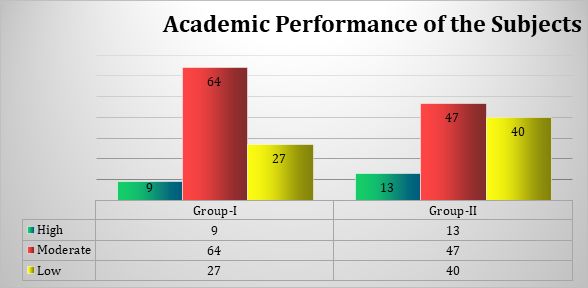
The overall COVID 19 impact on academic performance as it was projected in Fig:1 that the Majority of GI 63% and 47% of GII were moderately affected by the COVID-19 pandemic which hurt their academic performance, another 54% of GI and 80% of GII had a low level of impact on their academic performance. Hence H1 was accepted that there will be a significant relationship between the impact of Covid 19 and the level of academic performance of nursing students. The attitude of subjects towards E-learning was estimated in Figure 2 which show the Majority of GI 90% and 63% of GII had favorable attitudes towards E-learning and another 10% of GI and 37% of GII had unfavorable attitudes.
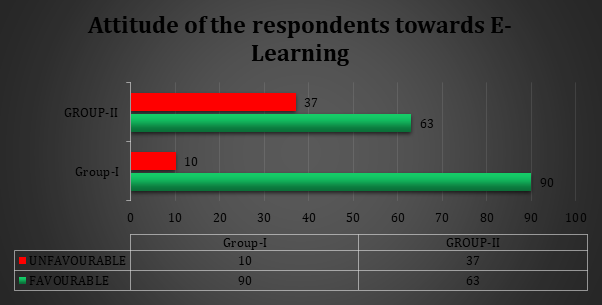
Table 3 reflects the Correlation between GI and GII on the Impact of the COVID-19 pandemic on the Academic performance of nursing students, with a mean score was 56.61±4.7 there exists a moderate correlation r=0.61 at (P >0.05). There was a moderate correlation between the Impact of Covid 19 Pandemic and the attitude of the respondents, with the Mean score being 31.43±1.9 and “r”=0.89 at (P >0.05) the level of significance. The obtained calculated ‘r’ value was greater than the table value. It shows that there was a significant relationship between attitude and academic performance.
| Variables | Reference Group | Mean | SD | ‘r’ value | Level of Significance p>0.05 |
|---|---|---|---|---|---|
| Academic performance | GI and GII | 56.61 | 4.7 | 0.61 | S** |
| Attitude | GI and GII | 31.43 | 1.9 | 0.89 | S** |
Table 3: Correlation between GI and GII about the Impact of covid 19 on academic performance and attitude toward E-Learning among
Table 4 shows the Significance of the relationship between the attitude of respondents towards E-learning within and between GI was computed and the mean score was 33.38±1.14 and the impact of covid 19 on academic performance was 52.53±0.5 with t=12.34 (df=98) at (P >0.05). The relationship between attitude towards E-learning within and between GII mean score was 29.48±3.01, and academic performance mean score 54.4±4.07 with t=15.89 (df=98) at (P >0.05). The obtained calculated ‘t’ value was greater than the table value 2.00. It shows that there was a highly significant difference between attitude and academic performance. The Chi-square was computed to find out the association between the impact of the covid 19 on the level of academic performance and selected demographic variables and in GI it was found that there was an association between age, gender, residence, and level of academic education. In GII there was an association between socioeconomic status, level of academic education, and level of academic performance at (p=0.05). Hence H2 was accepted that there will be a significant association between the level of academic performance of samples and selected demographic variables.
| Reference Group | Variable | Mean | SD | ‘t’ value | Level of significance p>0.05 |
|---|---|---|---|---|---|
| Group I | Attitude | 33.38 | 1.1 | 12.34 df=98 | Table value ‘t’=2.00 S*** |
| Academic performance | 52.53 | 0.5 | |||
| Group II | Attitude | 29.48 | 3 | 15.89 df=98 | Table value ‘t’=2.00 S*** |
| Academic performance | 54.4 | 4.1 |
Table 4: Comparison between attitude and academic performance among and within GI and GII.
Discussion
E-learning draws near to make easy and provides educational content from the teacher to the learner with horizontal communication through the use of computers all around the world is called E-learning. The realization of E-learning in higher education has enabled an elemental change in teaching and learning methods. The progression in technology affects all the organizations around the world [10, 11, 12]. The quick advances in knowledge of late put the organizations towards the use of E-learning in all spheres of academic institutions. The present study results would tell us that the majority 105(52.5%), of the subjects in the age group of 20-21 years, and 72 (36%) were 22-23 age group
23 (11.5) were 24-25 years. The majority 166 (83%) of subjects were female gender. In a similar study conducted in Oman, most of the participants were female (67.5%) and were in the age group between 18 to 27 years (93.9%) [10]. Just more than half of the respondents 103 (51.5%) had come from rural areas. Most of them were unmarried 199 (99.5%). About the SES 73 (36.5%) of the sample belonged to the Lower middle (III) based on the Kuppuswamy socio- demographic scale.
The present study results in greed with some studies that conducted that the academic performance of the students was negatively affected. Age and sex were other demographic variables that showed a significant relationship with academic performance. It was also observed that academic performance was associated with their residence living and level of socioeconomic status. The present research findings suggest that the academic performance of the students during COVID-19 was influenced and impacted their learning. A study conducted on Afghan students and their level of satisfaction with online teaching and academic performance also revealed that there were significant differences existed in the academic performance of students and their level of satisfaction with online teaching across genders. A strong positive correlation was found between the academic performance of Afghan students and their level of satisfaction with online teaching during the Covid-19 outbreak. According to the findings of the study, several implications and recommendations have been provided [10]. The COVID-19 pandemic has affected the academics of nursing students negatively. Online academics can be compensatory only to a certain extent, where practical training is the least. Professional clinical exposure and training are unavoidable for the nursing profession.
The present study also reveals that 76.5% of nursing students had favorable attitudes towards the use of E-Learning during the Covid-19 pandemic and it was consistent with another study conducted at Lahore [11]. One of the major troubles with E-learning was the relationship between teacher and student in the virtual flat form but not the real world. Therefore, since the students were not at hand in front of the teacher, if the teacher does not involve them in class, they might get out of contact with the group face-to-face, and it will not be possible for the teacher to return them to the class circle. In addition, dishonesty on tests and exams was unavoidable. On another hand, Clinical proficiency was a very significant practical component in nursing education and the most important aspect for students [13]. The experiences found varied according to the groups of students. Depending on how close they were to the end of their training or whether they were in graduate school and needed skill-based training as nurses or health care professionals, they might find e-learning ineffective. Most
studies do emphasize that professional teaching should be done in a traditional classroom lecture and demonstration method since theory and practical skills need to be enhanced with each other.
Recommendations
Based on the findings of the study the following recommendations were made.
- A similar study can be undertaken with a large sample size to generalize the findings
- A comparative study can be conducted to assess the attitude and academic performance of nursing students between traditional classroom teaching and virtual teaching.
- A study can be carried out to identify the impact of attitude and academic performance on the outcome of nursing students in their academic results and behavioral changes.
Conclusion
The study concludes that most of the respondents suffered from disturbances during online classes because of internet and electricity problems; also students were compelled to use data packages which are expensive for their online classes. Though technology has improved the various e-learning flat forms nursing education is more hand on skill training and demonstrations are needed. Hence the researcher felt that students were not able to learn nursing procedures adequately through e-learning. New virus strains are emerging and there is still doubt regarding the end of the COVID-19 pandemic situation. Hence, online is the only solution to complete the nursing student’s curriculum but the clinical training component will be difficult to address. Even virtual simulations are recommended by nursing experts. Nursing educators should prepare their students to cope with this form of crisis even in the future prepare themselves for virtual demonstrations and bring about a positive attitude among the students to adapt to upcoming challenges.
Acknowledgment
The authors would like to thank all the study participants for their cooperation in completing the study successfully.
Conflict of Interest
The author(s) declared that there are no potential conflicts of interest concerning the research, authorship, and/or publication of this article.
Funding
The author(s) received no financial support for the research, authorship, and/or publication of this article.
References
-
WHO (2020) WHO Director-General’s Opening Remarks at the Media Briefing on COVID-19.
-
Koh D (2020) COVID-19 Lockdowns throughout the World. Occup Med (Lond).
-
Odriozola-Gonzalez P, Planchuelo-Gomez A, Irurtia MJ, Luis-Garcia RD (2020) Psychological Effects of the COVID-19 Outbreak and Lockdown among Students and Workers of a Spanish University. Psychiatry Res 290: 113108.
-
Burgess S, Sievertsen HH (2020) Schools, Skills and Learning: The Impact of COVID-19 on Education. Journal of Public Administration Research and Theory 24(4): 729-760.
-
Adeyanju S, et al. (2020) Innovating in the Face of the Pandemic: Case Studies from Nigerian Universities. Global Research Education (8): 104-120.
-
Aslan H, Pekince H (2021) Nursing Students’ Views on the COVID‐ 19 Pandemic and their Perceived Stress Levels. Perspect Psychiatr Care 57(2): 695-701.
-
Voutilainen A, Saarinen T, Sormunen M (2017) Conventional vs. E-learning in nursing Education: A Systematic Review and Meta-Analysis. Nurse Educ Today 50: 97- 103.
-
Nagar K (2021) A Cross-Sectional Study to Assess the Attitude Regarding Online Lecture among Nursing College Students after Impact of Covid-19 at Selected College of Nursing, Nadiad. International Journal of Medrixiv 7(1): 1259-68.
-
Hashemi A, Adu-Gyamfi S (2021) Effects of COVID-19 on the Academic Performance of Afghan Students and their Level of Satisfaction with Online Teaching. Journal of Cogent Arts & Humanities 8(1): 633-644.
-
Alshdefat A, Natarajan J, Joseph MA, Baker RA, Qutishat MG (2021) Knowledge, Attitude and Practice of Nursing Students towards COVID-19 Pandemic in Oman. International Journal of Nursing Education 13(1): 23-30.
-
Bano R, Parveen K, Hussain M, Afzal M (2021) Attitude and Obstacles faced by Nursing Students during E-Learning of COVID-19 Pandemic. Journal of Global Biosciences 10(6): 8809-8833.
-
Bayrak M, Aydemir M, Karaman S (2017) An Investigation of the Learning Styles and the Satisfaction Levels of the Distance Education Students. Cukurova Universitesi Egitim Fakultesi Dergisi 46(1): 231-263.
-
Mousavizadeh SN (2022) The Experiences of Nursing Students using Virtual Education during the COVID-19 Pandemic. J Med Life 15(9): 1090-1095.
- Teaching Cognitive Behavioral Therapy to Graduate Psychiatric Mental Health Nurse Practitioner Students: Utilizing A Mixed Methods Course Evaluation
- The Role of Pharmacogenetic Testing in Clinical Practice: A Path toward more Effective, Personalized and Cost-effective Care
- Implementing Screening with the GAD-7 in an Outpatient Mental Health Setting: A Quality Improvement Project
- Social Media and Health Promotion
- A Study to Assess the Knowledge Regarding Ill Effects of Tobacco Consumption on Health among Adolescents in Selected Higher Secondary School in Nadiad City
- A Study to Assess the Effectiveness of Video Assisted Teaching Programme on Knowledge and Practice Regarding Adult Cardiopulmonary Resuscitation among School Teachers of Selected Schools of Kheda District