
Teaching Cognitive Behavioral Therapy to Graduate Psychiatric Mental Health Nurse Practitioner Students: Utilizing A Mixed Methods Course Evaluation
Cognitive Behavioral Therapy (CBT) is an evidence-based treatment recommended for many psychiatric disorders, including depression, anxiety, trauma, eating disorders and substance use disorders. Psychiatric Mental Health Nurse Practitioners (PMHNPs) are increasingly expected to integrate psychotherapy with pharmacotherapy management. However, the extent and availability of psychotherapy education remains variable. This mixed-methods course evaluation examined changes in students' understanding of CBT and its perceived relevance to their practice following completion of a semester-long CBT course. Pre and post-course responses were analyzed using descriptive statistics and inductive theme analysis. Findings demonstrated an increase in understanding of CBT, strengthened professional confidence, and the student’s intent to universally integrate CBT into future clinical practice. Case-based learning and evidence-based clinical tools were identified as key factors in enhancing learning. These findings support the integration of CBT education into PMHNP curriculum to promote learning, competency, professional identity, and holistic psychiatry care.
Introduction
Cognitive Behavioral Therapy (CBT) is one of the most extensively researched psychotherapeutic interventions and is recommended as a first-line treatment for a wide range of psychiatric conditions, including major depressive disorder, generalized anxiety disorder, posttraumatic stress disorder, substance use disorders, and insomnia [1]. CBT’s structured, time-limited, and skills-based approach makes it particularly relevant for integration into diverse clinical settings and provider roles.
Psychiatric Mental Health Nurse Practitioners (PMHNPs) are uniquely positioned to deliver comprehensive psychiatric care that integrates pharmacologic treatment with evidence- based psychotherapy. As healthcare systems increasingly emphasize integrated and collaborative care models, PMHNPs are expected to address both biological and psychosocial contributors to mental illness. Despite this expectation, psychotherapy training within PMHNP programs remains inconsistent in scope and depth [2]. Existing literature suggests that didactic exposure to psychotherapy concepts alone is insufficient to develop sustained clinical competence.
Training programs that incorporate experiential learning strategies, including case-based instruction, skills rehearsal, and reflective practice, are more effective in promoting knowledge transfer and clinician confidence [3]. Within nursing education specifically, case-based learning has been associated with improved clinical reasoning and application of theoretical knowledge [3].
Given the growing demand for PMHNPs capable of delivering psychotherapy, there is a need to evaluate educational interventions designed to enhance CBT competence during graduate training. This study examines the impact of a semester-long CBT overview course on PMHNP students’ understanding of CBT and their perceptions of its relevance to professional practice.
Methods
A mixed-methods descriptive course evaluation design was used to assess the educational impact of a CBT overview course delivered within a graduate PMHNP program. This approach allowed for the integration of quantitative descriptive data with qualitative insights derived from student reflections.
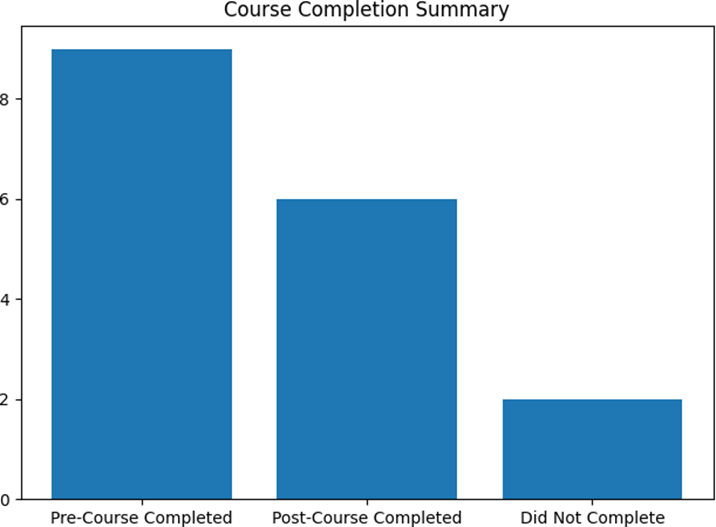
Participants included PMHNP students enrolled in the CBT overview course during a single academic semester. Nine students completed pre-course reflective prompts, and six students completed post-course reflections. Two students did not complete the course, resulting in an attrition rate of approximately 22%.
Students completed written reflections at the beginning and end of the semester. Pre-course prompts assessed students’ baseline understanding of CBT and perceptions of how learning CBT aligned with their professional goals. Post-course prompts explored perceived changes in understanding, clinical applicability of CBT skills, and influence on professional identity development. Quantitative data were summarized using descriptive statistics. Qualitative data were analyzed using inductive thematic analysis, with iterative coding and theme development through consensus.
Results
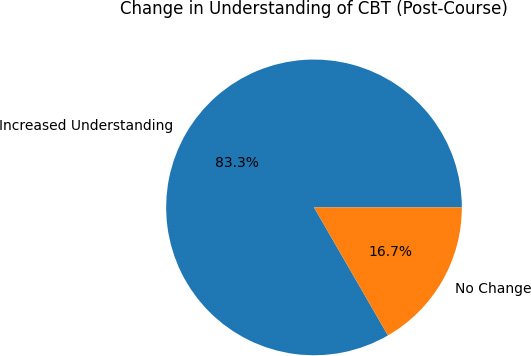
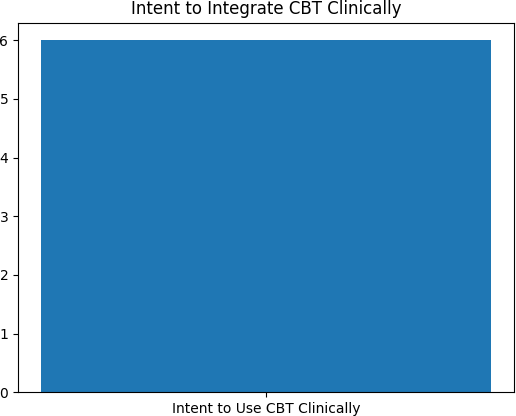
As shown in Figures 1 & 2, among students completing post-course reflections (n = 6), five students (83%) reported an increased understanding of CBT. One student (17%) reported no change in conceptual understanding but described improved appreciation for the structure and implementation of CBT interventions. Figure 3, all post- course respondents (100%) expressed intent to integrate CBT techniques into future clinical practice.
Qualitative analysis revealed four primary themes: baseline conceptual familiarity with CBT, expansion of applied clinical understanding, instructional strategies as facilitators of learning, and integration of CBT into professional identity.
Discussion
This mixed-methods course evaluation demonstrated that structured CBT education enhanced PMHNP students’ applied understanding of psychotherapy and strengthened professional identity formation. Although most students entered the course with foundational conceptual knowledge, post-course reflections revealed a clear shift toward applied competence. Experiential learning strategies, particularly case-based instruction, facilitated translation of theory into clinical practice. Students consistently cited real-world scenarios and structured worksheets as essential to their learning, aligning with evidence supporting case-based pedagogy in nursing education [4].
The students’ universal intention to integrate CBT into clinical practice underscores the course’s influence on professional identity development and supports holistic psychiatric care models.
Limitations include small sample size, reliance on self-reported data, and lack of objective competency measures. Future research should incorporate standardized assessments.
Implications for Nursing Education and Practice
Graduate nursing programs should expand psychotherapy curriculum to include structured CBT education with supervised practice, mentorship, and competency evaluation. Such initiatives may help address workforce shortages and improve access to evidence-based psychotherapy.
Conclusion
Structured CBT education enhances PMHNP readiness to deliver evidence-based psychotherapy and supports integrated psychiatric care. Incorporating applied psychotherapy training into graduate nursing curricula represents a critical step toward improving mental health care delivery.
References
-
Papola D, Miguel C, Mazzaglia M, Franco P, Tedeschi F, et al. (2024) Psychotherapies for generalized anxiety disorder in adults. JAMA Psychiatry 81(3): 250.
-
Aggarwal R, Cowley DS, Tang J, Lundquist RS, Wolf KM, et al. (2022) Understanding the training of psychiatric mental health Nurse Practitioners. Academic Psychiatry 47(3): 304-308.
-
Yue W, Chen Y, Ma X (2025) A structural equation model of psychological capital, self-directed learning, and learned helplessness: Implications for postgraduate nursing education. Nurse Education Today 151: 106748.
-
Afonso C, Amaral O (2025) From theory to practice: An implementing case- based learning in a family health nursing master’s course. Sage Open Nursing 11.
- The Role of Pharmacogenetic Testing in Clinical Practice: A Path toward more Effective, Personalized and Cost-effective Care
- Implementing Screening with the GAD-7 in an Outpatient Mental Health Setting: A Quality Improvement Project
- Social Media and Health Promotion
- Impact of Covid-19 Pandemic on the Academic Performance and Attitude of Nursing Students towards E-Learning
- A Study to Assess the Knowledge Regarding Ill Effects of Tobacco Consumption on Health among Adolescents in Selected Higher Secondary School in Nadiad City
- A Study to Assess the Effectiveness of Video Assisted Teaching Programme on Knowledge and Practice Regarding Adult Cardiopulmonary Resuscitation among School Teachers of Selected Schools of Kheda District