
Nanotechnology in Health Chemistry and Medicine: Current Challenges and Future Directions
Nanotechnology in Medicine employs materials with sizes ranging from 1 to 100 nm and devices to revolutionize healthcare. It offers precise drug delivery, advanced disease detection, and innovative treatments, leveraging nanoparticles and nanodevices for targeted therapy and diagnosis. Nanotechnology in Medicine has also enabled rapid disease diagnosis via biosensors and lab-on-a-chip devices. Therefore, Nanomedicine is the application of Nanotechnology in healthcare and medicine. This paper discusses the applications of nanotechnology in the medical field and presents the size and characteristics of the global nanomaterials market in medicine. It explains why the nanomaterials market is considered highly competitive due to the presence of many large-scale manufacturers.
Introduction
Fundamentals
In recent years, research involving materials on a nanometric scale, known as nanomaterials, has become very popular in various fields of chemistry, physics and materials science. Nanotechnology works with matter at dimensions in the nanometer scale (1-100 nm) and thus can be used for a broad range of applications and the creation of various types of nanomaterials and nanodevices [1]. The synthesis of nanostructured materials consists of the treatment of individual atoms, molecules, or compounds into structures to produce materials and devices with special properties. Basically involves the work from top down, i.e., reducing the size of large structures to the smallest structure, e.g., photonics applications in Nano electronics and Nano engineering, top- down or bottom-up, which involves changing individual atoms and molecules into nanostructures and more closely resembles chemistry, biology [2].
The properties of nanomaterials are considerably superior to those of conventional products, as they do not have any adverse health effects if used in various biomedical applications, such as Nanogadolinium in magnetic resonance imaging as a substitute for conventional products [3]. Another example, we can cite titanium nanoparticles used to inhibit bacterial growth, protecting the cell structure [4].
There has been considerable discussion about the trend towards miniaturization, which encompasses everything from computers and peripherals to machines responsible for producing a wide range of items. However, one aspect that has been troubling the academic community is related to miniaturization in a surprisingly different way, no longer restricted to miniaturizing machines and equipment, but rather to manufacturing them on an atomic scale, or more specifically, on a nanometric scale. The reason for this is due to the chemical and physical properties of nanomaterials, which can differ significantly from the characteristics of the same material at a macroscopic level or an atomic and molecular level. As the physical and chemical properties of a nanomaterial differ drastically from those of the same material as an extended solid, this nanomaterial has potential applications in several technological fields [5].
Advances in the field of nanotechnology and their applications in medicine and pharmaceuticals have revolutionized the twentieth century. Nanotechnology is the study of extremely small structures.
Therefore, we can consider that nanotechnology is undoubtedly our century’s leading scientific and technological breakthrough since it encounters applications in several fields, but we can say that in medicine it is an expanding and promising field. Therefore, we can consider that nanotechnology is undoubtedly our century’s leading scientific and technological breakthrough since it encounters applications in several fields, but we can say that in medicine, it is an expanding and promising field. Nanotechnology in medicine is an expanding and promising field. The advances brought about by this type of technology have been encouraging for doctors and patients. We like to emphasize that, according to research conducted by Grand View Research nanotechnology in medicine has transformative potential, offering new possibilities in areas such as diagnosis, treatment, and prevention of diseases [6].
It is no secret that the challenges facing medicine have only increased, with new diseases without a defined cure, such as cancer and Alzheimer’s, in addition to logistical difficulties in delivering health services, surgeries, and health emergencies, as was the case with the recent COVID-19 pandemic caused by the SARS-CoV-2 virus. To face this, medicine has always needed to innovate in its solutions, seeking alternatives to overcome these difficulties by offering more precise diagnoses and more effective treatments. One of these solutions is the application of nanotechnology to health, which enables new types of interventions and more sophisticated and precise diagnoses in everyday medical practice. Before understanding how the field of nanotechnology intersected with the knowledge of medicine, it is crucial to form a general overview of this field, which has already accumulated several decades of history. Ever since the discovery of the existence of atoms, invisible particles that make up all the materials we manipulate, humanity has dreamed of controlling these elements on a subatomic scale. However, it was only in the 1960s that nanotechnology began to take shape as an independent field. From lectures to books on the subject, the concept of nanotechnology began to emerge as an area ofstudy and manipulation of matter at the atomic level, that is, invisible to the naked eye [1].
Since its creation at the end of the 20th century, nanotechnology has profoundly revolutionized several areas, especially those that depend on and interact with particles, molecules, and tiny beings, such as the influence of viruses and bacteria. Since it is a relatively new science, which has only been in practical application for a few years and can even be considered a field of knowledge for the 21st century, it is challenging to predict the direction this technology will take, or even what phase we are currently in. However, it is possible to understand the main advantages of its use. For example, it is possible to achieve greater precision in exams and diagnoses, as well as increased agility in treatments and enhanced sophistication in procedures such as surgeries and other types of medical interventions.
Check out in detail why each of these topics represents a great benefit to the health area. As you have seen, the emergence of nanotechnology has been ongoing for several decades, accumulating knowledge, hypotheses, and literature in the field. However, when we discuss nanomedicine, another term for the application of nanoscience in the medical sciences, we are referring to much more recent advances.
The history of nanomedicine practices can be traced back to the 1990s, when the first innovations emerged from the leading laboratories of the time. It was only in 1990, for example, that the Italian laboratory Sigma-Tau Pharmaceuticals launched the drug “Adagen”, which helped combat immunodeficiency diseases through synthetic nanoparticles [7].
Since this milestone, other laboratories have been able to launch drugs that act through similar mechanisms, such as those encapsulated in liposomes and those involving the association between nanoparticles and substances. In the current scenario, several doctors, researchers, and other health professionals state that nanotechnology is one of the most essential and promising components in the field. Thus, the so-called wet nanotechnology, which can interact with cells and biological materials, has greatly facilitated medical work in cases such as the removal of endometriosis and cancer lesions, providing a significant advantage. Continue reading to discover additional benefits of applying nanotechnology to the healthcare field [6, 8, 9, 10].
Nanomaterials Market & Trends and Considerations
The global nanomaterials market size was estimated at US$ 12.42 billion in 2023 and is projected to grow at a compound annual growth rate (CAGR) of 15% (Figure 1) from 2024 to 2030 [6]. The market is expected to be driven by increasing demand for the product in electronic applications, but the application of nanomaterials is also varied in the medical industry on account of the utilization of products in various in-vitro and in-vivo applications [7, 8, 9]. The rising investment by multiple laboratories and biomedical industries for increasing product penetration in targeted drug delivery, “gene therapy [11] and treatment of malignant tumors is expected to boost the market growth.
![Figure 1: General illustration of the Market size of nanomaterials. Adapted from [6].](/fulltextimages/14044/fig_1.png)
The medical application segment accounted for a major share of around 31,2% of the global revenue in 2023 on account of the high penetration of the product for use in the treatment of cancer or other malignant tumors.
Moreover, nanoparticles are used as gene carriers for gene therapy and gene repair, as well as nano-biosensors. Finally, Nanotechnology in Medicine employs minuscule materials and devices to revolutionize healthcare. Certainly, define that the Nanomedicine is the application of nanotechnology in healthcare and medicine [9]. It involves the use of nanoscale materials and devices for diagnosis, drug delivery, and tissue regeneration. The nanoscale materials have unique physical, chemical and biological properties that allow for novel medical applications.
The medical application segment accounted for a significant share of around 30.4% of the global revenue in 2021 and is also the fastest-growing market on account of the high penetration of the product for use in the treatment of cancer and other malignant tumors [10, 11].
The production of nanomaterials requires varying raw materials depending of the manufacturing processes applied. We can highlight that the market growth stage is high and the pace of growth is accelerating; however, the degree of innovation is currently moderate. Several companies are continuously engaged in R&D activities and implementing new technologies to gain a competitive advantage. Therefore, a wide variety of processes is used to synthesize Nano products, such as precipitation or co-precipitation reactions, which is why the nanomaterials market is considered highly competitive on account of the presence of many large-scale manufacturers.
The rising investment by various research laboratories and biomedical industries in increasing product penetration for targeted drug delivery, gene therapy, and the treatment of malignant tumors is expected to boost the growth of the nanomaterials market [11]. Nanotechnology in medicine is a very targeted field. It is no wonder that, in 2020, the US National Institute of Health invested approximately US$ 445 million in nanomedicine, and the expectation is that its potential in health will only grow: it is expected that in 2026 the medical nanotechnology market should reach US$461,252 million, according to data gathered by Seed Scientific [10]. Furthermore, nanomaterials are used for various specific tasks in the medical sector, including imaging, targeted drug delivery, Nano-robots for surgery, nano-diagnostics, cell repair, and nano-biosensors. Bhuiyan MTH, et al. [12] describes studies for different nanomaterials and their physical chemistry properties, which are used in modern medicine.
The increase in research and development in the medical field for cancer treatment using nanoparticles has a considerable growth prospect.
According to the executive summary of Grand View Research [6] and Business Research Insights [13], the demand for nanomaterials is expected to grow at a CAGR of 14.1% from 2020 to 2028 in the biomedical industry.
Nanotechnology in Medicine: Innovations and Advances for the Future
Nanotechnology is revolutionizing medicine, with trends focused on accurate diagnosis, more effective treatments, and personalized care. It utilizes nanomaterials to deliver targeted drugs, optimize diagnostic systems, and even regenerate tissue, offering great potential to transform medicine through advances in diagnosis, treatment, and prevention of diseases. However, it is essential that research and applications are carried out with scientific rigor and ethics to ensure the safety and effectiveness of new treatments. Nanotechnology in medicine is a highly targeted field.
It is no wonder that, in 2020, the United States National Institute of Health invested around US$445 million in Nanomedicine. And the expectation is that its potential in health will only grow: by 2026, the medical nanotechnology market is expected to reach US$461,252 million, according to data gathered by SeedScientific [13]. However, studies themselves have demonstrated the role of Nanomedicine, as seen in this 2022 report, which examines the current and projected market potential for the sector. Among its conclusions, it notes that the main areas in which Nanomedicine products have had an impact are CNS diseases, cancer, cardiovascular diseases and infection control. However, its potential is much greater. Therefore, nanotechnology has opened up a range of possibilities in health-related topics.
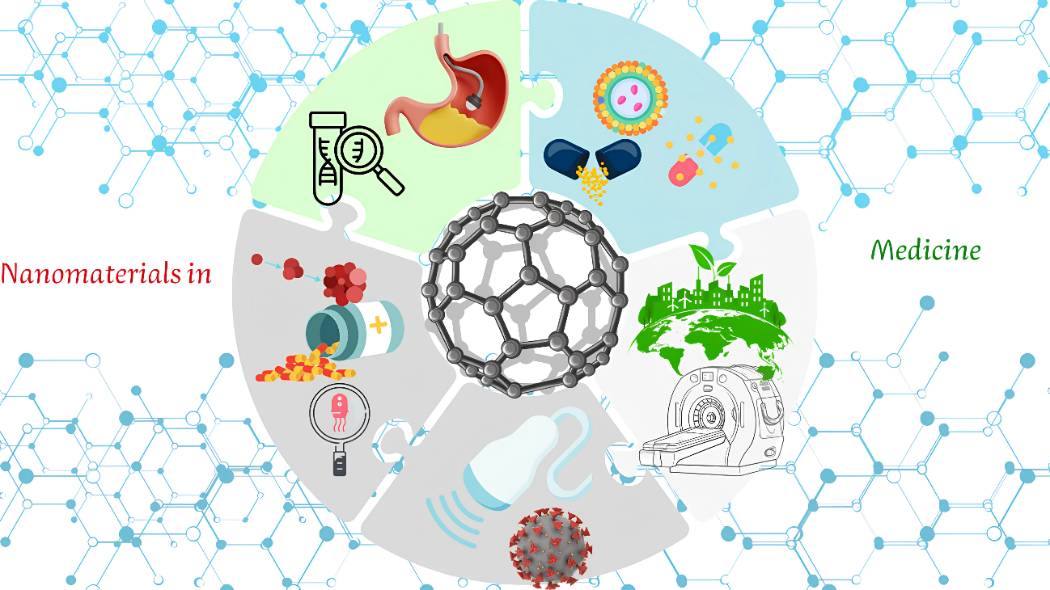
Nanotechnology is revolutionizing medicine, with trends focused on accurate diagnosis, more effective treatments, and personalized care. It uses nanomaterials to deliver targeted drugs, optimize diagnostic systems, and even regenerate tissue, and offers great potential to transform medicine, with advances in diagnosis, treatment, and prevention of diseases (Figure 2). However, it is essential that research and applications are carried out with scientific rigor and ethics, to ensure the safety and effectiveness of new treatments. Nanotechnology in medicine is a highly targeted field. It is no wonder that, in 2020, the United States National Institute of Health invested around US$445 million in Nanomedicine.
And the expectation is that its potential in health will only grow: by 2026, the medical nanotechnology market is expected to reach US$ 461.25 billion, according to data gathered by SeedScientific [13].
However, beyond the numbers, studies themselves have demonstrated the role of Nanomedicine, as seen in this 2022 report, which examines the current and projected market potential for the sector. Among its conclusions, it notes that the main areas in which Nanomedicine products have had an impact are CNS diseases, cancer, cardiovascular diseases, and infection control. However, its potential is much greater. Therefore, nanotechnology has opened up a range of possibilities in health-related topics.
In the healthcare area, nanotechnology opens new limits in the life sciences industry. Nanotechnology holds great promise in manipulating materials at the atomic level to transform various aspects of medical treatment, including diagnosis, disease monitoring, medical equipment, regenerative medicine, vaccine development, and medication delivery. It also opens the way through sophisticated research instruments to develop drugs to improve treatments for various ailments. Nanotechnology can be utilized to target medication to specific cells in the body, thereby reducing the risks of failure and rejection [14, 15, 16]. Several sectors are impacted daily by this technology, but one of the most committed to promoting innovation is the health sector [12, 13, 14, 15, 16, 17, 18, 19, 20, 21]. This is why the list of applications of nanotechnology in medicine is so long. Among these uses, we can highlight:
Better Diagnostic Techniques: Diagnosis is the foundation for effective treatment of any disease. Therefore, nanomaterials have been investigated as a means to enhance this process. With Nanotechnology/ Nanomedicine, doctors can make more accurate diagnoses, mainly by collecting information at the molecular level in greater quantities. Thus, nanomaterials can detect diseases in their early stages. This means that the treatment time can be shorter and the chances of success are higher. An example of this application of Nanomedicine is the nanoparticle-based diagnostic kit that works under the Point-of-Care (POC) concept. POC is based on being a simple, fast, and easy form of diagnosis, which has even had an impact on the COVID-19 test.
Development of Medicines: Nanomedicine is also well- known for developing drugs to combat various diseases. Also known as nanomedicine or nanopharmaceuticals, they are encapsulated on a microscopic scale. In this scenario, it is essential to explain that we are talking about artificial drugs, as the goal is to create drugs that do not depend on elements from our body to exist. From this, it is possible to transform how drugs are created and also how they act on the human body. They can, for example, offer fewer side effects and ensure a faster recovery. Nanomedicine is also being studied to more strongly combat problems such as diabetes and hypertension.
Microprobes in the Bloodstream: Among the applications of nanotechnology in medicine is the possibility of using microprobes in the bloodstream. They can be administered intravenously. Among their uses, they can be used to observe the conditions of red blood cells, leukocytes, plasma, and platelets, for example. The microprobe is capable of quickly identifying the type and quantity of cells, which helps in the diagnostic process. This will help in the repair of cells within the blood, in addition to generating faster and less invasive diagnoses.
Use of Drug Delivery: Research and scientific studies showed that the application of structures such as polymeric, inorganic, and dendrimer nanoparticles, for example, can release drugs in a controlled manner or have a more selective application. As a result, Nanomedicine has a more efficient impact on treatment, as the drugs are directed to where they are needed [22, 23, 24, 25, 26].
Decontamination of Environments: Continuing with the applications of nanotechnology in medicine, it also serves to promote the decontamination of environments. This process occurs through nanofibers, which are planted on surfaces. This is an interesting way to prevent diseases, including those in hospital, surgical, and outpatient environments, which are naturally part of medical practice.
Regarding this topic, the study on nanomaterials and the environmental issue in 2010 discovered that it is the most effective material for commercial purposes of disinfecting the environment [27].
Reconstruction of Synthetic Tissues: For example, it is possible to nanofabricate cells for this purpose. This strategy has been employed to treat burns and damage resulting from diabetes, among other conditions. Nanotechnology can also be used to make implants that are safer and more adherent to the patient’s tissue. Since nanoparticles enable the creation of biological tissues based on the analysis of a patient’s own DNA, this will reduce the chances of rejection and the recovery time for patients [28, 29, 30, 31, 32, 33, 34].
Unblocking Veins and Arteries: Nanodevices will also be able to help unclog veins and arteries. Nanotechnology is being studied to create Nano-robots that can move around inside our bodies and perform this type of procedure [35]. With nanorobotics and the simultaneous use of anticoagulant agents, it will be possible to open a small channel in the affected regions [36]. This use is essential for the treatment of problems such as stroke, in which it is necessary to unclog blood clots located in the brain. Once again, this solution will help speed up treatment, reducing recovery time and the chances of complications.
Nano-robots in the Fight Against Cancer: Another great advantage of Nanomedicine is its potential to combat cancer through Nano-robots, which target cancer cells directly, rather than attacking the entire body.
Another example is the discovery made by researchers at Arizona State University in the United States [37]. They created nanodevices that surgically eliminate tumors by blocking their blood supply. When they introduced the Nano- robots into the bloodstream of test subjects, they noticed that the diseased tissues were eliminated, while the healthy ones remained intact. Therefore, the treatment only affects the primary tumor, in addition to preventing the formation of metastases. For now, this technique has only been tested on laboratory rats suffering from melanoma, but it is already showing encouraging results.
Better Medical Equipment: The applications of nanotechnology in medicine can also impact the development of medical devices [38]. With nanomaterials, it is possible to create more sensitive and precise devices. One example of this is the replacement of chemotherapy and radiotherapy equipment, which causes a lot of pain to patients, with innovative devices that have a lower impact. Additionally, it is possible to develop safer equipment. For example, syringes, scalpels, and other instruments used in the daily lives of health professionals are less susceptible to the proliferation of microorganisms. Science is also seeking to give more autonomy to medical equipment. For example, nanosensors for the automatic detection of diseases, combined with artificial intelligence, will enable the early diagnosis of certain illnesses without human involvement.
Fighting the Coronavirus Pandemic: Finally, it is worth noting that nanotechnology has also been used to combat the coronavirus pandemic. Many researchers have begun to investigate the development of technological fabrics with antimicrobial properties that can be reused and sterilized quickly and efficiently. The idea is to make it possible to inactivate not only viruses, but also bacteria and fungi [39, 40]. The results themselves demonstrate that nanomaterials adhere to fabric fibers and inhibit bacterial growth.
In addition, nanoparticles were also used in the vaccine study, which are capable of inducing significant immune responses in in vivo tests.
We also identified important and vital sector in Nanomedicine, which is nanoparticles that were found useful in delivering myelin antigens, inducing immune tolerance in a mouse model with relapsing multiple sclerosis. In this technique, biodegradable polystyrene micro particles coated with myelin sheath peptides will reset the mouse’s immune system, thereby preventing the recurrence of disease and reducing symptoms as the protective myelin sheath forms a coating on the nerve fibers of the central nervous system. This method of treatment can potentially be used in the treatment of various other autoimmune diseases [41, 42].
Final Considerations
Nanomaterials have increased surface area and nanoscale effects, hence used as a promising tool for the advancement of drug and gene delivery, biomedical imaging, and diagnostic biosensors. Nanomaterials have unique physicochemical and biological properties as compared to their larger counterparts. The properties of Nano materials can greatly influence their interactions with biomolecules and cells, due to their peculiar size, shape, chemical composition, surface structure, charge, and solubility.
As a result of these properties the medical practices have become increasingly advanced and driven by new technologies, many still believe that Nanomedicine is a concept reserved for the distant future. The healthcare revolution is driven by Nanotechnology that emphasizes preventive population health management. Nanotechnology helps resolve the problem of focused treatment administration, reduces the danger of side effects and maximizes therapeutic effectiveness. This technology offers enormous potential markets and benefits, whole classes of current drugs.
Conceived in the 1970s and developed in Japan, nanotechnology has advanced exponentially in recent years, offering solutions that already benefit specialists today and are poised to revolutionize the medical sector even further.
Among the most Promising Practices in the area are those related to:
- Decontamination of environments;
- Fighting bacteria and viruses;
- Development of more efficient medicines;
- Tissue regeneration.
The regenerative possibilities of nanotechnology already bring promising prospects for the cure of diseases such as Alzheimer’s and cancer.
Furthermore, minimally invasive methods with a deeper capacity for interaction with the human body tend to speed up diagnoses, such as HIV, which can be performed in less than an hour, and non-invasive clot removal to prevent strokes, among many other possibilities. As with all other innovations in the healthcare field, nanotechnology still has a long way to go before it can be fully developed. The greatest concern is linked to the field of genetic alterations, as it is a relatively new field with possible adverse effects that are still unknown in the long term. In addition, poor guidance or incorrect medical conduct can also pose risks, as the action of microdevices can end up damaging healthy cells or altering biological processes. Nanotechnology applied to medicine is very promising, but it depends on caution and full attention to ethical and safety standards, so that it can continue to bring benefits and new possibilities for the health of the population. Among all the health technologies, nanotechnology is the area that promises to bring the most profound transformations to the entire medical sector, generating significant advantages for patients and expanding the possibilities of work for specialists.
Its applications and benefits are still in the process of development and expansion, but all the possibilities presented throughout the article prove that it is a reality that is here to stay.
Nanomedicine is an upcoming medical field that uses Nano technological expertise to prevent and treat severe conditions, including cancer, cardiovascular disease, and other illnesses. The latest advancements in nanotechnology have allowed doctors to sensitize the action goals in a live body by using nanoscale components, including the biocompatibility of nanoparticles and Nano-robots. Researchers are also using Nanomedicine to stimulate immunotherapy. There have been extensive advancements in nanomedicine in recent years that have expanded the market for Nanomedicine. The applications in Nanomedicine, such as Nano machine diagnostics, offer the capacity to monitor the interior chemistry of the organ and allow direct access to sick regions.
There is a very bright future for nanotechnology, by its merging with other technologies and the subsequent emergence of complex and innovative hybrid technologies. Biology-based technologies are intertwined with nanotechnology; nanotechnology is already used to manipulate genetic material, and nanomaterials are already being built using biological components. The ability of nanotechnology to engineer matter at the scale is revolutionizing areas such as information technology, cognitive science, and biotechnology, and is leading to new and interlinking these and other fields. Further research in nanotechnology can be helpful for every aspect of human life. Medicine, regenerative medicine, stem cell research and nutraceuticals are among the leading sectors that nanotechnology innovations will modify. For example, Nano particles can be used to produce exceptional images of tumor sites; single-walled carbon nanotubes, have been used as high-efficiency delivery transporters for biomolecules into cells. There is a very bright future to Nano technology, by its merging with other technologies and the subsequent emergence of complex and innovative hybrid technologies. Biology-based technologies are intertwined with nanotechnology-nanotechnology is already used to manipulate genetic material, and Nano materials are already being built using biological components. The ability of nanotechnology to engineer matter at the smallest scale is revolutionizing areas such as information technology cognitive science and biotechnology and is leading to new and interlinking these and other fields. By further research in nanotechnology, it can be useful for every aspect of human life. Medicine, regenerative medicine, stem cell research and nutraceuticals are among the leading sectors that will be modified by nanotechnology innovations. This means that, in the near future, nanotechnology will be a constant in hospitals, offices, clinics, operating rooms, diagnostic centers, among many other healthcare facilities! To prepare for this new reality, specialists need more than ever to stay alert to advances and innovations related to medical technologies.
What today seems distant and restricted to only a few researchers will soon become indispensable for medicine as a whole and also to meet the standards of health, well-being and quality of life that will dictate the societies of the future!
Nanomedicine has Attracted Public Interest, Yet Sparks about Safety and Health Risks: Targeting Difficulties: more research is needed to improve targeting and controlled release of nanoparticles in complex fluids and tissues; Regulatory Uncertainty: Food and drugs Administration approval pathways for many nanotech-based therapies are still being developed; Manufacturing Complications: Controlling the synthesis Delivery across the Blood-Brain Barrier: Most nanoparticles have difficulty crossing the blood-brain barrier; Cost Barriers: High costs due to complex production requirements and uncertainty about insurance coverage restrict access and mainstream use
References
-
(1993) Unbounding the future: The nanotechnology revolution. Precis Eng 15: 306.
-
Ibrahim H (2020) Nanotechnology and Its Applications to Medicine: an over view. QJM: An International Journal of Medicine 113.
-
Liu S, Jiang Y, Liu P, Yi Y, Hou D, et al. (2023) Single-Atom Gadolinium Nano-Contrast Agents with High Stability for Tumor T 1 Magnetic Resonance Imaging. ACS Nano 17: 8053-8063.
-
Younis Y, Kosaristanova HL, Smerkova K (2023) Titanium dioxide nanoparticles: Recent progress in antimicrobial applications. WIREs Nanomedicine and Nanobiotechnology 15.
-
Abinaya S, Kavitha HP, Prakash M, Muthukrishnaraj A (2021) Green synthesis of magnesium oxide nanoparticles and its applications: A review. Sustain Chem Pharm 19: 100368.
-
Grand View Research (2018) Nanomaterials Market Size, Share & Trends Analysis Report. Material (Gold, Silver, Iron, Copper), Application (Aerospace, Automotive, Medical), Region, And Segment Forecasts pp: 2024-2030.
-
Tinkle S, McNeil SE, Mühlebach S, Bawa R, Borchard G, et al. (2014) Nanomedicines: addressing the scientific and regulatory gap. Ann N Y Acad Sci 1313: 35-56.
-
Boisseau P, Loubaton B (2011) Nanomedicine, nanotechnology in medicine. C R Phys 12: 620-636.
-
Tibbals HF (2017) Medical Nanotechnology and Nanomedicine. CRC Press.
-
Gracher RH (2023) Nanotechnology: A Successful Future with Endless Possibilities and Applications. Determinations in Nanomedicine & Nanotechnology 3(1).
-
(2024) Gene Therapy Market Size, Share & Trends Analysis Report by Indication (Acute Lymphoblastic Leukemia, Large B-cell Lymphoma), By Vector Type (Lentivirus), By Route of Administration, By Region, And Segment Forecasts, 2024 - 2030. Grand View Research pp: 120.
-
Bhuiyan MTH, Chowdhury MN, Parvin S (2016) Potential Nanomaterials and their Applications in Modern Medicine: An Overview. ARC Journal of Cancer Science 2.
-
Mrkonjić E (2021) Nanotechnology Statistics: State of the Industry and Jobs. SeedScientific.
-
Kubik T, Bogunia-Kubik K, Sugisaka M (2005) Nanotechnology on Duty in Medical Applications. Curr Pharm Biotechnol 6: 17-33.
-
Raffa V, Vittorio O, Riggio C, Cuschieri A (2010) Progress in nanotechnology for healthcare. Minimally Invasive Therapy & Allied Technologies 19: 127-135.
-
Cormode DP, Skajaa T, Fayad ZA, Mulder WJM (2009) Nanotechnology in Medical Imaging. Arterioscler Thromb Vasc Biol 29: 992-1000.
-
Vishwakarma K, Vishwakarma OP, Bhatele M (2013) A Brief Review on Role of Nanotechnology in Medical Sciences. Proceedings of All India Seminar on Biomedical Engineering 2012 (AISOBE 2012) pp: 53-63.
-
Keskinbora KH, Jameel MA (2018) Nanotechnology Applications and Approaches in Medicine: A Review. Journal of Nanoscience & Nanotechnology Research 2(26): 5.
-
Quader S, Liu X, Toh K, Su YL, Maity AR, et al. (2021) Supramolecularly enabled pH- triggered drug action at tumor microenvironment potentiates nanomedicine efficacy against glioblastoma. Biomaterials 267: 120463.
-
Azimzadeh M, Rahaie M, Daneshpour M, Kimyasal A (2017) Electrochemical miRNA Biosensors: The Benefits of Nanotechnology.
-
Bayford R, Rademacher T, Roitt I, Wang SX (2017) Emerging applications of nanotechnology for diagnosis and therapy of disease: a review. Physiol Meas 38: R183-R203.
-
Jenjob R, Phakkeeree T, Crespy D (2020) Core-shell particles for drug-delivery, bioimaging, sensing, and tissue engineering. Biomater Sci 8: 2756-2770.
-
Sharma B, Varghese S (2016) Progress in orthopedic biomaterials and drug delivery. Drug Deliv Transl Res 6: 75-76.
-
Kozisek T, Hamann A, Nguyen A, Miller M, Plautz S, et al. (2020) High-throughput screening of clinically approved drugs that prime nonviral gene delivery to human Mesenchymal stem cells. J Biol Eng 14: 1-13.
-
Verma NK, Crosbie-Staunton K, Satti A, Gallagher S, Ryan KB, et al. (2013) Magnetic core-shell nanoparticles for drug delivery by nebulization. J Nanobiotechnology 11: 1-12.
-
Aguzzi C, Cerezo P, Viseras C, Caramella C (2007) Use of clays as drug delivery systems: Possibilities and limitations. Appl Clay Sci 36: 22-36.
-
Yunus IS, Kurniawan HA, Adityawarman D, Indarto A (2012) Nanotechnologies in water and air pollution treatment. Environmental Technology Reviews 1: 136- 148.
-
Lee EJ, Kasper FK, Mikos AG (2015) Biomaterials for Tissue Engineering. Ann Biomed Eng 42(2): 323-337.
-
Katti KS, Katti DR, Ambre AH (2007) Nanocomposites for Bone Tissue Engineering.
-
Zhou H, Lee J (2011) Nanoscale hydroxyapatite particles for bone tissue engineering. Acta Biomater 7: 2769- 2781.
-
Jamshidi SM, Akbari B, Nourmohammadi J (2019) Nanoclay Reinforced Starch-Polycaprolactone Scaffolds for Bone Tissue Engineering. Journal of Tissues and Materials 2: 55-63.
-
Razavi M (2017) Frontier in Biomaterials- Biomaterials For tissue engineering. Betham Science Publishers, UAE.
-
Demir AK, Elçin AE, Elçin YM (2018) Strontium-modified chitosan/montmorillonite composites as bone tissue engineering scaffold. Materials Science and Engineering: C 89: 8-14.
-
Zaszczynska A, Sajkiewicz P, Gradys A (2020) Piezoelectric scaffolds as smart materials for neural tissue engineering. Polymers (Basel) 12(1): 161.
-
Londhe VY, Bhadale RS (2022) Nanorobotics in Nanomedicine. Nanomaterials and Nanotechnology in Medicine, Wiley pp: 303-331.
-
Cavalcanti A, Shirinzadeh B, Freitas Jr RA, Hogg T (2008) Nanorobot architecture for medical target identification. Nanotechnology 19: 015103.
-
Li S, Jiang Q, Liu S, Zhang Y, Tian Y, et al. (2018) A DNA nanorobot functions as a cancer therapeutic in response to a molecular trigger in vivo. Nat Biotechnol 36: 258- 264.
-
Chehelgerdi M, Chehelgerdi M, Allela OQB, Pecho RCD, Jayasankar N, et al. (2023) Progressing nanotechnology to improve targeted cancer treatment: overcoming hurdles in its clinical implementation. Mol Cancer 22: 169.
-
da Silva Júnior AH, Macuvele DLP, Riella HG, Soares C, Padoin N (2021) Are carbon dots effective for ion sensing and antiviral applications? A state-of-the-art description from synthesis methods to cost evaluation. Journal of Materials Research and Technology 12: 688-716.
-
Zhang H, Liu Y, Liu Z (2024) Nanomedicine approaches against SARS-CoV-2 and variants. Journal of Controlled Release 365: 101-111.
-
Getts DR, Martin AJ, McCarthy DP, Terry RL, Hunter ZN, et al. (2012) Microparticles bearing encephalitogenic peptides induce T-cell tolerance and ameliorate experimental autoimmune encephalomyelitis. Nat Biotechnol 30: 1217-1224.
-
Nahar M, Dutta T, Murugesan S, Asthana A, Mishra D, et al. (2006) Functional Polymeric Nanoparticles: An Efficient and Promising Tool for Active Delivery of Bioactives. Crit Rev Ther Drug Carrier Syst 23: 259-318.
- Solution-Processed Chiral Perovskites for Biomedical Applications
- Human Exposure to Micro- and Nanoplastics: Pathways, Toxicity, and Intervention Strategies
- Exosome Nanomedicine for Cancer Therapy
- Micro and Nanoplastics–Plastisphere, Biotoxicity, Impact on Human Health, and Mitigation Strategies
- Process Validation of Cefixime Powder for Suspension Dosage Form, 50 mL
- Applications and Challenges of Nano Medicine for Covid-19 Outbreak: The Potential Relevance of Therapeutic and Diagnostic Approaches for Treatment