
Epidemiological, Clinical Characteristics and Evolving Profile of Cerebral Venous Thrombosis in the Far Ouest of Algeria
Cerebral venous thrombosis (CVT) is rare conditions related to occlusions of isolated dural sinuses or occlusions of cortical veins. They are characterized by their clinical and radiological polymorphism. 1.1. Methods: Our work is a descriptive (between January 2010 to December 2015). We collected 96 patients, all over the age of 18 years, for which we studied the epidemiological, clinical, and paraclinical presentations, and evolution outcomes. 1.2. Results: The average age in our study was 36.65 ± 6.1years with predominance in females (sex ratio 0,1 Clinical presentation was sub-acute in 73,9% of all cases. CIH syndrome was the most common presenting symptom (51,1% and focal symptoms in 25% of cases. Thrombosis was mainly located at the superior sagittal sinus (44,8%) followed by the lateral sinus (20,8%). Cerebral CT scan showed hemorrhagic venous infarction (73,9%). Identified causes were polymorphic and associated, dominated by post-partum (25%). Septic causes remained significant (19, 8%). The outcome was favorable in 75% of cases. 1.3. Conclusion: CTV is a thrombotic condition that is not as rare as thought, requiring early diagnosis and emergency management.
Introduction
Cerebral venous thrombosis (CVT), also called “cerebral thrombophlebitis” consists of the occlusion of one or more cerebral veins or sinuses. The incidence of CVT is estimated at 3 to 4 per million per year (2). The introduction of arteriography and, more recently, angiography sequences, computed tomography (CT) and magnetic resonance imaging (MRI) has revolutionized the diagnosis of CVT by allowing more visible visualization of the sinuses and veins of the brain and better detection of pauci symptomatic forms.
Objective
Describe the clinical, radiological features and evolutionary profile of CVT.
Methods
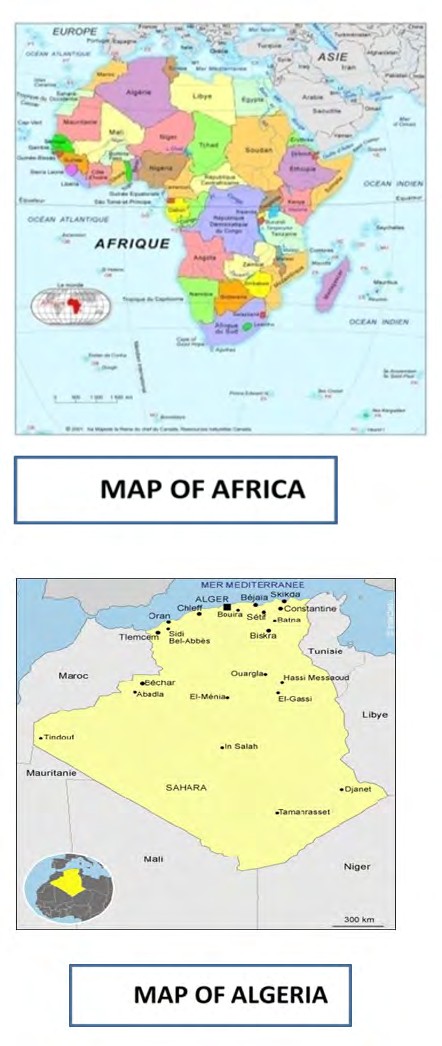
Algeria is a country in the south of the Mediterranean, north-west Africa and central Maghreb. It is the second largest country in Africa. Tlemcen is located on the northwestern coast of the country and has a seafront of 120 km. It is a border wilaya with Morocco. The chief place of the wilaya is located 432 km west of the capital, Algiers. Our study is descriptive, longitudinal to carry out this work; we recruited the subjects who were admitted to the neurology department of the CHU Tlemcen retrospectively from January 1st, 2016 to April 30th, 2018. The data were obtained by notification on a questionnaire which included identification of patients, personal history of autoimmune diseases, and CVT, contraception, post-partum period, surgical intervention, infection and family history especially of autoimmune diseases, and thromboembolic disease.
The onset was evaluated in three modes: Acute: when the CVT is demonstrated less than 48 hours after the onset of clinical signs, Sub-acute: when it is detected between 2 and 30 days, and chronic: when it is detected beyond 30 days. Clinical signs of onset: headache, seizures, alteration of consciousness, intracranial hypertension syndrome, and focal signs. Standard biological assessment was performed as well as, the thrombophilia assessment, the assessment of auto immunity. All our patients received a CT scan and a brain MRI and in some angio IRM are performed. The clinical course of the patients was assessed by the modified ranking score (mRS) (Figure 1) [1, 2, 3].
Results
96 patients were collected, 90, 6 % female. Oral contraception was the most frequent personal history; the acute onset is the most common, intracranial hypertension dominates the onset clinical signs in our patients (Table 1).
| 0,1 | |
|---|---|
| Average age of onset(years) | 36.65 ± 6.1 |
| Onset mod | |
| Acute | 17.70% |
| Sub-acute | 73.90% |
| Chronic | 8,3% |
| Onset clinical symptoms | |
| CIH syndrome | 51,1% |
| focal signs | 25% |
| Diffuse encephalopathy | 14,6% |
| headaches | 9,3% |
Table 1: Demographic and Clinical Characteristics.
| Causes | |
|---|---|
| Post-Partum | 25% |
| Infection | 19,8% |
| Surgical Intervention | 13,6% |
| Infection (Sphere ORL Et Autres) | 11,4% |
| Auto Immune Causes | 7,3% |
| Constitutional Thrombophilias | 12,5% |
| Indeterminate Cause | 10,4% |
| Cerebral CT scan | |
| Hemorrhagic Venous Infarction | 73.90% |
| Hyper density | 16.60% |
| Diffu Edema | 8,3% |
| Subarachnoid Haemorrhage | 1,04% |
| Cerebral MRI | |
| Superior Longitudinal Sinus | 44,8% |
| Lateral Sinus | 20,8% |
| Transverse Sinus | 18,8% |
| Sigmoid Sinus | 8,3% |
| Cavernous Sinus | 7,2% |
| Modified Rankin score | |
| <2 | 75% |
| >2 | 25% |
Table 2: Causes, Radiological Characteristics, and Evolution Outcomes.
Post-partum is one of the most common causes of CVT, as well as infections mainly, sinusitis, dental abscess. The TVC has been demonstrated in our patients in the form of cerebral hemorrhagic infarction in 73.9%. The upper longitudinal sinus is the most affected on the brain MRI (44.8%). Treatment is based on the anticoagulant treatment, the intracranial hypertension, and the various complications (epilepsy, papillary edema ... etc.) and the specific etiological treatment. The evolution of the patients was evaluated by modified Rankin score (Table 2).
Discussion
In our series, the CVT mainly affected women with a sex ratio of 0.1. Most of the studies [4] emphasized the preponderance of the female population due to the risk factors specific to them (oral contraception, postpartum contraception, hormonal therapy, etc.) These results are similar to those found in Maghreb countries and Algeria [5, 6]. Average age of our patients at the time of diagnosis was 36.65 years. The most affected age group was between 30 and 40 years old, this is in agreement with other studies [4, 5]. This confirms that this is a pathology that preferentially affects the young adult. Sub-acute onset is more frequent, in literature and many studies done in Maghreb countries. In the Maghreb [5, 6] the sub-acute mode is 64% and 56%, in some European studies [7, 8] it is 42% and 50% respectively. During the CVT, the different series show, well, that the headache is the most frequently encountered symptom, at percentages close to one hundred. In our series, the percentage of focal deficits and seizures remains close to the series of Ferro, et al. [4] (ISCVT). The presence of intracranial hypertension syndrome and disturbances of consciousness remain comparable to the Cantu et al series [9]. In our series, the diagnosis was established by MRI 72 times, by CT 11 times, by CT / MRI 17 times. In the ISCVT, the diagnosis was established by MRI / MRA in 71% of cases, by intra-arterial angiography in 12% of cases and venography in 2% of cases. The upper sagittal sinus is the most common seen in four series of patients [4, 6, 8].
The cerebral CT scan showed hemorrhagic infarction in 73.9%, whereas in the study carried out in Algiers [6]. The cerebral parenchymal resonance was dominated by intracerebral haemorrhage, also found in Y.L Yii [10]. Infections are a fairly common etiology in our population compared to European and Asian series. In the series of Napon, et al. [11]. In Burkina Faso, the frequency of septic CVT is estimated at 59%. This abnormally high rate, which is close to that found in our series, can be explained by the poor socioeconomic conditions of some patients and the improper use of antibiotic therapy. Dental infection has largely dominated infectious causes, hence the importance of systematic stomatological examination in front of any CVT [12]. In our patients, gyneco-obstetric causes are predominant and are widely represented in our series or the frequency of postpartum complicating CVT is higher than that reported in recent series.
Oral contraception accounts for the peak incidence of CVT in young women, and is most often incriminated in western series (54.3%) [13]. On the other hand, its frequency in our series is average (24.13%) but comparable to that reported to Burkina Fasso [11], Pakistan and the United Arab Emirates [14]. Thrombophilia is a not insignificant cause of CVT. The constitutional disorders of hemostasis predisposing to CVT were found in 41% of patients in a study involving 27 cases [15]. The evolution of the patients was evaluated by the modified Rankin score. The majority of patients have an evolution mRS <to 2 1 with a percentage of 75%, 25% of the patients have a mRS greater than 2. Our results are similar to the ISCVT and lariboisiere study [4, 8] as well as the Algerian study [6].
Conclusion
Thanks to advances in neuroimaging, our knowledge of CVT has evolved considerably. While being much rarer than arterial thrombosis, CVT are undoubtedly more frequent than was traditionally believed. They have, at least in the country with a high standard of living, etiologies that are more often infectious than septic. They have an extraordinarily variable symptomatology and an installation mode, making the clinical diagnosis difficult. The diagnosis is based on imaging, particularly on MRI, which makes it possible to visualize thrombosis and to follow its evolution. CT remains important for eliminating other conditions and angiography may still be useful in these cases of MRI. The evolution is most often favorable with a functional recovery of much better quality than in arterial accidents.
Conflict of Interest: None.
References
-
Ribes MF (1825) Des recherches faites sur la phlebite. Revue Medicale Francaise et Etrangere et Journal de Clinique de l’Hotel-Dieu et de la Charite de Paris 3: 5-41.
-
Stam J (2005) Thrombosis of the cerebral veins and sinuses. N Engl J Med 352(17): 1791-1798.
-
Bonita R, Beaglehole R (1988) Modification of Rankin Scale: Recovery of motor function after stroke. Stroke 19(12): 1497-1500.
-
Ferro JM, Canhao P, Stam J, Bousser MG, Barinagarrementeria F, et al. (2004) Prognosis of cerebral vein and dural sinus thrombosis: results of the international study on Cerebral Vein and dural sinus thrombosis (ISCVT). Stroke 35(3): 664-670.
-
Sidhom Y, Mansour M, Messelmani M, Derbali H, Fekih- Mrissa N, et al. (2014) Cerebral Venous Thrombosis: Clinical Features, Risk Factors and long term Outcome in a tunisian cohort. Journal of Stroke and Cerebrovascular diseases 23(6): 1291-1295.
-
Bensalah D (2016) Etude descriptive des thromboses veineuses cérébrales, these de doctorat en medecine interne, soutenue.
-
Haddid FE (2015) Prise en charge des thrombophlébites cérébrales au CHU de Marrakech: Etude retrospective de 45 cas, Soutenue en.
-
Crassard I, Ameri A, Rougemont D, Bousser MG (2012) Thromboses veineuses cerebrales. EMC Neurologie 9(3): 1-14.
-
Cantu C, Barinagarrementeria F (1993) Cerebral venous thrombosis associated with pregnancy and puerperium. Review of 67 Cases. Stroke 24(12): 1880-1884.
-
Irene YL, Mitchell PJ, Dowling RJ, Yan B (2012) Imaging predictor of clinical deterioration in cerebral venous thrombosis. Journal of Clinical Neuroscience 19(11): 1525-1529.
-
Napon C, Diallo O, Kanyanla E, Kabore J (2010) Les thromboses veineuses cerebrale en milieu hospitalier a Ouagadougou(Burkina Faso). Rev Neurol 166(4): 433- 437.
-
Berrabeh BO, Mrissa FN, Louati I, Layounia S, Zaouali J, et al. (2011) La thrombose veineuse cerebrale: etude prospective de 26 patient’s tunisiens. Rev Neurol 167(2): 141-149.
-
Herings R, Urquhart J, Leufkens HGM (1999) Veinous thrombosis among new users of different oral contraceptives. The lancet 354(9173): 127-128.
-
Khealani BA, Wasay M, Saadah M, Sultana E, Mustafa S, et al. (2008) Cerebral venous thrombosis: a descriptive multicenter study of patient in Pakistan and Middle East. Stroke 39(10): 2707-2711.
-
Rosenstingl S, Ruivard M, Melon E, Schaeffer A, Gouault- Heilmann M (2002) Thrombophlebite cerebrale: etude retrospective de vingt-sept casCerebral-vein thrombosis La revue de medecine interne 23(12): 973-982.
- A Review of Gene Therapy for Parkinson's Disease to Control Dopaminergic Neurons
- Late-Onset Myasthenia Gravis in a Patient with Recurrent Breast Cancer: A Case Report
- Covid-Induced Dystonia and Opsoclonus: A Case Report
- Generalized Tonic-Clonic Seizure in a Pediatric Patient with Sunflower Syndrome: A Case Report
- Comparison of Doppler Guided Seldinger Technique Versus Classic Palpatory Seldinger Technique for Radial Artery Cannulation-an Open Label Randomized Controlled Trial
- Brown Sequard Syndrome: Understanding the Complexities of Spinal Cord Injury