
Comparative Study of Lipid Profile among Stroke Patients with Gender Variations: A Study in Mymensingh Medical College Hospital, Mymensingh, Bangladesh
Introduction: Stroke is defined according to WHO as rapidly developing clinical signs of focal disturbance of cerebral functions with symptoms lasting for 24hrs or longer or leading to death, with no apparent cause other than vascular origin. More than 2400 years ago the father of modern medicine Hippocrates recognized and described stroke as sudden onset of paralysis. In Bangladesh day by day increase in stoke patients. Objective: This study was aimed to find out the association of one common risk factor of cardiovascular complication risk factor namely lipids level in stroke patient. And the main course of the study is to find the lipid level variations among both genders of stroke population. Materials and Methods: The stroke patients admitted in the Department of Neurology, Mymensingh Medical College Hospital, Mymensingh, Bangladeshduring the period of January 2019 to June 2019 included in this study. Patients with diagnosis of stroke comprising 50 consecutive patients of both the genders of age group around 21-60yrs were included in the study while patients on lipid lowering therapy were excluded from study. A serum sample after 12 hours of overnight fasting was taken on the both groups of patients. Results: Total serum cholesterol was high in female stroke patient’s 210±32.92 mg/dl when compared to male stroke patient’s 190±25.82 mg/dl which is statistically significant. Total triglycerides were increased in females stroke patients because of high body mass index when compared to male stroke patients was around 213±23.92, 197±58.43 mg/which is statistically significant. HDL-cholesterol level were very low in female stroke patients when compared to male stroke patients this is statistically more significant. The values were around 23.72±12.06, 37.43±7.18 mg/dl. LDL cholesterol is the direct marker of large vessel obstruction. LDL cholesterol level was found to be more in female stroke patients when compared to male stroke patients. The values are 141.81±31.89, 123.92±33.73 mg/dl. VLDL-cholesterol was high in female stroke patients when compared to male stroke patients which are statistically significant the values are 44.93±8.75, 37.83±9.33 mg/dl. Conclusion: Different environmental factors, genetic influences, and aging are playing a wide role in the prevalence of stroke among the old age group. Dyslipidaemia is a major risk factor for coronary heart disease, and atherosclerosis. In our study female patients had an increase in lipid level when compared to males.
Introduction
Stroke is defined according to WHO as rapidly developing clinical signs of focal disturbance of cerebral functions with symptoms lasting for 24hrs or longer or leading to death, with no apparent cause other than vascular origin. More than 2400 years ago the father of modern medicine Hippocrates recognized and described stroke as sudden onset of paralysis. In Bangladesh day by day increase in stoke patients. Until recently modern medicine has had very little power over this disease but the world of stroke medicine is changing and new better therapies are being developed every day [1]. Dr. Johann Jacob Wafer (1820) was the first person to demonstrate the stroke by doing post-mortem and bleeding in the brain of patients who died of apoplexy and he also described apart from bleeding, the blockage of the main arteries supplying the brain. Thus stroke became known as “Cerebral vascular Accident”(CVA). After several years of research the medical science has come up with an array of risk factors and various Path physiological mechanism by which the stroke is caused. The nontraditional factors are like increased Plasma fibrinogen, Hyper Homocysteinemia, High level of Lipoprotein. This has helped to identify the potential candidate for stroke among the patients just by looking at the presence of the risk factors in the blood and to employ the methods of modifying or eliminating these risk factors and thereby to prevent the incidence of stroke in our patients [2]. Serum lipid levels have an established effect on short term mortality due to strokes [3]. It is important to evaluate the difference in serum lipid levels in both the genders of strokes to guide lipid-lowering therapy which can reduce incidence of stroke and related mortality by adapting primary and secondary preventive measures among the stroke patients [4, 5]. Recent community surveys from many regions of India show a crude prevalence rate for stroke presumed to be of vascular origin in the range of 200/100,000 persons (0.2%) [6]. In approximately 1% of all patients with ischemic stroke and in up to 4% of young adults with stroke, the major precipitant of brain ischemia is mainly by blockage of artery with free radicals and lipid molecules [7, 8, 9]. The contribution of dyslipidemia in children with ischemic stroke has been reported to be 20 to 50% in most studies. Since dyslipidemia is also one of the important factor which contribute to the majority of cases of stroke, this study was undertaken to find out the association of lipid profile level in stroke patients. Serum HDL-cholesterol has antiatherogenic properties with ability to trigger the flux of cholesterol from peripheral cells to the liver and thus having a protective effect [10].
Materials and Methods
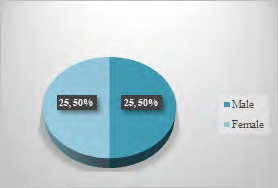
The study was conducted stroke patients admitted in the Department of Neurology, Mymensingh Medical College Hospital, Mymensingh, Bangladesh during the period of January 2019 to June 2019 included in this study. The sample size was around 50 and the age groups of the patients were around 21 to 85 yrs. Among stroke patients were 25 males and 25 female’s patients. A questionnaire was circulated to the patient attenders asking about the personal history like smoking, alcoholism, physical exercise and history of diabetes and hypertension. The lipid profile investigations were done fasting state. Venous blood samples were collected from anti cubical vein which is transferred into plain tubes. Samples were centrifuged at 4oC for 20 minutes after incubation of 30 minutes serum was extracted. The sera were analysed for serum lipid profile including total cholesterol, triglyceride, LDL-cholesterol, VLDL-cholesterol and HDL-cholesterol by standard enzymatic colorimetric method using chemistry auto-analyser. Mean values of the cholesterol, triglyceride, LDL-cholesterol, HDL-cholesterol and VLDL-cholesterol was determined.
Statistical Analysis
The statistical analysis was carried out using the Statistical Package for Social Sciences version 20.0 for Windows (SPSS Inc., Chicago, Illinois, USA). Qualitative variables of this study have been expressed as percentage. Quantitative variables are expressed as mean standard deviation. Done by comparison of lipid profile in two subgroups, using proportion test for any significant differences. From our study we concluded that females are in high risk for prevalence of cardiovascular disease.
Results
The mean age of presentation of patients with stroke was 54.2±32 years of both the genders. From our study we concluded that females are in high risk for prevalence of cardiovascular disease. Total serum cholesterol was high in females 210±32.92 mg/dl when compared to males190±25.82 mg/dl which is statistically significant. Total triglycerides were increased in females because of high body mass index when compared to males was around 213±23.92, 197±58.43 mg/dl which is statistically significant. HDL- cholesterol level were very low in females when compared to males which is statistically more significant.
| TC mg/dl | TGL mg/dl | HDL mg/dl | VLDL mg/dl | LDL mg/dl | |
|---|---|---|---|---|---|
| Males | 190±25.82 | 197±58.43 | 37.43±7.18 | 37.83±9.33 | 123.92±33.73 |
| Females | 210±32.92 | 213±23.92 | 23.72±12.06 | 44.93±8.75 | 141.81±31.89 |
| P value | <0.005* | <0.001** | <0.005* | <0.01*** | <0.005* |
Table 1: Shows the Variations among the Lipid Profile of Both the Genders (N=50).
There was an increase in Serum TC, TGL, VLDL, and LDL in female patients when compared with males. HDL cholesterol was found to be very less in females when compared with males. This is statistically significant. Significant* highly significant ** The values were around 23.72±12.06, 37.43±7.18 mg/dl. LDL cholesterol is the direct marker of large vessel obstruction. LDL cholesterol, level was found to be more in females when compared to males. The values are 141.81±31.89, 123.92±33.73 mg/dl. VLDL-cholesterol was high in females when compared to a male which is statistically significant the values are 44.93±8.75, 37.83±9.33 mg/dl.
Discussion
Stroke is a clinical syndrome characterized by loss of cerebral functions, with symptoms lasting more than 24 hours or leading to death with no apparent cause other than that of vascular origin [11]. Cerebral atherosclerosis with atheroma formation is the basic underlying pathophysiologic mechanism in ischemic stroke [12]. Conflicting results exist in the literature about the correlation between the total plasma cholesterol of patients and the risk of stroke [13]. Different environmental factors, genetic influences, and aging are playing a wide role in the prevalence of stroke among the old age group. Hypertension, DM, AF, and high cholesterol are the highest ranking controllable medical risk factors for stroke, whereas smoking, alcohol consumption, and obesity rank as the most important lifestyle stroke risk factors [14]. Dyslipidemia is a major risk factor for coronary heart disease Goff DC, et al. [15], and atherosclerosis not only in stroke patients, but also in old age group who are nearing the age around 60yrs of both the age groups. Qizilbash, et al. [16], from his study reviewed the relationship between serum total cholesterol and subsequent stroke. They concluded that there was a significant association between serum lipid profile and prevalence of stroke [16]. Khan, et al. [7] and Tanveer, et al. [17] from there study they proved that Hyperlipidemia was present in 16% patients of stroke. They analyzed that the serum lipid profile was 3rd most common risk factor for stroke [7, 17]. Sacco RL investigated cross-sectional differences in socio demographic and stroke risk factors and suggested that the burden of stroke risk factors is increased in both blacks and Hispanics with stroke [18]. Andersen KK et al. from their study they showed Cardiovascular risk factors were generally more prevalent in men. Lifestyle cardiovascular risk factors were more common in the young. Prevalence of hypertension, diabetes mellitus, coronary heart disease, and, in men, also atrial fibrillation go down after the age of 70 to 80 years [19]. The role of lipids in stroke patients in our environments needs further work in carefully selected stroke subjects. This finding may be important in this respect in our environment, as our populace now imbibe the western habit of eating high fatty foods and doing away with the indigenous high fiber diet.
Conclusion
Different environmental factors, genetic influences, and aging are playing a wide role in the prevalence of stroke among the old age group. Dyslipidemia is a major risk factor for coronary heart disease, and atherosclerosis. Cerebral atherosclerosis with atheroma formation is the basic underlying pathophysiologic which increases the risk of cardiovascular, and vessel wall disease among stroke patients. In our study female patients had an increase in lipid level when compared to males. This variations is mainly due to increase in body mass index, and imbalance in female sexual hormones after menopause may increase the adipose tissue fat content ,which favours the blockage of vessel walls and causes the ischemic responses. Regular monitor of lipid profile among stroke patients may decrease the risk of atherosclerosis and cardiovascular disease among the stroke patients.
References
-
Smolders, Robin Lemmens, Thijs V (2004) Stroke: Hope through Research, NINDS. Publication, pp: 99-2222.
-
Burkman K (1992) Stroke: History. In The stroke Recovery Book: A Guide for Patients and Families.
-
Zuliani G, Cherubim A, Atti AR, Ble A, Vavalle C, et al. (2004) Low cholesterol levels are associated with short term mortality in older patients with ischemic strokes. J Gerontol A Biol Sci Med Sci 59(3): 293-297.
-
Kirshner HS (2003) Medical prevention of stroke. South Med J 96(4): 354-358.
-
Laloux P, Galanti L, Jamart J (2004) Lipids in ischemic stroke subtypes. Acta Neurol Belg 104(1): 13-19.
-
Bhalla A, Gupta OP, Gupta SB (2002) Predicting Mortality in stroke. Neurology India 50(3): 279-281.
-
Hart RG, Sherman DG, Miller VT, Easton JD (1983) Diagnosis and management of ischemic stroke: Selectedcontroversies. Curr Probl Cardiol 8(7): 1-77.
-
Adams HP, Butler MJ, Biller J, Toffal GJ (1986) Nonhemorrhagic cerebral infarction in young adults. Arch Neurol 43(8): 793-796.
-
Klein GM, Seland TP (1984) Occlusive cerebrovascular disease in young adults. Can J Neurol Sci 11(2): 302-304.
-
Jia L, Bai H, Fu M, Xu Y, Yang Y, et al. (2005) Relationship between plasma HDL subclasses distribution and apoA- 1 gene polymorphisms. Clinica Chimica Acta 360(1-2): 37-45.
-
(2008) Stroke: diagnosis and initial management of acute stroke and transient ischaemic attack (TIA). NICE guideline Draft for consultation.
-
Khan J, Attique Rehman, Ali SA, Jielani A (2006) Frequency of hypertension in stroke patients presenting at Ayub Teaching Hospital. J Ayub Med Coll Abbottabad 18(1): 59-61.
-
Mahraood A, Sharif MA, Khan MN, Ali UZ (2010) Comparison of Serum Lipid Profile in Ischemic and Haemorrhagic Stroke. J Coll Physicians Surg Pak 20 (5): 317-320.
-
Goldstein LB, Adams R, Albert MJ, Appel LJ, Brass LM, et al. (2006) Primary prevention of ischemicstroke. A guideline from the American Heart Association/ American Stroke Association Stroke Council. Stroke 37(6): 1583-1633.
-
Goff DC, Bertoni AG, Kramer H, Bonds D, Blumenthal RS, et al. (2006) Dyslipidemia Prevalence, Treatment, and Control in the Multi-Ethnic Study of Atherosclerosis (MESA). Circulation 113(5): 647-656.
-
Qizilbash N, Duffy SW, War low C, Mann J (1992) Lipids are risk factors for ischemic stroke: overview and review. Cerebrovasc Dis 3(2): 127-136.
-
Tanveer A (1996) Localization and management in Cerebrovascular accident: a comparison of clinical assessment versus C.T scans [Dissertation]. College of Physicians & Surgeons, Karachi, Pakistan.
-
Sacco RL, Kargmann DE, Zamanillo MC (1995) Race- ethnic differences in stroke risk factors among hospitalized patients with cerebral infarction: the Northern Manhattan Study. Neurology 45(4): 659-663.
-
Andersen KK, Andersen ZJ, Olsen TS (2010) Age-and Gender-Specific Prevalence of Cardiovascular Risk Factors in 40102 Patients with First-Ever Ischemic Stroke. A Nationwide Danish Study. Stroke 41(12): 2768- 2774.
- A Review of Gene Therapy for Parkinson's Disease to Control Dopaminergic Neurons
- Late-Onset Myasthenia Gravis in a Patient with Recurrent Breast Cancer: A Case Report
- Covid-Induced Dystonia and Opsoclonus: A Case Report
- Generalized Tonic-Clonic Seizure in a Pediatric Patient with Sunflower Syndrome: A Case Report
- Comparison of Doppler Guided Seldinger Technique Versus Classic Palpatory Seldinger Technique for Radial Artery Cannulation-an Open Label Randomized Controlled Trial
- Brown Sequard Syndrome: Understanding the Complexities of Spinal Cord Injury