
Study on Yield and Yield Components of Onion (Allium Cepa L.) Under Hatseva Condition, Israel
Onion is one of the most important food crops and cultivated in many countries in different climatic zones, including temperate, tropical and sub-tropical regions. Yield parameters like harvest index, total bulb yield, marketable bulb yield, unmarketable bulb yield, total bulb number, marketable bulb number, unmarketable bulb number, and bulb quality parameters like small size bulb number, medium size bulb number and large size bulb number. Generally, the study showed that the mean marketable bulb number, the mean unmarketable bulb number and the mean total bulb number per dunam were calculated and found to be 17, 395.84, 24, 270.83 and 41, 666.67 respectively. Similarly the average marketable bulb yield, the average unmarketable bulb yield and the average total bulb yield per dunam were also calculated and found to be 6.18 ton/dunam, 2.44 ton/dunam and 8.62 ton/dunam respectively. On the other hand, the mean value of Small size bulb number, the mean value of Medium size bulb number and the mean value of Large size bulb number per dunam were found to be 270.83, 11, 250.00 and 250.00 respectively with the average harvest index of 70.84 %. For the potential onion growers or farmers in the study area special advice and training is essential on how to produce and get high yield of onion. Thus, onion (var. uri) growers in the study area can benefit if they are distributed well with the over all packages and production technologies. Therefore, further studies need to be conducted on various green houses, under different temperature conditions to generate more reliable information and acceptable practical evidences on onion production improvement in the Arava region.
Introduction
Onion (Allium cepa L.) is an important vegetable crop worldwide, ranking second among all vegetables in economic importance next to tomato. Onion contributes a significant nutritional value to the human diet and has medicinal properties and is primarily consumed for its unique flavor or ability to enhance the flavor of other foods [1]. The genus Allium which belongs to family Alliaceae is diverse and comprises of over 600 species. Only seven of them are widely cultivated in different parts of the world. Onion is one of the most important food crops and cultivated in many countries in different climatic zones, including temperate, tropical and sub- tropical regions.
The primary center of origin for onion is Central Asia with secondary center being in Near East and the Mediterranean region. From these centers, the onion has spread widely to other many countries of the world [2]. Onion is different from the other edible species of alliums for its single bulb and is usually propagated by true botanical seed. A global review of major vegetables shows that onion ranks second to tomatoes in area under cultivation. According to FAO, [3] amongst the onion producing countries in the world the first is China followed by India in terms of area of production. The highest productivity of onion in the world is from Korea Republic (67.25 t/ha) followed by USA (53.91 t/ha), Spain (52.06 t/ha) and Japan (47.55 t/ha). India being the second major Onion producing country in the world has a productivity of 10.16 t/ha only.
Over the last 15 years the total area dedicated to onion crop in the world has doubled and presently reaching 2.74 million hectares. Average world yield increased from 12 t/ha in the early 1960s to 17 t/ha in 2001. As a result, the increase in cultivated area and the yield obtained, the world production of onion is about 3944 million tons per year [4].
The geography of Israel is very diverse, with desert conditions in the south, and snow-capped mountains in the north. It is bounded to the north by Lebanon, the northeast by Syria, the east by Jordan and the West Bank, and to the southwest by Egypt, with this border also being the border between Asia and Africa. To the west of Israel is the Mediterranean Sea, which makes up the majority of Israel's 273 km (170 mi) coastline [3] and the Gaza strip. Israel has a small coastline on the Red Sea in the south.
Israel's area is approximately 27,000 km2 (10,425 sq mi), which includes 445 km2 (172 sq mi) of inland water.
Israel stretches 424 km (263 mi) from north to south, and its width ranges from 114 km (71 mi) to, at its narrowest point, 15 km (9.3 mi). The Israeli-occupied territories include the West Bank, 5,879 km2 (2,270 sq mi), East Jerusalem, 70 km2 (27 sq mi) and the Golan Heights, 1,150 km2 (444 sq mi). Geographical features in these territories will be noted as such.
The south of Israel is dominated by the Negev desert covering some 16,000 square kilometres (6,178 sq mi), more than half of the country's total land area. The north of the Negev contains the Judean Desert, which, at its border with Jordan, contains the Dead Sea which, at −417 m (−1,368 ft) is the lowest point on Earth. The inland area of central Israel is dominated by the Judean Hills of the West Bank, whilst the central and northern coastline consists of the flat and fertile Israeli coastal plain. Inland, the northern region contains the Mount Carmel mountain range, which is followed inland by the fertile Jezreel Valley, and then the hilly Galilee region. The Sea of Galilee is located beyond this, and is bordered to the east by the Golan Heights, which contains the highest point under Israel's control, a peak in the Israeli-occupied Mount Hermon massif, at 2,224 meters (7,297 ft). The highest point in territory internationally recognized as Israeli is Mount Meron at 1,208 meters (3,963 ft).
Israel’s agricultural sector is characterized by intensive production resulting from the need to overcome a scarcity of natural resources, particularly water. The high standard of development in the sector can be attributed to close cooperation and interaction between scientists, extension services, farmers, and agro- industries. These four elements have joined together to transform agriculture in Israel into an industry that is globally renowned for its efficiency and productivity, in a country where more than half of the land is classified as desert land.
Despite a steady decline in number of self-employed farmers over last three decades and agriculture’s limited contribution to the GDP, agriculture plays a vital role as the major food supplier in the local market, and is also a significant factor in Israeli exports. Total agricultural produce in 2010/11 accounted for 1.9% of GDP. Some 64,000 people were directly employed in agriculture in 2010/11 (one third self-employed, the rest hired labor), representing 2.0% of the country’s total labor force.
Despite a slight decrease in the total cultivated area in Israel, intensive agriculture, such as the production of vegetables and flowers in greenhouses, has increased more than threefold, from 5000 hectares to more than
15,000 hectares. In Israel farmers grow onions all over the country from the Golan Heights to the "Arava" valley over an area of about 2,000 acres. Most of the growing fields are small. The overall yield is about 100,000 tons and all of it is sold on the local market [5]. Tropical countries, having about 45% of the world’s arable land, grow about 35% of the world’s onions [6]. In the light of the above aspects, the present mini project research work was initiated with the general objective to determine the yield and yield components as well as some related quality parameters under Hazeva conditions, Israel.
Literature Review
The Onion plant
Onion (Allium cepa L.) is an herbaceous biennial monocot cultivated as an annual. Onion being a biennial crop, takes two seasons for seed production. During the first season bulbs are formed while flower stalks and seeds are developed in the second season. Onion is grown mainly for its bulbs; although the green shoots of salad onion is also an important part. It canbe grown in all types of soils. But, for higher yield drained friable loam soil with a pH of 6.0 to 6.8 is good.
The Onion bulb consists of the swollen bases (sheaths) of bladed leaves surrounding swollen bladeless leaves. Each leaf consists of a blade and sheath; the blade may or may not be distinctive. The sheath develops to encircle the growing point and forms a tube that encloses younger leaves and the shoot apex. Collectively, the grouping of these sheaths comprises the pseudo stem. Leaves arise from the short, compressed, dislike stem which continues to increase in diameter with maturation and resembles an inverted cone. The onion skin is formed from the dry paper like outer most leaf scales that lose their freshness during bulbing. Major bulb features are uniformity of shape, size and skin color, pungency and dry matter content.
Onion roots are shallow, mostly occur within 15 to 20 cm of the surface, and seldom extend horizontally beyond 50 cm. Onion roots are short lived, being continuously produced. Roots rarely have branch and root hairs and rarely increase in diameter. The terminal inflorescences develops from the ring like apical meristem scapes and several, generally elongate well above the leaves and ranges in height from 30 to more than 100 cm. The scape is the stem internodes between the spa the and the last foliage leaf. At first, the scape is solid but, by differential growth, becomes thin walled and hollow. The number of scapes that develop depends on the number of sprouted lateral buds. A spherical umbel is borne in each scape and can range from 2 to 15 cm in diameter.
Climatic and Nutrient Requirement of Onion
Climatic Requirement of Onion
Onion requires moist soil throughout the growing period. Moderate rainfall is preferable since excessive soil water and high humidity encourage diseases. The optimum water requirement for yield is between 350 to 550mm of water. A cool period promotes early leaf development, while high temperatures encourage bulb development but flower and seed production is only possible where the bulbs are subjected to low temperatures. Bulb setting in any onion variety is determined by day length and temperature. The optimum temperature for bulb setting is 20 to 25°C. At 10 to 15°C bulbs do not develop well regardless of day length. Temperature can also have another effect on plant development, and therefore production. Once an onion plant reaches a certain physiological age (50 to 80 days old) it may respond to certain temperature conditions (below 14 to 10°C) by initiating a flower head, which then develop flower stalk up to 1m high. Nutrient Requirement of Onion Plant tissues usually contain more Nitrogen than any other nutrient normally applied as a fertilizer. Nitrogen is an integral component of many essential plant compounds. Nitrogen is needed to form chlorophyll, proteins and it is a major part of all amino acids and many other molecules essential for plant growth and other critical nitrogenous plant components such as the nucleic acids and chlorophyll. Nitrogen is also essential for carbohydrate use within plants. A good supply of nitrogen stimulates root growth and development as well as the uptake of other nutrients [7].
Plant tissues usually contain more Nitrogen than any other nutrient normally applied as a fertilizer. Nitrogen is an integral component of many essential plant compounds. Nitrogen is needed to form chlorophyll, proteins and it is a major part of all amino acids and many other molecules essential for plant growth and other critical nitrogenous plant components such as the nucleic acids and chlorophyll. Nitrogen is also essential for carbohydrate use within plants. A good supply of nitrogen stimulates root growth and development as well as the uptake of other nutrients [7].
Neither plants nor animals can grow without phosphorus. It is an essential component of the organic compound often called the energy currency of the living cell: adenosine tri-phosphate (ATP). Synthesized through both respiration and photosynthesis, ATP contains a high- energy phosphate group that drives most energy- requiring biochemical processes. For example, the uptake of nutrients and their transport within the plant, as well as their assimilation into different bio-molecules are energy-using plant processes that require ATP as stated by. Phosphorous is an essential component of deoxyribonucleic acid (DNA), the seat of genetic inheritance, and of ribonucleic acid (RNA), which directs protein synthesis in both plants and animals. Phospholipids, which play critical roles in cellular membranes, are another class of universally important phosphorus-containing compounds. For most plant species, the total P content of healthy leaf tissue is not high, usually comprising only 0.2 to 0.4% of the dry matter [7].
Potassium also provides resistance against pest and diseases and drought as well as frost stresses [8]. With the exception of N, K is required by plants in much greater amounts than all other soil supplied nutrients [9]. Potassium uptake by plants from the soil solution is regulated by several factors including soil texture, moisture conditions, pH, aeration and temperature. Therefore, during growth development soil K supply is seldom adequate to support crucial processes such as sugar transport from leaves to bulbs, enzyme activation, protein synthesis and cell extension that ultimately determine bulbyield and quality [10].
Many studies reported several roles of K element in onion plant growth such as plant height, number of leaves per plant, fresh and dry weight of whole plant, total yield and its components. On the other hand the high levels of potassium fertilization resulted in bulbs with higher quality and higher TSS [11]. Also El-Bassiouny [12] found that using potassium Sulfate plus a suplemental dose of potassium oxide as foliar application resulted in the highest plant growth (plant length, number of leaves per plant, and fresh weight of leaves) and also the highest yield and bulb quality.
Materials and Methods
Description of the Experimental Site
The experiment was conducted at Hatzeva, Israel on farmers field in the year 2014 under irrigated condition. Arava/ Hatzeva is geographically located 130 km from Beer sheva in the north and 130 km to Eilat in the south at about 31°30′N 34°45′E / 31.5°N 34.75°E at the eastern end of the Mediterranean Sea in western Asia latitude and longitude at an altitude of 400 meter above sea level (m.a.s.l). The mean maximum and minimum temperatures are 19°C and 33°C, respectively and the mean maximum and minimum relative humidity are 25% and 20%, respectively. The mean annual rainfall of the area is 5, 000mm.
Experimental Material
Standard onion seed of variety Uri was used as planting material for the experiment. The seed were obtained from Meitav nursery and the planting day was 15/09/2013. This cultivar has been released by researchers or and this cultivar have a yield of 100 t/ha under research and 60 t/ha under farmer fields.
Experimental Procedures
The plot size was 1 m length and 1.2 m width each with spacing of 20 cm between rows and 10 cm between plants. Spacing between plots and replications was 0.5 and 1 m, respectively. Each experimental plot has a plot area of 1.2 m2 (1 m length and 1.2 m width). Each plot consist 5 rows and 12 plants per row with a total population of 60 plants per plot. The treatment combinations were randomly assigned to the experimental unit of each block so as to allot one treatment combination only once in each block.
Data collected
Data were recorded from the following parameters. Yield and Yield Component Parameters Marketable Bulb Number Per Dunam Were recorded as a mean number of marketable bulb numbers by counting good quality bulbs, better colour bulbs, medium bulbs, medium large bulbs and large bulbs per plot at harvest and converted in to dunam. Unmarketable Bulb Number Per Dunam Were recorded as a mean number of unmarketable bulb numbers by counting very small bulbs, under size bulbs, diseased bulbs over size bulbs per plot at harvest and converted in to dunam. Total Bulb Number Per Dunam Were the sum of marketable bulb numbers per plot and unmarketable bulb numbers per plot at harvest and converted in to dunam. Marketable Bulb Yield Per Dunam (Ton/Dunam) were recorded as a mean weight of marketable bulb yield per plot at harvest by weighing bulbs in kg/plot and converted in to ton/dunam Unmarketable Bulb Yield Per Dunam (Ton/Dunam) were recorded as a mean weight of unmarketable bulb yield per plot at harvest by weighing bulbs in kg/plot and converted in to ton/ dunam. Total Bulb Yield Per Hectare (T/Ha) were recorded as a sum of Marketable bulb yield per dunam (ton/dunam) and Unmarketable bulb yield per dunam (ton/dunam). Harvest Index (%) It is the proportion of economic (bulb) yield to that of total biological yield. It’s the ratio of mature dry bulb yield of plants harvested from 3 central rows and total biological yield of plants of the same rows. This was calculated by: HI= EY/BY x100 Where: EY- Weight of Economic Yield. BY- Weight of Biological Yield.
Bulb Quality Parameters
Small Size Bulb Number Were recorded as a small size bulbs per plot at harvest by counting bulbs in numbers/plot and converted into ton/dunam. Medium Size Bulb Number were recorded as a medium size bulbs per plot at harvest by counting bulbs in numbers/plot and converted into ton/dunam. Large Size Bulb Number Were recorded as a large size bulbs per plot at harvest by counting bulbs in numbers/plot and converted into ton/dunam. Statistical Analysis The data collected on different bulb yield and bulb quality parameters were analysed by using Microsoft word excel.
Results and Discussions
Yield and Yield Components
The major yield and yield components of onion were studied in the present investigation which are Harvest index (HI %), bulb number as expressed by marketable bulb number, unmarketable bulb number, total bulb number and bulb yield as expressed by marketable bulb yield, unmarketable yield and total bulb yield. The main results of all the above parameters are presented and discussed below.
| Parameters | Per Dunam | ||||
|---|---|---|---|---|---|
| HI | 70.84 | ||||
| MBN | 17, 395.84 | ||||
| UBN | 24, 270.83 | ||||
| TBN | 41, 666.67 | ||||
| Parameters | ton/ dunam | ||||
| MBY | 6.18 | ||||
| UBY | 2.44 | ||||
| TBY | 8.62 |
Table 1: Mean values of (HI) Harvest index, (MBN) Marketable bulb number , (UBN) Unmarketable bulb number, (TBN) Total bulb numbe
Table 1: Mean values of (HI) Harvest index, (MBN) Marketable bulb number , (UBN) Unmarketable bulb number, (TBN) Total bulb number , (MBY) Marketable bulb yield, (UBY) Unmarketable bulb yield and (TBY) Total tuber yield per dunam. Note: HI = Harvest index, MBN = Marketable bulb number , UBN =Unmarketable bulb number, TBN = Total bulb number , MBY = Marketable bulb yield, UBY =Unmarketable bulb yield and TTY = Total tuber yield per dunam.
Harvest Index (%)
The results given in Table 1 above, explains significant variation in respect of the harvest index of onion plants and the average result was found to be 70.84%.The harvest index improvement could attribute to an increased photosynthetic area which enhances assimilate production and greater partitioning of the same to the bulbs. The presence of high harvest index is associated with the production of high bulb weight relative to the above ground biomass and the presence of low harvest index is associated with the production of low bulb weight relative to the above ground biomass.
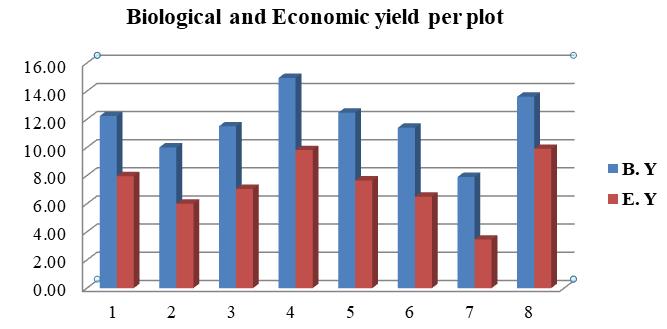
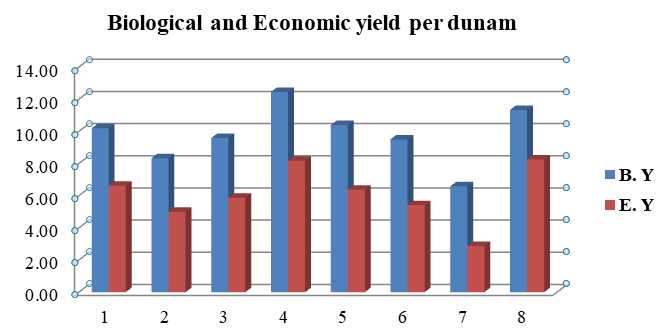
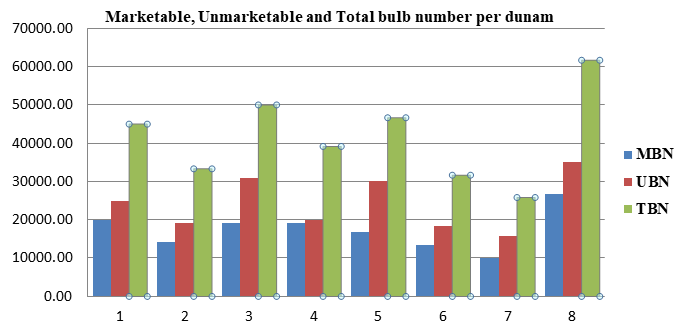
The mean marketable bulb number per dunam was calculated and found to be 17, 395.84 as indicated in table 1 above. Unmarketable Bulb Number per Dunam The mean unmarketable bulb number per dunam was also calculated and found to be 24, 270.83 as indicated in table 1 above.
Total Bulb Number Per Dunam
Similarly, the mean total bulb number per dunam which is actually the sum both marketable bulb number per dunam and Unmarketable bulb number per dunam was also calculated and found to be 41, 666.67and as indicated also in table 1 above.
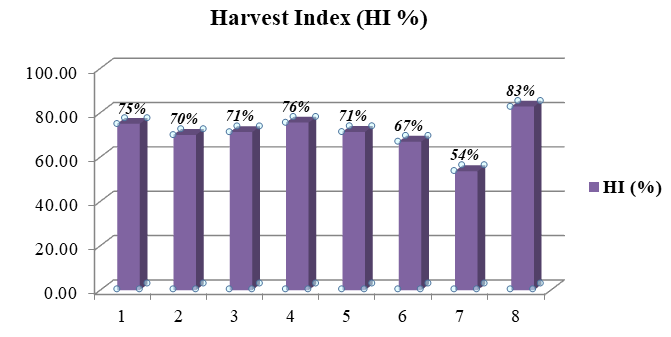
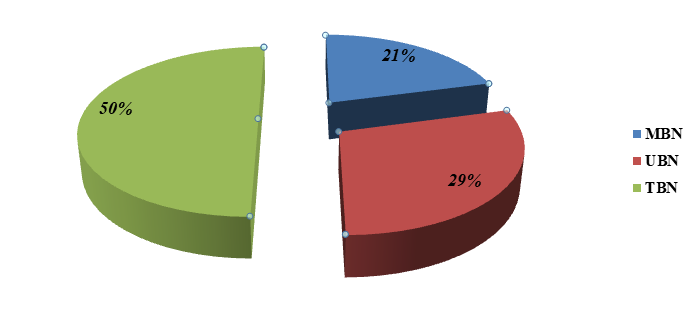
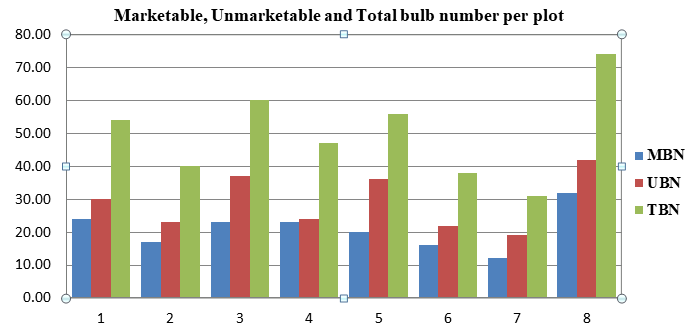
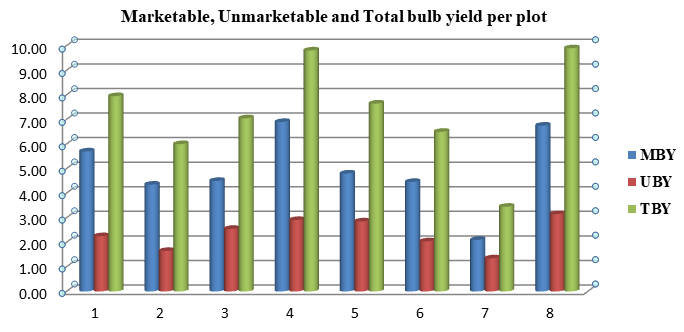
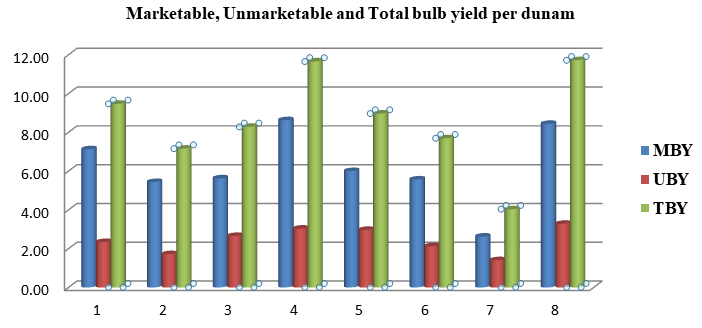
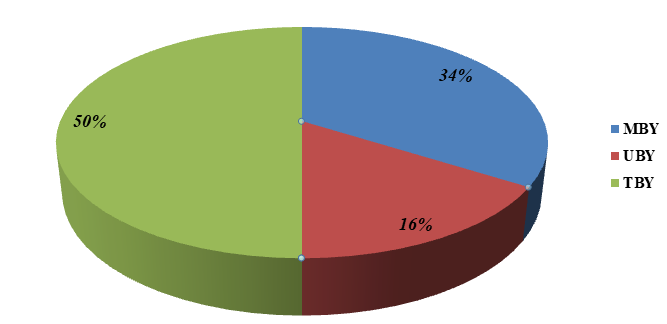
Figure 6: Marketable, Unmarketable and Total bulb number in percents. Marketable Bulb Yield (Ton/Dunam) As clearly indicated in table 1 above, the average marketable bulb yield per dunam was calculated and found to be 6.18 ton/dunam. Unmarketable Bulb Yield (Ton/Dunam) In similar fashion as specified in table 1 above, the average unmarketable bulb yield per dunam was calculated and found to be 2.44 ton/dunam. Total Bulb Yield (Ton/Dunam) In the same manner as showen in table 1 above again, the average total bulb yield per dunam which is the sum of marketable bulb yield (ton/dunam) and Unmarketable bulb yield (ton/dunam) was also calculated and found to be 8.62 ton/dunam.
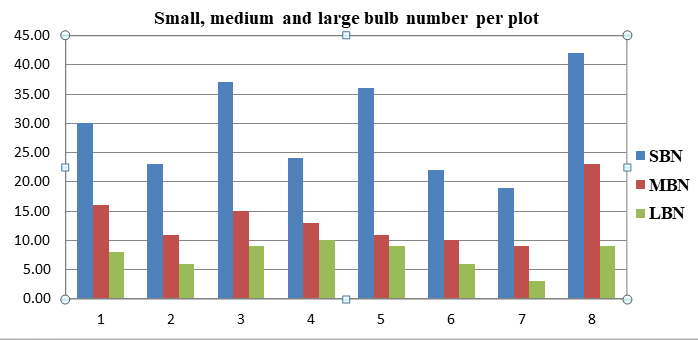
Quality Parameters
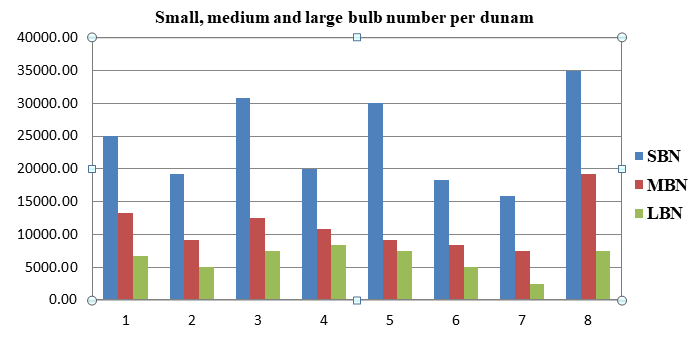
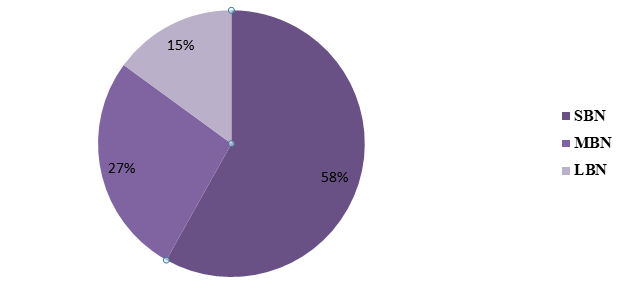
The quality parameters of onion in the present exploration as shown in table 2 below includes Small size bulb number, Medium size bulb number, Large size bulb number were also studied. Similarly, the main results are again presented and discussed hereunder.
| Parameters | Per Dunam | ||||
|---|---|---|---|---|---|
| SBN | 24, 270.83 | ||||
| MBN | 11, 250.00 | ||||
| LBN | 6, 250.00 |
Table 1: Mean values of Small size bulb number (SBN), Medium size bulb number (MBN) and Large size bulb number (LBN) per dunam. Note: SBN = Small size bulb number, MBN = Medium size bulb number and LBN = Large size bulb number per dunam. Small Size Bulb Number Accordingly, as simply illustrated in table 2 above, the mean value of Small size bulb number per dunam was numerically stated as 24, 270.83.
Medium Size Bulb Number
Likewise, as demonstrated in table 2 above, the mean value of Medium size bulb number per dunam was stated as 11, 250.00. Large Size Bulb Number Similarly, as shown in table 2 above, the mean value of Large size bulb number per dunam was mathematically stated as 6, 250.00.
Summary and Conclusion
Information on yield and crop response to different management practice is very important to come up with profitable and sustainable crop production. Appropriate agronomic practices such as planting density, planting date, harvesting date and fertilizer rate of the crop varies with environment, soil type and importance of the crop and variety of which are directly related to high yield of any crop including onion and other vegetables. It is very difficult to give general recommendation that can be applicable to the different agro ecological zones since there is no common specific recommended agronomic practice including fertilizer rate, time and method of application type to the study area including types of green houses. Experiences and indigenous knowledge are the common options for the farmers in the area to produce onion crop. To this effect, a study was conducted at Arava/ Hatzeva on onion to investigate the maximum yield of onion keeping all other management practices common and recommended one for maximum yields and better quality of onion under Arava/ Hatzeva conditions during the year of 2014 under irrigated condition in net house. The yield and yield components as well as onion quality parameters were significantly different comparing the production of onion in the region.
Generally, the study showed that the mean marketable bulb number, the mean unmarketable bulb number and the mean total bulb number per dunam were calculated and found to be 17, 395.84, 24, 270.83 and 41, 666.67 respectively. Similarly the average marketable bulb yield, the average unmarketable bulb yield and the average total bulb yield per dunam were also calculated and found to be 6.18 ton/dunam, 2.44 ton/dunam and 8.62 ton/dunam respectively. On the other hand, the mean value of Small size bulb number, the mean value of Medium size bulb number and the mean value of Large size bulb number per dunam were found to be 270.83, 11, 250.00 and 250.00 respectively with the average harvest index of 70.84 %.
Therefore, the result of this study has shown that assessment on yield and yield component as well as quality aspect have a sound and promising impact for yield improvement that could be applied for onion production. However, this study was conducted using one cultivar at one location and in short season and therefore difficult to give general recommendation.
Future Line of Work
- Studies involving more yield and yield component as well as quality parameters under various greenhouses of different farmers should be conducted.
- Similarly, studying starting from field preparation up to planting as well as up to harvesting is need to be conducted for different farmers and green house type.
- Studies on the effect of different fertilizer sources, water requirement and other agronomic practices are also essential.
- May be optimization of fertilizers with Planting density and water requirement for the different varieties under different greenhouse condition are also necessary.
References
-
Randle WM, Ketter CA (1998) Pungency assessment in onions. Proceedings of the19 workshop conference of the Association for Biology Laboratory Education, pp: 177-196.
-
Astley D, Innes NL, van der Meer QP (1982) Genetic resources of Allium species: A global report. International Board for Plant Genetic Resources, Rome.
-
FAO (2008) Production year book. Food and Agriculture Organization of the United Nations, Rome, Italy.
-
FAOSTAT (2011) Statistics division.
-
Sagi I, Kashti F, Geoola Y, Grinshpon L, Rozenfeld A, et al. (2014) Development of New Harvesting Machinery. Institute of Agricultural Engineering.
-
Pathak CS (1994) Allium improvement in the tropics: Problems and AVRDC Strategy. Acta Horticulturae 358(2): 23-32.
-
Brady NC, Weil RR (2002) The nature and properties of soils. 13th (Ed.), Pearson Education Asia, Delhi India, pp: 960.
-
Marschner H (1995) Mineral Nutrition of Higher Plants, 2nd (Ed.), Academic press, London, pp: 196.
-
Tisdale SL, Nelson WL, Beaton JD (1985) Soil and Fertilizer Potassium. In: Tisdale SL, Nelson WL, Beaton JD (Eds.), Soil Fertility and Fertilizers, 4th (Ed.), Macmillan, New York, pp: 249-291.
-
Williams L, Kafkafi U (1998) Proceedings of the symposium on foliar fertilization: A technique to improve production and decrease pollution, In: El- Fouly MM, Abdalla FE, Abdel-Maguid AA (Eds.), NRC Cairo, pp: 85-90.
-
Geetha A, Sreenivasaraju P, Chandrasekhar Rao, Suryanarayan Reddy M (2000) Effect of individual and combined application of FYM and potash fertilizer on yield and potash nutrition of onion. Alfisol Journal Research ANGRAU 28(4): 34-39.
-
El-Bassiouny AM (2006) Effect of potassium fertilization on growth, yield and quality of onion plants. Journal of Applied Science Research 2(10): 780-785.
- Enhancement of Vegetative Growth and Fruit Yield in Cucumber (Cucumis sativus L.) via Spiritual Blessing (Biofield) Energy Intervention
- Production of Açaí (Euterpe oleracea Mart.) under Different Agroforestry System Management Intensities in Amazonian Floodplain (Varzea) Forests
- Coffee and the Production Region: What is the Secret to the Expression "Quality"?
- Experiential Agripreneurship Training in Sub-Saharan Africa: Integrating a Business Incubator into Postgraduate Livestock Education at the University of Buea
- Advances in Agricultural High-Quality Development
- Linking Compost Residue to ABAGE in Plants - a Short Note