
Effect of Synthetic Urea on the Population Dynamics of Sucking Insect Pests of Cotton
Cotton is an important cash crop of Pakistan. Different biotic and abiotic factors are deteriorating the quantity and quality of the cotton directly or indirectly. From the biotic factor, sucking insect pests are most important because they lowering the photosynthetic activity of plants and also act as a vector of the disease-causing pathogen. Therefore, the experiment was conducted to evaluate the effect of synthetic urea on the population dynamics of sucking pest of cotton in Pakistan during 2016. Cotton plants were sown the filed under randomized complete block design (RCBD) with three replicates. Data were collected on a weekly basis and analysed through statistics 8.1. ANOVA of the population of sucking pests indicated that urea fertilizer significantly fluctuated the population of the cotton jassid, whitefly. Moreover, Duncan,s Multiple Range tests indicated that the population of sucking pests have elevated at the maximum level of urea fertilizer. This study would be helpful for the farmers for the appropriate use of fertilizer for crop production as well as crop protection.
Introduction
Agriculture made meaningful production during 2014- 15 and showed a growth of 2.9% as compared to 2013 when this growth was 2.7% in all agriculture sectors and subsectors [1]. Cotton, Gossypium hirsutum L. (Family: Malvaceae) commonly known as “White Gold”. It is commercially important due to its fibre quality. It is grown in temperate and tropical regions as an annual cash crop. In Pakistan Cotton act as a backbone of the textile industry because it is a natural fibre crop [2, 3].
Pakistan is the 4th biggest producer of cotton in the world [4]. Cotton contributes 1% GDP overall while 5.1% GDP in Sector in Pakistan. According to the economic survey of Pakistan 2016-17, the cotton production during 2016-17 was about 10.671 million bales and the total area under cotton cultivation was 2.917mha [5]. There are several biotic and abiotic factors which affect the yield of the cotton crop [6]. Among these factors, insect attack is the prominent one [7, 8]. There are about 150 mite and insect pests in Pakistan which affect the cotton crop [9, 10]. The high population of sucking insect pests and bollworms that survive every year, even though a massive use of insecticides on cotton cause about 45% of crop loss in some areas of the country [11, 12]. Among these insects jassid (Amrasca devastans Dist.), whitefly (Bemisia tabaci Genn.), thrips (Thrips tabaci Lind.) and aphid (Aphis gossypii Clov.) are very severe sucking insect pests. Whitefly is the main pest of transmission of cotton leaf curl virus (CLCV) [13]. It is a highly destructive disease in cotton which causes a great reduction in yield. It also reduced the photosynthetic activity of the plant. Whitefly acts as a vector in the disease spreading [14]. About 200 species of viruses are spread by whiteflies but Bemisia tabaci transmits 111 species of viruses in various plants [15]. It is reported that Whitefly spread more than 70 diseases in plants by suckling process. A serious reduction in yield is noticeable on cotton, cassava, bean, cowpea, sweet tomato cucumber, tobacco peeper, squash and papaya [16]. Thrips are another major damaging pests of cotton which affect the seedling stage. If their population remains unchecked, it will ultimately cause the death of seedlings. This pest has a negative correlation with rain [17, 18]. Jassids affect the foliage of the crop by feeding on the cell sap and inject their toxic saliva into a plant which results “hopper burn” [19]. Aphid and Jassid affect the photosynthetic activity as well as they also reduce the crop by reducing the nutrient uptake activity [20]. There is a huge economic loss caused by the insect pests to the economy of Pakistan that’s why we have adopted some precautionary measures like; spray of insecticides, pesticides etc. to overcome these losses [21, 22]. These precautionary measures somehow beneficial to overcome losses but at the same time, these are harmful to human beings indirectly by polluting the environment [23]. So it is necessary for the benefit of humans and the environment to use a certain level of fertilizer, genetically modified crops against insects to avoid chemical sprays and development of insect pest management strategy by the entomologists.
Materials and Methods
The experiment was conducted at the postgraduate agriculture research centre, University of Agriculture Faisalabad Pakistan in 2016S to find out the effect of different levels of urea fertilizer (50, 100, 150 and 200 kg/hectare) on the population dynamics of sucking insect pests of cotton. Through standard agronomic practices, cotton plants were sown in the field by applying Randomized Complete Block Design with three replications. Treatments were applied in two splits, one at the time of sowing and other at the flowering stage. The Data was recorded regarding the sucking insects viz., Jassid (Amrasca devastans Dist.), Whitefly (Bemisia tabaci Genn.) and Thrips (Thrips tabaci Lind.) in the months from 1st week of July to 2nd week of September. The statistical analysis was done through mStat Package. The means were compared by the DMR Test at P=0.05.
Results
Dynamics of Sucking Insect Pests of Cotton With Respect to Urea Application
An experiment was conducted to evaluate the different levels of urea fertilizer on the population density of sucking insect pest of cotton under field condition. Analysis of variance at P ≥ 0.01 for the data indicated that urea fertilizer has a significant effect on the population density of the sucking insect pests of cotton (Table 1). Linear line in bar graph represent that as the level of urea fertilizer increases, the population of insects was increased (Figure 1). Maximum population of jassid, whitefly and thrips (5.49, 30.05 and 11.14/leaf respectively) were observed on those plants where maximum urea (200 kg/hec) was applied (Figures 1,1b & 1c) and minimum density of jassid, whitefly and thrips (2.93, 18.31 and 5.66/leaf respectively) was seen at low level (50kg/hec) of urea fertilizer (Figures 1a-1c). Means of insect populations were compared by Duncan,s Multiple Range (DMR) test which indicated that maximum level of urea (200 kg/hec) gave significantly different results from all other levels of urea at P ≥ 0.05. At this level peak population of sucking insect pests were noted (Figures 1a-1c). Means sharing similar letters are not significantly from each other (Figure 1).
| SOV | D | . | F | F. Rato for Jassid | F. Ratio for Whitefly | F. Ratio for Thrips | ||||||||
|---|---|---|---|---|---|---|---|---|---|---|---|---|---|---|
| Replication | 2 | 0.40 NS | 0.35 NS | 0.17 NS | ||||||||||
| Dates (D) | 9 | 27.68** | 226.34** | 163.99** | ||||||||||
| Urea levels (U) | 3 | 37.84** | 64.53** | 30.95** | ||||||||||
| DXU | 27 | 1.81** | 2.39** | 1.89** | ||||||||||
| Error | 54 |
Table 1: Analysis of variance of the data regarding sucking insect pests of cotton, Urea levels and at various dates of observati
*= Significant at P ≥ 0.050. ** = Significant at P ≥ 0.01 Table 1: Analysis of variance of the data regarding sucking insect pests of cotton, Urea levels and at various dates of observation.
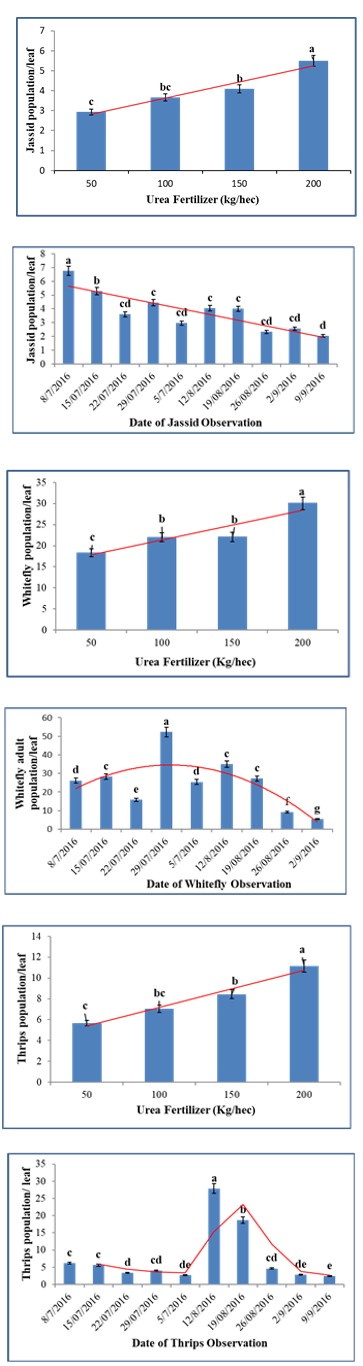
Figure 1a: Jassid Population on cotton at different levels of urea
Figure 1b: Whitefly population on cotton at different levels of urea
Figure 1c: Thrips population on cotton at different levels of urea
Dynamics of Sucking Insect Pests during Growth Period
Analysis of variance of the population of sucking insect pest recorded on different dates was done. ANOVA represented the highly significant effect of date of observation on the population fluctuation of sucking pest of cotton which may be due to the temperature, humidity or due to the growth of plants (Table 1). Their means were compared by the DMR test at α = 0.05. The peak value of jassid was observed at the start of July while the minimum population was noted in September. The linear line in graph indicated that as the plant grows the population of the jassid, whitefly and thrips decreases (Figures 2a-2c). Irregular increase in the population of whitefly and thrips might be due to the increase in humidity due to rainfall.
Figure 2a: Jassid population on cotton at different dates of observation
Figure 2b: Whitefly population on cotton at different dates of observation
Figure 2c: Thrips population on cotton at different dates of observation
Discussion and Conclusion
Sucking insect pests are severe pests of cotton affecting vegetative, seedling, fruiting and flowering stages [24]. The present study also observed the effect of different levels of synthetic urea fertilizer on the population fluctuation of sucking insects pests of cotton. Rate of urea fertilizer gave a positive response towards the population density of sucking insect pests of cotton. As the amount of urea increases the population of sucking pests were also increased. The study of Natarajan and Muhammad and Anjum also showed that sucking insects cause a lot of damage to the cotton crop [25, 26]. The damaging effect was also reported by Suhail et al., in Bt cotton line (IR-FH-901) [27]. In the present study nitrogen level effects the pest population, as in the highest level of nitrogen application shows the highest growth rate and vice versa (Figures 1a-2a). The similar results were also combined with Aqueel and Leather [28]. Cisneros and Godfrey, 2001 also observed the increase rate of insects pests by the increase of nitrogen level [29]. The same observations also studied in other crops like Wheat and Barley [30, 31]. Nevo and Coll also reported the Positive behaviour of sucking insect pests in increased nitrogen level [32]. According to the observations, a lot of fluctuations were observed in the population of sucking insect pests. As data revealed that the Jassid population was at a peak in the first week of July (Figure 1b) while in the case of Whitefly the favourable time period for pests was the last week of July (Figure 2b). Thrips showed variant behaviour and gave the highest peak of population in August (Figure 2b). These findings showed that different insects have different optimum growth period. July was favourable for Jassid and Whitefly while August was suitable for Thrips. These findings were supported by the study of Arif, et al. as they resulted that the insect population in different varieties had peaks of growth in June and July [33].
References
-
Economic Survey of Pakistan (2014-15). Economic Adviser’s Wing, Finance Division, Government of Pakistan, Islamabad.
-
Shafiq M, Lasrado F, Hafeez K (2019) The effect of TQM on organisational performance: empirical evidence from the textile sector of a developing country using SEM. Total Quality Management & Business Excellence 30(1-2): 31-52.
-
Sarwar M, Hamed M, Yousaf M, Hussain M (2013) Identification of resistance to insect pests infestations in cotton (Gossypium hirsutum L.) varieties evaluated in the field experiment. International Journal of Scientific Research in Environmental Sciences 1(11): 317-323.
-
Azam A, Shafique M (2017) Agriculture in Pakistan and its Impact on Economy. A Review. Inter J Adv Sci Technol 103: 47-60.
-
Economic Survey of Pakistan (2016-17) Economic Adviser’s Wing, Finance Division, Government of Pakistan, Islamabad.
-
Azad HMS, Amin MR, Tithi DA, Hossain SMA (2011) Performances of three cotton varieties cultivated under economic threshold level based insecticide sprayed and non-sprayed conditions. Our Nature 9(1): 21-25.
-
Sattar M, Abro GH (2011) Mass rearing of Chrysoperla carnea (Stephens) (Neuroptera: Chrysopidae) adults for integrated pest management programmes. Pakistan J Zool 43: 483.
-
Mohamed ASEDG (2016) Ecological and toxicological studies on certain insect pests infesting cotton crop in Assiut Governorate (Doctoral dissertation, Assiut University).
-
Mahmood HS, Iqbal M, Hamid T, Hussain KA (2004) Efficacy of environmentally effective University Boom Sprayer for bollworm mortality. Pakistan journal of agricultural sciences 41(1-2): 86.
-
Atta B, Mustafa F, Adil M, Raza MF, Farooq MA (2015) Impact of different transgenic and conventional cotton cultivars on population dynamics of whitefly, Bemisia tabaci Adv Zool Bot 3(4): 175-178.
-
Clive J (2009) Global status of commercialized biotech/GM crops: 2009. ISAAA brief, 41.
-
Jaleel W, Saeed S, Naqqash MN, Zaka SM (2014) Survey of Bt cotton in Punjab Pakistan related to the knowledge, perception and practices of farmers regarding insect pests. International Journal of Agriculture and Crop Sciences 7(1): 10.
-
Shah SIA, Malik TH, Khan IR, Hussain Z (2017) Screening of USDA cotton accessions against sucking insect pests complex and cotton leaf curl virus (CLCuV) disease with major emphasis on abiotic factors. Pakistan Journal of Zoology 49(4): 1159- 1173.
-
Nadeem MK, Nadeem S, Hasnain M, Ahmed S, Ashfaq M (2011) Comparative efficacy of some insecticides against cotton whitefly, Bemisia tabaci (Gennadius)(Homoptera: Aleyrodidae) under natural field conditions. Nucleus 48(2): 159-162.
-
Canto T, Aranda MA, Fereres A (2009) Climate change effects on physiology and population processes of hosts and vectors that influence the spread of hemipteran‐borne plant viruses. Global Change Biology 15(8): 1884-1894.
-
Trapero C, Wilson IW, Stiller WN, Wilson LJ (2016) Enhancing integrated pest management in GM cotton systems using host plant resistance. Frontiers in plant science 7: 500.
-
Stewart DJ (2013) A New Species of Arapaima (Osteoglossomorpha: Osteoglossidae) from the Solimões River, Amazonas State, Brazil. Copeia 3: 470-476.
-
FitzGerald VC (2014) Screening of Entomopathogenic Fungi against Citrus Mealybug (Planococcus Citri (Risso)) and Citrus Thrips (Scirtothrips Aurantii (Faure)) (Doctoral dissertation, Rhodes University) 1- 111.
-
Raj BT (2003) Studies on potato pests in western Gangetic plains. Journal of Experimental Zoology 6: 397-401.
-
Amin MR, Afrin R., Suh SJ and Kwon YJ (2016) Infestation of sucking insect pests on five cotton cultivars and their impacts on varietal agronomic traits, biochemical contents, yield and quality. SAARC Journal of Agriculture 14(1): 11-23.
-
Atique MR, Abdul R (1983) Efficacy of pyrethroid pesticides for the control of cotton pests. Pakistan Journal of Agricultural Research 4(1): 65-67.
-
Kranthi S, Kranthi KR, Rodge C, Chawla S, Nehare S (2019) Insect Resistance to Insecticides and Bt Cotton in India. In: Natural Resource Management: Ecological Perspectives. Springer, Cham, pp: 185-199.
-
De Oliveira BFA, Chacra APM, Frauches TS, Vallochi A, Hacon S (2014) A curated review of recent literature of biomarkers used for assessing air pollution exposures and effects in humans. Journal of Toxicology and Environmental Health, Part B 17(7-8): 369-410.
-
Abro GH, Syed TS, Tunio GM and Khuhro MA (2004) Performance of transgenic Bt cotton against insect pest infestation. Biotechnology 3(1): 75-81.
-
Natarajan K (2007) Management of agriculturally important sucking pests of cotton. Central Institute for Cotton Research, Regional Station, Coimbatore 80- 83.
-
Muhammad A, Anjum S (2010) Studying the sucking insect pests community in transgenic Bt cotton. International Journal of Agriculture and Biology 12(5): 764-768.
-
Suhail MA, Arshad M, Arif J, Gogi MD (2010) Conservation of Beneficial Insects for Sustainable Agriculture. In: Survival and Sustainability. Springer, Berlin, Heidelberg, pp: 1463-1468.
-
Aqueel MA and Leather SR (2011) Effect of nitrogen fertilizer on the growth and survival of Rhopalosiphum padi (L.) and Sitobion avenae (F.)(Homoptera: Aphididae) on different wheat cultivars. Crop Protection 30(2): 216-221.
-
Cisneros JJ and Godfrey LD (2001) Midseason Pest Status of the Cotton Aphid (Homoptera: Aphididae) in California CottonIs Nitrogen a Key Factor?. Environmental Entomology 30(3): 501-510.
-
Ponder KL, Pritchard J, Harrington R. and Bale JS (2000) Difficulties in location and acceptance of phloem sap combined with reduced concentration of phloem amino acids explain lowered performance of the aphid Rhopalosiphum padi on nitrogen deficient barley (Hordeum vulgare) seedlings. Entomologia Experimentalis et Applicata 97(2): 203-210.
-
Khan M, Port G (2008) Performance of clones and morphs of two cereal aphids on wheat plants with high and low nitrogen content. Entomological Science 11(2): 159-165.
-
Nevo E, Coll M (2001) Effect of nitrogen fertilization on Aphis gossypii (Homoptera: Aphididae): variation in size, color, and reproduction. Journal of Economic Entomology 94(1): 27-32.
-
Arif MJ, Gogi MD, Mirza M, Zia K, Hafeez F (2006) Impact of plant spacing and abiotic factors on population dynamics of sucking insect pests of cotton. Pak J Biol Sci 9(7): 1364-1369.
- Enhancement of Vegetative Growth and Fruit Yield in Cucumber (Cucumis sativus L.) via Spiritual Blessing (Biofield) Energy Intervention
- Production of Açaí (Euterpe oleracea Mart.) under Different Agroforestry System Management Intensities in Amazonian Floodplain (Varzea) Forests
- Coffee and the Production Region: What is the Secret to the Expression "Quality"?
- Experiential Agripreneurship Training in Sub-Saharan Africa: Integrating a Business Incubator into Postgraduate Livestock Education at the University of Buea
- Advances in Agricultural High-Quality Development
- Linking Compost Residue to ABAGE in Plants - a Short Note