
The Added Value of Mountain Products
The agricultural-livestock activity, linked to the proper management of resources, protects the existence of a vital socio-economic fabric in the mountain area, preserves evidence of local traditions and culture and acts as a defense of the territory. From these reasons, the primary sector in these marginal territories has got an important multifunctional role and it is very important to valorize it because of important positive effects along the productive pathway.
Opinion
The agricultural-livestock activity, linked to the proper management of resources, protects the existence of a vital socio-economic fabric in the mountain area, preserves evidence of local traditions and culture and acts as a defense of the territory. From these reasons, the primary sector in these marginal territories has got an important multi- functional role and it is very important to valorize it because of important positive effects along the productive pathway.
From certain point of view, agriculture is considered only as the source of food, forgetting all the other services offered by it. It is of vital importance to put in evidence these aspects, in order to enhance them especially in mountain areas, where sometimes living conditions are difficult and severe. The advantages of recognizing these peculiarities involves first of all the farmers that can be encourage in their precious work and all the land around, as a virtuous consequence of the ecosystem services related.
A lack in communication is evident, that’s way it is fundamental valorizing these productions spreading to the consumers a series of data related to the advantages of mountain livestock guarantees, in particular all the benefits that silently offered to the entire community by the constant and laborious commitment of farmers. Adequate information on eco-systemic services are therefore tools that, if exploited in a strategic way, can offer positive effects to all the players in the mountain agro-food chains and a decisive attraction for the various tourist and recreational activities. In fact buying a typical production implies the opportunity to purchase also the ancient heritage at the base of it and that helps in the passing on of this precious heritage. It’s evident that in the last years a new type of sustainable tourism, environmentally friendly and respectful of unique and inimitable territories, is emerging.
Opinion

This can be an opportunity to stimulate all the mountain area from the social, economic and environmental point of view. In fact, farmers and producers can promote their productions, on the base of their exclusive characteristics; but, on the other hand also customers are loyal to goods with a specific peculiar geographical, cultural and identity connotation, guaranteed by transparency and traceability of the production path (Figure 1). In this way, conscious purchasing becomes a driving force for development of the local economy. Obviously all the territory itself is safeguarded from the distorting effects of globalization, through the enhancement of territorial competitiveness, the protection of indigenous productions, the protection of the natural and landscape environment and the increase in local income.
The effective transmission of information regarding the multifunctional aspects of a particular company or supply chain allows the latter to obtain a competitive advantage towards other realities, highlighting the value of the productions and going meeting the satisfaction of the public’s expectations. At the same time, the strengthening and endorsement of production activities in these complex areas helps to consolidate the balance between anthropogenic action and the environment, essential to maintain that “tenacity” which guarantees the response to climatic- environmental stresses, which, more and more often, the territory is subject.
A essential step is to identify in a precise manner these eco-system services, at the scope to measure the benefits related to the maintenance of the vegetative and landscape biodiversity, the tutelage of animal welfare, the environmental and social sustainability and the containment of emissions. To measure these aspects of multi-functionality is an obligatory step to highlight a worthy management of all the compartment.
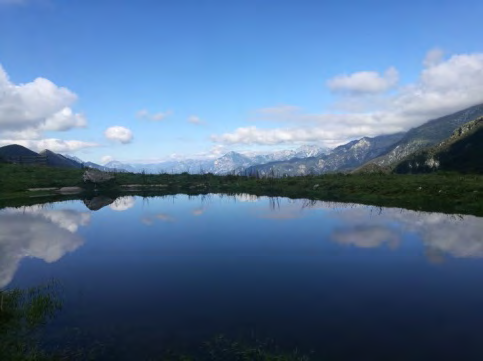
The diversity of the plant landscape is a complex concept that has to be investigated under several aspects, taking into account the generic land use (farm crops, number of plots and related surfaces), the elements of rural landscape (presence of scattered trees, hedges or streams within grassland crops) and the floristic variability of the number of botanical species in meadows and pastures (Figure 2).
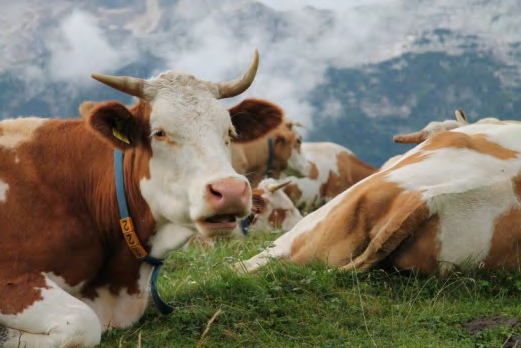
A low anthropization in highlands usually allows to have a higher diversifications and consequently a upper degree of biodiversity in respect to the bottom (Figure 3). Animal welfare is an important aspect to be examined, in fact herds had the opportunity to live in a pure and uncontaminated places and farmed with extensive techniques, in line with the minimum standards requirements requested by proposed by EFSA (European Food Safety Authority) (Council Directive 98/58/EC) instead of intensive and semi-industrial conditions typical of valley bottom. Consumers are also more and more interested in buying products from a food chain supply very respectful of the life and rights of bred animal. This commercial trend is a great opportunity for a further valorization of this products on the market.
Environmental sustainability can be assessed by applying the Life Cycle Assessment (LCA) method, with the aim of quantifying the ecological footprint on a unit of product (e.g. greenhouse gas emissions/kg milk and greenhouse gas emissions/kg product dairy) and the management efficiency of the mountain dairy supply chain. The identification of production aspects and less impactful actions, such as a correct waste management, a reduction in the use of fossil fuels, CO2 emissions, etc., in the mountain context contributes to the harmonization between the production process and the local area, through the virtuous and dynamic modification of the inputs used.
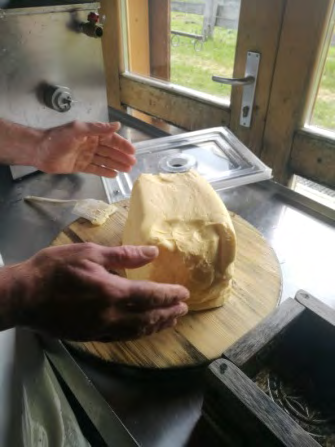
A very turning point is related to the fact that most of the times farmers are not completely aware about their role in this complex equilibrium. For these reasons a great task must be develop by researchers together with authorities, local societies and so on, in order to strength the sensibility of agriculturist in recognizing themselves as protagonists and leaders in the preservation of mountain productions, environmental and traditions (Figure 4).
- Enhancement of Vegetative Growth and Fruit Yield in Cucumber (Cucumis sativus L.) via Spiritual Blessing (Biofield) Energy Intervention
- Production of Açaí (Euterpe oleracea Mart.) under Different Agroforestry System Management Intensities in Amazonian Floodplain (Varzea) Forests
- Coffee and the Production Region: What is the Secret to the Expression "Quality"?
- Experiential Agripreneurship Training in Sub-Saharan Africa: Integrating a Business Incubator into Postgraduate Livestock Education at the University of Buea
- Advances in Agricultural High-Quality Development
- Linking Compost Residue to ABAGE in Plants - a Short Note