
Improving Protein Contents in Mixed Forage of Corn and Groundnut by Intercropping
Cereal crops constitute a major source of feeds to the livestock system but with low protein content. Cultivation of this major crop along with legumes may likely increase the proteins in combined feeds of cereal-legumes through intercropping. An experiment was set up using a randomized complete block design (RCBD) at the research farm of the department of Horticultural Technology of Federal Polytechnic Mubi to study the contribution of groundnut in improving the proteins in combined forage of Corn-Groundnut through intercropping. Results indicate that intercropping significantly increased the growth and physiological performance of corn in the corn-groundnut intercrop. There was also a significant increase in potassium mineral due to intercropping. The Acid Detergent Lignin content of the combined forage was significant reduced. Dry matter yield of groundnut was significantly reduced while that of corn was increased from 2636.6-6257.5 kg ha-1. The crude protein in total forage increased from 8.21% in sole corn to 12.97% when intercropped with groundnut. It is therefore seen that a significant increase in digestibility, better protein content and higher dry matter was achieved for forage due to intercropping
Introduction
Cereal and legume constitute a major source of energy and protein for livestock [1]. It is a common crop production system in the tropics with several benefits, key among them being the improvement in household food security (including animal feeds) and soil fertility [2]. Maize is one of the most important cereal crops that could substantially be used to improve livestock feeding. Maize-legume intercropping is also known to be one of the practices in the agricultural production system that could increase forage quality and quantity and decrease requirements for protein supplements in livestock feeds.
The benefit of groundnut in intercrop with corn for forage production has not been reported in the tropical climate. In view of the fact that compatibility is crucial in any intercropping system, particularly as a legume component plays a vital role in increasing forage quality, corn/groundnut intercrop was evaluated by looking at the performance of groundnut in intercropping as well as assessing their yield, towards achieving an improved yield, raised proteins and digestibility of their combined forage.
**Materials and Methods**
The field experiment was conducted at research farm of the Department of Horticultural Technology, Federal Polytechnic, Mubi located at latitude 90 261 and 100101 N and longitudes 130 11 and 130 441 E. Land was ploughed and ridges of 4 m long were constructed with each plot containing six ridges. The space between the ridges is 0.50 m and the width of each ridge was 0.50 m. Total plot size was 6 m×4 m. The space between plots is 0.50m and alley between replications was 1 meter. Planting for both corn and groundnut was done together. A field experiment was set up using the randomized complete block design (RCBD) involving four treatments [Fertilized corn with nitrogen (FCN), sole corn without nitrogen (SC), sole groundnut (SG) and corn/groundnut intercrop (CG)]. Weed control was achieved by use of plastic mulch spread over the entire field. A specific spot where the seeds were planted is cut open using a scissors. The shiny black plastic mulch was held to the ground using 1.5mm galvanized iron wires, 15cm long and clipped down the edges of the mulch sheet against the wind from blowing it off.
Nitrogen fertilizer in the form of urea (46% N) was applied only to the fertilized corn plots at the rate of 200 kg ha$^{-1}$ [3, 4] in two split doses while phosphorus (TSP-21% P) and potassium (MOP- 50% K) fertilizers was applied to all treatments during land preparation at 65 kg ha$^{-1}$ and 200 kg ha$^{-1}$ respectively.
Plant height was measured in situ using a measuring a tape. Five plants were sampled at intervals of two weeks from each plot and the mean plant height was computed and recorded. Also number of leaves per plant was taken in situ from randomly tagged plant at intervals of two weeks from the selected five plants per plot and the mean number of leaf was recorded.
Root to shoot ratio (RSR) was determined according to the procedure of Richard [5].
$$\text{RSR} = \frac{\text{DWR}}{\text{DWS}}$$
Where: DWR is the dry weight of root and DWS is the dry weight of shoot.
Destructive sampling of plants was done at 6 and 12 weeks after sowing and all plants was dried at 65 °C in an air circulating oven during 72 hours to calculate the crop growth rate using the formula as given below:
$$\text{CGR} = \frac{\left( W_1 - W_0 \right)}{\left( t_1 - t_0 \right)}$$
Where, $W_1$ and $W_2$ are dry matter (g) produced at time $t_1$ and $t_0$ [6, 7].
Total leaf area (TLA) was measured by using a leaf area meter-model LI-3100 (LI-COR, Inc. Lincoln, Nebraska, and USA).
Dry matter yield was obtained after oven drying at 70oC for 72 hours [8]. The dried material was weighed using digital weighing scale (1 kg capacity digital balance model APEX A5000-I).
Acid detergent fiber (ADF), neutral detergent fiber (NDF) and acid detergent lignin (ADL) were determined using the chemical analysis as described by Van Soest [9]. Both ADF and NDF were analyzed using the FOSS Fibercap TM 1021 (Sweden).
ADF/NDF was calculated as received:
$$\% \text{ADF} = \frac{100X\left(\left( w_3 - w_1 \right) - \left( B_3 - B_1 \right)\right)}{w_2}$$
Where:
$w_1$ = Initial weight of the capsule (g)
$w_2$ = Sample weight (g)
$w_3$ = Capsule + residue weight (g)
$B_1$ = Initial blank weight (g)
$B_3$ = Blank weight (g)
Dry matter digestibility was determined in accordance with Tilley and Terry [10] as was modified by Jones, et al. [11].
The analysis of mineral concentration of forage was done following the digestion of forage samples. Nitrogen and phosphorus were analyzed using an auto analyzer (Lachat Instrument 8000 series). Potassium, calcium, magnesium, copper and iron were analyzed by Atomic Absorption Spectrophotometer Model 3110, Perkin Elmer, USA.
**Data Analysis**
Data that were generated from this experiment were subjected to analysis of variance using SAS version 9.4 software. Mean values were compared using least significance difference at the p=0.05 level of probability [12].
Results
In Table 1 is the effect of intercropping on days to emergence and establishment count of corn and groundnut. There was no significant effect (p>0.05) of intercropping on the number of days taken for the seedling to emerge for both corn and groundnut among treatments. The number of days taken for the seedlings to emerge stood at 5 days for all corn treatment. There was a significantly better plant establishment in sole corn plot than in both intercropped and fertilized corn. Groundnut did not show any significant difference in both intercrop and sole crop (Table 1).
| Days to Emergence | Establishment Count | |||
|---|---|---|---|---|
| Treatment | Corn | G/nut | Corn | G/nut |
| Corn-groundnut intercrop | 5.00a | 5 | 24.33b | 72.66a |
| Fertilized corn | 5.33a | - | 27.33b | - |
| Sole Corn | 5.00a | - | 52.00a | - |
| Sole Groundnut | - | 5 | - | 73.33a |
| LSD | 0.75 | 0 | 12.64 | 21.41 |
| CV | 6.52 | 0 | 16.14 | 8.35 |
| P>F | 0.44 | 1 | 0.006 | 0.9 |
Table 1: Effects of intercropping on Days to emergence and establishment count of corn and Groundnuts.
Figures 1 & 2 presents the effect of intercropping on plant height for corn and groundnut from 2 weeks after sowing to 10 weeks after sowing.
The application of nitrogen fertilizer to corn significantly (p< 0.01) increased the height of corn by 23% from 169 to 208cm at 10 WAS (Figure 1). Intercropping significantly (p< 0.01) reduced the height of groundnut by 57% from 55 to 35 cm at 10WAS (Figure 2).
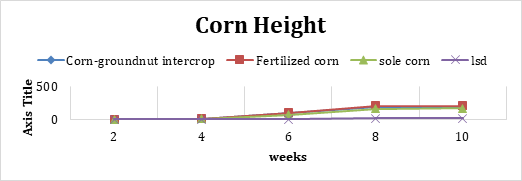
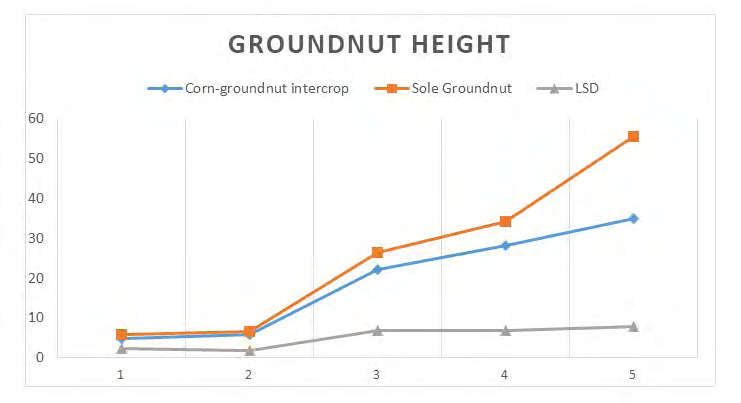
Table 2 presents the effect of intercropping corn and groundnut on number of leaves for corn from 2 to 10WAS.
The number of leaves produced by corn at 2 WAS did not show any significant (p>0.05) difference between Fertilized corn and intercrop corn, but intercropped corn was significantly higher in leaf number compared to monocrop corn. At 4 to 10 WAS the application of nitrogen fertilizer to corn significantly (p< 0.01) increased the number of leaves of corn from 9 to 10 and 12 respectively.
| Treatment | Number of Leaves | ||||
|---|---|---|---|---|---|
| 2WAS | 4WAS | 6WAS | 8WAS | 10WAS | |
| Corn-groundnut intercrop | 6.09a | 8.80ab | 10.30b | 11.60a | 12.00b |
| Fertilized corn | 6.06ab | 9.26a | 10.86a | 12.06a | 12.66a |
| Sole Corn | 5.63b | 8.13b | 8.60c | 9.70b | 10.00c |
| Sole Groundnut | - | - | - | - | - |
| LSD | 0.44 | 0.74 | 0.05 | 1.07 | 0.52 |
| CV | 3.34 | 3.73 | 2.24 | 4.27 | 2.01 |
| P>F | 0.05 | 0.03 | 0.0005 | 0.008 | 0.0003 |
Table 2: Effects of intercropping on the number of leaves of corn.
The effect of intercropping corn and groundnuts on the plant canopy width of Groundnuts is presented in Table 3. Intercropping significantly (p< 0.01) lowered the canopy width of groundnut across the sampling occasions except at 4 WAS as compared to monocrop.
| Treatment | 2WAS | 4WAS | 6WAS | 8WAS | 10WAS |
|---|---|---|---|---|---|
| Corn-groundnut intercrop | 4.51b | 8.68a | 32.93b | 52.13b | 89.00b |
| Fertilized corn | - | - | - | - | - |
| Sole Corn | - | - | - | - | -- |
| Sole Groundnut | 6.42a | 10.64a | 57.73a | 68.20a | 109.33a |
| LSD | 0.77 | 2.61 | 1.31 | 14.41 | 7.58 |
| CV | 4.01 | 7.69 | 0.82 | 6.81 | 2.17 |
| P>F | 0 | 0.08 | 0.0002 | 0.04 | 0.007 |
Table 3: Intercropping significantly (p< 0.01) lowered the canopy width of groundnut across the sampling occasions except at 4 WA
Leaf chlorophyll (SPAD) was significantly affected by intercropping as the monocrop of groundnut had a significantly (p< 0.01) higher SPAD value as compared to its intercrop. The application of N-fertilizer to corn significantly increased the leaf chlorophyll CGR. Intercropping significantly (p< 0.01) reduced the CGR of groundnut by 38% from 72.75 to 52.83 g m-2 d-1. The application of N-fertilizer to corn significantly increased the CGR of corn by 45% from 123.43 to 178.91 g m-2 d-1. The increase in CGR due to fertilizer application to corn was more than the increase due to intercropping with groundnut by 7.3%.
The mean values for the root to shoot ratio did not show any significant difference (p>0.05) among treatment for both the groundnut and corn components of the intercrop.
There was no significant (p>0.05) influence of intercropping on the leaf area index among treatment for groundnut. The LAI for the corn showed that the application of N-fertilizer significantly (p< 0.01) increased the LAI in corn (3.24) by 5.5% more than the effect of intercropping with groundnut (3.07). Corn had a higher LAI when intercropped with groundnut as compared to monocrop.
The effect of intercropping corn and groundnut on total leaf area (TLA) is presented in Table 4. Intercropping significantly (p< 0.01) reduced the TLA of groundnut from 2095.9 to 1651.9 cm2. The application of fertilizer to corn significantly increased the TLA of corn by 205% from 1374.6 to 4196.5 cm2 which was 18% greater than the increase in TLA due to intercrop with groundnut.
| Treatment | Leaf Chlorophyll | Crop Growth Rate | Root to Shoot Ratio | Leaf Area Index | Total Leaf Area | |||||
|---|---|---|---|---|---|---|---|---|---|---|
| Corn | G/nut | Corn | G/nut | Corn | G/nut | Corn | G/nut | Corn | G/nut | |
| Corn-groundnut intercrop | 45.43a | 34.30b | 66.10b | 12.16a | 0.28a | 0.06a | 3.07a | 1.15a | 3560.3a | 1651.92b |
| Fertilized corn | 46.63a | - | 72.00a | - | 0.47a | - | 3.24a | - | 4196.5a | - |
| Sole Corn | 30.03b | - | 48.66c | - | 0.23a | - | 1.39b | - | 1374.6b | - |
| Sole Groundnut | - | 44.03a | 22.33a | 0.17a | - | 1.03a | - | 2095.89a | ||
| LSD | 5.51 | 8.96 | 4.05 | 10.56 | 0.24 | 0.23 | 0.34 | 0.78 | 1444.3 | 345.99 |
| CV | 5.97 | 6.51 | 2.87 | 17.43 | 32.73 | 58.65 | 6 | 20.41 | 20.93 | 5.25 |
| P>F | 0.001 | 0.04 | 0.0002 | 0.05 | 0.1 | 0.18 | 0.0002 | 0.55 | 0.01 | 0.03 |
Table 4: Effects of intercropping on some physiological and growth performance of corn and groundnuts.
The effect of intercropping corn and groundnut on the mineral content of forage is presented in Table 5. The minerals analyzed were: phosphorus, potassium, calcium, magnesium, copper and iron. The mean phosphorus content in forage was not significantly (p>0.05) different among treatments. The mean phosphorus concentration ranged from 0.40 to 0.59%. Corn with or without N-fertilizer has the highest potassium concentration in forage as compared to groundnut. Intercropping corn with groundnut increased the potassium concentration. The mean calcium content in forage was not significantly (P>0.05) different among treatments. The mean calcium concentration ranged from 0.22% to 0.30%.
The mean magnesium content in forage was not significantly (P>0.05) different among treatments. The mean calcium concentration ranged from 0.17% to 0.22%. The mean copper content in forage was not significantly (P>0.05) different among treatments. The mean copper concentration ranged from 0.05% to 0.08%. Intercropping significantly (P<0.01) increased the iron concentration in corn-groundnut compared to both Fertilized corn and sole corn.
| Treatment | Nitrogen | Phosphorus | Potassium | Calcium | Magnesium | Copper | Iron |
|---|---|---|---|---|---|---|---|
| Corn-groundnut intercrop | 2.07a | 0.57a | 1.51 | 0.29 | 0.22 | 0.05 | 0.60a |
| Fertilized corn | 1.60b | 0.58a | 1.68 | 0.3 | 0.18 | 0.08 | 0.15b |
| Sole Corn | 1.31c | 0.58a | 1.5 | 0.22 | 0.17 | 0.08 | 0.22b |
| Sole Groundnut | 2.19a | 0.47b | 1.33 | 0.26 | 0.22 | 0.06 | 0.68a |
| LSD | 0.22 | 0.07 | 0.46 | 0.24 | 0.05 | 0.18 | 0.12 |
| CV | 6.23 | 6.75 | 15.29 | 45.18 | 14.17 | 125.31 | 15.13 |
| P>F | 0.0002 | 0.03 | 0.4 | 0.84 | 0.1 | 0.97 | 0.0001 |
Table 5: Effect of intercropping on the mineral content of Forage.
Table 6 presents the effects of intercropping on the nutritive quality of forage.
The mean neutral detergent fiber was not significantly (p>0.05) different among treatments. The mean neutral detergent fiber ranged from 62.89 to 69.35%. The mean acid detergent fiber was not significantly (p>0.05) different among treatments. The mean acid detergent fiber ranged from 38.93 to 48.72%. Intercropping significantly reduced the acid detergent lignin of in corn-groundnut compared to sole groundnut. The mean acid detergent lignin ranged from 4.45 to 6.99%.
| NDF | ADF | ADL | |
|---|---|---|---|
| Corn-groundnut intercrop | 66.98 | 45.8 | 4.45b |
| Fertilized corn | 65.18 | 38.9 | 5.03ab |
| Sole Corn | 68.96 | 48.7 | 4.97ab |
| Sole Groundnut | 62.89 | 42.8 | 6.99a |
| LSD | 6.7 | 15.6 | 2.07 |
| CV | 5.08 | 17.7 | 19.34 |
| P>F | 0.25 | 0.5 | 0.05 |
Table 6: Effects of intercropping on the quality of Forage.
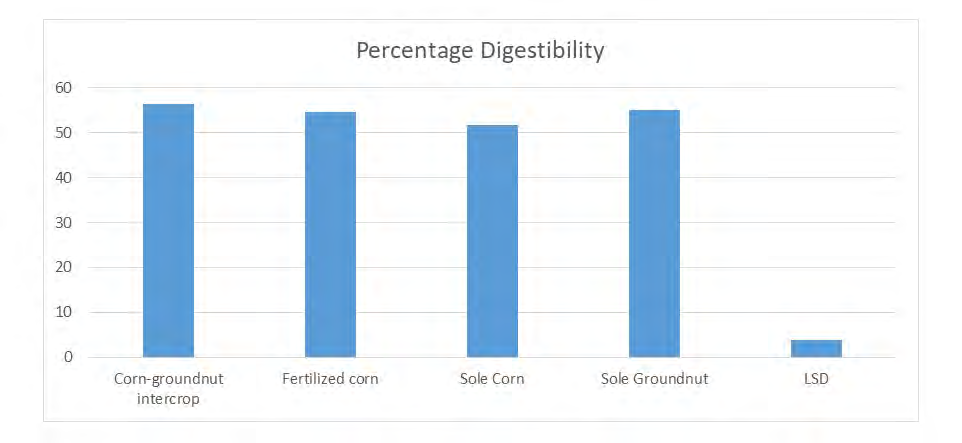
Figure 3 showed that there was no effect (p>0.05) of N-fertilizer application on the digestibility of corn. However, addition of groundnuts increased the digestibility compared to sole corn without N application (51.80%).
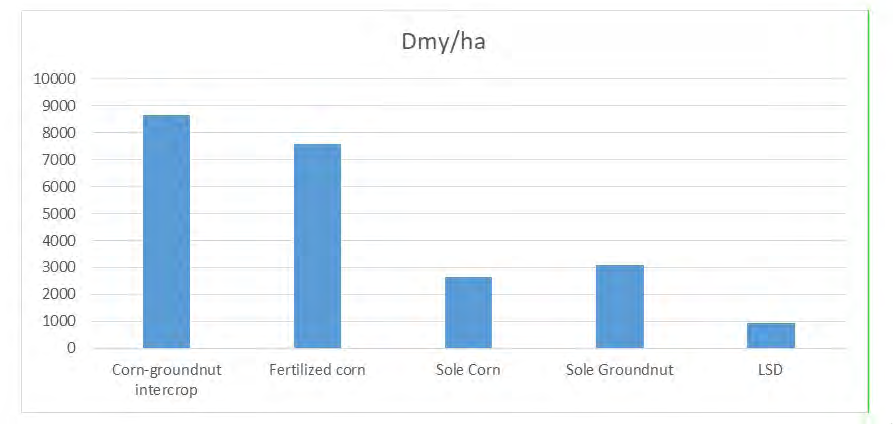
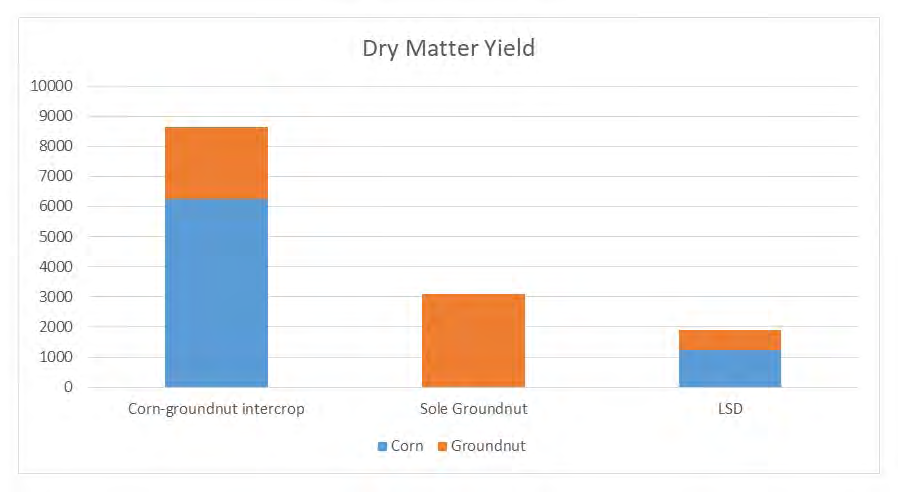
Figures 4 & 5 present the effects of intercropping corn and groundnuts on the dry matter yield and the total dry matter yield.
Intercropping significantly (p< 0.01) lowered the dry matter yield of groundnut in intercropped groundnut from 3,086.9 to 2,389 kg ha-1 (29.2%). Similarly, intercropping significantly (p< 0.01) increased the dry matter yield of corn in from 2,636.6 to 6,257.5 kg ha-1 (137%). Also, the application of nitrogen to corn significantly (p< 0.01) increased the dry matter yield of corn by 21.3% when compared to the intercrop of groundnut. Intercropping significantly (p< 0.01) increased the total dry matter yield (groundnut +corn) in the corn/groundnut intercrop (8,647 kg ha-1) by 180 and 228% as compared to sole groundnut (3,086.9 kg ha-1) and sole corn without fertilizer (2,636.6 kg ha-1) respectively.
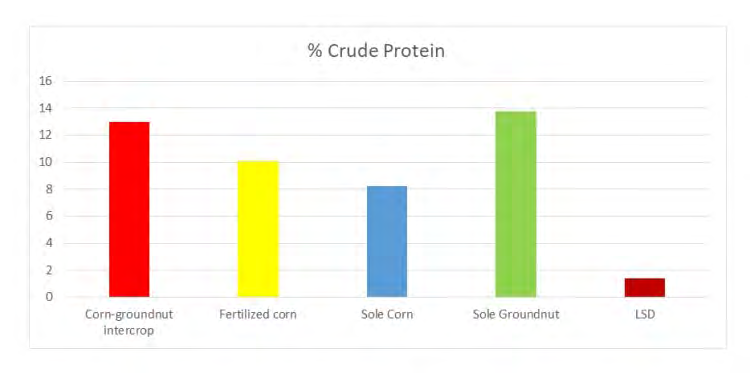
The application of N-fertilizer significantly (p< 0.01) increased the crude protein content of sole corn from 8.21 to 10.06 %. Intercropping of corn with groundnut increased crude protein in total forage from 8.21% in sole corn without N to 12.97% when intercropped with groundnut. However there was no difference (p>0.05) in crude protein of N fertilized sole corn compared with crude protein in combined forage of corn intercropped with groundnut (Figure 6).
Discussion
Dry matter production is a function of the nature of competition among the component crops in mixture as well as the morpho-physiological performance of individual crops in mixture. Intercropping lowered the dry matter yield in groundnut by 29.2% than its monoculture. This could be attributed to competition between species for growth factors (nutrients, moisture, light etc). Carr, et al. [13] reported that yields of legume-cereal in mixtures were intermediate or even lower than yields of monoculture due to competition between species. Similarly, the higher dry matter yield of corn compared to groundnut in monocrop and intercrop could be due to the vigorous nature of corn growth and its ability to rapidly utilize the nitrogen fertilizer applied to the soil. In addition, corn has a C4 photosynthetic pathway. The addition of inorganic N could also have led fertilized corn to give 21.3% more dry matter yield than the yield of corn in intercrop of groundnut. Abdallah and Sebahattin [14] reported a high dry matter yield in monocrops of oat (13,520 kg ha-1) and barley (12,810 kg ha-1) as compared to the pea- oat (11,270 kg ha-1) and pea-barley (10,540 kg ha-1) mixtures. Plant height and leaf area index are indicators of biomass and yield production. Increased LAI and plant height in both fertilized corn and groundnut intercropped corn was an early indication of higher dry matter yield in fertilized corn and corn intercropped with groundnut. Liu and Waitrak [15] reported a significant correlation between both plant height and LAI. Sangakkara, et al. [16] found a significant increase in corn biomass yield when grown in intercrop with legumes under the humid tropical condition. The significant increase in the DM yield of corn also suggest that corn benefited from the relationship between corn with groundnut and less competition for growth factors [17].
Corn-groundnut intercrop was 14% higher in total dry matter yield than fertilized corn which showed that the contribution of groundnut was higher than that of the inorganic fertilizer. Hamdollah [18] found that intercropping corn with cowpea and mung bean significantly increased the total dry matter yield compared with monoculture.
Crude Protein
The value of forage is not only judged by its dry matter but also by parameters such as protein content of such forage [19]. Intercropping increased the crude proteins in corn- groundnut as much as or even higher than that contribution of N-fertilizer application to corn. Monocrop of groundnut tend to give more crude proteins in absolute terms than its intercrop. Sanderson, et al. [20] found that legumes often have greater crude protein concentration than grass. The CP values for monoculture and mixtures were greater than the benchmark recommended for mature beef cattle for optimum rumen function (7%) but fell short of the requirement for high producing dairy cows (19%) as reported by NRC (1984 and 1989) respectively.
Acid detergent fiber and neutral detergent fiber concentrations are important forage quality characteristics [21] as the nutrients that are available to the animal is a function of ADF and NDF content of the forage. Neutral detergent fiber refers to the total cell wall in forage and it influences the amount of forage that an animal can consume [14]. Mertens [22] reported that the maximum cell wall concentration of the diet that will not hinder intake and animal production can be as high as 70 to 75% NDF and as low as 15 to 20% NDF for beef and dairy cows respectively. This suggest that the NDF of corn-groundnut can satisfy the dietary requirement of both dairy and beef cattle. ADF is a measure of digestibility, higher ADF means lower digestibility. Abdullah and Sehabbattin [14] reported a lower ADF in legume monoculture than in mixture and this was true of groundnut monoculture and in mixture. Also lower ADF was observed in legumes than in grasses [23]. Thus, the addition of groundnut to forage corn reduced the ADF concentration, indicating an improvement in quality and thus increased the potential forage intake by livestock. Similar results from cereal-legume intercropping were reported by Bingol, et al. [24]. Lignin refers to the indigestible portion of feeds. This was found to be higher in legumes than in grasses or mixtures. Singh, et al. [25] reported forages to have a higher lignin concentration in legumes than in grasses.
Addition of groundnuts to corn in the mixture increased the digestibility of dry matter.. Generally, digestibility of both monoculture and mixture appeared good (above 50%), the sole groundnut was a better monoculture in terms of digestibility. The increase in digestibility in corn-groundnut could be as a result of a relatively reduced lignin content. This was so because lignin was known for its adverse effect on digestibility, due to the presence of crosslink between lignin and the cell wall polysaccharides [26].
Intercropping influenced the mineral content of forage by raising of and maintaining the required minimum balance of each mineral element in mixtures. Mahdieh and Dahmardeh [27] reported that though groundnut contained the minimum required quantity of calcium and magnesium when grown as monocrop, more of these elements are found in corn/groundnut grown in intercrop than in their monocrops. The phosphorus found in the combination and monoculture of groundnut were adequate for animal nutrition. High phosphorus level in feed has no adverse consequences, other than its relationship to calcium and the fact that it is wasteful. The magnesium content of groundnut both in mixture and monoculture stood within the range of 0.122 to 0.228%. Khan, et al. [28] found magnesium content among mixture and monoculture to be in a range 0.235% to 0.268%. Potassium in forages of groundnut nut was found to be higher than the optimum quantity required for animals. ARC [29] recommended the optimum potassium needed by animals at 0.8%. This is similar to the result reported for groundnut both in monoculture and mixture. Groundnut/ corn intercropping as to be known to progress Fe nutrition in all groundnut tissues [30]. Enhancement in the Fe nutrition of groundnut intercropped with corn was mainly caused by rhizosphere collaboration between groundnut and corn [31].
Conclusion and Recommendation
In conclusion, forage mixtures for corn/groundnut have resulted in increased crude protein content, total dry matter yield and digestibility. Therefore, corn-groundnut forage should be used for improved digestibility and better protein content in livestock feed.
Acknowledgement
I humbly acknowledge the funding provided by through the Institutional Based Research Grant IBR-G -2018- FPM. I also acknowledge the Federal Polytechnic Mubi for providing the enabling environment for this research work.
References
-
Yilmaz S, Ozel A, Atak M, Erayman M (2015) Effects of Seeding Rates on Competition Indices of Barley and Vetch Intercropping System in The Eastern Mediteranean. Turk J Agr and For 39: 135-143.
-
Adeniyan ON, Ayoola OT, Ogunleti DO (2011) Evaluation of Cowpea Cultivars Under Maize and Maize-Cassava Based Intercropping Systems. Afr J Plant Sci 5(10): 570- 574.
-
Dahmardeh M (2013) Intercropping Two Varieties of Maize (_Zea Mays_ L) And Peanut (_Arachis Hypogaea_ L): Biomass Yield and Intercropping Advantage. Int J Agric and Forestry 3(1): 7-11.
-
Amjad AA, Theodore JKR, Nguyen VH (2015) Effect of Intercropping Three Legumes Species on Early Growth of Sweet Corn (_Zea Mays_) in Hawaii. Journal of crop improvement 29(3): 370-378.
-
Richard WH (1992) Root–Shoot Ratios. Journal of Arboriculture 18(1): 39-42.
-
Kumar A, Kumar S (2008) Crop Growth Rate and Development Characteristics of Indian Mustard Var Vardan to Varying Levels of Nitrogen and Sulphur. Indian J Agric Res 42: 112-115.
-
Hunt R, Causton DR, Shipley B, Askew AP (2002) A Modern Tool for Classical Plant Growth Analysis. Annals of Botany 90(4): 485-488.
-
Dobermann A (2005) Procedure for Measuring Dry Matter, Nutrient Uptake, Yield and Components of Yield in Maize. Version 1.1, Department of Agronomy and Horticulture, University of Nebraska, Lincoln.
-
Van Soest PJ, Wines RH (1967) Use of Detergent in the Analysis of Fibrous Feeds IV Determination of Plant Cell Wall. J Assn offic Anal Chem 50: 50-55.
-
Tilley JMA, Terry RA (1963) A two Staged Technique for the _in Vitro_ Digestion of Forage Crops. Journal of British Grassland Society 18(2): 104-111.
-
Jones RJ, Meyer JHF, Bechaz M, Stoltz MA (2000) An Approach to Screening Potential Pasture Species for Condensed Tannin Activity. Anim feed Science and Technology 85(3-4): 269 -277.
-
Gomez KA, Gomez AD (1984) Statistical Procedures for Agricultural Research. 2nd (Edn.), John Wiley and Sons, Singapore, pp: 680.
-
Carr PM, Horsley RD, Poland WW (2004) Barley, Oat, and Cereal-Pea Mixtures as Dryland Forages in The Northern Great Plains. Agronomy Journal 96(3): 677-684.
-
Abdullah K, Sebahattin A (2012) Determination of Forage Yield and Quality of Pea (_Pisum Sativum_ L.) Mixtures with Oats and Barley. Turkish Journal of field crops 17(1): 96-99.
-
Liu k, Waitrak P (2011) Corn Production and Plant Characteristics Response to N Fertilization Management in Dry-Land Conventional Tillage System. Inter J Plant Prod 5(4): 405-416.
-
Sangakkara UR, Richner W, Schnider MK, Stamp P (2003) Impact of Intercropping Beans (_Phaseolus Vulgaris_ L) And Sunhemp (_Crotalara Juncea_ L) on Growth, Yields, and Nitrogen Uptake of Maize (Zea Mays L) Grown in the Humid Topics During the Minor Rainy Season. Maydica 48(3): 233-238.
-
Rana RS, Singh B, Nrgi SC (2001) Management of Maize/ Legume Intercropping Under Mid–Hill Sub-Humid Conditions. Indian J Agric Res 35(2): 100-103.
-
Hamdollah E (2012) Yield and Quality of forage produced in intercropping of maize (_Zea mays_ L.) with cowpea (_Vigna sinensis_ L) and Mungbean (_Vigna radiate_ L) as double cropped. J Basic Appli Sci Res 2(1): 93-97.
-
Sadeghpour A, Jahanzad E, Esmaeili A, Hosseini MB, Hashemi M (2013) Forage Yield, Quality and Economic Benefit of Intercropped Barley and Annual Medic in Semi-Arid Conditions: Additive Series. Field Crop Research 148: 43-48.
-
Sanderson MA, Soder KJ, Brzezinski N, Taube F, Klement K, et al. (2006) Sward Structure of Simple and Complex Mixtures of Temperate Forages. Agronomy Journal 98(2): 238 -244.
-
Assefa G, Ledin I (2001) Effect of Variety, Soil Type and Fertilizer on the Establishment, Growth, Forage Yield, Quality and Voluntary Intake by Cattle of Oats and Vetches Cultivated in Pure Stands and Mixtures. Anim Feed Sci Tech 92: 95-111.
-
Mertens DR (1994) Regulation of Forage Intake. In: George C, et al. (Eds.), Forage Quality and Utilizations. American Society of Agronomy, Madison WI, USA.
-
Evitayani L, Warley A, Faraini T, Ichinohe A, Fujihara T (2004) Study in Nutritive Value of Tropical Forages in North Sumatra, Indonesia. Asian Australian Journal of Animal science 17(11): 1518 -1523.
-
Bingol NT, Karsli MA, Yilmaz IH, Bolat D (2007) The Effects of Planting Time and Combination on The Nutrient Composition and Digestible Dry Matter Yield of Four Mixtures of Vetch Varieties Intercropped With Barley. Turk J Vet Anim Sci 31(5): 297- 302.
-
Singh S, Kushwaha BP, Nag SK, Mishra AK, Singh A, et al. (2012) _In Vitro_ Fermentation, Protein and Carbohydrate Fractionation, Methane Production and Prediction of Twelve Commonly Used Indian Green Forages. Animal Feed Science and Technology 178: 2-11.
-
Jung HG, Varel VH, Weimer PJ, Ralph J (1999) Accuracy of Klason Lignin and Acid Detergent Lignin Methods as Assessed by Bomb Calorimetry. J Agric Food Chem 47(5): 2005-2008.
-
Mahdieh R, Dahmardeh M (2014) The Evaluation of Corn and Peanut Intercropping on Efficiency of Use The Environmental Resources and Soil Fertility. Journal of Agricultural science 6(4): 99-108.
-
Khan ZI, Ashraf M, Hussain A (2007) Evaluation of Micro Minerals Content of Forages: Influence of Pasture and Seasonal Variation. Asian Australian Journal of Animal science 20(6): 908-913.
-
ARC, CAB (1980) The Nutrients Requirements of Ruminant Livestock: Technical Review. 4th (Edn.), On behalf of the Agricultural Research Council by the Commonwealth Agricultural Bureaux, Farnham Royal, England, pp: 73-310.
-
Hongchun X, Shen H, Zhang L, Zhang Y, Guo X, et al. (2013) Comparative proteomic analysis for assessment of the ecological significance of maize and peanut intercropping. Journal of Proteomics 78: 447-460.
-
Zuo YM, Zhang FS, Li XL, Cao YP (2000) Studies on the Improvement in Iron Nutrition of Peanut by Intercropping with Maize on A Calcareous Soil. Plant and Soil 220: 13-25.
- Enhancement of Vegetative Growth and Fruit Yield in Cucumber (Cucumis sativus L.) via Spiritual Blessing (Biofield) Energy Intervention
- Production of Açaí (Euterpe oleracea Mart.) under Different Agroforestry System Management Intensities in Amazonian Floodplain (Varzea) Forests
- Coffee and the Production Region: What is the Secret to the Expression "Quality"?
- Experiential Agripreneurship Training in Sub-Saharan Africa: Integrating a Business Incubator into Postgraduate Livestock Education at the University of Buea
- Advances in Agricultural High-Quality Development
- Linking Compost Residue to ABAGE in Plants - a Short Note