
Selected Farming Systems for Improving Crop Production and Rain- Water Productivity in Semi-Arid Zone, Sudan
The problem of water shortages for rainfed agricultural production is due to low rainfall and uneven distribution throughout the rainy season makes rainfed agriculture a highly risk enterprise. Appropriate farming systems and soil conservation measures are the only opportunity to reduce the high risk of crops yield losses. The aim of this study was to evaluate the effect of three farming systems; Conventional Farming (CF), Conservation Agriculture (CA), and in-field rain Water Harvesting (WH); on the yield and water productivity of sorghum, sesame and cowpea crops. Field experiments were conducted in semi-arid area of Sennar State, Sudan for two consecutive seasons (2015 and 2016). Three different planting machines were used. The CA recorded higher crop yield for sorghum (2594 kg/ha) followed by in-field rainwater Harvesting (WH) which gave 2362 kg/ha, while CF has the lowest crop yield (2072 kg/ha). For the sesame crop the WH gave the highest crop yield (740kg/ ha) followed by CA (718 kg/ha) and the lowest crop yield was obtained by CF (602 kg/ha). The highest cowpea crop yield was obtained by WH (927.kg/ha) followed by CA farming system (847 kg/ha) and the lowest crop yield was obtained by CF (785kg/ha). The CA farming system recorded the highest water productivity for sorghum (1.081 kg/m3) compared to the WH and CF, while the WH farming system recorded the highest water productivity (0.32 and 0.366 kg/m3) for sesame and cowpea respectively compared to the CA and CF. WH is best recommended farming system in semi-arid areas and CA the best recommended practice where annual rainfall is relatively high.
Introduction
In Sudan, agriculture is divided into irrigated and rainfed sectors. Rainfed agriculture is practiced in the semi-dry to semi-humid agro-ecological zones within the Central Clay Plains belt. These belts extend through Kassala, Gedarif, Sennar, Blue Nile, White Nile, and South Kordofan States, covering about 12 million hectares. The main crops grown in this belt are Sorghum, Sesame, Groundnut, Millet, Cowpea, and Sunflower. Agricultural practices in these areas are more or less the same.
The problem of water shortages for rainfed agricultural production occurs due to low rainfall and uneven distribution throughout the season, making rainfed agriculture a highly risky enterprise. Appropriate farming systems and conservation measures for rainwater and soil are the only opportunities to reduce the high risk of crop yield losses. Additionally, the agricultural sector faces the challenge of producing more food with less water by increasing crop water productivity.
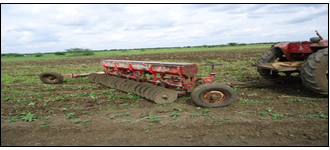
Water productivity is defined as the ratio of benefits from crops, forestry, fishery, livestock, and mixed agricultural systems to the amount of water required to produce those benefits. In broader terms, it reflects the objective of achieving more food, income, livelihoods, and ecological benefits with less social and environmental cost per unit of water used [1]. Physical water productivity relates to the mass of agricultural output to water used, aiming for more crops per drop. Economic water productivity relates to the economic benefits obtained per unit of water used and has also been applied to connect water use in agriculture with nutrition, jobs, welfare, and the environment. Increasing water productivity is particularly relevant where water is scarce compared to other resources involved in crop production [2]. A Farming System or agricultural cropping system is sets of concepts and practices used or followed on a farm from pre-implementation to the completion of the production cycle. Farming systems vary from one agro-ecological zone to another. The Conventional Farming system (CF) is the usual way farmers perform agricultural practices in a specific area. Generally, CF lags improved technical packages and scientific standards for implementing farm operations. In rainfed areas, farmers usually begin cultivation when about 100 to 125 mm or more rainfall occurs. In the CF system, the wide- level disk (WLD) plow with a seeder box is used for seedbed preparation and seeding operations.
Conservation Agriculture (CA) Farming system can be defined as a resource-saving agricultural crop production approach that aims to achieve acceptable profits along with high and sustained production levels while conserving the environment [3]. Many agriculture practices meet these basic principles and qualify as CA, such as Zero Tillage (ZT) and direct seeding or drilling. Zero-tillage is defined as a technical component used in conservation agriculture, but not everyone practicing ZT is practicing CA [4]. The main challenge in applying the concept of CA in dryland regions is the scarceness of crop residues. Crop residues are lacking due to limited and highly variable precipitation, which limits biomass production [5]. CA can reduce the overall requirement for farm power and energy for field production by up to 60% compared to conventional farming [6]. This is because power-intensive operations, like tillage, are eliminated [7]. This energy saving is particularly attractive to small-holder farmers who want to invest less time in agricultural production and more in off-farm jobs or expanding their cropped area Friedrich T, et al. [8], Lotfie AY, et al. [9] reported that CA saved 25% of fuel and 26% of the time required to establish sorghum crops in southern Gedarif State. Findings by Taha MB, et al. [10] indicated that CA produced significantly higher sorghum grain compared to conventionally plowed seedbeds, while Lotfie AY, et al. [9] indicated that CA outperformed CF by fourfold [11]. Found that ZT and chisel plowing resulted in significantly higher sorghum grain yield in seasons with higher rainfall. They concluded that ZT is promising and justifiable for rainfed sorghum production.
Water harvesting (WH) can be defined as the collection of rainwater for crop production purposes. WH systems are practiced in arid and semi-arid zones where annual rainfall is insufficient for plant requirements, either due to low rainfall or inadequate water infiltration to the plant root zone. Reasons for inadequate infiltration include steep slope, low soil infiltration rate, and heavy clay soil. Strategies for WH include increasing soil water-holding capacity and reducing water losses. Various methods and cultural practices can be adopted for WH strategies, such as deep plowing to roughen the soil surface and capture rainwater, constructing ridge-furrows and terraces to collect rainwater, selecting suitable early-maturing crop varieties, optimizing sowing dates, adopting suitable seeding methods and plant density, and implementing timely and effective weed control since weeds compete for available soil moisture. In-field rain Water Harvesting is suggested as a key option for a sustainable water management strategy to increase agricultural production while mitigating the environmental impact [12, 13, 14]. Rainwater harvesting (RWH) systems, successfully tested for higher crop productivity in smallholder farming in semi-arid regions, are suggested by several researchers and development organizations as potential measures for supplemental moisture/water supply [15, 16, 17]. Several studies have demonstrated that in-situ WH systems increase crop yields by 30% to 50% [18, 19, 20, 21]. The sustainability of rainwater harvesting systems is crucial for improving livelihoods. Sustainability is based on three key attributes of RWH systems: a) reliable water supply and production potential, b) effective water use, and c) minimal negative impacts on natural resources.
Increasing water productivity in rainfed agriculture plays a vital role in alleviating competition for scarce water resources, preventing environmental degradation, and ensuring food security [22]. While Kijne JW, et al. [1] provide several strategies to enhance agricultural water productivity by integrating varietal improvement and better resource management at the plant level, field level, and agro-climatic zone. Water productivity can be defined in many ways, but in general terms, it refers to the amount of crop produced per unit of water, expressed in kg/m3, where yield is expressed in kg/ha and water use is expressed in m3/ha [23].
This study aimed to evaluate the effects of three farming systems, namely Conventional Farming system (CF), Conservation Agricultural system (CA), and in-field rain Water Harvesting system (WH), on the total grain yield and productivity of sorghum, sesame, and cowpea crops in the semi-arid zone of Sennar State, Sudan.
Materials and Methods
Study Area
The research work was carried out in rainfed areas of Sennar State, where rainfall is the main source of water for irrigating crops. The State encompasses two agro-ecological zones, the arid zone in the northern part and semi-arid zone in the southern part. The annual rainfall is about 250 to 450 mm and 450 to700 mm, for the two agro-ecological zones, respectively.
The experiments were a combination of two factors, which were crops and farming systems. Three crops; sorghum, sesame and cowpea were grown in a certain cropping sequence. The three farming systems were Conventional Farming system (CF), Conservation Agricultural system (CA) and in-field rain Water Harvesting system (WH). The implemented three farming systems could be described as follows:
- The Conventional Farming system (CF): The Wide Level Disk (WLD) is the common implement in the mechanized rainfed areas of the Sudan since mid-1940s. This machine is used twice during the season, for land preparation and sowing operations. The first pass was conducted in mid- June in the Study site area.
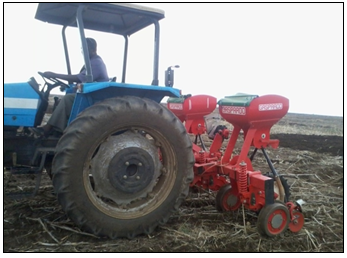
- Conservation Agricultural system (CA): This system was recently introduced in the rainfed areas. It comprised the sowing of crops in rows without tilling the soil (Zero-Tillage) via row crop planter in the previous crop residues.
- In-field rain Water Harvesting techniques (WH): Water is the determinative factor for the productivity of rainfed crops. Two methods were tested in this study as in situ WH techniques, which were deep plowing and furrow planting.
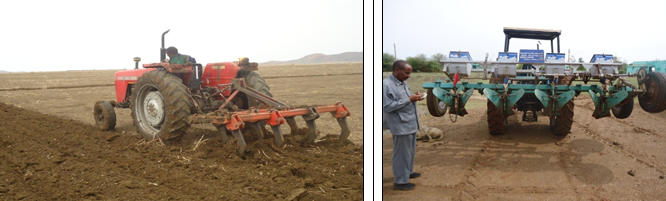
- Chiseling plus bounds or terraces was used. Half of the experimental plots that were allocated for WH technique was prepared by chisel plow (18 to 25 cm deep) which roughen the soil surface, reducing water runoff and which are expected to increase the water holding capacity of the soil. In the plots where chisel plow followed by hand seeding in rows.
- The other half of the experimental plots that were allocated for WH technique were seeded in the bottom of the ridges by WaHIP. WaHIP is a newly developed and recommended planter for sowing crops in rainfed areas where rainfall is limited. Weed control in these plots was done manually.
The experiment was laid in split plot design, with four replications. The main plots were allocated for crops and the subplots were allocated for farming systems. The subplot size was 10 ×15 m. The pass way between subplots was two meters; while it was eight meters between replications. The treatments were randomly distributed in the subplots.
To achieve the above-mentioned three farming systems, many implements were used. These implements were considered as tested treatments. The description of these implements is as follows: • The Wide Level Disk (WLD) is the conventional machine for land preparation and sowing in the mechanized rainfed area (Figure 1).
• For Zero-tillage treatment, the planter was equipped with fertilizer and seeder boxes. The planter has a double disks furrow opener. Each planter unit works (Figure 2).
• In-field Water Harvesting: Chisel plow and in-field rain Water Harvesting In-Rows Planter (WaHIP) planter were used. The plowing depth was about 18 to 25 cm for Chisel plow, the chisel plow was carried out in the mid of June in each season with bounds for the purposes of water harvesting. The WaHIP machine performs two functions simultaneously, constructing the ridges and seeding. It puts the crops seeds in the bottom of the ridges and covers them (Figure 3).
Climate Data
Climatic data, which include, rainfall, maximum and minimum air temperature, relative humidity, sunshine duration, and wind speed were obtained from the Abu_Naama metrological stations existed nearby the experimental site for the two seasons (2014/15 and 2015/16). This data were used to analysis the rainy season characteristics and Reference Evapotranspiration (ETO) by using CROPWAT program (version 8.0), and then crop ETO was used to compute crop water requirement (CWR) and water productivity.
The CWR was calculated according to the procedure described by Allen RG, et al. [24] by using the following formula:
$$ E T _ {C} = E T _ {O} \times K _ {C} (1) $$
Where: ETc = Crop evapotranspiration (mm/day). ETO = Reference evapotranspiration (mm/day) Kc = Crop coefficient (dimensionless).
Water Productivity (WP)
WP was calculated by dividing the crop grain yield (kg) by water used (total rainfall amount in m3); here the water used was assumed to be equivalent to effective rainfall. The following equation describes the calculation of the WP.
( ) 2 3/ 2 / / ( ) WP yield kg m water used m m = (2)
SAS software, version 80-2011 was used for the analysis of variance (ANOVA). In addition, Duncan’s Multiple Range Test (DMRT) was used for means separation.
Results and Discussion
Growing Season Characteristics
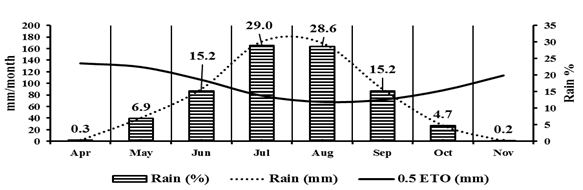
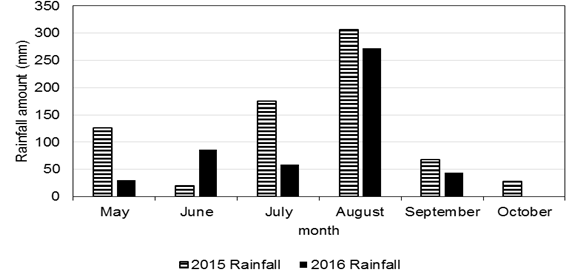
Determination of the start, end, and length of the growing season, in addition to rainfall analysis, is necessary for selecting crops and their management practices, especially in rainfed agricultural areas. To define the start, end, and length of the growing season, monthly rainfall and other climate parameters data for the study site were obtained from the Sudan Meteorological Authority for a more than thirty-year period (1981 to 2014). The rainfall and half of the evapotranspiration (0.5 ETO) data in mm/month are usually plotted on the same chart [25]. The points at which the rainfall curve intersects with the 0.5 ETO curve determine the start and end of the growing season (Figure 4). The growing season starts on June 20th and ends on September 20th. The results also showed that July and August received the majority (60%) of the total rain, whereas the critical period for crop growth, while the end of the growing season received only 15% of the total rain amount. Figure 5 shows that the study area received 722.5 mm of rainfall in 2015 (46 rainy days, while in 2016 the area received only 490.6 mm (41 rainy days). The two-season received rainfall amount above the long-term average (≈ 400 mm).
Farming Systems and Sorghum Crop Production
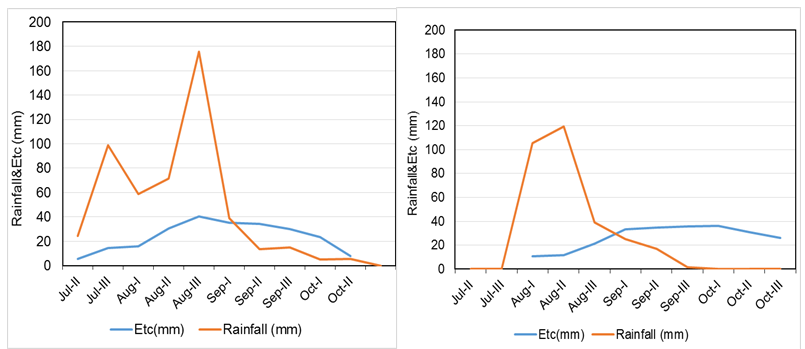
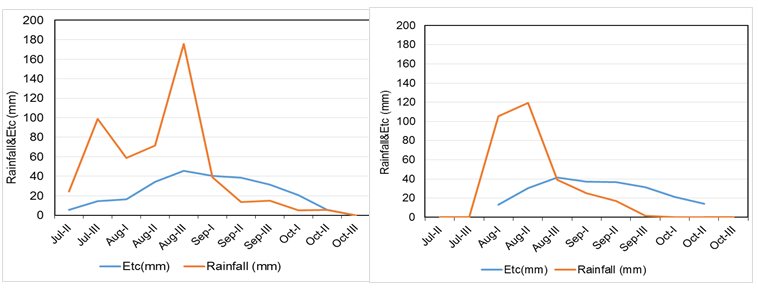
The total Crop Water Requirement (CWR) was 237.4 mm and 240.6 mm in the first and second seasons, respectively. This variation in total water requirement was mainly due to the variation in climate parameters and sowing date in both seasons. These water requirement values were less than the total rain received during the rainy seasons (722 mm and 490 mm). However, the total amount of rainwater received during the sensitive crop growth stage was less than the CWR in the first and second seasons. Meanwhile, the early stages of crop growth in both seasons received a high amount of rainwater, exceeding the water required by the crops (Figure 6). The uneven distribution of rainfall throughout the growing season affects crop performance, yield, and yield components. During the growing period of the first season (July to October), a total of about 507 mm of rainwater was received over 30 days. The rainy season started in May with high rainfall, which delayed the start of land preparation. In the second season, a total of 307 mm of rainwater was received over 21 days. Cultivation in the second season started late due to low rainfall during July. The uneven distribution of rainfall and the timing of the growing season indicate a negative impact of dry spells during the reproductive stages of the crops and high soil moisture content during the early stages, which are sensitive to waterlogging.
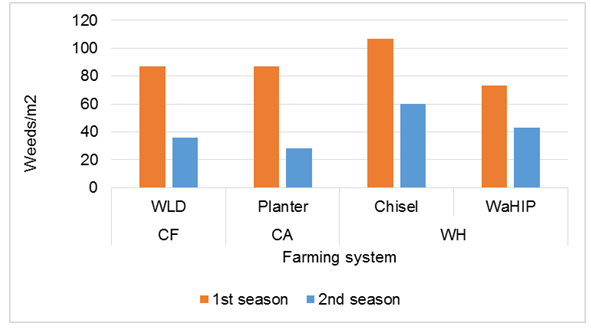
There were significant differences (P ≤ 0.05) between the farming system for weed infestation (three weeks after crop emergence in both seasons). The chisel plowing treatment gave the highest weed density in both seasons and their combined analysis (Figure 7). This may be due to the fact that the plowing depth for chisel is up to 25 cm which increased the infiltration rate and storage of enough water in the soil profile which enhanced weed seed germination. The treatment of direct seeding by the double disk furrow opener planter (CA) resulted in the lowest weed infestation in both seasons and their combined analysis. Higher weed density implies intense competition with crop plants for available water and nutrients, necessitating additional costs for weed control. Weed infestation was greater during the first season due to high rainfall at the beginning of the rainy season.
No significant differences between the farming systems on days to 50% flowering in both seasons and their combined analysis. The average days to 50% flowering was 63 days and 45 days for the first and second seasons respectively (Figure 8). Sorghum cultivar grown during the two seasons was early maturing variety, the high rainfall in the first season encouraged vegetative growth thus delayed the flowering compared to the second season. The crop plants in the second season were exposed to water stress thus enhancing early flowering. The results also showed that there is no significant difference between the tested treatments on plant height at harvest in both seasons and their combined analysis. The average plant height was 148 cm and 150 cm in the first and the second season, respectively.
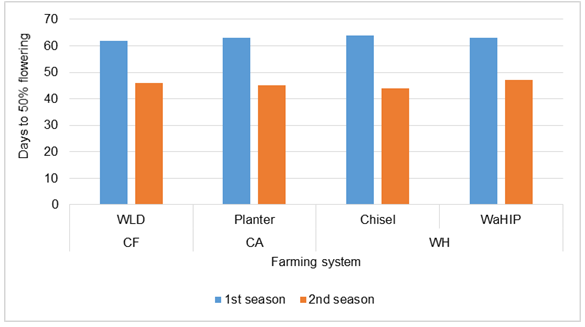
Figure 8: Effect of farming systems on Days to 50% flowering for sorghum during the two seasons. The statistical analysis showed that there was significant difference (P ≤ 0.05) between the treatments in sorghum grain yield in the first season. CA gave the higher yield (3100 kg/ha), whereas the treatment of WLD resulted in the lowest grain yield (2622 kg/ha) compared to the other treatments as shown in (Table 1), while in the second season there was no significant difference between the treatments in grain yield, the higher yield recorded by CA (2190 kg/ha) and WLD gave the lowest yield (1523 kg/ha). However, there was significant difference between the total yield in the two season (P ≤ 0.05) and this difference was mainly due to low rainfall in the second season and late sowing of the crop on 5th August, as shown in Figure 6 whereas the CWR is higher than rainfall received during the critical stage of crop.
| Farming Systems | Grain Yield (Kg/ha) | Biomass (ton/ha) | Grain Yield (Kg/ha) | Biomass (ton/ha) | ||
|---|---|---|---|---|---|---|
| 1st Season | 2nd season | |||||
| CF | WLD | 2622B | 9.84A | 1523 | 4.1 | |
| CA | Planter | 3100A | 9.3A | 2190 | 3.4 | |
| WH | Chisel | 2954A | 8.28AB | 2097 | 3.7 | |
| WH | WaHIP | 3016A | 7.44B | 1855 | 3.7 | |
| Average | 2936 | 8.44 | 1625 | 3.8 | ||
| C.V. (%) | 10.2 | 13.2 | 1858 | 14.4 | ||
| SE ± | 75.2* | 1.12* | 27 | 0.137 ns |
Table 1: Effect of farming systems on sorghum yield and yield components.
Means followed by the same letter (s) are not significantly different according to Duncan’s Multiple Range Test. ns = Not significant* = Significant at P = 0.05 level. Table 1: Effect of farming systems on sorghum yield and yield components.
The CA practice yielded the highest sorghum grain yield (2594.1 kg/ha), followed by the WH method (2362.3 kg/ha), while the lowest yield was obtained using CF (2072.2 kg/ ha). The increase in sorghum grain yield achieved by CA and WH over CF was 25% and 14%, respectively. Additionally, the increase in yield for CA over WH was 10% (Figure 9). Despite variations in rainfall amount and distribution between the two seasons, both CA and WH consistently demonstrated higher yields [26]. Mentioned that sorghum yield under zero tillage was three to four times greater than under CF.
These results suggest that, for producing sorghum in semi- arid areas, both CA and WH outperformed CF. Among them, CA was the most effective due to the chisel plow enhancing weed germination. This finding aligns with Lipic J, et al. [27] who reported improved infiltration of rainwater into the soil increase water availability to sorghum plants and improve biomass production; also Ogbaga CC, et al. [28] reported increased biomass accumulation with higher soil water availability.
![Figure 9: Average Sorghum grain yield (kg/ha) under different farming systems during two seasons. Water Productivity for Sorghum Crop The average value of water requirement for sorghum crop in the Study site for both seasons was 239.0 mm which is equivalent to 2390 m3/ha. The analysis of the water productivity “WP” (kg/m3) according to equation 2, shows that the value of WP ranged between 0.882 and 1.042 kg/ m3 in the first season and between 0.808 and 1.162 kg/ m3 in the second season. The highest WP was obtained by the CA farming system in the first and the second seasons, respectively. While the lowest WP was obtained by the CF farming system in both seasons. These results agreed with Singh R, et al. [29] who reported that the average water productivity for sorghum in India ranged between 0.56 and 1.43 kg/m3 (Figure 10).](/fulltextimages/10876/fig_9.png)
Figure 9: Average Sorghum grain yield (kg/ha) under different farming systems during two seasons. Water Productivity for Sorghum Crop The average value of water requirement for sorghum crop in the Study site for both seasons was 239.0 mm which is equivalent to 2390 m3/ha. The analysis of the water productivity “WP” (kg/m3) according to equation 2, shows that the value of WP ranged between 0.882 and 1.042 kg/ m3 in the first season and between 0.808 and 1.162 kg/ m3 in the second season. The highest WP was obtained by the CA farming system in the first and the second seasons, respectively. While the lowest WP was obtained by the CF farming system in both seasons. These results agreed with Singh R, et al. [29] who reported that the average water productivity for sorghum in India ranged between 0.56 and 1.43 kg/m3 (Figure 10).
Farming Systems and Sesame Crop Production
The crop water requirement for sesame crop was 252.5 mm and 250.6 mm in the first and second seasons, respectively. These values of water requirement were less than the total rain received during both seasons. However, during the growing season the CWR in fifth and sixth decades; in which the sensitive growth stage occurs; received less rain than the required water in the first and the second seasons, respectively. In contrast, during the early stages of crop growth in both seasons, the received rainwater exceeded the water required by the crop (Figure 11). This indicates that rain distribution during the growing season affects crop performance and yield. Throughout the growing period of the first season, the total rainfall was about 507 mm over 30 days, while in the second season, it amounted to 307 mm over 21 days. The results revealed that the total water requirement for the sesame crop was 2525 m3/ha for the first season and 2506 m3/ha for the second season. The average water requirement for the sesame crop in each season was 251.6 mm, equivalent to 2516 m3/ha. In contrast during the early stages of crop growth in both seasons the received rainwater was more than the water required by the crop (Figure 11).
The effect of the farming systems on number of branches per plant was highly significant (P ≤ 0.01 and P ≤ 0.05) in the first and the second seasons, respectively. Chisel plow treatment gave the highest number of branches per plant in both seasons. The effect of the treatments on number of capsules per plant was highly significant (P ≤ 0.001) and significant (P ≤ 0.05) in the first and the second seasons, respectively. The WH and CA farming system resulted in the highest number of capsules per plant in the first and the second seasons, respectively. However, the CF treatment gave the lowest seed yield in the two seasons, while the chisel plow treatment produced the highest and consistent seed yield across the two seasons (847 kg/ha), as shown in (Figure 12). Despite the Crop Water Requirement (CWR) being higher than the received rainfall in both seasons, the delayed sowing date in the second season did not affect the chisel plow treatment’s yield. This is because the chisel plow enhanced water infiltration, ensuring that the sesame crop did not experience water stress or waterlogging during the sensitive stage.
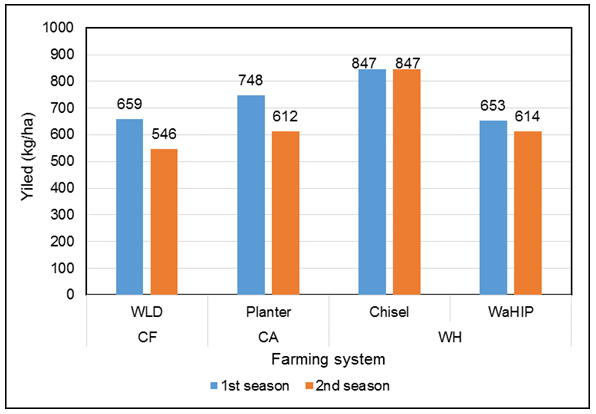
Figure 12: Effects of farming systems on sesame growth during the two seasons The WH (Chesil and WaHIP) gave the highest average sesame seed yield (740.2 kg/ha) followed by the CA (718.2 kg/ha) and the lowest yield was obtained by CF (602.3 kg/ ha) in both seasons. The increase of sesame seed yield by WH (Chesil and WaHIP) and CA over CF was 23% and 19%, respectively, while the increase by the WH over CA was 3%. The Chesil plow is the best practice for the WH farming system in semi-arid areas (Figure 13). The Results agreed with Oztürk F [30] reported seed yield and weed density were positively affected by the tillage methods, the increase in the seed yield observed at Conservation tillage.
![Figure 12: Effects of farming systems on sesame growth during the two seasons The WH (Chesil and WaHIP) gave the highest average sesame seed yield (740.2 kg/ha) followed by the CA (718.2 kg/ha) and the lowest yield was obtained by CF (602.3 kg/ ha) in both seasons. The increase of sesame seed yield by WH (Chesil and WaHIP) and CA over CF was 23% and 19%, respectively, while the increase by the WH over CA was 3%. The Chesil plow is the best practice for the WH farming system in semi-arid areas (Figure 13). The Results agreed with Oztürk F [30] reported seed yield and weed density were positively affected by the tillage methods, the increase in the seed yield observed at Conservation tillage.](/fulltextimages/10876/fig_12.png)
Water Productivity for Sesame Crop
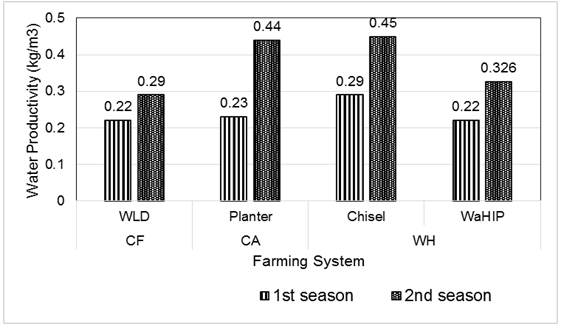
The value of WP for sesame for different treatment ranged between 0.285 and 0.22 kg/m3 in the first season and 0.449 and 0.29 kg/m3 in the second season. The highest water productivity was obtained by the treatment chisel in both seasons, while the lowest water productivity was obtained by the CF farming system in both seasons (Figure 14).
Farming System and Cowpea Crop Production
The performance of cowpea was evaluated by measuring several parameters such as plant density at establishment, number of pods per plant and number of seed per pod as well as grain yield and biomass. The statistical analysis showed no significant differences between the farming systems for all the parameters. The Chisel plow gave highest grain yield in the first season and the CF gave lowest yield as shown in Table 2, while CA gave the highest yield in second season. There was high significant difference (P ≤ 0.05) in cowpea grain yield between the two seasons due to the low rainfall in second season.
| Farming Systems | Grain Yield (kg/ha) | Biomass (Kg/ha) | Grain Yield (kg/ha) | Biomass (Kg/ha) | |
|---|---|---|---|---|---|
| 1st season | 2nd season | ||||
| CF | WLD | 1016 | 620.8 | 554 | 933 |
| CA | Planter | 1040 | 759.8 | 649.2 | 813.8 |
| WH | Chisel | 1473 | 629 | 548 | 777.5 |
| WaHIP | 1104 | 655 | 581 | 665.3 | |
| Average | 1148 | 658.4 | 584.5 | 793 | |
| C.V. (%) | 21.8 | 23.5 | 14.9 | 24.3 | |
| SE ± | 62.6ns | 38.7ns | 21.8ns | 48.1ns |
Table 2: Effects of farming systems on cowpea growth during the two seasons.
Means followed by the same letter (s) are not significantly different according to Duncan’s Multiple Range Test. ns = Not significant. Table 2: Effects of farming systems on cowpea growth during the two seasons.
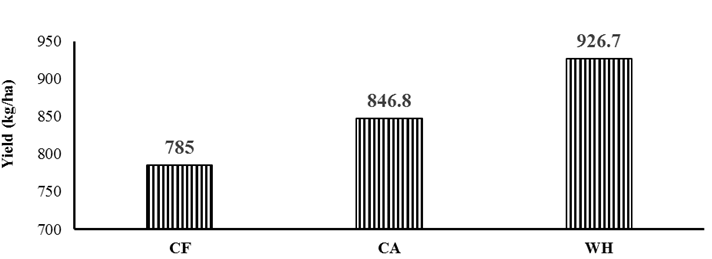
The WH gave the highest average cowpea yield (926.7 kg/ha) followed by the CA (846.8 kg/ha) and the lowest yield was obtained by CF (785.0 kg/ha). The increase of cowpea yield by WH and CA over CF was 18% and 8%, respectively, while the increase by the WH over CA was 9%. These results indicated producing cowpea in southern part of Sennar State, where rainfall is high, by the WH and the CA was better than the CF; but the WH was the best (Figure 15).
Water Productivity for Cowpea Crop
The total water requirement was 333.2 mm and 276.8 mm in the first and second seasons, respectively. These values of water requirement were less than the total rain received during both seasons. However, during the critical stage the received rainfall was less than the required water in the first and the seasons, respectively. In contrast during the early stages of crop growth in both seasons the received rainwater was more than the water required by the crop. The results revealed that the total water requirement for cowpea crop was 3332 and 2768 m3/ha for the first and the second seasons, respectively. This variation in total water requirement was mainly due to the variation in climate parameters and sowing date in both seasons. The average value of water requirement for cowpea crop for both seasons was 305 mm which is equivalent to 3050 m3/ha.
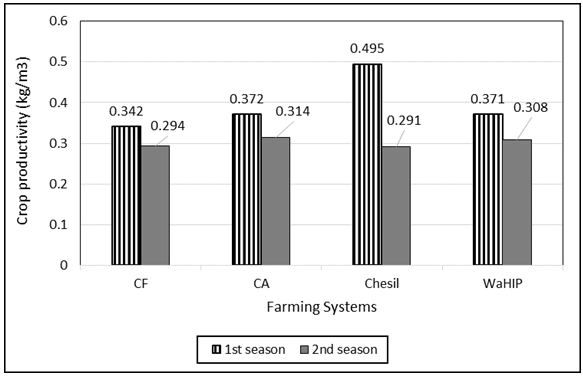
The value of WP ranged between 0.495 and 0.342 kg/m3 in the first season and 0.345 and 0.291 kg/m3 in the second season. The highest water productivity (0.495 kg/m3) was given by the treatment chisel in the first season and by the treatment CF (0.345 kg/m3) in the second season. The WLD treatment gave the lowest water productivity during the first season (Figure 16).
Conclusion
Implementing suitable farming systems and soil conservation measures represents the key strategy to mitigate the considerable risk of crop yield losses. This study evaluated the effect of the farming systems: Conventional Farming (CF), Conservation Agriculture (CA), and in-field rain Water Harvesting (WH), on the yield and water productivity of sorghum, sesame, and cowpea crops. The result indicated the superiority of the CA and WH over the CF for producing sorghum, sesame, and cowpea in semi-arid areas of Sennar State.
The highest water productivity was recorded by sorghum (0.963 kg/m3) followed by cowpea (0.343 kg/ m3) while the Sesame crop recorded the lowest water productivity (0.296 kg/m3). The CA farming system recorded the highest water productivity (1.081 kg/m3) compared to the WH and CF for sorghum while The WH farming system recorded the highest water productivity (0.32 and 0.366 kg/ m3) for sesame and cowpea respectively. Thus, the suitable farming system in semi-arid areas of Sennar State to obtain high water productivity was CA for sorghum and WH for sesame and cowpea crops. Generally, The WH system is the best alternative for CA when the expected rainfall amount is less than normal.
References
-
Kijne JW, Tuong TP, Bennett J, Bouman B, Oweis T (2003) Ensuring food security via improvement in crop water productivity. In: challenge program on water and food: The challenge program on water and food consortium.
-
Schultz B, Tardieu H, Vidal A (2009) Role of water management for global food production and poverty alleviation. Irrigation and Drainage 58 (S1): S3-S21.
-
FAO (2007) Conservation agriculture. Agriculture and Protection Department, Food and Agriculture Organization.
-
FAO (2001) Conservation agriculture matching production with sustainability. In: Intensifying crop production with conservation agriculture, Congress on Conservation Agriculture.
-
Stewart BA (2007) Water conservation and water use efficiency in dry land. In: Proceedings of National Workshop on Conservation Agriculture for Sustainable Land Management to Improve the Livelihood of People in dry areas, pp: 7-9.
-
Doets CE, Best G, Friedrich T (2000) Energy and conservation agriculture. Rome. FAO, sustainable Development and Natural Resources Division Energy Program, pp: 28.
-
Bistayev KS (2002) Farmer experience with Conservation Agriculture technology in northern Kazakhstan, paper presented at the inception workshop of the FAO project on Conservation Agriculture for sustainable crop production in northern Kazakhstan, Ministry of Agriculture, Astana, Kazakhstan.
-
Friedrich T, Kienzle J (2007) Conservation agriculture: Impact on farmers, Livelihoods, Labor, Mechanization and Equipment. In: Proceedings of National Workshop on Conservation Agriculture for Sustainable Land Management to Improve the Livelihood of People in dry areas.
-
Yousif LA, Babiker EH (2015) Effect of Conservation Agriculture on Sorghum Yield in Rainfed Areas Southern Gedarif State, Sudan. Journal of Agricultural Science and Engineering 1(2): 89-94.
-
Taha MB, Yousif LA, Faki HH (2005) Effect of seedbed preparation, seeding method and nitrogen fertilizer on rain grown sorghum. Agricultural Research Corporation Annual Report season, Sudan.
-
Yousif LA, Elwaleed ME, Saeed BS (2009) Influence of tillage methods on soil moisture content and sorghum grain yield in Vertisols of dryland farming Northern Gedarif. J Sc Tech 10(2): 60-68.
-
Rosegrant M, Cai X, Cline S, Nakagawa N (2002) The Role of Rainfed Agriculture in the Future of Global Food Production. Food Policy. International Food Policy Research Institute pp: 127.
-
Liniger H, Studer RM, Hauert C, Gurtner M (2011) Sustainable Land Management in Practice: Guidelines and Best Management Practices for Sub-Saharan Africa. FAO of the United Nations.
-
Dile YT, Karlberg L, Temesgen M, Rockströmb J (2013) The role of water harvesting to achieve sustainable agricultural intensification and resilience against water related shocks in sub-Saharan Africa. Agriculture Ecosystems and Environment 181: 69-79.
-
Hatibu N, Mahoo H (1999) Rainwater harvesting technologies for agricultural production: A case for Dodoma, Tanzania. Conservation tillage and animal traction. In: Kaumbutho PG, Simalenga TE (Eds.), A resource book of the Animal Traction Network for Eastern and Southern Africa. Harare, Zimbabwe, pp: 173.
-
Critchley WRS, Reij C (1989) Water harvesting for plant production: part 2. Case studies and conclusions from Sub-Saharan Africa.
-
Hudson N (1987) Soil and Water Conservation in semi- arid areas. FAO Soils bulletin pp: 172.
-
Botha JJ, van Rensburg LD, Anderson JJ, Kundhlande G, Groenewald DC, et al. (2003) Application of in-field rainwater harvesting in rural villages in semi-arid areas of South Africa. Proceedings of the symposium and workshop on water conservation technologies for sustainable dryland agriculture in sub-Saharan Africa Bloemfontein South Africa, pp: 25-32.
-
Gicheru PT, Gachene CK, Mbuvi JP, Wanjogu SN (2003) Effects of soil management practices and tillage systems on soil water conservation and maize yield on a sandy loam in semi-arid Kenya. Proceedings of the symposium and workshop on water conservation technologies for sustainable dryland agriculture in sub-Saharan Africa (WCT) Bloemfontein South Africa, pp: 18-24.
-
Biamah EK, Nhlabathi NN (2003) Conservation tillage practices for dryland crop production in semi-arid Kenya: promotion of conservation tillage techniques for improving household food security in Iiuni, Machakos, Kenya. Proceedings of the symposium and workshop on water conservation technologies for sustainable dryland agriculture in sub-Saharan Africa (WCT) Bloemfontein South Africa, pp: 45-50.
-
Chilimba ADC, Kabambe VH (2003) The effect of maize stover mulching and ridging techniques on soil water conserved and grain yield in Malawi. Proceedings of the symposium and workshop on water conservation technologies for sustainable dryland agriculture in sub- Saharan Africa (WCT) Bloemfontein South Africa, pp: 51-55.
-
Molden D, Murray-Rust H, Sakthivadivel R, Makin I (2003) A water productivity Framework for Understanding and Action. Water productivity in agriculture: Limits and Opportunities for Improvement, pp: 1-18.
-
Molden DJ, Oweis TY, Steduto P, Kijne JW, Hanjra AH, et al. (2007) Pathways for increasing agricultural water productivity. In: Molden, D.(ed) Water for food, water for life: a comprehensive assesement of water management in agriculture. Earthscan, London and International Water Management Institute, pp: 279-310.
-
Allen RG, Pereira LS, Raaes D, Smith M (1998) Crop evapotranspiration. Guidelines for computing crop water requirement. FAO Irrigation and Drainage, pp: 56.
-
Adam HS (2005) Agro-climatology, Crop Water Requirement and Water Management. Wad Medani, pp: 169.
-
Abdulrazak NA (2006) An investment and development model for zero tillage in the rainfed sub-sector of Sudan. University of Khartoum.
-
Lipic J, Kus J, Slowinska-Jurkiewicz A, Nosalewicz A (2005) Soil porosity and water infiltration as influenced by tillage methods. Soil and Tillage Research 89(2): 210- 220.
-
Ogbaga CC, Bajhaiya AK, Gupta SK (2019) Improvements in biomass production: Learning lessons from the bioenergy plants maize and sorghum. Journal of Environmental Biology 40(3): 400-406.
-
Singh R, Kundu DK, Bandyopadhyay KK (2010) Enhancing Agricultural Productivity through Enhanced Water Use Efficiency. Journal of Agricultural Physics 10: 1-15.
-
Öztürk F (2019) Effects of tillage systems on second crop sesame (sesamum indicum L.) yield and weed density. Environment and Food Sciences 3(1): 29-33.
- Enhancement of Vegetative Growth and Fruit Yield in Cucumber (Cucumis sativus L.) via Spiritual Blessing (Biofield) Energy Intervention
- Production of Açaí (Euterpe oleracea Mart.) under Different Agroforestry System Management Intensities in Amazonian Floodplain (Varzea) Forests
- Coffee and the Production Region: What is the Secret to the Expression "Quality"?
- Experiential Agripreneurship Training in Sub-Saharan Africa: Integrating a Business Incubator into Postgraduate Livestock Education at the University of Buea
- Advances in Agricultural High-Quality Development
- Linking Compost Residue to ABAGE in Plants - a Short Note