
Agroecology and Sustainable Citriculture
Sustaining citriculture amidst climate change has become a more daunting challenge considering simultaneous occurrence of multiple nutrient deficiencies triggered by depleting carbon stock of soil coupled with glaring impact of global warming on crop performance. Despite paradigm shift from purely inorganic to either organic or the combination of two, agroecological applications have always occupied a center-stage in sustainable citriculture. Development of microbial consortium (microbial concoction), rhizosphere hybridization, identification of microbial corridor and microbial hot spot in a field, besides storing carbon in plant vegetative framework, are some of the upcoming ways to realize the multiple dimensions of agroecology in sustaining the citriculture in years to come with emphasis on on-farm research. These efforts have to be further matched with other natural resource conserving options like conservation agriculture, organic farming, natural farming to name a few important ones.
Background
Agroecology works best when natural resources are utilized with on-farm ambit as a driver of sustainability in citriculture [1], where very often natural farming is linked to give birth to another form of agriculture, conceived as regenerative agriculture having much stronger resilience against climate change-related issues. Agroecological farming like any other sustainable citriculture integrates five major issues like soil health care, soil biodiversity, crop biodiversity, production stability, environmental health and water quality [2]. Of these, soil health is the central core of sustainable citriculture [3]. Of late, sustainability of citriculture is hugely challenged by global warming triggering unwarranted climate change, the impact of which becomes more discernible considering strong synergism between CO2 and nutrients under no water limiting conditions [4].
Our study reveals under central Indian conditions reveal that recommended dose of fertilizers (RDF) once worked stands out to be ineffective over a period of 20-years time on account of rise in average temperature by just less than 10C during flowering opening time (such examples can likewise be cited for any other crop), which later necessitated 25% additional K to moderate such temperature stress. How does RDF behave in the long run in different crops when agroecology is integrated with emphasis on microbial turnover of the nutrients to regulate soil fertility functions [5]. Recognition of the importance of soil microorganisms has led to a renewed interest in measuring the quantum of nutrients held in their biomass and its consequential effect on crop responses on a sustainable basis [6].
There are accruing evidences that agroecology- plant nutrition synergy is fundamental to production sustainability, looking at current precision in decoding rhizosphere functions using metagenomics of phytobiome [7]. Studies on polyploidy levels of crops connected well with nutrient-t deficiency or -efficiency in many field crops. Amidst these facts, a still bigger question emerges, how effectively we can utilise the microbial niches of crop phytobiome to unlock the ongoing plateau in crop production? In te foregoing discussion, we will analyse the possible contribution of agroecology beyond cop production sustainability [8]. The current G20 summit at New Delhi (India) slooks forward towards environmentally benign possibilities of sustaining, not only the crop production, but looks far beyond it via environmental health for the safeguard of posterity.
Agroecological Implications, a Regenerative Approach?
Land degradation (96.4 million ha of degraded land accounting to 29.3% of the country’s total geographical area of 328.7 million ha) neutrality has been one of the most vibrant strategies of sustainable citriculture where coalition of conventional and traditional farming takes place with singular objectivity of sustainability through agroecology driven regenerative agriculture [9]. India made some modest contribution to realise the strength of sustainable agriculture through: i. national project on organic farming, ii. systematic rice intensification and iii. zero budget natural farming, all put together under one umbrella towards sustainable citriculture. But, the basics of modern citriculture is never overlooked with regards to core issues like natural resource conservation, soil microbial diversity, resilience against forging climate change, expanding water intake capacity, scavenging soil contaminants, usage of cover crops (field buffers and plant strips on contours) for reduced run-off loss and maintaining the environmental health. While modern citriculture takes into account the rejuvenation of depleted land from physical, biological and chemical barriers restricting the targeted optimised crop agronomy and aid further in recuperating the full potential for crop carrying capacity in a farming system module [10-
12]. Hence, agroecology based regenerative agriculture recognizes all sustainable practices those affect the natural systems and uses all the management techniques to restore the system towards improved citrus productivity [13].
While comparing regenerative agriculture with organic citriculture, both are well connected with agroecology. We comprehensively overlook the harmful effects of organic pesticides, which could be even more harmful than synthetic pesticides in organically produced crops. Are natural pesticides safer than artificial pesticides? the answer could be both in both the ways. Surely, such scientific outcomes put an alarm bell to researchers and policy makers to keep a regular guard on health of agro-ecosystem using agroecology as a complete toolkit for future citriculture [14].
Intervention of Agroecology in Conventional Agriculture Imminent
Concurrent emergence of multiple nutrient deficiencies is one of the prime reasons for fast depleting soil organic carbon stock. No doubt, there has been concerted efforts of measuring carbon pool of Indian soils, including the carbon stock under different land uses [15, 16]. These efforts are more of indicative than suggestive, especially on mitigation terms, with still miniscule information available on horticultural crops based land uses [17, 18]. Lack of concepts like crop grids and land uses -based efforts have put researchers in dilemma to define the upper limits of soil organic carbon as a guarantee to sustained citrus crop production, despite the fact that soil carbon content is the single most important soil property having cascading effects on entire range of soil properties [19, 20, 21]. Our efforts to improve soil organic carbon using various forms of composts and manures have proved futile using citrus as a case study (Figure 1), despite an initial display of increase in organic carbon in the first 4-5 years, but later started declining, regardless of fruit yield level [22, 23, 24]. These studies also lend strong support that unless carbon is deposited into passive carbon pool, mere improvement in active pool of carbon will not aid in developing a climate resilient crop production system, unless agroecological intervention is brought into the system [25, 26, 27, 28, 29]. Therefore, an introduction of concept like microbial consortium brought some respite to infuse production sustainability [30, 31, 32].
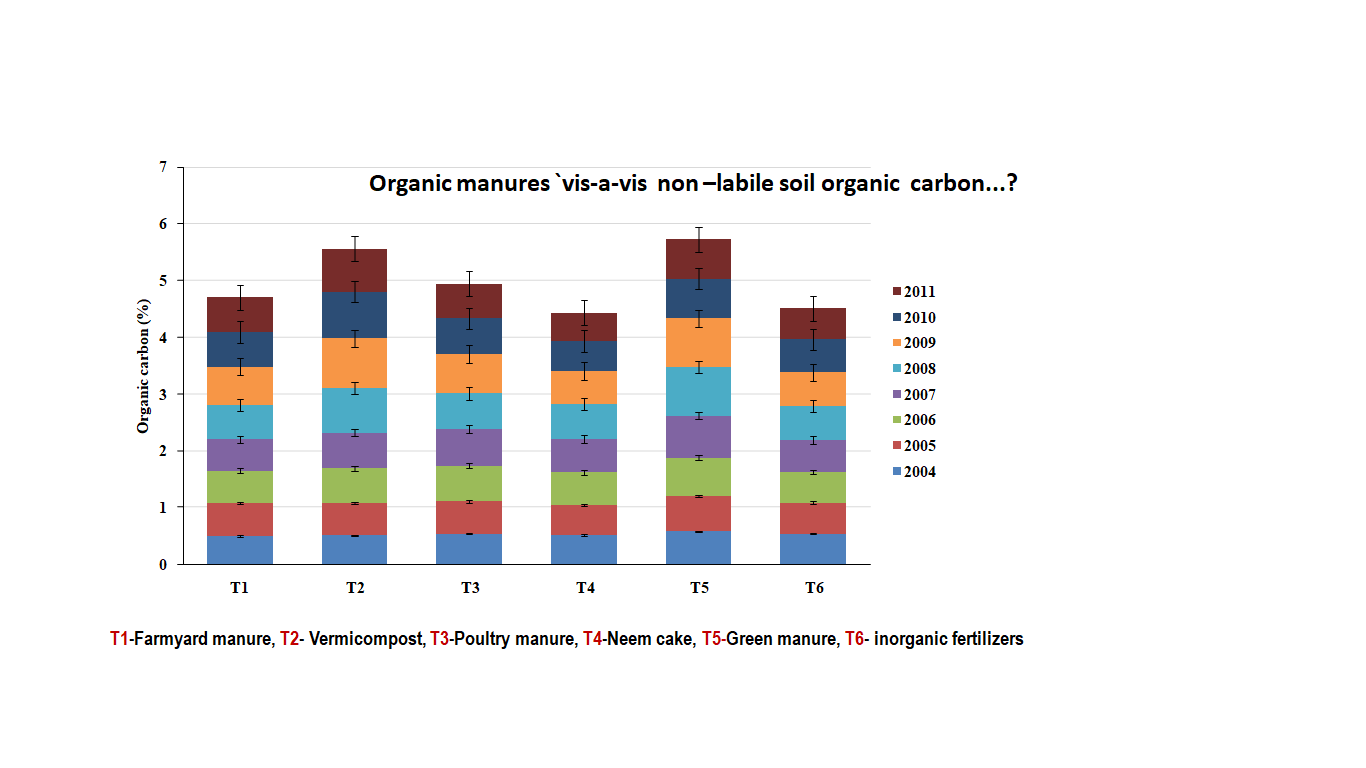
Source: T1 –Farmyard manure, T2- Vermicompost, T3-Poultry manure, T4-Neem cake, T6-inorganic fertilizers Srivastava AK [28, 29]. Figure 1: Changes in the organic carbon during 8 years of treatment with different organic manures in comparison to organic fertilizers (Residence time of carbon through organic manures applied in citrus rhizosphere: a case study for studying calcitrance or recalcitrance of different carbon sources.
Exploiting Microbial Niche for Soil-Plant Health Bioprospecting
Plant phytobiome displaying microbial diversity (culture dependent or culture independent) offer the best opportunity to develop and upscale the combination of rhizo-competent microbes, popularly called as microbial consortium or microbial concoction [33, 34]. The most common objective of developing microbial consortium is to capitalize on both the capabilities of individual microbes and their interactions to create useful systems in tune with enhanced productivity, and soil health improvements through efficient metabolic functionality [35, 36, 37, 38].
| ISFM modules | Yield (kg/tree) | Fruit quality parameters | |||
|---|---|---|---|---|---|
| Juice content (%) | TSS (0Brix) | Acidiy (%) | TSS/Acid ratio | ||
| Module I | 67.7 | 40.2 | 8.4 | 0.96 | 8.92 |
| Module II | 71 | 39.6 | 8.6 | 0.93 | 9.23 |
| Module III | 80.5 | 41.5 | 9.5 | 0.86 | 10.05 |
| Module IV | 83.2 | 42.7 | 8.4 | 0.91 | 9.56 |
| Module V | 88.8 | 44.2 | 9.3 | 0.8 | 11.62 |
| CD(P=0.05) | 2.1 | 2.1 | 0.3 | 0.1 | 1.1 |
We carried out studies with an aim to develop rhizosphere specific microbial consortium. The efficient microbes viz., Aspergillus flavus (MF113270, P- solubilizer), Bacillus pseudomycoides (MF113272, K- solubilizer), Acinetobacter radioresistens (MF113273, N- solubilizer), Micrococcus yunnanensis (MF113274, P- solubilizer) and Paenibacillus alvei (MF113275, P- solubilizer) were finally identified and later tested under nursery as well as field conditions. In the experiment on progressive response of multiple microbes of the microbial consortium was tested without addition of any inorganic fertilizers through soil inoculation, different microbes for the purpose of retrofitting microbes as nutrient replacement [14, 39, 40]. Multiple location testing revealed a significant reduction in mortality of citrus seedlings and budlings. While long term field evaluation (2007-16) of microbial consortium in different combinations with limited chemical fertilizers and vermicompost (Table 1), further showed 30-40% saving on chemical fertilizers without any compromise on fruit yield, any of the fruit quality parameters and soil health parameters including microbial biomass and microbial biomass nutrients, with an additional reduction of carbon dioxide (concurrent increase carbon fixation), indicating recalcitrance nature of carbon lodged into passive pool of soil organic carbon (called legacy carbon). Such recalcitrance of microbes mediated deposited carbon brings crop nutrient holiday more realistic in application than mere speculation [41, 42, 43, 44].
Microbes assisted crop production system (citrus as a case study). Such efforts are seriously required to be applied at other field and horticultural crops.
Rhizosphere Hybridization, A Rejuvenation for Microbial Diversity
Of the many novelties, emergence of concept like rhizosphere hybridization (though concept has to still find a scientific acceptance) has provided a strong silver lining as to ensure rhizosphere microbial diversity, a prerequisite for production sustainability (Figure 2). However, scientific world is divided between microbiome function and microbiome diversity, many lay emphasis.
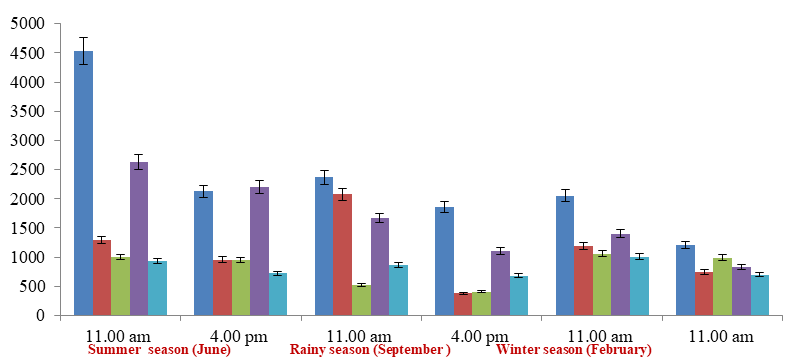
Source: Srivastava AK, et al. [38]. Figure 2: Changes in CO2emission rate (mg C/m2/hr) in response to different ISFM modules (Module I-Module V), representing the agroecological consequences in developing carbon neutral agriculture (Here citrus crop is used as case study).
On former that links with production plus crop health. Rhizosphere hybridization is a new concept to modify the rhizosphere ecology to create an optimum environment for harnessing the value added benefits of nutrient-microbe synergy [10, 12, 37]. Our studies on response of different treatments involving rhizosphere soil of three perennial trees viz., Ficus racemosa L. (Umber tree), Ficus benghalensis L. (Banyan tree), and Ficus religiosa L. (Pipal tree) along with rhizosphere soil of healthy and highly productive sweet orange trees in sweet orange buddlings showed differential response in terms of agronomic parameters, changes in soil physical properties, and pool of plant available nutrients [2, 39]. In field, the rhizosphere hybridization can be implemented by collecting rhizosphere soil of healthy trees (along microbial corridor) and injected into weaker trees to rationalise distribution of microbes across field /orchard as a part of agroecological farming [43, 44] (Figure 3).
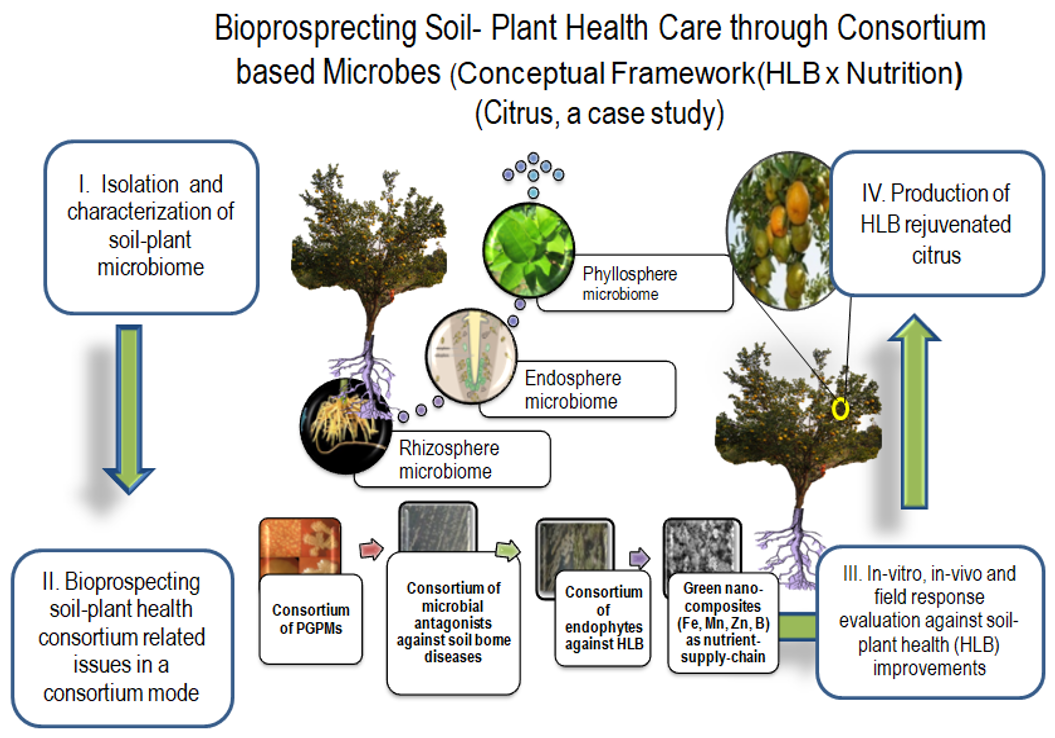
Source: Srivastava, et al. [12]. Figure 3: Agronomic response of consortium of PGPMs, antagonists, endophytes and nano-composites for improvement in plant nutrition and reduction in HLB soil borne pathogens (A case study of agroecological application).
Agroecology and Plant Carbon Stock
Feld crops or horticultural crops are key to any land usage, contributing significantly towards carbon dioxide sinks for tree’s permanent woody framework. Storing carbon in plants vegetative framework is a promising alternative to conventional method of carbon sequestration in soil. This is where agroecological applications have great role to play [45, 46]. For example, fruit crops are estimated to sequester 24 – 109 tons CO2/ ha (depending upon their age, planting distance, soil types, agrotechniques etc.), far higher than many of the tropical rain forests, with an additional ecosystem service in economic terms. Incidentally, the response of different fruit crops under elevated CO2 condition is a function of nutrition status of the crop, where soil microbial ecology plays a pivotal role. Although, the carbon stocked into the trees is subjected to stiff challenge against long term storage and released into the atmosphere through respiration of soil micro-communities [47, 48].
The carbon stored into the perennial framework of fruit crops is petrified with numerous organic compounds, and then subsequently distributed into various parts of the plants to discharge multiple functions, including their implications on computable economic outcome. While comparing the carbon storage into the soil, which is relatively more unstable, variable, and vulnerable to decomposition compared to carbon stored into the woody fabric of fruit crops. Therefore, we need a shift of concept, despite the fact that researchers across disciplines are concerned about storing carbon into the soil for an extended period. In either care, recalcitrance of carbon and its residence time would be of paramount importance to exploit atmospheric CO2. Such a concept is anticipated to be successful with minor modifications in photosynthesis system of field crops and intervention of microbes, especially endophytic in nature to store carbon inside the plants tissues [49]. Considering endophytic microbes as beneficial bioagents [50] and potent colonizers of plant’s tissues, we might be able to use the world’s tiniest organisms to solve the world’s most pressing problem [18, 23].
Conclusion and Suggested Futuristic Studies
Our efforts provided success in answering some popularly raised questions summarised as: i.microbes can replace nutrients requirement of nursery plants, considering absymally low nutrient requirement of nursery plants; ii.
microbial consortium is a far better choice than individual microbe(s); iii. liquid formulation of microbes is better than substrate-based inoculants, either individual microbe or consortium of microbes; iv. quantity of microbial broth needs to be standardized for containerized nursery versus field nursery; v. inoculation of nursery plants with microbial consortium needs further to be standardized depending upon substrates used (solarized soil versus soilless medium); vi. treatment of nursery plants (for example citrus plants) with microbial consortium reduced the rate of mortality to bare minimum, once transplanted in new orchard site; vii. treatment with microbial consortium provided an additional plant immune on account of biopriming effect of microbes, which eventually aided in far better withdrawal of nutrients from soil and ensured better plant health in ultimate terms; viii. the treatment with microbial inoculants individually or as microbial consortium has a strong promise to be integrated with irrigation to evolve a new concept called “biofertigation” for exclusively crop nurseries and ix. use of microbial inoculants can be tailored as per crop phenology synonymous to nutrient application [51].
A cultivar evaluated under both intensive farming, organic farming or natural farming system may not perform with similar magnitude of success. The major difference lies with respect to differential soil health indices, which are yet to be streamlined, while talking about Soil Health Card. Do we need to breed the fruit crops specifically tailored to such forms of farming (molecular approach to breeding of mineral deficiency resistance and mineral efficiency would facilitate produce nutritionally efficient biotypes in order to maximise the quality production of field or horticultural crops including citrus crop on sustained basis), an enigmatic answer still awaits for researchers to either refute such hypothesis or accept with sound scientific database. Hence, linking agroecology with sustainable citriculture is a forward looking agriculture model with more emphasis on genetic, functional and metabolic diversity of soil microorganisms within crop-based rhizosphere. The capacity of soil microbial communities to maintain functional diversity of those critical soil processes could ultimately be more important to ecosystem productivity and stability than mere taxonomic diversity.
References
-
Kohli RR, Srivastava AK, Shivankar VJ (1998) Organic culture in citrus cultivation. Indian Horticulture 43: 12- 15.
-
Marschner P, Crowley D, Yang CH (2004) Development of specific rhizosphere bacterial communities in relation to plants species, nutrition and soil type. Plant and Soil 261: 199-208.
-
Mousavi SM, Srivastava AK, Cheraghi M (2023) Soil health and crop response of biochar: an updated analysis. Archives of Agronomy and Soil Science 69(7): 1085-1110.
-
Srivastava AK (2012) Integrated nutrient management in citrus. Indian Journal of Fertilizers 6(110): 34-44.
-
Srivastava AK (2014) Global citrus nutrition research: an incisive analysis. Current Horticulture 2(1): 3-4.
-
Srivastava AK (2015) Nutrient diagnostics in citrus: Are they applicable in current season crop. Agrotechnology 2(2): 104-105.
-
Klitgord N, Segre D (2011) Ecosystems biology of microbial metabolism. Current Opinion in Biotechnology 22(4): 541-546.
-
Keditsu R, Srivastava AK (2014) Substrate dynamics: Developments and issues. Annals of Plant and Soil Research 16(1): 1-8.
-
Srivastava AK, Wu QS, Mousavi SM, Hota D (2021) Integrated soil fertility management in fruit crops: An overview. International Journal of Fruit Science 21(1): 413-439.
-
Srivastava A K, Malhotra S K (2014) Nutrient management in fruit crops: Issues and strategies. Indian Journal of Fertilizers 10(12): 72-88.
-
Srivastava AK, Malhotra S K (2017) Nutrient use efficiency in perennial fruit crops-A Review. Journal of Plant Nutrition 40(2): 1928-1953.
-
Srivastava AK, Malhotra SK, Krishna Kumar NK (2015) Exploiting nutrient-microbe synergy in unlocking productivity potential of perennial fruits: A review. Indian Journal of Agriculture Sciences 85(4): 459-481.
-
Srivastava AK, Hota D (2020) Fruit crops under nutrient- capped scenario: a timeless journey. Current Horticulture 8(2): 14-17.
-
Srivastava AK, Singh S (2008) Citrus nutrition research in India: Problems and prospects. Indian Journal Agricultural Sciences 78(1): 3-16.
-
Srivastava AK, Patil P (2014) Soil fertility indexing in acid lime grown on smectite rich soils. Annals of Plant and Research 16(1): 25-28.
-
Srivastava AK, Singh S (2001) Development of optimum soil property limits in relation to fruit yield and quality of Citrus reticulata Blanco cv. Nagpur mandarin. Tropical Agriculture (Trinidad) 78(3): 174-181.
-
Srivastava AK, Singh S (2002) Soil analysis based diagnostic norms for Indian citrus cultivar. Communications in Soil Science and Plant Analysis 33(11-12): 1689-1706.
-
Srivastava AK, Singh S (2003) Soil-plant nutrient limits in relation to optimum fruit yield of sweet orange (Citrus sinensis Osbeck) cultivar Mosambi. Indian Journal of Agriculture Sciences 73(4): 209-211.
-
Srivastava AK, Singh S (2003) Plant and soil diagnostic norms for optimum productivity of Nagpur mandarin (Citrus reticulata Blanco). Fertilizer News 48(2): 47-63.
-
Srivastava AK, Singh S (2003) Foliar fertilization in citrus – A review. Agricultural Reviews. 24(4): 250-264.
-
Srivastava AK, Singh S (2005) Diagnosis of nutrient constraints in citrus orchards of humid tropical. Journal of Plant Nutrition 29(6): 1061-1076.
-
Srivastava AK, Singh S (2005) Zinc nutrition, a global concern for sustainable citrus production. Journal of Sustainable Agriculture 25(3): 5-42.
-
Srivastava AK, Singh S (2004) Leaf and soil nutrient guide in citrus – A review. Agricultural Reviews 25(4): 235-251.
-
Srivastava AK, Paithankar DH, Venkataramana KT, Hazarika V, Patil P (2019) INM in fruit crops: Sustaining quality production and soil health. Indian Journal of Agricultural Sciences 83(3): 379-395.
-
Srivastava AK, Singh S (2006) Diagnosis of nutrient constraints in citrus orchards of humid tropical India. Journal of Plant Nutrition 29(3): 1-16.
-
Srivastava AK, Singh S (2006) Citrus nutrition and biochemical markers. Journal of Plant Nutrition 29(5): 827-855.
-
Srivastava AK, Singh S (2008) Analysis of citrus orchard efficiency in relation to soil properties. Journal of Plant Nutrition 30(12): 2077-2090.
-
Srivastava AK (2010) Development of integrated nutrient management to harmonise with improved citrus production. Advances in Plant Physiology 12: 294- 368.
-
Srivastava AK (2013) Nutrient deficiency symptomology in citrus: An effective diagnostic tool or just an aid for post– mortem analysis. Agricultural Advances 2(6): 177- 194.
-
Srivastava AK (2013) Early warning system for plant nutrient deficiency: Future toolbox. Agrotechnology 2(3): e106.
-
Srivastava AK, Singh S (2008b) DRIS norms and their field validation in Nagpur mandarin (Citrus reticulata Blanco). Journal of Plant Nutrition 31(6):1091-1107.
-
Srivastava AK, Singh S, Huchche AD (2015) Evaluation of INM in citrus on Vertic Ustochrept: Biometric response and soil health. Journal of Plant Nutrition 38(6): 854- 867.
-
Srivastava AK, Singh S, Albrigo LG (2008) Diagnosis and remediation of nutrient constraints in Citrus. Horticulture Review 34: 277-364.
-
Srivastava AK, Singh S, Marathe R A (2002) Organic citrus: Soil fertility and plant nutrition. Journal of Sustainable Agriculture 19(3): 5-29.
-
Srivastava AK, Das AK, Jagannatham PTK, Bora P, Ansari FA, et al. (2022) Bioprospecting microbiome for soil and plant health management amidst huanglongbingin citrus: a review. Frontiers in Plant Science 13: 858842.
-
Srivastava AK, Singh S (2009) Citrus decline: Soil fertility and plant nutrition. Journal of Plant Nutrition 32(2): 197-245.
-
Srivastava AK, Singh S (2009) Zinc nutrition in Nagpur mandarin on Haplustert. Journal of Plant Nutrition. 32(7): 1065-1081.
-
Srivastava AK, Singh S (2016) Site-Specific nutrient management in Nagpur mandarin (Citrus reticulata Blanco) raised on contrasting soil types. Communication in Soil Science and Plant Analysis 47(3): 447-456.
-
Wang S, Srivastava AK, Wu QS, Fokom R (2014) T effect of mycorrhizal inoculation on the, rhizosphere properties of trifoliate orange (_Poncirus trifoliata L._ Raf.). Scientia Horticulturae 170: 137-142.
-
Wu QS, Srivastava AK, Ning Zou Y (2013) AMF-induced tolerance to drought stress in citrus A review. Scientia Horticulturae 164: 77-87.
-
Wu QS, Srivastava AK, Ming Qin Cao, Wang J (2014) Mycorrhizal function on soil aggregate stability in root zone and root-free hyphae zone of trifoliate orange. Archives of Agronomy and Soil Science 61(6): 813-825.
-
Wu QS, Srivastava AK (2015) Effect of mycorrhizal symbiosis on growth behavior and carbohydrate metabolism of trifoliate orange under different substrate P levels. Journal of Plant Growth Regulation 34: 499-508.
-
Wu QS, Dong HJ, Srivastava AK, Ning ZY, Kamil Kuca (2019) Mycorrhizas enhance drought tolerance of citrus by altering root fatty acid composition and their saturation levels. Tree Physiol 39(7): 1149-1158.
-
Yadav K, Prasad V, Mandal K, Ahmed N (1992) Effect of co-inoculation (Azospirillum and Rhizobium strains) on nodulation, yield, nutrient uptake and quality of lentil [_Lens culinaris_]. Lens Newsletter 19: 29-31.
-
Zou YN, Srivastava AK, Ni QD, Wu QS (2015) Disruption of mycorrhizal extraradical mycelium and changes in leaf water status and soil aggregate stability in root box- grown trifoliate orange. Frontiers in Microbiology 6: 20- 31.
-
Srivastva AK, Das AK, Jaganatham PTK, Popy B, Ansari FA, et al. (2022) Bioprospecting microbiome for soil and plant health management amidst Hunaglongbing threat in citrus; a review. Front Plant Sci 13: 858842.
-
Srivastava AK, Huchche AD, Ram L, Singh S (2007) Yield prediction in intercropped versus monocropped citrus orchards. Scientia Horticulturae 114(1): 67-70.
-
Srivastava AK, Singh S (2004a) Soil and plant nutritional constraints contributing to citrus decline in Marathawada region, India. Communications in Soil Science and Plant Analysis 35(17,18): 2537-2550.
-
Bora P, Saikia K, Hazarika H, RageshG (2019) Exploring bacterial endophytes in disease management of horticultural crops. Current Horticulture 7(2): 32-37.
-
Bora P, Bora LC (2020) Disease management in horticultural crops through microbial interventions: An overview. Indian Journal of Agricultural Science 90(8): 1389-1396.
-
Bora P, Rahman M (2022) Microbes knocking louder roles for next green revolution : A meta-analysis. Annals of Plant of Plant and Soil Research 24(4): 552-563.
- Enhancement of Vegetative Growth and Fruit Yield in Cucumber (Cucumis sativus L.) via Spiritual Blessing (Biofield) Energy Intervention
- Production of Açaí (Euterpe oleracea Mart.) under Different Agroforestry System Management Intensities in Amazonian Floodplain (Varzea) Forests
- Coffee and the Production Region: What is the Secret to the Expression "Quality"?
- Experiential Agripreneurship Training in Sub-Saharan Africa: Integrating a Business Incubator into Postgraduate Livestock Education at the University of Buea
- Advances in Agricultural High-Quality Development
- Linking Compost Residue to ABAGE in Plants - a Short Note