
Biostimulatory Activity of Pyroligneous Acid Enhanced Metabolites Accumulation in Grape Wine
Pyroligneous acid (PA) is a known biostimulant in agriculture, but its effects on metabolite accumulation in grape berries and wine are not well understood. This study investigated the impact of varying PA concentrations (0%, 2%, 4%, 8%, and 12%) on metabolite profiles in grape wine (Vitis vinifera cv. KWAD7-1). Using a randomized complete block design, PA was applied to grape leaves at 14-day intervals. Wine samples were analyzed using NMR spectroscopy, identifying 52 metabolites across seven compound groups. The 12% PA treatment resulted in the highest oBrix content: 0.14-fold higher than the control. This treatment significantly (p<0.05) altered the concentrations of organic acids, increasing most except for malic and acetic acids, which decreased by 0.16-fold and 0.60-fold, respectively. Notably, 12% PA increased total amino acid content by 5.96- fold compared to the control and enhanced glucose and fructose contents by 0.25- and 1.40-fold, respectively. A 0.53-fold increase in myo-inositol was also observed with 12% PA, suggesting potential improvements in nutritional value. Principal component analysis revealed distinct metabolic profiles for grapes treated with 12% PA, characterized by elevated levels of phenolics, alcohols, volatiles, and carbohydrates. These findings suggest that PA application can be used to manipulate grape wine metabolites, potentially enhancing sensory attributes and nutritional value. This study provides insights into the use of PA as a tool for modulating wine quality to meet consumer preferences.
Abbreviations
NOESY: Nuclear Overhauser Effect Spectroscopy; FID: Free Induction Decays; PCA: Principal Component Analysis.
Introduction
Wine grape (Vitis vinifera L.) is one of the most important economic berry crops in the world. It is used in the food and beverage sector to make salads, bakery products, juice, and wine Zoffoli J, et al. [1, 2]. In Canada, the grape industry is a growing sector with a current production area of more than 13,000 ha in 2021, which generated a total revenue of about 9 billion Canadian dollars Statistic Canada [3]. Nova Scotia is one of the grape-growing and wine-producing provinces and is also known for its high-quality wine Diez-Zamudio F, et al. [4]. Grape wine quality is significantly influenced by the compositions of the primary and secondary metabolites in the berries. Like most plants, these metabolites are determined by genotypic characteristics, climatic, edaphic and management factors Gutiérrez-Gamboa G, et al. [5]. Metabolites involve a diverse range of species-specific compounds that determine the flavour and chemical quality of the berry, and fall into various phytochemical categories including alkaloids, terpenes, tannins, sterols, saponins, and phenolics Zhang C, et al. [6, 7]. Metabolites such as anthocyanins, stilbene (resveratrol), and flavonoids have a significant impact on the nutritive value and sensory properties (i.e., colour, taste, and aroma) of wines Velić D, et al. [8]. As a result, there has been a surge in scientific investigations focused on the development of grape production strategies with a specific emphasis on enhancing the chemical composition and quality of grape berries.
Innovative agronomic strategies to improve grape berry yield and quality such as alternate furrow irrigation Du TS, et al. [9], multifunctional irrigation system Davide B, et al. [10], integrated and organic pest management Perria R, et al. [11] and bio-organic fertilization Li X, et al. [12] have been reported but not much on biostimulants. The interplay between cultivation practices and plant physiological responses driven by primary and secondary metabolism can influence not only crop yield but also, the chemical composition of berries Bredun MA, et al. [13]. Biostimulants are substances that have the ability to stimulate physiological processes associated with water and nutrient absorption and assimilation, abiotic stress tolerance and plant health resulting in an overall invigorating effect Perria R, et al. [11]. One of such biostimulant is pyroligneous acid (PA).
The application of PA, a natural source of biostimulant has become a useful approach for the sustainable management of crops, and it is targeted to benefit plant nutrient uptake, reduce the application of conventional (inorganic) fertilizers and improve crop quality characteristics Grewal A,et al. [14, 15]. PA, also known as wood vinegar, is a condensed smoke obtained from burning organic materials such as tree branches, wood chips and other crop residues in the absence of oxygen Ofoe R, et al. [14, 16]. The benefits of PA can be extended beyond enhancing plant growth to the management of plant diseases Ratanapisit J, et al. [17, 18] due to its antimicrobial properties Souza-Silva A, et al. [19, 20] action as organic fertilizers, and indirect enhancement of soil health by improving soil microbial activity [21].
Foliar application of PA was found to improve the growth and yield of soybean (Glycine max) Travero JT, et al. [22], cucumber (Cucumis sativus), lettuce (Lactuca sativa), cole (Brassica oleracea) Jun M, et al. [23] and rockmelon (Cucumis melo) Zulkarami B, et al. [24]. Recently, PA has been shown to improve nutritive value such as elemental composition, total phenolics and flavonoids contents of tomato (Solanum lycopersicum) Ofoe R, et al. [25]. This suggests that the biostimulatory effect of PA could have a positive impact on the chemical composition as well as organoleptic properties of fruits including grape berries, which can impact grape wine. However, there is limited to no research on PA effect on grape berry and wine. Therefore, the present study determined the effect of PA on metabolites accumulation in grape wine following foliar application of different concentrations of PA.
Materials and Methods
Study Area
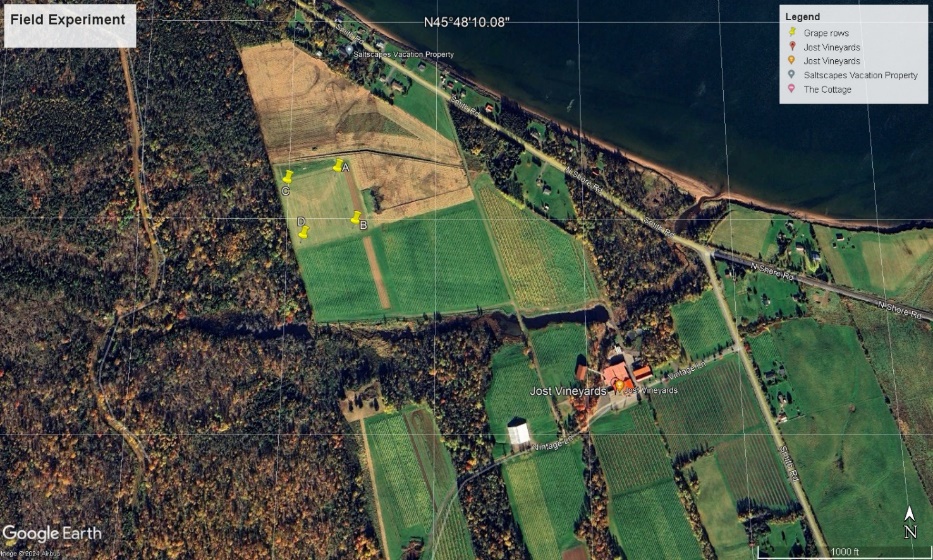
The experiment was carried out between May and August 2021 in Jost Vineyard, Malagash (latitude 45°46’N; longitude 63°25’W; altitude 45 m above sea-level) in Nova Scotia, Canada (Figure 1). The grape (Vitis vinifera cv. KWAD7-1) plants were approximately 23 years old. The mean annual precipitation and temperature during the study ranged from 4.5 to 9.8 mm and 9.5° to 20°C, respectively [26].
Experimental Treatment, Design and Management
The PA was obtained from Proton Power Inc. (Lenoir City, USA) and was prepared from white pine (Pinus strobus) biomass using fast pyrolysis. The mass yield of PA produced from 40,000 MT of pine wood biomass was 10% with a density of 1.0 g/cc and a moisture content of 85% Ofoe R, et al. [25]. Dilutions of the PA and water were prepared by using the raw PA (100%) and water to obtain the various concentrations on volume per volume (v/v) basis. The concentrations of PA were 0% (i.e., only water as control), 2%, 4%, 8%, and 12% applied to the leaves of the plants at a 14-day interval. The treatments application commenced at the buds break stage where we applied 2 L of each treatment to the plants. At the vegetative stage and reproductive stages 6 L and 8 L of each treatment were applied to the 20 plants used respectively. Each application was made eight times before final harvesting, thus, 16 weeks after the first treatment application. The experimental treatments were arranged in randomized complete block design (RCBD) with four replications and five plants for each treatment per replication (N = 20). The planting distance was 1.2 m between plants and 3 m between plant rows. The plants were rainfed throughout the study. Weed control and pruning were done when necessary.
Harvesting and Wine Processing
The grape berries were hand-harvested at maturity 16 weeks after treatment application when the berries were soft to touch and the average oBrix was 18. The oBrix content of the harvested berries was measured using a handheld refractometer (Atago, Japan). Juice pH, salinity, total dissolved solids (TDS), and electrical conductivity (EC) were determined with a multi-purpose pH meter (EC 500 ExStik II S/N 252957, EXTECH Instrument, Taiwan). All measurements were performed in three replicates in 50 mL beakers a method used by Ofoe R, et al. [27] with slight modification. Grapes with physical appearance that meet the market quality (i.e., disease-free and no bruises) were selected for the study. Samples of the harvested grape berries (1 kg/ treatment) were immediately transported to the Plant Stress and Physiology Laboratory in the Department of Plant, Food, and Environmental Sciences for wine processing following Bravo JL [28] protocol with slight modifications. Briefly, the grape berries were gently isolated from the pedicel and thoroughly rinsed with cold water. The grape berries were crushed into juice, centrifuged for 1 hr and fermented. The wine was stored in 30 mL glass vials at 4°C for 10 months before analysis at the The Metabolomics Innovation Center, Department of Biological Sciences, University of Alberta, Edmonton, Canada.
Metabolic Analysis of Wine Using Nuclear Magnetic Resonance Analytical (NMR) Assay
Targeted quantitative metabolomics approach was used to analyze the wine samples Saude EJ, et al. [29, 30]. In brief, 200 µL of wine samples were added to 50 µL of a standard buffer solution (54% D2O:46% 0.2 mM (KH2PO4 + KH2PO4 at pH 7.0, v/v) containing 5.84 mM DSS-d6, 5.84 mM 2-chloropyrimidine-5 carboxylate (phasing compound). The wine sample (250 µL) was then transferred into 3mm Sample Jet NMR tube for subsequent spectral analysis. All 1H-NMR spectra were collected on a 700 MHz Avance III (Bruker) spectrometer equipped with a 5 mm HCN Z-gradient pulsed-field gradient (PFG) cryoprobe. 1H-NMR spectra were acquired at 25°C using the first transient of the Nuclear Overhauser Effect Spectroscopy (NOESY) pre- saturation pulse sequence (noesy1dpr), chosen for its high degree of quantitative accuracy Saude EJ, et al. [29]. All the free induction decays (FID) were zero-filled to 250 K data points. The singlet produced by the DSS methyl groups was used as an internal standard for chemical shift referencing (set to 0 ppm) and for quantification. All 1H-NMR spectra were processed and analyzed using an in-house version of the MAGMET automated analysis software package using a custom metabolite library. MAGMET was used for qualitative and quantitative analysis of an NMR spectrum by automatically fitting spectral signatures from an internal database to the spectrum. Each spectrum was further inspected by an NMR spectroscopist to minimize compound misidentification and misquantification. Typically, all of the visible peaks were assigned and most of the visible peaks were annotated with a compound name. It has been previously shown that this fitting procedure provided absolute concentration accuracy of 90% or better [30].
Data Processing and Analysis
Data obtained from the NMR analysis were subjected to bivariate correlation analysis, and a multivariate statistical analysis of grouped compounds, and two-dimensional principal component analysis (PCA) using XLSTAT version 2022.3 (Addinsoft, New York, USA).
Results and Discussion
PA Effect on Grape Juice Quality Indices
Grape juice quality indices were significantly (p<0.05) improved with the varying rates of PA (Table 1).
| PA | oBrix | pH | Salinity (mg/L) | TDS (mg/L) | EC (mS/cm) |
|---|---|---|---|---|---|
| 0% | 16.9d | 3.03a | 3195.0a | 4040.0a | 5.79a |
| 2% | 18.4b | 2.89b | 2687.5b | 3527.5c | 4.97c |
| 4% | 17.9c | 3.05a | 2680.0b | 3530.0c | 4.96c |
| 8% | 18.4b | 2.80c | 2005.0c | 2850.0d | 4.06d |
| 12% | 19.3a | 2.85bc | 3070.0a | 3877.5b | 5.55b |
| p-value | 0 | 0 | 0 | 0 | 0 |
Table 1: PA Altered the Grape Juice Quality Indices.
Means that do not share a letter are significantly (p < 0.05) different according to Fisher least significant difference (LSD). Table 1: PA Altered the Grape Juice Quality Indices.
Brix content was increased in PA treated juice compared to the control. The application of 12% PA recorded the highest Brix content followed by 8% and 2%, and 4% PA which were 0.14-, 0.09-, and 0.06-folds higher than 0% PA respectively. The juice pH was influenced by the varying rates of PA application. The 4% PA slightly increased the juice pH content but was not significantly (p>0.05) different from the 0% PA. The 12%, 8% and 2% significantly (p<0.05) decreased the pH content by approximately, 0.06-, 0.08-, and 0.06-folds respectively compared to the 0% PA. The salinity of the grape juice was reduced at 12% PA application but was statistically the same as the 0% PA. The 8%, 4% and 2% PA significantly compared) decreased the salinity by approximately, 0.37-, and 0.16-folds respectively compared to the 0% PA. PA at 12% significantly (p<0.05) reduced the total dissolved solids (TDS) followed by 4% and 2%, and 8% which were 0.04-, 0.13-, and 0.29-folds lower than the 0% PA. the electrical conductivity (EC) also followed the same trend as TDS. 12% PA in this case, significantly (p<0.05) decreased EC by approximately 0.04-fold, followed by 4% and 2%, 0.14-fold and 8% by 0.30-fold compared to 0% PA. Varying rates of PA significantly (p<0.05) influenced tomato fruit juice oBrix, pH, salinity, total dissolved solids, electrical conductivity, and titratable acidity [27].
Metabolite Profile
The profiles of grape wine metabolites showed variations
corresponding to the different PA application rates. These differences in the overall metabolite compositions implied variations in plant primary metabolism as a response to the varying levels of PA application. The NMR analysis of the wine conducted in this study quantified 52 metabolites. These metabolites were categorized into seven (7) different compound groups i.e., organic acids, amino acids, sugars (alcohol and carbohydrates), nucleotides, phenolic, and volatile (Figures 2,4-6) according to the 500 MHz NMR Wine- Beer-metabolite list. The others were classified as other metabolites namely betaine, choline, glycerol, trigonelline, 2,3-butanediol, acetoin, and ethyl acetate (Figure 7).
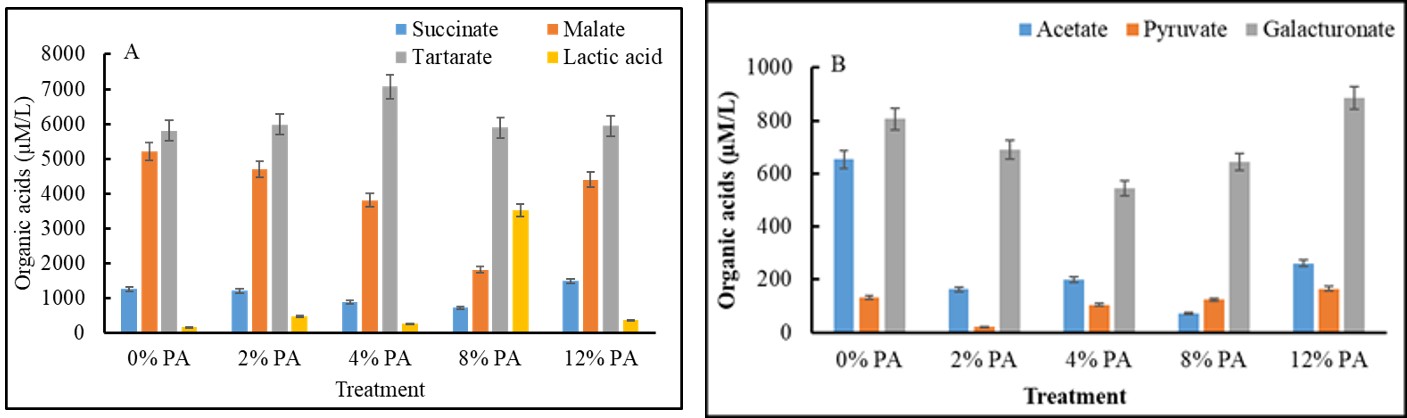
Organic Acids: Organic acids play a crucial role in grape juice and wine as they influence the chemical composition and preserve the beverage Silva FLDN, et al. [31, 32]. These group of compounds impact various aspects of wine quality such as the appearance, pH, titratable acidity, and sensory attributes such as taste. Their presence and composition directly contribute to the overall quality and characteristics of wine Lima MMM, et al. [33]. In the present study, organic acids were the predominant group of metabolites, which constituted approximately, 0.37-fold of the total metabolites identified (Figure 2).
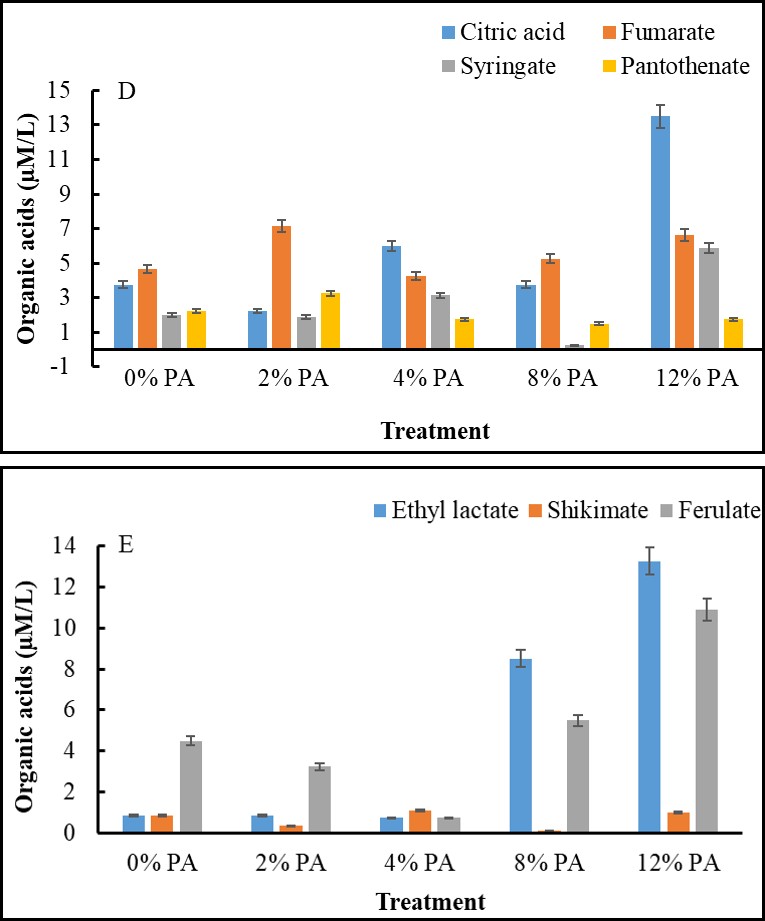
Figure 2: Effects of Foliar-Applied Pyroligneous Acid (PA) on Organic Acid Concentrations in Grape Wine. Concentrations (µm/L) of Organic Acids (A-E) in Grape Wine Produced from Vitis vinifera Cv. KWAD7-1 Vines Treated with Varying Levels of Pyroligneous Acid (PA). PA Treatments (0%, 2%, 4%, 8%, and 12%) Were Applied to Grapevine Leaves at 14-day Intervals throughout the Growing Season. The Control (0%) Received Only Water. Bars Represent Mean Values ± Standard Error.
The total acid quantified per PA concentration ranged from 0.13 to 7066 µM/L (Figure 2) A total of 19 individual organic acids were identified and quantified, which included lactic, succinic, gallic, oxalic, tartaric, malic, fumaric, formic, citric, and acetic acids. The concentrations of these organic acids were found to be influenced by the varying concentrations of PA treatments applied. Among the various organic acids identified, tartaric and malic acids were the primary contributors to the acidity of the grape wine Silva FLDN, et al. [31] (Figure 2). These acids play a significant role in the organoleptic properties of wine including color, aroma and taste Volschenk H, et al. [34]. In addition, tartaric and malic acids exert crucial influence on preserving the biochemical stability and antibacterial activity of wines, respectively Ivanova-Petropulos V, et al. [34, 35]. All the PA concentrations showed a positive influence on wine tartaric acid, with the highest concentration (7066 µM/L) observed in response to the 4% PA. The application of 12% PA increased the concentrations of all the detected organic acids except for malic and acetic acids, which exhibited reductions of 0.16-fold and 0.60-fold, respectively, compared to the 0% PA. Conversely, the concentrations of malic acid decreased across all PA applications compared to 0% PA with the 12% PA treatment having the least effect. The observed reduction in malic acid across all PA levels suggests that PA may have inhibited malic acid biosynthesis and vacuolar accumulation Volschenk H, et al. [34]. Alternatively, it is possible that PA treatment increased the degradation of malic acid through the activity of malate dehydrogenase via respiration at the stage of colour change of the grapes. This effect could be attributed to the higher demand for respiratory substrates in the grape berry during the maturation and ripening stages of the berries Volschenk H, et al. [34]. Similarly, the application of PA at resulted in reduced concentrations of acetic acid, which is considered as one of the main organic acids and a key indicator of the vinegary perception of wine Scutarașu EC, et al. [36]. The observed decrease in acetic acid could be attributed to the effects of malolactic fermentation, which may be influenced by the levels of malic acid present Lima MMM, et al. [33, 34, 36] although acetic acid and malic acid are positively correlated (Figure 3). Based on the correlation analysis, increase in tartaric acid had a negative effect on malic and acetic acids concentrations.
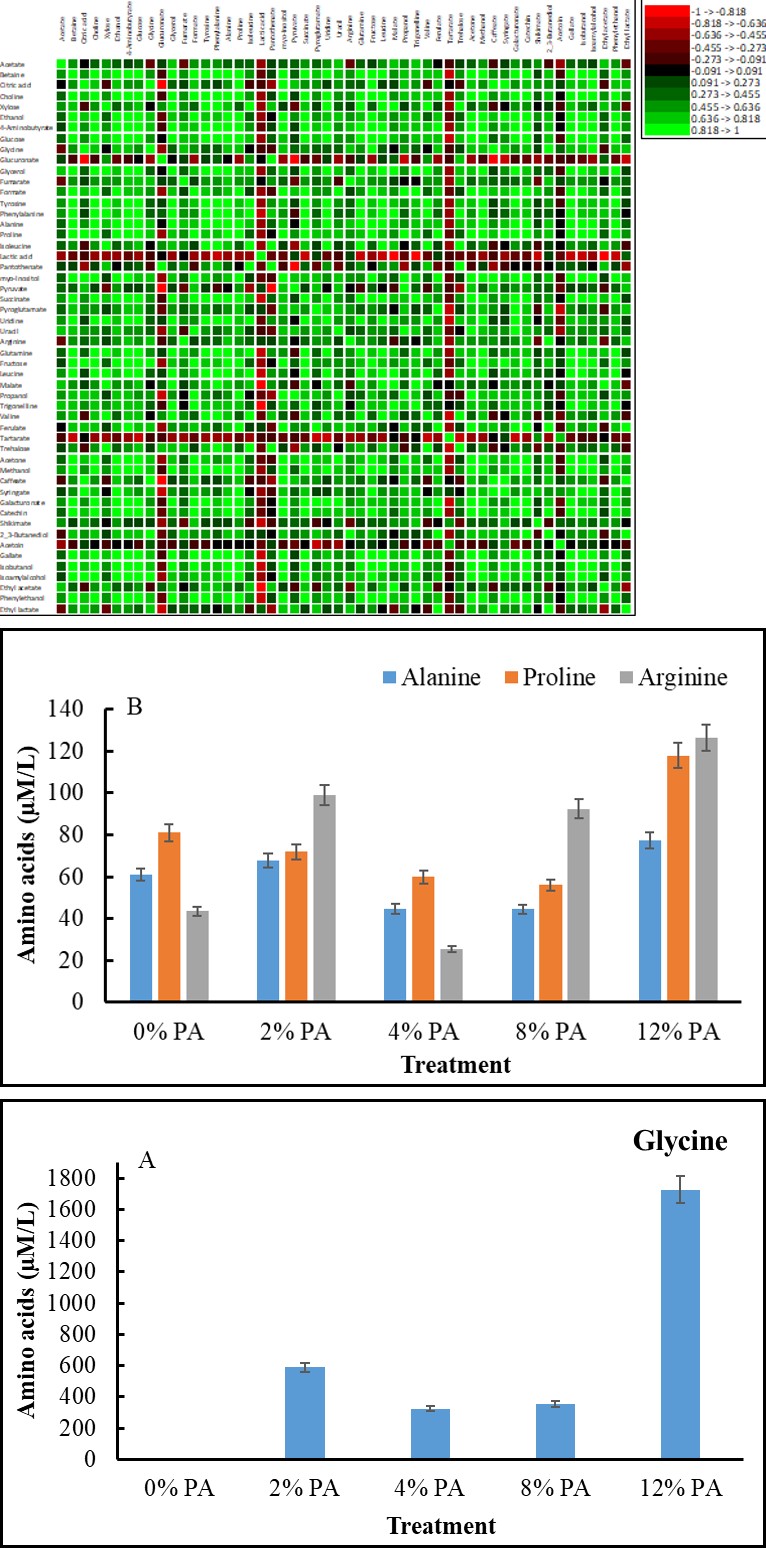
Amino Acids: Eleven amino acids i.e., glycine, tyrosine, phenylalanine, alanine, proline, isoleucine, glutamine, leucine, valine, arginine and 4-aminobutyrate were detected
in the wine with concentrations ranging from 1.5 to 1725 µM/L (Figure 4) under the conditions of the present study.
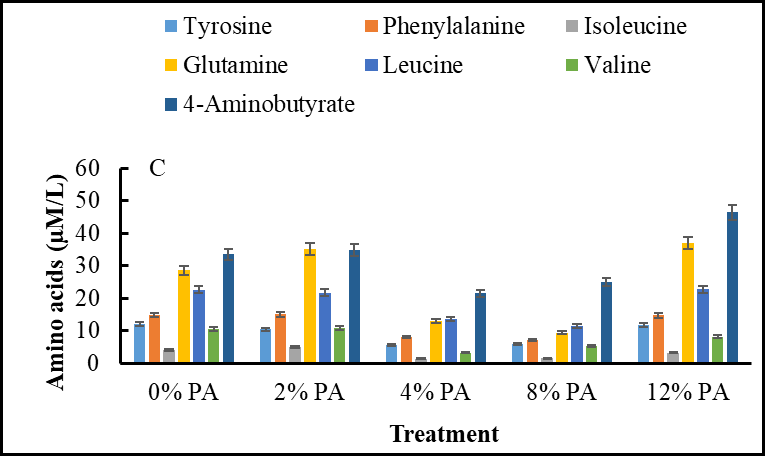
Figure 4: Effects of Foliar-Applied Pyroligneous Acid (PA) on Amino Acid Concentrations in Grape Wine. Concentrations (µM/L) of Amino Acid (A-C) in Grape Wine Produced from Vitis vinifera Cv. KWAD7-1 Vines Treated with Varying Levels of Pyroligneous Acid (PA). PA Treatments (0%, 2%, 4%, 8%, and 12%) Were Applied to Grapevine Leaves at 14-day Intervals Throughout the Growing Season. The Control (0%) Received Only Water. Bars Represent Mean Values ± Standard Error.
Amino acids are the most essential compounds in wines as they contribute to the enhancement of the wine quality and promote human health Gutiérrez-Gamboa G, et al. [5]. Amino acids play a vital role in the synthesis of proteins within the human body in addition to the production of peptide hormones and certain neurotransmitters Gutiérrez-Gamboa G, et al. [5]. According to RM Callejón, et al. [37] amino acids in wines originate from various sources including those naturally present in grapes and those that can be partially or completely metabolized by yeast during fermentation. Thus, these nitrogenous compounds play a pivotal role as primary sources of nutrition for yeasts throughout the fermentation process in wines, constituting between 0.2- and 0.5-folds of the total compounds of wine. PA enhanced the overall concentration of amino acids i.e., the 2%, 4%, 8%, and 12% PA resulted in respective increases of 2.05-, 0.65-, 0.95-, and 5.96-folds in the total amino acid content compared to the 0% PA. Interestingly, the 12% PA showed a remarkable increase of 1.28-fold in total amino acid content compared to the 2% PA. These findings imply that the adoption of a 12% PA for grape production can potentially enhance fermentation process in winemaking and improve the quality of the wine. Similarly, all the PA treatments resulted in an exponential increase in glycine, while a reduction was observed in tyrosine level (Figure 4). This could be due to the negative correlation between glycine and tyrosine as previously shown (Figure 3). For glycine, an increment of about 195-, 107-, 117- and 574-folds were stimulated by the application of 2%, 4%, 8%, and 12% PA, respectively compared to the 0% PA. Proline is known for its function as a non-sugar sweetener in wine while glutamic acid contributes to the perception of savory taste Wine Australia [38]. Notably, the 12% PA resulted in appreciable amounts of proline and glutamic acid i.e., 0.46-fold and 0.29-fold increase compared to the 0% PA. The observed increase in the concentrations of glycine, proline and glutamic acid may be attributed to the positive correlation among them (Figure 3). These findings indicate that the 12% PA potentially enhanced the sensory attributes of the grape wine under the conditions of the present study.
Carbohydrates and Alcohols: Glucose and fructose are the predominant sugars in grapes, while sucrose is present in trace amounts in most grape cultivars M Jordão, et al. [39] as found in the present study (Figure 5).
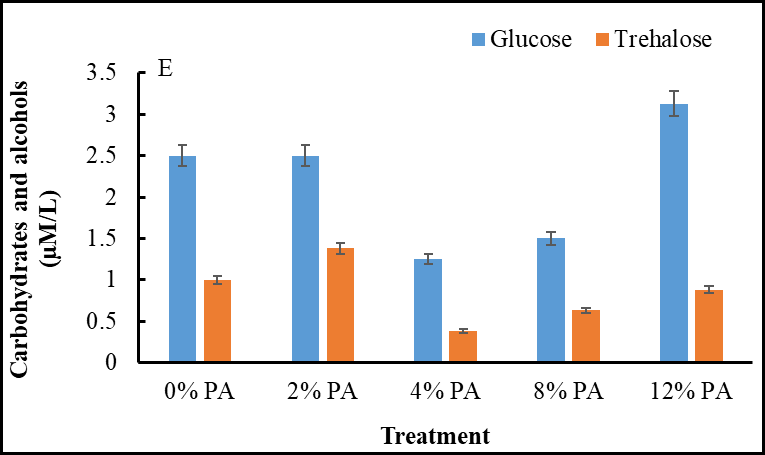
Figure 5: Effects of Foliar-Applied Pyroligneous Acid (PA) on Carbohydrates and Alcohols Concentrations in Grape Wine. Concentrations (µm/L) of Carbohydrates and Alcohols (A-E) in Grape Wine Produced from Vitis vinifera Cv. KWAD7-1 Vines Treated with Varying Levels of Pyroligneous Acid (PA). PA Treatments (0%, 2%, 4%, 8%, and 12%) Were Applied to Grapevine Leaves at 14-Day Intervals Throughout the Growing Season. The Control (0%) Received Only Water. Bars Represent Mean Values ± Standard Error.
The non-detection of sucrose can be ascribed to sucrose transported from the leaves were accumulated in the grape berry vacuoles and was mainly hydrolyzed to glucose and fructose by the activity of vacuolar acid invertase RP Walker, et al. [40]. In addition to glucose and fructose, xylose and trehalose were also detected (Figure 5). Sucrose was not detected during the ripening process; grape berry sugars undergo changes in composition and can be influenced by environmental factors and viticulture management practices M Jordão, et al. [39]. The results showed that the 12% PA increased glucose and fructose contents by about 0.25- and 1.40-folds, respectively compared to the 0% PA (Figure 5). The quantity of sugars, particularly glucose and fructose present in the grape juice can be directly associated with the resulting alcohol, especially ethanol and myo-inositol contents of the wine (Figure 3). Seven individual alcohols, namely; ethanol, propanol, methanol, isobutanol, isoamyl alcohol, phenylethanol, and myo-inositol were detected (Figure 5). Ethanol emerged as the predominant compound, and its concentration increased by 0.44-fold with the application of 12% PA compared to the 0% PA.
It is important to note that higher ethanol content in wine can lead to reduced aromatic complexity, while simultaneously increasing perceived sensations of “hotness” and “bitterness” [41]. The 4% PA resulted in a 0.25-fold decrease in ethanol content compared to the 0% PA. These findings indicate that the application of PA can be utilized to manipulate the overall sensory perception of wine grapes and potentially meet consumer preferences [39]. Furthermore, the 12% PA contributed to about 0.53-fold increase in myo- inositol compared with the 0% PA (Figure 5), suggesting the possibility of enhancing wine nutritive value. Myo- inositol has shown efficacy in managing polycystic ovary syndrome (PCOS) in women [42]. It also plays a crucial role in mediating signal transduction in response to hormones and neurotransmitters, and participating in osmoregulation [43, 44]. Additionally, myo-inositol has been explored as a potential treatment for Type 2 diabetes [45].
Nucleotides, Phenolics and Volatiles: The 12% PA resulted in a remarkable increase of 1.02-fold in catechin concentration, and a 0.31-fold increase in acetone concentration compared to the 0% PA (Figure 6), and the two compounds had a strong positive correlation between them (Figure 3).
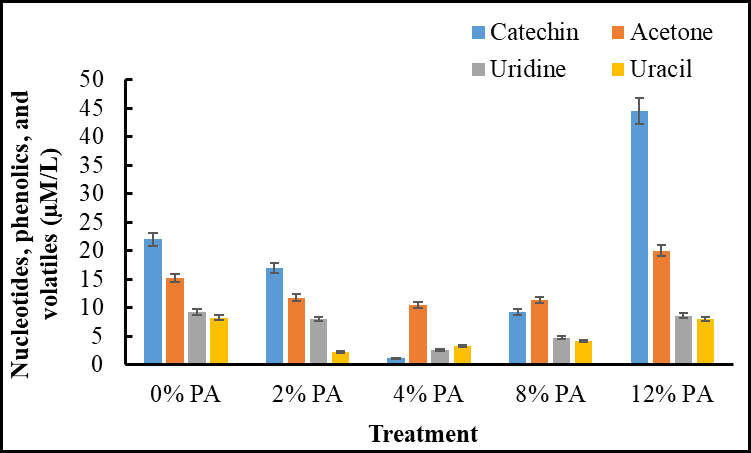
Figure 6: Effects of Foliar-Applied Pyroligneous Acid (PA) on Nucleotides, Phenolics and Volatile Concentrations in Grape Wine. Concentrations (µm/L) of Nucleotides, Phenolics and Volatile in Grape Wine Produced from Vitis vinifera Cv. KWAD7-1 Vines Treated with Varying Levels of Pyroligneous Acid (PA). PA Treatments (0%, 2%, 4%, 8%, And 12%) Were Applied to Grapevine Leaves at 14-day Intervals Throughout the Growing Season. The Control (0%) Received Only Water. Bars Represent Mean Values ± Standard Error.
Catechin is known for its role in the oxidative stability and organoleptic properties of wine and plays a crucial role in enhancing consumer sensory experience [46]. Additionally, it exhibits a range of health benefits and biological activities such as antioxidant, antibacterial, anti-inflammatory, and anti-carcinogenic properties [47]. Acetone, a volatile organic compound, contributes to aroma and flavor profile of wines. Its presence in wine grapes is influenced by factors such as grape variety, vineyard management practices, and winemaking techniques [48]. Hence, the application of PA holds potential as a cultivation technique to enhance the contents of catechin and acetone in wine grapes, thereby improving the nutritive and sensory properties of the resulting wine. All the PA treatments reduced the nucleotides, uridine, and uracil concentrations (Figure 6) although they are essential in contributing to the overall quality and sensory properties of wine [49, 50].
Other Metabolites: Based on the Canadian 500 MHz Wine- Beer-metabolite list, betaine, choline, glycerol, trigonelline, 2,3-butanediol, acetoin, and ethyl acetate are categorized as other metabolites (Figure 7).
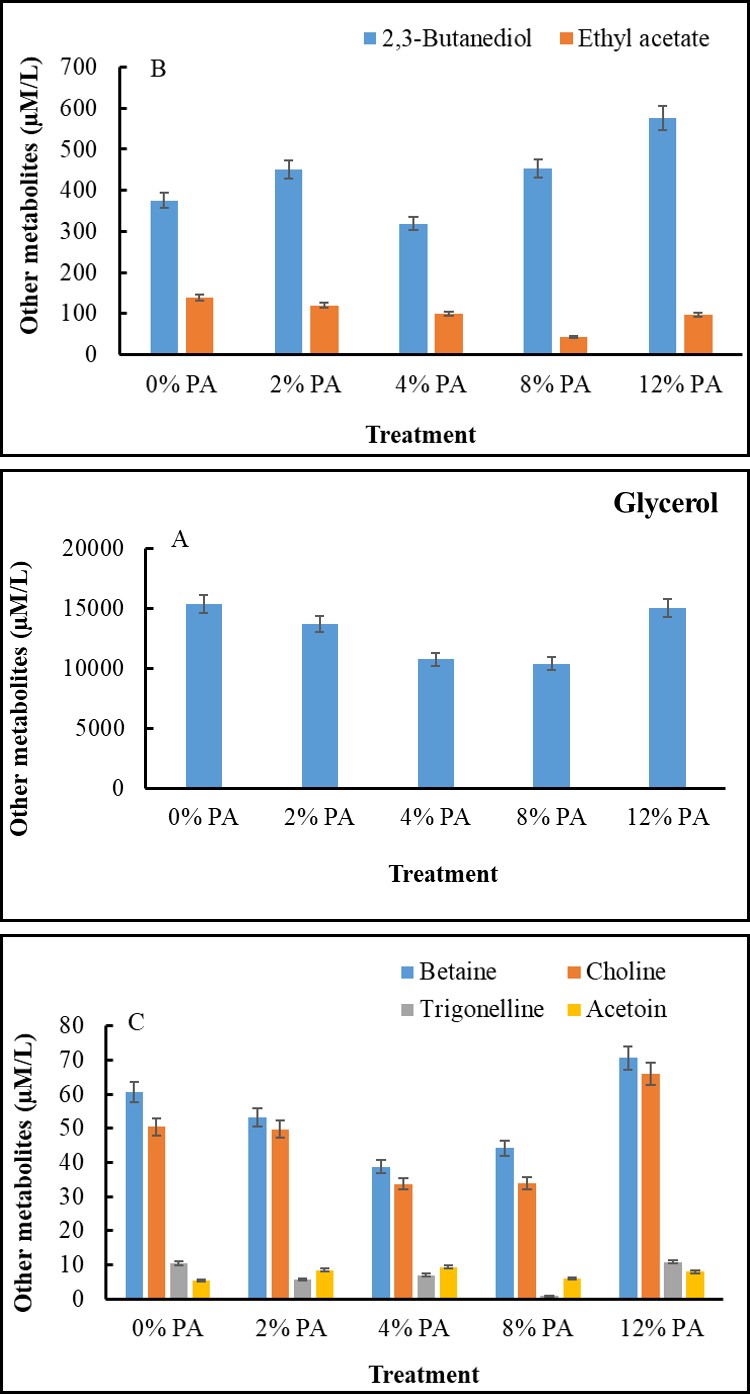
Figure 7: Effects of Foliar-Applied Pyroligneous Acid (PA) on Other Metabolites Concentrations in Grape Wine. Concentrations (µm/L) of Other Metabolites (A-C) in Grape Wine Produced from Vitis vinifera Cv. KWAD7-1 Vines Treated with Varying Levels of Pyroligneous Acid (PA). PA Treatments (0%, 2%, 4%, 8%, and 12%) Were Applied to Grapevine Leaves at 14-day Intervals Throughout the Growing Season. The Control (0%) Received Only Water. Bars Represent Mean Values ± Standard Error.
The PA treatments influenced the concentrations of these compounds in the grape wine. Interestingly, the 12% PA appreciably increased the concentrations of betaine, choline and 2, 3-butanediol by 0.16-fold, 0.31-fold and 0.53-fold, respectively compared to the 0% PA. Betaine, choline and 2, 3-butanediol had a significant (p<_0.05) positive correlation among them (Figure 3). Choline is an essential nutrient that can be acquired from diet and by _de novo biosynthesis. The former is recommended to ensure sufficient supply to meet human requirements as it plays important role in brain and memory development in the fetus and in repairing fatty liver and muscle damage in adults [51]. Additionally, betaine plays a crucial role in the donation of methyl groups to homocysteine, which facilitate the conversion of homocysteine into the essential amino acid, methionine [51, 52]. Moreover, 2, 3-butanediol is a metabolite produced during malolactic fermentation during the process of wine production. It is a neutral compound that has the potential to contribute to the aroma and flavor of wine [34] and also, serves as a metabolizable energy source for human nutrition [53]. As a result, the presence of metabolites such as choline, betaine, 2,3-butanediol, and other unknown compounds in the wine may contribute to enhancing its nutritional value. These metabolites can potentially provide additional nutritional benefits to wine consumers.
Principal Component Analysis (PCA)
To further assess the association between the metabolites and PA treatments, a 2-dimensional principal component analysis (PCA) was performed (Figure 8).
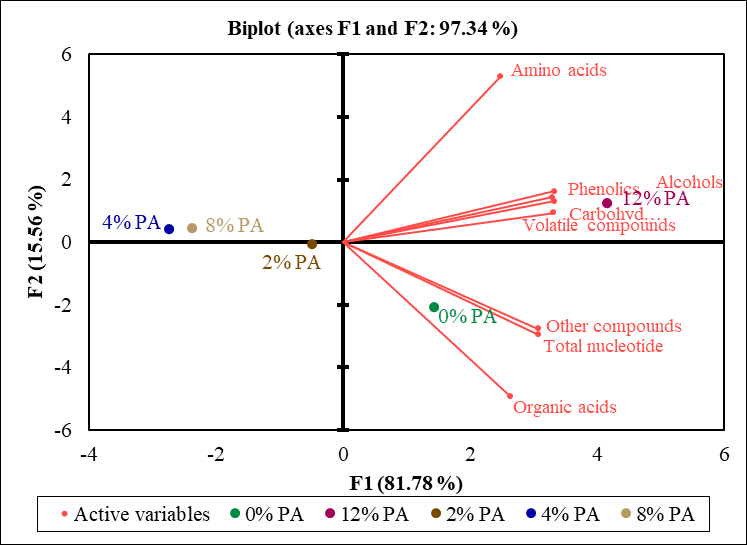
The first and second principal components (PC1 and PC2) accounted for 81.8% and 15.6%, respectively explaining about 97.3% of the total variations in the dataset. The results indicated a positive correlation between the PA application to grape plants and the improvement of the grape wine metabolites (Figure 8). Based on the PCA results, grape berry from plants treated with 2% PA, 4% PA, and 8% PA clustered together suggesting that these three treatments had similar metabolic compositions, which were distinct from the samples treated with 12% PA. Furthermore, the 0% PA can be associated with increased organic acids, total nucleotides, and other compounds. This suggests that the absence of PA treatment led to a distinctive metabolic composition. On the other hand, the 12% PA can be associated with phenolics, alcohols, volatiles, and carbohydrates, which indicates the marked impact of the 12% PA on the accumulation of these compounds in the wine. Catechin, acetone, ethanol, propanol, methanol, isobutanol, isoamylalcohol, phenylethanol, xylose, glucose, fructose, trehalose, and myo-Inositol are important classes of compounds that contribute to the sensory properties, flavor, aroma, and overall quality of wine [54].
Conclusion
In this study, 52 metabolites were identified in grape wine, and can be grouped into seven different chemical compounds i.e., alcohols, carbohydrates, organic acids, amino acids, phenolics, volatiles, nucleotides and uncharacterized (unknown) group. The results indicated that different rates of PA application had varying effects on the metabolic composition of the wine. The application of 12% PA increased the concentrations of glycine, proline, glutamic acid, glucose, fructose, ethanol better than the other PA treatments. Myo-inositol, catechin, acetone, choline, betaine, and 2, 3-butanediol whiles it reduced the concentration of acetic acid and malic acid. Thus, the 12% PA resulted in a distinct metabolic profile characterized by elevated levels or altered compositions of phenolics, alcohols, volatiles, and carbohydrates, which may have implications for the sensory attributes and quality of the wine. Further studies should be conducted to evaluate the effect of PA on grape juice sensory quality i.e., the taste, colour, and aroma.
Authorship Contribution Statement
Efoo Bawa Nutsukpo: Conceptualization, Formal analysis, Investigation, Methodology, Validation, Writing – original draft, Writing – review & editing. Lokanadha R. Gunupuru: Formal analysis, Investigation, Methodology, Validation, Writing – review & editing. Raphael Ofoe: Formal analysis, Investigation, Methodology, Validation, Writing – review & editing. Seyed Mohammad Nasir Mousavi: Formal analysis, Methodology, Writing – review & editing. Peter Amoako Ofori: Validation, Writing – review & editing. Samuel K. Asiedu: Validation, Writing – review & editing. Chijioke Emenike: Validation, Writing – review & editing. Lord Abbey:
Conceptualization, Funding acquisition, Methodology, Project administration, Resources, Supervision, Validation, Writing – review & editing.
Declaration of Competing Interest
The authors declare that they have no known competing financial interests or personal relationships that could have appeared to influence the work reported in this paper.
Acknowledgment
The lead author wishes to thank his laboratory mates for their generous assistance and support. We also thank Jost Farm for permitting us to conduct the field studies in their vineyard, Proton Power Inc. for providing us with the pyroligneous acid, and The Metabolomics Innovation Center, Department of Biological Sciences, University of Alberta, Edmonton, Canada for the grape wine analysis.
Funding
This work was financially supported by Research Nova Scotia Corp – Special Initiative Grant #RNS-SIG-2021-1613 and Canada Foundation for Innovation (CFI) grant (No. 37581) to L.A.
References
-
Zoffoli J, Lattorre B (2011) Table grape (_Vitis vinifera_ L.). Postharvest Biology and Technology of Tropical and subtropical Fruits. pp: 179-214.
-
Torres-León C, Ramírez-Guzman N, Londoño-Hernandez L, Martinez-Medina GA, Díaz-Herrera R, et al. (2018) Food Waste and Byproducts: An Opportunity to Minimize Malnutrition and Hunger in Developing Countries. Sustainable Food Processing 2.
-
Statistic Canada (2022) Departmental Plan. pp: 1-56.
-
Diez-Zamudio F, Laytte R, Grallert C, Ivit NN, Gutiérrez- Gamboa G (2021) Viticultural performance of hybrids and _Vitis vinifera_ varieties established in annapolis valley (Nova scotia). Horticulturae 7(9).
-
Gutiérrez-Gamboa G, Verdugo-Vásquez N, Díaz-Gálvez I (2019) Influence of type of management and climatic conditions on productive behavior, oenological potential, and soil characteristics of a “Cabernet Sauvignon” vineyard. Agronomy 9(2).
-
Zhang C, Li J, Wang J, Lyu L, Wu W, et al. (2023) Fruit Quality and Metabolomic Analyses of Fresh Food Accessions Provide Insights into the Key Carbohydrate Metabolism in Blueberry. Plants 12(18).
-
Colantonio V, Ferrão LFV, Tieman DM, Bliznyuk N, Sims C, et al. (2022) Metabolomic selection for enhanced fruit flavor. Proc Natl Acad Sci 119(7): e2115865119.
-
Velić D, Klarić AD, Velić N, Klarić I, Tominac VP, et al. (2018) Chemical Constituents of Fruit Wines as Descriptors of their Nutritional, Sensorial and Health- Related Properties. Descriptive Food Science.
-
Du TS, Kang SZ, Yan BY, Zhang JH (2013) Alternate Furrow Irrigation: A Practical Way to Improve Grape Quality and Water Use Efficiency in Arid Northwest China. J Integr Agric 12(3): 509-519.
-
Davide B, Martino B, Lucio B, Sara C, Daniele F, et al. (2023) Effect of multifunctional irrigation on grape quality: a case study in Northern Italy. Irrig Sci 41: 521- 542.
-
Perria R, Ciofini A, Petrucci WA, D’Arcangelo MEM, Valentini P, et al. (2022) A Study on the Efficiency of Sustainable Wine Grape Vineyard Management Strategies. Agronomy 12(2).
-
Li X, Chu C, Ding S, Wei H, Wu S, et al. (2022) Insight into how fertilization strategies increase quality of grape (Kyoho) and shift microbial community. Environmental Science and Pollution Research. 29(18): 27182-27194.
-
Bredun MA, Sartor S, Panceri CP, Chaves ES, Burin VM (2023) Changes in phytochemical composition of Merlot grape and wine induced by the direct application of boron. Food Research International 163.
-
Grewal A, Abbey L, Gunupuru LR (2018) Production, prospects and potential application of pyroligneous acid in agriculture. Journal of Analytical and Applied Pyrolysis 135: 152-159.
-
Jindo K, Goron TL, Pizarro-Tobías P, Sánchez-Monedero MA, Audette Y, et al. (2022) Application of biostimulant products and biological control agents in sustainable viticulture: A review. Frontiers Media SA.
-
Ofoe R, Mousavi SMN, Thomas RH, Abbey L (2024) Foliar application of pyroligneous acid acts synergistically with fertilizer to improve the productivity and phytochemical properties of greenhouse-grown tomato. Sci Rep 14(1): 1934.
-
Ratanapisit J, Apiraksakul S, Rerngnarong A, Chungsiriporn J, Bunyakarn C (2009) Preliminary evaluation of production and characterization of wood vinegar from rubberwood.
-
Mourant D, Yang DQ, Lu X, Roy C (2005) Anti-Fungal Properties Of The Pyroligneous Liquors From The Pyrolysis Of Softwood Bark. Wood and Fiber Science 37(3): 542-548.
-
Souza-Silva A, Zanetti R, Carvalho GA, Mendonça LA (2006) Quality of Eucalyptus Seedlings Treated with Pyroligneous Extract. Cerne 21(1): 19-26.
-
Yatagai M, Nishimoto M, Hori K (2002) Termiticidal activity of wood vinegar, its components and their homologues. Journal of Wood Science 48: 338-342.
-
Steiner C, Das KC, Garcia M, Förster B, Zech W (2008) Charcoal and smoke extract stimulate the soil microbial community in a highly weathered xanthic Ferralsol. Pedobiologia 51(5-6): 359-366.
-
Travero JT, Mihara M (2016) Effects of Pyroligneous Acid to Growth and Yield of Soybeans (_Glycine max_). International Journal of Environmental and Rural Development7(1): 50-54.
-
Jun M, Zhi-ming Y, Wen-qiang W, Qing-li W (2006) Preliminary study of application effect of bamboo vinegar on vegetable growth. Forestry Studies in China 8(3): 43-47.
-
Zulkarami B, Ashrafuzzaman M, Omar MH, Ismail MR (2011) Effect of pyroligneous acid on growth, yield and quality improvement of rockmelon in soilless culture. Australian Journal of Crop Science 5(12): 1508-1514.
-
Ofoe R, Qin D, Gunupuru LR, Thomas RH, Abbey L (2022) Effect of Pyroligneous Acid on the Productivity and Nutritional Quality of Greenhouse Tomato. Plants 11(13): 1650.
-
Wanderlog (2023) Malagash, Nova Scotia weather in May_ average temperature & climate.
-
Ofoe R, Gunupuru LR, Qin D, Thomas RH, Abbey L (2022) Pyroligneous Acid Increases Productivity and Nutritional Quality of Greenhouse Tomato. SSRN Electronic Journal pp: 1-25.
-
Bravo JL (2023) Wine Making Basics-The Next Step for the Home Grower. The Connecticut Agricultural Experiment Station, pp: 1-8.
-
Saude EJ, Slupsky CM, Sykes BD (2006) Optimization of NMR analysis of biological fluids for quantitative accuracy. Metabolomics 2(3): 113-123.
-
Ravanbakhsh S, Liu P, Bjorndahl TC, Mandal R, Grant JR, et al. (2015) Accurate, fully-automated NMR spectral profiling for metabolomics. PLoS One 10(5): e0124219.
-
Nascimento Silva FLD, Schmidt EM, Messias CL, Eberlin MN, Frankland Sawaya ACH (2015) Quantitation of organic acids in wine and grapes by direct infusion electrospray ionization mass spectrometry. Analytical Methods 7(1): 53-62.
-
Cosme F, Gonçalves B, Ines A, Jordão AM, Vilela A (2016) Grape and Wine Metabolites: Biotechnological Approaches to Improve Wine Quality. Grape and Wine Biotechnology.
-
Lima MMM, Choy YY, Tran J, Lydon M, Runnebaum RC (2022) Organic acids characterization: wines of Pinot noir and juices of ‘Bordeaux grape varieties. Journal of Food Composition and Analysis 114.
-
Volschenk H, La, Van Vuuren HJJ, Viljoen-Bloom M (2006) Malic Acid in Wine: Origin, Function and Metabolism during Vinification. South African Journal of Enology and Viticulture 27(2): 123-136.
-
Ivanova-Petropulos V, Petruševa D, Mitrev S (2020) Rapid and Simple Method for Determination of Target Organic Acids in Wine Using HPLC-DAD Analysis. Food Analytical Methods 13(5): 1078-1087.
-
Scutarașu EC, Luchian CE, IB Cioroiu L, Trinca C, Cotea VV (2022) Increasing Amino Acids Content of White Wines with Enzymes Treatments. Agronomy 12(6): 1406.
-
Callejón RM, Troncoso AM, Morales ML (2010) Determination of amino acids in grape-derived products: A review. Elsevier 81(5): 1143-1152.
-
Wine Australia (2023) Amino acids contribute to desirable sensory attributes in red wine.
-
Jordão M, Vilela A, Cosme F (2015) From sugar of grape to alcohol of wine: Sensorial impact of alcohol in wine. Beverages 1(4): 292-310.
-
Walker RP, Bonghi C, Varotto S, Battistelli A, Burbidge CA, et al. (2021) Sucrose metabolism and transport in grapevines, with emphasis on berries and leaves and insights gained from a cross‐species comparison. IJMS 22(15): 7794.
-
Varela C, Dry PR, Kutyna DR, Francis IL, Henschke PA, et al. (2015) Strategies for reducing alcohol concentration in wine. Aust J Grape Wine Res 21: 670-679.
-
Merviel P, James P, Bouée S, Guillou ML, Rince C, et al. (2021) Impact of myo-inositol treatment in women with polycystic ovary syndrome in assisted reproductive technologies. BioMed Central Ltd 18(1): 13.
-
Parthasarathy LK, Ratnam L, Seelan S, Tobias C, MF
- Enhancement of Vegetative Growth and Fruit Yield in Cucumber (Cucumis sativus L.) via Spiritual Blessing (Biofield) Energy Intervention
- Production of Açaí (Euterpe oleracea Mart.) under Different Agroforestry System Management Intensities in Amazonian Floodplain (Varzea) Forests
- Coffee and the Production Region: What is the Secret to the Expression "Quality"?
- Experiential Agripreneurship Training in Sub-Saharan Africa: Integrating a Business Incubator into Postgraduate Livestock Education at the University of Buea
- Advances in Agricultural High-Quality Development
- Linking Compost Residue to ABAGE in Plants - a Short Note