
IoT-Based Agriculture and Smart Farming: Machine Learning Applications: A Commentary
In-depth analysis of the most recent developments in IoT-based agriculture and smart farming is provided in this article with a specific focus on the integration of machine learning applications. With the advent of Internet of Things (IoT) technology, conventional agricultural methods have been transformed by the ability to gather real-time data from numerous sensors and devices. The commentary highlights the pivotal role of machine learning in harnessing the vast amounts of data generated by IoT devices. By employing sophisticated machine learning algorithms, farmers can analyse historical and real-time data to uncover valuable insights, forecast trends, and proactively manage their farms. Applications of machine learning in agriculture, such as precision agriculture, automated monitoring, and predictive maintenance, have contributed to increased efficiency, optimized resource utilization, and higher crop yields. While delving into the challenges and opportunities, the commentary emphasizes the significance of data privacy and security in IoT-based agriculture. Furthermore, it discusses the integration of machine learning at the edge, which facilitates rapid and decentralized decision-making, minimizing latency and dependence on cloud-based solutions. The potential societal and environmental impacts of adopting IoT-based smart farming techniques are also discussed, as these applications promote sustainable practices, resource conservation, and food security
Introduction
For thousands of years, agriculture has been the foundation of human civilization, giving people all over the globe food and a means of subsistence. The difficulties confronting contemporary agriculture, nevertheless, are more intricate than ever. With a growing global population, changing climate patterns, and increasing pressure on natural resources, farmers and agricultural stakeholders are seeking innovative solutions to enhance productivity, reduce waste, and ensure sustainability. One of the most promising technological advancements in agriculture is the integration of the Internet of Things (IoT) and machine learning applications, giving rise to what is commonly referred to as IoT-based agriculture or smart farming. This convergence of technologies is transforming traditional farming practices into highly efficient, data-driven operations. In this commentary, we will delve into the exciting realm of IoT- based agriculture and explore its intricate relationship with machine learning programs [1].
The linked collection of physical objects and sensors that collect and exchange data via the Internet is known as the “Internet of Things” for short. In agriculture, this network encompasses a vast array of devices, from soil moisture sensors and weather stations to GPS-equipped tractors and livestock tracking collars. These devices collect a wealth of data on various aspects of farming, including soil conditions, weather patterns, crop health, and animal behaviour.
The true potential of IoT-based agriculture lies not just in data collection but in the intelligent analysis and utilization of this data. This is where machine learning steps into the picture. Machine learning, a specialized sort of AI, allows computers to learn from data and make predictions or judgements without explicit programming. In the context of agriculture, machine learning algorithms can sift through vast datasets, identify patterns, and generate insights that guide farmers’ decisions. When IoT and machine learning converge, the result is a dynamic and responsive agricultural ecosystem. Sensors continuously collect data from fields, orchards, and barns, transmitting it to cloud-based platforms or local edge devices. Machine learning algorithms then process this data in real time, providing farmers with actionable insights. These insights range from optimal planting times based on weather forecasts to early disease detection in crops or livestock [2].
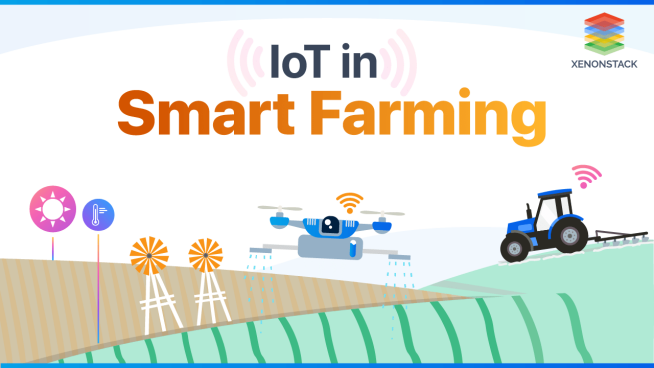
In this commentary, we will explore the myriad applications of machine learning in IoT-based agriculture. From precision agriculture practices that optimize resource allocation to the development of automated monitoring systems and predictive maintenance solutions, the marriage of these technologies has the potential to revolutionize how we approach food production. Moreover, we will examine the challenges and opportunities that come with this technological transformation. Data privacy and security concerns, the need for accessible and user-friendly solutions for farmers of all scales, and the imperative to address sustainability and environmental considerations will all be explored in depth [3].
In a world whereby the need for food is growing but there are only numerous resources available to generate it, IoT-based agriculture and machine-learning applications offer a beacon of hope. This commentary seeks to shed light on this exciting frontier, where technology meets the soil, and innovation blooms alongside our crops [4].
Agriculture with IoT
The structures connected to the Internet of agriculture have been provided in a number of publications. An IoT solution’s sensor most often consists of a micro controller, a range of detecting (from simple temperatures to cameras), motors, and linked devices. Wi-Fi, LoRaWAN, Zigbee, or other wireless technologies could be used for these communications. A local WSN gateway builds the internet portion and sends information through a connection to the internet. You must execute information processing duties including visualizing data, statistical analysis, information preservation, and information security in order to understand the data that the service layer has collected. Probably the most important part is the applications layer, which gives customers the ability to monitor and control important agricultural activities as they make significant decisions dependent on developments within the industry and projections.
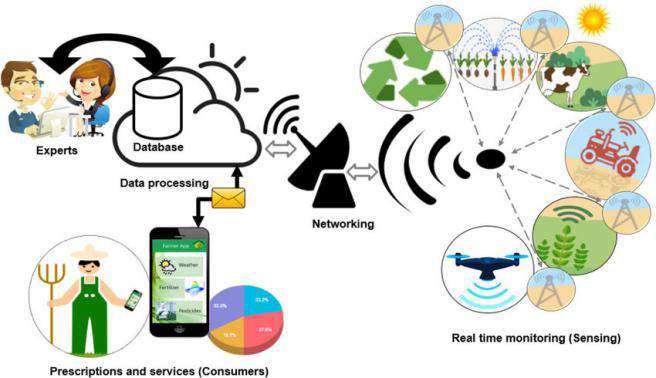
Farming is linked to the Internet of Things (IoT), data in the kind of voltage amounts, images, actuator statements, and robotics positions have been produced from numerous places inside and surrounding farms. Good data generate accurate data. Despite having trustworthy data, you cannot utilize machine learning algorithms to create models for prediction. Running machine learning (ML) algorithms on this improved data may result in improved assessment and accurate prediction. The Internet of Things, which may also incorporate Internet-based services like storing data in the cloud and farming arranging, can collect and handle a lot of data from sensors with simplicity. It is possible to link from start to finish and conduct on-going monitoring with access to current data at all moments and from any place.
Systems of Machine Learning in IoT depend on the Agriculture
A revolutionary way for machines to imitate people’s methods of instruction, learn new knowledge, constantly enhance achievement, and produce unique capabilities is known as machine learning (ML). During the past few decades, it has been demonstrated that integrating algorithms for machine learning, ideas, and applications with extra agricultural techniques may lower plant costs and boost productivity. In domains including disease diagnosis, crop identification, water organizing, conditions of the soil, plant identification, quality of crops, and forecasting the weather, machine learning (ML) applications on fields of crops may be extensively employed. Following harvesting, machine learning is often utilized to evaluate the item’s freshness (for fruits and vegetables), resilience, excellence, market analysis, etc. Support vector machine (SVM), the naive Bayes method, discrimination analysis (DA), K-nearest neighbour, K-mean clustering, fuzzy clustering, Gaussian mixture theories, artificial neural networks (ANN), causing decisions, and deep learning may be the main machine learning (ML) methods used in connected to the internet of agriculture [5].
Managing Plants
As the world population continues to grow, so does the demand for agricultural products. The agricultural sector is experiencing a significant shift to accommodate this need while addressing issues like climate change, resource constraints, and sustainable land use. The combination of the Internet of Things (IoT) and machine learning systems is one of the main factors enabling this shift. In particular, these systems are revolutionizing how we manage plants in agriculture. IoT, with its network of interconnected sensors and devices, has paved the way for a new era of precision agriculture. These IoT sensors can monitor a wide range of environmental factors, including soil moisture, temperature, humidity, and light levels, in real time. Machine learning algorithms, on the other hand, can process this continuous stream of data to make informed decisions and predictions. One of the primary applications of IoT-based machine learning in agriculture is plant health monitoring. Sensors placed in the field or on individual plants can detect early signs of stress, disease, or nutrient deficiencies. Machine learning models can then analyse these data and alert farmers to potential issues before they escalate. This allows for timely interventions, reducing crop losses and minimizing the need for chemical inputs. Using greenhouse technological advances, An ideal and controlled atmosphere for agriculture development is delivered by a hybrid of machine learning (ML) and the IoT. The extemporization variability of crop establishment ecological characteristics and its reciprocating effects on defensive cultivating crops, however, it is making it hard for conventional farming and ecological laws to adjust to the establishment of numerous plant one kind of varied stages of growing.
Therefore, from the perspective of management and monitoring, more accuracy is needed. With the rise of the Internet of Things, advances in technology, and economic results, many investigations have been conducted on creating and assessing different methods for tracking and regulating altering temperatures and humidity, brightness, atmospheric carbon dioxide (CO2) threshold, and other environmental factors. It has been proposed that IoT, detectors, and actuators might be utilized to manage the environment certain kind of crops. The Internet of Things (IoT) cloud-hosted Artificial Neural Networks (ANN) might be utilized to enforce ecological laws in this case [6].
Management of Production and Crop
Agriculture is undergoing a transformative revolution, driven by advancements in technology. Among these, the integration of the Internet of Things (IoT) and machine learning systems plays a pivotal role in managing production and crops efficiently. In this commentary, we explore how these systems are revolutionizing agriculture by enhancing the management of production processes and crop cultivation.
IoT technology, with its network of interconnected sensors and devices, has enabled precision agriculture by providing real-time data from farms. Machine learning algorithms, capable of processing large volumes of data and extracting valuable insights, are a natural complement to IoT in agriculture. Together, they empower farmers and producers with actionable information for efficient decision-making. IoT-based machine learning systems are instrumental in optimizing various production processes in agriculture. They monitor and analyse factors such as temperature, humidity, and equipment performance to ensure optimal conditions for crop growth and livestock management. Predictive maintenance models can anticipate equipment failures, reducing downtime and ensuring uninterrupted production.
Effective crop management is critical for maximizing yields and minimizing resource use. IoT sensors in the field provide data on soil conditions, weather patterns, and crop health. Machine learning models analyse this data to recommend precise planting times, irrigation schedules, and fertilizer application rates. These insights enable sustainable farming practices, reducing costs and environmental impacts. Depends on data collected from yield tracking devices linked via a GPS-enabled IoT system, and machine learning (ML) return map can be used in farmers. The knowledge that is acquired and reveals the yield statistics will be displayed in accordance with the various agricultural methods.
In addition, improving forecasting and improving crop yields may be accomplished using machine learning (ML) and the Internet of Things. Farmers often seek the advice of experts regarding farming before making decisions. People with no previous knowledge of computers, such as farmers, utilize these sorts of systems. Farming for crops may make use of systems based on ML. This method of gathering data takes advantage of data that is currently available. Producers are now in a position to handle their crops in an inexpensive manner. A number of such systems have been created in light of the achievement of systems for experts. Agricultural benefits greatly from the Internet of Things. According to associated research, Systems with AI (artificial intelligence) could be built on the Internet of Things to give recommendations on how to exploit immediate time input information.
Managing Soil
In the modern age of agriculture, the fusion of Internet of Things (IoT) technology with machine learning systems is revolutionizing the way we manage one of our most vital resources—soil. Soil is the foundation of agriculture, and its health and quality directly impact crop yields and environmental sustainability. This commentary explores the integration of IoT-based machine learning systems in soil management, highlighting the transformative potential and challenges in this field.
The Synergy of IoT and Machine Learning: IoT technology, with its network of interconnected sensors and devices, is a game-changer in agriculture. These sensors gather instantaneous data on a range of soil characteristics, including the amount of moisture, pH levels, nutrient concentrations, and temperature. Machine learning algorithms, adept at handling vast datasets and pattern recognition, are employed to process and interpret this data. Precision Soil Management: IoT-based machine learning systems enable precision soil management. By continuously monitoring soil conditions, these systems can provide farmers with invaluable insights. For example, they can recommend optimal planting times, precise irrigation schedules, and tailored nutrient applications based on the specific needs of different soil zones within a field. This precision enhances crop health and minimizes resource waste. Soil Health Assessment: Soil health is a critical factor in sustainable agriculture. IoT sensors can assess soil health indicators such as organic matter content and microbial activity. Machine learning models can analyse this data to create comprehensive soil health profiles, enabling farmers to choose effective soil amendments and conservation techniques. Predictive Soil Maintenance: Machine learning can predict soil degradation and nutrient depletion trends based on historical data and current conditions. This predictive capability empowers farmers to implement proactive measures, such as cover cropping or crop rotation, to maintain and improve soil quality over time. Mitigating Soil Erosion: Soil erosion is a significant challenge in agriculture. IoT sensors can monitor erosion-prone areas, and machine learning algorithms can predict erosion risks. This information can guide land management practices to reduce soil erosion, ensuring the long-term productivity of agricultural lands. Challenges and Future Prospects: While the potential benefits of IoT-based machine learning systems in soil management are profound, several challenges exist. Data privacy and security concerns, The requirement for trustworthy connections in rural agricultural regions, and the requirement for user-friendly interfaces for farmers are among the issues that need attention.
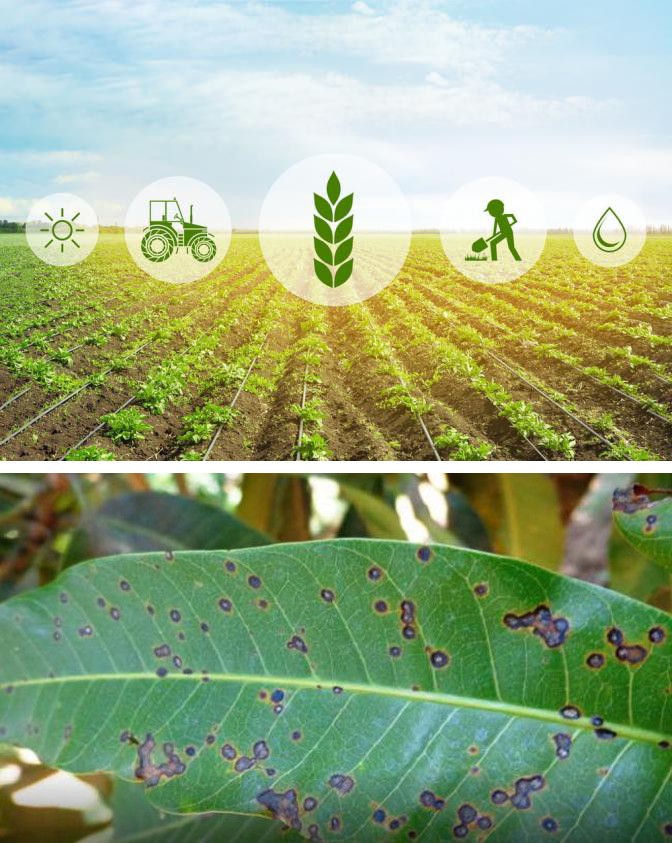
The marriage of IoT and machine learning is reshaping soil management in agriculture. These technologies provide producers with immediate knowledge about the state and health of the ground, enabling more sustainable and efficient land use. As agriculture faces increasing pressures to feed a growing global population while minimizing environmental impacts, the integration of technology in soil management is a critical step toward achieving these goals. An in-depth discussion of these kinds of applications and an examination of the advantages and disadvantages of using machine learning systems in the Internet of Things for controlling soil in agriculture will be covered in this article [7].
Management of Diseases
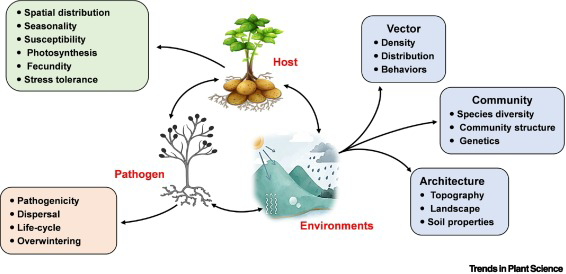
The integration of Internet of Things (IoT) technology with machine learning systems is revolutionizing disease management in agriculture. Plant diseases, caused by pathogens such as fungi, bacteria, and viruses, have long been a significant challenge for farmers worldwide. In this commentary, we delve into how IoT-based machine learning systems are transforming the management of diseases in agriculture, enhancing crop health, and increasing yields while reducing the need for chemical interventions. The Synergy of IoT and Machine Learning: IoT technology, with its network of interconnected sensors and devices, is a cornerstone of precision agriculture. These sensors can monitor environmental conditions, plant health, and the presence of pathogens in real time. Machine learning algorithms, capable of processing large datasets and recognizing patterns, play a pivotal role in processing and interpreting this data [8]. Early Disease Detection: One of the primary applications of IoT-based machine learning in disease management is early detection. IoT sensors can detect subtle changes in plant health and environmental conditions, which may indicate the presence of pathogens. Machine learning models analyse this data and provide early warnings to farmers, allowing for timely and targeted interventions. Disease Prediction Models: Machine learning algorithms can create predictive models for disease outbreaks based on historical data, weather patterns, and real-time monitoring. These models help farmers anticipate disease risks and take proactive measures, such as adjusting planting schedules, selecting disease-resistant crop varieties, or implementing specific treatments. Precision Treatment Recommendations: IoT-based systems can integrate data from various sources, including weather forecasts, soil moisture sensors, and disease databases. Machine learning models process this information to recommend precise treatment options. This targeted approach minimizes the use of chemical pesticides and fungicides, reducing environmental impacts and preserving beneficial organisms. Monitoring and Feedback Loop: IoT sensors continually monitor disease progression. Machine learning algorithms can assess the effectiveness of disease management strategies and provide real-time feedback to farmers. This iterative process allows for adjustments and refinements in disease control measures [9]. Challenges and Future Prospects: While the potential benefits of IoT-based machine learning systems in disease management are significant, challenges exist. Data security and privacy concerns, the need for reliable connectivity in rural areas, and the requirement for user-friendly interfaces for farmers are among the issues that need attention.
The convergence of IoT and machine learning is reshaping disease management in agriculture. These systems empower farmers with real-time insights into disease risks and enable targeted and sustainable disease control strategies. As agriculture strives to meet growing global food demands while minimizing environmental impacts, the integration of technology in disease management is a critical step toward achieving these goals. This article will go further into these applications and examine the advantages and disadvantages of using machine learning algorithms on the Internet of Things for disease control in agro.
Figure: 3.4: Management of Diseases.
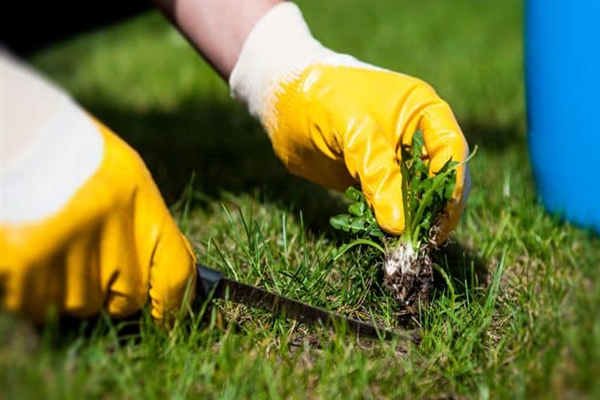
Grape transparency and quantity have risen and excessive use of pesticides has decreased because of effective disease identification, precise herbicide administration, and precise watering plans. In addition, the construction uses deep learning techniques for categorizing and distinguishing speech phases of different crops. The audio recordings of the stages at these manufacturing facilities depend on real-time visual information that is gathered in the field and moved to various parts of the property using connected to the internet of cameras node sensors [10]. Management of Weeds Weed infestations have long posed a significant challenge in agriculture, competing with crops for resources and reducing yields. In recent years, an efficient method for managing weeds is the combination of Internet of Things (IoT) technologies with machine learning algorithms. This commentary explores how IoT-based machine learning systems are revolutionizing the way farmers tackle weed problems, leading to increased crop yields and reduced reliance on herbicides.
The Synergy of IoT and Machine Learning: IoT technology, with its network of interconnected sensors and devices, has paved the way for precision agriculture. These sensors can monitor environmental conditions, soil health, and weed presence in real time. Machine learning algorithms, capable of processing vast datasets and recognizing patterns, play a crucial role in processing and interpreting this data. Weed Detection and Classification: One of the primary applications of IoT-based machine learning in weed management is the detection and classification of weeds. IoT sensors, including cameras and spectral sensors, capture images and data from the field. Machine learning models analyse this data, identifying weed species and locations with remarkable accuracy. Precision Weed Control: Once weeds are detected and classified, machine learning systems can trigger precision control mechanisms. These mechanisms may include robotic weeders, automated herbicide sprayers, or even targeted laser systems. By precisely targeting weeds while avoiding crop plants, this approach reduces herbicide use and minimizes the environmental impact. Weed Growth Prediction: Machine learning algorithms can create predictive models for weed growth based on historical data, environmental conditions, and real-time monitoring. Farmers can use these models to anticipate weed pressure and plan their weed management strategies accordingly, optimizing resource allocation. Data-Driven Decision-Making: IoT-based systems continuously collect data on weed presence and environmental conditions. Machine learning algorithms process this data and provide farmers with actionable insights. These insights inform decisions on weed control strategies, enabling a proactive and efficient approach [11]. Challenges and Future Prospects: While the integration of IoT and machine learning holds immense promise in weed management, challenges exist. Data security and privacy concerns, the need for reliable connectivity in rural areas, and the requirement for user-friendly interfaces for farmers are among the issues that require attention.
The fusion of IoT and machine learning is transforming weed management in agriculture. These systems empower farmers with real-time insights into weed infestations and enable targeted and sustainable weed control strategies. As agriculture strives to increase productivity while minimizing the environmental impact of herbicides, the integration of technology in weed management represents a crucial step toward achieving these goals. This commentary will delve deeper into these applications and explore the potential benefits and challenges of deploying systems of machine learning in IoT for weed management in agriculture [12].
Waters Management
Water is a precious resource, and its efficient management is paramount in modern agriculture. As global challenges such as climate change and population growth intensifies. This commentary explores how IoT-based machine learning systems are revolutionizing the way water resources are managed in agriculture, enhancing crop yields, conserving water, and preserving ecosystems [13].
The Synergy of IoT and Machine Learning: IoT technology, with its network of interconnected sensors and devices, has laid the foundation for precision agriculture. These sensors can monitor various aspects of water resources, including soil moisture levels, weather conditions, groundwater levels, and irrigation systems, in real time. Machine learning algorithms, equipped to process extensive datasets and recognize patterns, are instrumental in analysing and interpreting this data [14]. Precision Irrigation: One of the primary applications of IoT- based machine learning in water management is precision irrigation. IoT sensors monitor soil moisture, weather forecasts, and crop water needs. This data is processed by machine learning algorithms to improve irrigation schedules, ensuring that crops get the appropriate quantity of water at the appropriate time and location. This approach minimizes water wastage, conserves resources, and enhances crop yields. Water Quality Monitoring: IoT sensors can also monitor water quality in irrigation systems, rivers, and reservoirs. Machine learning algorithms can analyse this data to detect anomalies, such as contamination or salinity issues, and provide early warnings. Timely interventions based on these insights help maintain water quality and ensure crop health [15, 16]. Groundwater Management: Machine learning models can predict groundwater levels and trends based on historical data and real-time monitoring. Farmers and water authorities can use these predictions to manage groundwater resources sustainably, avoiding over-extraction and depletion. Environmental Impact Assessment: IoT-based machine learning systems can assess the environmental impact of agricultural water usage. By monitoring water flow and ecosystem health in water bodies near agricultural areas, these systems can help ensure that water resources are used in a way that minimizes harm to local ecosystems [17].
Challenges and Future Prospects: While the integration of IoT and machine learning holds immense promise in water management, challenges exist. Issues about data security and privacy are among them, as is the need for dependable connections in rural regions, and the requirement for user- friendly interfaces for farmers and water authorities.
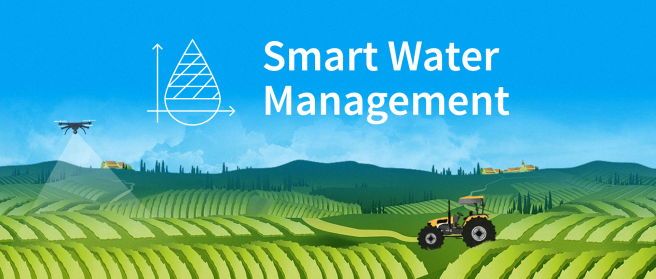
The fusion of IoT and machine learning is transforming water management in agriculture. These systems empower stakeholders with real-time insights into water resources and enable targeted and sustainable water conservation strategies. As agriculture confronts the pressing need to produce more with less and mitigate environmental impacts, the integration of technology in water management represents a vital step toward achieving these goals [18].
Animals Monitoring
With the use of Internet of Things (IoT) technology and machine learning systems, agriculture, and notably cattle production, has seen a remarkable revolution. Monitoring and managing animals’ health, behaviour, and well-being is crucial for maximizing productivity and ensuring animal welfare. This is explores how IoT-based machine- learning systems are revolutionizing animal monitoring in agriculture, resulting in more effective and long-term livestock management [19].
The Synergy of IoT and Machine Learning: IoT technology, with its network of interconnected sensors and devices, serves as the foundation for precision animal farming. These sensors can monitor various aspects of animal husbandry, including animal health, behaviour, and environmental conditions, in real-time. Machine learning algorithms, capable of processing extensive datasets and recognizing patterns, are pivotal in analysing and interpreting this data. Health Monitoring: One of the primary applications of IoT-based machine learning in animal agriculture is health monitoring. IoT sensors, such as wearable devices or implantable sensors, can continuously collect data on vital signs, activity levels, and feeding behaviour. Machine learning models process this data to detect deviations from normal patterns, enabling early disease detection and timely veterinary interventions [20]. Behavioural Analysis: IoT sensors can capture data on animal behaviour, including movement patterns, social interactions, and feeding habits. Machine learning algorithms can analyse this data to identify abnormal behaviour, which may indicate stress, disease, or environmental issues. This allows farmers to address welfare concerns promptly. Environmental Control: IoT sensors also monitor environmental conditions within animal housing facilities, such as temperature, humidity, and air quality. Machine learning models can optimize these conditions based on animal preferences and physiological needs, enhancing comfort and well-being. Predictive Analytics: Machine learning algorithms can use historical data and real-time monitoring to make predictions about animal performance, reproductive cycles, and even potential disease outbreaks. Farmers can use these predictions to make informed decisions about breeding, feeding, and overall herd management. Resource Allocation: By monitoring individual animals within a herd or flock, IoT-based machine learning systems enable precise resource allocation. This includes optimized feeding regimes, targeted healthcare interventions, and efficient breeding programs, resulting in improved productivity and resource use efficiency [21].
Challenges and Future Prospects: While the integration of IoT and machine learning holds immense promise in animal monitoring, challenges exist. Such as issues with data security and privacy as well as the need for dependable connections in remote locations, and the requirement for user-friendly interfaces for farmers.
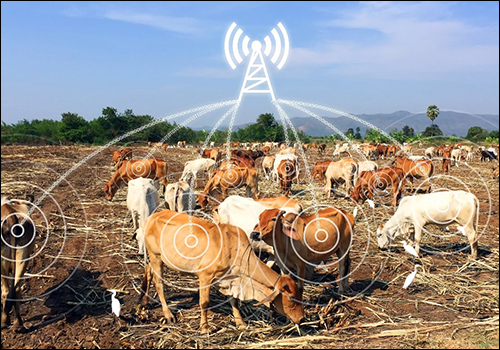
IoT and machine learning are revolutionizing animal monitoring in agriculture. These systems empower farmers with real-time insights into animal health and behaviour, enabling targeted and sustainable livestock management practices. As agriculture seeks to meet the growing global demand for animal products while ensuring animal welfare and environmental sustainability, the integration of technology in animal monitoring represents a vital step toward achieving these goals. This article will go further into these applications and examine the possible advantages and difficulties of using machine learning systems in IoT for agricultural animal monitoring [22, 23, 24, 25, 26, 27, 28, 29].
Summary
This commentary explores the transformative impact of integrating Internet of Things (IoT) technology and machine learning applications in agriculture and smart farming. It highlights the convergence of IoT and machine learning as a game-changer, enabling data-driven decision- making and sustainable practices across various facets of agriculture. The upcoming big thing in intelligent farming and farming technology is IoT-ML-based farming. The technology may get more advanced, give precise details, and make recommendations by applying machine learning to information collected from diverse inputs to farms using the aid of the agriculture Internet of Things. In this article, we look at how ML research is currently being conducted in agriculture and their results, noting their respective advantages and disadvantages. Because the bulk of machine learning (ML) programs needed immediate information to train forecasting algorithms, the installation of creative apps on the IoT was recommended subsequently. With the use of AI (artificial intelligence) systems that use machine learning to analyse data from sensors, farm management platforms are becoming a reality. These tools offer more insights and ideas for the next work choices & actions alongside a variety of ultimate output enhancements. Future use of machine learning models will be made possible by this variety and will be expected. In conclusion, IoT-based agriculture and smart farming, empowered by machine learning applications, represent a significant advancement in agriculture. These technologies offer the potential to enhance productivity, reduce environmental impacts, and ensure food security. Collaborative efforts from farmers, researchers, and policymakers are essential to realize the full potential of this transformative approach to agriculture.
Acknowledgments
I want to thank and really appreciate all of the responders who gave up their time to sit down with me, talk about, and make contributions to my thesis, especially given the SOPs we had to adhere to. My profound gratitude to my advisor, Professor Dr. K. GEETHA, for her warm disposition, unwavering support, and prompt counsel throughout the thesis process. She gave me the drive to set my thesis bounds and look for significant conclusions. I sincerely appreciate everything that she did for me. I also want to thank the teacher and Mentor from the Department of Computer Science and Engineering who gave me helpful suggestions during thesis meetings and helped me choose the best approach for my work. They included Professor Dr. P.C.SENTHIL MAHESH, the HoD, and Mr. M. Sathishkumar, Associate Professor.
References
-
Popa M, Prostean O, Popa AS (2019) Machine Learning Approach for Agricultural IoT in Proc. Inter J Rec Technolo Engin, pp: 22-29.
-
Medela, Cendon B, Gonzalez L, Crespo R, Nevares I (2013) IoT Multiplatform networking to monitor and control wineries and vineyards. IEEE, Portugal, pp: 1-10.
-
Mahdavinejad MS, Rezvan M, Barekatain M, Adibi P, Barnaghi P, et al. (2018) Machine learning for internet of things data analysis: a survey. Digit Commun Netw 4(3): 161-175.
-
Andreas K, Feng G, Francesc X, Ali M (2016) Agri-IoT: A Semantic Framework for Internet of Things-enabled Smart Farming Applications. European Union, USA.
-
Jayaraman PP, Ali Y, Dimitrios G, Ahsan M, Arkady Z (1884) Internet of Things Platform for Smart Farming: Experiences and Lessons Learnt. Sensors 16(11): 1-17.
-
Castelli M (2018) Supervised Learning: Classification, Reference Module in Life Sciences. Elsevier.
-
Cunha RLF, Silva B, Netto MA (2018) A Scalable Machine Learning System for Pre-Season Agriculture Yield Forecast.” 2018 IEEE 14th International Conference on e-Science (e-Science), Amsterdam, pp: 423-430.
-
Dimitriadis S, Goumopoulos C (2008) Applying Machine Learning to Extract New Knowledge in Precision Agriculture Applications. 2008 Panhellenic Conference on Informatics, Greece, pp: 100-104.
-
Siddique T, Barua D, Ferdous Z (2017) London, pp: 757- 763.
-
Shakoor MT, Rahman K, Rayta SN, Chakrabarty A (2017) Agricultural production output prediction using Supervised Machine Learning techniques. 1st International Conference on Next Generation Computing Applications (Next Comp), Mauritius, pp: 182-187.
-
Ramesh MV, Nibi KV, Anupama K, Renjith M, Arsha A, et al. (2017) Water quality monitoring and waste management using IoT. 2017 IEEE Global Humanitarian Technology Conference (GHTC), USA, pp: 1-7.
-
Rao RN, Sridhar B (2018) IoT based smart crop field monitoring and automation irrigation system. 2018 2nd International Conference on Inventive Systems and Control (ICISC), India, pp: 478-483.
-
Araby AA, Mostafa H, Darweesh M, Abdelaal N, Magdy N, et al. (2019) Smart IoT Monitoring System for Agriculture with Predictive Analysis. 2019 8th International Conference on Modern Circuits and Systems Technologies (MOCAST), Greece, pp: 14.
-
Dimitriadis S, Goumopoulos C (2008) Applying Machine Learning to Extract New Knowledge in Precision Agriculture Applications. 2008 Panhellenic Conference on Informatics, Greece, pp: 100-104.
-
Pandithurai O, Aishwarya S, Aparna B, Kavitha K (2017) Agro-tech: A digital model for monitoring soil and crops using internet of things (IOT). 2017 Third International Conference on Science Technology Engineering & Management (ICONSTEM), India, pp: 342-346.
-
Management of Production and Crop.
-
(2019) 4 Sustainable Soil Management Practices Worth Knowing About. Pinterest.
-
Zamir M, Rajendra M (2023) A Review of the Applications of the Internet of Things (IoT) for Agricultural Automation. International Conference on Communication and Electronics Systems (ICCES), India.
-
IOT Based Smart Energy Meter For Power Monitoring System Using ESP8266.
-
Flip-Books Digital Platform Flip-Books Digital Platform.
-
Surabhi S, Haneef F, Sumit K, Viput O (2020) Internet of things and agriculture relationship: a bibliometric analysis. J for Global Business Advancement 13(5): 643.
-
IoT-Based Agriculture and Smart Farming.
-
Krishnagandhi P, Anitha K, Pitchai R, Sangeetha S, Satyanarayana TVV, et al. (2023) "Chapter 15 Intelligent Machines, IoT and AI are Revolutionizing Agriculture for Water Processing." IGI Global, pp: 26.
-
Jyotir MC, Abhishek K, Pramod SR, Vishal J (2021) "Internet of Things and Machine Learning in Agriculture", Walter de Gruyter GmbH.
-
International Research Journal of Education and Technology. IRJWEB.
-
Surabhi S, Farha H, Sumit K, Viput O (2020) "Internet of Things and agriculture relationship: a bibliometric analysis", Journal for Global Business Advancement 13(5): 643.
-
Submitted to Hult International Business School. Inc.
-
Velusamy A, Akilandeswari J, Priya M (2023) "IoT-enabled intelligent Maternal Intensive Care: Research Study", 2023 International Conference on Self-Sustainable Artificial Intelligence Systems (ICSSAS).
-
Amitava C, Arindam B, Singh TP, Santanu KG (2021) "Smart Agriculture Automation using Advanced Technologies", Springer Science and Business Media LLC.
- Revolutionizing Property Measurement Through Artificial Intelligence: The Journey of PropertyMeasure.ai
- AI Infused Business Model Innovation for Competitive Advantage in the Era of Big Data and Digital Transformation
- Use of CPM/PERT in the Effort to Eradicate Polio
- Integrated Multimodal Deep Learning Framework for Early Detection of Mouth Cancer Using CT Imaging and Clinical Symptom Analysis
- Artificial Intelligence in Medical Robotics and Assistance: An Overview
- Server Migration with Multipath-QUIC