
Artificial Intelligence in Medical Robotics and Assistance: An Overview
Artificial intelligence (AI) applications in medical robotics are fetching a novel era to medicine. Pioneering medical robots can achieve diagnostic and surgical measures, support restoration, and deliver synergetic prosthetics to substitute limbs. The technology pragmatic in these devices, concomitant with computer vision, medical image examination, haptics, triangulation, precise operation, and machine learning (ML), could authorize self-governing robots to carry out diagnostic imaging, remote surgery, surgical subtasks, or even complete surgical measures. Furthermore, AI in restoration devices and progressive prosthetics can deliver individualized support, as well as upgraded functionality and mobility. The amalgamation of extraordinary advances in robotics, medicine, materials science, and computing could fetch safer, more competent, and more broadly accessible patient care in the future.
Abbreviations
AI: Artificial Intelligence; ML: Machine Learning; CT: Computed Tomography; MRI: Magnetic Resonance Imaging; PET: Positron Emission Tomography; TKA: Total Knee Arthroplasty; THA: Total Hip Arthroplasty; RCTs: Rotator Cuff Tears; CNN: Convolutional Neural Networks.
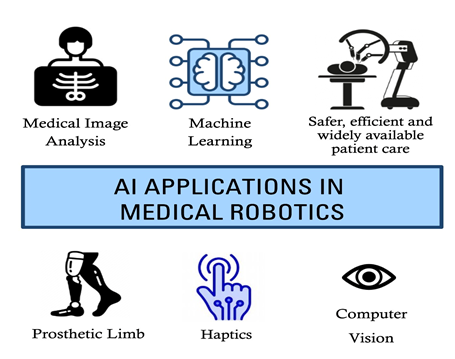
Introduction
Robot surgery, a minimally invasive surgery technique using computer-controlled robotic weapons, transfigured modern medicine. Compared to outmoded laparoscopic surgery, it provides upgraded skill, envisaged improvement and abridged tremor, leading to advantages for patients [1]. They include smaller incisions, less blood loss, quicker recovery time and pain relief. Artificial intelligence (AI) includes a range of intelligent technologies that can be learned, rational and decided without clear programming. In the field of health, AI finds increasing applications in diverse fields, including (i) medical images and diagnosis, (ii) drug discovery and development, and (iii) robot support surgery. AI integration into robotic surgery is a gigantic promise to further progress its accuracy, efficiency and accessibility. This article determines the current status of robotic surgery systems led by AI, their advantages and limits and future direction for this revolution technology. The development of robotic surgery dates back to the 1980s with the introduction of Puma Robot [1]. The first robotic surgery systems were principally used for telemanipulation, permitting surgeons to operate remotely. This advancement later led to the conception of more sophisticated robotic arms with upgraded control. The historical approval of the FDA of Vinci DA Surgery System in 2000 manifested a significant step in the field. AI in healthcare is making strides, driven by advancements in machine learning algorithms and the vast availability of medical data. AI also helps optimize healthcare operations and improve patient care. The first AI applications often focused on automating routine tasks, predominantly in medical image analysis for cancer detection and patient outcome prediction. This includes using AI to analyze medical images namely, X-rays, CT scans, and MRIs to identify abnormalities and potentially detect cancer earlier. Moreover, AI algorithms are being developed and utilized to predict how patients might respond to different treatments, enabling personalized treatment plans. These algorithms analyze vast amounts of patient data, including medical history, genetics, and lifestyle factors, to identify patterns and predict individual responses to various therapies. This allows for tailoring treatments to the specific characteristics of each patient, potentially improving effectiveness and reducing adverse effects. The initial integration of AI on robot surgery focused on automation of specific surgical errands, such as stitching or surgery. These applications are pointed at refining uniformity and dropping the workload of the surgeon [2]. Existing robotic surgery systems based on AI combine different features, especially the recognition and segmentation of the image, AI algorithms can analyze the image of the surgical field in real time to identify important structures, blood vessels and tumors, help in decision making during surgery .AI can help in planning and optimizing the movements of surgical tools, leading to smoother and more precise procedures. AI can improve the sensation of the surgeon through a robot interface, providing valuable feedback on the structure of tissues and resistance [1, 2].
AI, particularly those using machine learning, can learn and improve their algorithms autonomously by processing data and adjusting their internal parameters without explicit human programming [3]. This describes AI enhancing human and technological capabilities by leveraging data and learning from experiences, much like how humans develop through cognitive inputs and learning. rom experiences, much like how humans develop through cognitive inputs and learning. AI can process information and cause insights that both humans and other technological systems can utilize for several purposes. This can involve tasks like automations, augmenting human intelligence through data analysis, and even collaborating on complex problems [3]. In the 1970s, MYCIN was recognized as an early backward chaining expert system that used artificial intelligence to identify bacteria causing severe infections, such as bacteremia and meningitis, and to recommend antibiotics, with the dosage adjusted for patient’s body weight - the name derived from the antibiotics themselves, as many antibiotics. Nevertheless, the acceptance of these systems in clinical practice was not predominantly high. Viruses, pandemics, and the associated public health governance have been persistent challenges throughout human history. Establishing a new governance framework characteristically requires multiple validations, which must be uninterruptedly refined in response to noteworthy public health emergencies [3]. The COVID-19 outbreak served as a global stress test for the health systems and governance structures of nations worldwide. During the initial phases of the pandemic, the deployment of robots, anti-pandemic applications, and AI- driven image recognition emerged as crucial intelligent tools in the fight against the virus. These innovations represented an inclination towards exploiting advanced technology to develop operative public health governance systems. This study focuses on public insights regarding the use of robots for medical care during the pandemic, which we classify as anti-pandemic robots. At the beginning of the pandemic, the most of robots were not explicitly designed to address the unanticipated occurrence of COVID-19, including those used for delivery. Many of these robots did not sufficiently align with the necessities of the pandemic; thus, engineers worked speedily to create robots that could better support the nation’s anti-pandemic initiatives. In China, these robots were rapidly deployed to hospitals, quarantine centres, and other emergency locations during the early phases of the disaster. Nevertheless, as anti-pandemic trials became more extensive and the shortage of healthcare workers upgraded, many of these robots began to integrate into everyday life in main cities. For example, temperature-monitoring robots were introduced in public places such as universities, banks, and restaurants. Investigators from Pakistan, South Korea, and Indonesia have studied and recognized the effectiveness of anti-pandemic robots in China [4].
AI and mobile applications can meaningfully augment disease prevention efforts by encouraging individuals to adopt healthier lifestyles and providing personalized perceptions. AI-powered tools can analyze vast datasets to recognize patterns and predict risks, while mobile apps can offer personalized guidance, reminders, and support for healthy behaviors. [5, 6]. The integration of AI with the Internet of Medical Things (IoMT) in both mobile and standalone health applications has already proven beneficial for users. In the realm of disease diagnostics, AI has significantly advanced the field. This area can leverage AI in two primary ways: by improving the sensitivity of diagnostic tests and by consolidating diagnostic data from various sources, such as imaging, laboratory results, and functional assessments. AI has shown promise in early disease detection for conditions like hemorrhage, stroke, and cancer, leading to increased accuracy and reduced false positives. AI algorithms can analyze medical images and data to identify patterns and anomalies that may be missed by humans, enabling earlier and more accurate diagnoses. For example, AI can help detect strokes by analyzing CT scans and other imaging data, improving detection rates and reducing diagnostic errors, according to Dr. Vanchilingam Hospital. Similarly, AI algorithms are being used to analyze cancer images, such as breast x-rays and CT scans, to identify cancerous tissue with high accuracy [5, 6]. The American Cancer Society reports a consistent decline in cancer mortality rates in the United States over recent years, as indicated in their annual statistical publications. The origins of robotic surgery can be traced to the 1980s with the launch of the Programmable Universal Machine for Assembly (PUMA) robot. Initial robotic surgical systems focused on telemanipulation, enabling surgeons to perform operations remotely. Further advancements resulted in the development of more advanced robotic arms featuring enhanced dexterity and control. The pivotal FDA approval of the da Vinci Surgical System in 2000 represented a major milestone in this domain. The initial implementation of artificial intelligence in robotic surgery concentrated on automating particular surgical functions, such as suturing and tissue dissection [7]. These applications were designed to enhance consistency and alleviate the workload of surgeons. Presently, AI-enhanced robotic surgical systems encompass a range of capabilities, including image recognition and segmentation, where AI algorithms can evaluate images of the surgical field in real-time to pinpoint essential structures, blood vessels, and tumours, thereby assisting surgeons in their decision-making processes. Furthermore, with motion control and path planning, AI can facilitate the planning and optimization of surgical instrument movements, resulting in more fluid and accurate procedures [6, 7]. Additionally, AI-driven motion control and path planning significantly enhance surgical procedures by optimizing instrument movements, leading to smoother, more precise, and potentially less invasive surgeries. This technology allows for pre-planning of surgical paths, real-time adjustments based on imaging data, and even personalized surgical plans tailored to individual patients. AI in medical robotics and assistance can be comprehended under following heads:
AI in Robotics
The methodologies for imparting new skills to robots have significantly advanced over time. There are three primary and well-recognized methods: direct programming, imitation learning, and reinforcement learning [8, 9]. Dexterous manipulation of the robot is an important part of realizing intelligence, but manipulators can only perform simple tasks such as sorting and packing in a structured environment. In view of the existing problem, this paper presents a state-of-the-art survey on an intelligent robot with the capability of autonomous deciding and learning. The authors first review the main achievements and research of the robot, which were mainly based on the breakthrough of automatic control and hardware in mechanics. With the evolution of artificial intelligence, many research studies have made further developments in adaptive and robust control. The survey reveals that the latest research in deep learning and strengthening learning has flagged the way for highly complex errands to be performed by robots. Moreover, deep reinforcement learning, imitation learning, and transfer learning in robot control are deliberated in detail. Lastly, major achievements based on these methods were summarized and analyzed thoroughly, and future research challenges were anticipated. Direct programming represents the most basic solution, allowing for the manual setting of desired positions for the robot. Imitation learning can be approached through three main techniques: Kinaesthetic, Teleoperating, and Observational Learning. Kinaesthetic training involves manually guiding the robot’s body while recording its movements. In teleoperating, the instructor operates from a remote location, demonstrating movements that are captured through motion sensors or devices. Reinforcement learning (RL) is characterized by a trial-and- error learning process, where the concept of reward plays a crucial role, serving as either positive reinforcement or negative punishment. RL has carved out a specific niche in the field of robotics, exploring several critical areas where robotics integrate with artificial intelligence contributing to healthcare [8, 9].
Robotics in Healthcare
Technological advancements encompass IoT, cloud- based services, and AI [7]. The Seamless IoT–cloud–edge- AI integration has been noticed to be closely linked to the concept of Real-Time Intelligence, as it enables the immediate and intelligent processing of data generated by IoT devices, leveraging the power of edge computing and cloud to make real-time decisions. [8]. Robotics can play a crucial role in managing pandemic situations by minimizing infection exposure, delivering medications and food, monitoring vital signs, enhancing border security, and automating disinfection processes [7, 8].
Robotics in Oncology
Proficiency-based training programs for robotic surgery have been developed and integrated into the education of surgical oncology fellows [9]. Proficiency-based training programs for robotic surgery have increasingly been developed and integrated into the education of surgical oncology fellows. These programs mainly focused on a structured approach to skill acquisition, utilizing various tools like simulation, dry lab exercises, and mentored training. The goal was to ensure the fellows to achieve a certain level of competency before performing robotic surgeries independently. The outcomes exposed that, following their training, the fellows are capable of safely executing complex gastrointestinal robotic surgeries and applying these skills post-graduation. The shift from open to laparoscopic surgery, the expansion of robotic surgery, and the rising demand for surgeons skilled in intricate robotic medical procedures are expected to grow [9]. A study comparing open surgery and robot-assisted laparoscopic surgery (RALP) for prostate cancer found that patients choosing RALP generally had a higher average level of education, despite the fact that the cost per procedure was approximately 30% greater [9]. This proposes a possible link between education, access to information, and the choice of surgical approach.
Bio-Robotics
Bio-robotics is a field that syndicates biology and robotics to create autonomous or semi-autonomous systems that learn from and mimic living organisms, often using mechatronic systems to achieve complex tasks. It is an interdisciplinary discipline that explores how biological concepts can be applied to advance robot design and function, and vice versa. [10]. The emphasis on living entities, such as insects, in the realm of AI is predicated on a thorough understanding of biological processes and bodily functions, rather than solely the brain, as the foundation for automated intelligence [9, 10]. This agility is crucial in addressing the rapidly evolving challenges faced by the ecosystems and species in the wild. In this section of conceptual overview, authors attempted to discussed, the opportunities for the fusion of AI and animal-inspired robotics to revolutionize the ability to study wildlife and also authorize to implement more effective and sustainable conservation practices. This synergistic approach harnesses the assets of both technology and biology, marking a noteworthy jump forward in the efforts to guard and preserve the natural world.
Bio-robotics uses designs inspired by animals to develop novel approaches to targeted medicines and minimally invasive procedures. Notable examples include pangolin- inspired soft, magnetically actuated robots that can navigate intricate anatomical systems to administer medications, provide localized heat for the treatment of thrombosis or tumor ablation, and regulate bleeding [11]. Similarly, micro- and nanorobotic systems, modelled after biological micro-swimmers such as bacteria, are engineered for targeted drug delivery, gene therapy, and precision medical interventions, as discussed in a study by Mengyi H, et al. [12]. These developments demonstrate how the combination of biological inspiration, cutting-edge materials, and artificial intelligence is propelling improvements in diagnostics, treatments, and regenerative medicine, underscoring the revolutionary potential of bio-robotics in medicine.
AI in Medical Image Analysis
Over the last few decades, medical imaging has become a key component of healthcare. It is expansively utilized for the detection, confirmation, differential diagnosis, treatment of illnesses, and rehabilitation. AI algorithms have made distinguished strides in image processing, enhancing various applications from medical diagnosis to visual analysis. These algorithms, trained on vast datasets, can analyze images, identify objects, and even generate new images based on text descriptions [13]. Physicians evaluate a range of digital medical image modalities, including X-ray, ultrasound (US), computed tomography (CT), magnetic resonance imaging (MRI), positron emission tomography (PET) scans, mammography, retinal photography, histology, morphology slides. The task of reporting images is labor-intensive and primarily performed by seasoned radiologists and physicians. The interpretation of images is prone to errors due to variations in the visual presentation of pathologies and differing methodologies in image analysis [14]. The statement correctly identifies challenges in medical image reporting. Image interpretation is a manual, time-consuming process, primarily done by radiologists and physicians. It is vulnerable to errors because different presentations of diseases and varying analytical approaches can lead to misinterpretations. Furthermore, the potential fatigue of human experts may contribute to flawed diagnostic conclusions. For example, the sensitivity and specificity of screening mammography are reported to range from 77- 87% and 89-97%, respectively. While multiple readings can enhance recognition rates, they also increase the cost of reporting. Computer-aided detection (CAD) systems may assist physicians in interpreting medical images, although the advantages of CAD usage remain a topic of debate. Several studies have indicated promising outcomes for CAD systems by comparing their efficacy with double readings [13, 14].
In recent years, researchers have developed numerous advanced architectures. A common feature among these solutions is the convolution operation, which has enabled scientists to create very deep structures for algorithms like those used in computer vision. Recently, Recurrent Neural Networks (RNN) have gained traction in image processing applications, particularly due to their effectiveness in handling sequential data such as image captioning and multi- image classification [15]. These operations, particularly in the form of Convolutional Neural Networks (CNNs), leverage the mathematical concept of convolution to extract features and patterns from input data. Capsule Networks (Caps Net) appear to offer a superior model for the hierarchical representation of image components compared to CNN. As a consequence, Caps Net is employed in image classification tasks. Generative Adversarial Networks (GANs), which consist of a generator and a discriminator trained adversarially, have demonstrated remarkable capabilities in generating realistic synthetic images, enhancing image quality, and augmenting limited datasets features that are especially valuable in medical imaging were acquiring large, high-quality datasets is often challenging and costly [15]. GANs solve data shortages, enhance model robustness, and facilitate more effective segmentation, classification, and picture reconstruction tasks by synthesizing additional training samples. In clinical contexts, when labelled medical pictures are scarce and datasets may be very unbalanced across various illnesses or patient demographics, this is especially pertinent [16]. Additionally, GANs help with domain adaptation and image- to-image translation, which improves model generalization across imaging modalities and institutions [17, 18].
By facilitating cooperative model training across several institutions without centralizing private patient data, federated learning enhances these capabilities while maintaining privacy and regulatory compliance. Only model updates not raw data are shared and aggregated in federated learning, where models are trained locally on dispersed datasets. This strategy works effectively for medical imaging, where ethical and privacy regulations limit data sharing. Researchers can lessen the consequences of data scarcity and class imbalance at specific sites by utilizing federated learning to tap into the pooled knowledge of multiple datasets. A potent paradigm for improving computer vision in healthcare is the combination of GANs for creating synthetic data and federated learning for training distributed models, especially in settings with fragmented or restricted data access. When combined, these cutting-edge methods help guarantee that deep learning models are fair and accurate, even in cases when training data is inconsistent or insufficient [15].
Numerous studies have demonstrated the capabilities of AI in facilitating intricate brain tumor surgeries. One particular study illustrated a scenario where AI-enhanced imaging guidance enabled surgeons to perform a more thorough tumor resection during a sensitive brain operation, which may result in better patient outcomes [19, 20]. Based on the availability of high-dimensional datasets, progressively innovative algorithmic patterns, and their powerful ability to identify and combine information, AI techniques are gradually reshaping the established patterns of tumor diagnosis and treatment, holding great promise for the future of precision. AI is also proving to be beneficial in supporting intricate neurological interventions such as brain tumor excision. A recent study highlighted a case in which AI-driven imaging guidance assisted surgeons in achieving a more comprehensive tumor resection during a thought- provoking brain surgery. AI algorithms are currently being investigated for their application in preoperative scheduling and intraoperative navigation in neurological surgeries [20, 21]. Authors also present the obstacles and possible future paths for the broader implementation of these groundbreaking approaches in neurosurgery, highlighting the importance of ongoing technological advancements and interdisciplinary collaboration to improve the accuracy and usefulness of 3D visualization and reality technologies in skull base surgeries. This may include the development of 3D brain models derived from patient imaging and the use of AI for real-time visualization of indispensable anatomical structures during surgical procedures [22, 23].
Obstacles and Unresolved Matters in the Analysis of Medical Images
Recent advancements in artificial intelligence are largely dependent on data-driven methodologies associated with deep learning and artificial neural networks. These methods demonstrate superior performance compared to human readers when utilized with adequately large labeled training datasets, achieve greater performance compared to human readers in various errands. Consequently, noteworthy progress has been attained in fields such as computer vision, speech recognition, and language translation [21]. Nevertheless, a broader range of AI capabilities is necessary to address real-world problems effectively. In practice, AI systems must be capable of learning efficiently from relatively small datasets. The implementation of deep learning techniques in medical image analysis encounters several challenges [23]. The primary issue pertains to the collection of relevant and accurately annotated data, as many medical images are archived in hospitals alongside medical reports formatted as free text [21, 22, 23]. The main challenge in using medical images for machine learning lies in the scarcity of labeled data. While hospitals store vast amounts of images, these are often accompanied by free-text radiology reports rather than structured labels. This presents a obstacle for developing AI models because they prerequisite labeled data to learn [21, 22, 23].
The reliability of annotations provided by medical professionals remains a topic of discussion. While double reading has demonstrated greater accuracy in disease diagnosis, it is a labor-intensive process. Innovative deep learning algorithms hold the potential to surpass the accuracy of human evaluators; however, they do not eliminate the risk of incorrect diagnoses [24]. Furthermore, a significant challenge lies in the pronounced imbalance of datasets. Due to the nature of disease distribution, identifying abnormal classes is considerably more challenging than recognizing normal cases. Consequently, the datasets are skewed, complicating the development of a fair predictive model. This issue necessitates careful consideration, with potential solutions including the design of appropriate loss functions or data augmentation. CapsNets appear to address AI-related tasks with greater reliability than alternative methods. Lastly, the image classification issue is often oversimplified. In making a final determination, physicians consider not only images but also additional factors such as medical history, demographics, and age [25]. All relevant features should be integrated into a computer-aided diagnosis (CAD) system. The challenge arises from the vast number of image features in contrast to the limited attributes available from reports. To tackle this problem, novel data-blending techniques should be employed. In summary, the supervised deep learning approach currently represents the leading technique in numerous computer vision applications. However, its effectiveness is contingent upon the availability of annotated data. Specifically, annotating medical images necessitates the involvement of medical experts, making the process both time-consuming and expensive [23, 24]. Additionally, the significant imbalance in medical data necessitates the use of specialized models, such as adversarial ones.
AI in Surgery
Robotic surgery, a minimally invasive surgical technique utilizing computer-controlled robotic arms, has revolutionized modern medicine. Compared to traditional laparoscopic surgery, it offers dexterity, improved visualization, and reduced tremors, leading to several benefits for patients [26]. Furthermore, it contributes to the digitization of radiology and pathology, as well as advancements in image analysis through neural networks [27]. The technology offers a three-dimensional magnified perspective and allows for precise movements during bi- manual operations with articulated arms. Nevertheless, the effectiveness of robotic surgery is significantly influenced by the quality of the data utilized, despite existing privacy concerns in the healthcare sector [27]. The data gathered and shared during surgical procedures can yield valuable insights for surgeons.
However, the expensive expense of robotic surgery which includes large upfront expenditures in robotic equipment, continuing maintenance costs, and the requirement for specialized training for surgical teams remains a major obstacle to its broad adoption. Accessibility may be restricted by these costs, especially in low- and middle-income nations or environments with limited resources. A number of tactics could be used to increase accessibility and cost in order to address these issues. By distributing fixed expenses over a greater number of procedures, economies of scale achieved by increasing the volume of robotic surgeries performed can assist to reduce the cost per case. Furthermore, public- private partnerships or government subsidies might be formed to lessen the financial strain on patients and hospitals, increasing the accessibility of robotic surgery. Costs related to surgical errors and inefficiencies may also be decreased by funding training initiatives and creating standardized procedures. By putting these tactics into practice, the medical community can strive for a more equitable distribution of robotic surgery technology, guaranteeing that its advantages are available to a larger patient base and unrestricted by budgetary limitations. This balanced approach would help maximize the clinical impact of robotic surgery while addressing the economic challenges that currently hinder its adoption [28, 29].
Radiological imaging methods are essential for diagnosing liver cancer, typically employing techniques such as magnetic resonance imaging, computed tomography, or contrast-enhanced ultrasonography. The conventional assessment of tumors through radiological imaging predominantly depends on qualitative characteristics [30]. These characteristics encompass tumor density, enhancement patterns, distribution of cells within the tumor, the regularity of tumor borders, anatomical relationships with adjacent tissues, and their effects on these structures. In numerous instances, histopathological analysis becomes necessary when imaging findings are ambiguous. In situations where imaging techniques like MRI don’t provide a definitive diagnosis, histopathological analysis (microscopic examination of tissue) is crucial. By leveraging artificial intelligence technology, radiological images, pathological assessments, and various data types can be evaluated for detection and diagnosis. Authors argue for refinement of AI imaging studies via consistent selection of clinically meaningful endpoints such as survival, symptoms, and need for treatment. This methodology not only assists in monitoring disease progression but also enables highly accurate prognosis predictions, thus promoting early diagnosis and informing follow-up schedules for patients [30]. Colorectal cancer (CRC), a type of gastrointestinal tumor, ranks as the third most prevalent malignancy among both genders. Extensive research has demonstrated that the integration of AI in CRC screening significantly enhances the detection rate of colorectal tumors, proving to be more effective than traditional endoscopy and radiological assessments. This further underscore the remarkable potential and clinical significance of AI in the early detection of cancer. Furthermore, ophthalmologists have observed that AI may excel in diagnosing eye diseases such as macular degeneration, cataracts, diabetic retinopathy, and glaucoma, showcasing substantial screening capabilities. In orthopedic surgeries involving knee and hip replacements, AI facilitates accurate surgical planning, which not only reduces errors linked to manual techniques but also decreases surgical time and lowers the risk of postoperative complications [27, 30]. AI-powered systems can analyze patient data, predict outcomes, and guide surgeons in achieving more precise procedures, ultimately improving patient outcomes.
Orthopedic Surgery
Systems like the MAKO robotic arm use CT imaging to create a 3D model of the knee, enhancing preoperative assessments. This allows surgeons to plan and visualize implant placement and make virtual adjustments for soft tissue balance, leading to more precise and functional knee replacement outcomes [30]. Multiple studies and reviews indicate that the MAKO robotic system (MAKO) offers benefits in total knee arthroplasty (TKA) and total hip arthroplasty (THA), including improved component positioning accuracy, reduced postoperative pain and hospital stay, and better functional consequences. In the case of THA, the MAKO system has demonstrated superior outcomes with complication rates comparable to traditional methods, with patients reporting improved results and fewer occurrences of implant misalignment. Artificial intelligence (AI) is rapidly advancing the diagnosis and management of rotator cuff tears (RCTs) in shoulder surgery. AI is improving diagnostic accuracy, enhancing treatment planning, and potentially optimizing surgical outcomes. This is achieved through AI algorithms that analyze medical imaging data, predict tear reparability, and even aid in exercise classification for rehabilitation [31, 32]. Traditionally, orthopedic surgeons diagnose RCT by analyzing MRI scans, but deep learning technologies utilizing 3D convolutional neural networks (CNN) have been developed for automated and precise diagnosis. These systems can detect RCT, assess tear sizes, and visualize the locations of tears. Furthermore, AI algorithms are being used to analyze muscle atrophy, like that of the supraspinatus, to predict the reparability of extensive rotator cuff tears (RCTs). This improves diagnostic efficiency and objectivity by quantifying factors like the supraspinatus muscle occupation ratio. By analyzing these parameters, AI can assist in treatment planning and outcome prediction for patients with RCTs. Research indicates that AI can enhance implant positioning and potentially minimize long-term complications in orthopedic surgery [31, 32, 33]. These studies systematically explored AI-assisted robotic TKA, revealing improved component positioning and alignment compared to traditional methods, which may lead to increased implant longevity and better patient outcomes. Furthermore, AI has the capability to tailor surgical strategies in orthopaedics by considering factors such as patient anatomy and medical history, which may include optimizing implant choices and surgical techniques for each unique patient [31, 32, 33].
Gastrointestinal Surgery
Research focuses on integrating artificial intelligence (AI) into robotic-assisted minimally invasive colorectal surgery to improve visualization and enhance surgical accuracy. AI can analyze surgical images, provide real-time feedback, and assist in complex tasks, ultimately aiming to reduce surgical time and improve patient outcomes. Robotic surgery has demonstrated significant benefits in colorectal cancer surgery, particularly in complex procedures like total mesorectal excision (TME) and complete mesocolon excision (CME), due to enhanced precision, visualization, and dexterity. These benefits include reduced intraoperative blood loss, shorter hospital stays, and improved functional outcomes [34, 35]. The robotic platform supports surgeons in executing vascular dissection, intracorporeal anastomoses, and lymphadenectomy, particularly in anatomically challenging regions adjacent to critical vascular structures or the lateral pelvic walls. Numerous medical institutions are now adopting robotic assistance as a standard practice for rectal resections, highlighting the increased success and benefits of robotic surgery in these technically complex colorectal operations [35]. A significant concern regarding the broader implementation of robotic assistance in colorectal surgery has been the associated high costs. However, substantial evidence consistently illustrates the undeniable advantages of robotic surgery, particularly in left colectomies and various rectal procedures, often exceeding the capabilities of advanced 3D laparoscopic systems. Robotic-assisted surgery can address the limitations of traditional laparoscopy, providing benefits such as reduced blood loss, shorter hospital stays, quicker recovery of bowel function, favourable oncological outcomes, and a lower rate of conversion to open surgery [34, 35]. A meta-analysis conducted by Trastulli et al. confirmed that robotic colorectal surgeries lead to fewer perioperative complications and surgical site infections when compared to laparoscopic procedures [34, 35].
Firefly technology, integrated into robotic rectal resections, enhances the precision and safety of low ligation of the inferior mesenteric artery (IMA) pedicle, according to research on robotic surgery. This is particularly beneficial in rectal cancer surgery where the IMA is often ligated below the left colic artery, and it aids in accurate identification of the vascular system and lymph node dissection [36]. The precision that robotic systems provide in retroperitoneal and pelvic dissection is essential for performing accurate lymphadenectomy around the IMA. The application of robotics in bariatric surgery has been evolving since Cadiere et al. first documented a case in 1999. The Roux- en-Y gastric bypass is widely acknowledged as the most effective surgical intervention for severe obesity, and robotic surgery has emerged as a promising technology to enhance this procedure due to its established benefits. It is the most thoroughly researched robotic bariatric procedure [36]. Sleeve gastrectomy is also becoming increasingly popular due to its low complication risk, excellent outcomes, and perceived technical ease. However, it presents specific challenges, such as the potential for leakage along the staple line and the necessity for meticulous dissection in the left crus and hiatus area to mobilize the fundus. Robotic surgery offers distinct advantages over traditional laparoscopy, particularly in terms of precision and dexterity, due to the “endo-wrist” capabilities and the surgeon’s ability to manipulate the instruments with a wider range of motion. This allows for more precise dissection and suturing, including the staple line, in complex areas like the pelvis [37]. A systematic review by Cirocchi et al. revealed that robotic bariatric surgery is being utilized more frequently not only in revision cases but also in primary procedures, such as creating intra- corporeal anastomoses during Roux-en-Y gastric bypass or addressing complex resections in sleeve gastrectomy. Furthermore, robotic technology enhances the efficiency of closing enterotomies or gastrotomies, even when stapling is employed for anastomoses. In the realm of pancreatic surgery, a study involving 250 robotic pancreatic resections demonstrated that robotic-assisted surgery is viable for both oncologic and benign conditions, with a low conversion rate to open surgery [37, 38].
AI in Minimally Invasive Cardiac Surgery
AI-enhanced robotic coronary artery bypass grafting (CABG): Recent studies indicate that artificial intelligence has the potential to enhance outcomes in minimally invasive cardiac surgery [38]. The findings revealed encouraging results, including reduced operative durations, lower blood loss, and fewer complications in comparison to conventional methods [38]. Ongoing research aims to utilize AI for real- time risk assessment during cardiac procedures, which may involve evaluating various physiological indicators to foresee possible complications and assist surgeons in making well- informed choices. Besides, the prospective uses of AI in this domain have been underscored [38, 39].
The Advancement of AI in the Field of Healthcare
Artificial Intelligence was initially introduced by John McCarthy during the Dartmouth Summer Research Project on AI in 1956; however, the field’s earliest pioneer was the distinguished Alan Turing, whose innovative contributions to computational theory and machine intelligence established the groundwork for the advancement of AI. The MYCIN system, developed at Stanford University in 1970, was among the first AI applications in medicine, capable of diagnosing bacterial infections and recommending antibiotics based on patient data and laboratory findings. By the 1980s, the Internist-1 system from IBM, equipped with a comprehensive medical knowledge base, was able to formulate diagnostic hypotheses and suggest additional diagnostic procedures in a question-and-answer format after receiving initial patient information. This system was extensively utilized in medical diagnosis, showcasing the ability of computers to address intricate medical challenges [40]. By the year 2000, advancements in computational power and data storage led to machine learning and big data analysis becoming key applications of AI in healthcare. Since 2015, AI has been fully integrated and applied clinically within the medical sector, with deep learning, which employs multilayer neural networks for data processing and analysis, revealing considerable potential and benefits in medical imaging, disease prediction, and personalized treatment [41].
At the end of the year of 2022, the impressive introduction of ChatGPT (OpenAI, Palo Alto, CA) rekindled worldwide interest in artificial intelligence, eclipsing the excitement generated by Google’s AlphaGo, which triumphed over world Go champion Lee Sedol in 2016. AI swiftly emerged as a central theme, prompting various sectors to invest in the creation of their own AI solutions, with the healthcare industry being no exception. IBM initiated its foray into medical technology as early as the 1950s, concentrating on medical imaging and electronic health record systems. Healthcare innovations have not only enabled medical facilities to enhance efficiency and deliver superior care but have also propelled advancements in medical technology.
In 2017, Microsoft launched its Healthcare NEXT division, marking its official entry into the healthcare arena. This year, NVIDIA is committed to merging AI technology with surgical practices to improve real-time data analysis during operations. They intend to utilize AI algorithms for surgical decision-making, medical education, and collaboration among operating room teams, thereby assisting physicians in executing surgeries with greater precision and increasing their success rates [42]. Through ongoing developments and enhancements, AI has revealed numerous significant benefits over conventional medicine in the healthcare sector. In the realm of early disease detection and diagnosis, AI can pinpoint potential health threats and facilitate accurate screenings. It has also enabled the formulation of personalized treatment strategies, establishing itself as a formidable asset in precision medicine. Furthermore, when combined with telemedicine technologies, AI guarantees that patients in remote locations receive effective and precise medical assistance. As technology progresses, the potential applications of AI within contemporary healthcare systems are becoming increasingly vast [43, 44, 45, 46, 47].
Ethical, Social and Technical Challenges in AI-Driven Medical Robotics
A number of ethical, social, and technological issues are raised by the incorporation of AI in medical robots, which affects both its uptake and efficacy. The most important of them is data privacy, since AI-powered robotic systems need to access enormous volumes of private patient data in order to be trained and function, which raises questions about abuse, breaches, and illegal access. Algorithmic bias is another critical challenge, where AI models may perpetuate or exacerbate existing healthcare disparities if trained on non-representative datasets, leading to inequitable diagnosis, treatment, or patient outcomes [48]. A lack of human oversight due to over-automation or an over- reliance on robotic and AI technologies might compromise clinician autonomy and possibly damage the doctor-patient relationship [49]. These worries are exacerbated by the requirement for transparency in AI decision-making and the challenge of determining who is responsible for unfavorable outcomes or mistakes, both of which have the potential to undermine patient and healthcare professional trust [48, 49].
Mitigation measures must be based on strong, interdisciplinary approaches in order to solve these issues. Strict data governance guidelines, the use of cutting-edge cybersecurity solutions, and adherence to legal requirements like General Data Protection Regulation (GDPR) and Health Insurance Portability and Accountability Act (HIPAA) are necessary to ensure data privacy. Using inclusive and varied datasets, conducting frequent model audits, and implementing fairness-aware machine learning strategies are all ways to combat algorithmic bias. Maintaining a balanced human-in-the-loop approach is crucial to preventing over- automation, where physicians get complete training on the potential and constraints of AI systems and retain final decision-making authority [50, 51]. Additionally, creating clear lines of accountability and encouraging openness and transparency with patients regarding the use of AI in their treatment are essential for promoting responsible adoption and generating confidence. To guarantee that AI-driven medical robotics is both efficient and fair, recent research emphasizes the significance of ongoing ethical review, cooperation between AI developers and clinicians, and the creation of regulatory frameworks. One example of this is the 2025 review by Weiner et al. in PLOS Digital Health [50, 51].
Conclusion and Future Perspectives
The integration of artificial intelligence (AI) in healthcare is gradually increasing since it becomes more general in contemporary business as well as daily life. AI holds noteworthy assurance for supporting healthcare professionals in various areas, including patient care and administrative functions. Whilst various innovations in AI and healthcare confirm to be beneficial to the industry, the approaches they support can differ noticeably. Some studies recommend that AI can match or even surpass human performance in certain tasks, such as disease diagnosis; though, it will take substantial time prior to AI can completely substitute humans in a broad continuum of medical roles. However there have been substantial advancements, the application of AI in healthcare is still in its infancy. Ongoing research along these notions and objectives is enhancing the technology’s capabilities, promising noteworthy advancement in different sectors in the years ahead. AI and machine learning hold great latent for the crucial healthcare industry, which is presently experiencing speedy digital transformation, and these innovations could greatly augment patient quality of life. Simultaneously, robotic technology is revolutionizing healthcare delivery by automating routine tasks, supporting medical professionals during surgeries, and providing remote care options. Robotic systems guarantee surgical procedures are performed with precision, swiftness, and consistency, leading to fewer errors and faster recovery period for patients. Besides, telepresence robots support remote consultations, monitoring, and even surgical interventions, thus escalating access to healthcare services and overcoming geographical barriers.
Acknowledgement
This article is the result of collaboration between SR Institute of Management & Technology, Lucknow and IFTM University, Moradabad, U.P., India. Authors are grateful to Chairman, Vice Chairman, Advisor and Board
of Directors of SRGI, Lucknow, U.P., India for providing the research promotion facilities and continuous motivation for accomplishing the present piece of work.
Conflict of Interest
Authors declare no conflict of interests.
References
-
Liu YM, Mitachm C, Nordmann A (2021) Cultural comparison of global technical governance of Covid19. Sci Econ Soc 1: 1–12.
-
Khan ZH, Siddique A, Lee CW (2020) Robotics utilization for healthcare digitization in global Covid19 management. Int J Environ Res Public Health 17: 3819.
-
Betriana F, Tanioka T, Locsin R, Malini H, Lenggogeni DP (2020) Are Indonesian nurses ready for healthcare robots during the covid19 pandemic? Belitung Nurs J 6: 63-66.
-
Jiang H, Cheng L (2021) Public perception and reception of robotic applications in public health emergencies based on a questionnaire survey conducted during COVID19. Int J Environ Res Public Health 18(20): 10908.
-
Freeman WD, Sanghavi DK, Sarab MS, Kindred MS, Dieck EM, et al. (2021) Robotics in simulated COVID19 patient room for health care worker effector tasks: preliminary, feasibility experiments. Mayo Clin Proc Innov Qual Outcomes 5(1): 161–170.
-
Gao A, Murphy RR, Chen W, Dagnino G, Fischer P, et al. (2021) Progress in robotics for combating infectious diseases. Science Robotics 6(52): eabf1462.
-
Javaid M, Haleem A, Vaish A, Vaishya R, Iyengar KP (2020) Robotics applications in Covid19: A review. J Ind Integr Manag 5: 441–451.
-
Cheng LB, Tavakoli M (2020) Covid19 pandemic spurs medical telerobotic systems: A survey of applications requiring physiological organ motion compensation. Front Robot AI 7: 594673.
-
Hua J, Zeng L, Li G, Ju Z (2021) Learning for a robot: Deep reinforcement learning, imitation learning, transfer learning. Sensors 21(4): 1278.
-
Bellos T, Manolitsis I, Katsimperis S, Juliebo P, Feretzakis G, et al. (2024) Artificial intelligence in urologic robotic oncologic surgery: A narrative review. Cancers 16(9): 1775.
-
Soon RH, Yin Z, Dogan MA, Dogan NO, Tiryaki ME, et al. (2023) Pangolininspired untethered magnetic robot for ondemand biomedical heating applications. Nat Commun 14(1): 3320.
-
Hu M, Ge X, Chen X, Mao W, Qian X, et al. (2020) Micro/ nanorobot: a promising targeted drug delivery system. Pharmaceutics 12(7): 665.
-
Zemmar A, Lozano AM, Nelson BJ (2020) The rise of robots in surgical environments during Covid19. Nat Mach Intell 2: 566–572.
-
Tabourin T, Sarfati J, Pinar U, Beaud N, Parra J, et al. (2021) Postoperative assessment of nosocomial transmission of COVID19 after robotic surgical procedures during the pandemic. Urol Oncol Semin Orig Investig 39(5): 298e7.
-
Hussain J, Bath M, Ivarsson J (2025) Generative adversarial networks in medical image reconstruction: A systematic literature review. Comput Biol Med 191: 110094.
-
Skandarani Y, Jodoin PM, Lalande A (2023) Gans for medical image synthesis: An empirical study. J Imaging 9(3): 69.
-
Coelho L (2023) How artificial intelligence is shaping medical imaging technology: A survey of innovations and applications. Bioengineering (Basel) 10(12): 1435.
-
Kumar Y, Koul A, Singla R, Ijaz MF (2023) Artificial intelligence in disease diagnosis: A systematic literature review, synthesizing framework and future Research Agenda. J Ambient Intell Humaniz Comput 14: 8459– 8486.
-
Li SQ, Guo WL, Liu H, Wang T, Zhou YY, et al. (2023) Clinical application of an intelligent oropharyngeal swab robot: Implication for the Covid19 pandemic. Eur Respir J 56: 2001912.
-
Coelho L (2023) How artificial intelligence is shaping medical imaging technology: A survey of innovations and applications. Bioengineering (Basel) 10(12): 1435.
-
Ce M, Irmici G, Foschini C, Danesini GM, Falsitta LV, et al. (2023) Artificial intelligence in brain tumor imaging: A step toward personalized medicine. Curr Oncol 30(3): 2673–2701.
-
Isikay I, Cekic E, Baylarov B, Tunc O, Hanalioglu S (2024) Narrative review of patientspecific 3D visualization and reality technologies in skull base neurosurgery: enhancements in surgical training, planning, and navigation. Front Surg 11: 1427844.
-
Zhao X, Wang L, Zhang Y (2024) A review of convolutional neural networks in computer vision. Artif Intell Rev 57: 99.
-
Miziara ID, Miziara CSMG (2025) Recognition of medical error: It is not too late for an open disclosure–a narrative review. Clinics 80: 100622.
-
Najjar R (2023) Redefining Radiology: A Review of artificial intelligence integration in Medical Imaging. Diagnostics (Basel) 13(17): 2760.
-
Reddy K, Gharde P, Tayade H, Patil M, Reddy LS, et al. (2023) Advancements in robotic surgery: A comprehensive overview of current utilizations and upcoming frontiers. Cureus 15(12): e50415.
-
Giardino A, Gupta S, Olson E, Sepulveda K, Lenchik L, et al. (2017) Role of imaging in the era of precision medicine. Acad Radiol 24: 639–649.
-
Guerrero MA, Pellino G, Damieta MP, Gimeno M, Alonso S, et al. (2025) Costeffectiveness of robotic compared with laparoscopic rectal resection. Results from the Spanish perspective national trial ROBOCOSTES. Surgery 180: 109134.
-
Wah JNK (2025) The rise of robotics and AIassisted surgery in modern healthcare. J Robot Surg 19(1): 1–13.
-
Alzubaidi L, Bai J, Sabaawi A, Santamaria J, Albahri AS, et al. (2023) A survey on deep learning tools dealing with data scarcity: definitions, challenges, solutions, tips, and applications. J Big Data 10(1): 46.
-
Huang J, Yang DM, Rong R, Nezafati K, Treager C, et al. (2024) A critical assessment of using ChatGPT for extracting structured data from clinical notes. Digital Med 7(1): 106.
-
Garcia A, Hsu KL, Marinakis K (2023) Advancements in the diagnosis and management of rotator cuff tears. The role of artificial intelligence. J Orthop 47: 87–93.
-
Iftikhar M, Saqib M, Zareen M, Mumtaz H (2024) Artificial intelligence: revolutionizing robotic surgery: review. Ann Med Surg (Lond) 86(9): 5401–5409.
-
Picozzi P, Nocco U, Labate C, Gambini I, Puleo G, et al. (2024) Advances in robotic surgery: A review of new surgical platforms. Electronics 13: 4675.
-
Chen E, Chen L, Zhang W (2025) Robotic-assisted colorectal surgery in colorectal cancer management: a narrative review of clinical efficacy and multidisciplinary integration. Front Oncol 15: 1502014.
-
Cepolina F, Razzoli RP (2022) An introductory review of robotically assisted surgical systems. Int J Med Robot 18: e2409.
-
Ma N, Sun P, Xin P, Zhong S, Xie J, Xiao L (2024) Comparison of the efficacy and safety of MAKO robot- assisted total knee arthroplasty versus conventional manual total knee arthroplasty in uncomplicated unilateral total knee arthroplasty: a singlecentre retrospective analysis. Int Orthop 48(9): 2351–2358.
-
Wu Z, Zheng Y, Zhang X (2024) Safety and efficacy of orthopedic robots in total hip arthroplasty: a network metaanalysis and systematic review. J Orthop Surg Res 19: 846–855.
-
Shaker F, Esmaeili S, Nakhjiri MT, Azarboo A, Shafiei S (2024) The outcome of conversion total hip arthroplasty following acetabular fractures: a systematic review and metaanalysis of comparative studies. J Orthop Surg Res 19(1): 83.
-
Mosca V, Fuschillo G, Sciaudone G, Sahnan K, Selvaggi F, et al. (2023) Use of artificial intelligence in total mesorectal excision in rectal cancer surgery: State of the art and perspectives. ArtifIntell Gastroenterol 4(3): 64– 71.
-
Sung H, Ferlay J, Siegel RL, Laversanne M, Soerjomataram I, et al. (2021) Global cancer statistics 2020: GLOBOCAN estimates of incidence and mortality worldwide for 36 cancers in 185 countries. CA Cancer J Clin 71: 209–249.
-
Iftikhar M, Saqib M, Zareen M, Mumtaz H (2024) Artificial intelligence: Revolutionizing robotic surgery. Ann Med Surg (Lond) 86(9): 5401–5409.
-
Fairag M, Almahdi RH, Siddiqi AA, Alharthi FK, Alqurashi BS, et al. (2024) Robotic revolution in surgery: diverse applications across specialties and future prospects review article. Cureus 16(1): e52148.
-
Leivaditis V, Beltsios E, Papatriantafyllou A, Grapatsas K, Mulita F, et al. (2025) Artificial Intelligence in Cardiac Surgery: Transforming Outcomes and Shaping the Future. Clin Pract 15(1): 17.
-
Kilic A (2020) Artificial intelligence and machine learning in cardiovascular health Care. Ann Thorac Surg 109: 1323–1329.
-
Bajpai D, Mishra MK, Srivastava S, Tiwari AM, Gupta P, et al. (2025) Advancements and challenges of artificial intelligence in healthcare and medicine: An overview. Asian J Curr Res 10(1): 145–160.
-
Mishra S, Gupta P, Mishra MK, Ahmad M (2025) Artificial intelligence versus healthcare and medical system: An editorial. Open Access J Data Sci Artif Intell 3(1): 000160.
-
Weiner EB, Mullan I, Nelson WA, Hassanpour S (2025) Ethical challenges and evolving strategies in the integration of artificial intelligence into clinical practice. PLOS Digit Health 4(4): e0000810.
-
Morrison M, Jakab I, Ratti E (2025) Ethical and social considerations of applying artificial intelligence in healthcare; a twopronged scoping review. MedR xiv.
-
Bradwell HL, Winnington R, Thill S, Jones RB (2020) Ethical perceptions towards realworld use of companion robots with older people and people with dementia: Survey opinions among younger adults. BMC Geriatr 20: 1–10.
-
Vozna A, Costantini S (2025) Ethical, legal, and societal Dimensions of AIdriven social robots in elderly healthcare. Intelligenza Artificiale.
- Revolutionizing Property Measurement Through Artificial Intelligence: The Journey of PropertyMeasure.ai
- AI Infused Business Model Innovation for Competitive Advantage in the Era of Big Data and Digital Transformation
- Use of CPM/PERT in the Effort to Eradicate Polio
- Integrated Multimodal Deep Learning Framework for Early Detection of Mouth Cancer Using CT Imaging and Clinical Symptom Analysis
- Server Migration with Multipath-QUIC
- Artificial Intelligence versus Healthcare and Medical System: An Editorial