
AI Infused Business Model Innovation for Competitive Advantage in the Era of Big Data and Digital Transformation
The concept of Business Model Innovation (BMI) has become a strategic need to survival and competitiveness in the wake of the calding pace of the digital revolution, as demonstrated by the emergence of Big Data and the ubiquitous Digital Transformation (DT) and has fundamentally challenged the paradigm of traditional business. The greatest disruptive technology of our times is artificial intelligence (AI), and its precise influence on the systematic facilitation and transformation of business models has been ambiguous and understudied. The broad overview paper will serve to address a significant research gap by consolidating the knowledge of AI Infused Business Model Innovation by incorporating post 2020 articles. The approach used in the literature review of this work presupposes the analysis of the interplay between the main elements of business models (value creation, delivery, and capture) and the perceptive, predictive, and prescriptive nature of AI technologies, such as Machine Learning and Deep Learning. The successful implementation of the digital strategy should be supported by a strong big data infrastructure, the digital transformation to the advanced level, and a stratified AI functionality, as the analysis shows, to reach the successful result. In particular, the AI enabled BMI presupposes four major shapes, i.e. improving the value proposition (e.g., hyper personalization), simplification of operations (e.g., automation and efficiency), creation of new revenue streams, and establishment of a high-quality innovation capacity. These findings prove that the implementation of AI is an important change in the organization that requires specific new skills and strategic management roles instead of a technical one. The following paper presents the Conceptual Framework of AI Infused BMI, which elucidates the complex interactions between these technologies by describing these AI powered processes. This work finally confirms the strategic importance of AI as the key to the contemporary competitive digital strategy and provides managers and policymakers with a valuable contribution to this discipline by determining major tendencies, solutions to key challenges (such as data quality and talent deficit), as well as an abundant agenda to further research.
Muddasar Khan¹*, Aftab Ahmed² and Muhammad Majid Sharif³
¹F.G Liaqat Ali Degree College Peshawar Road Rawalpindi, Pakistan ²National University of Technology Islamabad, Pakistan ³National University of Pakistan, Pakistan Keywords: Big Data; Business Model Innovation; Transformation
Abbreviations
AI: Artificial Intelligence; DT: Digital Transformation; BMI: Business Model Innovation; ML: Machine Learning; DL: Deep Learning; BI: Business Intelligence; RBV: Resource Based View.
Introduction
The modern economic setting has become a state of constant flux because of a web of thoroughly connected and quickly advancing technological foundation. Primary peculiarities of such environment include the synergistic convergence of Big Data, Artificial Intelligence (AI), and extensive Digital Transformation (DT), which, according to the research, stands behind the current business strategy and the reorganization of international trade [1]. The three aforementioned pillars of AI as the brain, Big Data as the fuel, and DT as the operating system are what now need to be successfully coupled to execute a success in terms of separating the market leaders and those that are being disrupted and are becoming less competitive [2]. Organizations do not merely require modernizing their systems to develop, produce and take economic value, and also re-engineer such processes and make ongoing digital innovation a core part of their game plan [3].
The Rise of Big Data, AI, and Digital Transformation
Big Data, which is marked with excessive volume, speed and complexity of unstructured information produced under the impact of digital interactions, connected devices, and cloud computing environments, is the pillar of this new digital paradigm [4]. The bulk of data is an inimitable, unique asset of strategy, but in its crude form does not provide much valuable information. It needs complicated calculation techniques in order to make it convenient. Artificial Intelligence (AI), a set of technologies play a significant role in this critical scenario, and these technologies involve Machine Learning (ML), Deep Learning (DL), and predictive analytics [5]. The driving force of the processing is AI which transforms a vast amount of data into comprehensible insights, and they can be used to make decisions that are more complex and faster than would be digestible by human systems. Artificial Intelligence can identify hidden patterns, automatically perform sophisticated tasks and can predict the future. And it is this power which pushes the business intelligence of today [6].
Such technologies being included in the blood of a business are then called as Digital Transformation (DT). Overarching digital technology in a business can be described as DT and requires radical changes in how business recognizes and connects to customers, and the basic nature of how systems perform that accompanies the new strategic outlook [7]. The change given is not a one-off situation but rather a process of culture change and structural change that transeuntly cuts across the board of our organization [8]. The journey itself is critical to survival as DT has been proven empirically relevant in the creation of innovation and efficiency in any industry thus constituting a required space to drive strategic growth well into the digital era [9]. This convergence is slowly, however, becoming a feature where many studies are now boasting of a hybrid technology integration like the uniting AI Blockchain Cloud computing concept (the concept of the ABCD) as a generator of novel value propositions in the contemporary operations. [10].
Shift in Traditional Business Models toward Digital Innovation
The traditional business models are currently being redesigned and restructured during extensive technological development to survive digitally [11]. Business Model Innovation (BMI) entails a systematic and ongoing re- invention of the core concepts or reasoning of an organisation in creating, delivering and capturing value [12]. Although BMI was once a haphazard strategic initiative, it has become a necessity of contemporary enterprise and digital native rival players, necessitated by the need to build a sustainable competitive advantage [13]. It has been found that the most disruptive firms apply digital transformation (DT) to not only enhance daily operations but serve as a propelling platform of large-scale business model innovation (BMI) [14]. It implies that the direction is to leave stable, product-oriented solutions and go more dynamic, customer oriented and data driven service or platform models. Even in the oldest of industries, the pressure to change and re-examine the old forms of doing business is evident.
As one example, marketing has changed significantly. The traditional marketing models are now being incorporated directly into the structure of Industry 4.0, which underscores the extent to which the digitalization process has altered how the customer is engaged and the value propositions are constructed [15]. The most basic nature of this change is that technology is no longer just another resource that needs to be utilized now is the reasoning behind the value network of a firm. To overcome this issue, it requires much redesigning of the organization and change of rigid legacy systems [16].
Importance of AI Driven Decision Making
The possibility of making decisions using data and artificial intelligence can be the key to the improved performance of the business. As opposed to the traditional Business Intelligence (BI), AI will be a significant innovation as it will bring three significant benefits such as more intelligent automation, systematized optimization, and feasible strategic decision making [17]. • Cognitive Task Automation: AI does not just execute manual tasks, which are routinely repetitive, but also has the potential to carry out complex cognitive tasks. This enhances acceleration, predictability and scalability which allows human talents to be deployed in high value, non-routine activities which require creativity and emotional intelligence [18]. • Systematic Optimization: AI algorithms can tend to be employed in large datasets of data that have to be optimized in real time to designate sophisticated systems, e.g., supply chains, energy use, or dynamic pricing. Such continuous advances can be regarded as incremental, but accumulate and enhance resource efficiency, lowering costs, and enhancing the value capture of the business model [19]. • Strategic Decision Support: In the case of executives, AI provides a highly effective strategic support interface with predictive and prescriptive analytics. It assists leaders to predict market demand, competitor actions, and the success of the new initiatives [19]. Making informed decisions based on data enables organizations to remain agile and make proactive and market-oriented decisions even in turbulent environments [20].
Overview of Business Model Innovation (BMI) in Modern Enterprises
Business Model Innovation (BMI) is the transformation of a business model of a company, which is frequently the modification of the underlying technology, re definition of service offering, or the revenue model, in an attempt to realize a meaningful competitive advantage [12]. In the modern world BMI is strongly associated with the online agenda. Studies indicate that organizations in a broad spectrum of industries including the service industry, global management consulting, and so on are aggressively seeking BMI as one of the means of responding to digital disruption [13].
Modern Business Model Innovation has a strategic objective of creating an organizational structure that maximizes the use of technology. This innovation usually manifests itself in two primary locations: • Value Proposition Innovation: Creating completely new methods of providing value to the customers. To illustrate, the hyper personalization potential of AI through its capability to analyses customer data in detail will create an outstanding customer loyalty and a better customer experience [21]. • Value Chain Innovation: Reinventing the operational architecture to be more versatile, effective, and scalable with AI based optimization. This enables the firms to offer better quality products or services at a lower price than the competitors [22].
Technology alone is not a guarantee of success of Business Model Innovation. It presupposes a high level of organizational commitment, first rate management skills to lead the transition process, and the incorporation of ethics by design to overcome the threats of strong technologies [23]. This combination of initiatives determines the most significant direction of the modern enterprise to a stable competitive advantage.
Key Research Gap: Fragmented Understanding of AI’s Role in BMI
Although the strategic role of AI and Business Model Innovation has become evident, there is still a large gap in research. Recent research, especially that published after 2020, demonstrates that the role of AI, especially when combined with BMI to facilitate a competitive edge, is yet to be thoroughly studied [24]. Although there are works, which successfully analyse the role of AI in particular functional domain (e.g., human resources or logistics), they tend to lack a coherent framework to describe how various AI capabilities interact with one another within the business model as a whole [24]. This is further hampered by a few restrictions: • Absence of Overarching Frameworks: A holistic framework that incorporates all the essential elements such as Big Data maturity, Digital Transformation strategies, and the three important AI capabilities of perceptive, predictive, and prescriptive needs to be there [6]. • Minimal Managerial Advice: There is a lot of literature that is too high level or too technical and does not provide much practical advice to the top management. There is limited information on the individual skills that are needed to be a powerful leader in AI enabled BMI, especially how to handle change in organizational culture and deal with a shortage of talent [12]. • Lack of emphasis on Causality: As much of the literature forms a correlation, additional empirical research will be required to confirm the causal processes in which AI based BMI generates sustainable competitive advantage, especially across different industries and geographic locations [25].
This disjointed vision is the biggest challenge to practitioners who require a synthesized model to direct complicated multimillion investments in digital transformation and AI integration.
Objectives of this Review
In order to fill this significant gap, the present review would offer a summary of the literature on the topic, published after 2020 in a singular and comprehensive manner, pursuing the following objectives: • Systematic Synthesis: In order to review the current post 2020 literature systematically and map AI
infused Business Model Innovation landscape, recent developments and findings were paid attention to in terms of publishing high quality journals. • Mechanism Articulation: To explain how the combination of Big Data, AI capabilities (perceptive, predictive, prescriptive) and Digital Transformation maturity can be used to generate new forms of BMI. • Creation of a Cohesive Conceptual Framework: To create a single conceptual framework of AI infused BMI, by identifying the inputs (technology and data), processes (organizational and strategic roles), and intended outputs (pathways to competitive advantage). • Challenges and Future Directions: In order to determine and categorize the major challenges and future research directions that should be taken care of by both theoreticians and practitioners to promote the field.
Contributions
The study has a number of significant contributions to the theory and practice.
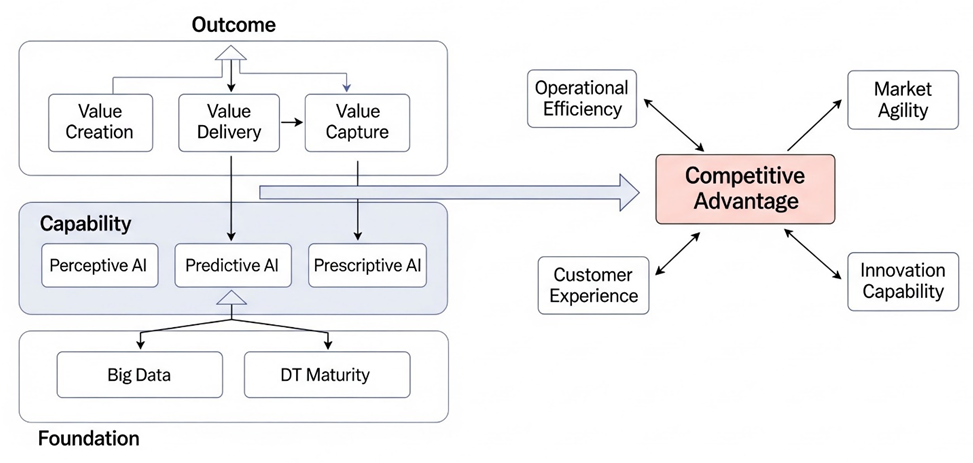
• Theoretical Contribution: The proposed paper will offer a coherent conceptual framework to AI infused Business Model Innovation and provide a solution to the perennial problem of fragmentation due to the combination of technological, data, and organizational aspects into a unified structure [26]. It contributes to the development of the BMI theory by demonstrating that AI as one of the key dynamic capabilities can lead to value discovery and value realization in novel business models, which is one of the most crucial demands of the innovation in the modern realm of digital servitization [27]. • Practical Contribution: The review presents a practical guide to the business leaders and top management. It provides practical information on how to align the digital strategy with organizational change and how to build the AI related capabilities to achieve the competitive edge in the long term [28]. Besides, it focuses on the significance of ethical standards, contributing to Corporate Digital Responsibility to make AI powered innovation profitable yet socially responsible [23] (Figure 1).
Background and Theoretical Foundations
In order to explore the process of modern business model innovation in detail, a concise and clear theoretical framework should be made. The section is a methodological discussion of the elements of the business model in the core, the strategic role of Big Data and digital transformation, and the different ways in which advanced technologies impact organizations nowadays, which will be used based on the current research since 2020.
Business Model Concepts: Value Creation, Value Delivery, and Value Capture
A business model is a blueprint of an organization, which describes the way in which the organization creates and maintains value to the stakeholders. A business model is fundamentally founded upon three interdependent elements namely value creation, value delivery, and value capture [29]. Although these basic elements have not been altered by the digital age, the processes and resources that contributed to them have been greatly changed by the latter.
Value Creation in the Digital Era: Value creation means coming up with the essence of the product or service being offered and the structures that enable it. Value creation in the digital era can no longer be a fixed process but it is a very dynamic and data driven cycle. One of them is the question of personalization and relevance. Recent technologies can help companies to study heavy amounts of data to grasp customer backgrounds and foresee personal necessities with a precision never seen before [21]. This means that the companies cease to be generic about what they offer but can now offer customized value propositions at the right time creating a distinct market niche [29]. These technologies have capabilities of perception and predictability which are critical as it allows firms to foresee demand and even, through the use of continuous digital feedback, to create value with customers through the process of constant renewal [29].
Moreover, advanced technologies enable the formation of completely new types of value that were not technologically possible before. To illustrate, in the industrial setting, they facilitate circular business models through optimal resource consumption and facilitating the transformation of selling products to performance-based services [21]. This shift alters the essence of the value proposition which is a tangible product to a data enhanced service which creates both an economic and sustainability value at the same time. In such a way, the creation of value in the digital era is determined not just in its quality of the product but in the smartness and flexibility in the offering itself.
Value Delivery through Digital Transformation: The value delivery can be seen as the operational architecture of the firm such as channels, distribution networks and production systems which are employed to deliver the value that has been created to the final user. This process is being directly redefined in the digital age by Digital Transformation (DT) programs, the goal of which is to streamline processes and increase reach [2].
DT enables the provision of values at high speed via change of siloed, sequential operation chains to flexible, interconnected and responsive digital ecosystems. The secret lies in the utilization of new technologies, which will allow optimizing processes, such as the supply chain management (SCM) through the use of predictive analytics and mechanism learning [18]. The strategy ensures that the rate of providing goods and services is accelerated, and with the low error margin and efficiency in resource consumption, which is often referred to as intelligent operations [29].
Besides improved efficiency, the redesign value delivery mechanism also opens the market access to uniqueness. As an example, global management consulting firms have adapted their value delivery by discarding the traditional face to face consultancy services to the new advanced, technology-based results and digital properties. The strategy enhances the area of coverage and reduces the physical presence [24]. Such developments demonstrate that DT, as the key to conducting business in value provision, allows companies to surpass the geographical and channel limits of the previous century, which is crucial to achieving competitive edge in the digital world globalization [25].
Value Capture via New Revenue Streams: Value capture is the processes by which a company transforms its value proposition into revenue streams, which are profitable to the firm, such as pricing strategy, cost structure, and target market segments. Business model innovation with AI fundamentally changes the way value is captured by enabling new and flexible and data driven revenue models [29].
Old methods of business which are usually one-off sales are slowly being run out by subscription based, usage based or pay as you perform methods, which is enabled by technologies that can accurately track and forecast usage. The combination of AI and Big Data facilitates the high order dynamic pricing approaches that maximize revenues in real time, based on the responses to the demand in the market, the competitors prices, and inventory status [29]. Moreover, such optimization can be used to minimize the operational expenses, such as more effective management of resources or automation of processes, increasing the margin and increasing the effectiveness of value capture.
The online value re capture means in brief that firms can form and utilize emerging revenue streams that were formerly non accessible and transition to variable, data optimizing business models.
Big Data and Digital Transformation
The business model innovation discussion cannot be complete without discussing two of its essential enablers, namely, Big Data, which is the raw material of what is packed into the insight, and Digital Transformation, which is the platform and organizational culture in which the said insights can be effectively implemented.
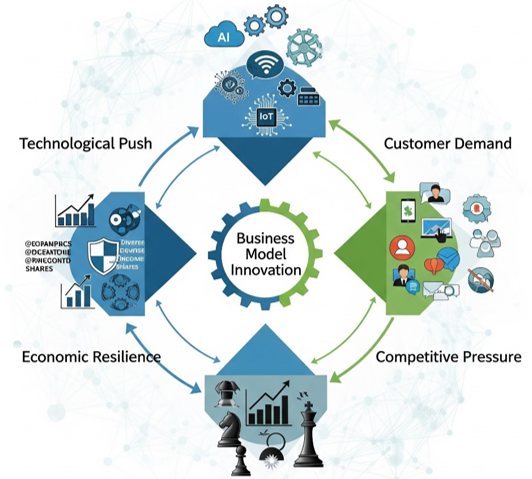
• Digital Transformation Drivers: Digital Transformation (DT) is a strategic reaction to an array of potent and interacting drivers needing organizational change. These drivers are not completely technological and they must encompass competition, economical and social forces. • Technological Push: The rapid advancement of AI, IoT, and cloud computing cannot be ignored as it has certain abilities. The prospect of realizing substantial efficiency and automation and forecasting perfection compels organizations to integrate them, or they will be left behind [30]. • Customer Expectation Shift: Customer expectations have changed, now people expect all the organizations to provide the same level of customer experience as the digital native companies do as they are used to the smooth and personalized customer experience [31]. This compels the companies to encompass the latest data analytics within their customer-facing platforms to improve the interaction and deepen the bonds [21]. • Competitive Pressure: Digital transformation is also a reaction to the disruptive business models threat. Cases of firms that have managed to revolutionize industries like transportation and music prove that business models that have been enabled by technology can displace the old markets in a short period of time [14]. This poses a great need to innovate and transform among organizations to stay competitive just because they need to [25]. • Economic Resilience: Events occurring in the world, such as the pandemic, enhanced the necessity to create resilient, agile, and digitally enabled supply chains and models of operation within organizations. DT is becoming a prominent mechanism of attaining long term organizational and economic stability [7].
Digital transformation, however, can be successful only with proper management. Studies have indicated that inadequately implemented DT strategies, especially those that do not consider flexibility of the organization or culture change tend to fail and thus project is abandoned and key stakeholders lose trust [32]. This is an important reflection that digital transformation is not only a technological issue but people and strategy challenge (Figure 2).
Data as a Strategic Resource: In the digital economy, information has turned out to be a strategic asset and one of the most important non-financial resources to any organization. It has its worth in the fact that it can help in sophisticated analytics and help to minimize uncertainty in strategic and operational decision making. The large size and speed of the data that is being generated today necessitates the use of specialized computational capabilities in order to effectively handle such data and this proves that the old methods of data management are no longer effective. The idea of data being a strategic asset is the main theme of the literature surrounding digital strategy. It has various implication consequences: • Data as Competitive Uniqueness: Data with proprietary and high quality, on which advanced analytics are run, can be copied by other competitors with great difficulty. It is what provides it with a unique and long-term competitive edge beyond just technological hardware [20]. • Data Allows Accuracy and Optimization: The accuracy of the prediction of advanced analytics depends on the quality and amount of data on which it works. Data can be better utilized in successful organizations to help the organization to achieve optimality in demand forecasting, risk response and resource allocation hence, the structural efficiency gains are sustainable [19]. • Data Requires Strategy: To use data as strategic asset, there should be a very high standard of governance structures and integrity. Such problems as data privacy, their ownership, and data integrity must be addressed on the executive level, where the role of such a position as a Chief Data Officer tends to ensure that data is used in accordance with the law, ethics and realistically to generate business value [23].
To conclude, the strategic objective of digital transformation is the establishment of the ability to make effective use of big data and analytics within the organization. It is the core of any AI based business model innovation.
Role of AI in Modern Organizations
Artificial intelligence is the driving force of the digitally transformed organization, both operational and strategic. Its effects spilt over the entire value chain and support three significant functions that are central to the modern enterprise.
Automation: Reconfiguring the Operational Core: There is automation powered by AI, that is, the replacement or addition of human labor by smart arrangements and reorganization of the original nature of organization. Under modern automation, the clerical jobs are not only confined to the routine clerical work but also include cognitive automation that encompasses intricate decisions through the use of acquired rules and patterns that use AI [18]. • Impact on Production and Service: AI replaces how production schedules and quality is planned as well as how robots are controlled in the manufacturing sector. It finds application in the service industries to aid in customer service via highly elaborate chatbots, back- office tasks, and compliance inspections and results in substantial lead times reductions and cost savings. • Human Resources redistribution: this alteration of the work completion is among the key aspects of moving the industry to Industry 4.0, in this scenario, AI based systems will take up a significant portion of the labour force. This means that human resources will be able to work on strategic, creative and interpersonal things, which underscores the growing significance of human resource management in the contemporary digital age [33].
Optimization: Continuous Improvement and Efficiency: The use of AI based optimization is not similar to automation as it aims at constantly adjusting processes and results to the most optimal performance under the existing conditions. Machine learning and deep learning algorithms are tools created to find the best solutions to a complex and high dimensional environment [5].
Operation Optimization: It manifests itself through real time dynamic pricing, predictive maintenance schedules in which potential equipment failures are forecasted to reduce the downtime, and very efficient energy management systems [29]. AI can help organizations optimize resource usage, which is a major profitability force in the digital economy, by offering real time information and changing the operational parameters [27].
Financial and Risk Optimization: AI is also an important tool in optimizing risk management, fraud detection, and financial modelling. Through the analysis of massive data points related to finances in a short period, AI models are capable of creating abnormalities and forecasting market trends better than conventional statistical procedures and assist in preserving the financial stability of the firm [11].
Strategic Decision Support: Intelligence for Leadership: On the top tier, AI is very relevant in Strategic Decision Support. This entails predictive and prescriptive functionalities to inform, validate as well as guide a decision at the executive level and directly link Big Data to business strategy [13]. • Market and Competitive Intelligence: AI enables better competitive intelligence and monitoring and forecasting actions and market trends of the competition. The reading of massive amounts of external data enables AI to provide companies with a clear picture of what is going on in the environment that enables companies to become more dynamic and operate more decisively [34]. • Strategic Alignment and Goal Setting: The AI driven analytics can pre analyse the feasibility of any strategic decisions, such as new market entry or mergers and acquisitions, and spend a lot in them. Such look into the future enables the leadership to match organizational strengths, such as building new skills with long term strategic outcomes and compare the performance to the metrics that are applicable in the digital era [35]. • Future Research Recommendation: The strategic significance of AI is discussed by the academic community, and a targeted research agenda should be created on how to incorporate AI into business and IT strategies to create greater business value. This underscores the AI role in every strategy planning in future [24].
To conclude, AI is changing the contemporary organization at three levels: it is automating operational level tasks, continually optimizing processes operating at a system level, and leading strategy at the executive level. A combination of these functions directly facilitates AI driven business model innovation, which is explained in the sections below.
Literature Review
The scholarly landscape of the digital transformation of business has developed at a fast pace, changing the focus of the theoretical discourse of disruption to the empirical research of integrated strategies in the field of technology. The given review dwells on the post 2020 research, wherein the central theoretical premises underpinning the proposed Conceptual Framework of AI Infused Business Model Innovation (AI BMI) can be outlined. Analyzing the evolution of BMI, the purpose of AI, the strategic importance of Big Data, and the organizational environment offered by Digital Transformation, this section creates the state of knowledge and identifies the existing gaps in the theoretical knowledge.
Evolution of Business Model Innovation (BMI)
Business Model Innovation (BMI) has long been a strategic move beyond mere product or process enhancement, and it is an inherent change in the way organizations create, deliver and capture value [12]. One of the characteristics of BMI in the post 2020 environment is its strong connection with digital technologies [13]. It has been found out that BMI is now not an ad hoc or a planned strategic decision; it has become an ongoing and critical organizational ability, required to remain competitive in the current digital discontinuity [32].
Digitalization as a Mandate for BMI: The greatest change in recent studies is the perception that the Digital Transformation (DT) can be an overwhelming force behind Business Model Innovation [14]. According to the existing texts, unlike in the previous ones where technology was regarded as a complementary factor, the digital layer is the new position where effective business models need to be built. As can be observed, based on the literature about DT and business performance, digitalization yields the highest value when it results in the BMI [35].
Since organizations must redesign their operational and strategic tendencies in a direction that can be utilized to create value digitally, they must re-plan the whole business model, in essence. Devoid of such extensive reconfiguration, technological investments generate only marginal and short-term effectiveness of gains, unable to gain competitive advantage on a sustainable basis [9]. This is particularly an urgent need of legacy companies and those in the more traditionally conservative industries, including the banking sector, where DT has been an immense disruptor of existing value chains. In this respect, it requires constant BMI that incorporates a new feature such as FinTech and Blockchain to stay competitive and relevant [11].
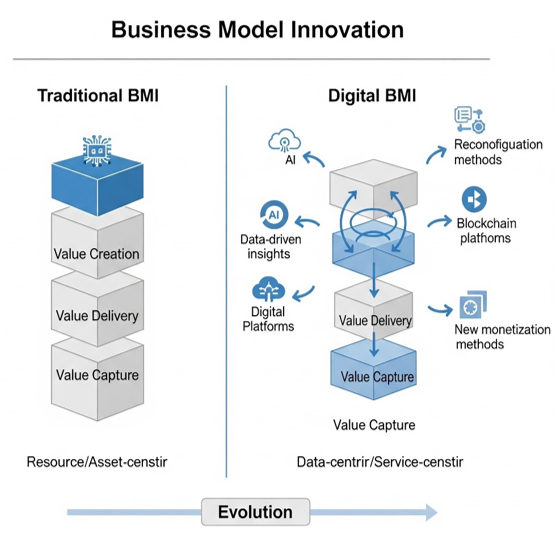
The Shift to Data Driven and Service Oriented Models: Business Model Innovation in the digital era is a structural change in favor of two dominant archetypes the data driven model and the digital servitization model. The data driven model is premised on the unremitting collection and processing of big data to generate and deliver the most individual value. According to studies, the strategy leads to some of the most sustainable forms of competitive advantage [20]. The topic of research emphasizes that the effectiveness of such type of BMI is in the ability of an organization to integrate strategic data accumulation and network effects creation into a self-sustaining loop, which is difficult to be repeated by the competitors [20].
Another significant trend in BMI, especially prevalent in the industrial setting, is the digital servitization model, i.e., a transition to selling a product as an item to selling an outcome or a service as an ability [27]. Predictive maintenance and remote optimization technologies can help the firms to offer uptime as a service or performance as a service, which radically changes the value proposition, revenue model, and customer relationship. In order to implement this model, it will be necessary to reconstruct the operational processes and the manner in which the firm treats its physical resources, which is an example of a complex and systemic type of business model innovation [27] (Figure 3).
AI Driven Business Model Innovation
The core of modern Business Model Innovation is the strategic utilization of Artificial Intelligence that serves as a motor that transforms the digital strategy into the quantifiable competitive advantage. According to the literature, AI driven BMI is defined as the capacity to change the organizational capabilities, and improve the process by which value is created, delivered and captured.
AI Capabilities and Value Reconfiguration: The three primary capabilities, namely, perceptive, predictive, and prescriptive, are the most articulate ways in which AI can be considered contributing to modern business model innovation [27].
These capabilities are in line with the key elements of the business model: • Perceptive Capacity (Value Creation): AI can identify and define real time information, and therefore the organizations can act immediately on demand and react to market changes. This helps to develop highly relevant, hyper personalized value propositions that are dynamic as opposed to being static [21]. In marketing, e.g. this is converted into the datafication of customer relationships, where AI is capable of analyzing preferences and intentions to provide highly targeted engagement [10]. • Predictive Capacity (Value Delivery): Predictive AI is used to predict customer churn, market trends or equipment failures. These predictive insights allow companies to optimise on the provision of value in both proactive and resource optimal decisions thereby enhancing the operational efficiency and customer satisfaction [29]. • Prescriptive Capacity (Value Capture): On the upper end, AI systems are able to suggest or even take the most advantageous action. This functionality has a direct impact on value capture since it allows the implementation of dynamic pricing, automated financial risks management, and constant optimization of processes, which leads to the enhancement of profit margins and organizational resilience [11].
The Role of Top Management and Organizational Competencies: One of the key fields of study is the relationship of AI based business model innovation with the human aspect. Literature emphasizes that the organizational change must be equally important in context of the technological transformation, in terms of job and skills of top management. The achievement of AI BMI requires special top management skills to support the adoption and the proliferation of intelligent systems [34]. These are technical fluency to discern the strategies of AI, change management mentality as the way to surmount organizational resistance, and ethical foresight to make sure the implementation is responsible [34]. The studies of strategic management and AI point to the fact that the implementation of AI is successful in terms of the organizational environment and the possibility of the firm developing complementary capabilities, i.e. AI related competencies aligned with its strategic goals [24].
Big Data Analytics for Strategic Advantage
The critical precursor to AI is Big Data Analytics (BDA) as the process that links raw data to smart insights that can be transformed into business model innovation. The strategic value of this lies in its capability to derive high quality insights that help in supporting differentiated decision making throughout the organization.
BDA as a Source of Competitive Advantage: The studies prove that BDA capability is a pure source of competitive advantage, especially in the situation when it can be used to promote innovation and efficiency. BDA helps decrease risk where their uncertainty is subjected to high risk due to situations where such high levels of uncertainty would make them yield clearer outcomes and predictive modeling and organizations would be able to make strategic decisions that are surer and more certain [19]. This is highly expedited and is of vital importance especially when dealing with volatile scenarios such as the emerging markets where good analytic conduct is a must to implement an effective business management and positioning [36].
BDA and AI transform the pre-existing Business Intelligence not only into a descriptive system, which it is a tool that explains what has been developed, but also to a prescriptive system, which proposes what actions should be taken. This transformation is basically improving the strategic decision-making quality and speed. BDA for Operational and Managerial Insights: There is also a significant impact of BDA on the level of operations. The capability of giving comprehensive analytic understanding of what is going on in the organization enables it to ensure continuous process optimization, and resources are managed in a more efficient manner [29]. BDA provides the necessary inventory, logistics, and variability of demand in such aspects as the supply chain management. Combining such data and AI models, the whole chain will be streamlined to generate the maximum value [18].
Besides, BDA enhances the performance of the manager because it offers evidence to make a strategic decision and to assess the success of digital efforts in relation to business performance [37]. This evidence-based strategy cuts down on the use of intuition, thus leading to stronger, scaled up, and more dependable company outputs.
Digital Transformation Frameworks
Digital Transformation (DT) lays the groundwork of AI based Business Model Innovation in the scale of the wider organizational environment. Literature stresses the importance of organization structures to handle the complicated and non-linear process of transformation.
From Adoption to Strategic Alignment: The first conceptualizations of Digital Transformation emphasized mostly the issue of technology adoption, as typically operating within models like the Technology Acceptance Model (TAM) and the Unified Theory of Acceptance and Use of Technology (UTAUT) to forecast customer acceptance [38]. The modern studies though suggest that digital transformation cannot be successful without more than a change in technology, but strategic alignment and redesign of internal processes is necessary. Contemporary DT models emphasize the fact that transformation should be comprehensive, with three main pillars that include strategy, people, and technology. Research has indicated that effective digital strategy in a firm can only be achieved when the technological vision is aligned with organizational culture, rules, and required workforce skills [12].
Decision Making Models for DT: The emergence of decision-making models to support digital transformation strategies has been considered in recent research, especially in its application in AI technologies [6]. The models have tended to use multi criteria decision making methodologies to assist organizations in the systematic assessment of the other factors affecting DT in the diverse spheres, such as the environment, the resources available, the working mechanisms, and expertise [6]. These models are of particular value to managers because they will make the general concept of digital transformation specific to definite set of actionable criteria and measurable metrics. This will ensure that the AI investments will lead to the actual and sustainable change of business model. The ultimate aim of these models is to complete the organizational digital transformation more expeditiously and make it lasting and productive in the long term [5].
Integration of AI, Big Data & Digital Transformation
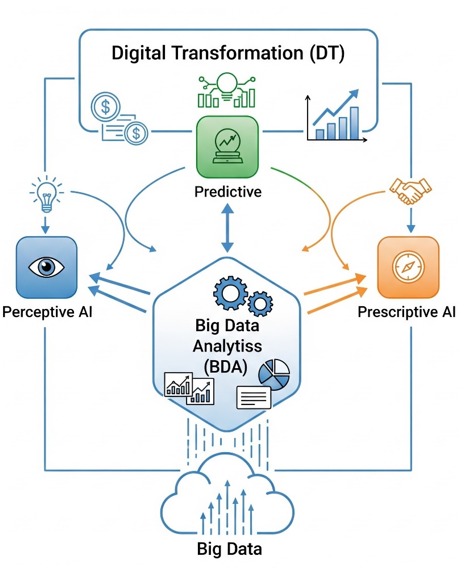
The most radically developed works focus on the unity between AI + Big Data + Digital Transformation as a single and identical force that awakens truly disruptive business value [2]. The strategy does not consider studying these aspects in isolation but in the comprehensive interplay of these components that create strong synergies that redefines the process of value generation and maintenance by the organizations.
Synergies for Superior Competitive Advantage: Combining such factors results in a competitive advantage, which is far more sustainable than the one, that can be achieved through the use of any technology only. The presence of this synergy has been studied within the context of the models such as the ABCD model that integrates AI, Blockchain, Cloud, and Data Analytics and that considers their intersection to be the source of the new and disruptive business value propositions in the working environment [10]. Literature is extremely explicit in making the difference between organizations that are simply digitized, that is, are using digital tools and organizations that are digitally mature that is, implementing digital logic to re write their business models. It is this increased maturity that has been demonstrated to positively influence the long-term sustainable development in a direct manner [14].
This combined practice is also the core of more specialized types of Business Model Innovation. Indicatively, practitioners have demonstrated that AI can be used with the Internet of Things to facilitate real time data streams to support intelligent and timely decision-making processes in various industries, which are the basis of AI driven BMI [21]. Consequently, this convergence has emerged as a part of future study focus, and researchers have been urging together conceptual models that explicitly relate integrated digital technologies to explicit routes towards the development and maintenance of competitive advantage [39] (Figure 4).
Gaps Identified
Although the research on the topic of post 2020 is profound and extensive, there are still several gaps in the field that can be addressed by creating the proposed Conceptual Framework.
First, AI driven Business Model Innovation is conceptualized in a highly fragmented way. There is no cohesive and unified framework that integrates AI capabilities perceptive, predictive, and prescriptive against the fundamental elements of the business model value creation, value delivery, and value capture [29]. A lot of current research focuses on the single aspects of BMI, including the use of technology or data analytics, without providing the comprehensive strategic pathway that would allow practitioners to view AI enabled business models and manage them in an effective manner [24]. Secondly, organizational and ethical integration is not given much attention. Even though the role of ethical AI is a commonly accepted idea, there is a lack of frameworks and empirical evidence that evaluates the effectiveness of Corporate Digital Responsibility (CDR) and ethics by designs practices in AI BMI initiatives in real life settings [23]. On the same note, the human aspect of change especially the changing competencies that the top management needs in order to effectively guide and scale AI powered change have not been adequately investigated using primary empirical research and are also too theoretical in the current literature [40].
Third, it is strongly required that more empirical evidence is given showing causality and contextual relevance. Most of the available research shows that AI BMI is related to competitive performance, although limited research rigorously proves causal correlation with sustainable competitive advantage [25].
Such disparity is particularly noticeable in multitalented and underrepresented backgrounds, including upcoming marketplaces and industry specific domains like tourism, where firms experience unique structural, cultural, and economic limitations in utilizing AI in digital transformation and BMI [5]. The lack of such contextual analysis restricts the generalizability as well as the applicability of existing models.
These gaps, together, demonstrate the urgency of the discussed Conceptual Framework that should shed more light on the structure of the research and offer practical strategy instructions to proceed with academic studies and effective corporate application of AI Infused Business Model Innovation.
Conceptual Framework for AI Infused Business Model Innovation
The main implication of this review is the creation of a Conceptual Framework of AI Infused Business Model Innovation (AI BMI) which effectively deals with the discontinuity currently inherent in the literature. The framework brings together the foundational layer, the capability layer and the outcome layer that are identified in the post 2020 research and then transports them into a consistent and valuable model. In that way, it explains the specifics of the functioning of Artificial Intelligence as the driver of business model change in a succinct, well-structured manner. Most importantly, the framework describes how to transform digital investments into a sustainable competitive advantage, giving both the researchers and professionals the organized viewpoint on the way to understand and adopt the AI powered business model innovation. Proposed Review Framework: The Three Integrated Layers The proposed model can be split into three layers in the form of the interwoven matter to depict the logical order that should be adhered to in order to attain successful AI Infused Business Model Innovation: the Foundation Layer, the Capability Layer, and the Resulting Layer [29]. One layer supports the other, i.e. the strength and effectiveness of the entire structure depends on the proper development of the base elements.
The Foundation Layer: Enablers of AI BMI: There are two important foundations behind any successful AI BMI program, namely, Big Data Infrastructure and Analytics (BDA) and Digital Transformation (DT) maturity. Such pillars are not passive conditions, they are dynamic, intensity consuming, long term organizational capabilities.
AI is based on technical and strategic background of the Big Data Infrastructure and Analytics (BDA). The performance of AI systems is very data sensitive and quality, quantity, and accessibility of the data consumed by an AI system determines its functionality. This means that companies must possess deployed infrastructure with high data volumes, real time broadband and high levels of variety that consist of structured and semi structured besides unstructured data. Besides the technical layer, this skill requires a strategic investment in the fact that data is the primary organizational resource, and the use of BDA to process raw information into actionable knowledge [29]. Devoid of such grounding, AI systems are used as black box instruments that can no longer provide timely, credible, or dispassionate outputs, and thus restrict their capacity to lead to the relevant business model innovation. This is because a robust database is able to provide optimization and efficiency gains throughout the value chain, which are the primary drivers of economic value in the digital economy [19].
Digital Transformation maturity is the willingness of the organization to implement and implement AI solutions successfully. A high DT maturity implies that digital technologies are integrated in business functions, operational processes have gone digital and the organizational culture is agile, customer oriented, and constantly adaptable [12]. Notably, the workforce readiness, such as the digital skills and competence to work with intelligent systems and meet the augmented complexity of digitally enabled value chains, is also a part of DT maturity. In this regard, DT offers the organizational context within which AI capabilities can be transcended to be a single use technological application and be embedded into daily activities. It is the key catalyst that transforms the technological capability of AI into long term and system wide innovation and business model change [9]. The Capability Layer: AI Mechanisms for Transformation: Capability Layer is the core of the framework, and a consistent digital base is transformed into business model change in action. Three main AI capabilities in the literature on technological capacity and servitization characterize it [27]. The concept of perceptive capacity is a feature of the AI system that is capable of sensing, monitoring, and interpreting real time internal and external environments. This potential is enabled by Big Data generated by sources including IoT devices, social media feeds, market intelligence and internal information systems, enabling firms to shift off a retrospective analysis into real time situational awareness.
In the framework of BMI, perceptive capacity helps to enhance Value Creation directly by responding quickly to customer cues and hyper personalized, context aware offerings [21]. Predictive capacity is the capability of the AI system to more or less know what will happen in the future based on the past trends and recent data, which is the central point of the Machines Learning and Deep Learning applications. The capability assists in demand prediction, failure prediction, financial risk analysis and assessment of strategic options [5].
Predictive capacity is also necessary in BMI terms to optimization of Value Delivery because it enables supply chains, resource allocation and inventory systems to be modified in advance leading to significant enhancements in efficiency and agility within organizations [18]. Prescriptive capacity is the highest type of AI capacity, and it allows the systems to predict outcomes but also to suggest or independently perform the most correct actions. This capability is what causes automation and constant optimization of the business model by not asking the question of what will happen but asking what should be done. Here can be the automatic diversion of the logistics according to the anticipated disruption or in a real time alterations in prices based on anticipated demand elasticity both of which directly raise the Value Capture efficiency as well as the profit margins [29].
The Outcome Layer: Business Model Reconfiguration: The ultimate result of the successful execution of the Capability Layer leads to the transformation of the basic business model units of Value Creation, Value Delivery and Value Capture in such a way that results in a sustainable competitive advantage when taken collectively.
Value Creation is reformulated because AI BMI converts the value offering into an active, adaptive and highly personalized value offering. Through advancement of AI and its insightful and foresight capabilities, companies constantly refine what they offer, basing on the present customer signals and estimated needs, and this method works wonders in boosting a completely customer mindset, however, not a blanket solution [41].
The central part of the operations is restructured so as to turn Value Delivery and render automation, optimization and resilience typical of it. Intelligent operations via AI imply that companies will acquire high efficiency levels, scalability, and trustworthiness where not worth going will be provided continuously of a lower value than that of rivals or in high quality [27].
Value Capture is re-configured as well because AI BMI may enable the shift towards data based and service- based forms of revenue logics. The subscription, dynamic pricing, and cost optimization systems with the assistance of AI analytics create systems that are more adaptable, long lasting, and frequently recurring revenues, increasing financial outcomes and sustainability [11].
Mechanisms for Competitive Advantage
A combination of four mechanisms used in attaining the synergies of the three layers creates sustainable competitive advantage. This is not an isolated but a systemic historical situation that corresponds to long term sustainability which is enabled and supported by the AI BMI framework.
Operational Efficiency: The nearest and measurable competitive advantage is Operational Efficiency that is spurred by the prescriptive and automation aspects of AI as its main engine. The level of accuracy and quickness that is incomparable to the conventional manual system is achieved because AI continuously enhances the inner operations, including supply chains, production, customer service, and back-office services [18]. This translates into lean cost structure and the shorter time to market and gives firms a tangible performance advantage [29]. In simple words, AI changes a cost management a dynamic and data-based practice and, therefore, a major triggers of Business performance enhancement by Business Model Innovation [35].
Market Agility and Resilience: With the knowledge and foreseeing ability of AI comes Market Agility, which is the ability of the company to sense as fast as possible, understand and respond to the external market modifications, rivalries or changing client needs [20]. The use of AI BMI improves organizational resilience by providing insights and vision to operate in uncertain conditions to ensure the business model also stays viable even when there are major disruptions or digital transformation [32]. Such a fast adaptation ability makes the firm a moving goal to the competitors and makes the competitive advantage of the firm sustainable over time [8]. Superior Customer Experience: AI is changing the interaction between the company and clients radically. Through AI, a greater customer experience can be established using Big Data to interpret context and predict tastes, services, and communication, which is hyper personalized. Such a focus on engagement and quality of relationships encourages stronger customer loyalty and transforms transactional relationships into long term relationships and increases customer lifetime value of the customer base [21]. The literature in the service sector indicates that there is a direct relationship between digital transformation, entrepreneurial orientation and competitive advantage in which customer focus is the most important mediator [25].
Innovation Capability (Value Discovery): A natural innovation capability is the long-term competitive advantage. AI BMI raises this potential to the data based and continuous innovation process. AI facilitates the discovery of values by recognizing unmet needs and market opportunities by identifying patterns in Big Data to offer evidence to support the business model concepts of a new business venture [27]. This continuous data proven business model minimizes the danger and fast track to market of innovations, providing the company with an unending driver of development and reinvention, a must have of long-term entrepreneurial achievement [13].
Comparative Analysis of Models in Recent Literature
Both the necessity and the construction of this coherent framework is justified by the comparison of post 2020 literature that is characterized by the overwhelming preference towards the holistic frameworks. • Focus on Technological Convergence: Frameworks like the ABCD model (AI, Blockchain, Cloud, Data Analytics) have argued that the competitive edge of a specific area of focus is achieved by combining numerous digital technologies, as opposed to the single use of AI. This reinforced the synergies of Big Data, AI, and Digital Transformation proposed framework as an integrated need to create disruptive value [2]. • Managerial and Human Centric Focus: The emphasis on organizational and human factors is supported by research on the competencies of top management. The success of AI BMI will require the leaders to possess the capability to lead the AI adoption process by demonstrating that the change is not merely a technical issue but a managerial issue [34]. The decision making models that will facilitate the process of guiding digital transformation further explain the necessity of an organized approach to managing both the human and strategic factors [6]. • Strategic alignment and sustainability: in the studies of Circular Business Model Innovation, AI capabilities could be used to support environmental and sustainability goals. This study, by facilitating resource optimized model of services and other new types of value, proves that AI BMI is a multidimensional strategic tool that is improving financial performance and corporate responsibility [27]. • Addressing the Fragmentation Gap: The systematic reviews of the literature on the digital transformation of BMI reveal that the systematic syntheses of the literature are still in demand. This gap is eliminated in the proposed framework as it goes beyond the single purpose analysis of the separate applications of AI, providing a consistent multi layered framework that is applicable in both academic research and practice [42].
Discussion
The literature synthesis of post 2020 and the suggested Conceptual Framework of AI Infused Business Model Innovation (AI BMI) provide an essential background of the contemporary picture of the digital strategy. This segment examines the strategic implication of the framework, compares the results with historical views and offers practical recommendations to managers and policy makers in an effective manner of fulfilling the aim of this review.
Interpretation of Economic Drivers and Key Trends
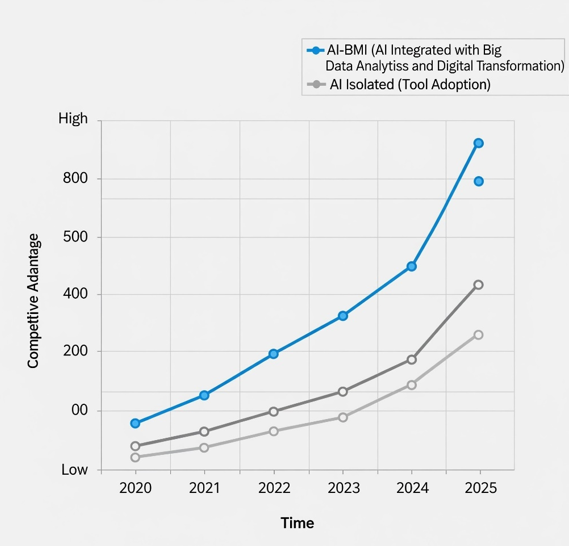
The most crucial observation made in this review is that moving past fundamental digitalization and towards functioning at the next stage of systemic AI Infused Business Model Innovation (AI BMI) is the key driver of contemporary competitive advantage. This is a move towards an additive strategy of an added tool being adopted, and a transformative strategy of re-engineering the business logic. It has been demonstrated in the literature that the long-term benefit obtained not out of AI implementation, but the successful implementation of AI, Big Data, and Digital Transformation maturity is achieved through the collaboration of all three factors [24].
Data as the Ultimate Economic Moat: The economic value of big data can be regarded as forming an economic moat which is the barrier which safeguards the competitive stance of the firm. This strength is based on two things. To start with, the data itself is an inimitable and difficult to copy resource: proprietary, real-time customer and operational data used to train sophisticated AI models is highly incomparable to the one created by rivals, particularly when combined with the network effects created by a digital platform [20]. This produces a flywheel of benefit that reinforces itself and is based on data. Second, the sustained optimization and automation brought about by the prescriptive feature of AI results in a sustainable structural cost reduction and efficiency gains [29]. Twin Value Creation of high quality and lower costs, combined with operational strengths, becomes possible, making it difficult to be matched by non-digitally mature companies [43].
The Shift from Efficiency to Strategic Resilience: One of them is the changing perception of the position of AI, as it is not about providing short term benefits, but about creating long term Strategic Resilience, or Market Agility. As provided in the literature, the current issues, including those that disturb global supply chains and the severe and fast changing competitive environment, demand a highly agile organization [32]. It is the machine predictive and perceptive intelligence that will provide us with the vision of responding and foreseeing the threats in the moment. It is an economic asset on a global scale even more than the issue of cost savings because it is the ability to project data-based forecasts (which is possible in the time of turmoil) [20]. It enables businesses to migrate out of the way and be active in the establishment of their market space.
The Emergence of Ethical Value as an Asset: The other economic trend that should be mentioned is that the significance of the ethical and responsible adoption of AI grows. The review indicates that there is an increasing trend in Corporate Digital Responsibility (CDR) and legal regulations in AI use [38]. This is not only a matter of compliance but now it is a competitive advantage. In case our customers are characterized with low trust in the market, organizations implementing ethics by design into their AI BMI policies will receive a competitive edge of the benefit of trust which strengthens the brand image and consumer base. Understanding that ethical governance can be managed by actively governing data privacy issues and algorithmic bias can help mitigate the risks in the long run and transform ethical governance into a sustainable value capture tool [23] (Figure 5).
Comparison with Earlier Studies and Theoretical Alignment
The findings of this review of AI BMI confirm and close in on past theoretical frameworks and expand the usage of towards a variety of areas. They demonstrate the contact between AI, Big Data, and Digital Transformation in a more methodical manner that can be employed to promote innovation in business models and is thus more combined and operative to implement than previous models.
Refinement of Innovation and Strategy Theories: The traditional innovation theories that focused on bettering products and processes have been replaced by the notion of a holistic Business Model Innovation (BMI). The modern literature demonstrates that reinventing the main economic rationale of a firm is the most powerful type of innovation that is not only possible but also inevitable due to the digital technologies [14]. This point of view builds the Resource Based View (RBV) to make AI capabilities and Big Data strategic and inimitable resources that create competitive advantage and outweigh the role of traditional physical assets and generic IT capabilities [33].
Besides, the results give a picture of the Digital Transformation (DT) process. Unlike previous models, including TAM and UTAUT, which were concerned with the personal technology acceptance, the recent studies are based on the strategic fit and the organizational capacity. DT is now being acknowledged as a complicated organizational and cultural change that needs the conscious stewardship of the top leadership that has the right technical expertise and ability to plan [44]. This is a hypothetical maturation of conceiving the complexity of introducing new digital logic to the broad enterprise.
Validation of Convergence Models: The emphasis on the concept of implementing AI, Big Data, and Digital Transformation (DT) of the framework is well justified by the current models of converging technology, including the ABCD framework [10]. This convergence produces genuinely disruptive business value as it has the capability to combine various technologies and multiply the effects of one another [2]. Instead of considering AI in a vacuum, the literature points to the role of considering it as a component of a digital ecosystem that encompasses the Industrial Internet of Things (IoT) and Blockchain and focuses on the compounded impact of technological synergy [21].
Managerial Insights
The literature review and the recommended Conceptual Framework are firm and practical to managers managing AI BMI programs. The recommendations reveal the necessity of strategic and organizational changes and do not emphasize only on technical investments.
Strategic Focus on Value Mechanisms: Managers are advised to view AI investment as a business overhaul of the three core value mechanisms of the business model: • Value Creation: Use AI to support hyper personalization and discover new and data driven value propositions, make offerings dynamic and context sensitive [29]. • Value Delivery: With AI, intelligent operations and less wasteful processes can be propagated throughout the whole value chain, including supply chain management and logistics, ensuring cost effectiveness and operational agility [18]. • Value Capture: Redesign value models by making them data driven and flexible e.g. use based pricing or predictive maintenance deals to improve long term profitability and stabilize the revenue streams [11].
Organizational and Competency Development: It is a managerial role to transform. There are three areas that the executives should prioritize on: • Develop Digital Competencies: Focus on the growth of AI and Big Data Analytics (BDA) at the management level. Digital transformation success relies not just on the recruitment of technical personnel but also on the up skilling of the organization to have a data first culture, without which business intelligence is virtually impossible [38]. • Lead with Ethical Governance: Lead as an ethical use of AI as a strategic initiative. To maintain the trust of the stakeholders, minimize the risks and remain aligned to the evolving legislation, it is essential that the Corporate Digital Responsibility (CDR) policies are established in an understanding manner [23]. • Adopt Ecosystem Thinking: Learn to realize the fact that sustainable competitive advantage is increasingly dependent on how the firm can engage its partners and customers through open innovation. They ought to organize and harmonize these external relations and data flows with the help of AI [27].
Policy Implications
Reviewing structural findings can provide a clear understanding of the way governments and regulatory bodies should build inclusive and competitive digital economies. • Normalize Data Infrastructure and Access: Policymakers should aim at establishing national digital infrastructure capable of allowing access to quality data and cloud facilities by all businesses particularly, the SMEs, to apply AI BMI [39]. With no powerful and accessible database, the advantages of the economy are skewed in favor of the largest, data consuming firms.
• Invest in the AI Workforce: To address the highly significant AI skills deficit, which in turn could kill economic growth and digital maturity, the governments must commence a comprehensive education and training program [28]. This capital is a social good, which can be used to transition to Industry 4.0 work patterns. • Develop Coherent and Multinational AI Regulation: Because digital transformation is transcendental, the regulator should contemplate developing consistent, progressive law on AI in business [7]. This is the strike between legislation on data privacy and determining the responsibility of autonomous AI decisions, which are essential in enlisting trust of individuals and facilitating international trade [29].
Future Research Directions
The emergence of the Conceptual Framework of the AI Infused Business Model Innovation (AIBMI) along with a critical analysis of the literature published beyond 2020 identify several gaps in the theoretical and empirical research that persist to this day. These gaps indicate that there is an interesting agenda to future research, which involves developing causal relationships, further refining and validating conceptual models, and studying the managerial and ethical aspects that are essential to the AI enabled organizational transformation.
Hybrid AI BMI Frameworks and Empirical Causality
In the future, studies should go beyond the correlational studies of AI adoption and emphasize on determining the empirical causality between AI capability implementation and achievement of sustainable competitive advantage [25]. This involves the creation and support of hybrid AI BMI models that will accurately capture and model the effects of multiple digital technologies on the fundamental elements of the business model.
Modeling Synergistic Effects: The main opportunity in the future of the study is to conduct an empirical study of the synergistic value of technological convergence, such as about the frameworks such as ABCD (AI, Blockchain, Cloud, and Data analytics) [10]. Researchers are encouraged to develop longitudinal research or stringent comparative studies to find out whether the simultaneous implementation of these technologies yields a significantly significant competitive edge as opposed to the implementation of the technologies individually [2]. Specifically, one of the research areas should be the best order of technology adoption like: firstly, should firms first acquire Big Data infrastructure and then use AI to optimize and then adopt Blockchain to gain trust or is it that this sequence is different in the industry context and a mature market. Such studies would provide valuable prescriptive advice to managers regarding the allocation of strategic resources and when to do it [6].
The Value of Prescriptive AI in BMI: Further studies must put more focus on the value created by Prescriptive AI, which is the latest stage of AI capability. Although the perceptive (sensing) and predictive (forecasting) functions are extensively researched, the prescriptive function that autonomously prescribes or implements the best actions is under researched [27]. The empirical research are required to quantify the exact gains in efficiency and profitability of the management of Value Delivery and Value Capture processes by prescriptive AI systems in contrast with human in the loop strategies.
This involves gauging the efficiency of real time pricing, automated supply chain changes, and real time risk control in various market environments [11]. This kind of evidence would help in informed decision making on the heavy investments needed to completely automate and optimize the core business processes [29].
Context Specific and Longitudinal Research
The relevance of the existing AI BMI studies is limited by the fact that the questions are focused on developed markets and large enterprises. Future research needs to expand their horizons to context-based studies, such as to include emerging markets, small and medium sized business and industry related circumstances, so that the insights and frameworks are as applicable as possible and as applicable as practical.
AI BMI in Emerging Markets: There is an urgent necessity to empirically test AI BMI structures in developing markets [36]. Research must take into account the unique infrastructural and organizational factors in these areas; reduced levels of digital transformations maturity, disjointed access to quality data, and lack of skilled talent [12]. Comparative studies may also look into how companies in the emerging markets manage to gain competitive advantage through AI despite these limitations, such as through low cost, high impact AI solutions or exploiting unique local sources of data. This kind of research would provide a more localized, international look at AI BMI and its role in sustainable economic growth [29].
Sector Specific Innovation Models
In spite of the fact that overarching principles were identified during this review, AI BMI solutions in various industries verticals require customization. Innovation models that are sector specific are to be the focus in future research:
- Circular Business Models: It is necessary to measure the environmental and economic benefits of AI oriented circular business models in the industries. The interaction between the predictive capabilities of AI, the data generated through IoT, and the sector specific dynamic capabilities should be studied to generate value in a digital servitization environment [27].
- Public Sector and Service Industries: The study should investigate the application of AI BMI to the fields that remain tourism and the administration of the state and should concentrate on the value creation as performed non profitably. Some of the important measures are the societal impact, citizen experience, and resource optimization within the regulatory constraint [45].
- Traditional Industries: Case studies need to be covered in detail on how traditional industrial companies can successfully implement AI BMI. The experience of the organizational and managerial difficulties during changing the products oriented to data driven service paradigms should be recorded in research and should serve as practical advice to other similar businesses [46].
Longitudinal Analysis of Competitive Advantage: Longitudinal studies following firms longer than five to ten years should be the most stringent research [20]. This strategy would be necessary to establish whether AI BMI has created a sustainable competitive advantage or provides a short-lived increase in efficiency only. These studies must be designed in the form of a mixed method, which will focus on quantitative indicators such as market share, profit margins, and R&D spending as well as qualitative data on the organizational culture, leadership continuity, and the emergence of AI capabilities [47]. This overall approach would offer sound empirical data to prove the main propositions of the AI BMI framework.
Managerial and Ethical Dimensions
Human and governance aspects of AI BMI remain incompletely investigated, which indicates the necessity of special research on ethical and responsible application. The gaps in research have to be closed by further studies on the impact that the leadership competencies, corporate digital responsibility (CDR) practices, and organizational culture can have on the successful and ethical implementation of AI into the business models. This will ensure that the AI BMI initiatives do not only result in the generation of performance, but also foster trust, fairness, and regulations.
Defining Managerial Competencies and Training Roadmaps: Future research should explain the significance of Top Management Competencies in the success of AI BMI [34]. This involves the development of empirically tested models of competencies that fit the C suite job, AI Workforce Roadmaps that fit specific industries [48]. The study of the most promising training and cultural interventions that can inculcate the data first mindset in the organizations should be conducted and the effectiveness of the interventions should be measured on the overall maturity of DT. The answer to this is to work on these human capital aspects in order to take advantage of AI in the strategic way and stay ahead of competition in the era of Industry 4.0 [49].
Ethical and Governance Frameworks: The development of effective Corporate Digital Responsibility (CDR) and Ethical Governance Frameworks that empirically will be tested is one of the research priorities [23]. Specifically, the researcher is expected to:
- Appreciate the Trust: Reconsider the research that offers an economic worth of perceived trust and ethics in the field of AI BMI, including establishing the impact of algorithmic transparency on customer loyalty, engagement, and willingness to pay [21].
- Develop Audit and Accountability Models: Design formal auditing mechanisms to ensure that AI systems that are being used in the context of BMI, e.g. dynamic pricing, hiring or operational optimization, adhere to ethical principles and legal requirements and map abstract principles onto practical accountability mechanisms [7].
- Explore Algorithmic bias: Discover how AI systems could unintentionally propagate or increase the already existing biases in the market, and offer both technical and managerial approaches to make AI BMI produce fair results in Value Creation and Value Delivery [23].
Through these major research priorities, hybrid modeling and empirical causality to localized and ethical governance, the scholarly community will be in a position to give the holistic, consistent advice that can enable the wide range, accountable implementation of AI Infused Business Model Innovation in the global system.
Conclusion
Artificial Intelligence (AI) has become the key driver of strategic change, and AI Infused Business Model Innovation (AI BMI) has become an indispensable need of the organizations intent on acquiring and maintaining competitive advantage in a world characterized by Big Data and ubiquitous Digital Transformation (DT) [29]. This is a literature review that covers the historical discontinuity in the literature by harmonizing the latest post 2020 studies and offers a single Conceptual Framework of AI BMI. The important point here is that AI BMI is not a technological adoption; it is a necessary, systematic re-invention of the basic economic logic of a company.
Summary of Major Insights and Framework Validation
The integration of research in the six sections above led to the creation of three legitimized knowledge that shapes the modern strategic environment: • AI BMI as a Multi Layered, Systemic Imperative: The paper validates the multi layered model of the Conceptual Framework. The Capability Layer is facilitated by a robust Foundation Layer, which is composed of a Big Data Infrastructure and mature and affordable DT, in terms of functionality and performance. This, further, propels the Outcome Layer, which reconfigures Value Creation, Delivery and Capture [27]. The results emphasize the fact that, unless the isolated AI projects are connected with the data strategy of the company and with the work on DT, they are not likely to translate into success, and the focus on the shift of AI as a technology issue to the role of an organizational challenge is necessary [32]. • Four Mechanisms of Sustainable Competitive Advantage: The survey designates four evidence-based mechanisms where AI BMI creates sustained competitive edge: Operational Efficiency, by means of never-ending algorithmic optimization; Market Agility, by prediction foresight; Superior Customer Experience, by hyper personalization; and improved Innovation Capability, by data driven value discovery [25]. Together, these mechanisms demonstrate that AI can provide a greater number of benefits in the form of efficiency and customer relationships and create additional opportunities to generate new revenues and expand [29]. • Governance and Ethics as Strategic Asset: In the study, the authors demonstrate that human and governance aspects are the key to strategic success. To achieve successful AI BMI, the most appropriate management skills are required to spearhead a change within the organization, and proactive Corporate Digital Responsibility (CDR). Ethical AI not only generates trust within the society, but it also turns the governance into an asset of strategic, non monetary value that will be more risk averse and more strengthening the long term brand value [50].
Strategic Importance and Implications for Practice
This review shows that the paradigm shift in the strategic context of organizations in the digital economy is the most significant: it is not whether or not to use AI but how to include it in an organized way as part of the very business model structure. The application of AI in an organization will need to be holistic and ought to incorporate technology, data infrastructure, organizational and governance capabilities and abilities. The companies which successfully have figured out this structural integration will be in a position to make AI more than a tool, a fundamental source of competitive advantage which will result in operational efficiencies, market agility, customer orientedness and continuous innovations.
The New Competitive Battleground: Data & Synergy: The environment of competition has virtually transformed the attitude of using on either physical assets or generic IT infrastructure as usage of data and technological synergy. Those companies that have been doing well are those that are able to combine proprietary Big Data with AI based platforms that exploit network effects. This transformation means that future investments will have to focus on the quality of the data, sound data management, and a harmony with AI with other supportive technologies like Blockchain and IoT. This kind of strategy will develop a strong economic moat, which will give the company an advantage that cannot easily be duplicated by other players. AI Infused Business Model Innovation (AI BMI) in this sense becomes the key channel to assist established companies to protect market share and disruptive start ups to scale intelligent and adaptive business models.
A Mandate for Organizational Re Platforming: To managers, this overview will provide a clear-cut answer organizational changes should be given the first priority before individual use of technology, and this should be supported by the proposed Conceptual Framework. There are three urgent steps involved: • Data Quality First: Quality data and more sophisticated Big Data Analytics (BDA) are the key components of any AI project. All AI projects at the downstream level rely on a data infrastructure base, so leaders should view data infrastructure as a strategic capital investment and not a regular operating cost. • Develop Managerial Competencies: AI literacy is a skill that executives must be ready to develop and pursue within the organization as a culture. The internal capability development is a structural necessity to resolve the talent gap to ensure the continued growth and facilitate the process of AI inspired change. • Redefine Value Capture: Organizations need to shift off of the old paradigms of transactional revenue models to dynamic and data driven service based models. Using AI to optimize and develop new revenue streams, managers can increase the financial durability and achieve the long term growth.
Policy Recommendations and Future Research Outlook
To policymakers, this review highlights that there is an urgent need to have organized, state based efforts to facilitate the implementation and expansion of AI BMI. The governments must devote more attention to the quick advancement of digital skills via specific educational programs and workforce training, to fill the talent gap which is necessary to prepare to Industry 4.0. Simultaneously, it is essential to create uniform and enforceable legal and ethical standards of AI to offer regulatory clarity, promote responsible investment, and guarantee citizens that the risks associated with algorithms include bias and abuse of data.
The Future Research Agenda and the Section 6 focuses on hybrid framework validation, context specific modeling (especially within emerging markets) and longitudinal research of competitive advantage. Further investigation in these fields will leave the field of in fragments and bring it under one, causal approach, providing practical advice that practitioners can use to bring AI BMI in success and sustainability.
In conclusion, the 21 st century strategic imperative is AI Infused Business Model Innovation. It is a progress which is inspired through the intelligent integration of information, technology and business capacity. The proposed model offers the conceptual insights and management course that organizations will be capable of working their way into digital disruption and transform it into a sustainable and self-perpetuating competitive advantage.
References
-
Omol EJ (2023) Organizational digital transformation from evolution to future trends.
-
Eboigbe JT (2023) Business intelligence transformation through AI and data analytics. Eng Sci Technol J 4(5).
-
Forradellas RFR, Gallastegui LMG (2021) Digital transformation and artificial intelligence applied to business: Legal regulations, economic impact and perspective. Laws 10(70).
-
Rane NL (2023) Enhancing customer loyalty through artificial intelligence, internet of things, and big data technologies improving customer satisfaction, engagement, relationship, and experience.
-
Shehadeh M (2023) Digital transformation and competitive advantage in the service sector: A moderated-mediation model.
-
Singh PK (2023) Digital transformation in supply chain management: Artificial intelligence and machine learning as catalysts for value creation. Int J Supply Chain Manag 12(6).
-
Sewpersadh NS (2023) Disruptive business value models in the digital era. J Innov Entrep 12(2).
-
Kuzior A (2021) Use of artificial intelligence in terms of open innovation process and management.
-
Lu H, Shaharudin MS (2024) Role of digital transformation for sustainable competitive advantage of SMEs: A systematic literature review. Cogent Bus Manag 11(1).
-
Winter J (2021) Digital business model innovation: Empirical insights into the drivers and value of artificial intelligence. Int J Comput Technol 21.
-
Abousaber I, Abdalla HF (2023) Review of using technologies of artificial intelligence in companies. Int J Commun Netw Inf Secur 15(1).
-
Alim I (2024) AI and blockchain integration: Driving strategic business advancements in the intelligent era.
-
Fernandez-Rovira C (2021) The digital transformation of business: Towards the datafication of the relationship with customers. Technol Forecast Soc Change 162.
-
Rane NL (2024) Artificial intelligence, machine learning, and deep learning for advanced business strategies: A review. Partners Univ Int Innov J 2(3).
-
Kitsios F, Kamariotou M (2021) Artificial intelligence and business strategy towards digital transformation: A research agenda. Sustainability 13(4).
-
Naimi-Sadigh A (2021) Digital transformation in the value chain disruption of banking services. J Knowl Econ.
-
Joel ES (2024) The impact of digital transformation on business development strategies: Trends, challenges, and opportunities analyzed. World J Adv Res Rev 21(3).
-
Shehadeh M (2023) Digital transformation and competitive advantage in the service sector: A moderated-mediation model.
-
Ahmed A (2021) Digital transformation and organizational operational decision making: A systematic review.
-
Knudsen ES (2023) Stability in turbulent times? The effect of digitalization on the sustainability of competitive advantage.
-
Bist AS (2022) Managing digital transformation in marketing: Fusion of traditional marketing and digital marketing. Int Trans Artif Intell 1(1).
-
Costa F (2024) Digital business model innovation: Integrating artificial intelligence for competitive advantage and organizational transformation.
-
Caliskan A (2020) Digital transformation of traditional marketing business model in new industry era.
-
Kindzule-Millere I, Zeverte-Rivza S (2022) Digital transformation in tourism: Opportunities and challenges.
-
Farayola OA (2023) Innovative business models driven by AI technologies: A review. Comput Sci IT Res J 4(2).
-
Mao H (2021) Research framework for determining how artificial intelligence enables information technology service management for business model resilience. Sustainability 13(20).
-
Harahap MAK (2024) Toward competitive advantage: Harnessing artificial intelligence for business innovation and entrepreneurial success.
-
Tavoletti E (2022) Business model innovation and digital transformation in global management consulting firms.
-
Paramesha M, Rane NL, Rane J (2024) Big data analytics, artificial intelligence, machine learning, internet of things, and blockchain for enhanced business intelligence. Partners Univ Multidiscip Res J 1(2).
-
Lu H, Shaharudin MS (2024) Role of digital transformation for sustainable competitive advantage of SMEs: A systematic literature review. Cogent Bus Manag 11(1).
-
Verhoef PC (2021) Digital transformation: A multidisciplinary reflection and research agenda. J Bus Res 122.
-
Sjodin D (2023) Artificial intelligence enabling circular business model innovation in digital servitization.
-
Johnson M (2021) Impact of big data and artificial intelligence on industry.
-
Perifanis NA, Kitsios F (2023) Investigating the influence of artificial intelligence on business value in the digital era of strategy: A literature review.
-
Akter S (2020) Transforming business using digital innovations: The application of AI, blockchain, cloud and data analytics. Ann Oper Res.
-
Rathore B (2023) Digital transformation 4.0: Integration of artificial intelligence & metaverse in marketing. Eduzone J 12(1).
-
Daraojimba DO (2024) Business intelligence in the era of big data: A review of analytical tools and competitive advantage. Comput Sci IT Res J 5(2).
-
Paul J (2024) Digital transformation: A multidisciplinary perspective and future research agenda. Int J Consum Stud.
-
Martinez-Pelaez R (2023) Role of digital transformation for achieving sustainability: Mediated role of stakeholders, key capabilities, and technology.
-
Kovacevic A (2023) Strategic business transformation through AI-IoT integration: creating competitive advantage in the digital economy. Int J Bus Manag Invention 7(8).
-
Wang Z (2023) Digitalization effect on business performance: role of business model innovation.
-
Ciacci A, Penco L (2021) Business model innovation: harnessing big data analytics and digital transformation in hostile environments.
-
Dash B (2023) Organizational digital transformations and the importance of assessing TAM, TTF, and UTAUT. Int J Adv Comput Sci Appl 14(2).
-
Jorzik P (2024) Artificial intelligence-enabled business model innovation: competencies and roles of top management. IEEE Trans Eng Manag 71.
-
Samarasinghe KR, Medis A (2020) Artificial intelligence based strategic human resource management (AISHRM) for Industry 4.0.
-
Agustian K (2023) The impact of digital transformation on business models and competitive advantage. Technol Soc Perspect 1(2):79-93.
-
Kim K, Kim B (2023) Decision-making model for reinforcing digital transformation strategies based on artificial intelligence technology.
-
Vaska S (2021) The digital transformation of business model innovation: a structured literature review. Front Psychol 11.
-
Martinez-Pelaez R (2023) Role of digital transformation for achieving sustainability.
-
Zhang T (2021) Enterprise digital transformation and production efficiency. Econ Res-Ekon Istraz 35(1).
- Revolutionizing Property Measurement Through Artificial Intelligence: The Journey of PropertyMeasure.ai
- Use of CPM/PERT in the Effort to Eradicate Polio
- Integrated Multimodal Deep Learning Framework for Early Detection of Mouth Cancer Using CT Imaging and Clinical Symptom Analysis
- Artificial Intelligence in Medical Robotics and Assistance: An Overview
- Server Migration with Multipath-QUIC
- Artificial Intelligence versus Healthcare and Medical System: An Editorial