
Recent Advances in mRNA Vaccine Development
Messenger RNA vaccines are vaccine that utilizes a small segment of genetic material, messenger RNA (mRNA), to provide instructions to cells to produce a specific protein. This mRNA is synthesized in a laboratory and packaged into lipid nanoparticles, which protect and facilitate its entry into cells for protein synthesis. Upon injection into the muscle of the recipient, the mRNA instructs cells to produce a protein that is displayed on the surface of the cell, triggering an immune response. The immune system then produces antibodies and activates immune cells to target and eliminate the protein, while also generating memory cells to respond quickly in the event of future pathogen encounters. Available mRNA vaccines, such as Pfizer-BioNTech and Moderna, were developed and authorized for emergency use within a year. These vaccines require extensive cold chain storage, antigen delivery, potential immune response variability optimization, and sophisticated manufacturing process. To improve their effectiveness, stability, and delivery, efforts are underway to explore next-generation mRNA vaccines. Research is focused on enhancing the stability of mRNA vaccines, particularly their temperature sensitivity, to facilitate easier storage and distribution. Self-amplifying mRNA vaccines are also being developed to generate multiple copies of mRNA within cells, potentially leading to a higher production of protein and a stronger immune response. Studies are also exploring new delivery systems using specialized nanoparticles and liposomes to specifically target certain immune cells. Additionally, the development of combination vaccines, including multiple mRNA sequences in single vaccine, is being investigated to protect against multiple strains or variants of particular pathogen simultaneously. Direct delivery of mRNA vaccines into the skin is being explored as a means of enhancing immune response and reducing the required vaccine dose. In summary, messenger RNA vaccines represent a promising new approach to vaccination, with ongoing research aimed at improving their effectiveness, stability, and delivery.
Introduction
Vaccination is widely used as the most effective strategy for controlling the transmission of infectious diseases. Its impact on the healthcare system is noteworthy, as it mitigates the costs associated with managing such ailments. Vaccines have been instrumental in averting, managing, and even eliminating numerous illnesses globally. The vaccine work by stimulating the body’s immune system to produce antibodies against specific pathogens, and protect individuals from getting sick or help to reduce the spread of diseases in communities [1]. Vaccination campaigns have been used to prevent, control, and eradicate diseases like smallpox, polio, measles, human papillomavirus (HPV), many other bacterial disease, and COVID-19 [1, 2]. Smallpox, a contagious disease that is caused by the variola virus and it was transmitted through respiratory droplets and close contact. The disease had a high mortality rate, and survivors were often left with permanent scars or blindness. In 1967, the World Health Organization (WHO) launched an intensive global smallpox eradication campaign, aiming to wipe out the disease within a decade [3]. The smallpox vaccine, developed in the late 18th century by Edward Jenner, is a live virus vaccine that uses the related cowpox virus to stimulate immunity against smallpox. Vaccination played a crucial component in the smallpox eradication campaign, in reducing the transmission and impact of the disease. During the eradication campaign, vaccination was used as a preventive measure, actively searching for cases of smallpox and vaccinating individuals who had come into contact with infected individuals or who were at high risk of exposure [1]. This approach, known as ring vaccination, involved creating a protective ring of vaccinated individuals around each case of smallpox, thereby containing the spread of the disease which finally resulted in the eradication.
Polio was once a devastating disease that paralyzed thousands of children every year, but as a result of widespread vaccination efforts, the number of polio cases has decreased by more than 99% since 1988, and the disease has been eradicated in most countries [4]. Similarly, a highly contagious measles viral disease that can cause severe health complications including pneumonia and brain damage have a vaccine since the 1960s and widespread vaccination efforts have led to a 73% decrease in measles deaths globally between 2000 and 2018 [3]. Conversely, human papillomavirus (HPV) is a prevalent sexually transmitted infection that has been linked to the development of several types of cancer, such as cervical, anal, and throat cancers [2]. Vaccines against HPV have been available since 2006 and be highly effective in preventing HPV infections and related cancers. The COVID-19 pandemic of the recent past has had a profound impact on the global health landscape, economies, and societies at large. The emergence of efficacious vaccines against the SARS-CoV-2 virus, which is responsible for causing COVID-19, represents a significant milestone in the ongoing efforts to curb the spread of the pandemic [4, 5]. During the pandemic, vaccination efforts have been shown to reduce hospitalizations, severe illness, and death from COVID-19 [6, 7].
The need for new vaccine development arises as new and emerging infectious diseases continually pose a threat to global health, as demonstrated by recent outbreaks of Ebola, Zika, and COVID-19 [8, 9]. These diseases can spread rapidly and have significant morbidity and mortality, stressing the need for effective vaccines to prevent their transmission and reduce their impact. On the other hand, existing vaccines may have limitations in terms of their effectiveness, safety, and accessibility [3, 10, 11]. Some vaccines may not provide long- term immunity or may be less effective against certain strains of a pathogen. similarly, some vaccines may be associated with adverse effects, and access to vaccines may be limited in low-resource settings [12, 13]. In addition, advances in technology, the need to avail effective vaccines rapidly and current ways of understanding pathogen molecular structure and possible manipulations are driving the development of new and innovative vaccines [12, 14]. Approaches such as mRNA vaccines and viral vector vaccines offer advantages in terms of their speed of development, scalability, and potential for inducing strong and long-lasting immune responses [6, 15]. Thus, the need for new vaccine development is driven by the ongoing threat of infectious diseases, limitations of existing vaccines, advances in technology, and the imperative to prepare for potential bioterrorism events.
Approaches in Vaccine Development
The Path of Vaccine Development
There are several types of approaches to developing vaccines, each with its advantages and limitations. For example, live attenuated vaccines use live viruses or bacteria that have been weakened so that they cannot cause disease in humans. They stimulate a strong and long-lasting immune response, but can be unsafe for people with weakened immune systems [2, 3, 16]. On the other hand, inactivated or killed vaccines use viruses or bacteria that have been killed or inactivated, so they cannot cause disease. Although they are considered safe for individuals with compromised immune systems, in comparison to live attenuated vaccines, they may not elicit as robust of an immune response [16]. In the other manner; subunit, recombinant, or conjugate type of vaccines use specific proteins or parts of the pathogen to stimulate an immune response. These types of vaccines are often safer than live attenuated vaccines but may require booster shots to maintain a protective immunity level [1, 2].
The vector vaccine approach involves utilizing viruses or bacteria as a carrier to transport a particular antigen from the targeted pathogen. This method is frequently employed for diseases that are challenging to prevent using other vaccine modalities. Conversely, the virus-like particle (VLP) vaccine development approach is a promising new technique that employs non-infectious virus-like particles that imitate the virus’s structure but lack the genetic material required for replication and pathogenesis. Nevertheless, these particles can elicit an immune response [12]. The nucleic acid vaccine development approach, which utilizes genetic material such as DNA or RNA to elicit an immune response, represents a more contemporary and sophisticated technological advancement. They are relatively new and have been developed for diseases such as COVID-19 [10, 17].
Recent Advances in Vaccine Development: Recent advanced vaccine development and manufacturing technologies have revolutionized the way vaccines are developed, tested, and produced. For example, recombinant DNA technology involves the manipulation of genes to create proteins that can be used as vaccines. This technology has been utilized to develop vaccines for various diseases, including hepatitis B, human papillomavirus (HPV), and others [15]. Adopting a comparable methodology, the technology of virus-like particles entails the fabrication of non-infectious particles that imitate the structural characteristics of a virus. VLPs can be used as vaccines to stimulate an immune response without causing disease. This type of vaccine development technology has been used to develop vaccines against HPV and hepatitis B [5, 15]. The latest and groundbreaking technology in vaccine development and production is the mRNA vaccine technology, which utilizes genetic material from the virus to elicit an immune response. This technology has been used to develop vaccines against COVID-19 and is being explored for use against other infectious and non- infectious diseases [16, 17].
mRNA Vaccines
The messenger RNA (ribonucleic acid) vaccine development is based on DNA and uses the gene in the cell as a template, and after being transcribed and generated based on the principle of complementary base pairing [7]. This describes the presence of base sequences in DNA molecules that correspond to functional fragments. These fragments can serve as a direct template for protein biosynthesis. While mRNA only accounts for a small percentage of total RNA, it is highly diverse and metabolized rapidly, with a very short half-life. In fact, it can break down within minutes of synthesis [18]. The mRNA that encodes the disease-specific antigen is delivered to the body, where it is used by antigen-presenting cells to synthesize the antigen. This antigen is then expressed and recognized by the immune system, ultimately leading to the prevention and treatment of the disease. Figure 1 illustrates advances in mRNA vaccine development.
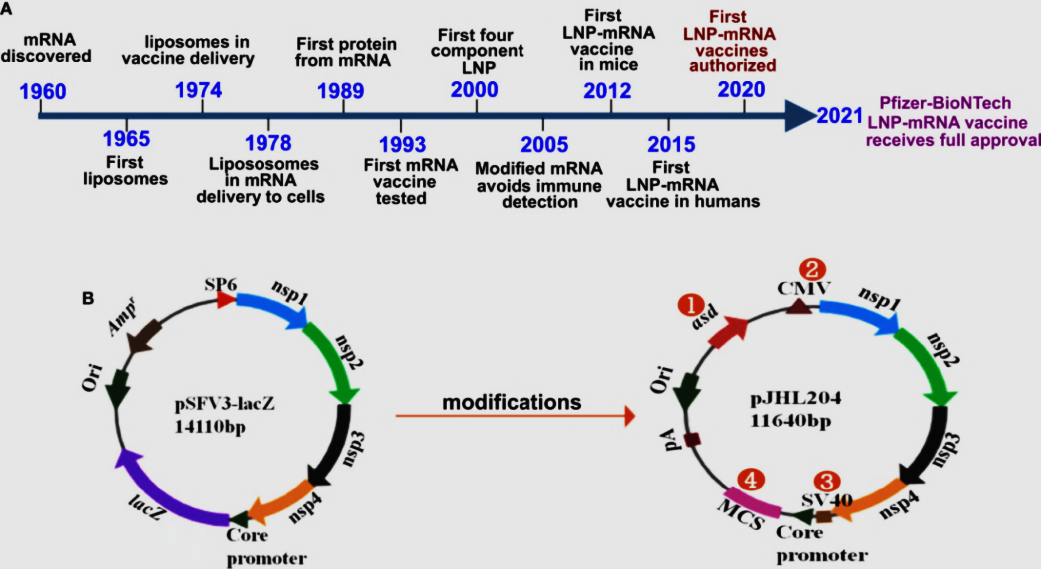
When a person receives an mRNA vaccine, the lipid nanoparticles containing the mRNA are injected into the muscle. Once inside the cells, the mRNA instructs the cells to produce the viral or bacterial protein. This protein is then displayed on the surface of the cell, triggering an immune response. The immune system recognizes the displayed protein as foreign and mounts a defense by producing antibodies and activating immune cells to target and eliminate the protein. These immune responses create a memory of the protein, enabling the immune system to quickly respond if it encounters the actual virus or bacteria in the future [19].
Approaches in mRNA Vaccine Development mRNA Structure and Vaccine Development Target: The translation of DNA’s genetic sequence into proteins by ribosomes in the cytoplasm of cells is facilitated by mRNA molecules. Currently, researchers are exploring two types of mRNAs, namely non-replicating and self-amplifying, as potential vaccines for antigens. Conventional, non- replicating mRNA-based vaccines encode antigens for the immunogenic reaction, which contain the 50 and 30 untranslated regions (UTRs) and open reading frame (ORF). Conversely, self-amplifying mRNA contains components with an additional coding region in their ORF, which codes for viral replication machinery, enabling continuous intracellular RNA amplification followed by amplified antigen expression [20, 21]. The 5’ end of mRNA is characterized by the presence of a 7-methylguanosine moiety, followed by a triphosphate moiety that is attached to the first nucleotide (m7GpppN). This protective structure is well-known for its ability to safeguard RNA from exonuclease cleavage, regulate pre- mRNA splicing, and initiate mRNA translation and nuclear export [22]. Additionally, the 5’ cap plays a crucial role in the recognition of non-self mRNA or exogenous mRNA from self mRNA or endogenous mRNA by the innate immune system [23].
To improve the effectiveness and durability of mRNA, it is possible to introduce post-transcriptional modifications to its structure. Specifically, modifying the 50-cap structure can enhance mRNA translation efficiency and prevent the activation of endosomal and cytosolic receptors, such as RIG-I and MDA5, which serve as defensive mechanisms against viral mRNA [23]. Hence, the 20-O-methylation of the 50-cap structure is a highly desirable approach to enhance protein production from mRNA post-transcription and prevent any unwanted immune responses from the host immune system. Co-transcriptional reactions can be employed to generate Cap 1 analogs, such as m7GpppNm, which comprises any nucleotide with a 20 O-methylation, and trinucleotide cap analogs. Studies have demonstrated that the use of m7GpppAG analogs for capping IVT mRNA enables the mRNA to possess the m7G moiety at the 50- ends, without any reverse-capped 50 end mRNA products [19, 24]. The m7Gpppm6AmG cap has been determined to yield the highest luciferase expression in vitro transfection. Additionally, the impact of altering transcribed nucleotides, with or without 20-O-methylation, in mRNA IVT reaction has been investigated [25]. The 50-capping structure plays a critical role in effectively targeting dendritic cells to elicit a desired immune response, as mRNA translation in a dendritic cell (DC) exhibits an 8-fold value disparity between m6A and m6Am 50-caps [24].
Modified Nucleotides: During the post-transcriptional modification process of natural mRNA molecules, which comprise of the four fundamental nucleotides ATP, CTP, GTP, and UTP, specific nucleotides undergo modification, including pseudouridine and 5-methylcytidine. These modified nucleotides can be effectively utilized in the in vitro transcription (IVT) of mRNA [26]. Modified nucleotides present several advantages as they can impede the recognition of in vitro transcription (IVT) mRNA by the innate immune system, thus circumventing unwanted immune responses and augmenting the translation efficiency of mRNA to the intended antigen [27]. A recent investigation demonstrated that mRNA incorporating the N(1)-methyl- pseudo-uridine modification surpassed the pseudo-uridine modified mRNA platform by yielding 44-fold higher and 13- fold higher reporter gene expression upon transfection into cell lines or mice, respectively [28]. The findings of this report indicate that the use of (m5C/) modified mRNA during in vitro transfection leads to a decrease in intracellular innate immunogenicity. This modification facilitates the regulated activation of toll-like receptor 3 (TLR3), which in turn triggers the downregulation of innate immune signaling. Such a characteristic is highly desirable in an mRNA vaccine [29].
The Mechanism by Which mRNA Vaccines Work: To develop an mRNA vaccine, scientists first need to understand the structure of the virus and its genetic material. Once proteins have been identified, designing a small piece of mRNA that codes for that protein will follow. The mRNA is essentially a set of instructions that tells the body’s cells how to produce the protein. The mRNA molecule is fragile and can be quickly degraded by the body’s enzymes. To protect the mRNA and ensure it gets into cells, scientists encapsulate it in a lipid nanoparticle. The lipid nanoparticle is essentially a tiny ball of fat that acts as a protective coating around the mRNA [30]. The vaccine is then injected into the patient’s arm, usually in the form of two doses given several weeks apart. Once injected, the lipid nanoparticle delivers the mRNA to cells in the body. Immunological action can be illustrated in Figure 2.
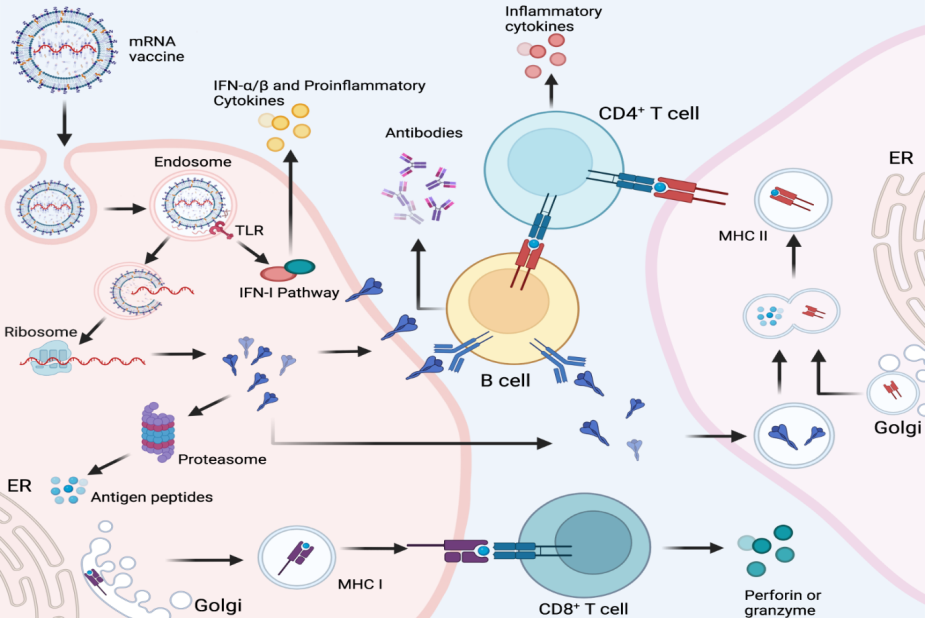
The identification of single-stranded RNA (ssRNA) and double-stranded RNA (dsRNA) by immune cells within the host is aided by a range of innate receptors located in both the endosomal and cytosolic compartments. The Toll- like receptor immune cells, TLR3 and TLR7, are integral components of the human innate immune response to foreign antigens. These receptors possess the ability to bind to exogenous ssRNA within the endosome. In contrast, inflammation signaling receptors, namely RIG-I, MDA5, NOD2, and PKR, bind to both ssRNA and dsRNA within the cytosol [30, 31]. This binding process leads to cellular activation and the production of type I interferon, which inhibits cellular translation and reduces the amount of antigen produced by mRNA vaccines. The mRNA vaccines currently available in the market contain purified IVT mRNA, which is single-stranded and contains modified nucleotides [28]. The aforementioned modification leads to a reduction in the binding affinity towards TLR3 and TLR7, as well as immune sensors, thereby limiting the excessive production of type I interferon and its interference with the cellular translation of mRNA [32]. mRNA vaccines exhibit the capacity to transfect immune cells that are present in the tissue, including antigen-presenting cells such as dendritic cells and macrophages [33].
The development and manufacturing of mRNA vaccines are expedited compared to traditional vaccines, owing to the ability to synthesize the mRNA sequence in a laboratory using easily accessible materials. Furthermore, mRNA vaccines do not comprise live viruses, thereby eliminating the possibility of contracting the disease from the vaccine. The adaptability of mRNA vaccines to target new strains of a virus or different viruses altogether is another advantage. However, the novelty of mRNA vaccines necessitates the collection of long- term safety data. As with all vaccines, mRNA vaccines may cause side effects such as fever, fatigue, and soreness at the injection site [21].
Unique Characteristics of mRNA Vaccines
In late 2020, the mRNA vaccines based on SARS COV-2 have been approved for emergency use to protect against COVID-19 disease in many countries, and there has been a push to expand their use to other diseases as well. As an example, Moderna is developing mRNA vaccines for influenza and cytomegalovirus, and BioNTech is working on mRNA vaccines for multiple sclerosis and cancer [32, 34]. The effectiveness of mRNA vaccines against emerging variants of COVID-19 has been a concern, leading to the development of booster shots. These booster shots contain a modified version of the original vaccine that targets the new variants and currently Pfizer-BioNTech and Moderna have both developed booster shots for COVID-19 [35, 36].
The possibilities of combining mRNA vaccines with other types of vaccines to create “multivalent” vaccines that protect against multiple diseases. For example, the mRNA vaccine for COVID-19 could be safely and effectively administered alongside the influenza vaccine [37]. One of the challenges of mRNA vaccines is that they need to be kept at very low temperatures to remain stable. However, recent advances in storage and distribution technology have made it easier to transport and store mRNA vaccines. The COVID-19 vaccine developed by Moderna has recently been approved for storage at standard freezer temperatures, thereby facilitating its distribution in regions with limited refrigeration infrastructure [37]. The efficacy of mRNA vaccines in safeguarding against COVID-19 has sparked considerable interest and investment in this technology, and we can expect to witness further progress and utilization in the near future.
Manufacturing of mRNA Vaccine
The mRNA vaccines have exhibited numerous benefits over conventional vaccines, including a streamlined development process, scalability, structural adaptability, and accelerated manufacturing. Similar to other vaccines, the production of mRNA vaccine products adheres to a standard three-stage process, encompassing upstream production, downstream purification, and final formulation of the mRNA vaccine substance.
Upstream Manufacturing Process: The bioprocessing steps involved in the manufacture of mRNA vaccines vary depending on the specific vaccine and the manufacturing process used. The first step in bioprocessing mRNA vaccines entails the synthesis of the mRNA sequence that encodes the desired antigen. This is accomplished by creating a DNA template that contains the target gene. This can be achieved by either cleaving a plasmid containing the gene of interest using restriction endonucleases enzymes or amplifying the gene of interest through PCR. Following mRNA synthesis, purification is necessary to eliminate any impurities that may have been introduced during the IVT process. Chromatography techniques, such as reverse-phase high-performance liquid chromatography (RP-HPLC) or ion- exchange chromatography (IEX), are utilized to achieve this purification. The diagrammatic approach in the production process can be seen in Figure 3.
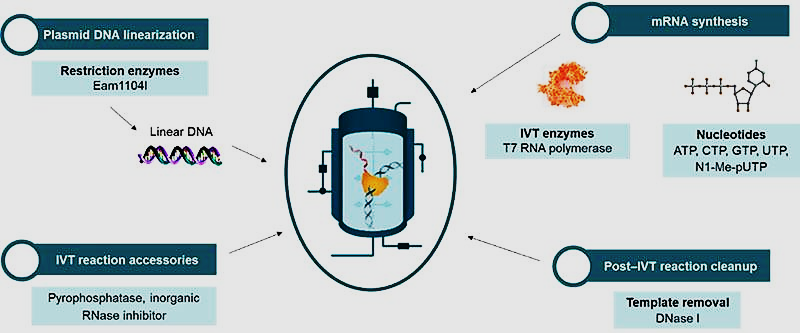
The initial stage of mRNA vaccine production involves the generation of mRNA transcripts from plasmids containing the desired gene. This process is commonly achieved through in vitro transcription (IVT) technology, which utilizes enzymes to transcribe the target gene sequence into mRNA. The purified mRNA is mixed with a lipid nanoparticle (LNP) formulation. The LNP is typically composed of a lipid bilayer that surrounds the mRNA and helps to protect it from degradation and facilitate its delivery to cells. The LNP formulation can be optimized to improve the stability and efficacy of the vaccine. Throughout the bioprocessing steps, the vaccine undergoes extensive quality control testing to ensure that it meets safety and efficacy standards. This includes testing the vaccine for purity, potency, and sterility. The important point to note is that the bioprocessing of mRNA vaccines is a complex and highly specialized process that requires specialized equipment and expertise. Additionally, the quality control process and regulatory requirements for mRNA vaccines are rigorous, and strict adherence to these requirements is essential to ensure the safety and efficacy of the vaccine. The mRNA vaccine will accommodate these all in availing the required vaccine at a fast development process compared to the traditional vaccine development process [38].
Downstream Process: During the upstream production process, the mRNA bulk product resulting from the IVT reaction undergoes several purification steps in downstream processing to guarantee its purity. The IVT reaction mixture comprises several impurities, including enzymes, residual NTPs, incorrect structure mRNAs, and DNA plasmid templates, which necessitate removal to obtain a pure mRNA product with the intended efficacy and safety profile. DNase enzyme digestion and lithium chloride (LiCl) precipitation are utilized to eliminate DNA and other impurities from the IVT mRNA. The downstream purification process plays a crucial role in achieving optimal translation efficiency and preventing an undesired immunostimulatory profile in mRNA vaccine products. Studies have demonstrated that reverse-phase HPLC purification of modified mRNA prior to delivery to dendritic cells can enhance mRNA transfection and related protein production [39]. Chromatography is a widely recognized purification method in the biopharmaceutical industry for vaccines and biological drug products.
Size exclusion chromatography (SEC) is a commonly employed technique for large-scale purification of RNA oligonucleotides. This method provides several advantages, such as selectivity, scalability, versatility, cost-effectiveness, and high purity and yields of nucleic acid products. On the other hand, ion-pair reverse-phase chromatography (IEC) has been demonstrated to be an exceptional purification method for mRNA vaccines [16].
Recent advances in mRNA vaccine purification have focused on improving the yield and purity of the mRNA from the reaction mixture. One such approach is the use of chromatography, a process that separates molecules based on their physical and chemical properties. Chromatography techniques such as ion exchange chromatography, size exclusion chromatography, and affinity chromatography have been used to purify mRNA from the reaction mixture [40, 41]. Another approach to improve mRNA purification is the use of magnetic bead-based isolation, which allows for rapid and efficient purification of mRNA from the reaction mixture. This technique involves binding mRNA to magnetic beads that are then separated using a magnetic field. These advances in mRNA vaccine purification have improved the yield and purity of mRNA, making it easier and more efficient to produce large quantities of high-quality mRNA for vaccine production [40, 42, 43]. This has been paying crucial in the rapid development and production of mRNA vaccines for COVID-19 and other diseases.
mRNA Vaccine Delivery Technologies
The dimensions of mRNA vaccine molecules are significant, ranging from 104 to 106 Da, and they possess a negative charge that impedes their ability to penetrate the lipid bilayer of cell membranes. When administered in their unencapsulated form, these molecules are vulnerable to degradation by nucleases present in the bloodstream, and they are also susceptible to being engulfed by immune cells in the tissue and serum [44]. In order to overcome these challenges, a range of techniques have been developed to enhance the delivery of mRNA molecules into cells. These include gene guns, electroporation, and ex-vivo transfection. In vivo methods of mRNA delivery involve the transfection of immune or non-immune cells using lipids or transfecting agents. There are several approaches to mRNA delivery that will be further elaborated upon below.
Lipid Nanoparticles (LNPs): Lipid nanoparticles (LNP) are nanoparticles designed using phospholipids and structured as vesicles consisting of phospholipid bilayers. By loading nucleic acid containing vaccine substance into LNPs, the encapsulated nucleic acid substance is protected from degradation and clearance, and their transport across the cell membrane to the target site is facilitated [21]. The LNP vaccine delivery method is a strategic approach utilized for the administration of mRNA vaccines by various companies, such as Pfizer-BioNTech and Moderna, for COVID-19. LNPs are minute particles that consist of a lipid bilayer enveloping a hydrophobic nucleus. The mRNA is encapsulated within the core of the LNP, while the lipid bilayer acts as a protective barrier, aiding the mRNA in evading degradation by enzymes in the body [45]. The LNP vaccine delivery approach has several advantages, including the ability to rapidly produce vaccines using mRNA technology and the potential for rapid adaptation to new variants of viruses or bacteria. However, there are also challenges associated with LNP vaccine delivery, such as the potential for adverse reactions and the need for specialized cold storage and transportation to maintain the stability of the mRNA-LNP formulation. Liposomes: The utilization of liposome-based mRNA presents a broad spectrum of delivery solutions, encompassing tailored liposome production and characterization, as well as various applications. The encapsulation of mRNA within liposomes can provide a secure and efficacious delivery mechanism for mRNA-based vaccine products. Studies have demonstrated that cationic liposome formulations can significantly enhance the functional delivery of negatively charged nucleic acids to cells. Liposome vaccine delivery is a technique that employs small liposomes, which are spherical vesicles composed of a lipid bilayer capable of encapsulating a diverse array of biomolecules, such as antigens, adjuvants, and immunomodulators [38]. The liposome delivery system is being explored for a variety of vaccine applications, including COVID-19 vaccines. The liposome vaccine delivery approach has several advantages, including the ability to encapsulate multiple vaccine components, such as antigens and adjuvants, in a single particle, and the potential for enhanced immune responses. However, there are also challenges associated with liposome vaccine delivery, such as the potential for adverse reactions and the need for specialized manufacturing and storage conditions to maintain the stability of the liposomes.
Polymer Complexes: The polymerization of mRNA with polymeric materials such as polymethyl glycol (PEGs), polyamines, dendrimers, and copolymers are a valuable technique for the delivery of mRNA vaccines. These materials offer protection against RNase-mediated degradation and facilitate intracellular delivery. The coupling of mRNA with polymers is a service that is available with a variety of materials and modifications, including the incorporation of lipid chains, hyperbranched groups, and biodegradable subunits [46]. In this approach, the vaccine components, such as antigens and adjuvants, are encapsulated in a polymeric nanoparticle or microparticle that can protect the vaccine from degradation and enhance its delivery to immune cells. The polymer complex vaccine delivery approach has several advantages, including the ability to encapsulate multiple vaccine components in a single particle, and the potential for enhanced immune responses. Additionally, the polymeric particles can be engineered to have controlled release properties, which can prolong the duration of the immune response. However, there are also challenges associated with polymer complex vaccine delivery, such as the potential for adverse reactions and the need for specialized manufacturing and storage conditions to maintain the stability of the polymeric particles.
Cationic Polypeptides: Protamine is a cationic peptide that is being used in many early studies to deliver mRNA vaccines by coupling target mRNA sequences to protamine to aid in the efficient delivery of mRNA vaccines. Cationic polypeptides are positively charged peptides that have been studied as potential vaccine delivery vehicles [47]. In this methodology, the constituents of the vaccine, namely antigens and adjuvants, are combined with cationic polypeptides to generate nanoparticles. These nanoparticles serve the dual purpose of safeguarding the vaccine from degradation and augmenting its transportation to immune cells. The cationic polypeptide vaccine-delivery approach has several advantages, including the ability to encapsulate multiple vaccine components in a single particle and the potential for enhanced immune responses. The cationic polypeptides can also be synthesized and modified to have specific properties, such as improved stability and targeting capabilities. But there are also challenges associated with cationic polypeptide vaccine delivery, such as the potential for adverse reactions and the need for further optimization of the delivery system to enhance its efficacy.
Current Status of mRNA Vaccines
mRNA Vaccines in Clinical Trials: As per clinical trial data from Global Data, the industry has sponsored 85% of mRNA vaccine trials in 2023, marking a significant increase from the 34% of trials initiated in 2021. The clinical development phase is a pivotal stage for every vaccine candidate, which comes after the successful completion of preclinical studies and precedes the market launch. Similarly, clinical advancement of an mRNA vaccine entails a sequence of clinical trials that evaluate the safety, immunogenicity, and effectiveness of the vaccine in human subjects. These trials are classified into Phases 1, 2, 3, and 4, depending on the patient cohort and trial objectives. Phase 1 clinical investigations are conducted on a restricted cohort of individuals with the primary objective of establishing the safety and pharmacokinetics of the vaccine candidate. Phase 2 trials are designed as proof-of-concept studies to validate the outcomes obtained in Phase 1 clinical investigations and assess efficacy in a marginally larger participant pool. Phase 3 studies are confirmatory investigations carried out across multiple centers and a diverse population to corroborate the safety and efficacy of the vaccine candidate [48].
Several mRNA vaccines in various stages of clinical trials since the authorization of COVID-19 vaccines from Pfizer- BioNTech and Moderna. Thus, the landscape of clinical trials is continuously evolving, and there are several new developments. Moderna initiated Respiratory Syncytial Virus (RSV) Vaccine, a Phase 1/2 clinical trial in September 2021 to evaluate an mRNA vaccine candidate for the respiratory syncytial virus [15], a common respiratory virus that can cause severe illness, particularly in infants and older adults. Similarly, CureVac, a German biopharmaceutical company, was developing an mRNA-based COVID-19 vaccine and started a Phase 3 clinical trial in September 2021, to assess the safety and efficacy of the vaccine candidate [49].
Similarly, Sanofi and Translate Bio collaborated to develop an mRNA-based COVID-19 vaccine candidate and were conducting a Phase 1/2 clinical trial since September 2021 to evaluate the safety and immune response generated by the candidate vaccine [50]. The company behind the Pfizer-BioNTech COVID-19 vaccine was also exploring the use of mRNA technology for a potential vaccine against multiple sclerosis (MS) and initiated a Phase 1 clinical trial in April 2021 to evaluate the safety and immunogenicity of mRNA-based MS vaccine [51]. The rapid progress in mRNA vaccine design and delivery technology has expedited the advancement and clinical implementation of mRNA-based cancer vaccines. The nucleic acid-based vaccine platform holds great promise and appeal owing to its capacity to administer multiple antigens with ease and elicit robust MHC I-mediated CD8+ T cell responses [52]. In contrast to conventional vaccines, nucleic acid vaccines for cancer confer several benefits, such as safety, specificity in inducing immune response for the antigen of interest, stimulation of both humoral and cellular immune responses, relatively low production cost, and facile manufacturing [53]. BioNTech’s BNT111, an mRNA-based cancer vaccine, is currently undergoing clinical trials for the treatment of various solid tumors, including melanoma and head and neck cancer. It aims to elicit an immune response against specific tumor antigens. mRNA-4157 is an mRNA-based vaccine developed by Moderna, which is being studied in clinical trials for the treatment of solid tumors, including ovarian cancer, colorectal cancer, and pancreatic cancer. It is designed to induce an immune response against tumor-associated antigens. RO7198457 is an mRNA-based vaccine developed through collaboration between Merck being evaluated in clinical trials for the treatment of various types of cancers, including colorectal cancer, ovarian cancer, and lung cancer [54].
mRNA Vaccines on the Market
Pfizer-BioNTech COVID-19 Vaccine: The vaccine developed jointly by Pfizer and BioNTech, was the first mRNA vaccine authorized for emergency use by the FDA in December 2020. The vaccine contains a small piece of mRNA that encodes for the spike protein found on the surface of the SARS- CoV-2 virus that causes the disease COVID-19. The vaccine is administered in two doses, given three weeks apart, and is highly effective in preventing COVID-19 [55].
The Pfizer-BioNTech COVID-19 vaccine, which utilizes messenger RNA (mRNA) technology, was developed through a series of crucial steps. Initially, scientists identified the SARS-CoV-2 virus responsible for COVID-19 in early 2020 and proceeded to sequence its genetic material. Subsequently, they analyzed its structure to gain insight into its mechanism of infecting human cells [56]. Following, the researchers identified the spike protein on the surface of the virus as a target for the vaccine which helps the virus attach to and enter human cells, so targeting this protein can prevent infection. After target identification, design a synthetic mRNA sequence that codes for the spike protein. Thus, mRNA is designed to be delivered to human cells, where it will instruct the cells to produce the spike protein [56].
The mRNA needs to be delivered to human cells in a way that protects them from degradation and allows them to enter the cells. The Pfizer-BioNTech vaccine uses lipid nanoparticles as a delivery system, which protects the mRNA and facilitates its entry into human cells [57]. After several evaluations in pre-clinical and clinical trials, the vaccine is now being manufactured and distributed globally to help control the spread of COVID-19. Generally, the development of the mRNA Pfizer-BioNTech COVID-19 vaccine involved a combination of cutting-edge technology, extensive testing, and collaboration between scientists, regulators, and manufacturers.
Moderna COVID-19 Vaccine
Moderna has developed an additional COVID-19 vaccine that is based on mRNA technology and incorporates a fragment of mRNA that encodes the spike protein present on the SARS-CoV-2 virus. Similar to the Pfizer-BioNTech vaccine, this vaccine is administered in two doses, with a four-week interval between doses. The FDA granted emergency use authorization for this vaccine in December 2020, and it has demonstrated significant efficacy in preventing COVID-19 [58]. This vaccine also targets the spike protein on the surface of the virus as an antigenic target for the vaccine. The Moderna vaccine also uses lipid nanoparticles as a delivery system, which protects the mRNA and facilitates its entry into human cells. The vaccine was granted emergency use authorization by regulatory agencies based on the results of the clinical trials. Generally, the development of the Moderna mRNA COVID-19 vaccine involved a combination of cutting-edge technology, extensive testing, and collaboration between different stakeholders.
The Moderna and Pfizer-BioNTech mRNA COVID-19 vaccines have a lot in common, as they are both based on the same mRNA technology and are highly effective at preventing COVID-19. However, there are a few key differences between the two vaccines. The Moderna vaccine requires two doses, given four weeks apart, while the Pfizer-BioNTech vaccine requires two doses, given three weeks apart. The Moderna vaccine can be stored at -20°C (-4°F) for up to six months, and at standard refrigeration temperatures (2-8°C or 36-46°F) for up to 30 days, while the Pfizer-BioNTech vaccine must be stored at ultra-cold temperatures (-80°C/-112°F to -60°C/- 76°F) for up to six months, and can be stored at standard refrigeration temperatures for only up to five days [59]. During clinical trials at different conditions, the Moderna vaccine was found to be 94.1% effective at preventing COVID-19, while the Pfizer-BioNTech vaccine was found to be 95% effective at preventing COVID-19. Concerning age restrictions, the Moderna vaccine is authorized for use in people aged 18 and older, while the Pfizer-BioNTech vaccine is authorized for use in people aged 12 and older [60].
CureVac COVID-19 Vaccine: CureVac is an mRNA COVID-19 vaccine developed by the German biopharmaceutical company, and authorized for emergency use by the European Medicines Agency (EMA) in November 2021 [61]. This vaccine is authorized for use in European countries. The CureVac COVID-19 vaccine, akin to other mRNA vaccines, possesses several distinctive attributes that differentiate it from conventional vaccines. The vaccine employs messenger RNA (mRNA) technology to direct cells to generate a protein present on the exterior of the SARS-CoV-2 virus. Furthermore, the CureVac vaccine is formulated to be dispensed in a reduced dosage in comparison to other COVID-19 vaccines [27]. This is because the mRNA technology used in the vaccine is highly efficient at stimulating an immune response, so less vaccine is needed to achieve protection.
Unlike the Pfizer/BioNTech vaccine, which requires ultra-cold storage temperatures, and the Moderna vaccine, which requires freezing temperatures for long-term storage, the CureVac vaccine can be stored at standard refrigeration temperatures (2-8°C), making it easier to distribute and administer [62]. CureVac’s mRNA technology is designed to be easily scalable, which could allow for large-scale production and distribution of the vaccine [63]. This could be particularly important for increasing access to vaccines in low- and middle-income countries. In addition, the mRNA technology used in the CureVac vaccine can be quickly and easily modified to target new variants of the SARS-CoV-2 virus, if necessary, by changing the genetic sequence of the mRNA which helps the efforts to combat COVID-19 and its variants. It’s worth noting that the efficacy and safety of the CureVac.
Advantages of mRNA Vaccines
The technology utilized in the development of mRNA vaccines has played a pivotal role in the worldwide response to the COVID-19 pandemic. These vaccines were expeditiously developed and authorized for emergency use, and have demonstrated remarkable efficacy in preventing both COVID-19 infection and severe illness [10]. mRNA vaccines can be developed rapidly compared to traditional vaccine platforms. Once the genetic sequence of a pathogen is known, the mRNA can be synthesized in the laboratory without the need for growing and inactivating the actual pathogen. This accelerated development process allows for a quicker response to emerging infectious diseases or rapidly mutating viruses. This is important for responding to future pandemics, as well as for developing vaccines against diseases that are currently difficult to develop vaccines. In other way, mRNA vaccines do not contain live viruses or bacteria and are not able to cause disease or alter a person’s DNA, as the mRNA is quickly broken down by the body after it has been used to stimulate an immune response [64]. Clinical trials have also shown that mRNA vaccines, those developed by Pfizer/BioNTech and Moderna, are highly effective at preventing COVID-19 infection and severe disease. The mRNA vaccines are highly adaptable and can be designed to target various pathogens by simply changing the mRNA sequence. The adaptability of mRNA technology facilitates the creation of vaccines for a diverse array of infectious diseases, encompassing viral infections as well as potentially bacterial or parasitic infections. Furthermore, mRNA vaccines are deemed safe due to their lack of live or inactivated pathogens, thereby eliminating the possibility of inducing the targeted disease. Moreover, mRNA is a transient molecule that undergoes rapid degradation and elimination by the body, thereby augmenting its safety profile. Additionally, mRNA vaccines can be produced with greater ease and speed than conventional vaccines, which necessitate laborious procedures such as cultivating substantial quantities of live viruses or bacteria [63]. This means mRNA vaccines can be produced on a larger scale, which is especially important during a pandemic response.
Shortcomings of mRNA Vaccines
Following mRNA vaccination, antigens are produced and taken up by antigen-presenting cells (APCs), which then transport them to lymph nodes. The interaction between B cells, APCs, and follicular helper T cells leads to the formation of a germinal center, where B cells undergo amplification and differentiation to produce high-affinity neutralizing antibodies against the pathogen. This series of immunological biochemical reactions is crucial for maintaining antibody persistence, resulting in an extended duration of efficacy against the infectious pathogen [65]. Preclinical studies have demonstrated that mRNA vaccines elicit potent germinal center immunogenic responses and TFH cell induction against HIV-1, SARS-CoV-2, Zika virus, and influenza virus [66]. However, the duration of the antibody response is a complex phenomenon that varies significantly depending on the antigen. There have been specific safety incidents that necessitate further refinement of mRNA vaccines and their constituents. As with most medicinal treatments, adverse reactions to mRNA vaccines have often intensified and escalated with dosage. In the recent COVID-19 vaccination campaign, a mild anaphylactic reaction was observed in 4.7 per million vaccinations. The Moderna vaccine had 2.5 per million vaccinations, while the Pfizer-BioNTech vaccine had 2.2 per million vaccinations [67]. According to scientific research, the allergic response observed in patients may be linked to pre-existing antibodies against PEGylated lipids utilized in LNPs. These lipids can be generated in the body as a result of exposure to PEG in various consumer products, including toothpaste and shampoos. Studies have demonstrated that PEG facilitates this process by cross- linking the B cell receptor and inducing IgM production. It has been reported that 40% of the population possess anti- PEG antibodies during vaccination, which can exacerbate the likelihood and severity of allergic reactions and impede vaccine effectiveness [68].
Throughout pregnancy and the neonatal phase, the immune system undergoes significant changes that render individuals more susceptible to infectious diseases that are not currently addressed by mRNA vaccines. The Zika virus has the ability to infiltrate cortical neurons and glial cells in the developing fetus, leading to cellular death, neuroinflammation, and severe congenital abnormalities [69]. The mRNA vaccines need to be stored at ultra-low temperatures, typically around -70°C for long-term storage and transportation [59]. This poses logistical challenges, particularly in resource-limited settings or regions with inadequate cold chain infrastructure. The other is that mRNA vaccines have a relatively short shelf life compared to traditional vaccines and once thawed, they must be used within a specific timeframe which can be challenging for areas with difficult distribution limiting the effort of vaccination.
The production of mRNA vaccines is more intricate and time-consuming compared to traditional vaccine production methods. Scaling up production and achieving mass distribution can be a significant challenge. Currently, available mRNA vaccines require intramuscular injection, which necessitates trained healthcare professionals for administration [11]. This may limit accessibility in areas with a shortage of healthcare workers or remote regions with limited access to medical facilities. In addition, like other new medical technology, mRNA vaccines have faced public hesitancy and misinformation. Concerns about the newness of the technology, long-term effects, and safety have led to vaccine skepticism in some individuals, which can impact vaccine uptake and population-level protection [70]. Ongoing efforts are focused on improving vaccine stability, simplifying manufacturing processes, exploring alternative delivery methods, and addressing concerns through research and development.
Next-generation mRNA Vaccine Studies
Currently, efforts are underway to develop next- generation mRNA vaccines with a primary objective of enhancing safety, efficacy, storage, and handling while addressing inefficiencies. The enhancements involve achieving vaccine stabilization at room temperature and minimizing the cold chain prerequisite for storage and conveyance, while upholding the equivalent level of effectiveness and safety. Furthermore, current research is concentrated on identifying more robust and ligand-targeted nanocarriers that can provide an improved safety and mRNA delivery effectiveness profile. Additionally, extensive research is underway to investigate the potential of diverse RNA-based molecules as vaccines. Lipid Nanoparticle Improvements: The lipid nanoparticles (LNP) are carriers that encapsulate and protect the mRNA molecule facilitating its delivery into target cells. Lyophilized mRNA vaccines have the ability to maintain stability and efficacy when stored at sub-zero temperatures. The enduring stability of the vaccine is a crucial consideration in the advancement of lipid nanoparticles (LNPs), which endeavor to tackle the physical and chemical instabilities that arise during the storage of LNPs as an aqueous suspension [21]. Chemical degradation pertains to the modification of bonds in the mRNA molecule, while physical degradation encompasses the loss of secondary and tertiary molecular structure, denaturation/aggregation, fusion, and leakage of encapsulated mRNA. Presently, researchers are engaged in optimizing LNPs to augment their stability, enhance cellular uptake, and mitigate potential side effects [71]. LNPs facilitate the cellular uptake of mRNA and are engineered to possess a positively charged surface, which aids in binding to the negatively charged cell membranes. LNPs can also be engineered to release the mRNA payload in a controlled manner, optimizing its availability for translation into protein. This controlled release ensures efficient and sustained production of the target protein, maximizing the immune response and efficacy of the vaccine. These advancements can increase the efficiency of mRNA delivery and improve the immune response. Self-amplifying mRNA: Self-amplifying mRNA vaccines are designed to produce more copies of the encoded antigen within the body [72]. They utilize a modified form of mRNA that includes additional genetic material, allowing for the replication and amplification of the mRNA once it enters the host cells. This amplification leads to higher expression levels of the target antigen, which can potentially result in a more robust immune response. By incorporating additional genetic elements, saRNA vaccines can replicate and produce more copies of the encoded antigen within the cells. This amplification process leads to increased antigen expression, which can stimulate a stronger immune response compared to conventional mRNA vaccines [73]. Different approaches in designing mRNA can be seen in Figure 4 below.
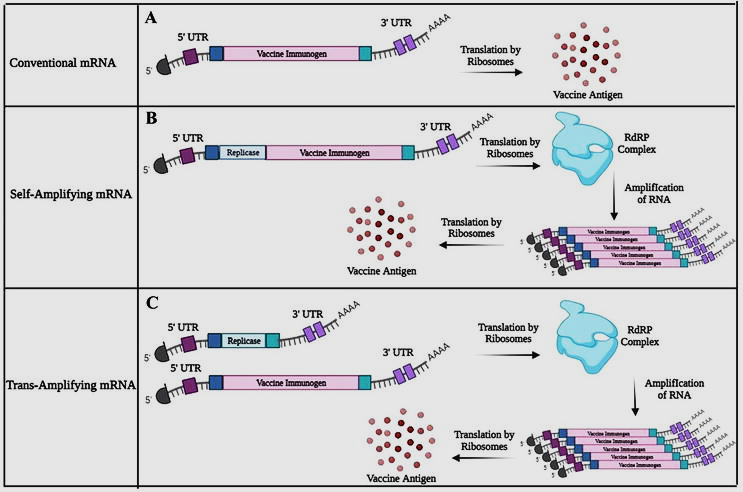
In conventional mRNA molecules, the vaccine immunogen is typically encoded along with flanking 5′ and 3′ UTRs, as well as a 5′ cap (m7G) and poly A tail that are common to all RNA transcripts. Translation of the nonreplicating transcript results in the production of the antigen. However, self-amplifying RNA incorporates 5′ and 3′ CSE sequences, the nsP1-4 genes, a sub-genomic promoter, and the vaccine immunogen to achieve self-amplification within host cells [74]. Self-amplifying mRNA (SAM) vaccines employ distinct genetic components sourced from alphaviruses, namely Semliki Forest virus (SFV), Sindbis virus (SINV), and Venezuelan equine encephalitis virus (VEEV), to encode replicase genes that facilitate the replication of mRNA within cells. The replicase proteins of alphaviruses enable the amplification of mRNA within host cells, resulting in heightened production of both replicase proteins and the target antigen [75]. Upon undergoing in situ translation, the nsP1-4 proteins assemble into the RdRP complex, which identifies flanking CSE sequences and amplifies transcripts encoding the vaccine, leading to an accumulation of the antigen within the cell [76].
In order to achieve a comparable outcome to self- amplifying mRNAs, trans-amplifying mRNAs employ two distinct transcripts. The first transcript, which is already known, encodes the nsP1-4 genes and is flanked by 5′ and 3′ UTRs. The second transcript encodes the sub-genomic promoter, the viral CSE sequences, and the vaccine immunogen. These two transcripts are co-delivered and in situ translation of the conventional mRNA results in the formation of the RdRP complex, which subsequently amplifies the vaccine-encoding transcript, leading to the accumulation of the intended antigen. This approach has the potential to enhance vaccine potency and reduce the required vaccine dose.
Nucleosides Modification
The process of nucleoside modification in mRNA vaccines entails the modification of the constituent elements of mRNA, namely nucleotides, with the aim of enhancing the stability, translational efficacy, and immunogenicity of the mRNA molecule. Such modifications have the potential to significantly augment the performance of mRNA vaccines across multiple dimensions. Pseudouridine is a modified nucleoside that can replace uridine (U) in mRNA as it is incorporated into mRNA to increase stability and reduce immune activation. Pseudouridine modifications can enhance the half-life of the mRNA molecule within cells, prolonging the duration of protein production and potentially improving the immune response [77]. In another way, 5-Methylcytidine is a modified form of cytidine (C) in mRNA incorporation that may enhance mRNA stability, protect the mRNA from degradation by cellular enzymes, and improve translational efficiency [78]. The nucleoside modification approach can be seen in Figure 5.
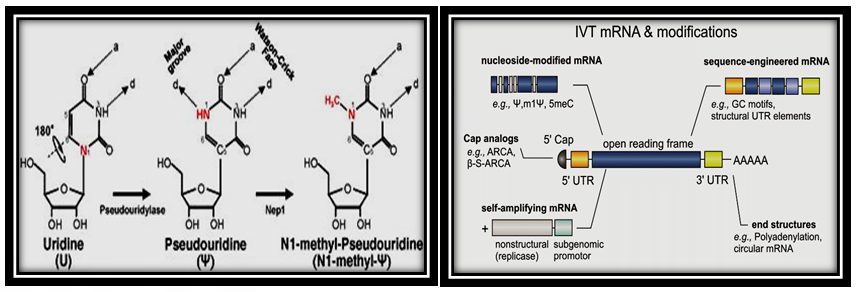
This modification can contribute to increased protein expression levels. Generally, nucleoside modifications help address some of the limitations of mRNA vaccines, such as susceptibility to degradation and potential immune activation. These modifications can improve the stability and translational efficiency of mRNA, leading to increased protein production and potentially stronger immune responses. The specific nucleoside modifications used can vary depending on the mRNA vaccine platform and target disease.
Pseudouridine can enhance stability and translation while lowering the immunological response in mRNA vaccines. Toll-like receptors 7 and 8 (TLR7 and TLR8), the cellular detectors of foreign RNA, are less able to recognize pseudouridine-modified mRNA, which lowers the innate immune response [78]. The stability and translational effectiveness of pseudouridine are further improved by 1-methylpseudouridine. According to studies, mRNA vaccines containing m1 inhibit the innate immune system’s ability to respond as strongly as those containing unaltered nucleotides. Additionally, mammalian cells translate m1- modified mRNA more effectively [18]. A combination of 5-methylcytidine (m5C) and 2-thiouridine (s2U) can also be used to stabilize mRNA. m5C is a naturally occurring RNA modification, and s2U, a sulfur-containing derivative of uridine, is commonly found in tRNA.
Intranasal Delivery: Current mRNA vaccines are administered via injection, but intranasal delivery is being explored as an alternative route. Intranasal vaccines can target the respiratory mucosa, which is a primary site of infection for many respiratory viruses. Intranasal administration involves delivering the mRNA vaccine through the nasal route, typically in the form of a nasal spray. The nasal mucosa has a large surface area and is rich in blood vessels, facilitating rapid absorption and immune activation. By optimizing the size, surface charge, and composition of LNPs, the vaccine can be designed to enhance its penetration and interaction with the nasal epithelium. Additionally, to improve the residence time of the vaccine in the nasal cavity, mucoadhesive agents can be included in the formulation. These agents help the vaccine adhere to the mucus layer, allowing for prolonged contact with the underlying cells and facilitating absorption [79]. This could potentially result in a quicker immune response compared to intramuscular injection. This approach may induce both systemic and mucosal immune responses, providing broader protection [80]. Intranasal delivery allows the vaccine to directly target the respiratory tract, which is the primary site of respiratory infections which is particularly beneficial for diseases transmitted through the respiratory route, such as influenza and respiratory syncytial virus (RSV).
Thermal Stability: Ongoing research endeavors are currently focused on enhancing the thermostability of existing mRNA vaccines. The objective is to create formulations that can endure a broader range of temperatures, thereby reducing or eliminating the need for ultra-cold storage requirements. One area of research is centered on improving the stability of mRNA vaccines, particularly with regards to temperature sensitivity. Enhancing thermostability would simplify storage and distribution, particularly in regions with limited access to cold chain infrastructure. One approach involves exploring various formulation strategies to improve the stability of mRNA vaccines, including optimizing the composition of lipid nanoparticles that safeguard and deliver the mRNA. By fine-tuning the lipid composition, researchers aim to enhance the stability of the mRNA at higher temperatures. The untranslated regions (UTR) located at the 5’ and 3’ ends of messenger RNAs (mRNAs) have been shown to not only impact thermal stability, but also play a crucial role in regulating transcript translation. The inclusion of internal ribosomal entry sites or the Kozak sequence in the 5’-UTR can enhance ribosomal loading and initiation of translation. Conversely, the 3’-UTR can be equipped with a stabilization motif, such as the b-globulin 3’-UTR, to extend the half-life of the transcript, or a regulatory motif, such as the miRNA-122 binding site, to achieve tissue-specific expression and mitigate systemic toxicity by reducing off-target transgene expression.
Furthermore, ongoing research is exploring the feasibility of lyophilizing mRNA vaccines to extend their shelf life and reduce cold storage requirements. In general, the aim of such research efforts is to develop mRNA vaccine formulations that remain stable at higher temperatures, allowing for easier storage, transportation, and distribution in various settings, including resource-limited areas. By improving the thermostability of mRNA vaccines, it becomes more feasible to reach populations with limited access to ultra-cold storage infrastructure, expanding the potential impact of mRNA vaccination campaigns.
Conclusion
Extensive research into the design and delivery technology of messenger RNA (mRNA) has yielded highly promising results in the fight against emerging pandemics and existing infectious diseases. The development of the first two mRNA vaccines to combat SARS-CoV-2 was achieved at an unprecedented pace, setting a new record in the field. The progress made in the development of mRNA-based vaccines has exceeded expectations, laying a robust foundation and indispensable groundwork for the future of mRNA vaccines. In addition to COVID-19, mRNA vaccines are currently under development for other infectious diseases, including influenza, Zika virus, and cytomegalovirus (CMV). Preclinical and early clinical studies have shown promising results for mRNA vaccines targeting these diseases, and further research is ongoing. Furthermore, researchers are exploring the potential of mRNA vaccines in other areas, such as cancer immunotherapy and genetic diseases. Early-stage clinical trials have shown that mRNA vaccines can induce immune responses against cancer cells and potentially offer a new treatment option for cancer patients. Additionally, mRNA vaccines are being investigated as a possible treatment for genetic diseases, such as cystic fibrosis. Presently, ongoing research and development endeavors are focused on enhancing various aspects of mRNA vaccine production and technology with the objective of improving the stability of mRNA vaccines and reducing temperature sensitivity to facilitate storage and distribution. Scientists are exploring self-amplifying mRNA vaccines that generate multiple copies of mRNA within cells, potentially leading to a stronger immune response. Combination vaccine development is being pursued as an approach that could provide protection against multiple diseases or target different strains or variants of a pathogen. Novel delivery systems such as nanoparticles or liposomes are being investigated to improve the specificity and efficiency of mRNA vaccine delivery. In general, mRNA vaccine technology has emerged as a highly effective approach for developing vaccines against a wide range of diseases.
References
-
Plotkin SA, Halsey NA (2021) A brief history of vaccines and vaccination. Pediatric Research 89(5): 920-927.
-
Plotkin SA, Orenstein WA, Offit PA (2014) Health Affairs. Vaccines: Past, Present, and Future 33(4): 581-587.
-
Ernst E, Wolfe P, Stahura C, Edwards KA (2021) Technical considerations to development of serological tests for SARS-CoV-2. Talanta 224: 121883.
-
Cruz TPD, Michelato M, Silva MDP, Paula TGD, Macedo EA, et al. (2021) Growth performance, amino acid retention and mRNA levels of mTORC1 signaling pathway genes in Nile tilapia fingerlings fed protein-bound and crystalline amino acids. Aquaculture 543: 736953.
-
Ho JKT, Raj BJ, Netter HJ (2020) Hepatitis B virus (HBV) subviral particles as protective vaccines and vaccine platforms. Viruses 12(2): 126.
-
Alturki SO, Alturki SO, Connors J, Cusimano G, Kutzler MA, et al. (2020) The 2020 pandemic: current SARS- CoV-2 vaccine development. Front Immunol 11: 1880.
-
Britton A, Embi PJ, Levy ME, Gaglani M, DeSilva MB, et al. (2022) Effectiveness of COVID-19 mRNA vaccines against COVID-19–associated hospitalizations among immunocompromised adults during SARS-CoV-2 Omicron predominance—VISION Network, 10 States, December 2021—August 2022. MMWR Morb Mortal Wkly Rep 71(42): 1335-1342.
-
Maruggi G, Ulmer JB, Rappuoli R, Yu D (2022) Self- amplifying mRNA-based vaccine technology and its mode of action. Curr Top Microbiol Immunol 440: 31-70.
-
Hsu FF, Liang KH, Kumari M, Chen WY, Lin HT, et al. (2022) An efficient approach for SARS-CoV-2 monoclonal antibody production via modified mRNA- LNP immunization. Int J Pharm 627: 122256.
-
Knezevic I, Liu MA, Peden K, Zhou T, Kang HN (2021) Development of mRNA vaccines: scientific and regulatory issues. Vaccines (Basel) 9(2): 81.
-
Rosa SS, Prazeres DMF, Azevedo AM, Marques MPC (2021) mRNA vaccines manufacturing: Challenges and bottlenecks. Vaccine 39(16): 2190-2200.
-
Nooraei S, Bahrulolum H, Hoseini ZS, Katalani C, Hajizade A, et al. (2021) Virus-like particles: Preparation, immunogenicity and their roles as nanovaccines and drug nanocarriers. J Nanobiotechnology 19(1): 59.
-
Chen D, Zehrung D (2013) Desirable attributes of vaccines for deployment in low‐resource settings. J Pharm Sci 102(1): 29-33.
-
Cable J, Rappuoli R, Klemm EJ, Kang G, Mutreja A, et al. (2022) Innovative vaccine approaches—a Keystone Symposia report. Ann N Y Acad Sci 1511(1): 59-86.
-
Aliprantis AO, Shaw CA, Griffin P, Farinola N, Railkar RA, et al. (2021) A phase 1, randomized, placebo-controlled study to evaluate the safety and immunogenicity of an mRNA-based RSV prefusion F protein vaccine in healthy younger and older adults. Hum Vaccin Immunother 17(5): 1248-1261.
-
Pardi N, Hogan MJ, Porter FW, Weissman D (2018) mRNA vaccines—a new era in vaccinology. Nat Rev Drug Discov 17(4): 261-279.
-
Pardi N, Hogan MJ, Weissman D (2020) Recent advances in mRNA vaccine technology. Curr Opin Immunol 65: 14- 20.
-
Jackson LA, Anderson EJ, Rouphael NG, Roberts PC, Makhene M, et al. (2020) An mRNA vaccine against SARS-CoV-2—preliminary report. N Engl J Med 383(20): 1920-1931.
-
Zeng C, Hou X, Yan J, Zhang C, Li W, et al. (2020) Leveraging mRNA sequences and nanoparticles to deliver SARS‐ CoV‐2 antigens in vivo. Adv Mater 32(40): e2004452.
-
Brito LA, Kommareddy S, Maione D, Uematsu Y, Giovani C, et al. (2015) Self-amplifying mRNA vaccines. Adv Genet 89: 179-233.
-
Gote V, Bolla PK, Kommineni N, Butreddy A, Nukala PK, et al. (2023) A comprehensive Review of mRNA vaccines. Int J Mol Sci 24(3): 2700.
-
Ramanathan A, Robb GB, Chan SH (2016) mRNA capping: biological functions and applications. Nucleic Acids Res 44(16): 7511-7526.
-
Daffis S, Szretter KJ, Schriewer J, Li J, Youn S, et al. (2010) 2’-O Methylation of the Viral MRNA Cap Evades Host Restriction by IFIT Family Members. Nature 468(7322): 452-456.
-
Sikorski PJ, Warminski M, Kubacka D, Ratajczak T, Nowis D, et al. (2020) The Identity and Methylation Status of the First Transcribed Nucleotide in Eukaryotic MRNA 50 Cap Modulates Protein Expression in Living Cells. Nucleic Acids Res 48(4): 1607-1626.
-
Pardi N, Tuyishime S, Muramatsu H, Kariko K, Mui BL, et al. (2015) Expression kinetics of nucleoside-modified mRNA delivered in lipid nanoparticles to mice by various routes. J Control Release 217: 345-351.
-
Kariko K, Weissman D (2007) Naturally Occurring Nucleoside Modifications Suppress the Immunostimulatory Activity of RNA: Implication for Therapeutic RNA Development. Curr Opin Drug Discov Dev 10(5): 523-532.
-
Barbier AJ, Jiang AY, Zhang P, Wooster R, Anderson DG (2022) The clinical progress of mRNA vaccines and immunotherapies. Nat Biotechnol 40(6): 840-854.
-
Firdessa-Fite R, Creusot RJ (2019) Nanoparticles versus dendritic cells as vehicles to deliver mRNA encoding multiple epitopes for immunotherapy. Mol Ther Methods Clin Dev 16: 50-62.
-
Cullis PR, Hope MJ (2017) Lipid Nanoparticle Systems for Enabling Gene Therapies. Mol Ther 25(7): 1467-1475.
-
Chaudhary N, Weissman D, Whitehead KA (2021) Whitehead, K.A. MRNA Vaccines for Infectious Diseases: Principles, Delivery and Clinical Translation. Nat Rev Drug Discov 20(11): 817-838.
-
Fang E, Liu X, Li M, Zhang Z, Song L, et al. (2022) Advances in COVID-19 mRNA vaccine development. Signal Transduct Target Ther 7(1): 94.
-
Raeven RHM, Riet EV, Meiring HD, Metz B, Kersten GFA (2019) Systems Vaccinology and Big Data in the Vaccine Development Chain. Immunology 156(1): 33-46.
-
Lindsay KE, Bhosle SM, Zurla C, Beyersdorf J, Rogers KA, et al. (2019) Visualization of Early Events in MRNA Vaccine Delivery in Non-Human Primates via PET–CT and near-Infrared Imaging. Nat Biomed Eng 3(5): 371- 380.
-
Zhang NN, Li XF, Deng YQ, Zhao H, Huang YJ, et al. (2020) A Thermostable mRNA Vaccine against COVID-19. Cell 182(5): 1271-1283.
-
Buschmann MD, Carrasco MJ, Alishetty S, Paige M, Alameh MG, et al. (2021) Nanomaterial Delivery Systems for mRNA Vaccines. Vaccines (Basel) 9(1): 65.
-
Bernal JL, Andrews N, Gower C, Gallagher E, Simmons R, et al. (2021) Effectiveness of Covid-19 Vaccines against the B.1.617. 2 (Delta) Variant. N Engl J Med 385(7): 585- 594.
-
Schoenmaker L, Witzigmann D, Kulkarni JA, Verbeke R, Kersten G, et al. (2021) MRNA-Lipid Nanoparticle COVID-19 Vaccines: Structure and Stability. Int J Pharm 601: 120586.
-
Hong HC, Kim KS, Park SA, Chun JM, Hong EY, et al. (2021) An MRNA Vaccine against SARS-CoV-2: Lyophilized, Liposome-Based Vaccine Candidate EG-COVID Induces High Levels of Virus Neutralizing Antibodies. bioRxiv, pp: 1-30.
-
Trenkenschuh E, Friess W (2021) Freeze-Drying of Nanoparticles: How to Overcome Colloidal Instability by Formulation and Process Optimization. Eur J Pharm Biopharm 165: 345-360.
-
Hou X, Zaks T, Langer R, Dong Y (2021) Lipid nanoparticles for mRNA delivery. Nature Reviews Materials 6(12): 1078-1094.
-
Bai J, Wei X, Zhang X, Wu C, Wang Z, et al. (2023) Microfluidic strategies for the isolation and profiling of exosomes. TrAC Trends in Analytical Chemistry 158: 116834.
-
Pilkington EH, Suys EJA, Trevaskis NL, Wheatley AK, Zukancic D, et al. (2021) From Influenza to COVID-19: Lipid Nanoparticle MRNA Vaccines at the Frontiers of Infectious Diseases. Acta Biomater 131: 16-40.
-
Iqbal S, Blenner M, Alexander-Bryant A, Larsen J (2020) Polymersomes for Therapeutic Delivery of Protein and Nucleic Acid Macromolecules: From Design to Therapeutic Applications. Biomacromolecules 21(4): 1327-1350.
-
Zhuang X, Qi Y, Wang M, Yu N, Nan F, et al. (2020) MRNA Vaccines Encoding the HA Protein of Influenza A H1N1 Virus Delivered by Cationic Lipid Nanoparticles Induce Protective Immune Responses in Mice. Vaccines (Basel) 8(1): 123.
-
Retzer A, Aiyegbusi OL, Rowe A, Newsome PN, Douglas- Pugh J, et al. (2022) The value of patient-reported outcomes in early-phase clinical trials. Nat Med 28(1): 18-20.
-
Uddin MN, Roni MA (2021) Challenges of storage and stability of mRNA-based COVID-19 vaccines. Vaccines (Basel) 9(9): 1033.
-
Morais P, Adachi H, Yu YT (2021) The critical contribution of pseudouridine to mRNA COVID-19 vaccines. Front Cell Dev Biol 9: 789427.
-
Tallantyre EC, Vickaryous N, Anderson V, Asardag AN, Baker D, et al. (2022) COVID‐19 vaccine response in people with multiple sclerosis. Ann Neurol 91(1): 89- 100.
-
Qin F, Xia F, Chen H, Cui B, Feng Y, et al. (2021) A guide to nucleic acid vaccines in the prevention and treatment of infectious diseases and cancers: from basic principles to current applications. Front Cell Dev Biol 9: 633776.
-
Vishweshwaraiah YL, Dokholyan NV (2022) Toward rational vaccine engineering. Adv Drug Deliv Rev 183: 114142.
-
Miao L, Zhang Y, Huang L (2021) mRNA vaccine for cancer immunotherapy. Molecular Cancer 20(1): 1-23.
-
Mahase E (2020) Covid-19: Pfizer vaccine efficacy was 52% after first dose and 95% after second dose, paper shows. BMJ 371: m4826.
-
Thorn CR, Sharma D, Combs R, Bhujbal S, Romine J, et al. (2022) The journey of a lifetime–development of pfizer’s covid-19 vaccine. Curr Opin Biotechnol 78: 102803.
-
Wilson B, Geetha KM (2022) Lipid nanoparticles in the development of mRNA vaccines for COVID-19. Journal of Drug Delivery Science and Technology 74: 103553.
-
Livingston EH (2021) Necessity of 2 doses of the Pfizer and Moderna COVID-19 vaccines. JAMA 325(9): 898.
-
Meo SA, Bukhari IA, Akram J, Meo AS, Klonoff DC (2021) COVID-19 vaccines: comparison of biological, pharmacological characteristics and adverse effects of Pfizer/BioNTech and Moderna Vaccines. Eur Rev Med Pharmacol Sci 25(3): 1663-1669.
-
Rudrapal M, Khairnar SJ, Borse LB, Jadhav AG (2020) Coronavirus disease-2019 (COVID-19): an updated review. Drug Res (Stuttg) 70(9): 389-400.
-
Verbeke R, Lentacker I, De Smedt SC, Dewitte H (2021) The dawn of mRNA vaccines: The COVID-19 case. J Control Release 333: 511-520.
-
Kon E, Elia U, Peer D (2022) Principles for designing an optimal mRNA lipid nanoparticle vaccine. Curr Opin Biotechnol 73: 329-336.
-
Bown CP, Bollyky TJ (2022) How COVID‐19 vaccine supply chains emerged in the midst of a pandemic. World Econ 45(2): 468-522.
-
Abbasi J (2020) COVID-19 and mRNA vaccines—first large test for a new approach. JAMA 324(12): 1125- 1127.
-
Goel RR, Apostolidis SA, Painter MM, Mathew D, Pattekar A, et al. (2021) Distinct antibody and memory B cell responses in SARS-CoV-2 naïve and recovered individuals after mRNA vaccination. Sci Immunol 6(58): eabi6950.
-
Cagigi A, Loré K (2021) Immune responses induced by mRNA vaccination in mice, monkeys and humans. Vaccines (Basel) 9(1): 61.
-
Wolfson AR, Robinson LB, Li L, McMahon AE, Cogan AS, et al. (2021) First-dose mRNA COVID-19 vaccine allergic reactions: limited role for excipient skin testing. J Allergy Clin Immunol Pract 9(9): 3308-3320.
-
Guerrini G, Gioria S, Sauer AV, Lucchesi S, Montagnani F, et al. (2022) Monitoring anti-PEG antibodies level upon repeated lipid nanoparticle-based COVID-19 vaccine administration. Int J Mol Sci 23(16): 8838.
-
Nir O, Schwartz A, Toussia-Cohen S, Leibovitch L, Strauss T, et al. (2022) Maternal-neonatal transfer of SARS-CoV-2 immunoglobulin G antibodies among parturient women treated with BNT162b2 messenger RNA vaccine during pregnancy. Am J Obstet Gynecol MFM 4(1): 100492.
-
Danchin M, Buttery J (2021) COVID‐19 vaccine hesitancy: a unique set of challenges. Intern Med J51(12): 1987- 1989.
-
Callaway E (2023) The next generation of coronavirus vaccines: a graphical guide. Nature 614: 22-25.
-
Minnaert AK, Vanluchene H, Verbeke R, Lentacker I, Smedt SCD, et al. (2021) Strategies for controlling the innate immune activity of conventional and self- amplifying mRNA therapeutics: Getting the message across. Adv Drug Deliv Rev 176: 113900.
-
Bloom K, Berg FVD, Arbuthnot P (2021) Self-amplifying RNA vaccines for infectious diseases. Gene Ther 28(3-4): 117-129.
-
Maruggi G, Ulmer JB, Rappuoli R, Yu D (2022) Self- amplifying mRNA-based vaccine technology and its mode of action. Curr Top Microbiol Immunol 440: 31-70.
-
Gao Y, Goonawardane N, Ward J, Tuplin A, Harris M (2019) Multiple roles of the non-structural protein 3 (nsP3) alphavirus unique domain (AUD) during Chikungunya virus genome replication and transcription. PLoS pathog 15(1): e1007239.
-
Tavakoli S, Nabizadeh M, Makhamreh A, Gamper H, McCormick CA, et al. (2023) Semi-quantitative detection of pseudouridine modifications and type I/II hypermodifications in human mRNAs using direct long- read sequencing. Nature Communications 14(1): 334.
-
Higuchi A, Sung TC, Wang T, Ling QD, Kumar SS, et al. (2023) Material Design for Next-Generation mRNA Vaccines Using Lipid Nanoparticles. Polymer Reviews 63(2): 394-436.
-
Shahzamani K, Mahmoudian F, Ahangarzadeh S, Ranjbar MM, Beikmohammadi L, et al. (2021) Vaccine design and delivery approaches for COVID-19. Int Immunopharmacol 100: 108086.
-
Marks PW, Gruppuso PA, Adashi EY (2023) Urgent need for next-generation COVID-19 vaccines. JAMA 329(1): 19-20.
-
Morens DM, Taubenberger JK, Fauci AS (2023) Rethinking next-generation vaccines for coronaviruses, influenzaviruses, and other respiratory viruses. Cell Host & Microbe 31(1): 146-157.
-
Ramachandran S, Satapathy SR, Dutta T (2022) Delivery strategies for mRNA vaccines. Pharmaceut Med 36(1): 11-20.
-
Cao J, Novoa EM, Zhang Z, Chen WCW, Liu D, et al. (2021) High-throughput 5′ UTR engineering for enhanced protein production in non-viral gene therapies. Nat Commun 12(1): 4138.
-
Xu S, Yang K, Li R, Zhang L (2020) mRNA vaccine era— mechanisms, drug platform and clinical prospection. Int J Mol Sci 21(18): 6582.
- Antifungal Activity of New Acetophenone Derivatives
- Interconnected Microbiomes Human Health Within an Environmental Framework
- Silkworm-Based Vaccine Production for H5N1: A One Health Approach to Pandemic Preparedness
- Microbial Diversity and Lipolytic Activity of Bacteria and Fungi from Oil-Contaminated Sites in Makurdi Metroplois
- Antibiotic Resistance Profile of Bacteria Isolated at the Central Laboratory of the National Hospital Center of Nouakchott
- Epidemiology and Sensitivity to Antibiotics of Germs Isolated from Blood Cultures in the Laboratory of the National Hospital Center of Nouakchott-Mauritania