
A Review of Nanofiber Coating Technology for Future Food Packaging
This brief review explores the burgeoning field of antimicrobial nanofiber coating technologies, poised to redefine the standards of food packaging for enhanced safety and longevity. With the global imperative for reducing food spoilage and extending shelf life, this paper highlights the revolutionary role of nanofibers infused with antimicrobial agents. These cuttingedge coatings promise not only to actively combat microbial growth but also to maintain the sensory and nutritional quality of food products. By integrating insights from recent studies and technological advancements, the review underscores the necessity for interdisciplinary collaboration among scientists, industry experts, and policymakers. The aim is to accelerate the development, scalability, and regulatory approval of these innovative materials, thereby setting a new benchmark for futureproofing food packaging against microbial contamination.
Introduction
The significance of advancements in food packaging cannot be overstated, as they play a crucial role in preserving food quality, extending its shelf life, and ensuring its safety. In recent years, the food packaging industry has undergone significant transformations, driven by consumer demands for better food safety, convenience, and environmental sustainability. A key player in this evolution is the field of nanotechnology, which focuses on the development, characterization, fabrication, management, and application of nanostructured materials across various domains [1]. Nanomaterials, which are materials with dimensions ranging from 1 to 100 nm, exhibit enhanced properties such as increased surface-to-volume ratio, improved adsorption capacity, and greater biological effectiveness due to their reduced size. Innovations such as biodegradable materials, intelligent packaging, and active packaging are at the forefront of addressing these challenges. For example, active packaging interacts directly with food to maintain its freshness, thereby prolonging the shelf life of perishable items [2]. Nanotechnology is one of the most rapidly expanding research areas in the agricultural and food industry, touching upon the environmental, agricultural, medical, and food sectors, among others. The food industry, in particular, has benefited from nanotechnology breakthroughs, leading to the production of food with enhanced quality, nutritional value, and safety. Recent efforts have focused on developing various nano-packaging solutions aimed at extending product shelf life. The growing nanotechnology market has led to a surge in demand for nanomaterials [3]. Moreover, antibacterial nanofiber has shown promise in effectively extending shelf life. Nanotechnology’s ability to manipulate materials at the molecular or atomic level allows for the creation of structures with unique properties. Its application in food packaging introduces innovative possibilities that were previously unattainable. Due to their tiny size, nanomaterials possess unique characteristics, such as high surface area-to-volume ratios, enabling the creation of more effective barriers against microbial, moisture, and oxygen contamination. This enhanced barrier protection is essential for maintaining the safety and quality of food, especially perishable items. Furthermore, nanotechnology facilitates the development of “smart” packaging solutions capable of responding to environmental changes or the presence of pathogens, thereby improving the shelf life of food products. Recent research indicates that certain nanomaterials possess antibacterial properties that inhibit the growth of spoilage-causing bacteria [4]. According to the National Nanotechnology Initiative, the application of nanotechnology in food packaging could significantly transform global food supply chains by reducing food spoilage rates by up to 50%. As the field of nanotechnology continues to advance, its use in food packaging is expected to increase, offering new solutions to longstanding food safety and preservation challenges, as well as opportunities for enhanced efficiency and sustainability in the food industry. The review’s objectives include different types of antimicrobial packaging based on nanomaterials, with a focus on food preservation [5]. It focuses on advancements in nano-based packaging, namely nano-based packaging, enhanced packaging, and intelligent packaging, which provide a variety of benefits of improved, antimicrobial nano-fiber and intelligent packaging. To provide environmentally friendly packaging, next- generation packaging incorporates antimicrobial nanofiber materials made from agro-food waste and other natural fibers. A succinct synopsis of safety and environmental issues, along with future directions, is provided at the end of the article.
Manufacture Process and Characteristics of Nanofiber
An electrospinning device from ENF Product, LLC (Edmond, OK, USA; www.enfproducts.com, viewed on October 20, 2023) was used to create polycaprolactone (PCL) nanofiber membranes. A single-axis, one-inch discharge metallic needle was used in this procedure to feed a solution made by dissolving PCL in acetone. Direct current (DC) motors with speed control were used to drive a drum collector in the electrospinning apparatus. A high voltage of 9 kV was supplied to the syringe needle to create an electrically charged jet in the PCL solution. This voltage was produced using a high precision and high voltage power supply AC-DC converter MAX output -20 KV 0.5 mA (Analog Technologies, Inc., San Jose, CA, USA). With a relative humidity of 30-40% and room temperature, the jet was directed toward the drum collector, which was about 5 cm from the needle. This created a stream of synthetic polymer fibers [6]. A 40 mm- radius drum was used to collect the fibers, and the solution feeding rate was adjusted at 0.025 mL/minute. Nanofibers are distinguished by their remarkable physical and chemical capabilities as well as their small diameter, which is usually less than 100 nanometers. Despite to their small size, they have a high surface area-to-volume ratio, which greatly improves their reactivity and ability to interact with other materials. This property is essential for high-efficiency filtration applications, such water and air purifiers, since nanofibers can effectively remove small particles. With their special abilities, nanofibers may improve food safety, increase shelf life, and improve packaging efficiency, potentially changing the food packaging industry [7].
In addition to their large surface area, antimicrobial chemicals may be added, effectively preventing the development of harmful bacteria and pathogens on food surfaces. SEM image of nanofiber is presented in Figure 1. Furthermore, sensors that recognize and alert users to the presence of gases resulting from food spoilage may be incorporated into nanofibers, providing real-time food quality monitoring. Antibacterial nanofiber technology provides a strong barrier against foodborne microbes by incorporating nanoscale fibers with antibacterial qualities into packaging materials. Antimicrobial compounds, either synthetic or natural, may be built into these nanofibers and released in a controlled way onto the food’s surface [8, 9]. This inhibits the development of bacteria, fungi, and viruses that cause food spoiling in addition to directly combating infections. Inhibiting the development of microorganisms in the packaging, antimicrobial nanofibers improve food safety, preserve product quality, and significantly extend shelf life.
![Figure 1: Furthermore, sensors that recognize and alert users to the presence of gases resulting from food spoilage may be incorporated into nanofibers, providing real-time food quality monitoring. Antibacterial nanofiber technology provides a strong barrier against foodborne microbes by incorporating nanoscale fibers with antibacterial qualities into packaging materials. Antimicrobial compounds, either synthetic or natural, may be built into these nanofibers and released in a controlled way onto the food’s surface [8,9]. This inhibits the development of bacteria, fungi, and viruses that cause food spoiling in addition to directly combating infections. Inhibiting the development of microorganisms in the packaging, antimicrobial nanofibers improve food safety, preserve product quality, and significantly extend shelf life.](/fulltextimages/12303/fig_1.png)
Antimicrobial Mechanisms in Nanofibers
To fabricate antimicrobial food packaging using silver nanoparticles, organic acids, and essential oils, a scientific approach involves understanding the antimicrobial mechanisms of these agents, selecting appropriate base materials for packaging, and applying rigorous methods for incorporating the antimicrobial substances. This study briefly discusses a detailed scientific explanation of antimicrobial nanofiber mechanisms:
Antimicrobial Mechanisms
Silver Nanoparticles (AgNPs): AgNPs cause bacterial cell membranes to interact with silver ions (Ag+), which results in structural changes and increased permeability that ultimately cause cell death. Silver ions may also penetrate bacterial cells, interfering with the replication of DNA and enzymatic processes that are essential for the synthesis of energy and cell division. Silver nanoparticles, or AgNPs, are tiny silver particles that range in size from one to one hundred nanometers (nm) [10]. In is study, Figure 2 describes the AgNP method of manufacture.
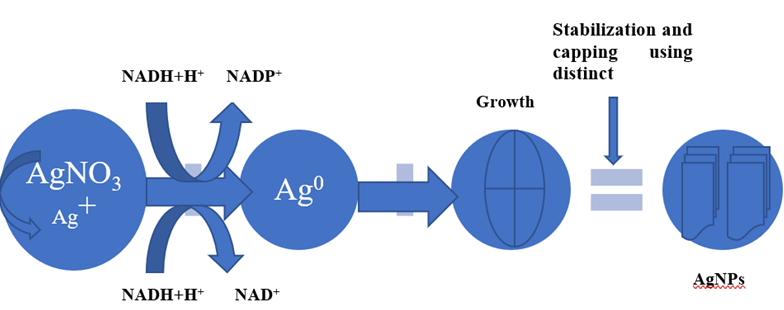
Organic Acids: According to previous studies, organic acids such as lactic acid and citric acid may permeate microbial cell walls and upset the internal pH balance. This can cause nutrient transport interference and enzyme denaturation, which can eventually stop microbial development. This is an additional technique for preserving food. By efficiently stopping the development of bacteria and fungus, the inhibitory action of lactic and acetic acid is vital for the preservation of food [11]. These natural acids provide an acidic environment that inhibits the growth of microorganisms, improving food product safety and extending its shelf life.
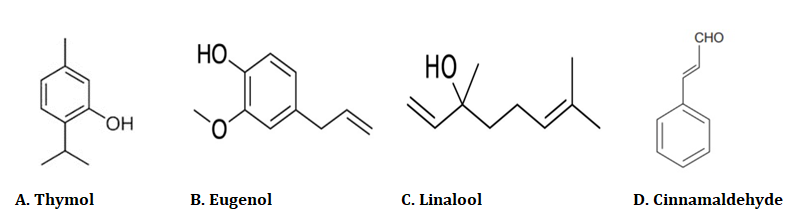
Essential Oils: Essential oils (e.g., thymol, eugenol, linalool, and Cinnamaldehyde) contain bioactive compounds that disrupt cell membranes, interfere with enzyme activity, and alter protein synthesis in microorganisms, leading to cell lysis and death. Some of the antimicrobial compounds’ structures are presented in Figure 3.
Material Selection and Preparation
After previous research analysis, the Selection of packaging materials compatible with antimicrobial agents, such as polyethylene (PE), polypropylene (PP), or biodegradable polymers like polylactic acid (PLA). This material should not interact adversely with the antimicrobial substances or the packaged food.
Incorporation of Antimicrobial Agents
Direct Incorporation: For the fiber to be effective against germs, antimicrobial ingredient uptake is crucial. Incorporate AgNPs, organic acids, and essential oils straight into the polymer matrix as its being extruded or cast. By using this technique, the antimicrobial chemicals are distributed evenly throughout the packing material. Any product’s shelf life can always be extended with proper packaging, and this creative storage method is no exception.
Coating: Prepare coatings by dissolving or suspending the antimicrobial agents in a solvent, followed by application on the packaging surface through spraying, dipping, or brushing. After the application of the coating, allow the solvent to evaporate, leaving a thin antimicrobial layer of food packaging.
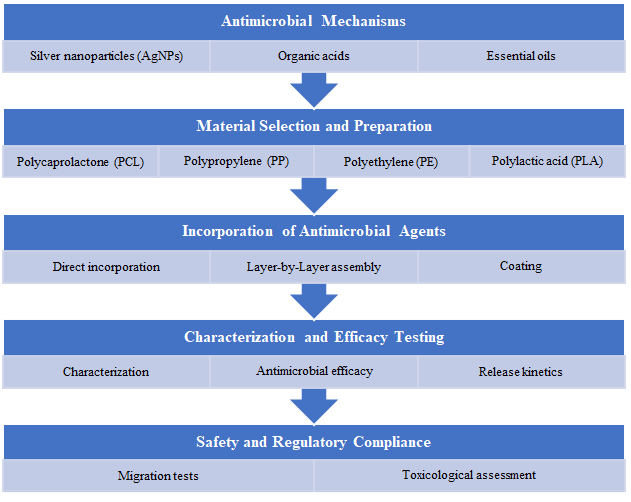
Layer-by-Layer Assembly: This is a further method of using electrostatic interactions to create multilayer coatings on the packaging surface by switching between negatively charged antimicrobial agents and positively charged materials like chitosan. Antimicrobials may be released under regulated conditions thanks to this technique. Lastly, it may create food packaging made of antibacterial nanofibers. The manufacturing process of antimicrobial packaging is described in the flow chart and presented (Figure 4). This diagram provides the details manufacturing process of how to make an antimicrobial nanofiber and a basic process about different standards.
Optimal Food Categories for Antimicrobial Nanofiber Packaging
Antimicrobial-infused nanofiber packaging is highly suitable for a variety of food categories, offering increased safety and longer shelf life. Antimicrobial materials provide the perfect packaging option for dairy goods like cheese and yogurt, which are susceptible to bacterial development and deterioration, extending their shelf life [12]. Due to their quick microbial decomposition, meat, poultry, and seafood are maintained safer and longer-lasting. Significant benefits are also realized for processed foods, baked products, and ready-to-eat meals, all of which preserve quality and cut down on waste. Fruits and vegetables, which are perishable, might also benefit from a longer freshness display [13]. Furthermore, snack items packed in antimicrobial nanofiber materials may maintain their taste and crispness, which will satisfy customers. For this reason, this cutting-edge packaging technique is essential to maintaining the durability and integrity of a wide variety of food goods.
Characterization and Efficacy Testing
Characterization: Testing is an essential component of any materials for performance analysis after the synthesis of antimicrobial nanoparticles. After preparation, characterization is essential for the product’s quality assessment. Numerous effective methods, such as scanning electron microscopy (SEM), transmission electron microscopy (TEM), and X-ray diffraction (XRD), were used to analyze the distribution, size, and morphology of AgNPs. Fourier-transform infrared spectroscopy (FTIR) was used to confirm the presence of organic acids and essential oils in the packaging after a review of previous literature. Compare the results of all the tests with the various literature standard values.
Antimicrobial Efficacy: A microbial test is essential for analyzing the performance of nanoparticles. Determine the antimicrobial efficiency of the packaging by using recognized microbiological tests against major foodborne pathogens such as E. coli, Listeria monocytogenes, and Salmonella spp. One measure of a nanoparticle’s efficiency is its clear zone, and the antimicrobial nanoparticle vs. organism test is significant. Determine the study’s log reductions for microbe counts, zones of inhibition, and minimum inhibitory concentrations (MICs).
Release Kinetics: This is one of the most important things considered when evaluating the packaging’s resistance to microbes. This also describes the connection between microbial availability and shelf life. Investigate the release kinetics of the antimicrobial agents from the packaging into food simulants under various conditions to ensure controlled and extended antibacterial activity during the targeted shelf life. Positive kinetics refers to the use of nanoparticles that increase shelf life; negative kinetics refers to the opposite.
Safety and Regulatory Compliance
Migration Tests: To ensure the safety of food commodities, migration testing requires the use of food simulants. A crucial component of quality testing is the product quality test. Quantifying the quantity of antimicrobial agents that are transported from packaging materials into the simulated food environment is the aim of these studies. The levels of these substances that are finding their way into food remain within the upper limits established by regulatory bodies such as the Food and Drug Administration (FDA) in the United States and the European Food Safety Authority (EFSA) in Europe.
Toxicological Assessment: Toxicological analyses are essential for determining the safety of antimicrobial compounds, particularly silver nanoparticles (AgNPs), because of worries about their build-up in biological systems and potential harm to human health. Without toxicological reports, products cannot launch in the market, this is mandatory for getting licenses. These studies examine these agents’ interactions with living things in great detail, paying particular attention to how they are absorbed, distributed, metabolized, and excreted [14]. Any potentially harmful consequences and the possibility of bioaccumulation that might hurt health is the major goal. Risks to one’s health arise when antimicrobial agents-infused nanofibers used in food packaging contaminate food with metals. Though they are powerful antimicrobials, metals like silver or copper may be poisonous and cause bioaccumulation that affects the kidneys, liver, and nervous system when taken in excess. For these hazards to be reduced, it is essential to maintain regulated release and safety regulations. Safe exposure limits, preventing bioaccumulation, and risk assessment for human health are hallmarks of standard practices in metal toxicology. Public health safety is ensured by stringent testing and monitoring techniques, and regulations enforced by organizations such as the EPA and WHO establish maximum permitted quantities of metals in food, water, and the environment to limit toxicity concerns [15].
Fabrication Methods for Antimicrobial Nanofibers
The manufacturing of antimicrobial nanofibers because of their possible uses in filtration systems, wound dressings, and medical equipment. To create these nanofibers, many methods have been used, each with special benefits and drawbacks. The electrospinning nanofiber preparation process is presented in Figure 5. When creating nanofiber for use in a variety of applications, electrospinning is one of the finest methods. Utilizing information from the body of current research, this comparison explores the three most popular techniques: electrospinning, force spinning, and melt blowing. Because of its ease of use and adaptability, electrospinning has been the most thoroughly studied method for creating antimicrobial nanofibers. The polymer solution is drawn from a droplet into a fine fiber using an electric field in this approach. Cui, et al conducted research that demonstrated how polymer matrices may be included with a broad variety of antimicrobial agents using electrospinning, such as metals, metal oxides, and organic substances [16]. Unfortunately, the need for solvents that can dissolve both the antimicrobial chemicals and the polymer which aren’t always compatible may place some restrictions on the procedure. Using centrifugal force rather than an electromagnetic field, force spinning is a relatively recent technology that creates fiber. Due to its lack of reliance on solvent compatibility, force spinning has the potential to attain greater production rates than electrospinning. Their ability to function as antibacterial agents may be hampered by the greater diameter of the fibers that are generated.
![Figure 5: When creating nanofiber for use in a variety of applications, electrospinning is one of the finest methods. Utilizing information from the body of current research, this comparison explores the three most popular techniques: electrospinning, force spinning, and melt blowing. Because of its ease of use and adaptability, electrospinning has been the most thoroughly studied method for creating antimicrobial nanofibers. The polymer solution is drawn from a droplet into a fine fiber using an electric field in this approach. Cui, et al conducted research that demonstrated how polymer matrices may be included with a broad variety of antimicrobial agents using electrospinning, such as metals, metal oxides, and organic substances [16]. Unfortunately, the need for solvents that can dissolve both the antimicrobial chemicals and the polymer which aren’t always compatible may place some restrictions on the procedure. Using centrifugal force rather than an electromagnetic field, force spinning is a relatively recent technology that creates fiber. Due to its lack of reliance on solvent compatibility, force spinning has the potential to attain greater production rates than electrospinning. Their ability to function as antibacterial agents may be hampered by the greater diameter of the fibers that are generated.](/fulltextimages/12303/fig_5.png)
Melt blowing is an additional method for creating antimicrobial nanofibers, mainly for filtering uses. Hot air blasted at a high speed attenuates the filaments into strands while a polymer melt is extruded via tiny nozzles. Not requiring solvents, melt blowing is a useful method for large- scale production of nanofibers. Nonetheless, the melting points of various polymers restrict their use, and adding antibacterial agents might be difficult. For nanofibers to be widely used in industries like tissue engineering, energy storage, and filtration, industrial-scale manufacturing must replace laboratory-scale production. This can only happen with significant advancements in nanofiber fabrication processes [3]. With an emphasis on scalability and efficiency gains, this overview contrasts current developments in nanofiber production. To improve its scalability, electrospinning despite being a traditional method has undergone substantial advancements. The advent of multi- needle setups and needleless electrospinning has been particularly revolutionary. Studies have shown that by overcoming the drawbacks of single-needle setups, such as clogging and limited throughput, a needleless electrospinning configuration may achieve far higher output rates.
Properties of Antimicrobial Nanofibers
The creation of antimicrobial nanofibers has drawn attention in the field of nanotechnology research because of their possible uses in filtration systems, medical fabrics, and wound dressings. These nanofibers are designed to stop microorganisms from growing, which lowers infection rates and improves hygiene in a variety of contexts. This study explores the biological, chemical, and physical characteristics of antimicrobial nanofibers as well as the techniques used to evaluate their safety and effectiveness.
Physical Properties: Antimicrobial nanofibers’ surface shape, porosity, and fiber diameter are important physical characteristics that affect how effective they are against microorganisms. These properties may be altered by varying variables including polymer concentration, voltage, and spinning distance in electrospinning, a widely used method for creating nanofibers. According to studies, the antibacterial activity of nanofibers is enhanced when their diameter is decreased because it results in a higher surface area-to-volume ratio and better interaction with germs. The shape and homogeneity of the fibers may be seen in detail thanks to the comprehensive pictures provided by Transmission Electron Microscopy (TEM) and Scanning Electron Microscopy (SEM). Natural essential oils have been shown by Rahman et al. to have antibacterial action against airborne microorganisms [6]. They also discussed the intriguing possibility of using neem and lavender oil nanoemulsions in conjunction with polycaprolactone (PCL) as efficient and eco-friendly antimicrobial agents for air cleaning and disinfection. Additionally, they showed that these nanoemulsions have increased antibacterial activity against common airborne infections such as Escherichia coli, Bacillus subtilis, and Staphylococcus aureus.
Chemical Properties: The chemical composition of antimicrobial nanofibers, including the kind of polymer and antimicrobial chemicals used, plays a vital role in their functionality. Polymers including polyvinyl alcohol (PVA), polycaprolactone (PCL), and polyethylene oxide (PEO) are often used because of their biocompatibility and ease of manufacturing. Organic antibacterial agents include triclosan and natural essential oils. Silver nanoparticles are one kind of inorganic antibacterial agent. The inclusion of these chemicals into the nanofibers may be achieved by encapsulation, coating, or mixing; the antibacterial activity and release kinetics of each method differ [10]. To confirm that the antimicrobial chemicals have been effectively absorbed into the nanofiber matrix, elemental composition, and chemical bonding are examined using X-ray photoelectron spectroscopy (XPS) and Fourier transform infrared spectroscopy (FTIR). Biological Properties: The antibacterial activity of microorganisms, including bacteria, fungi, and viruses, is measured. The zone of inhibition test, the broth dilution method, and assays for colony-forming units (CFUs) are frequently used methods to evaluate this activity. These tests’ results provide insight into the spectrum of antimicrobial activity and the necessary minimum inhibitory concentration (MIC) for efficacy [6]. Moreover, biocompatibility is a prerequisite for these nanofibers, especially for applications where they will come into direct contact with human tissue. Cytotoxicity assays, including the MTT assay, are performed to ensure that the nanofibers don’t result in adverse cellular responses. In food packaging, the fungus also causes biological damage to human health; however, antimicrobial packs detect fungus development [17]. In particular, spices are goods on which bacteria and other microbes may readily proliferate, as shown by earlier study studies [18, 19, 20]. Lastly, antimicrobials and nanofibers work well together to prolong shelf life by inhibiting bacterial development.
Regulatory and Safety Considerations
The use of nanoparticles in food packaging is subject to a complex regulatory framework that is regulated by several rules and regulations designed to protect consumers and lessen environmental effects. The safety guidelines for food packaging are presented in Table 1. These frameworks are heavily influenced by regulatory agencies like the World Health Organization (WHO), the Food and Agriculture Organization of the United Nations (FAO), and the U.S. Food and Drug Administration (FDA). To make sure that using nanomaterials does not put people’s health in danger, a thorough evaluation of their chemical and physical characteristics, potential for migration into food items, and toxicological profiles must be done [21].
| Guidelines | Description | Relevant Materials |
|---|---|---|
| Migration Limits | Ensuring chemical migration from packaging to food is below safe limits. | Plastics, metals, inks |
| Non-toxic Materials | Using materials that are non-toxic and safe for direct food contact. | All packaging materials |
| Allergen Management | Preventing cross-contamination with allergens during packaging. | All packaging processes |
| Labeling Accuracy | Providing accurate and clear labeling for consumer safety. | Labels on all food packages |
| Traceability | Maintaining records to trace the packaging material back to its source. | All packaging materials |
| Environmental Considerations | Reducing environmental impact by using recyclable or biodegradable materials | All packaging materials |
Table 1: Safety guidelines for food packaging.
The goal of nanotechnology is to prolong the shelf life of food products by maintaining the release of antioxidants, tastes, enzymes, antimicrobials, and nutraceuticals. The agro- food sector is the main focus. The best food packaging uses smart packaging, which allows it to detect its surroundings and mend rips and holes in itself. Nanocomposites are utilized to make up for the shortcomings of bio based materials, improve the use of edible and biodegradable films, and increase their shelf life [22]. There are already more than 500 commercially available nano-packaging products, and their number is growing unstoppably.
The Toxicity and Hazards of the Nanoparticles in Food Packaging
Food items are now better preserved, safer, and of higher quality thanks to the introduction of nanoparticles into food packaging materials. On the other hand, considerable worldwide regulatory attention and scientific investigation have been sparked by the possible toxicity and safety concerns connected to the usage of these nanomaterials. The main worry is that nanoparticles might leak into food from packaging, causing people to absorb them directly and creating concerns about the effects they could have on the environment and human health. With an emphasis on assessing the migratory potential, toxicological hazards, and environmental effects of nanoparticles, international standards, and regulatory frameworks are being established more and more to address these issues [23]. The European Food Safety Authority (EFSA) and the Food and Drug Administration (FDA) of the United States have created recommendations for the risk evaluation of nanomaterials in food packaging in response to these concerns. These recommendations stress how crucial it is to describe the physical and chemical characteristics of nanoparticles, evaluate how they migrate into food under different circumstances, and carry out thorough toxicological analyses to ascertain their safety profile. To harmonize methodologies and guarantee the safety and effectiveness of these cutting- edge packaging solutions, the European Committee for Standardization (CEN) and the International Organization for Standardization (ISO) have also developed standards and technical specifications for the testing and assessment of nanomaterials [24, 25]. The field still needs to develop standardized testing procedures, long-term research on the health effects of repeated exposure to nanoparticles, and mitigation techniques for the field’s negative environmental effects. To guarantee that the advantages of nanotechnology in food packaging are achieved without compromising consumer safety or environmental integrity, strong international standards and regulatory frameworks must be developed and put into place [26, 27, 28]. These guidelines need to be flexible to incorporate new scientific discoveries and protect public health while promoting technological advancements in food packaging.
Challenges and Limitations
- Regulatory Compliance- Food packaging rules about nanomaterials are still developing, and it is difficult to guarantee that nanofiber coatings comply with global food safety standards and regulations.
- Manufacturing Scale- It is difficult to increase production costs or compromise antimicrobial efficacy when moving from lab to industrial scale in the manufacturing of nanofiber coatings.
- Safety- Comprehensive safety evaluations are necessary yet difficult to perform to comprehend the possible migration of nanoparticles into food and their effects on human health.
- Market Adoption- Overcoming opposition from the public resulting from the greater expenses of nanofiber coating technologies in comparison to traditional packaging materials, and demonstrating the long-term advantages to producers and consumers.
Antimicrobial food packaging using cutting-edge nanofiber coating technology is constrained in several ways. Initially, adherence to regulations is a dynamic objective due to the intricate and dynamic regulatory environment [29, 30]. It is difficult, secondly, to scale up manufacturing from laboratory to industrial levels without suffering a major cost rise or reduction in effectiveness. Thirdly, uncertainties regarding the long-term safety and environmental effects of nanomaterials give rise to worries about possible health hazards and the migration of nanoparticles into food. Furthermore, these new materials’ greater prices might prevent their broad adoption, particularly in sectors where cost is a factor [31, 32]. Ultimately, one technological challenge that has to be overcome is guaranteeing the stability and longevity of nanofiber coatings under diverse storage scenarios.
Future Perspectives and Innovations
- Nanofiber technology is revolutionizing food packaging by enhancing barrier properties against moisture, oxygen, and pathogens. This technology aligns with environmental and health-conscious consumer demands, extending shelf life and contributing to sustainability. Research and development in this area could lead to more efficient, eco-friendly packaging solutions.
- Advancements in nanotechnology are driving the development of smart packaging solutions in the food industry. These technologies, including sensors and indicators, offer benefits like food safety, quality monitoring, and traceability. They also facilitate supply chain transparency, inventory management, and waste reduction.
- Active packaging, incorporating nanotechnology, is a significant advancement in food packaging. It involves substances that interact with food or the environment to extend shelf life, improve safety, or maintain quality. Future innovations could include packaging adapting to environmental changes or actively repairing minor damages.
Conclusion
In summary, nanofiber coating technology offers novel ways to improve food safety, lengthen shelf life, and tackle the rising threat of foodborne organisms. As such, it constitutes a substantial achievement in the area of food packaging. The production process of nanofibers, which are distinguished by their distinct antibacterial processes, has been thoroughly investigated, demonstrating the possibility of transforming packaging techniques by using antimicrobial nanofibers. These advancements highlight how crucial it is to comprehend the manufacturing processes since doing so is essential to getting the intended characteristics and functions of nanofiber coatings. In this study, it is crucial to strike a balance between safety and innovation as we explore the world of antimicrobial nanofibers, which calls for a careful analysis of safety protocols and regulatory frameworks. Because of the possible toxicity and risks linked to nanoparticles, caution is advised. To protect consumer health and the environment, extensive testing and strict adherence to regulations are essential. Although there have been encouraging developments, there are still issues and restrictions, such as scalability, affordability, and public opinion of nanotechnology in food packaging. To create packaging solutions that are safe, effective, and sustainable, scientists, businesses, and regulators must work together in a multidisciplinary manner to address these issues. In terms of food packaging, nanofiber coating technology has a promising future ahead of it. Continued research is expected to reveal novel materials, production methods, and uses. A new age of food packaging will be possible if these innovations are welcomed and safety and environmental stewardship are given equal priority, all the while adhering to regulatory requirements.
Funding
None
Declaration of Competing Interest
The authors declare that they have no conflict of interest
References
-
Nanda A, Pandey P, Rajinikanth PS, Singh N (2024) Revolution of nanotechnology in food packaging: Harnessing electrospun zein nanofibers for improved preservation-A review. Int J Biol Macromol 260(pt 1): 129416.
-
Primozic M, Knez Z, Leitgeb M (2021) (Bio) Nanotechnology in food science-food packaging. Nanomaterials (Basel) 11(2): 292.
-
Zhao L, Duan G, Zhang G, Yang H, He S, et al. (2020) Electrospun functional materials toward food packaging applications: A review. Nanomaterials (Basel) 10(1): 150.
-
Sameen DE, Ahmed S, Lu R, Li R, Dai J, et al. (2022) Electrospun nanofibers food packaging: Trends and applications in food systems. Crit Rev Food Sci Nutr 62(22): 6238-6251.
-
Chausali N, Saxena J, Prasad R (2022) Recent trends in nanotechnology applications of bio-based packaging. Journal of Agriculture and Food Research 7: 100257.
-
Rahman MM, Kotturi H, Nikfarjam S, Bhargava K, Ahsan N, et al. (2024) Antimicrobial Activity of Polycaprolactone Nanofiber Coated with Lavender and Neem Oil Nanoemulsions against Airborne Bacteria. Membranes (Basel 14(2): 36.
-
Kuswandi B, Moradi M (2019) Improvement of food packaging based on functional nanomaterial. Nanotechnology: applications in energy, drug and food, pp: 309-344.
-
Hemmati F, Bahrami A, Esfanjani AF, Hosseini H, McClements DJ, et al. (2021) Electrospun antimicrobial materials: Advanced packaging materials for food applications. Trends in Food Science & Technology 111: 520-533.
-
Bahrami A, Delshadi R, Assadpour E, Jafari SM, Williams L (2020) Antimicrobial-loaded nanocarriers for food packaging applications. Adv Colloid Interface Sci 278: 102140.
-
Tripathi N, Goshisht MK (2022) Recent advances and mechanistic insights into antibacterial activity, antibiofilm activity, and cytotoxicity of silver nanoparticles. ACS Applied Bio Materials 5(4): 1391- 1463.
-
Zokaityte E, Cernauskas D, Klupsaite D, Lele V, Starkute V, et al. (2020) Bioconversion of milk permeate with selected lactic acid bacteria strains and apple by-products into beverages with antimicrobial properties and enriched with galactooligosaccharides. Microorganisms 8(8): 1182.
-
Motelica L, Ficai D, Ficai A, Oprea OC, Kaya DA, et al. (2020) Biodegradable antimicrobial food packaging: Trends and perspectives. Foods 9(10): 1438.
-
Wang Y, Xu H, Wu M, Yu DG (2021) Nanofibers-based food packaging. ES food & agroforestry 7: 1-24.
-
Rezvani E, Rafferty A, McGuinness C, Kennedy J (2019) Adverse effects of nanosilver on human health and the environment. Acta Biomater 94: 145-159.
-
Venkatesan M, Veeramuthu L, Liang FC, Chen WC, Cho CJ, et al. (2020) Evolution of electrospun nanofibers fluorescent and colorimetric sensors for environmental toxicants, pH, temperature, and cancer cells–A review with insights on applications. Chemical Engineering Journal 397: 125431.
-
Cui J, Li F, Wang Y, Zhang Q, Ma W, et al. (2020) Electrospun nanofiber membranes for wastewater treatment applications. Separation and Purification Technology 250: 117116.
-
Khan I, Saeed K, Khan I (2019) Nanoparticles: Properties, applications and toxicities. Arabian journal of chemistry 12(7): 908-931.
-
Rahman M, Moniruzzazan M, Das KC, Islam MA, Kamal MM, et al. (2023) Effect of gamma radiation on fungal load decontamination of marketed spices. Archives of Agriculture and Environmental Science 8(4): 468-475.
-
Topuz F, Uyar T (2020) Antioxidant, antibacterial and antifungal electrospun nanofibers for food packaging applications. Food Res Int 130: 108927.
-
Rahman M, Islam MA, Das KC, Salimullah M, Mollah MZI, et al. (2021) Effect of gamma radiation on microbial load, physico-chemical and sensory characteristics of common spices for storage. J Food Sci Technol 58(9): 3579-3588.
-
Gupta K (2023) Food safety guidelines for food packaging. In Green Sustainable Process for Chemical and Environmental Engineering and Science, pp: 59-69.
-
Maresca D, Mauriello G (2022) Development of antimicrobial cellulose nanofiber-based films activated with nisin for food packaging applications. Foods 11(19): 3051.
-
Naseer B, Srivastava G, Qadri OS, Faridi SA, Islam RU, et al. (2018) Importance and health hazards of nanoparticles used in the food industry. Nanotechnology Reviews 7(6): 623-641.
-
Alfei S, Marengo B, Zuccari G (2020) Nanotechnology application in food packaging: A plethora of opportunities versus pending risks assessment and public concerns. Food Res Int 137: 109664.
-
Mallia DO, Galea R, Nag R, Cummins E, Gatt R, et al. (2022) Nanoparticle food applications and their toxicity: current trends and needs in risk assessment strategies. J Food Prot 85(2): 355-372.
-
Ashfaq A, Khursheed N, Fatima S, Anjum Z, Younis K (2022) Application of nanotechnology in food packaging: Pros and Cons. Journal of Agriculture and Food Research 7: 100270.
-
Ahmad SS, Yousuf O, Islam RU, Younis K (2021) Silver nanoparticles as an active packaging ingredient and its toxicity. Packaging Technology and Science 34(11-12): 653-663.
-
Enescu D, Cerqueira MA, Fucinos P, Pastrana LM (2019) Recent advances and challenges on applications of nanotechnology in food packaging. A literature review. Food Chem Toxicol 134: 110814.
-
Siddiqui S, Alrumman SA (2021) Influence of nanoparticles on food: An analytical assessment. Journal of King Saud University-Science 33(6): 101530.
-
Bumbudsanpharoke N, Choi J, Ko S (2015) Applications of nanomaterials in food packaging. J Nanosci Nanotechnol 15(9): 6357-6372.
-
Polat S, Agçam E, Dündar B, Akyildiz A (2019) Nanoparticles in food packaging: opportunities and challenges. In: Malik A, et al. (Eds.), Health and safety aspects of food processing technologies, pp: 577-611.
-
Alqahtani T (2022) Silver nanoparticles impregnated in tapioca starch biofilm made using the electrospinning technique: a cutting-edge material for food packaging. Biomass Conversion and Biorefinery, pp: 1-8.
- Antifungal Activity of New Acetophenone Derivatives
- Interconnected Microbiomes Human Health Within an Environmental Framework
- Silkworm-Based Vaccine Production for H5N1: A One Health Approach to Pandemic Preparedness
- Microbial Diversity and Lipolytic Activity of Bacteria and Fungi from Oil-Contaminated Sites in Makurdi Metroplois
- Antibiotic Resistance Profile of Bacteria Isolated at the Central Laboratory of the National Hospital Center of Nouakchott
- Epidemiology and Sensitivity to Antibiotics of Germs Isolated from Blood Cultures in the Laboratory of the National Hospital Center of Nouakchott-Mauritania