
Bioremediation of Some Organic Pollutants in the Aquatic Environment; the Egyptian and the Global Experiences
Organic pollutants reach the aquatic environment through different waste sources such as municipal, industrial and agricultural wastes. The term “organic pollutants” in the present review is considering different types of chemicals including; pesticides, organic matter, dyes and oil spills. The ordinary methods used for remediation of such pollutants from the water environment such as mechanical removal, coagulation, aeration and filtration are defective due to their partial treatment effect in some instances and their high costs in some others. The modification of new, environmentally friend treatment methods are of great concern by abundant environmentalists. Bioremediation is one of new promising techniques that attracting worldwide attention, to completely or partially remove the organic pollutants from the aquatic systems. It is eco-friendly, cost-effective, and suitable for in situ applications. Microbial remediation has been applied to eliminate the toxic and recalcitrant pollutants from the water environment through several mechanisms including biodegradation. This review article provides a survey on the aquatic environment and the main groups of organic pollutants that commonly contaminate it. It also deeply expatiates the multiple applications of microbial bioremediation of such organic pollutants. Moreover, it focuses on some in situ applications of bioremediation technology in some case studies.
Abbreviations
DO: Dissolved Oxygen; TOC: Total Organic Carbon; TN: Total Nitrogen; COD: Chemical Oxygen Demand; BOD: Biological Oxygen Demand; OCPs: Organophosphorus Pesticides; LC- MS: Liquid Chromatography-Mass Spectrum.
Introduction
The accumulation of organic pollutants in the aquatic environment causes serious environmental risks [1]. The global development of chemical industries and the multiple applications of such chemical compounds have altered the natural environments everywhere [2]. Aquatic environments are susceptible to organic and inorganic pollutants, where they might reach the water bodies through the discharge of effluents containing industrial wastes, agricultural and domestic wastes, oil spills, petroleum exploitation and transportation [3]. The persistence of the organic pollutants in the aquatic resources depends on their physical and chemical features, whereas the organic compounds of complex structures, are more persistent than others; some of them are strongly resistant to degradation and survive for many years, they are called recalcitrant [4]. Several cleanup methods are applied for the removal of chemical contaminants from water bodies such as; mechanical removal, sedimentation, flotation, sorption, filtration, coagulation, aeration, degasification, neutralization, and ion exchange [5]. However, there are several restrictions on physicochemical methods including; i) high cost, for example; the cleanup of contaminated sites by traditional methods in the United States would mount to 1.7 trillion US$ [6], ii) partial treatment which sometimes leads to generating of secondary pollutants, causing further environmental threats [7]. Bioremediation of organic contaminants from an aqueous environment is considered a promising technology to recover such problems, forasmuch, it is a cost-effective, environmentally friend technique, and can be applied on large distanced contaminated areas [8].
This review aims to i) provide a beneficial evaluation of current achievements of bioremediation of some hazardous organic pollutants from aqueous environments, ii) give introspection of In Situ applications of pollutants bioremediation, and iii) investigate the limitations, challenges and prospects of using microorganisms to treat organic contamination of water bodies.
The Aquatic Environment
The importance of water is coming from the fact that all living organisms strictly need it to survive. The unique properties of water make it basic to life [9]. The term aquatic environment is involving; groundwater, rivers, canals, lakes and all types of surface water, oceans and marines, as well as, glaciers, ice caps and snow [10]. Chemically, water is hydrogen and oxygen, but actually, it is a mixture of more than 30 possible compounds. Each water environment is characterized by special physical and chemical features, it contains different concentrations of naturally occurring inorganic and organic particulates such as; iron particles which originate from soil and rocks weathering, in addition to humic acid which produced from degrading leaf litter [9]. The characteristics of an aquatic environment are susceptible to some changes, as some chemicals (organic or inorganic) might reach the water bodies either directly through the discharges of industrial and/ or wastewater effluents or indirectly due to surface runoff from soils [11]. Moreover, the deterioration of rivers waters quality is probably attributed to the nonpoint source pollution (contributes about 60% of pollution cases), while the municipal discharge, industrial discharge and sewer overflows contribute 21%, 18% and 1%, respectively [9].
On the other hand, each water environment is also characterized by a unique microbial community, which might include fungi, bacteria, viruses, protozoa, rotifers, and algae. Among all the living organisms on the planet, microorganisms are considered as the utmost varied group of them. They are will survived and need minimal requirements to exist in different circumstances [9]. The majority of microorganisms are non- pathogenic; however, the presence of human or animal intestinal tract microorganisms in a given water body indicates its pollution with fecal materials, and consequently, confirms its contamination by pathogens. Pathogenic microorganisms might reach the water bodies via the untreated domestic wastewater, they temporarily residing water, going with the flow, to meet up with their final host [12].
Organic Pollutants in the Aquatic Environments
Different organic pollutants can reach the water bodies through agriculture activities, oil production, transportation and unexpected accidents, and the improper discharge of industrial and domestic wastes. In such context, the following discussion will focus on four major categories of organic pollutants that have been detected in water bodies nationally and globally.
Pesticides
Herbicides, fungicides and insecticides are extensively applied in agriculture in many countries. They might contaminate different water resources, which leads to some complicated health hazards that affect the human beings [13]. There are plenty of regulations have been published all over the world to regulate the utilization of pesticides, nevertheless, immeasurable amount of pesticides materials are used all over the world every year [14]. This can reach surface waters from application sites via the discharge of agricultural drains [15], or from streams of wastewater treatment plants [16]. They can also contaminate the groundwater through runoff and leaching [17]. Globally, the detection of various kinds of pesticides in water bodies has been investigated by numerous authors [18, 19, 20, 21]. For example; diuron has been extensively used in agricultural areas in France, during the recent decades, several studies highlighted the presence of diuron in various rivers and drainage waters [22]. Alachlor and endosulfan residues were detected in Ochlocknee River water, Tallahassee, Florida [23]. The occurrence of malathion and chlorpyrifos in different countries both in ground- and surface- waters even at low concentrations was highlighted by Westlund and Yargeau [24]. In Egypt, the presence of aldrin, DDT, dieldrin, HCH, endrin, and heptachlor epoxide have been scanned in a drainage canal located at the pesticides factory in Damietta Governorate. They were detected in concentrations of 715, 1259, 95, 819, 169 and 243 ppb, respectively [25].
B-HCH, hepatochlor epoxide and endrin were detected in concentrations of 1.668, 2.098 and 4.66 ng L-1, respectively, in El-Sarsawia canal while aldrin and endosulfan were present in concentrations of 2.149 and 5.746 ng L-1, respectively, in Embaby drain, Menufiya Governorate [26]. Furthermore, alachlor was detected in high concentrations (165-254 ppb) in some water bodies of many Egyptian governorates such as; Cairo, Alexandria, Damietta and Manzala [27]. In a detailed monitoring study conducted by Dahshan and co-workers [28], organochlorine pesticides; dieldrin, DDD, DDE, DDT and endrin were detected in some sites (according to the local pollution points) along the River Nile in concentrations of 1.081, 1.209, 1.192, 3.22 and 0.403 μg L-1, respectively, and they concluded that dieldrin, DDT and DDE concentrations were above the WHO standard guidelines. Moreover, the concentrations of organophosphorus pesticides chlorpyrifos, ethion, ethoprophos, fenamiphos, fenitrothion, pirimiphos- methyl, quinalphos and triazophos were 0.263, 0.111, 0.578, 0.04, 1.076, 2.601, 1.222 and 1.91 μg L-1, respectively.
Organic Matter
The occurrence of elevated concentrations of organic compounds in a given water resource causes the decrease in the dissolved oxygen (DO) of the water due, this condition is known as hypoxia of water bodies [29]. Organic matter content of wastewater is particularly evaluated by measuring the concentrations of total organic carbon (TOC), total nitrogen (TN), chemical oxygen demand (COD) and biological oxygen demand (BOD) [30]. Organic pollutants from distillery effluent were evaluated by Tripathi, et al. [31] where the concentration of TN, COD, BOD and phenols was 1200, 37000, 17000, 6900 mg L-1, respectively. Food industries are usually producing wastewaters rich in organic matter [29]. The improper discharge of such wastes sometimes poses pollution threats to the aquatic environment. The organic content of maize processing wastewater of an industrial factory, located on the 10th of Ramadan industrial city in Egypt was rich in carbonaceous and nitrogenous compounds where COD, BOD and TKN concentrations were 12100, 9000 and 2330 mg L-1, respectively [32]. In addition, animal- processing industries are also reported as another source of water pollution with organic matter, where a considerable amount of organic wastes were always produced, which indirectly, might reach the water systems. For example, the BOD of slurry collected from some pig farms was in range of 30000 to 80000 mg L-1 [33]. Manure is always collected in farms of livestock production to be used as organic fertilizer, sometimes it diffuses in water channels causing their pollution [34]. Fertilizers are usually applied for agricultural purposes, when they are excessively used; they might contaminate the water bodies via soil wash-off. Moreover, aquacultures are considered a major source of organic encumbrance in water environments. For instance, a salmon farm in Scotland was found to produce organic wastes equal to 75 % of the domestic organic wastes of the human inhabitants. The total organic wastes generated by shrimp’s aquacultures in Bangladesh exceeded 600 tons per day [35]. In a study conducted on water samples collected from some fish farms located in the city of Abengourou - Côte d’Ivoire to evaluate their physical and chemical quality. Sanou and co- workers [36] found that the values of physical characteristics such as pH, temperature, DO, TDS, EC, transparency and suspended matter were ranged between 6.2 - 8.18, 28.28 - 30.87 ºC, 5.28 - 6.92 mg L-1, 21 - 42 mg L-1, 32 - 101 µS cm-1, 25 - 43.6 cm and 101.69 -149.58 mg L-1, respectively. While the values of chemical characteristics such as PO4, NO3, ammonia and chlorophyll (a) were ranged from 2.2 to 4.3 mg L-1, 3.7 to 16.6 mg L-1, 1.04 to 2.69 mg L-1 and 2.6 to 6.6 µg L-1, respectively. They finally calculated the pollution indices which were ranged between 2.00 to 2.66 and approved that there were high levels of organic materials in the farm.
On the other hand, the Egyptian aquaculture has gained a prompt development over the past ten years. Egypt is now number one in Africa and number six worldwide in aquaculture production. The Egyptian total fish production is mainly coming from aquacultures (about 81%), the rest is coming from lakes (such as; Al-Manzala, El-Brullus, Ghalion, Qaroun and Nasser lakes) in approximate percentage of (10%), of seawater (4.4%) and of freshwater (3.8%). The environmental problems always occur in fish culture ponds are; 1) accumulation of toxic metabolites 2) excessive phytoplankton production and 3) low dissolved oxygen [37].
Dyes
Globally, dye production and dye industries are of great concern, it was reported that about 700,000 tons of different kinds of pigments were produced annually [38]. Of them, about 10 to 15% were discharged as effluent during their applications [39]. The discharge of effluents containing dyes into different water resources poses some possible menaces to the quality of water, and generates tangible problems to the aquatic biota, plants and animals, as well as, the human beings. Furthermore, coloring of water caused by dyes-contamination reduces the amount of sunlight and of oxygen penetrates to the water body, which could weaken photosynthesis and consequently, reduce the concentration of DO in such water system [40]. Nowadays, abundant industries initially depend on dyes as a main constituent during the production process including; paper, textile, food, electronics, rubber, leather, cosmetics, paints and inks [41]. Textile industries consume the majority (about 70%) of overall produced dyes [42]. The complexity of the chemical structure of most pigments resulted in their resistance to be broken down even after they reach the water effluents; therefore, they are severe to be degraded or decolorized even after they reached the water systems [43]. Among the plenty of dye-types commonly used in different industries, azo dyes are considered the most common, as they are used extensively [44]. The group of the azo dyes contains synthesized organic chemicals that contains one azo group (– N=N –) or more, in their structure. When azo dyes reach wastewater, they attracted to the suspended organic particles by electrostatic interactions, which increase their persistence [45]. The environmental impact assessment of the contamination of the aquatic environment with harmful dyes could be explained as follows; when such wastewater is discharged into a water body; the concentration of BOD, COD, total nitrogen and some trace metals like Cr, Ar and Zn will increase [46], that will affect the aquatic animals, which might transfer such toxic components to humans beings, through the food chain, causing many diseases like; bleeding, hypertension, cramps and nausea. Sometimes in high doses, severe damage to the kidneys, livers, reproductive system and brain might occur [47]. Unfortunately, most of azo dyes are reported as carcinogenic or toxic and recalcitrant [4]. The pigmentation of wastewater ponds collecting effluents from 10th of Ramadan City factors - Sharqia Governorate - Egypt, was reported by Ewida and co-workers [48] as illustrated in (Figure 1).
![Figure 1: Contamination of wastewater ponds at 10th of Ramadan industrial city – Sharqia Governorate - Egypt with textile red dyes (with permission of Ewida, et al. [48]).](/fulltextimages/12959/fig_1.png)
Oil Spills
The offshore oil exploration, the ocean and/or river transportation, tankers release and the accidental spills of refined petroleum products, are the main causes of aqueous environment contamination with oil spills [49]. Worldwide, the amount of spilled oil in the aquatic environment from 2010 to 2015 has reached 330 x 103 tons, as reported by Duran R, et al. [50]. The majority of oil spills might occur due to some accidents such as; the outpouring of tankers’ crude oil or refined petroleum products, drilling rigs or wells and offshore platforms, as well as, the release of fuels from large ships [51]. So, we can conclude that oil spills are mostly originated due to human activities. Once oil spilled out in the aquatic environment, it mainly floats on water surface due to the difference density. It will rapidly spread, sometimes reach the shores, and then it becomes a thin black layer known as an oil slick [52]. Such type of pollution is hard to be treated and may remain for hundreds of years due to oil low solubility, high viscosity and chemical stability [53]. Several accidental oil spills have been recorded worldwide; details for some of them will be given as follows;
The Oil Spill of Persian Gulf (1991): It happened as a result of the Gulf War in 1991 and was recorded as one of the biggest oil spills in the history where the total amount of the spilled oil approximately achieved 200 million tons [54]. Numerous researches have been conducted to evaluate the impact of such spill on the marine environment. The majority of them were concluded that such spill caused aggressive environmental deterioration to the marine organisms [55], illustrated by (Figure 2).
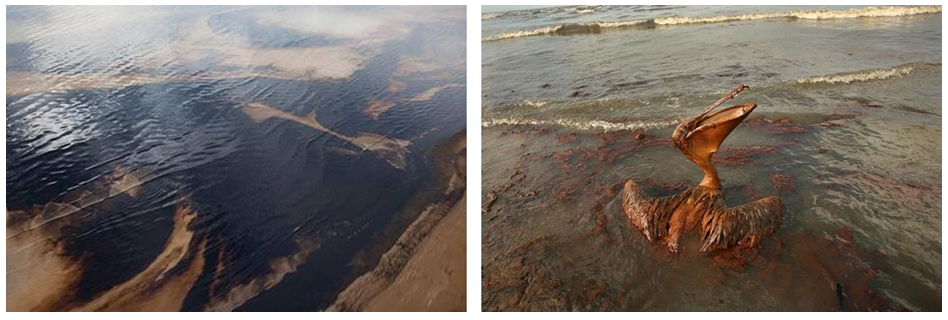
The Macondo Oil Release at the Gulf of Mexico (2010): It happened due to the exploding of the drilling rig of DH at the Gulf of Mexico. The approximate amount of the spilled oil exceeded 100 million tons where the oil overflowed from the damaged well for 87 days. That led to the pollution of more than 1773 km of shoreline [56]. After one year of this spill, the contamination of Atlantic Ocean water with alkanes and polyaromatic hydrocarbons (PAHs) was observed at Louisiana marshes [57].
The Penglai 19-3 Oilfield Spill (2011): It was initiated from the sea floor and continued for 4 days, resulting in the leakage of about 20 million tons of crude oil which impact Bohai Sea shorelines at China [58].
In Egypt; the detection of weak oil spills has been detected during some few accidents of oil-water transportation and somewhere at the river banks near the stations of ship settlement and fixation [59, 60, 61].
Discussion
The existence of organic pollutants in a given water resource is undesirable, so, some conventional physicochemical methods for recovery were applied to the contaminated sites. Among those methods are mechanical removing, washing out by highly pressurized hot water [62] and chemical curing [8]. The physical technologies usually require heavy equipment with a lot of efforts and sometimes it is very expensive [63]. The chemical treatments methods sometimes produce residues which have more serious unfavorable effect on the water environment [64]. Bioremediation is a promising technique attracting worldwide concern, to remove organic pollutants from the aqueous environment. It is eco-friendly, cost-effective, and suitable for in situ applications [1, 8, 65]. The term “Bioremediation” points to the process of pollutants removal from the environment using living things. Bioremediation is sometimes named after the organisms used; it is called phytoremediation when using plants, phycoremediation when using algae, mycoremediation when using fungi microbial remediation when using microorganisms such as bacteria [66, 67]. The organisms involved in bioremediation are called bioremediators. Possibly, microbial bioremediation is the most common and traditionally applied worldwide. Microorganisms exhibit different mechanisms when applied for bioremediation; such as i) Biodegradation: which concerns the capability of microorganisms to utilize the targeted organic compound, resulting in the conversion of the substrate to a simpler one. If biodegradation of a given organic pollutant ends with mineral compounds like CO₂, H₂O, and or NH₄⁺, it is called mineralization [68]; ii) Biotransformation: describes the chemical modification performed by microorganisms for the targeted organic compound, which might reduce or increase the toxicity of pollutants. When microorganisms transform dyes by removing their colors, it is called biodecolorization, which lower the harmful effect of coloring the water environment [48]; iii) Bioaccumulation: is used when microorganisms gradually accumulate substances, such as pesticides, in their cells. When the microbial cells absorb some toxic materials at a rate faster than that at which the substances are naturally broken down or eliminated, that called bioaccumulation [69]; iv) Biosorption; refers to the ability of microbial cells to bind and concentrate heavy metals from aqueous solutions [70].
As the aim of the present review is to consider the bioremediation of organic pollutants, through the biodegradation ability of microorganisms, the following discussion will focus on the microbial biodegradation of pesticides, organic matter, dyes and oil spills from the aquatic environment, concerning the results obtained from in vitro and in situ cases studies.
Microbial Degradation of Pesticides
Due to different economical and agricultural reasons, pesticides use cannot yet be completely avoided [71] and the need for remediation of the pesticides-polluted aqueous environment is still of great importance. The microbial remediation of pesticides attracted scientists for a long time and continued up to date [72, 73]. Most of pesticides are chemically complicated in their structures and are deemed as POPs i.e. persistent organic pollutants. POPs are materials that hard to be degraded and last for a long time in the aquatic environment [74] and called recalcitrant [4]. However, plentiful of microorganisms have been reported as valid biodegraders; fungi such as Lentinus tigrinus, Phanerochaete chrysosporium, Pleurotus ostreatus and Trametes versicolor [75]; bacteria such as Micrococcus, Arthrobacter, Bacillus, Enterobacter, Alcaligenes, Burkholderia and Pseudomonas [76]. Some in vitro experiments recorded in the literature were given in Table 1.
The ability of microorganisms to biodegrade pesticides is affected by some factors like the structure of the pesticide, its concentration, and the conditions under which the biodegradation process is performed. The degradation of pesticides passes through multi-steps involving many metabolism enzymes of the microorganism [77]. Some scientists recorded high performance of microorganisms for pesticide remediation from the aquatic environment, for example; Ewida [23] found that the bacterial consortium isolated from Ochlocknee River water, in Florida, removed 94% of endosulfan and 80% of alachlor of initial concentration 100 mg L-1 (each). The potential biodegrading bacteria for endosulfan and alachlor were Burkholderia, Pseudomonas and Beta Proteobacterium. The identification of whole genomic material of those bacterial isolates indicated that they have specific genes controlling their abilities to degrade many other pesticides such as atrazine [78]. Contrary to such findings, Istvan [79] found that only 34% of 10 mg L-1 of acetochlor was removed after one month of treatment by soil bacteria. In a case study conducted on diuron using a microbial community of freshwater sediment collected from Morcille River, in France, authors suggested that diuron might be mineralized by the act of the microbial enzymes [22].
The laboratory-scale experiments are considered the uterus from which a new technology will elaborated. A laboratory investigation was carried out using bed biofilm reactors for malathion and chlorpyrifos, the reactor was operated for 300 days, and the biofilm could remove 70% and 55% (of 210 and 165 µg/m2/d), respectively [80]. On a pilot scale, Carles and co-workers [71] did apply the degrading bacteria (previously identified as eco- friendly) for pesticide removal. They constructed small boxes (microcosms) containing soil planted with seeds of wheat, then they applied 2,4-D herbicide mixed with a bacterial degrader named Cupriavidus necator JMP134. All were incubated in small agriculture greenhouses covered with porous plastic covers, for two weeks. They found that the application of bacterial degrader with the pesticide did not suppress its effectiveness, as well as, reduce the time of pesticide persistence in the environment by threefold than usual.
In Egypt, many authors have been engaged in pesticide bioremediation research, for example; Bayoumi, et al. [81] isolated six microbial strains from soil and sewage water polluted with dursban pesticide. Those microorganisms showed their capabilities to utilize dursban as a sole carbon source. The conditions of dursban breakdown were optimized using MSM enriched with 40 ml L-1 of pesticide concentration, at 25 oC for 7dyes. The potential bacterial isolates could remove dursban were identified as Flavobacterium balustinum S8B6 and Pseudomonas stutzeri S7B4. Another study concerning the degradation of 17 organophosphorus pesticides (OCPs) presented in three different agricultural wastewater drains at Kafr El-Sheikh Governorate. Numerous bacterial strains were isolated from the same sources; the best of them was identified as Peanibacillus sp. and was found capable of degrading 10 (of 17 OCPs) in broth cultures, with removal efficiency frequented from 24.4 % to 100 % [82]. Fungi were also reported in pesticides biodegradation field for example, Ibrahim and co-workers [83] isolated Anabaena oryzae and Nostoc muscorum from wastewater at Al-Fayoum Governorate. They recorded the ability of such fungi to breakdown up to 90% of malathion concentration of 100 mg L-1. Recently, Ewida and co-workers isolated and identified two bacterial and four fungal strains from agricultural drainage water which showed high potential (more than 90%) in degradation of chlorpyrifos and malathion with concentrations up to 100 mg L-1 [84].
| Pesticides | Microorganisms | Source of Isolation | References |
|---|---|---|---|
| Aldrin - Endrin | Bacillus sp., Artheobacter sp. | Soil, Wisconsin, U.S.A. | [85] |
| Atrazine, Propazine, Simazine | Rhodococcus sp. | Agricultural soil, Ottawa, Canada | [86] |
| Carbofuran | Bacillus thuringiensis | Nzoia River basin, Kenya | [87] |
| Chlorophenyl | Pseudomonas acidovorans | Soil, Tennessee, U.S.A. | [88] |
| Chlorpyrifos | Verticillium sp. | Soil, China | [89] |
| Chlorpyrifos | Bacillus cereus | Wastewater, Egypt | [90] |
| DDT | Stenotrophomonas sp. | Soil, Kenya | [91] |
| Diazinon | Serratia marcescens | Soil, Katowice, Poland | [92] |
| Malathion | Pseudomonas frederiksbergensis | Soil, India | [93] |
| Methyl, Parathion | Sphingobium sp. | Wastewater of insecticide factory, China | [94] |
| Oxamyl | Pseudomonas monteilii | Agricultural soil, Crete, Greece | [95] |
| Propiconazole | Burkholderia sp. | Soil, India | [96] |
| Toxaphene | Bjerkandera sp. | Soil, La Paz, Bolivia | [97] |
Table 1: List of some pesticides degraded by a diverse group of microorganisms from different locations.
In Situ Application of Pesticide Bioremediation: Biobed bioremediation systems have been originated by a Swedish farmer named Goran Ohlsson in 1992. It is an efficient, environmentally friendly system, for in farm - treatment of wastewater contamination with pesticides. The original components of the biobed were soil, peat and straw in volumes of 25: 25: 50. They subjected to air-drying and grounding then mixed and packed in big boxes. When wastewater contaminated with pesticides is passing through such biobed, pesticides are completely adsorbed on it. At the same time, microorganisms available in the biomixture start to degrade the adsorbed pesticides [98]. Since that time, biobeds have been used worldwide, the simplicity and efficiency of the biobed system led to its fast distribution and use in many countries, such as; Guatemala, Peru and Ecuador. Furthermore, it is distributed in European countries with different names like; biofilter in Belgium, biomassbed in Italy, and biobac in France. Moreover, some scientists modified the biomixture content of the biobed aiming to enhance the microbial community to perform pesticide biodegradation more efficiently. In Spain, a group of agricultural and environmental researchers has constructed biobeds using olive-oil industry wastes mixed with soil in a pilot-scale assay to use it in olive grove areas. They found that the removed proportion of diuron, dimethoate, imidacloprid, oxyfluorfen and tebuconazole was 75, 100, 80, 50 and 73 %, respectively [99].
Microbial Degradation of Organic Matter
Domestic wastewater, food industry effluents and aquacultures always comprise high concentrations of OC, COD, BOD and TN due to their richness in organic matter such as; proteins, fats, carbohydrates, oil & grease, fatty acids and nitrogenous compounds [29]. These contaminants are easily degraded by microorganisms under aerobic conditions. Aerobic biodegradation is carried out by degradable organisms that strictly needing oxygen in their degradation either at the start of the process of contaminants breakdown or at the end of their metabolic chains [100]. Enzymes such as; oxygenase and peroxidase are sharing in organic matter degradation; abundant strains of bacteria and fungi were reported in the literature as such enzymes producers; they get benefits of them through observing carbon and nitrogen sources, as well as, energy [30]. Such capability of microorganisms attracted environmental researchers since a long time. McIntosh and McGeorge [101] have used aeration theory to treat liquid wastes with high COD and BOD contents from canned fruits and vegetables. The approximate recorded values of COD and BOD were 4000 and 3000 mg L-1, respectively, and by the act of microbial degradation, enhanced by excessive oxygen, reduced by more than 80%. Tricolici, et al. [102] investigated wastewater biodegradation of dairy industry, in Romania; it was characterized with its high concentration of nitrogenous compounds. They reported that microalgae and bacteria were capable of removing about 68% of TN and 91% of COD contents. In Egypt, Abdel-Fatah and co-authors [103] applied using of plentiful aeration to treat maize processing wastewater. They found that the COD and BOD contents come down from 8000 and 4500 mg L-1 to 700 and 400 mg L-1, respectively. Ewida [32] did operate a one-month lab experiment on corn processing wastewater very rich in COD, BOD and TN, under ambient conditions and excessive oxygen created by continuous shaking. They potentially reduced from 12000, 9000, and 2330 mg L-1 to 430, 220, and 420 mg L-1, respectively. The identification of microorganisms performed such breakdown are Bacillus subtilis, B. licheniformis, B. amyloliquefaciens and Saccharomyces cerevisiae.
Microbial Degradation of Dyes
The bioremediation of dyes from the water environment can be achieved using microorganisms and/or their catalytic enzymes. A lot of potential bacterial strains competent to decolorize plenty number of dyes has been investigated under different conditions by many researchers [48]. For example; bismarck brown y dye in concentration of 200 mg L-1 was decolorized by Alcaligenes faecalis ZD02 with percentage of 88% through 48 h [104]. Recently, about 93% of 500 mg L-1 of reactive black 5 dyes has been degraded by Pseudomonas entomophila BS1 within 120h [105]. Table 2 summarizes some published researches concerning dyes biodecolorization, it includes dye name, the concentration used, the microorganisms used and the reference.
| Dye | Microorganism | Optimum Dye Concentration (mg/L) | References |
|---|---|---|---|
| Acid red 337 | Bacillus megaterium | 500/ 24h | [48] |
| Cotton blue | Penicillium ochrochloron | 50/ 2.5h | [106] |
| Crystal violet | Pseudomonas putida | 0.022 / 7d | [107] |
| Direct black 38 | Enterococcus gallinarum | 100 / 5d | [108] |
| Direct blue | Pseudomonas desmolyticum | 100/ 72h | [109] |
| Indigo blue | Phormidium autumnale | 0.02/ 19d | [110] |
| Malachite green | Pseudomonas pulmonicola | 50/ 3.5h | [111] |
| Reactive green 19A | Micrococcus glutamicus | 50 / 42h | [112] |
| Reactive red 2 | Pseudomonas sp. | 3000 / 72h | [113] |
| Remazol red | Lysinibacillus sp. | 50/ 6h | [114] |
Table 2: List of some dyes degraded by a diverse group of microorganisms with different concentrations.
In addition, it was approved that indigenous microorganisms (i.e. microorganisms which have been isolated from the contaminated sites) are always capable to achieve the best results of biodecolorization or biodegradation of dyes. Abo Zeid, et al. [115] isolated bacterial community from the River Nile (a non-contaminated site) and El-Rahawy drain (as a heavily contaminated site) to evaluate the biodecolorization capability of the microbial community of both resources for dye telon yellow A 4R. El-Rahawy drain bacterial consortium was capable of decolorizing more than 90% of 200 mg L-1 of the dye while the bacterial consortium of the Nile River decolorized less than 20% of the same concentration. Ewida, et al. [48] have been use textile wastewater samples collected from a textile effluent contaminated with red pigments to isolate some indigenous bacterial strains having the ability to biodegrade red dyes. They have isolated and identified a bacterial strain named Bacillus megaterium KY848339.1 which showed a potential capability (91%) to remove azo dye acid red 337 from solutions at concentration up to 500 mg L-1. The follow up of degradation pathway using Liquid Chromatography- Mass Spectrum (LC-MS) instrument approved the complete degradation of the dye by such bacterium. Finally, they applied the same experiment under same conditions, using B. megaterium on wastewater samples contaminated with red dyes. The bacterium was able to remove 98.9% of the red color within 10 days (Figure 3).
![Figure 3: Biodecolorization of red-colored textile wastewater using B. megaterium [48].](/fulltextimages/12959/fig_3.png)
Recently, the using of immobilized enzymes instead of the microbial cells had drawn abundant attention of scientists. Microorganisms could produce enzymes such as; peroxidases, laccases and dioxygenases which act as biocatalysts in dye biodegradation process [104, 116]. For instance; malachilte green dye was completely degraded at concentration of 50 mg L-1 using laccase enzyme. The advantages mentioned by the authors illustrated that the enzyme was resistant to high salinity, high heavy metal content and high temperature [117].
Microbial Degradation of Oil Spills
Crude oil contains thousands of components (named hydrocarbons; which are compounds composed mainly of hydrogen and carbon). These components are separated into saturates, aromatics (including PAHs), resins (including; amides, carbazoles, sulfoxides, quinolones and pyridines) and asphaltenes (including; porphyrins, esters, fatty acids, phenols and ketones). Some microorganisms have a potential ability to break down hydrocarbons from oil spills, for instances; Rhodococcus sp., Acetobacter sp., Bacillus sp., Pseudomonas sp., and Flavobacterium sp., were isolated from diesel-contaminated water, they showed promising capabilities to biodegrade plenty of PAHs [118]. Biodegradation of oil spills sometimes deals with one or more of the oil- constituents [60] and sometimes deals with the row crude oil [119]. When crude oil is accidentally spilled out, it is subjected to the weather factors that affect biological and physico-chemical processes. Saturates are readily biodegraded in the water environment, due to their simple structure of single bond (C-C atoms) [120]. Aromatics containing one to three benzene rings are also subjected to biodegradation; Jahin, et al. [60] isolated bacterial consortium from the river Nile, which was capable of degrading phenanthrene (a three-aromatic ring PAH) in a concentration of 100 mg L-1 over 14 days. Although those four to six aromatic ring PAHs are highly resistant to microbial biodegradation, a four-ring PAH named fluoranthene was utilized as a sole energy and carbon source by Pseudomonas paucimobilis EPA505 isolated from an oil contaminated soil [121]. Concerning the biodegradation of PAHs composed of five or more rings, there is much less research data in the literature. However, Cladosporium sphaerospermum, a soil fungus that was isolated from a senile gas refinery plant, was able to uptake 18% of the original concentration of benzo (a) pyrene (a five-ring PAH) after 4 days of incubation [122]. Moreover, the biodegradability of asphaltene and resin fractions of oil which contain higher molecular weight compounds is not yet clears [123]. To enhance the ability of microorganisms to remediate the oil spills, some scientists applied adding biosurfactants to the aqueous medium within which the biodegradation process was performed. Chen, et al.
[124] constructed a lab experiment by using two models, one containing crude oil with bacteria and the other containing crude oil with bacteria with rhamnolipid biosurfactant. They reported that rhamnolipid could increase the degradation of oil from 22% (bacterial cell only) to 58%. The ability of some bacterial isolates to produce biosurfactants is of great importance in the industrial field [61]. Other scientists prefer to supplement the water system at the oil contaminated site with nitrogen and phosphorus fertilizers to enhance the growth of biodegrading bacteria in such site to biodegrade the spilled oil. This concept was applied in situ at a large-scale implementation for bioremediation of oil that was spilled out from the supertanker of Exxon Valdez at Alaska. The supplementation of the contaminated water site with nitrogen and phosphorus compounds resulted in the overgrowth of an endogenous bacterial group belonging to genus Alcanivorax which predominate the bacterial community of the oil- contaminated marine environment [123]. Recently, some environmental researchers prefer to use extracted enzymes for biodegradation of spilled oil [53].
In Situ Applications of Oil-spill Bioremediation: In 1989, the oil mega tanker of Exxon Valdez accidently struck Bligh Island Reef at Prince William Sound, Alaska, USA. The crude oil continued to spill out for several days that led to a serious environmental disaster where more than 260,000 barrels of crude oil were spilled out. The Oceanic waters of approximately 778 Km of the shorelines were affected by the oil slicks. The application of physical washing was difficult to be achieved, so, bioremediation became the choice for shoreline curing by EPA and Exxon. During the first couple of weeks of the spill, they perform some laboratory tests, adjunct to some field trials to apply the addition nitrogen and phosphorus fertilizers to promote the growth rates of oil biodegrading bacteria. The addition of fertilizers enhanced some indigenous hydrocarbon-degrading microorganisms by 1.25% per day. Getting such results, the federal on-scene- coordinator approved the implementation of bioremediation technique for spill curing using fertilizers. The concentrations of NH + and that of NO in oceanic water were followed up considering EPA water quality standards. The count of oil- degrading bacteria at the beginning of treatment was 1 X 10³ CFU mL-1 and become 1 X 10⁵ CFU mL-1 during the treatment time. From 1989 to 1991, more than 1400 oil-contaminated sites along the shorelines were loaded with fertilizer. Finally, a survey was carried out in 1992 approved that most of the shorelines were cured from oil contamination and the U.S. Coast Guard and the State of Alaska officially declared the cleanup was accomplished [125].
In 2010, high-pressure oil absconds from an exploratory well belonged to the British Petroleum’s Deep Water Horizon in Mississippi Canyon Block. It was located 48 miles offshore.
Oil leaked from multiple locations over 84 days, leading to spill of more than 5 X 10⁶ barrels of Macondo oil. Dispersion of oil was the first strategy used to decrease the negative impact of oil on the water environment, thereby preventing large slicks formation. However, some large oil spills moved to the ocean surface, the bacterial count in such spills was 1 X 10⁵ CFU mL-1 while it was 1 X 10³ CFU mL-1 outside the spills. Using the 16S rRNA technique for bacterial identification, the majority of the bacterial community was belonged to Gamma-proteobacteria which known as strong PAHs- degrading bacteria [126]. Two coastal marshes impacted by such oil spill were selected to apply bioremediation of PAHs and alkanes; Bay Jimmy and Fourchon Beach in Louisiana from 2012 to 2015. Obvious loss of 3- and 4- ring PAHs was recorded, with elevation in CO2 (comparing such results with those obtained from laboratory experiments ensuring the mineralization of such organic pollutants by bacteria) [127].
Restrictions and Challenges of Using Microorganisms to Treat Organic Contamination of Water Bodies
Despite the several advantages mentioned through the present review concerning the application of bioremediation for removing pollutants from the aquatic environment, there are some limitations that always challenge the researchers such as; i) solubility of the pollutants (to be available for bacterial cells and enzymes), which sometimes delivered by using biosurfactants; ii) the contaminant concentration, the in situ application of bioremediation cannot control pollutant concentration; iii) time consumed, bioremediation relies mainly on microbial metabolism to degrade pollutants which sometimes need months or years to uptake all pollutants; iv) the amount of biomass, which might be resolved by using fertilizers; v) the environmental conditions, which considered the most serious challenge to be adapted.
Conclusion
Bioremediation of organic contaminants using microbial biomass seems to be a very promising technique to clean the aquatic environment. It has several advantages compared with the traditional physical and chemical methods; it is environmentally friendly, cost-effective and can be applied to treat large-distances of contaminated areas. The ability of microorganisms to biodegrade pesticides, organic matters, dyes and oil spills was investigated by many authors in vitro to remediate the environment. Moreover, many in situ applications of bioremediation have been recorded worldwide, encouraging the author to recommend the use of such technology to remediate the aquatic environment.
References
-
Baghour M (2019) Algal degradation of organic pollutants. In: Martinez LMT, et al. (Eds.), Handbook of Ecomaterials. Springer, Switzerland, pp: 565-586.
-
Zoumis T, Schmidt A, Crigorova L, Clamano W (2001) Contaminants in sediments: remobilization and demobilization. Sci Total Environ 266(1-3): 195-202.
-
Joo HS, Nidegwa PM, Shoda M, Phae CG (2008) Bioremediation of oil-contaminated soil using _Candida_ _catenulate_ and foodwaste. Environ Pollut 156(3): 891- 896.
-
Acuner E, Dilek FB (2004) Treatment of tectilon yellow 2G by _Chlorella vulgaris_. Process Biochemistry 39(5): 623-631.
-
Healy MG, Bustos RO, Solomon SE, Devine C, Healy A (1995) Biotreatment of marine crustacean and chicken egg shell waste. In: Moo-Young M, et al. (Eds.), Environmental Biotechnology. Springer, Dordrecht, Netherlands, pp: 302-319.
-
Kuiper I, Lagendijk EL, Bloemberg GV, Lugtenberg BJJ (2004) Rhizoremediation; a beneficial plant-microbe interaction. Mol Plant Microbe Interact 17(1): 6-15.
-
Porwal HJ, Mane AV, Velhal SG (2015) Biodegradation of dairy effluent by using microbial isolates obtained from activated sludge. Water Resources and Industry 9: 1-15.
-
Imron MF, Kurniawan SB, Ismail NI, Abdullah SRS (2020) Future challenge in diesel biodegradation by bacteria isolates: A review. J Cleaner Production 251: 119716.
-
Spellman FR (2007) The Science of Water; Concepts and Applications. 2nd (Edn.), CRC Press, Taylor & Francis Group, Boca Raton, FL, USA, pp: 448.
-
Rich VI, Maier RM (2015) Aquatic Environments. 3rd (Edn.), Environmental Microbiology, Elsevier Inc, pp: 111-138.
-
Biton G (2005) Wastewater Microbiology. 3rd (Edn.), John Wiley & Sons, Inc., Hoboken, New Jersey, Canada.
-
Koren H, Bisesi MS (1996) Handbook of Environmental Health and Safety: Principles and Practices. 3rd (Edn.), CRC Publishers, USA, 1: 704.
-
Schreinemachers P, Tipraqsa P (2012) Agricultural pesticides and land use intensification in high, middle, and low income countries. Food Policy 37(6): 616-626.
-
FAO UN (2016a) State of the World’s Forests. Land-Use Challenges and Opportunities, Food and Agriculture Organization, Rome, Italy.
-
Kock-Schulmeyer M, Villagrasa M, Lopez DAM, Cespedes- Sanchez R, Ventura F, et al. (2013) Occurrence and behavior of pesticides in wastewater treatment plants and their environmental impact. Sci Total Environ 458- 460: 466-476.
-
Campo J, Masia A, Blasco C, Pico Y (2013) Occurrence and removal efficiency of pesticides in sewage treatment plants of four Mediterranean river basins. Hazard Mater 263(Pt 1): 146-157.
-
Ritter WF (1990) Pesticide contamination of groundwater in the United States; a review. JEnviron Sci Health B 25(1): 1-29.
-
Starling MCVM, Amorim CC, Leao MMD (2019) Occurrence, control and fate of contaminants of emerging concern in environmental compartments in Brazil. Hazard Mater 372: 17-36.
-
Delli-Compagni R, Gabrielli M, Polesel F, Turolla A, Trapp S, et al. (2020) Risk assessment of contaminants of emerging concern in the context of wastewater reuse for irrigation: an integrated modelling approach. Chemosphere 242: 125185.
-
Dong H, Xu L, Mao Y, Wang Y, Duan S, et al. (2021) Effective abatement of 29 pesticides in full-scale advanced treatment processes of drinking water: from concentration to human exposure risk. J Hazard Mater 403: 123986.
-
McClure CM, Smalling KL, Blazer VS, Sperry AJ, Schall MK, et al. (2020) Spatiotemporal variation in occurrence and co-occurrence of pesticides, hormones and other organic contaminants in rivers in the Chesapeake Bay Watershed, United States. Sci Total Environ 728: 138765.
-
Pesce S, Magroum C, Rouard N, Foulquier A, Martin- Laurent F (2013) Freshwater sediment pesticide biodegradation potential as an ecological indicator of microbial recovery following a decrease in chronic pesticide exposure: A case study with the herbicide diuron. Ecological Indicators 29: 18-25.
-
Ewida AYI (2014a) Biodegradation of alachlor and endosulfan using environmental bacterial strains. World Applied Sciences J 32(4): 540-547.
-
Westlund P, Yargeau V (2017) Investigation of the presence and endocrine activities of pesticides found in wastewater effluent using yeast-based bioassays. Sci Total Environ 607-608: 744-751.
-
Abdel-Halim KY, Salama AK, El-Khateeb EN, Bakry NM (2006) Organophosphorus pollutants (OPP) in aquatic environment at Damietta Governorate, Egypt: implications for monitoring and biomarker responses. Chemosphere 63(9): 1491-1498.
-
Nasr IN, Arief MH, Abdel-Aleem AH, Malhat FM (2009) Persistent organic pollutants (POPs) in Egyptian aquatic environment. Applied Sciences Research 5(11): 1929- 1940.
-
Salim MI, Popendorf WJ (2009) Pesticide contamination of surface water in Egypt and potential impact. Catrina J 4(1): 1-9.
-
Dahshan H, Megahed AM, Abd-Elall AMM, Abd-El-Kader MA, Nabawy E, et al. (2016) Monitoring of pesticides water pollution in the Egyptian River Nile. J Environ Health Sci Eng 14: 15.
-
Hawley JK (1985) Assessment of health risk from exposure to contaminated soil. Risk Anal 5(4): 289-302.
-
Zheng C, Fu Z, Li A, Zhao L, Zhou X (2013) Treatment technologies for organic wastewater. In: Elshorbagy W, et al. (Eds.), Water treatment. Intech Open.
-
Tripathi S, Singh K, Singh A, Mishra A, Chandra R (2022) Organo-metallic pollutants of distillery effluent and their toxicity on freshwater fish and germinating Zea mays seeds. Int J Environ Sci Technol 19: 2025-2038.
-
Ewida AYI (2020) Bio-treatment of maize processing wastewater using indigenous microorganisms. Sustain Environ Res 30: 3.
-
FAO (2006b) Livestock’s long shadow. Food a n d Agriculture Organization of the United Nations, Rome, Italy.
-
FAOUN (2017) Water pollution from agriculture: a global review. Food and Agriculture Organization of the United Nations, Rome, Italy.
-
FAOUN (2014) Nutrient loading and eutrophication of coastal waters of the South Asian Seas – a scoping study. Food and Agriculture Organization of the United Nations, Rome, Italy.
-
Sanou A, Coulibaly S, Guei AM, Baro M, Tanon EF, et al. (2022) Assessment of some physico-chemical parameters of the fish farm water in Abengourou, Cote d’Ivoire. Egyptian Journal of Aquatic Biology & Fisheries 26(5): 319-343.
-
USDA (2022) An Overview of the Aquaculture Industry in Egypt. Global Agricultural Information Network (GAIN).
-
Pearce CI, Lioyd JR, Guthrie JT (2003) The removal of colour from textile wastewater using whole bacterial cells: A review. Dyes and Pigments 58(3): 179-196.
-
Husain Q (2006) Potential applications of the oxido-reductive enzymes in the decolorization and detoxification of textile and other synthetic dyes from polluted water: A review. Critical Reviews in Biotechnology 26(4): 201-221.
-
Ratna B, Padhi S (2012) Pollution due to synthetic dyes toxicity and carcinogenicity studies and remediation. International J of Environmental Sciences 3: 940-955.
-
Hunger K (2003) Industrial dyes: Chemistry, properties, Applications. J of the American Chemical Society 125: 10144.
-
Chudgar RJ, Oakes J (2003) Dyes, azo. Kirk Othmer Encycl Chem Technol. Hoboken, John Wiley & Sons, Inc, NJ, USA.
-
Sharma J, Janveja B (2008) A study on removal of Congo red from the eluents of textile industry using rice Husk carbon activated with steam. Rasayan J of Chemistry 1(4): 936-942.
-
Kalyani DC, Telke AA, Dhanve RS, Jadhav JP (2009) Ecofriendly biodegradation and detoxification of Reactive Red 2 textile dye by newly isolated _Pseudomonas_ sp. SUK1. Hazard Mater 163(2-3): 735-742.
-
Soriano JJ, Mathieu-Denoncourt J, Norman G, Solla SRD, Langlois VS (2014) Toxicity of the azo dyes Acid Red 97 and Bismarck Brown Y to Western clawed frog (Silurana tropicalis). Environ Sci Pollut Res Int 21(5): 3582-3591.
-
Sarayu K, Sandhya S (2012) Current technologies for biological treatment of textile wastewater - A Review. Appl Biochem Biotechnol 167(3): 645-661.
-
Sarkar S, Banerjee A, Halder U, Biswas R, Bandopadhyay R (2017) Degradation of synthetic azo dyes of textile industry: A sustainable approach using microbial enzymes. Water Conserv Sci Eng 2: 121-131.
-
Ewida AYI, El-Sesy M, Abo-Zeid A (2019) Complete degradation of azo dye acid red 337 by _Bacillus_ _megaterium_ KY848339.1 isolated from textile wastewater. Water Science 33(1): 154-161.
-
Duran R, Cravo-Laureau C (2016) Role of environmental factors and microorganisms in determining the fate of polycyclic aromatic hydrocarbons in the marine environment. FEMS Microbial Rev 40(6): 814-830.
-
Garcia-Olivares A, Aguero A, Haupt BJ, Marcos MJ, Villar MV, et al. (2017) A system of containment to prevent oil spills from sunken tankers. Sci Total Environ 593-594: 242-252.
-
Anselain T, Heggy E, Dobbelaere T, Hanert E (2023) Qatar Peninsula’s vulnerability to oil spills and its implications for the global gas supply. Nat Sustain 6: 273-283.
-
Agarwal A, Liu Y (2015) Remediation technologies for oil-contaminated sediments. Mar Pollut Bull 101(2): 483-490.
-
Dai X, Lv J, Yan G, Chen C, Guo S, et al. (2020) Bioremediation of intertidal zones polluted by heavy oil spilling using immobilized laccase-bacteria consortium. Bioresource Technology 309: 123305.
-
Khordagui H, Al-Ajmi D (1993) Environmental impact of the Gulf War: An integrated preliminary assessment. Environmental Management, Springer, New York 17(4): 557-562.
-
Bultmann PR (1991) Environmental Warfare; 1991 Persian Gulf War. College at Oneonta, State University of New York.
-
Michel J, Owens EH, Zengel S, Graham A, Nixon Z, et al. (2013) Extent and degree of shoreline oiling: Deepwater Horizon oil spill, Gulf of Mexico, USA. PLoS One 8.
-
Silliman BR, Koppel JVD, McCoy MW, Diller J, Kasozi GN, et al. (2012) Degradation and resilience in Louisiana salt marshes after the BP-Deepwater Horizon oil spill. Proc Natl Acad Sci USA. 109(28): 11234-11239.
-
Wang C, Lui X, Guo J, Lv Y, Li Y (2018) Biodegradation of marine oil spill residues using aboriginal bacterial consortium based on Penglai 19-3 oil spill accident, China. Ecotoxicol Environ Saf 159: 20-27.
-
Ewida AYI (2014b) Oil Spills: Impact on water quality and microbial community on the Nile River, Egypt. International J of Environment 3(4): 192-198.
-
Jahin HS, Gaber SE, Ewida AYI (2014) Biodegradation of phenantherene by native bacterial strains isolated from the river Nile water in Egypt. Nature and Science 12(1): 1-8.
-
Ewida AYI, Mohamed WSE (2019) Isolation and characterization of biosurfactant producing bacteria from oil- contaminated water. Biosci Biotech Res Asia 16(4).
-
Sergy GA, Guenette CC, Owens EH (2003) In-situ treatment of oiled sediment shorelines. Spill Science & Technology Bulletin 8(3): 237-244.
-
Vidonish JE, Zygourakis K, Masiello CA, Sabadell G, Alvarez PJJ (2016) Thermal treatment of hydrocarbon- impacted soils: a review of technology innovation for sustainable remediation. Engineering 2(4): 426-437.
-
Zhang L, Yan C, Guo Q, Zhang J, Ruiz-Menjivar J (2018) The impact of agricultural chemical inputs on environment: global evidence from informetrics analysis and visualization. Int J Low Carbon Technol 13(4): 338- 352.
-
Ke CY, Chen LY, Qin FL, Sun WJ, Wang SC, et al. (2021) Biotreatment of oil sludge containing hydrocarbons by Proteus mirabilis SB. Environmental Technology & Innovation 23: 101654.
-
Velazquez-Fernandez JB, Martinez-Rizo AB, Ramirez- Sandoval M, Dominguez-Ojeda D (2012) Biodegradation and bioremediation of organic pesticides. In Pesticides – recent trends in pesticide residue Aassay. Intech Open.
-
Hayatsu M, Hirano M, Tokuda S (2000) Involvement of two plasmids in fenitrothion degradation by Burkholderia sp. strain NF100. Appl Environ Microbiol 66(4): 1737-1740.
-
Mitchell R, Gu JD (2010) Environmental Microbiology. 2nd (Edn.), John Wiley & Sons, Inc., Hoboken, New Jersey.
-
Mustafa S, Bhatti HN, Maqbool M, Iqbal M (2021) Microalgae biosorption, bioaccumulation and biodegradation efficiency for the remediation of wastewater and carbon dioxide mitigation: Prospects, challenges and opportunities. J Water Process Engineering 41: 102009.
-
Volesky B (1990) Removal and recovery of heavy metals by biosorption. Biosorption of heavy metals. CRC Press, Inc. U.S.A, pp: 7-43.
-
Carles L, Martin-Laurent F, Devers M, Spor A, Rouard N, et al. (2021) Potential of preventive bioremediation to reduce environmental contamination by pesticides in an agricultural context: A case study with the herbicide 2,4- D. Hazard Mater 416: 125740.
-
Tiedje JM, Hagedron MJ (1975) Degradation of alachlor by a soil fungus, Chaetomium globsum. J Agric Food Chem 23(1): 77-81.
-
Oviedo-Matamoros F, Pérez-Villanueva ME, Masís-Mora M, Aguilar-Álvarez R, Ramírez-Morales D, et al. (2024) Biological treatment of pesticide-containing wastewater from coffee crops: Selection and optimization of a biomixture and biobed design. Front Microbiol 15: 1357839.
-
Bhatt P, Gangola S, Bhandari G, Zhang W, Maithani D, et al. (2021) New insights into the degradation of synthetic pollutants in contaminated environments. Chemosphere 268: 128827.
-
Federici E, Giubilei M, Santi G, Zanalori G, Negroni A, et al. (2012) Bioaugmentation of a historically contaminated soil by polychlorinated biphenyls with Lentinus tigrinus. Microb Cell Fact 11: 35.
-
Kumar M, Yadav AN, Saxena R, Paul D, Tomar RS (2021) Biodiversity of pesticides degrading microbial communities and their environmental impact. Biocatalysis and Agricultural Biotechnology 31: 101883.
-
Nie J, Sun Y, Zhou Y, Kumar M, Usman M, et al. (2020) Bioremediation of water containing pesticides by microalgae: Mechanisms, methods, and prospects for future research. Sci Total Environ 707: 136080.
-
Chauhan A, Pathak A, Ewida AYI, Griffiths Z, Stothard P (2016) Whole genome sequence analysis of an Alachlor and Endosulfan degrading Pseudomonas strain W15Feb9B isolated from Ochlockonee River, Florida. Genomics Data 8: 134-138.
-
Istvan J (2000) Microbial and photolytic degradation of herbicide acetochlor. Int J Environ 78(1): 1-8.
-
Bouteh E, Ahmadi N, Abbasi M, Torabian A, Loosdrecht MCMV, et al. (2021) Biodegradation of organophosphorus pesticides in moving bed biofilm reactor: Analysis of microbial community and biodegradation pathways. J Hazard Mater 408: 124950.
-
Bayoumi RA, Mohamed E, Louboudy S, Hendawy A (2009) Biodegradation of organophosphate pesticide chloropyrifos by Egyptian bacterial isolates. Commun Agric Appl Biol Sci 74(1): 177-195.
-
Belal EB, Shalaby ME, El-Gremi SM, Gad WA (2018) Biodegradation of organochlorine pesticides by Paenibacillus sp. strain. Environmental Engineering Science 35(11): 1194-1205.
-
Ibrahim WM, Karam MA, El-Shahat RM, Adway AA (2014) Biodegradation and utilization of organophosphorus pesticide malathion by Cyanobacteria. BioMed Research International 14: 392682.
-
Ewida AYI, Elsesy ME, Al-Aswar EI, ElSayed EE (2023) Biodegradation of malathion and chlorpyrifos by some microorganisms isolated from agricultural drainage water in Egypt. Water Science 37(1): 426-438.
-
Patil KC, Matsumura F, Boush GM (1970) Degradation of endrin, aldrin, and DDT by soil microorganisms. Appl Microbiol 19(5): 879-881.
-
Behki RM, Khan SU (1994) Degradation of Atrazine, Propazine and Simazine by Rhodococcus Strain B-30. J Agric Food Chem 42(5): 1237-1241.
-
Ortega SN, Nitschke M, Mouad AM, Landgraf MD, Rezende MO, et al. (2011) Isolation of Brazilian marine fungi capable of growing on DDD pesticide. Biodegradation 22(1): 43-50.
-
Hay AG, Focht DD (1998) Co-metabolism of 1,1-dichloro- 2,2-bis(4-chlorophenyl) ethylene by Pseudomonas acidovorans M3GY grown on biphenyl. Appl Environ Microbiol 64(6): 2141-2146.
-
Fanga H, Xianga YQ, Haoa YJ, Chua XQ, Pana XD, et al. (2008) Fungal degradation of chlorpyrifos by Verticillium sp. DSP in pure cultures and its use in bioremediation of contaminated soil and pakchoi. International Biodeterioration & Biodegradation 61(4): 294-303.
-
Elshikh MS, Alarjani KM, Huessien DS, Elnahas HAM, Esther AR (2022) Enhanced biodegradation of chlorpyrifos by Bacillus cereus CP6 and Klebsiella pneumoniae CP19 from municipal waste water. Environ Res 205: 112438.
-
Mwangi K, Boga HI, Muigai AW, Kiiyukia C, Tsanuo MK (2010) Degradation of dichlorodiphenyltrichloroethane (DDT) by bacterial isolates from cultivated and uncultivated soil. African J of Microbiology Research 4(3): 185-196.
-
Cycon M, Wojcik M, Piotrowska-Seget Z (2009) Biodegradation of the organophosphorus insecticide diazinon by Serratia sp. and Pseudomonas sp. and their use in bioremediation of contaminated soil. Chemosphere 76(4): 494 -501.
-
Hussaini SZ, Shaker M, Iqbal MA (2013) Isolation of fungal isolates for degradation of selected pesticides. 2(4): 50-53.
-
Yuanfan H, Jin Z, Qing H, Qian W, Jiandong J, et al. (2010) Characterization of a fenpropathrin-degrading strain and construction of a genetically engineered microorganism for simultaneous degradation of methyl parathion and fenpropathrin. J Environmental Management 91(11): 2295-2300.
-
Rousidou K, Chanika E, Georgiadou D, Soueref E, Katsarou D, et al. (2016) Isolation of Oxamyl-degrading bacteria and identification of cehA as a novel Oxamyl hydrolase gene. Front Microbiol 7: 616.
-
Satapute P, Kaliwal B (2016) Biodegradation of propiconazole by newly isolated Burkholderia sp. strain BBK_9. 3. Biotech 6(1): 110.
-
Romero ML, Terrazas E, van-Bavel B, Mattiasson B (2006) Degradation of toxaphene by Bjerkandera sp. Strain BOL13 using waste biomass as a co-substrate. Appl Microbiol Biotechnol 71(4): 549-554.
-
Castillo MDP, Torstensson L, Stenstrom J (2008) Biobeds for environmental protection from pesticides use: a review. J Agric Food Chem 56(15): 6206-6219.
-
Delgado-Moreno L, Nogales R, Romero E (2017) Biodegradation of high doses of commercial pesticide products in pilot-scale biobeds using olive-oil agroindustry wastes. Environ Manage 204(Part 1): 160- 169.
-
Pedro JJA, Walter AI (2005) Bioremediation and natural attenuation: Process fundamentals and mathematical models. John Wiley & Sons, Inc., Hoboken, New Jersey.
-
McIntosh GH, McGeorge GG (1964) Year around lagoon operation. Food Process 25: 82-86.
-
Tricolici O, Bumbac C, Postolache C (2014) Microalgae-bacteria system for biological wastewater treatment. J Environ Prot Ecol 15: 268-276.
-
Abdel-Fatah MA, Sherifm HO, Hawash SI (2015) Investigation on wastewater treatment of maize processing effluent. Int J Sci Eng Res 6(7): 264-268.
-
El-Sesy M, Ewida AYI, Abo-Zeid A (2016) Bio- decolorization of azo dye Bismarck Brown Y by Alcaligenes faecalis ZD02. Egyptian J of Applied Sciences 31(12): 231-38.
-
Pham VHT, Kim J, Chang S, Bang D (2023) Investigating bio-inspired degradation of toxic dyes using potential multi-enzyme producing extremophiles. Microorganisms 11(5): 1273.
-
Shedbalkar U, Dhanve R, Jadhav J (2008) Biodegradation of triphenylmethane dye cotton blue by Penicillium ochrochloron MTCC 517. Hazard Mater 157(2-3): 472-479.
-
Chen CC, Liao HJ, Cheng CY, Yen CY, Chung YC (2007) Biodegradation of crystal violet by Pseudomonas putida. Biotechnol Lett 29(3): 391-396.
-
Bafana A, Chakrabarti T, Muthal P, Kanade G (2009) Detoxification of benzidine based azo dye by E. gallinarum: time-course study. Ecotoxicol Environ Saf 72(3): 960-964.
-
Kalme SD, Parshetti GK, Jadhav SU, Govindwar SP (2007) Biodegradation of benzidine based dye Direct Blue-6 by Pseudomonas desmolyticum NCIM 2112. Bioresour Technol 98(7): 1405-1410.
-
Dellamatrice PM, Silva-Stenico ME, Moraes LABD, Fiore MF, Monteiro RTR (2017) Degradation of textile dyes by cyanobacteria. Braz J Microbiol 48(1): 25-31.
-
Chen CY, Kuo JT, Cheng CY, Huang YT, Ho IH, et al. (2009) Biological decolorization of dye solution containing malachite green by Pandoraea pulmonicola YC32 using a batch and continuous system. Hazard Mater 172(2-3): 1439-1445.
-
Saratale R, Gandhi SS, Purankar MV, Kurade MB, Govindwar S, et al. (2013) Decolorization and detoxification of sulfonated azo dye CI Remazol Red and textile effluent by isolated Lysinibacillus sp. RGS J Biosci Bioeng 115(6): 658-667.
-
Kalyani DC, Patil JP, Jadhav JP, Govindwar SP (2008) Biodegradation of reactive textile dye red BLI by an isolated bacterium Pseudomonas sp. SUK1. Bioresour Technol 99(11): 4635-4641.
-
Saratale RG, Saratale GD, Chang JS, Govindwar SP (2009) Ecofriendly degradation of sulfonated diazo dye CI Reactive Green 19A using Micrococcus glutamicus NCIM2168. Bioresour Technol 100(17): 3897-3905.
-
Abo-Zeid A, El-Sesy M, Ewida AYI (2017) Bio- decolorization of Telon yellow A-4R dye using microbial communities of Nile River and drain water. International conference for Environmental Sciences, Zagazig University, Egypt.
-
Harish BS, Thayumanavan T, Nambukrishnan V, Sakthishobana K (2023) Heterogeneous biocatalytic system for effective decolorization of textile dye effluent. Biotech 13(6): 165.
-
Lima NSM, Gomes-Pepe ES, Kock FVC, Colnago LA, Lemos EGDM (2023) Dynamics of the role of LacMeta laccase in the complete degradation and detoxification of malachite green. World J Microbiol Biotechnol 39: 127.
-
Bhuvaneswar C, Swathi G, Vijaya B, Munichandrababu T, Rajendra W (2012) Effective synergetic biodegradation of diesel oil by bacteria. International Journal of Environmental Biology 2(4): 195-199.
-
El-Sheekh MM, Hamouda RA, Nizam AA (2013) Biodegradation of crude oil by Scenedesmus obliquus and Chlorella vulgaris growing under heterotrophic conditions. Int Biodeter Biodegr 82: 67-72.
-
Whale GF, Dawick J, Hughes CB, Lyon D, Boogaard PJ (2018) Toxicological and ecotoxicological properties of gas-to-liquid (GTL) products. Crit Rev Toxicol 48(4): 273-296.
-
Mueller JG, Chapman PJ, Blattmann BO, Pritchard PH (1990) Isolation and characterization of a fluoranthene- utilizing strain of Pseudomonas paucimobilis. Appl Environ Microbiol 56(4): 1079-1086.
-
Potin O, Veignie E, Rafin C (2004) Biodegradation of polycyclic aromatic hydrocarbons (PAHs) by Cladosporium sphaerospermum isolated from an aged PAH contaminated soil. FEMS Microbiol Ecol 51(1): 71- 78.
-
Harayama S, Kishira H, Kasai Y, Shutsubo K (1999) Petroleum biodegradation in marine environments. J Mol Microbiol Biotechnol 1(1): 63-70.
-
Chen Q, Bao M, Fan X, Liang S, Sun P (2013) Rhamnolipids enhance marine oil spill bioremediation in laboratory system. Mar Pollut Bull 71(1-2): 269-275.
-
Atlas RM, Hazen TC (2011) Oil biodegradation and bioremediation: A tale of the two worst spills in U.S. history. Environ Sci Technol 45(16): 6709-6715.
-
Boehm PD, Cook LL, Murray KJ (2023) Aromatic hydrocarbon concentration in seawater: Deepwater Horizon oil spill. In Proceedings 2011 International Oil Spill Conference; American Petroleum Institute: Washington DC, USA 2011(1).
-
Rodrigue M, Elango V, Curtis D, Collins AW, Pardue JH (2020) Biodegradation of MC252 polycyclic aromatic hydrocarbons and alkanes in two coastal wetlands. Mar Pollute Bull 157: 111319.
- Antifungal Activity of New Acetophenone Derivatives
- Interconnected Microbiomes Human Health Within an Environmental Framework
- Silkworm-Based Vaccine Production for H5N1: A One Health Approach to Pandemic Preparedness
- Microbial Diversity and Lipolytic Activity of Bacteria and Fungi from Oil-Contaminated Sites in Makurdi Metroplois
- Antibiotic Resistance Profile of Bacteria Isolated at the Central Laboratory of the National Hospital Center of Nouakchott
- Epidemiology and Sensitivity to Antibiotics of Germs Isolated from Blood Cultures in the Laboratory of the National Hospital Center of Nouakchott-Mauritania