
Role of Bacteria in Plant Nutrient Mobilization: A Review
Plant roots are the site of dynamic and complex interactions between a variety of microorganisms, such as fungi, bacteria, and archaea. Plant Growth-Promoting Rhizobacteria (PGPR) is one of those that are important for improving the health and growth of plants. Bacteria are among the most abundant and diverse microorganisms in the rhizosphere. These bacteria contribute to various processes, including nitrogen fixation, phosphate solubilization, and production of plant growth-promoting substances, thereby enhancing plant nutrient uptake and growth. Fungi are another important component of the rhizosphere microbiota. These microbes are used as bioinoculants in the agricultural field, replacing the traditional use of pesticides. Bioinoculants do not show any detrimental impact on the soil's plant and animal life as they are eco-friendly, highly efficient, and can be utilized as bio-pesticides that do not have any harmful influence on plant products. Understanding the composition and functions of rhizosphere microbiota is crucial for developing sustainable agricultural practices that harness the beneficial interactions between plants and microorganisms to enhance soil fertility and crop productivity while minimizing environmental impacts. This review examines the emerging use of microorganisms in the agricultural field, which can replace the chemical fertilizers that are proven hazardous if used extensively over crops, specifically regarding the important micronutrients required by the plant. The current study addresses the gap in the effectiveness of these microorganisms as bio-inoculants in the rhizosphere and future aspects of the microbes for crop productivity.
Abbreviations
PGPR: Plant Growth-Promoting Rhizobacteria; KMB: Potassium Mobilizing Bacteria; PSB: Phosphate Solubilizing Bacteria; ZSB: Zinc Solubilizing Bacteria; ATP: Adenosine Triphosphate; TCP: Tricalcium Phosphate; K: Potassium; KSB: Potassium Solubilizing Bacteria; ZSB: Zn Solubilizing Microbes; BNF: Biological Nitrogen Fixation; NFB: Nitrogen-fixing Bacteria; MSMs: Mineral-Solubilizing Microbes.
Introduction
The world of plants is a thriving ecosystem that is home to a complex network of microorganisms. These tiny living beings are found in various areas of the plant, both above and below the ground. The area above the ground where the leaves and stems are located is known as the phyllosphere. The area below the ground where the roots extend is called the rhizosphere. Together, these two regions create a diverse and fascinating environment that is rich in microbial life and commonly found in the rhizosphere or the phyllosphere, in Devi R, et al. [1]. Endophytic microbes live inside plants without harming them. They enter plants through natural openings or wounds and dissolve the plant’s cell wall using enzymes. These microbes can be transmitted vertically via seeds or horizontally by secreting enzymes like cellulase, pectinase, and proteinase that dissolve the plant’s cell wall, in Frank AC, et al. [2].
Rhizosphere is an important region of soil surrounding the plant roots, which contains a diverse array of microorganisms that play significant roles in nutrient cycling, soil fertility, and plant growth. These microorganisms, collectively known as rhizosphere microbiota, interact closely with plant roots, shaping both plant growth and soil ecosystem dynamics, in Philippot L [3]. In a plant-microbe relationship, both parties interact symbiotically to meet each other’s needs and requirements. Plants provide the microbes with food by releasing root exudates, which is a nutrient- rich cocktail necessary for energy. Additionally, the plant provide shelter to the microbes, allowing them to thrive in a safe environment, in Erb M, et al. [4]. In return, microbes enhance plant growth through various mechanisms such as improving nutrient uptake, recycling nutrients, improving soil fertility, and mitigating abiotic factors like heat, cold, drought, salinity, alkalinity, and acidity, in Mus F, et al. [5]. One of the critical requirements for plant growth is nutrients that are made available through various mechanisms such as mineralization (organic to inorganic), solubilization (inorganic to soluble), and mobilization (uptake), in Khan MS [6]. The utilization of microorganisms as biofertilizers or as antagonists of phytopathogens is an effective approach to sustainable agriculture. It offers a promising alternative to chemical fertilizers and pesticides. In recent years, the use of Plant Growth-Promoting Rhizobacteria (PGPR) has seen a significant increase in different parts of the world. This practice has proven to be an effective method for promoting sustainable growth and agricultural productivity, in Behera A [7]. Potassium mobilizing bacteria (KMB), phosphate solubilizing bacteria (PSB), zinc solubilizing bacteria (ZSB), and nitrogen-fixing bacteria are crucial components of the rhizosphere microbiome, each contributing to the promotion of plant growth and soil fertility through distinct mechanisms. Members of rhizospheric microbes belong to diverse genera such as Serratia, Rhizobium, Pseudomonas, Paenibacillus, Methylobacterium, Flavobacterium, Erwinia, Enterobacter, Bacillus, Burkholderia, Acinetobacter, Arthrobacter, Alcaligenes, Azospirillum Penicillium spp and Pantoa spp. are few of the main reported species, in Devi R, et al. 12 [1].
Potassium is an essential macronutrient for plants, involved in various physiological processes. Bacteria such as Bacillus mucilaginosus, Bacillus megaterium, and Bacillus circulans are recognized for their ability to mobilize potassium in the rhizosphere. These bacteria release organic acids and chelating compounds, facilitating plant roots’ solubilization and uptake of potassium. By enhancing potassium availability in the soil, these bacteria promote plant growth, increase drought tolerance, and bolster resistance to diseases, in Glick BR [8, 9]. Phosphate solubilizing bacteria play a critical role in converting insoluble phosphates into soluble forms accessible to plants. Genera such as Pseudomonas, Bacillus, and Enterobacter are known for their phosphate- solubilizing abilities. Through the production of organic acids, enzymes, and siderophores, these bacteria enhance phosphorus availability, leading to improved root growth, flowering, and overall plant productivity, in Richardson AE [10]. Zinc solubilizing bacteria are instrumental in making zinc, an essential micronutrient, available to plants. Bacteria like Bacillus, Pseudomonas, and Enterobacter solubilize insoluble zinc compounds by producing organic acids, siderophores, and chelating compounds. By facilitating zinc solubilization, these bacteria enhance zinc uptake by plants, thereby promoting crucial physiological processes such as photosynthesis, enzyme activity, and hormone regulation, in Ma Y, et al. [11]. Nitrogen-fixing bacteria are pivotal in supplying plants with an essential nutrient, nitrogen, through the process of nitrogen fixation_. Rhizobium, Azotobacter, and _Azospirillum are well- known nitrogen-fixing bacteria. Rhizobium forms symbiotic associations with leguminous plants, residing in root nodules and fixing atmospheric nitrogen, in Postgate John Raymond [12]. Azotobacter and Azospirillum are free-living nitrogen fixers commonly found in soil and the rhizosphere. By converting atmospheric nitrogen into ammonia, these bacteria contribute to soil fertility, reduce the need for synthetic nitrogen fertilizers, and promote sustainable agricultural practices, in Vance CP [13].
Nutrient depletion, accumulation of pollutants, water scarcity, soil erosion, and fertility loss are major challenges faced by today’s agriculturists. Achieving sustainability has become critical in addressing these challenges. Nutrient depletion is a major concern for agriculturists since insufficient supply may cause problems such as yellowing of leaves due to reduced production of chlorophyll, chlorosis, necrosis, discoloration, and withering leaves, which ultimately reduce plant growth. Nutrient deficiency not only affects plants but also humans, as a deficiency of minerals, especially micronutrients, leads to hidden hunger which causes multiple diseases such as poor physique, vulnerability or exacerbation of illness, mental retardation, blindness, and general loss of productivity and potential. The excessive use of agrochemical inputs in agricultural fields is the primary cause of these conditions, in Clark M [14].
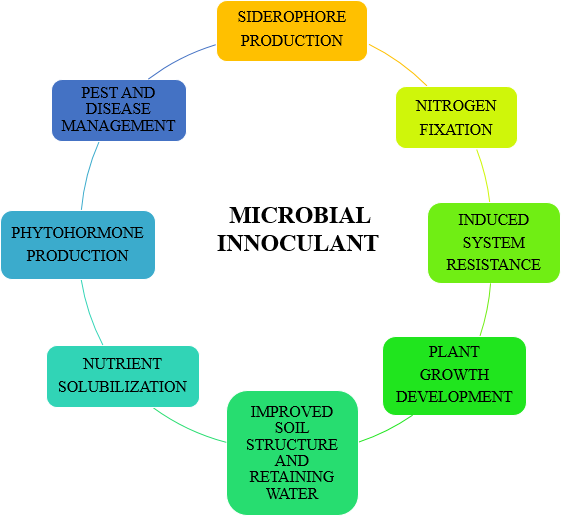
Despite the critical role of soil in providing natural capital and ecosystem services for the well-being and productivity of modern society, there has been a significant decline in soil quality and the widespread loss of fertile soil in some areas due to the intensification of agriculture. This alarming trend of soil degradation and loss has major implications for food security and the sustainability of agricultural practices, in Lin P [15]. With the population increasing and grain demand growing, intensive agriculture is necessary. Replenishing plant nutrients regularly to maintain soil fertility is essential. The high productivity in agriculture has been mainly achieved through the use of high-yielding variety seeds, increased water availability for irrigation, and the enhanced use of chemical fertilizers. However, this approach has been highly reliant on non-renewable energy resources, leading to a significant increase in the consumption of petroleum products. Thus, the use of rhizobacteria as bioinoculants is widespread as it is advantageous and cost-effective as well. Bioinoculants are eco-friendly as they don’t have any adverse effect on soil fertility. These bioinoculants can also be used as biopesticides which do not have any residual effect on crop products, in Sharma A, et al. [9]. Figure 1 shows role of microorganisms as bioinoculants in the rhizosphere.
Phosphate Solubilizing Bacteria
Phosphorus (P) is a vital nutrient for plants, serving various essential functions in growth and development. It plays a central role in energy transfer as a component of adenosine triphosphate (ATP), the primary energy carrier in cells. Phosphorus is also integral to nucleic acid synthesis, forming the backbone of DNA and RNA, which are essential for genetic information storage and protein synthesis, in Ingle KP [16]. Phosphorus dynamics in soil depend on (i) dissolution and precipitation, (ii) sorption and desorption, and (iii) interconversion between organic and inorganic forms of phosphorus, in Sims JT [17].
In natural ecosystems, the availability of phosphorus can be limited due to its tendency to form insoluble compounds in soil. Only 0.1% of phosphorus is available in the soil, with the total amount of Phosphorus in soil being 0.5%, due to its poor solubility and its fixation as insoluble phosphates of other metallic elements in soil such as Ca, Al, and Fe to form Calcium phosphate, Aluminium phosphate & Ferrous phosphate, in de Oliveira Mendes G, et al. [18]. Calcium phosphate mainly exists in the form of apatite-like fluoroapatite (Ca5[PO4]3F), francolites (corbonate-fluorapatite) and hydroxyapatite (Ca5[PO4]3OH), which is primary source of Pi in the alkaline or neutral soil, whereas in acidic soil Fe and Al exist along with the phosphate as oxy(hydr)oxides such as augellite Al2PO4(OH)3, barrandite (Al, Fe)PO4.2H2O, crandallite (CaAl3(PO4)2(OH)5.H2O), strengite (FePO4.2H2O), variscite (AlPO4.2H2O) and wavellite (Al3(PO4)2(OH)3·5H2O), in Sims JT [17]. However, plants can access phosphorus with the help of phosphate- solubilizing bacteria in the rhizosphere. These beneficial bacteria produce organic acids and enzymes that break down insoluble forms of phosphorus, making it more accessible to plants. Trichoderma harzianum (T-22) was found to be solubilizing P via three possible mechanisms, i.e. chelating metabolites production, medium acidification, and redox activity, in Altomare C, et al. [19].
Enterobacter aerogenes, Burkholderia sp., and Acinetobacter baumannii, isolated from rhizospheric orchard soil, could solubilize tricalcium phosphate (TCP) and also promote Phaseolus vulgaris growth Collavino MM, et al. [20]. Zaheer A, et al. [21] isolated two phosphate-solubilizing bacterial strains, Pseudomonas sp. AZ5 and Bacillus sp. AZ17, from chickpeas. They observed enhanced plant growth with the strains. Table 1 shows microbes solubilizing phosphate and their mechanism of phosphate solubilization.
| Name of Organisms | Type of Organism | Mechanism | References | |
|---|---|---|---|---|
| 1 | Enterobacter aerogenes | PSB | Secretes organic acids such as Lactic, succinic, isovaleric, isobutyric and acetic acids | [22] |
| 2 | Pantoea dispersa | PSB | Secretes various organic acids, such as Citric, malic, succinic and acetic acids | [22] |
| 3 | Bacillus safensis | PSB | Secretes various organic acids, such as Gluconic acid, alpha-keto- gluconic acid, succinic acid, oxalic acid and tartaric acid | [22] |
| 4 | Bacillus siamensis | PSB | Secretes Glycolic acid | [22] |
| 5 | Tsukamurella trosinosolven | PSB | Secretes various organic acids, such as lactic acid, maleic acid, oxalic acid | [23] |
| 6 | Pantoea sp. | PSB | Secretes both organic acid and enzymes | [24] |
| 7 | Acinetobacter pittii gp-1 | PSB | Increases activity of phosphatase and phytase enzymes. | [25] |
| 8 | Penicillium sp. | PSB | Secretion of various organic acids such as, gluconic acid, oxalic acid, lactic acid and malonic acid. | [26] |
| 9 | Arthrobotrys oligospora | PSB | Acidification in the medium, organic acids production, and the secretion of enzymes | [27] |
Table 1: Microorganims solubilizing Phosphate and their mechanisms.
Mechanisms used by PSB to Avail Soluble Phosphate
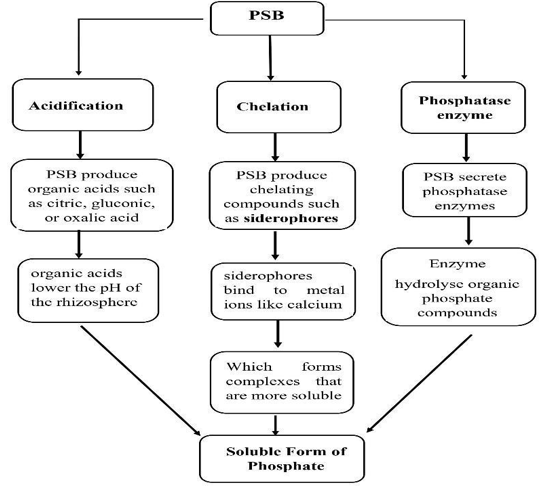
Many phosphate-solubilizing microorganisms generate organic acids, such as acetic acid, 2-ketogluconic acid, butyric acid, citric acid, fumaric acid, formic acid, gluconic acid, malic acid, lactic acid, oxalic acid, propionic acid, succinic acid, tartaric acid, and valeric acid, as metabolic byproducts. These organic acids function by chelating metal cations associated with insoluble phosphate compounds. Consequently, the chelation process liberates phosphate ions from insoluble complexes, rendering them soluble and available for plant uptake, in Sharma SB, et al. [28]. Phosphate solubilizing bacteria Pantoea sp., Kosakonia sp., and Bacillus sp. from territorial soils of Sanjivani Island were reported for secretion of 2-keto gluconic acid and gluconic acid, in Chakdar H, et al. [29].
Ca₃(PO₄)₂ + 2H⁺ + 2C₆H₈O₇ → 3Ca²⁺ + 2C₅H₇O₇⁻ + H₃PO₄
Citric acid chelates with calcium ions (Ca²⁺) bound to insoluble phosphate (Ca₃(PO₄)₂), leading to the release of soluble phosphate (H₃PO₄) into the soil solution. Bacillus megaterium, Pseudomonas fluorescens, Pantoea agglomerans, and Enterobacter cloacae are the phosphate solubilizers that may undergo these reactions, in Brearley AJ [30].
Some microorganisms secrete phosphatase enzymes, another vital mechanism for phosphate solubilization. These enzymes, including acid phosphatases and alkaline phosphatases, catalyze the hydrolysis of phosphate ester bonds in organic phosphorus compounds. By cleaving these bonds, phosphatase enzymes release inorganic phosphate ions into the surrounding environment, thereby contributing to the mineralization of organic phosphorus and the release of soluble phosphate for plant utilization.
C₆H₆O₂⁻₆ + H₂O → HPO₄²⁻ + C₆H₅O₇²⁻
Phosphatase enzyme hydrolyzes phytate (organic phosphate) into inorganic phosphate (HPO₄²⁻) and organic products, increasing the concentration of soluble phosphate available for plant uptake [6]. Bacillus subtilis, Pseudomonas putida, Burkholderia cepacia, and Pantoea dispersa could produce phosphatases to solubilize organic phosphate, in Brearley AJ [30].
PSB can lower the pH in the rhizosphere through the production of organic acids and proton release. The acidic environment dissolves insoluble phosphate minerals, increasing the concentration of soluble phosphate ions in the soil solution.
Ca₃(PO₄)₂ + 4H⁺ → 2H₂PO₄⁻ + 3Ca²⁺
Acinetobacter calcoaceticus, Bacillus cereus, Enterobacter asburia, and Pantoea agglomerans were maybe capable of lowering the pH, in Richardson AE [10]. Proton release by PSB acidifies the rhizosphere, leading to the dissolution of insoluble phosphate (Ca₃(PO₄)₂) and the release of soluble phosphate ions (H₂PO₄⁻) into the soil solution Figure 2.
Potassium mobilizing bacteria: Potassium (K) is a crucial nutrient for plants, involved in various physiological processes essential for growth and development. Potassium in soil exists in various forms: mineral Potassium, non-exchangeable Potassium, exchangeable Potassium, and soluble Potassium. Only soluble Potassium can be directly absorbed by plant. The concentration of soluble K in soil is typically very low, making up only about 2% of the total Potassium in the soil. This is the Potassium that can be directly absorbed by plants. The rest of the Potassium in the soil (more than 90-98%) exists in the form of insoluble mineral Potassium, exchangeable Potassium, and non-exchangeable Potassium, in Vera-Morales M, et al. [31].
It is widely believed that potassium (K) promotes growth by stimulating and regulating ATPase in the plasma membrane. This leads to an increase in acid stimulation, which in turn triggers the activation of hydrolase and loosening of the cell wall. These processes work together to promote cell growth, in Xu X, et al. [32]. It plays a vital role in enzyme activation, osmoregulation, and maintaining cell turgor pressure. Potassium also regulates stomatal opening and closing, influencing water and nutrient uptake efficiency. It is responsible for the transfer of carbohydrates, proteins, etc. from leaves to roots. It plays a vital role in the uptake of other elements like phosphorus, nitrogen, and calcium as it regulates the permeability of the cellular membrane. Specific rhizosphere microbes, including bacteria such as Bacillus sp., Pseudomonas putida, and Arthrobacter sp. and fungi such as Aspergillus spp. and Aspergillus terreus, are known to solubilize potassium. As reported in Singh G [33], three potassium solubilizers: Azotobacter chroococcum, Bacillus mucilaginosus, and Rhizobium sp., isolated from waste mica. Three potassium- solubilizing bacteria, including Bacillus subtilis, Pseudomonas nitroreducens, and Burkholderia cepacia, have been isolated from the tea plant’s root-associated soil, in Bagyalakshmi B, et al. [34]. Several genera of potassium solubilizing bacteria (KSB) are Azospirillum, Agrobacterium, Bacillus, Enterobacter, Erwinia, Flavobacterium, Micrococcus, Pseudomonas, Rhizobium, and Serratia, in Azizah H, et al. [35]. Table 2 shows microbes solubilizing Potassium and their mechanism.
| Name of Organisms | Type of Organism | Mechanism | References | |
|---|---|---|---|---|
| 1 | Aspergillus terreus | KMB | Citric acid production | [36] |
| 2 | Burkholderia | KMB | production of organic acids and siderophores | [37] |
| 3 | Frateuria Aurantia | KMB | Organic acid synthesis | [38] |
| 4 | Bacillus mucilagenosus | KMB | ||
| 5 | Bacillus licheniformis | KMB | Organic acid synthesis | [39] |
| 6 | Pseudomonas azotoformans | KMB | Organic acid synthesis | [39] |
| 7 | Acidothiobacillus ferrooxidan | KMB | Acidolysis | [40] |
| 8 | B. circulans | KMB | Organic acid production | [40] |
| 9 | Paenibacillus sp | KMB | Organic acid production | [40] |
Table 2: Microorganisms solubilizing Potassium and their mechanisms.
Mechanism of Potassium Solubilization
Potassium solubilizing bacteria secrete organic acids like citric, oxalic, tartaric, succinic, and α-ketoglucanic acids to dissolve insoluble potassium minerals such as mica, illite, and ortholox, and directly dissolve K rock or chelate silicate ions to bring potassium into the dissolved form. The organic acids secreted by bacteria form complexes with metal ions that bind to K minerals such as Fe2+, Al3+, and Ca2+, which leads to the dissolution of potassium, in Azizah H, et al. [35]. Through this chelation process, the organic acids facilitate the liberation of potassium ions (K⁺) from their complexes, thus rendering them more soluble and easily accessible for plant uptake, in Meena VS, et al. [41].
KAlSi₃O₈ + 2H⁺ + 2C₆H₈O₇ → Al³⁺ + K⁺ + 2C₅H₇O₇⁻ + 3SiO₂
Citric acid chelates with aluminum ions (Al³⁺) bound to insoluble potassium (KAlSi₃O₈), resulting in the release of soluble potassium ions (K⁺) into the soil solution. Enterobacter hormaechei has the capability of Potassium- solubilizing bacteria (KSB) since they produce oxalic acid, citric acids, and specific enzymes, in [42]. Other organisms like Acidithiobacillus ferrooxidans, Leptospirillum ferrooxidans, Acidobacterium capsulatu, and Burkholderia fungorum could be the potential producers of organic acids, in Banfield JF [43].
Zinc solubilizing bacteria: Zinc is an imperative micronutrient required for optimum plant growth. Zinc is a crucial micronutrient for the growth and development of plants. It exists in the soil in an insoluble form, such as zincite (ZnO), zinc silicates (ZnSiO3), willemite (ZnSiO4), sphalerite (ZnFe)S, smithsonite (ZnCO3), and zinc sulfide (ZnS), in Devi R, et al. [1]. Zn solubilizing microbes (ZSB) can transform these insoluble forms into soluble ones by releasing microbial metabolites. Potential substitutes for zinc supplementation include bacteria that solubilize zinc and change applied inorganic zinc into obtainable forms [44]. Zinc plays a critical role in plant stress responses, particularly in mitigating oxidative stress. PGPR, which facilitates zinc solubilization and uptake, can enhance plant stress tolerance by ensuring an adequate supply of zinc for antioxidant enzyme activation and reactive oxygen species scavenging. It helps plants cope with environmental stresses such as drought, salinity, and heavy metal toxicity, in Ma Y, et al. [11]. Zinc acts as a critical micronutrient essential for numerous metabolic processes within plants. PGPR, which facilitates zinc availability indirectly, promotes plant growth by ensuring optimal zinc nutrition. Enhanced zinc uptake leads to increased metabolic activity, supporting processes like photosynthesis, enzyme activation, and hormone synthesis, which are crucial for plant vigor, in Ma Y, et al. [45]. As it was reported in Saravanan VS, et al. [46] and Saravanan VS, et al. [47], that Gluconacetobacter diazotrophicus produces 5-ketogluconic acid, which helps insolubilize zinc available in soil in an insoluble form. In another investigation, Bacillus and Pseudomonas, isolated from rice root–soil were reported for solubilizing ZnO and ZnSO4.7H2O in Kandel SL, et al. [48]. In a study conducted by Mumtaz MZ, et al. [49], it was found that Bacillus sp., B. aryabhattai, and B. subtilis obtained from the maize rhizosphere were effective in solubilizing zinc. Another study by Dinesh R, et al. [50] examined six different microbes that solubilize zinc, including Burkholderia lata, Bacillus megaterium, Lysinibacillus sp., Bacillus sp., and Burkholderia latens. The study found that Bacillus megaterium was the most efficient zinc solubilizer among the tested microbes. Table 3 shows microbes solubilizing Zinc and their mechanism.
| Name of Organisms | Type of Organism | Mechanism | References | |
|---|---|---|---|---|
| 1 | Aspergillus terreus | ZSB | Decrease in Ph | [51] |
| 2 | Bacillus aryabhattai | ZSB | Secrets Malic acid, malonic acid, succinic acid, citric acid, propionic acid, | [52] |
| keto-D-glutarate and gluconic acid Malic acid, malonic acid, succinic acid, citric acid, propionic acid, keto-D-glutarate and gluconic acid secrets malic acid, citric acid, gluconic acid, succinic acid | [52] | |||
| 3 | Pseudomonas taiwenensis | ZSB | Malic acid, malonic acid, succinic acid, citric acid, propionic acid, keto-D-glutarate and gluconic acid Keto-D-glutarate, citric acid, propionic acid, gluconic acid and oxalic acid Keto-D-glutarate, citric acid, propionic acid, gluconic acid and oxalic acid Secrets Keto-D-glutarate, propionic acid, oxalic acid, gluconic acid, citric acid | [53] |
Table 3: Microorganisms solubilizing Zinc and their mechanisms.
Mechanism: At the heart of ZSB’s activity lies the production of organic acids, such as gluconic acid, citric acid, and oxalic acid, as metabolic byproducts. These organic acids are potent chelating agents, effectively binding to zinc ions associated with insoluble compounds like zinc oxide or zinc hydroxide. Through this chelation process, ZSB releases soluble zinc into the soil solution, rendering it readily available for plant roots to absorb, in Joshi D, et al. [54]. ZSB secrete siderophores that chelate metal ions. These siderophores enhance the solubility of zinc in the soil, aiding in its mobilization from insoluble sources. Additionally, ZSB can influence soil pH, creating acidic conditions in the rhizosphere. This acidity promotes the dissolution of insoluble zinc compounds, further augmenting zinc solubility and accessibility to plants. Thiobacillus ferrooxidans, Acidithiobacillus thiooxidans, Acidithiobacillus caldus, and Sulfobacillus thermosulfidooxidans are some examples, in Banfield JF [43]. Zinc deficiency can impair root growth and development, hindering nutrient and water uptake of plants. PGPR, which promotes zinc solubilization and mobilization in the rhizosphere, stimulates root growth and branching. A well-developed root system enhances nutrient and water acquisition, thereby fostering overall plant growth and productivity.
Nitrogen-fixing bacteria: Biological nitrogen fixation is a process in which atmospheric nitrogen is converted into ammonia by various types of bacteria, including symbiotic, associative, and free-living bacteria. This process is highly important for the environment as well as world agriculture. Nitrogen fixation is a crucial part of the nitrogen cycle since it replenishes the overall nitrogen content of the biosphere and compensates for the losses that are incurred due to denitrification. However, the availability of fixed nitrogen is often the limiting factor for crop productivity, which puts pressure on global agriculture to ensure food security as the world’s population continues to grow in the twenty-first century, in Dixon R [55]. Nitrogen is an essential element for plant growth and development, playing a crucial role in various physiological processes, including protein synthesis, chlorophyll formation, and enzyme activity. However, nitrogen in its gaseous form (N₂) makes up about 78% of the Earth’s atmosphere, but most plants cannot directly utilize atmospheric nitrogen. Instead, they rely on nitrogen in forms such as nitrate (NO₃⁻) and ammonium (NH₄⁺), which are derived from biological nitrogen fixation or nitrogen- containing compounds in the soil. Biological nitrogen fixation is the process by which certain microorganisms, known as nitrogen-fixing bacteria, convert atmospheric nitrogen (N₂) into ammonia (NH₃) or other nitrogen compounds that can be utilized by plants, in Bernhard A [56]. Table 4 shows Nitrogen fixing bacteria along with their mechanism.
| Name of Organism | Type of Organism | Mechanism | References | |
|---|---|---|---|---|
| 1 | Rhizobium spp. | NFB | Converts | [57,58] |
| 2 | Bradyrhizobium spp. | NFB | Atmospheric | [57] |
| 3 | Frankia spp. | NFB | Nitrogen to ammonium using the enzyme nitrogenase | [57] |
| 4 | Azotobacter spp. | NFB | Fixes nitrogen aerobically or anaerobically using nitrogenase | [57,58] |
| 5 | Azospirillum spp. | NFB | Enzymes produced intracellularly | [57,58] |
| 6 | Gluconobacter dizotrophicus | NFB | Fixes nitrogen aerobically or anaerobically using nitrogenase enzymes produced intracellularly | [46,47] |
Table 4: Nitrogen fixing bacteria and their mechanisms.
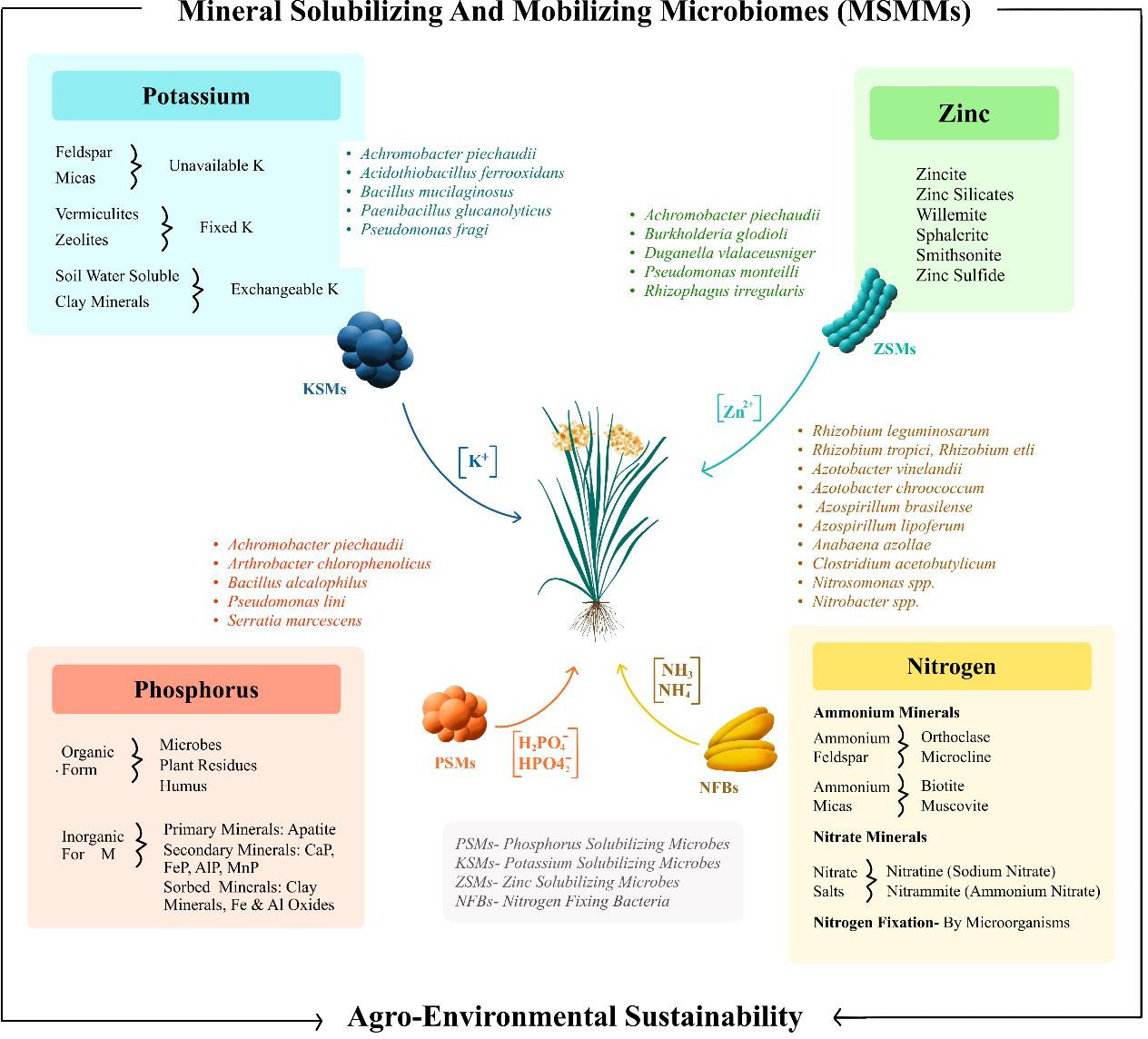
Mechanism: A nitrogen-fixing bacterium can exist freely or in symbiosis and either case, entraps atmospheric nitrogen and converts the unreactive N2 molecule to NH3, a form that is readily utilized by plants. This process is termed biological nitrogen fixation (BNF) and is catalyzed by the oxygen-sensitive enzyme nitrogenase, present within the bacteria. Nitrogenases are enzymes that play a crucial role in the biological reduction of dinitrogen to ammonia. These enzymes are complex metalloenzymes with conserved structural and mechanistic features. Nitrogenases consist of two components, which are named according to their metal composition. The smaller component is called the iron (Fe) protein, which is a dimer and functions as an ATP-dependent electron donor. The larger heterotetrameric component is called the molybdenum–iron (MoFe) protein and contains the enzyme catalytic site, in Dixon R [55]. A bacterium that is capable of fixing nitrogen can live independently or in symbiosis. In both cases, it captures atmospheric nitrogen and transforms the unreactive N2 molecule into NH3, a form that can be easily used by plants. This process is known as biological nitrogen fixation (BNF) and is facilitated by the oxygen-sensitive enzyme nitrogenase, which is found within the bacteria. The process occurs through the following reaction, in Kumar A, et al. [59]: 1. N2 + 8H+ + 8e− + 16ATP → 2NH3 + H2 + 16ADP + 16Pi 2. NH₃ + H₂O → NH₄⁺ + OH⁻ Conversion of atmospheric nitrogen to ammonia (NH₃) and further into ammonium ions (NH₄⁺) by nitrogen-fixing bacteria, providing a usable form of nitrogen for plants, in Postgate John Raymond [12]. As reported by Kumar A, et al. [59], nitrogen-fixing bacteria, such as Rhizobium spp. in legume root nodules, and free-living diazotrophic bacteria like Azotobacter spp. and Azospirillum spp., have the unique ability to convert atmospheric nitrogen into ammonia through the process of nitrogen fixation. Some nitrogen- fixing bacteria form symbiotic relationships with plants particularly leguminous plants. These bacteria colonize the roots of host plants and establish specialized structures called nodules, where nitrogen fixation occurs. In exchange for fixed nitrogen, the host plants provide carbohydrates and a suitable environment for the bacteria. This mutualistic association benefits both the bacteria and the plants, enhancing nitrogen acquisition and promoting plant growth, in Mus F, et al. [57] Figure 3.
Factors Affecting the Solubilization of the Minerals by Microorganisms
Although a higher secretion of all organic acids has been observed under P-deficiency, the patterns of organic acid secretion were shown to be variable and dependent on the specific treatment and strain being studied. Furthermore, the addition of Al into the media has been found to exacerbate the secretion of organic acids, particularly in the form of malic and citric acid. Aluminum-tolerant phosphobacteria increased both acid and alkaline phosphatase activity under P deficiency, which was further enhanced in the presence of Al, in Barra PJ, et al. [60]. A high concentration of potassium (K) in the soil solution can prevent the uptake of magnesium (Mg) by the plants. This can lead to Mg deficiency in the plants, as reported by, in Tränkner M, et al. [61]. On the other hand, K deficiency in maize could promote the absorption of sodium (Na+) and calcium (Ca2+), was found by, in Du Q, et al. [62]. However, in cotton, K deficiency could inhibit nitrogen (N) absorption, leading to a significant reduction in the content of nitrate (NO3–) in the leaves, as reported by, in Hu W, et al. [63]. It is evident that K plays a crucial role in the absorption and utilization of other nutrients by plants, and the appropriate K level may vary in different crops. The solubilization of zinc by Zinc-Solubilizing Bacteria (ZSB) in the soil is influenced by factors including soil acidity, availability of zinc in insoluble forms, organic matter content, and ZSB population diversity. Environmental factors such as temperature, moisture, and oxygen levels also play a role. Additionally, competition with other microorganisms and plant root exudates contributes to regulating zinc solubilization by ZSB, in Gadd GM [47, 64, 65]. The efficiency of nitrogen fixation by soil nitrogen- fixing bacteria is shaped by a range of factors. These encompass soil pH, organic matter content, nitrogen availability in various forms, and the diversity of nitrogen-fixing bacteria communities. Environmental factors like temperature, moisture, and oxygen concentration also have significant impacts. Moreover, competition with other microorganisms and root exudates from plants influence the nitrogen fixation process, in Zehr JP [66, 67, 68, 69, 70, 71, 72, 73, 74, 75, 76, 77, 78].
Future aspects: In order to promote sustainable agriculture practices and mitigate environmental impacts, future research could explore the optimization of four types of microorganisms: Phosphate solubilizing bacteria (PSB), Potassium mobilizing bacteria (KMB), Zinc solubilizing bacteria (ZSB), and Nitrogen-fixing bacteria (NFB). By reducing the reliance on chemical phosphorus fertilizers, PSB could also help minimize environmental pollution and conserve phosphorus resources. Moreover, PSB-based biofertilizers could be developed, offering a cost-effective and eco-friendly alternative to conventional fertilizers for farmers. KMB strains could be studied for their ability to mobilize potassium from mineral sources, thereby enhancing potassium uptake by plants. This could contribute to increased crop yields, especially in potassium-deficient regions. Additionally, KMB inoculants might be explored for their potential to improve plant tolerance to drought stress by enhancing potassium uptake and water use efficiency. ZSB could be utilized for micronutrient biofortification of crops, ensuring adequate zinc uptake by plants and addressing zinc deficiency in human diets and bioaugmentation strategies may be developed to improve zinc solubilization and availability in agricultural soils, especially in zinc-deficient regions. Finally, NFB inoculation could hold promise for sustainable nitrogen management in agriculture by reducing the need for synthetic nitrogen fertilizers, which can lead to nitrogen pollution and greenhouse gas emissions. Incorporating NFB into crop rotation systems could enhance soil fertility and nitrogen availability for subsequent crops, promoting long-term agricultural sustainability.
Conclusion
Bacteria play a significant role in enhancing nutrient availability, promoting plant growth, and improving soil health. Using mineral-solubilizing microbes (MSMs) as bio- inoculants can restore soil fertility and reduce chemical fertilizer usage. Future studies should investigate the best combination of fertilizers and microbes for different soils and crops while educating farmers about sustainable sources of inoculants.
Conflict of Interest
The authors declare no conflict of interest.
References
-
Devi R, Kaur T, Kour D, Yadav A, Yadav AN, et al. (2022) Minerals solubilizing and mobilizing microbiomes: A sustainable approach for managing minerals’ deficiency in agricultural soil. J Appl Microbiol 133(3): 1245-1272.
-
Frank AC, Guzmán JPS, Shay JE (2017) Transmission of bacterial endophytes. Microorganisms 5(4): 70.
-
Philippot L, Raaijmakers JM, Lemanceau P, Putten WHVD (2013) Going back to the roots: the microbial ecology of the rhizosphere. Nat Rev Microbiol 11(11): 789-799.
-
Erb M, Huber M, Robert CA, Ferrieri AP, Machado RA, et al. (2013) The role of plant primary and secondary metabolites in root-herbivore behaviour, nutrition, and physiology. Advances in Insect Physiology 45: 53-95.
-
Naik K, Mishra S, Srichandan H, Singh PK, Sarangi PK (2019) Plant growth promoting microbes: Potential link to sustainable agriculture and environment. Biocatalysis and Agricultural Biotechnology 21: 101326.
-
Kour D, Rana KL, Kaur T, Yadav N, Yadav AN, et al. (2021) Biodiversity, current developments and potential biotechnological applications of phosphorus- solubilizing and -mobilizing microbes: A review. Pedosphere 31(1): 43-75.
-
Behera A, Gorai S, Singh RK (2020) A review on physiological and biochemical properties of plant growth promoting rhizobacteria (PGPR) and their effect on growth and development of maize (Zea mays L.). International Journal of Chemical Studies 8(2): 1315- 1320.
-
Glick BR (2012) Plant growth-promoting bacteria: Mechanisms and applications. Scientifica (Cairo) 2012: 963401.
-
Sharma A, Johri BN, Sharma AK, Glick BR (2003) Plant growth-promoting bacterium _Pseudomonas sp._ strain GRP3 influences iron acquisition in mung bean (Vigna radiata L. Wilzeck). Soil Biology and Biochemistry 35(7): 887-894.
-
Richardson AE, Simpson RJ (2011) Soil microorganisms mediating phosphorus availability update on microbial phosphorus. Plant Physiol 156(3): 989-996.
-
Ma Y, Rajkumar M, Zhang C, Freitas H (2016) Beneficial role of bacterial endophytes in heavy metal phytoremediation. J Environ Manage 174: 14-25.
-
John Raymond Postgate (1982) Biological nitrogen fixation: fundamentals. Phil Trans R Soc B 296(1082).
-
Vance CP (2001) Symbiotic nitrogen fixation and phosphorus acquisition. Plant nutrition in a world of declining renewable resources. Plant physiol 127(2): 390-397.
-
Clark M, Tilman D (2017) Comparative analysis of environmental impacts of agricultural production systems, agricultural input efficiency, and food choice. Environmental Research Letters 12(6): 064016.
-
Pan L, Cai B (2023) Phosphate-Solubilizing Bacteria: Advances in their physiology, molecular mechanisms and microbial community effects. Microorganisms 11(12): 2904.
-
Ingle KP, Padole DA (2017) Phosphate solubilizing microbes: An overview. Int J Curr Microbiol App Sci 6(1): 844-852.
-
Sims JT, Pierzynski GM (2005) Chemistry of phosphorus in soil. In: Tabatabai AM, et al. (Eds.), Chemical processes in soil. SSSA book series, SSSA, Madison, USA, 8.
-
Mendes GDO, Freitas ALMD, Pereira OL, Silva IRD, Vassilev NB, et al. (2014) Mechanisms of phosphate solubilization by fungal isolates when exposed to different P sources. Annals of Microbiology 64: 239-249.
-
Altomare C, Norvell WA, Björkman T, Harman GE (1999) Solubilization of phosphates and micronutrients by the plant-growth-promoting and biocontrol fungus Trichoderma harzianum Rifai 1295- 22, Appl Environ Microbiol 65(7): 2926-2933.
-
Collavino MM, Sansberro PA, Mroginski LA, Aguilar OM (2010) Comparison of in vitro solubilization activity of diverse phosphate-solubilizing bacteria native to acid soil and their ability to promote _Phaseolus vulgaris_ growth. Biology and Fertility of Soils 46: 727-738.
-
Zaheer A, Malik A, Sher A, Qaisrani MM, Mehmood A, et al. (2019) Isolation, characterization, and effect of phosphate-zinc-solubilizing bacterial strains on chickpea (Cicer arietinum L.) growth. Saudi J Biol Sci 26(5): 1061-1067.
-
Zhang H, Han L, Jiang B, Long C (2021) Identification of a phosphorus-solubilizing _Tsukamurella tyrosinosolvens_ strain and its effect on the bacterial diversity of the rhizosphere soil of peanuts growth-promoting. World J Microbiol Biotechnol 37(7): 109.
-
Chen Q, Liu S (2019) Identification and characterization of the phosphate-solubilizing bacterium _Pantoea sp_. _S32_ in reclamation soil in shanxi, China. Front Microbiol 10: 2171.
-
Vidyashree DN, Muthuraju R, Panneerselvam P, Mitra D (2018) Organic acids production by zinc solubilizing bacterial isolates. Int J Curr Microbiol App Sci 7(10): 626-633.
-
Humphries RN, Brazier RE (2018) Exploring the case for a national‐scale soil conservation and soil condition framework for evaluating and reporting on environmental and land use policies. Soil Use and Management 34(1): 134-146.
-
Sharma SB, Sayyed RZ, Trivedi MH, Gobi TA (2013) Phosphate solubilizing microbes: sustainable approach for managing phosphorus deficiency in agricultural soils. SpringerPlus 2: 587.
-
Chakdar H, Dastager SG, Khire JM, Rane D, Dharne MS (2018) Characterization of mineral phosphate solubilizing and plant growth promoting bacteria from termite soil of the arid region. 3Biotech 8(11): 463.
-
Brearley AJ, Burchell LD (2005) Chemical control of bacterial nitrogen fixation in terrestrial environments. Soil Biology and Biochemistry 37(9): 1798-1808.
-
Vera-Morales M, Medina SEL, Naranjo-Morán J, Quevedo A, Ratti MF (2023) Nematophagous fungi: A review of their phosphorus solubilization potential. Microorganisms 11(1): 137.
-
Xu X, Du X, Wang F, Sha J, Chen Q, et al. (2020) Effects of potassium levels on plant growth, accumulation and distribution of carbon, and nitrate metabolism in apple dwarf rootstock seedlings. Front Plant Sci 11: 904.
-
Singh G, Biswas DR, Marwaha TS (2010) Mobilization of potassium from waste mica by plant growth promoting rhizobacteria and its assimilation by maize (Zea mays) and wheat (_Triticum aestivum L_.): a hydroponics study under phytotron growth chamber. Journal of Plant Nutrition 33(8): 1236-1251.
-
Bagyalakshmi B, Ponmurugan P, Balamurugan A (2017) Potassium solubilization, plant growth promoting substances by potassium solubilizing bacteria (KSB) from southern Indian Tea plantation soil. Biocatalysis and Agricultural Biotechnology 12: 116-124.
-
Azizah H, Rahajeng SM, Jatmiko YD (2020) Isolation and screening of phosphate and potassium solubilizing endophytic bacteria in Maize (Zea mays L.). The Journal of Experimental Life Science 10(3): 165-170.
-
He D, Wan W (2021) Phosphate-solubilizing bacterium _Acinetobacter pittii gp-1_ affects rhizosphere bacterial community to alleviate soil phosphorus limitation for growth of soybean (Glycine max). Front Microbiol 12: 737116.
-
Shanware AS, Kalkar SA, Trivedi MM (2014) Potassium solublisers: occurrence, mechanism and their role as competent biofertilizers. Int J Curr Microbiol App Sci 3(9): 622-629.
-
Matthew T, Tallapragada P (2017) Isolation, characterization and identification of potassium solubilizing fungi from rhizosphere soil in Bangalore. Intl J Biol Pharm Allied Sci 6(5): 931-940.
-
Kammar SC, Ravindra C, Gundappagol GP, Santosh SS, Ravi MV (2016) Isolation, morphological and biochemical characterization of potassium solubilizing bacteria (KSB) isolated from Northern part of Karnataka. J Pure & Appl Microb 10(1): 471-477.
-
Bakhshandeh E, Pirdashti H, Lendeh KS (2017) Phosphate and potassium-solubilizing bacteria effect on the growth of rice. Ecological Engineering 103(Part A): 164-169.
-
Meena VS, Maurya BR, Verma JP, Meena RS (2016) Potassium solubilizing microorganisms for sustainable agriculture. Springer, New Delhi, India.
-
Prajapati KB, Modi HA (2012) Isolation and Characterization of Potassium Solubilizing Bacteria From Ceramic Industry Soil. CIB Tech Journal of Microbiology 1(2-3): 8-14.
-
Banfield JF, Barker WW, Welch SA, Taunton A (1999) Biological impact on mineral dissolution: Application of the lichen model to understanding mineral weathering in the rhizosphere. Proc Natl Acad Sci USA 96(7): 3404- 3411.
-
Rajkumar M, Ae N, Prasad MNV, Freitas H (2010) Potential of siderophore-producing bacteria for improving heavy metal phytoextraction. Trends Biotechnol 28(3): 142- 149.
-
Ma Y, Oliveira RS, Nai F, Rajkumar M, Luo Y, et al. (2015) The hyperaccumulator Sedum plumbizincicola harbors metal-resistant endophytic bacteria that improve its phytoextraction capacity in multi-metal contaminated soil. J Environ Manage 156: 62- 69.
-
Saravanan VS, Madhaiyan M, Osborne J, Thangaraju M, Sa TM (2008) Ecological occurrence of Gluconacetobacter diazotrophicus and nitrogen-fixing Acetobacteraceae members: Their possible role in plant growth promotion. Microb Ecol 55(1): 130-140.
-
Saravanan VS, Kalaiarasan P, Madhaiyan M, Thangaraju M (2007) Solubilization of insoluble zinc compounds by _Gluconacetobacter diazotrophicus_ and the detrimental action of zinc ion (Zn2+) and zinc chelates on root knot nematode _Meloidogyne incognita_. Lett Appl Microbiol 44(3): 235-241.
-
Kandel SL, Joubert PM, Doty SL (2017) Bacterial endophyte colonization and distribution within plants. Microorganisms 5(4): 77.
-
Mumtaz MZ, Ahmad M, Jamil M, Hussain T (2017) Zinc solubilizing _Bacillus spp_. potential candidates for biofortification in maize. Microbiol Res 202: 51-60.
-
Dinesh R, Srinivasan V, Hamza S, Sarathambal C, Gowda SJA, et al. (2018) Isolation and characterization of potential Zn solubilizing bacteria from soil and its effects on soil Zn release rates, soil available Zn, and plant Zn content. Geoderma 321: 173-186.
-
Bhattacharjee RB, Singh A, Mukhopadhyay SN (2008) Use of nitrogen-fixing bacteria as biofertiliser for non- legumes: prospects and challenges. Appl Microbiol Biotechnol 80(2): 199-209.
-
Anitha S, Devi SNP, Kumari SK (2015) Isolation and identification of zinc solubilizing fungal isolates from agricultural fields. The Indian Journal of Agricultural Sciences 85(12): 1638-1642.
-
Upadhayay VK, Singh AV, Khan A, Sharma A (2022) Contemplating the role of zinc-solubilizing bacteria in crop biofortification: An approach for sustainable bioeconomy. Frontiers in Agronomy 29(4): 903-921.
-
Joshi D, Negi G, Vaid S, Sharma A (2013) Enhancement of wheat growth and Zn content in grains by zinc solubilizing bacteria. International Journal of Agriculture, Environment and Biotechnology 6(3): 363-370.
-
Dixon R, Kahn D (2004) Genetic regulation of biological nitrogen fixation. Nature Reviews Microbiology 2(8): 621-631.
-
Bernhard A (2010) The Nitrogen Cycle: processes, players, and human impact. Nature Education Knowledge 3(10): 25.
-
Mus F, Crook MB, Garcia K, Costas AG, Geddes BA, et al. (2016) Symbiotic Nitrogen Fixation and the Challenges to Its Extension to Nonlegumes. Appl Environ Microbiol 82(13): 3698-3710.
-
Shahwar D, Mushtaq Z, Mushtaq H, Alqarawi AA, Park Y, et al. (2023) Role of microbial inoculants as biofertilizers for improving crop productivity: A review. Heliyon 9(6): e16134.
-
Kumar A, Dewangan S, Lawate P, Bahadur I, Prajapati S (2019) Zinc-solubilizing bacteria: a boon for sustainable agriculture. In: Sayyed RZ, et al. (Eds.), Plant Growth Promoting Rhizobacteria for Sustainable Stress Management 1.
-
Barra PJ, Viscardi S, Jorquera MA, Duran PA, Valentine AJ, et al. (2018) Understanding the strategies to overcome phosphorus-deficiency and aluminum-toxicity by ryegrass endophytic and rhizosphere phosphobacteria. Front Microbiol 9: 1155.
-
Tränkner M, Tavakol E, Jákli B (2018) Functioning of potassium and magnesium in photosynthesis, photosynthate translocation, and photoprotection. Physiol Plant.
-
Du Q, Zhao X, Jiang C, Wang X, Han Y, et al. (2017) Effect of potassium deficiency on root growth and nutrient uptake in maize (Zea mays L.). Agricultural Sciences 8(11): 1263-1277.
-
Hu W, Coomer TD, Loka DA, Oosterhuis DM, Zhou Z (2017) Potassium deficiency affects the carbon-nitrogen balance in cotton leaves. Plant Physiol Biochem 115: 408-417.
-
Gadd GM (2004) Microbial influence on metal mobility and application for bioremediation. Geoderma 122(2-4): 109-119.
-
Rashid MI, Mujawar LH, Shahzad T, Almeelbi T, Ismail IMI, et al. (2016) Bacteria and fungi can contribute to nutrients bioavailability and aggregate formation in degraded soils. Microbial Res 183: 26-41.
-
Zehr JP, Kudela RM (2011) Nitrogen cycle of the open ocean: from genes to ecosystems. Ann Rev Mar Sci 3: 197-225.
-
Rodrigues JL, Pellizari VH, Mueller R, Baek K, Jesus EDC, et al. (2013) Conversion of the Amazon rainforest to agriculture results in biotic homogenization of soil bacterial communities. Proc Natl Acad Sci USA 110(3): 988-993.
-
Bahram M, Pervaiz ZH (2016) The genus Pseudomonas as a versatile biotechnological resource: An overview. Environmental Science and Pollution Research 23(1): 355-364.
-
Hirsch AM, Valdés M, Ballaré CL, Lumbreras C (2020) Nitrogen Metabolism and Plant Growth. Nitrogen Metabolism in Plants in the Post-genomic Era, Springer, Cham, pp: 3-30.
-
Khan MS, Zaidi A, Wani PA (2007) Role of phosphate- solubilizing microorganisms in sustainable agriculture—A review. Agronomy for Sustainable Development 27(1): 29-43.
-
Ma Y, Prasad MNV, Rajkumar M, Freitas H (2011) Plant growth promoting rhizobacteria and endophytes accelerate phytoremediation of metalliferous soils. Biotechnol Adv 29(2): 248-258.
-
Nannipieri P, Giagnoni L, Landi L, Renella G (2011) Role of phosphatase enzymes in soil. In Soil Enzymology. Springer, Berlin, Heidelberg, pp: 215-243.
-
Panda A, Das L, Mishra BB (2023) Zinc solubilization and potash mobilization by potent plant growth-promoting bacteria isolated from Odisha. Annals of Plant and Soil Research 25(2): 285-296.
-
Pathak DV, Kumar M (2016) Microbial inoculants as biofertilizers and biopesticides. In: Singh DP, et al. (Eds.), Microbial Inoculants in Sustainable Agricultural Productivity. Springer, New Delhi, India, 1: 197-209.
-
Sharma A, Shankhdhar D, Shankhdhar SC (2016) Potassium-Solubilizing Microorganisms: Mechanism and their role in potassium solubilization and uptake. In: Meena V, et al. (Eds.), Potassium Solubilizing Microorganisms for Sustainable Agriculture, Springer, New Delhi, India, pp: 203-219.
-
Teotia P, Kumar V, Kumar M, Shrivastava N, Varma A (2016) Rhizosphere microbes: potassium solubilization and crop productivity–present and future aspects. Potassium solubilizing microorganisms for sustainable agriculture, pp: 315-325.
-
Tian J, Ge F, Zhang D, Deng S, Liu X (2021) Roles of phosphate solubilizing microorganisms from managing soil phosphorus deficiency to mediating biogeochemical P cycle. Biology (Basel) 10(2): 158.
-
Wagner SC (2011) Biological nitrogen fixation. Nature Education Knowledge 3(10): 15.
-
Sattar A, Naveed M, Ali M, Zahir ZA, Nadeem SM, et al. (2019) Perspectives of potassium solubilizing microbes in sustainable food production system: A review. Applied Soil Ecology 133: 146-159.
-
Qiao H, Sun XR, Wu XQ, Li GE, Wang Z, et al. (2019) The phosphate-solubilizing ability of Penicillium guanacastense and its effects on the growth of Pinus massoniana in phosphate-limiting conditions. Biology open 8(11): bio046797.
- Antifungal Activity of New Acetophenone Derivatives
- Interconnected Microbiomes Human Health Within an Environmental Framework
- Silkworm-Based Vaccine Production for H5N1: A One Health Approach to Pandemic Preparedness
- Microbial Diversity and Lipolytic Activity of Bacteria and Fungi from Oil-Contaminated Sites in Makurdi Metroplois
- Antibiotic Resistance Profile of Bacteria Isolated at the Central Laboratory of the National Hospital Center of Nouakchott
- Epidemiology and Sensitivity to Antibiotics of Germs Isolated from Blood Cultures in the Laboratory of the National Hospital Center of Nouakchott-Mauritania