
Feeding Biology of Earthworms (Perionyx Excavatus and Eudrilus Eugeniae) and Bacteria Associated with their Guts and Vermicompost
The feeding behaviours of Perionyx excavatus and Eudrilus eugeniae were carried out. P. excavatus and E. eugeniae took an average of 3h. and 3h. 30 mins respectively to fill their guts. So, in P. excavatus 8(eight) gut fillings could occur in a day whereas in E. eugeniae 7(seven) gut fillings could occur in a day. Analysis of gut contents and vermicompost bacteria revealed the presence of Bacillus sp. (A), Bacillus sp. (B) and Klebsiella sp. Micrococcus sp. was isolated only from the gut of Perionyx excavatus. However, it was absent in the vermicompost. Further, Proteus sp. was isolated only from the gut of Eudrilus eugeniae but it was absent in the vermicompost. Further, Proteus sp. was isolated only from the gut of Eudrilus eugeniae but it was absent in the vermicompost. The study emphasizes importance of the rate of organic waste materials movement through the intestine of the worm and time taken during passing through the intestine and microbial changes in the worm casts ageing in the plastic tub.
Introduction
An understanding of the feeding biology and digestive capability of earthworms is essential in their role in the complex decomposition process. It has also been known that environmental factors greatly influence the various life activities of many earthworms [1, 2]. The epigeic (Surface- dwelling) species Eisenia foetida, Eudrilus eugeniae and Perionyx excavatus had gained popularity throughout the world for their potentials as decomposer subsystem and because of their importance various studies have been made on their different biological aspects.
The growth and reproduction of Eisenia foetida and Eudrilus eugeniae are greatly influenced by seasonal environmental factors [3, 4, 5, 6, 7, 8, 9]. Further, the growth and cocoon production pattern of Perionyx excavatus and Eudrilus eugeniae have also been studied [10, 11]. The temperature tolerance of Eisenia foetida, Eudrilus eugeniae and Perionyx excavatus has been investigated and found that Eudrilus eugeniae and Perionyx excavatus could be utilized in vermiculture [12]. The life cycles of Eudrilus eugeniae and Perionyx excavatus have been well documented and both the species were proved to be potential vermicomposting agents [12, 13, 14, 15, 16]. Further, the growth and reproduction of Eisenia foetida is also influenced by temperature [17, 18]. The digestive system of earthworms consists of a tubular alimentary canal extending from mouth to anus. The system can be differentiated as buccal chamber/cavity, pharynx, oesophagus, crop, gizzard, intestine and rectum. Feeding process of earthworms is subjected to the enzymatic actions within the gut. The capacity of mixing and turning over of substrate by earthworms varies with species to species. Data on substrate turnover for Eisenia foetida and Drawida calebi are available [19, 20].
Earthworms graze over a wide variety of organic matters. Influence of feeding pattern on growth and reproduction of Eisenia foetida is known [21, 22]. Preference for certain food materials by earthworms have also been reported [23, 24, 25, 26, 27, 28]. The effects of different organic wastes on vermiculture and vermicomposting has also been known [29, 30, 31]. Earthworms affect soil microfloral and faunal population directly or indirectly like the joint action of earthworms and microflora in forest soils [32]. The effects of earthworms on soil microflora leading to changes in soil properties, processes, micro floral and faunal community structure and plant and soil health have been known [33]. The earthworms also graze over soil microflora and that they have requisite enzymes to degrade complex plant substances [24, 34]. Selective grazing by earthworms may reduce the number of some organisms and increase others that could be beneficial [35].
The role of earthworms in the dispersal of soil organisms had been known [36, 37]. The bacterial feeding by earthworms [38, 39, 40]. The gut of earthworm constitutes a mobile anoxic microzone to which the microorganisms of aerated soils are subjected [41]. It provides an optimum incubation temperature, near neutral pH and abundant soluble organic carbon creating an ideal condition for high microbial activity. The cast in turn contains high assimilable carbon, favourable water regime and higher concentrations
of many nutrients [42] providing an excellent condition for microfloral and faunal proliferation. The intestine of earthworms is rich in microorganisms [43].
Our previous study revealed 4 bacteria types 2 Actino- mycetes types, 15 fungal types, 1-protozoa group, and 2 Nematodes types. For these 2 (two) types of worms, the richest microorganism were fungal types. 15 fungal types were isolated from the previous study [44]. The changes in the microbial status of earthworm cast varied based on their age [45]. The microbial composition of vermicompost are derived from various organic sources [46, 47]. A detailed microbe of the gut of Eudrilus eugeniae and Perionyx excavatus have also been made [48, 49]. The effects of gut passage, the age of cast material and the type of ingested substrate on microorganisms in Lumbricus terrestris faces are known [50]. The rate that material moves through the intestine depends on whether the worm is feeding, food takes about 20 hours to pass, but when burrows are being formed materials passes in about 12 hours [43]. Further, changes in the microbial status of the casts are noticed as they age under field condition [45]. The present study deals with organic wastes feeding behaviours of Perionyx excavatus and Eudrilus eugeniae in regards to their ingestion, gut load, transit time and egestion. And to examine further bacteria isolated from the gut content and vermicompost (Vermicast) produced by the worms.
Materials and Methods
Study on the Feeding Biology of Earthworms (Perionyx Excavatus and Eudrilus Eugeniae)
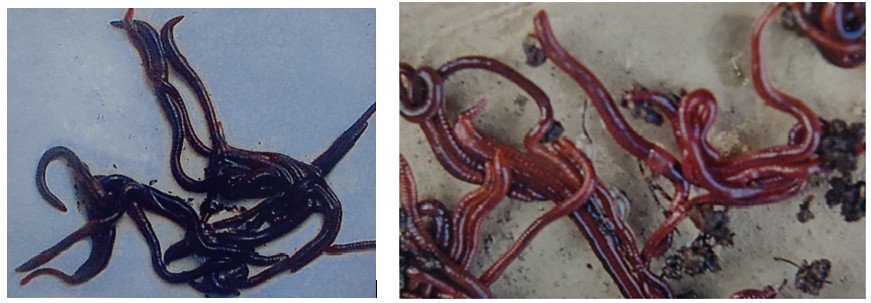
Experimental rearing of two earthworms (Perionyx excavatus and Eudrilus eugeniae) (Figures 1A & 1B) were conducted in the Life Sciences Department, Manipur University for a period of three years.
Figure 1A: A view of Perionyx excavatus. Figure 1B: A view of Eudrilus Eugeniae.
The organic wastes like cowdung, Kitchen wastes, Litter, and agricultural wastes were mixed prior to vermicosting (Figure 2A). For studies on the feeding biology of Perionyx excavatus and Eudrilus eugeniae both species were reared separately in plastic tubs (30 cm diameter and 8 cm height) in vermicomposting shed under natural conditions (Figure 2B). Observations on the feeding behaviours like ingestion, gut load, transit time and egestion were made (Figure 2C).
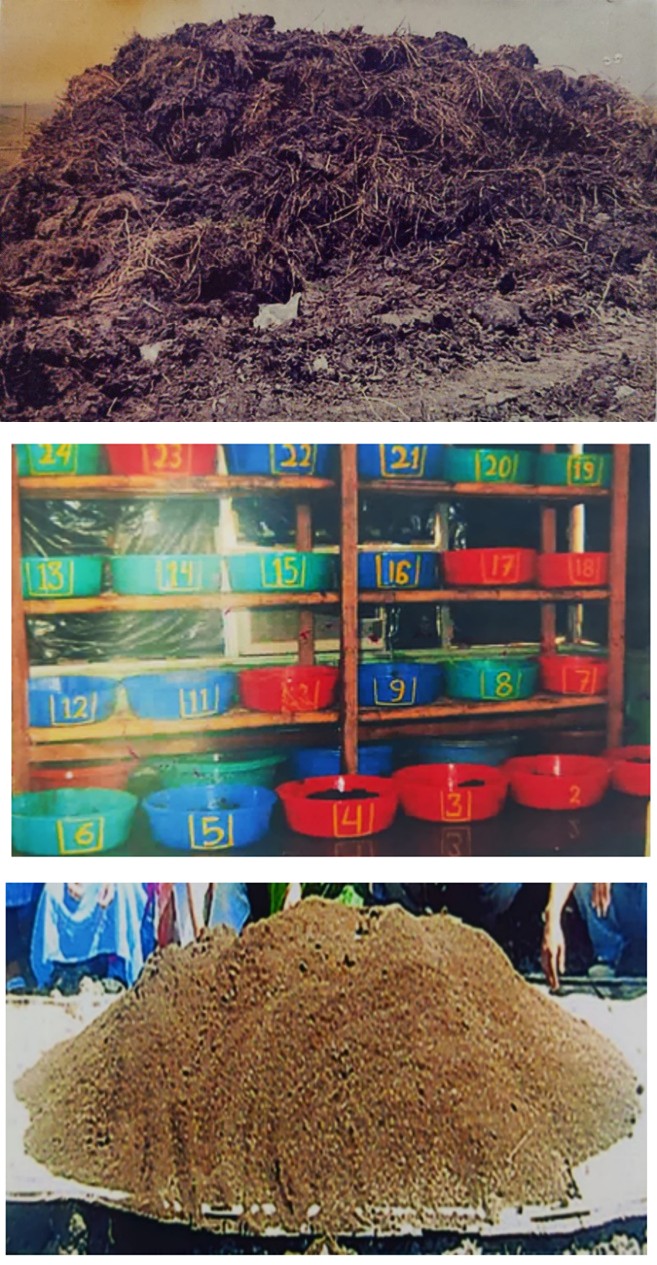
Figure 2A: Organic wastes prior to vermicomposting.
Figure 2B: Culture tubs containing cowdung and different organic wastes.
Figure 2C: A view of harvested vermicompost.
Rate of Gut Loading and Transit Time
Five (5) worms each of Perionyx excavatus and Eudrilus eugeniae were randomly collected from the respective culture tubs and brought to be laboratory. The gut of each individual worm was cleared by keeping it in half covered Petri dishes containing distilled water. To study the rate of gut loading and transit time of the feed materials, one gut cleared worm of each species were introduced to each culture tub containing 1kg of air dried, powdered and sieved (pore size: 2mm) cowdung. Two sets of experiments (one with Perionyx excavatus and the other with Eudrilus eugeniae) each with three replications were maintained. Worms were taken out at hourly intervals from the three replications of a set and their guts were cleared. The dry mass of the gut content was measured. The time periods at which the worms started casting were also noted.
Ingestion, Egestion and Assimilation
Five (5) earthworms of each species were introduced into plastic tubs (30x8cm) separately containing 1kg of air dried, powdered and sieved cowdung. Additional powdered cowdung was also spread thinly and uniformly in the tub. The surface of the cowdung was carefully smoothened so that the freshly laid cast was easily distinguished. The Cast were collected at 24hrs interval for a week and the dry mass of each sample was determined. Further, percentage egestion and assimilation of the ingested materials were also calculated on weekly basis. The intestinal loading rate and transit time of cowdung manure of two worms were applied following [51, 52].
Isolation and Identification of Bacteria associated with the Gut of Earthworms and Vermicompost
Earthworm Gut Bacteria: Mature worms of Perionyx excavatus and Eudrilus eugeniae were collected separately in sterile containers from the vermicomposting plastic tubs and brought to the laboratory for investigation of the gut microflora. Five (5) adult worms each of Perionyx excavatus and Eudrilus eugeniae were collected separately in sterile containers at random from the culture tubs. Representative worms were fixed in 70% alcohol for 10 mins and then washed repeatedly with sterilized distilled water. Each worm was cut into 3 pieces: anterior, middle and posterior with sterilized scissors. The gut contents of the different regions (anterior, middle and posterior) were collected in sterilized petri dishes, containing 2 ml of sterilized water. Gut contents of each region of individual worm were inoculated into petri dishes containing nutrient agar for bacteria in an inverted position at 30±1oC. Colonies so developed were counted for every 24 hrs interval. Morphologically dissimilar colonies were separated and subcultured pure were obtained [44].
Vermicompost Bacteria
Vermicompost obtained from feed mixture of cowdung + kitchen wastes + litters + paddy waste in 1:1:1:1 ratio was collected in sterilized Petri dishes using sterilized spatula and brought to the laboratory for investigations of bacterial (Figure 2B). Five (5) samples each of l gram vermicompost was randomly collected from the vermicomposting tubs. Each sample was mixed with 5ml of sterilised distilled water separately and later subjected to serial dilution up to 10-6 dilutions. For the isolation of bacterial components, 1 ml each of the suspension was inoculated in nutrient agar plates (in triplicate) and incubated in an inverted position at 30±1°C. Bacterial colonies so developed were counted for every 24h interval. Suitable controls were maintained. Morphologically dissimilar colonies were separated and transferred as subcultures. Pure cultures were obtained following [53].
Results and Discussion
Different regions and number of segments found in two species of earthworms are provided (Table 1A).
| Regions and Segments | Eudrilus Eugeniae (cm) | Perionyx Excavatus (cm) |
|---|---|---|
| Contracted size | 7 | 9 |
| Length of anterior region | 2 | 2.5 |
| Length of middle region | 2 | 2.5 |
| Length of posterior region | 3 | 4 |
| No. of segments in anterior region | 3 | 40 |
| No. of segments in middle region | 30 | 40 |
| No. of segments in Posterior region | 40 | 50 |
Table 1A: Size and Length (in cm) of different regions and number of segments found in two species of earthworms.
A comparative account of various biological aspect of Perionyx excavatus and Eudrilus eugeniae are provided (Table 1B).
| Biological Characteristics | Eudrilus Eugeniae | Perionyx Excavatus |
|---|---|---|
| Duration of life cycle (days) | ± 60 | ± 46 |
| Growth rate (mg worm-1 day-1) | 12 | 3.5 |
| Max body mass (mg) | 4294 | 600 |
| Maturation obtained at age (days) | ± 40 | ± 21 |
| Start of cocoon production (days) | ± 46 | ± 24 |
| Coccon production (worm-1 day-1) | 1.3 | 1.1 |
| Incubation period (days) | ± 16.6 | ± 18.7 |
| No. of hatchings from one worm | 1-5 | 1-3 |
Table 1B: A Comparative account of various biological aspects of Perionyx excavatus and Eudrilus eugeniae Source: Gunathilagraj, K. and Sahaya Alfred, cited by Devi KB [49].
Gut Load and Transit Time
Transit time and rate of gut loading of cow dung and other organic wastes by the two earthworms varied with each other_. Perionyx excavatus_ and Eudrilus eugeniae could consume 9.7 mg (dry mass) and 20.96 mg (dry mass) of cowdung respectively in one hour and 22.46 mg (dry mass) and 47.32 mg (dry mass) respectively in two hours. In three hours, Perionyx excavatus showed casting activity while Eudrilus eugeniae continued gut loading. By around three and half hours Eudrilus eugeniae started casting (Table 2A).
| Duration | Earthworm Species | |
|---|---|---|
| Perionyx Excavatus | Eudrilus Eugeniae | |
| 1h | 9.7 ± 0.36 | 20.96 ± 0.52 |
| 2h | 22.46 ± 0.48 | 47.32 ± 0.64 |
| 2h and 30 min | Gut loading continued | Gut loading continued |
| 3h | Casting | Gut loading continued |
| 3h and 30 min | – | Casting |
Table 2A: Transit time and rate of Gut loading of cowdung (in mg dry mass) for two earthworm species. Hence, in one day 8(eight) gut fillings could take place in Perionyx excavatus while 7(seven) gut fillings could take place in Eudrilus eugeniae.
Ingestion, Egestion and Assimilation
In the experimental tubs with Perionyx excavatus, the worms consumed about 98% of the cowdung and other organic wastes in a week but 69.44% of the ingested material was excreted while in the tubs with Eudrilus eugeniae, 95% was ingested in a week and 60.58% of the ingested material was excreted. Percentage assimilation of ingested material per week was higher in Eudrilus eugeniae than Perionyx excavatus by recording a value of 39.42% and 30.56% respectively. The ingestion, egestion and assimilation rate is provided (Table 2B).
| Biological Activities | Earthworm Species | |
|---|---|---|
| Perionyx Excavatus | Eudrilus Eugeniae | |
| Food ingested % week-1 | 98 | 95 |
| Food egestion % ingested week-1 | 69.44 ± 0.86 | 60.58 ± 0.85 |
| Assimilation % ingested week-1 | 30.56 ± 0.86 | 39.42 ± 0.85 |
Table 2B: Ingestion, Egestion and Metabolic rate of Perionyx excavatus and Eudrilus eugeniae in cowdung.
Bacteria associated with the Gut of Earthworms and Vermicompost
The investigations showed a number of bacterial colonies being developed on nutrient agar plates (Figure 3A). The bacterial colonies so developed were isolated and identified. The results of the various tests conducted were recorded and compared with the key to taxonomic bacteria from standard literatures [54, 55]. The bacterial types isolated from the gut of Perionyx excavatus and Eudrilus eugeniae and vermicompost (Figure 2C) are also presented (Table 3). Altogether four genera of bacteria were isolated and identified. Two species of Bacillus (Figures 3B & 3C) and one species of Klebsiella were isolated from both Perionyx excavatus and Eudrilus eugeniae. However, Micrococcus sp. was isolated from Perionyx excavatus alone and Proteus sp. was also isolated from Eudrilus eugeniae alone.
- Bacillus sp. [A]: Rod shaped, single, short/long chain, Gram +ve, Acid Fast – Not tested, spore +ve, Capsule/ Cyst – Not tested, Flagella – Not tested, and Motality +ve. (Figure 3B)
- Bacillus sp. [B]: Rod, single or chain (2-3μmL), spore cylindrical, Gram +ve, Acid Fast – Not tested, spore +ve, Capsule/Cyst – Not tested, Flagella – Not tested, and Motality +ve. (Figure 3C)
- Klebseilla sp.: Straight rod, upto 5.0μmL, singly, rarely chain, Gram -ve, Acid Fast -ve, spore -ve, Capsule /Cyst +ve, Flagella -ve, and Motality -ve.
- Micrococcus sp.: Spherical, single, pair & in clusters, Gram +ve, Acid Fast -ve, spore -ve, Capsule/Cyst -ve, Flagella = Not tested, and Motality -ve.
- Proteus sp.: Straight, rod about 3μmL pair or chain, Gram -ve, Acid Fast -ve, spore -ve, Capsule/Cyst -ve, Flagella +ve, and Motality +ve.
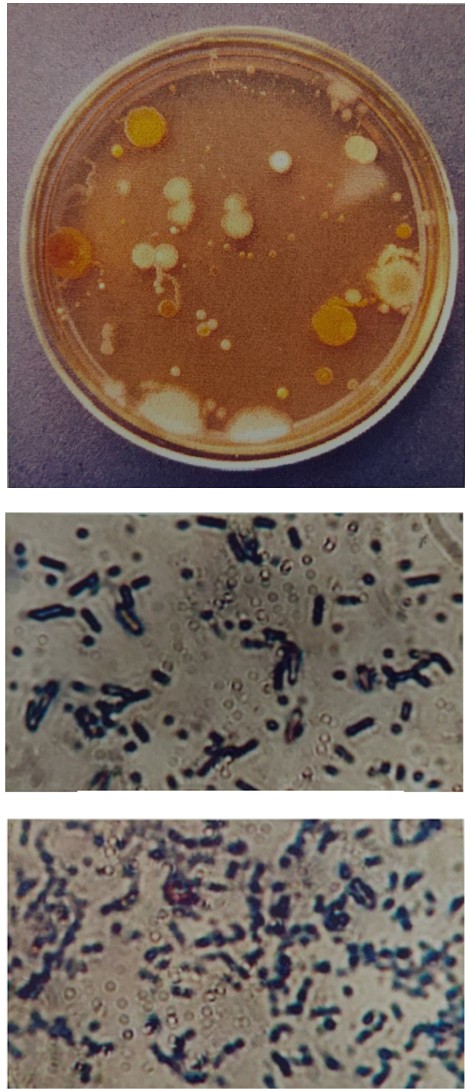
Figure 3A: Bacterial colonies developed on Nutrients agar medium.
Figure 3B: Bacillus sp.
Figure 3C: Bacillus sp.
Different region and number of segments found in two species of earthworm is provided (Table 3).
| Types of Becteria | Gut Content | Vermicompost | ||
|---|---|---|---|---|
| Eudrilus Eugeniae | Perionyx Excavatus | Eudrilus Eugeniae | Perionyx Excavatus | |
| Bacillus sp. A | Isolated | Isolated | Isolated | Isolated |
| Bacillus sp. B | Isolated | Isolated | Isolated | Isolated |
| Klebsiella sp. | Isolated | Isolated | Isolated | Isolated |
| Micrococcus sp. | Not Isolated | Isolated | Not Isolated | Not Isolated |
| Proteus sp. | Isolated | Not Isolated | Not Isolated | Not Isolated |
Table 5: Bacteria isolated from the gut content and vermicompost of Eudrilus eugeniae and Perionyx excavatus.
From the vermicompost (Figure 2C) produced by using Perionyx excavatus and Eudrilus eugeniae, one species each of Bacillus and Klebsiella could be isolated as the common bacterial flora. However, Bacillus sp. (B), Micrococcus Sp. and Proteus sp. could not be isolated from the vermicompost produced by using both the earthworms. In the present study, both Perionyx excavatus and Eudrilus eugeniae grow well and actively performed their various feeding and casting activities in cowdung and other organic wastes. In fact, cowdung can be considered as the most suitable medium for rearing of these earthworm species. These findings agreed with the previous findings [4] for Eudrilus eugeniae and [56] for Perionyx excavatus. Transit time and the rate of gut loading of Perionyx excavatus showed similar results with Octochaetona surensis [57] and that of Eudrilus eugeniae with Allobophora rosea [58] and L. mauritti [57]. The results of the ingestion, egestion and assimilation rates agreed previous workers [56]. In nature, it is observed that organisms ingesting smaller amount of cellulose and other plant materials exhibit higher assimilation efficiency, whereas organisms which have a lower assimilation capability always ingest larger amounts of food materials to meet their need. Hence, the lower ingestion and higher assimilation efficiency in Eudrilus eugeniae and higher ingestion and lower assimilation efficiency in Perionyx excavatus confirmed the above hypothesis.
Vermicomposting is one of the most efficient methods for converting organic wastes into valuable plant nutrients [59]. Eudrilus eugeniae and Perionyx excavatus are nowadays widely used in vermicomposting as they are prolific breeders and can adapt easily to various organic waste materials [56, 57]. Production of vermicompost depends on the consumability of the worms and also on the nutritional status and texture of organic wastes. The rate of breakdown of waste depends on the types of litter used [27]. In the present study, Perionyx excavatus showed better production of vermicompost than Eudrilus eugeniae. These results agreed with the previous findings [7, 60].
Earlier study revealed influence of environmental factors on survival and growth of Earthworms. P. excavatus does not grow much at low temperatures although it can survive them 4°C (39.2°F) but it is less susceptible to high temperature over 30°C (86°F) than E. eugeniae. Even in tropical areas, P. excavatus does not grow during low- winter temperatures but can survive the high-summer temperatures, whereas E. eugeniae has a much narrower tolerance range for temperature and cannot survive either the extreme low winter or the high summer temperatures [61]. In the present study too, earthworms move to more suitable areas in the culture tub if the environmental limits are greatly exceeded. Bacteria in the gut flora increased greatly in number [43] but the result suggest that changes in the microbial population during passage through the worm gut tended to be logarithmic, indicating that increases were by bacteria growth and not by the worm selecting food material with high bacteria count. The results of the present investigation revealed the presence of a number of bacteria in the gut of the earthworms. However, in the vermicompost, some of the microbes present in the gut were not isolated. Among the bacterial flora, one species of Bacillus and one species of Klebsiella were isolated from the vermicompost. The outcome of the present study shows the presence of bacteria like Bacillus and Klebsielal in the vermicompost indicating that they were not digested. These may be due to the production of antibiotic and/or presence of strong outer coat and/or production of phytotoxic metabolites. Both Perionyx excavatus and Eudrilus eugeniae could thrive well in organic waste materials and they can be used as potential vermicomposting agents. Through their decomposing activities, they help in the recycling of organic wastes.
Conflict of Interest
The authors have no financial conflict of interest to declare.
Acknowledgement
The work was supported by Department of Biotechnology, Ministry of Science & Technology, Government of India. (Grant No. BT/PR 4078/SPD/09/313/2003 Dt. 23/03/2004). The funders had no role in study, design, data collection and analysis, decision to publish. Thanks, are also due to Prof. P.K. Bandyopadhyay of Zoology Department, Kalyani University, Kalyani, (W.B.), India for confirming the Identification of the Earthworms.
References
-
Butt KR (1991) The effects of temperature on the intensive production of _Lumbricus terristus_ (Oligochaeta: Lumbricidae). Pedobiologia Journal of Soil Ecology 35(4): 257-264.
-
Anand LR, Vanessa J (2006) Variation in the number of earthworm castings and burrows at the soil surface in relation to seasonal changes in Ranga Reddy district of Andhra Pradesh, Uttar Pradesh. J Zool 26(2): 213-216.
-
Dash MC, Senapati BK (1980) Cocoon morphology, hatching and emergence pattern in ropical earthworms. Pedobiologia 20(5): 316-324.
-
Graff O (1981) Preliminary experiments on vermicomposting of different waste materials using _Eudrilus eugeniae_ (kinberg). In: Appelhof M (Ed.), Proceedings of workshop on role of earthworms in the stabilization of organic residue. Kalamazoo, Michigan, pp: 179-191.
-
Bhiday MR (1995) Technology for Earthworm Rearing. Farm Digest, pp: 19.
-
Amoji SD, Shagoti UM, Biradar VA, Biradar PM (1999) Growth and reproduction of the epigeic earthworm (_Eudrilus eugeniae)_ as influenced by the seasonal factors in semi-arid climatic region. J Soil Biol Evol 19(1&2): 122-128.
-
Biradar PM, Amoji SD, Biradar VA (2004) Compostibility of organic waste by earthworm, _Perionyx excavatus_ as influenced by seasonal factors. J Exp Zool India 7(2): 201-212.
-
Biradar PM, Amoji SD, Biradar VA (2004) Influence of animal manures on the biology of earthworm, _Perionyx_ _excavatus_ in tropical semi-arid climate. J Exp Zool India 7(2): 245-252.
-
Sharma DS, Sonal (2004) Seasonal variation on the cocoon production of earthworm Eisenia foetida (Savigny) 8(3): 695-698.
-
Reinecke AJ, Viljoen SA (1998) Reproduction of the African earthworm, _Eudrilus eugeniae_ (Oligochaeta) cocoons. Biol Fertil Soils 7: 23-27.
-
Reinecke AJ, Hallat L (1989) Growth and cocoon reproduction of _Perionyx excavatus_ (Oligochaeta). Biol Fertil Soils 8: 303-306.
-
Reinecke AJ, Viljoen SA, Saayman RJ (1992) The suitability of _Eudrilus eugeniae_, Perionyx excavatus and _Eisenia foetida_ (Oligochaeta) foe vermicomposting in Southern Africa in terms of temperature requirements. Soil Biol Biochem 24(12): 1295-1307.
-
Viljoen SA, Reinecke AJ (1989a) Moisture and growth, maturation and cocoon production of _Eudrilus eugeniae_ (Oligochaeta). Revue d’Écologie et de Biologie du Sol 26(3): 291-303.
-
Viljoen SA, Reinecke AJ (1989b) The life cycle of the African night crawler, _Eudrilus eugeniae_ (Oligochaeta). S Afr J Zool 24(1): 27-32.
-
Gupta PK (2005) Vermicomposting for sustainable agriculture. Agrobios, India, pp: 210.
-
Ismail SH (2005) The Earthworm Book. Other India Press, Goa, India, pp: 101.
-
Tsukamoto J, Evans AC (1977) Influence of temperature on hatching and growth of _Eisenia foetida_ (Oligochaeta, lumbricidae). _Pedobiologia_ 17(5): 338-342.
-
Reinecke AJ, Kriel JR (1981) Influence of temperature on the reproduction of the earthworm _Eisenia foetida_ (Oligochaeta). S Afri J Zool 16(2): 96-100.
-
Hartenstein F, Hartenstein E, Hartenstein R (1981) Gut load and transit time in the Earthworm _Eisenia foetida._ _Pedobiologia_ 22(1): 5-20.
-
Dash MC, Satpathy B, Behera N, Dev C (1984) Gut load and turnover of soil, plant and fungal material by _Drawida calebi_, a tropical earthworm. Rev Ecol Biol Sol 21(3): 387-393.
-
Reinecke AJ, Viljoen SA (1990) The infuence of feeding pattern on growth and reproduction of the vermicomposting earthworm, _Eisenia foetida_ (Oligochaeta). Biol Fertil Soils 10: 184-187.
-
Pulikeshi MB, Amoji SD (2003) Influence of organic wastes and seasonal environment factors on growth and reproduction of _Eisenia foetida._ J Environ Biol 24(1): 81- 89.
-
Miles HB (1963) Soil protozoa and Earthworm Nutrition. Soil Science 95(6): 407-409.
-
Dash MC, Mishra PC, Behera N (1979) Fungal feeding by a tropical Earthworm. Tropical Ecology 20 (1): 9-12.
-
Dash MC, Behera N, Dash HK (1985) Earthworm and microfungal interaction in soil. Proc Soil Biol Symp Hissar 77-83.
-
Abbott I, Parker CA (1981) Interactions between earthworms and their soil environment. Soil Biol Biochem 13(3): 191-197.
-
Kale RD, Krishnamoorthy RV (1981) Litter preference in the Earthworm _Lampito mauritii,_ Proc Indian Acad Sci (Anim Sci) 90: 123-128.
-
Sharma DS, Sonal (2006) Survival, growth and multiplication of Red Compost Worm _Eisenia foetida_ (Savigny) on Organic wastes of different animal sources. Uttar Pradesh J Zool 26(2): 193-196.
-
Curry JP (1976) Some effects of animals manures on earthworms in grassland. _Pedobiologia_ 16(6): 425-438.
-
Hatanbe K, Ishiokay, Furuichi E (1983) Cultivation of _Eisenia foetida_ using dirty waste sludge cake. In: Satchell JE (Ed.), Earthworm Ecology. Darwin to Vermiculture.
-
Chandran S, Ramalingam R (2007) Utilization of waste sludge from paper mill and press mud from sugar mill for the culture of a compost earthworm _Perionyx excavatus_ (Perrier). Indian J Environ and Ecoplan 14 (1-2): 161- 165.
-
Kozlovskaya LS, Zhdannikova EN (1961) Joint action of earthworms and microflora in forest soils. _Dokl. Akad_ _Nauk_ SSSR 139: 470-473.
-
Dhakshayani C, Dawood N, Ismail SA (2003) Earthworms and microorganisms – a synergistic role in improving soil fertility. Proceedings of the National Seminar on Environmental Biotechnology – Envirotech. JBAS College, Chennai, India, pp: 80-84.
-
Mishra PC, Dash MC (1980) Digestive enzymes of some earthworms. Experientia 36(10): 1156-1157.
-
Lussenhop J (1992) Mechanisms of microarthropod microbial interactions in soil. Adv Ecol Res 23: 1-33.
-
Brown GG (1995) How do earthworm affect microfloral and faunal community diversity? Plant and Soil 170: 209-231.
-
Doube BM, Brown GG (1998) Life in a complex cummunity: Functional interactions between earthworms, organic matter, Microorganisms and plants. In: Edwards CA (Ed.), Earthworm Ecology. CRC Press, The Netherlands, pp: 179-211.
-
Bassalik R (1913) On silicate decomposition by soil bacteria. Z Garing physiol 2: 1-32.
-
Day GM (1950) Influence of earthworms on soil microorganisms. Soil Sci 69(3): 175-184.
-
Khambatta SR, Bhatt JV (1957) A contribution to study of the intestinal microflora of Indian Earthworms. Arch Mikrobiol 28(1): 69-80.
-
Drake HL, Horn MA (2007) As the worm turns: The Earthworm Gut as a Transient Habitat for soil Microbial Biomes. Annu Rev Microbiol 61: 169-189.
-
Lee KE (1985) Earthworms: Their Ecology and Relationships with Soils and Land Use. Academic Press, Sydney, Australia, pp: 411.
-
Parle JN (1963) Microorganisms in the Intestines of Earthworms. J Gen Microbiol 31: 1-11.
-
Devi KB, Singh NI (2017) Microbes (Bacteria Actinomycetes, Fungi, Protozoa and Nemalotes) associated with gut content of Earthworms. In: Singh NI, et al. (Eds.), Microbial Resources of Indo-Myanmar (Burma) Hot Spot Region. Publishes & Distrubutors 23- A, New Connaught place, Dehra Dun - 248001, India.
-
Parle JN (1963b) A microbial study of earthworm casts. J Gen Microbiol 31(1): 13-23.
-
Parthasarathi K, Ranganathan LS (2000) Ageing effect on enzyme activities in pressmud of vermicomposts of _Lampito mauritie_ (Kinberg) and _Eudrilus eugeniae_ (Kinberg). Biol Fert Soils 30: 347-350.
-
Bamane SR, Pawar PK, Khambe SD (2004) Vermiculture Biotechnology: An expert system for hotel waste management. Indian J Environ & Ecoplan 8(1): 193-196.
-
Singh NI (2007) Earthworm Biotechnology for Introducing Organic Farming Among SC/ST Communities in Imphal East District, Manipur for Sustainable Development. Department of Biotechnology, Ministry of Science & Technology, Govt. of India, pp: 47.
-
Devi KB (2012) Conversion of organic wastes to manure through Easthworm. Biotechnology Ph.D. thesis, Life Sciences, Manipur University, pp: 104.
-
Tiunov AV, Scheu S (2000) Microbial Biomass biovolume and respiration in _Lumbricus terrestries_ L. cast material of different age. Soil Biol Biochem 32(2): 265-275.
-
Gupta PK (2005) Vermicomposting for Sustainable Agriculture. Agribios. Vedams eBooks (P) Ltd, New Delhi, India.
-
Kale RD (2006) Vermicompost – Crown Jewel of Organic Farming. Malleswaran, Bangalore, India.
-
Collin CH, Lyne PM, Grage JM, Falkinham JO (1989) Microbiological Methods. 8th(Edn.), Butter worth and co. publ, pp: 409.
-
Skerman VBD (1967) A guide to identification of the gener of bacteria. With Methods and Digests of Generic Characteristics. 2nd (Edn.), The Williams & Wilkins, Baltimore, Maryland.
-
Buchanan RE, Gibbons NE (1974) Burgey’s Manual of Determinative Bacteriology, 8th(Edn.), Md. William and Wilkins, Baltimore, Maryland, pp: 1246.
-
Kale RD, Bano K, Krishnamoorthy RV (1982) Potential of _perionyx excavatus_ for utilizing organic wastes. Pedobiologia 23(6): 419-425.
-
Dash MC, Senapati BK (1986) Vermin technology, an option for organic waste management in India. In: Dash MC, et al. Verms and vermicomposting. Five-star Printing Press, Burla, India, pp: 157-172.
-
Bolton PJ, Phillipson J (1976) Burrowing, feeding, egestion and energy budgets of _Allobophora rosea_ (Savigny) (Lumbricidae). Oecologia 23(3): 225-245.
-
Slocum K (1998) Vermicomposting livestocks manure. J Worm Digest 18: 8-9.
-
Manna MC, Singh M, Kundu S, Tripathi AK (1994) Decomposition of waste organic materials of farm and city as influence by vermiculture extended summaries. National Seminar on Developments in Soil Science, Indian Agricultural Research Institute, New Delhi, India.
-
Dominguez J, Edwards CA (2011) Biology and Ecology of Earthworm species used for vermicomposting. Taylor & Francis Group, LLC, pp: 27-40.
- Antifungal Activity of New Acetophenone Derivatives
- Interconnected Microbiomes Human Health Within an Environmental Framework
- Silkworm-Based Vaccine Production for H5N1: A One Health Approach to Pandemic Preparedness
- Microbial Diversity and Lipolytic Activity of Bacteria and Fungi from Oil-Contaminated Sites in Makurdi Metroplois
- Antibiotic Resistance Profile of Bacteria Isolated at the Central Laboratory of the National Hospital Center of Nouakchott
- Epidemiology and Sensitivity to Antibiotics of Germs Isolated from Blood Cultures in the Laboratory of the National Hospital Center of Nouakchott-Mauritania