
Isolation and Characterization of Stigmasterol from Psidium guajava Leaves: A Promising Bioactive Compound with Therapeutic Potential
This study aimed to isolate and characterize bioactive compounds from the leaves of Psidium guajava Linn. The hydroethanolic extract yielded 32% (80 g) from the crude material, which was subjected to column chromatography for fractionation. Structural elucidation of the isolated compound was performed using 1D and 2D Nuclear Magnetic Resonance (NMR) spectroscopy, including COSY, HSQC, and HMBC experiments. The spectral data confirmed the presence of stigmasterol, characterized by its distinct chemical shifts and long-range correlations between carbon and proton atoms. Stigmasterol was isolated as a white, crystalline solid and identified by its unique physio-chemical properties, such as solubility in organic solvents, a melting point of 163-164°C, and molecular formula C29H48O. This compound is known for its significant biological activities, including antibacterial, antimalarial, anti-inflammatory, antioxidant, and anticancer effects. By employing advanced techniques like 1D and 2D NMR spectroscopy, the study provides precise structural elucidation of stigmasterol, contributing to natural product research and reinforcing the medicinal potential of guava leaves as a source of pharmacologically active compounds. This adds to the existing knowledge of the plant’s bioactive components and their applications in medicinal chemistry.
Abbreviations
NMR: Nuclear Magnetic Resonance; COSY: Correlation Spectroscopy; HSQC: Heteronuclear Single Quantum Coherence; HMBC: Heteronuclear Multiple Bond Coherence; TLC: Thin-layer Chromatography.
Introduction
The medicinal use of plants has been a cornerstone of traditional medicine across the world for centuries. In recent decades, there has been a resurgence of interest in natural compounds derived from plants, driven by the growing demand for alternative therapies and the quest to discover novel drugs with fewer side effects than synthetic pharmaceuticals. Among the plants of great medicinal importance is Psidium guajava Linn, commonly known as guava [1]. Native to tropical and subtropical regions, guava has been recognized for its wide range of therapeutic properties. Various parts of the plant, especially the leaves, are used in traditional medicine for treating conditions such as gastrointestinal disorders, diabetes, inflammation, and infections [2].
Scientific research has validated many of the medicinal uses of Psidium guajava, linking its bioactivity to the presence of secondary metabolites such as flavonoids, tannins, terpenoids, and sterols [3]. Among these, phytosterol, stigmasterol is of particular interest due to its diverse biological activities. Stigmasterol is a plant-derived sterol that belongs to the family of phytosterols compounds structurally similar to cholesterol in humans. It is found in various plant species and is known to exert several pharmacological effects, including anti-inflammatory, antioxidant, antibacterial, antidiabetic, and anticancer activities [4]. The structural similarity of stigmasterol to cholesterol has also attracted attention for its role in managing cholesterol levels and improving cardiovascular health by inhibiting cholesterol absorption in the human body.
Sterols such as stigmasterol are integral to plant cell membranes, where they regulate membrane fluidity and permeability. In addition, stigmasterol has been linked to various biological processes, including the regulation of immune responses, modulation of inflammatory pathways, and inhibition of oxidative stress. Its diverse bioactivity suggests a potential for therapeutic applications in a variety of conditions, ranging from metabolic disorders like diabetes to degenerative diseases such as cancer. The multifaceted biological properties of stigmasterol make it a compound of high interest for both pharmaceutical research and natural product development.
Despite the wealth of research supporting the pharmacological potential of stigmasterol, there remains a need for further investigation into its isolation and characterization from natural sources. In this context, Psidium guajava leaves serve as a valuable source of stigmasterol, as evidenced by prior studies demonstrating the presence of this compound in guava leaf extracts [5]. Isolating and characterizing stigmasterol from guava leaves provides an opportunity to better understand its molecular structure, chemical behavior, and potential applications in drug discovery and development.
To achieve these goals, advanced spectroscopic techniques such as Nuclear Magnetic Resonance (NMR) spectroscopy are indispensable. 1D and 2D NMR techniques, including Correlation Spectroscopy (COSY), Heteronuclear Single Quantum Coherence (HSQC), and Heteronuclear Multiple Bond Coherence (HMBC), enable the detailed elucidation of stigmasterol’s structure by mapping the connectivity between hydrogen and carbon atoms in the molecule. These spectroscopic techniques allow for the precise determination of molecular features, including the arrangement of double bonds, the location of functional groups, and the stereochemistry of the compound, which are critical to its bioactivity [6].
The aim of this study is to isolate stigmasterol from the leaves of Psidium guajava and elucidate its structure using advanced spectroscopic methods. The findings from this research will provide a detailed understanding of stigmasterol’s molecular properties and contribute to the growing body of knowledge on its pharmacological potential. By comparing the spectroscopic data obtained from stigmasterol with reference values from the literature, this study will confirm its identity and further underscore the medicinal relevance of Psidium guajava as a source of bioactive compounds.
Materials and Method
Collection and Identification of Plant Material
The Fresh forms of Guava leaves were obtained from Lambun Sarki, Kofar Marusa Low - cost, University of Abuja, Gwagwalada Abuja, Nigeria, in March 2022. It was identified and authenticated at the Department of Botany, University of Abuja, Abuja Nigeria by comparing the voucher specimen of Psidium guajava leaf in the herbarium with the sample collected.
Extraction of the Plant Material
The powdered sample of the plant materials was extracted following Gupta, et al. Fifty grams (50 g) of each dried powder were weighed into a glass container and extracted with 500 mL, 70% ethanol and 30 % sterile distilled water (Hydro- ethanolic extraction) by decoction method for two weeks. The sealed bottle has undergone vigorous shaking at regular intervals for 48 h. The mixture was sieved through a muslin cloth and then re - filtrated by passing through Whatman’s filter paper No. 1. The deposit was concentrated by complete evaporation of the solvent on a water bath at 40°C to yield the reddish-brown gummy solid extract. The extract was subsequently transferred into a clean, sterile, airtight glass container and stored in the refrigerator at 4°C until use.
Preparation of the Hydro-ethanolic Extract of Psidium Guajava
The dried leaves were grinded into fine powder with the aid of a grinder. 250g of the grinded leaves were put into a glass container, 2500 mL of a prepared hydro ethanolic solvent was added containing 70 % ethanol (1750 ml of ethanol and 750ml of distilled water), it was then closed tightly and left for 72 hrs. thoroughly shake at regular intervals. After 72hrs, the mixture was filtered with a Whatman’s filter paper and the solution collected in glass beakers, the beakers containing the solution were then placed in a water bath at a temperature of 40°C and left to concentrate until required. The dried extract was then collected in a glass container and stored in a refrigerator at a temperature of 4°C. [7].
Plant Extraction Yield
After the extraction process, the percentage yield of the extract was calculated from the 250g of the powdered plant leaves using the expression below, Extraction yield = W1 / W2X100 Where W1 is dry extract after extraction, and; W2 is plant sample weight before extraction.
The isolation and characterization of Psidium guajava Linn extract was achieved through the following steps:
Fractionation: The concentrated extract was then segregated using preparative TLC and column chromatography. This divides the various extract constituents according to their physical and chemical characteristics.
Instrumentation of Column Chromatography: The following elements make up a typical column chromatographic system that uses a gas or liquid mobile phase: stationary phase (Silica Gel), column, mobile phase and delivery system (DCM, Methanol, and n-Hexane), injector system (Syringe), detector and chart recorder (10% H2SO4 and Ultra Violet light), fraction collector (10ml Bottles), and so on.
Preparation of the Column: Most of the column is made up of a glass tube that is filled with the proper stationary phase. Before packing the stationary phase, a pad made of glass wool, cotton wool, or asbestos is placed at the bottom of the column. After packing, a paper disc is left on top to prevent the stationary layer from being damaged when the sample or mobile phase is added.
Procedure for Column Preparation Wet packing was used to prepare the column. The stationary phase of the column was silica gel (Mesh), and the mobile phases were dichloromethane, hexane, methanol, and ethyl acetate. The packed column was filled with the dissolved extract, and the chemicals were then sparingly collected into a 10ml vial bottle. The purity of the substances was also determined using preparatory thin layer chromatography. For characterization and bioactivity, the pure compounds were maintained in a desiccator in a tidy, dry sample vial. The same process was used to purify the impure chemicals again, but a smaller column was utilized to increase the likelihood of obtaining pure compounds. Additionally, the compounds’ purity was discovered by re-spotting them on a TLC plate and examining them under UV light.
Characterization The 400 MHz Agilent Technologies HP5973 mass electron detector was used, PerkinElmer Spectrum Two FT- IR Spectrometer, JASCO-P-1020 polarimeter, Bruker AVANCE III NMR spectrometer, Agilent Technologies 6890N. Utilizing spectroscopic and spectrometric analyses, structures were established. To determine the precise configurations of isolated compounds, NMR and FTIR tests on the compounds were forwarded to the cooperating laboratory. On either a 400MHz or 500MHz Bruker AVANCE III NMR spectrometer, the NMR experiment was carried out. Spectra were captured in CDCl3 and, occasionally, DMSO-d6. In the 1H NMR spectrum at 7.26 and in the 13C NMR spectrum at 77.23, respectively, CDCl3 was referenced in accordance with the center line. In the 1H NMR spectrum at 2.50 and at 39.51 in the 13C NMR spectrum, respectively, the DMSO was referred in accordance with the middle line. Software called Bruker NMR academic Topspin was used to process the spectra.
Results
The extraction yield was weighed as 80 g
Fractionation of Crude Extract
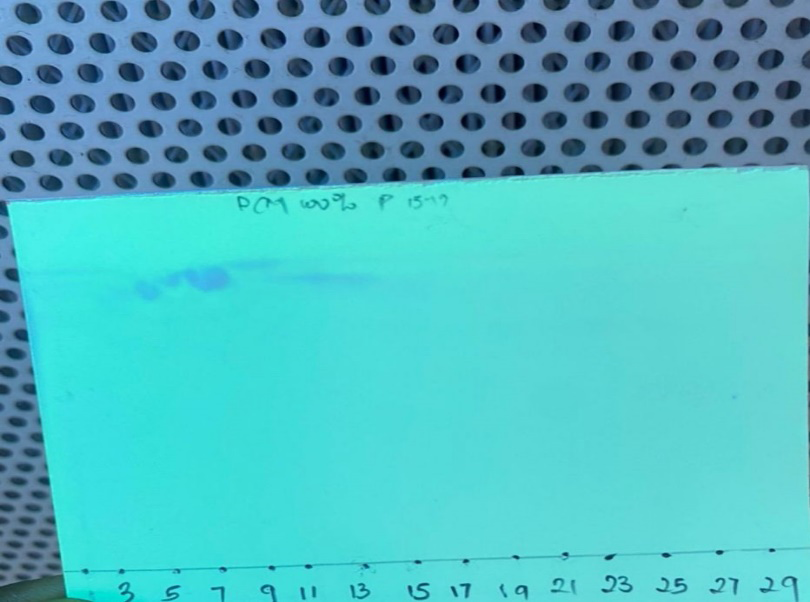
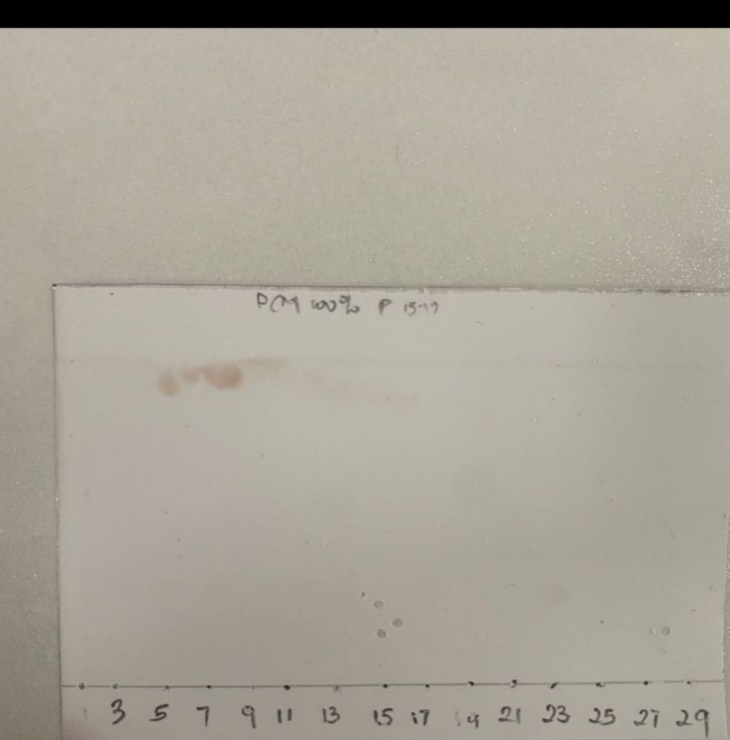
The crude extract was collected into fractions using column chromatography (Figures 1 & 2).
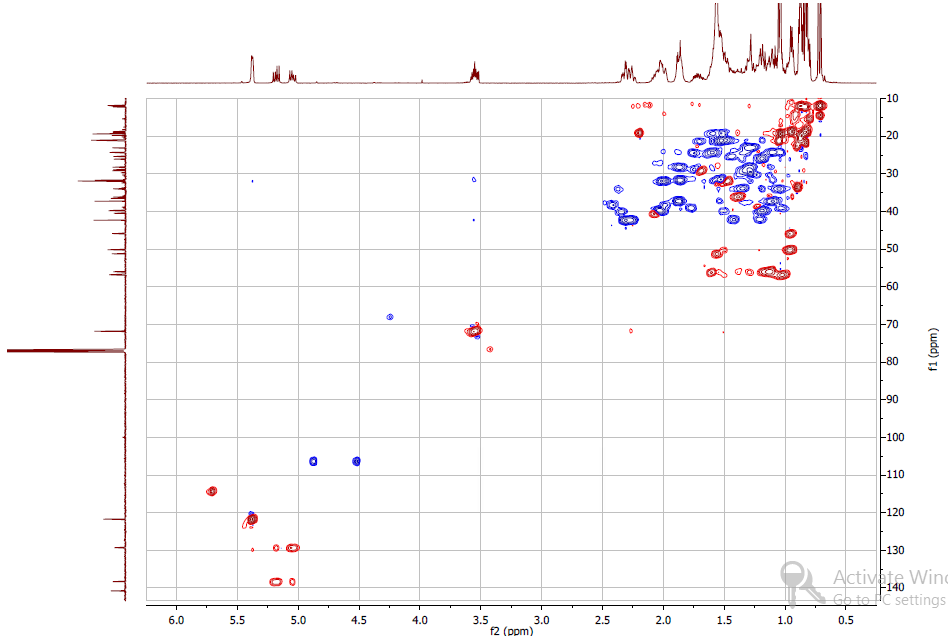
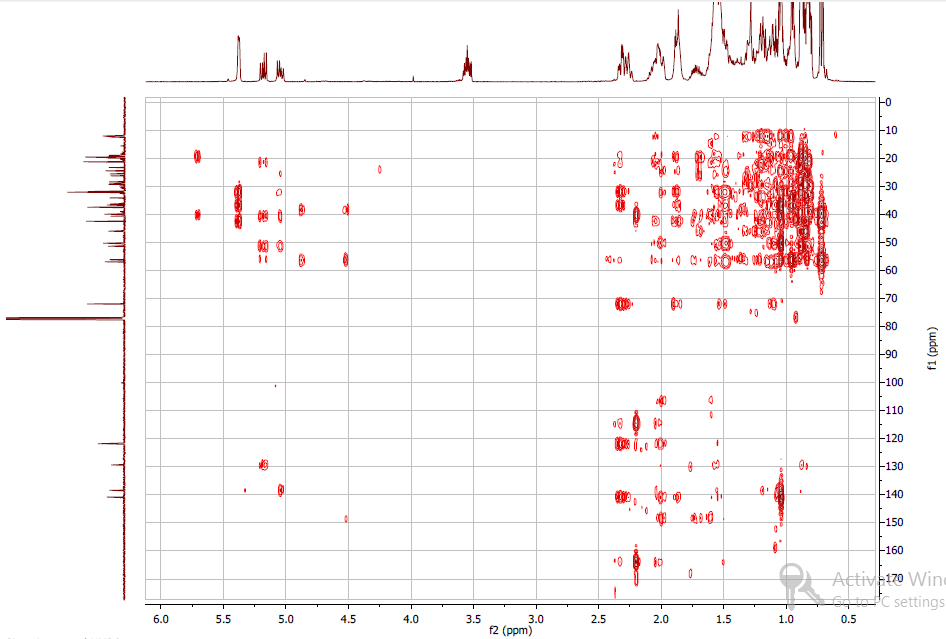
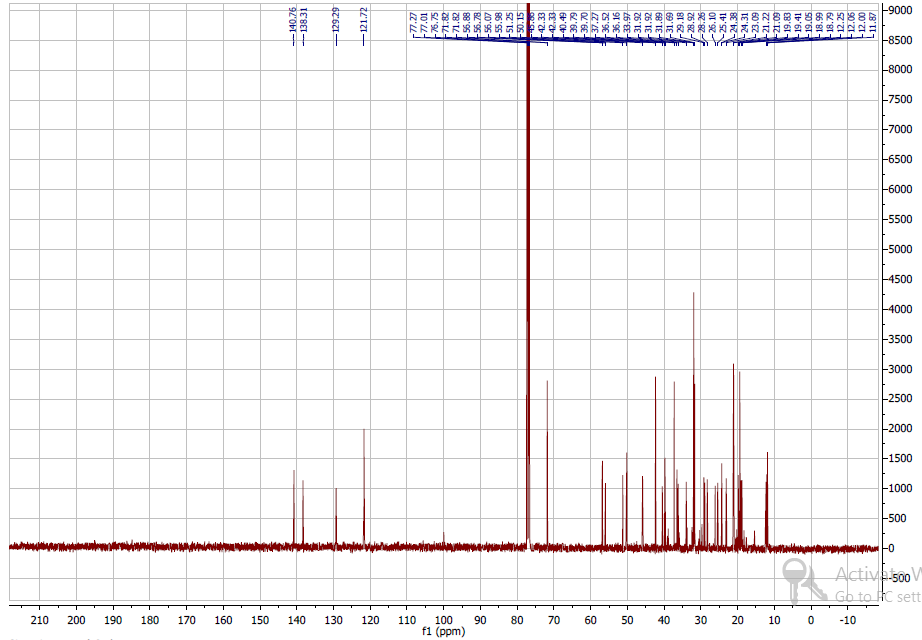
Structural Elucidation of Stigmasterol (Tables 1 & 2) and (Figures 3-8)
| Position of Carbons | 1H | 1H* |
|---|---|---|
| 1 | 3.55 | 3.51 (tdd, 1H, J = 4.5, 4.2, 3.8 Hz) |
| 2 | 5.2 | 5.31 (t, 1H, J = 6.1 Hz) |
| 3 | 0.93 | 0.91 (d, 3H, J = 6.2 Hz) |
| 4 | 5.05 | 4.98 (m, 1H) |
| 5 | 5.16 | 5.14 (m, 1H) |
| 6 | 0.83 | 0.83 (t, 3H, J = 7.1 Hz) |
| 7 | 0.82 | 0.82 (d, 3H, J = 6.6 Hz) |
| 8 | 0.8 | 0.80 (d, 3H, J = 6.6 Hz) |
| 9 | 0.71 | 0.71 (s, 3H) |
| 10 | 1.03 | 1.03 s, 3H) |
Table 2: Comparison of 1H chemical shift values of Stigmasterol isolated from extract of Psidium guajava leaves and reference val
| Position of Carbons | 13C | 13C* |
|---|---|---|
| 1 | 37.27 | 37.6 |
| 2 | 31.92 | 32.1 |
| 3 | 71.82 | 72.1 |
| 4 | 42.3 | 42.4 |
| 5 | 140.76 | 141.1 |
| 6 | 121.72 | 121.8 |
| 7 | 28.92 | 31.8 |
| 8 | 31.69 | 31.8 |
| 9 | 50.15 | 50.2 |
| 10 | 36.52 | 36.6 |
| 11 | 21.22 | 21.5 |
| 12 | 39.79 | 39.9 |
| 13 | 42.33 | 42.4 |
| 14 | 56.78 | 56.8 |
| 15 | 24.31 | 24.4 |
| 16 | 28.92 | 29.3 |
| 17 | 56.07 | 56.2 |
| 18 | 40.49 | 40.6 |
| 19 | 21.5 | 21.7 |
| 20 | 138.31 | 138.7 |
| 21 | 129.21 | 129.6 |
| 22 | 45.86 | 46.1 |
| 23 | 24.38 | 25.4 |
| 24 | 12.06 | 12.1 |
| 25 | 29.18 | 29.6 |
| 26 | 19.83 | 20.2 |
| 27 | 19.41 | 19.8 |
| 28 | 18.79 | 18.9 |
| 29 | 12.25 | 12.2 |
Table 1: Comparison of 13C chemical shift values of Stigmasterol isolated from extract of Psidium guajava leaves and reference va
Physio-Chemical Properties of Stigmasterol
Stigmasterol is a white, odorless, crystalline solid with a molecular formula of C29H48O and a molecular mass of 412.68 g/mol. It is hydrophobic, soluble in organic solvents like ethanol and chloroform, but insoluble in water. It has a melting point of 163-164°C and is stable under normal conditions but can oxidize when exposed to heat, light, or air,
Discussion
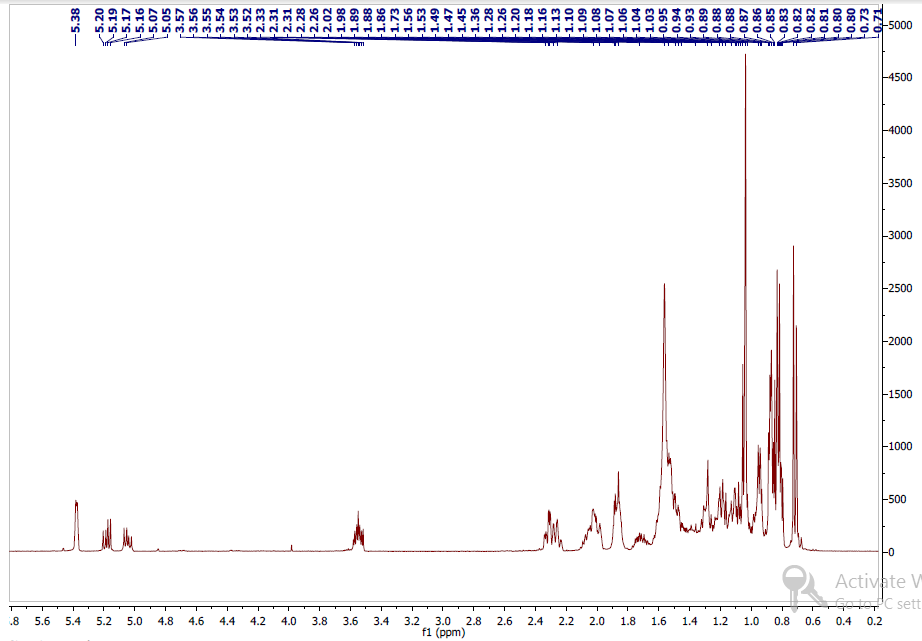
The extraction of Psidium guajava Linn yielded a crude extract of 80g, representing 32% of the plant material used. This crude extract was fractionated and purified through column chromatography, followed by thin-layer chromatography (TLC), which confirmed the isolation of a pure compound, identified as stigmasterol. The purity of the compound was validated through TLC, both under UV light and using 100% dichloromethane as a developing solvent. The structural elucidation of stigmasterol was carried out using various spectroscopic techniques, including 1D and 2D Nuclear Magnetic Resonance (NMR) spectroscopy. The 1H-NMR spectrum revealed key features characteristic of stigmasterol, such as olefinic protons at 5.05, 5.16, and 5.20 ppm, a hydroxyl proton at 3.55 ppm, and methyl protons resonating between 0.71 and 1.03 ppm. These shifts are consistent with known spectral data for stigmasterol, confirming the identity of the isolated compound [4, 9]. The 13C-NMR spectrum provided further confirmation, showing resonances corresponding to 29 carbon atoms, including olefinic, methyl, methylene, and quaternary carbons, as outlined.
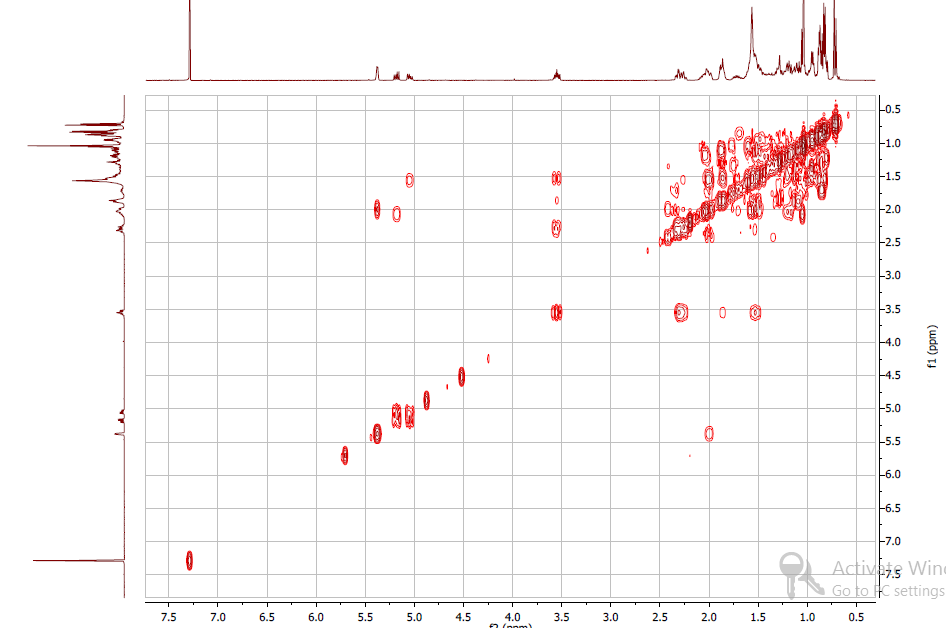
Further verification of the structural integrity of the isolated stigmasterol was achieved through 2D NMR techniques. Correlation Spectroscopy (COSY) helped to determine the coupling between nuclei connected through one to three bonds. Heteronuclear Single Quantum Coherence (HSQC) confirmed the connectivity and chemical shifts of directly bonded carbon and hydrogen atoms, while Heteronuclear Multiple Bond Coherence (HMBC) allowed for the identification of longer-range correlations between carbons and protons. These findings established the position of functional groups, such as the hydroxyl group at C-3 and the double bonds at C-5 and C-22. The data align with previously published studies on stigmasterol [3, 10].
The physio-chemical properties of stigmasterol also support its identification as a plant-derived sterol. Stigmasterol is a white, crystalline solid with a molecular formula of C29H48O and a molecular weight of 412.68 g/ mol. It exhibits a melting point of 163–164°C and is soluble in organic solvents like ethanol, chloroform, and acetone, but insoluble in water. These characteristics are consistent with reported literature data for stigmasterol, indicating the reliability of the extraction and isolation process used in this study [4].
Stigmasterol is a well-documented compound known for its diverse biological activities. Several studies have demonstrated its antibacterial, anti-inflammatory, antioxidant, anticancer, and antidiabetic properties [11]. These pharmacological activities are attributed to stigmasterol’s ability to modulate biological pathways related to inflammation, oxidative stress, and cellular proliferation. For instance, the anti-inflammatory properties of stigmasterol are linked to its ability to inhibit pro- inflammatory cytokines and reduce oxidative damage, making it a potential therapeutic agent for chronic inflammatory diseases [12]. Similarly, its antidiabetic properties arise from its role in regulating glucose metabolism and improving insulin sensitivity.
The biological activities of stigmasterol make it a promising candidate for further research in natural product- based drug development. Given its structural similarity to cholesterol, stigmasterol can compete with dietary cholesterol for absorption in the human gut, leading to reduced cholesterol levels, which are beneficial in managing cardiovascular diseases [4]. Additionally, its antioxidant properties make it a suitable candidate for protecting cells from oxidative stress, which is implicated in the progression of diseases such as cancer and diabetes [11].
Conclusion
This study successfully isolated and characterized stigmasterol from Psidium guajava leaves using spectroscopic techniques. The findings from both 1D and 2D NMR analyses, along with the physio-chemical data, are consistent with previously published reports, confirming the identity of the compound. The pharmacological potential of stigmasterol, as highlighted by its antibacterial, anti-inflammatory, antioxidant, and antidiabetic properties, supports its relevance as a bioactive compound with therapeutic applications in modern medicine. The results of this research contribute to the growing body of evidence supporting the use of natural products in drug discovery and development.
References
-
Adedoyin B, Adeniran LA, Ahmed U, Adekunle EO, Sani MI, et al. (2024) In vitro antibacterial activity of betulinic acid from Psidium guajava L. Journal of Medicinal Plants Studies 12(1): 48-54.
-
Naseer S, Hussain S, Naeem N, Pervaiz M, Rahman M (2018) The phytochemistry and medicinal value of Psidium guajava (guava). Clinical Phytoscience 4: 32.
-
Begum S, Hassan SI, Siddiqui BS, Shaheen F, Ghayur MN (2002) Triterpenoids from the leaves of Psidium guajava. Phytochemistry 61(4): 399-403.
-
Abdel-Shafy HI, Mansour MSM (2016) A review on polycyclic aromatic hydrocarbons: Source, environmental impact, effect on human health and remediation. Egyptian Journal of Petroleum 25(1): 107- 123.
-
Kumar M, Tomar M, Amarowicz R, Saurabh V, Nair MS, et al. (2021) Guava (Psidium guajava L.) Leaves: Nutritional Composition, Phytochemical Profile, and Health- Promoting Bioactivities. Foods 10(4): 752.
-
Adeniran LA, Ogundajo AL, Ashafa AOT (2020) Pharmacological activities of Hermannol (9-(7-methyloctyl)-9H-xanthene-2, 3-diol), a new Xanthene derivative isolated from the roots of Hermannia geniculata Eckl. & Zeyh. South African Journal of Botany 135: 330-335.
-
Ee GCL, Lim CK, Rahmani M, Shaari K (2015) Chemical constituents from the leaves of Psidium guajava Linn. (Myrtaceae). Molecules 20(3): 4747-4758.
-
Alves VDC, Teixeira DDC, Lima RND, Júnior RADO, Campina FF, et al. (2017) Isolation and characterization of bioactive compounds from the ethanolic extract of Psidium guajava leave. Arabian Journal of Chemistry 10: S2672-S2679.
-
Silverstein RM, Webster FX (2005) Spectrometric identification of organic compounds. 6th(Edn.), John Wiley & Sons, College of Environmental Science & Forestry, State University of New York, USA.
-
Manosroi J, Dhumtanom P, Manosroi A (2011) Anti- proliferative activity of essential oil extracted from Psidium guajava L. leaves on human mouth epidermal carcinoma cells. Journal of Ethnopharmacology 134(2): 253-259.
-
Gutiérrez RMP, Mitchell S, Solis RV (2008) Psidium guajava: A review of its traditional uses, phytochemistry, and pharmacology. J Ethnopharmacology 117(1): 1-27.
-
Ostlund RE, McGill JB, Zeng CM, Covey DF, Rogan TC (2003) Phytosterols that displace cholesterol from micelles decrease cholesterol absorption in humans. American Journal of Clinical Nutrition 77(5): 1385-1389.
- Antifungal Activity of New Acetophenone Derivatives
- Interconnected Microbiomes Human Health Within an Environmental Framework
- Silkworm-Based Vaccine Production for H5N1: A One Health Approach to Pandemic Preparedness
- Microbial Diversity and Lipolytic Activity of Bacteria and Fungi from Oil-Contaminated Sites in Makurdi Metroplois
- Antibiotic Resistance Profile of Bacteria Isolated at the Central Laboratory of the National Hospital Center of Nouakchott
- Epidemiology and Sensitivity to Antibiotics of Germs Isolated from Blood Cultures in the Laboratory of the National Hospital Center of Nouakchott-Mauritania