
Genome-Wide-Associated-Genetic Variants Identification in Critical COVID-19
A recent study using genome-wide association study (GWAS), a monocyte transcriptome-wide association study (TWAS) models, and Mendelian randomization revealed association of the critical COPVID-19 with genes relatedhost factors required for viral replication and entry, -immunometabolism, monocyte-macrophage activation and endothelial permeability, and inflammatory signalling; RAB2A and TMPRSS2 (Figure 1) [1], AK5 and SLC2A, PDE4A, and JAK1, respectively [1]. There was critical correlations between predicted gene expression in monocyte [2], blood [3], and lung (Figure 2) [1, 4, 5].
Editorial
A recent study using genome-wide association study (GWAS), a monocyte transcriptome-wide association study (TWAS) models, and Mendelian randomization revealed association of the critical COPVID-19 with genes related- host factors required for viral replication and entry, -immunometabolism, monocyte-macrophage activation and endothelial permeability, and inflammatory signalling; RAB2A and TMPRSS2 (Figure 1) [1], AK5 and SLC2A, PDE4A, and JAK1, respectively [1]. There was critical correlations between predicted gene expression in monocyte [2], blood [3], and lung (Figure 2) [1, 4, 5]. In conclusion, Therapeutic targeting for critical COVID-19 could have potential by highlighting novel disease- biological mechanisms and critical- COVID-19-pathogenesis understanding.
The missense variant rs117169628 with linkage disequilibrium (LD) is demonstrated by coloring. b, An
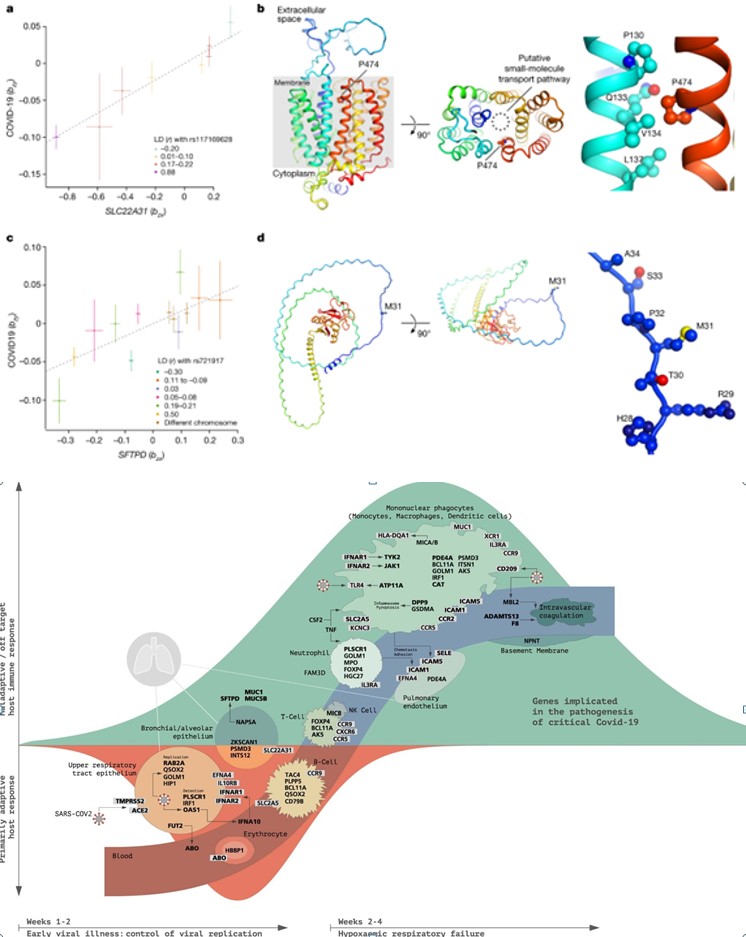
Figure 1(a): Demonstrating the critical COVID-19 increasing susceptibility against by the effect-size plot for the effect of multiple variants on SLC22A31 expression (eQTLgen, x axis) (βxy = 0.11; Pxy = 1.3 × 10⁻⁹).
Playing a role in controlling viral replication and those implicated in driving hypoxemic respiratory failure later in disease (green section, demonstrating “maladaptive” response) are functioned by dived host- immune process. A higher level of confidence in both the gene identification and the biological role are indicated by the bold-type-gene names [1, 4, 5].
References
-
Pairo Castineira E, Rawlik K, Bretherick AD, Qi T, Wu Y, et al. (2023)QWAS and meta-analysis identifies 49 genetic variants underlying critical COVID-19. Nature 617: 764- 768.
-
Gusev A, Ko A, Shi H, Bhatia G, Chung W, et al. (2016) Integrative approaches for large-scale transtome-wide association studies. Nat Genet 48(3): 245-252.
-
Degenhardt F, Ellinghaus D, Juzenas S, Lerga Jaso J, Wendorff M, et al. (2022) Detailed stratified GWAS analysis for severe COVID-19 in four European populations. Hum Mol Genet 31(23): 3945-3966.
-
Consortium GTEX (2020) The GTEX Consortium atlas of genetic regulatory effects across human tissues. Sciences 369(6509): 1318-1330.
-
Rusell CD, Lone NI, Baillie JK (2023) Comorbidities, multimorbidity and COVID-19. Nature 29(2): 334-343.
- Bedside Pulmonary Rehabilitation – Mandatory and Cost- Effective Tools
- The Role of Chest Radiology in Traumatic Injuries: A Comprehensive Narrative Review
- Pseudosepsis in Acute Inflammation of the Lung
- An Overview of Lung Injury in Covid-19: Evaluating the Impact of Re-Exposure and Emerging Variants
- Fibreoptic Bronchoscopy-its Role in Pulmonary Medicine-Current Trends in Intensive Care Unit
- Retrospective Study on the Efficacy of Homoeopathic Medicines in the Treatment of Acute Rhinitis