
Pharmaceutical Drug Regulatory Affairs Journal
Opinion
1 min read
Piperine: An Effective Bioenhancer for Drug Absorption
* Corresponding author
Figures
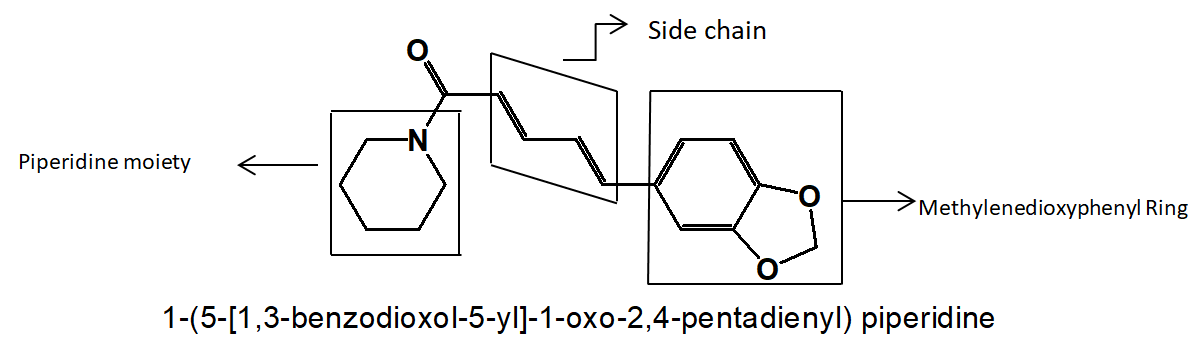
Click to enlarge
Tables
| Mechanism of Action | |
|---|---|
| Piperine and Rifampicin | Piperine augments transcription inhibitory activity of rifampicin by several folds against Mycobacterium smegmatis. Combining piperine with rifampicin decreased the dose of rifampicin from 450 to 200 mg. |
| Piperine and Resveratrol | Effect of piperine on oral bioavailability of resveratrol was studied in mice and the study demonstrated that piperine significantly improves the in-vivo bioavailability of resveratrol |
| Piperine with Propranolol and Theophylline | The effects of piperine on the bioavailability an pharmacokinetics of propranolol and theophylline were studied. An earlier tmax and a higher Cmax and AUC were observed in the subjects who received piperine and propranolol. It produced a higher Cmax, longer t1/2, and a higher AUC with theophylline. |
| Piperine and Coenzyme Q10 | In a double-blind study, it is postulated that the bioenhancing mechanism of piperine to increase plasma levels of supplemental coenzyme Q10 is nonspecific and possibly based on its description in the literature as a thermonutrient |
| Piperine and β-Carotene | The effectiveness of piperine was evaluated for its ability to improve serum response of β-carotene during oral supplementation using a double-blind, crossover study design. Study suggested that the serum response during oral β-carotene supplementation is improved through the nonspecific, thermogenic property of piperine |
| Piperine and Curcumin | Influence of piperine on the pharmacokinetics of curcumin in animals and human volunteers was studied. Piperine, a known inhibitor of hepatic and intestinal glucuronidation, enhanced the serum concentration, extent of absorption, and bioavailability of curcumin in both rats and humans with no adverse effects. |
| Piperine and Aflatoxin B1 | Piperine enhances bioavailability of aflatoxin B1 in rat tissues. A 10 mg dose of piperine causes a marked increase in serum gonadotropins and a decrease in intratesticular testosterone concentration, despite normal serum testosterone titres in adult male albino rats. |
| Piperine and Pentobarbitone | Effect of piperine on pentobarbitone-induced hypnosis in rats was studied. Piperine treatment in rats, treated chronically with phenobarbitone, significantly potentiated pentobarbitone sleeping time, as compared to the controls There was no alteration in barbital sodium sleeping time. It is possible that piperine inhibits liver microsomal enzyme system and thereby potentiates the pentobarbitone sleeping time. |
| Piperine and Phenytoin | Effect of piperine on pharmacokinetics of phenytoin was studied in healthy volunteers. The results of a crossover study, showed that a single daily dose of piperine for 7 days decreased the t1/2α (P<0.05), prolonged the t1/2 (P<0.01), and produced a higher AUC (P<0.05) in comparison to phenytoin alone. |
Table 1: Some examples of bioavailability enhancement of various drugs by piperine.
References
-
Patil UK, Singh A, Chakraborty AK (2011) Role of piperine as a bioavailability enhancer. Int J Recent Adv Pharm Res 4: 16-23.
-
(1991) Ministry of Health and Family Welfare (CSIR), Government of India, 5th (edn), Indian Pharmacopoeia Volume I, Delhi, pp: 10-14.
-
Annamalai AR, Manavalan R (1990) Effect of Trikatu and its Individual Components and piperine on gastrointestinal tracts: Trikatu- a bioavailability enhancer. Indian Drugs 27(12): 595- 604.
-
Atal CK, Dhar KL, Singh J (1975) The Chemistry of Indian Piper Species. Lyodia 38(3): 256-259.
-
Raj KPS, Nagarsheth HK (1992) Pepper. Indian Drugs 16(1): 199-203.
-
Peterson B, Weyers M , Steenekamp JH, Steyn JD, Gouws C, et al. (2019) Drug Bioavailability Enhancing Agents of Natural Origin (Bioenhancers) that Modulate Drug Membrane Permeation and Pre-Systemic Metabolism. Pharmaceutics 11(1): 33.
-
Alexander A, Qureshi A, Kumari L, Vaishnav P, Sharma M, et al. (2014) Role of herbal bioactives as a potential bioavailability enhancer for active pharmaceutical ingredients. Fitoter 97: 1-14.
-
Bhardwaj RK, Glaeser H, Becquemont L, Klotz U, Gupta SK, et al. (2002) Piperine, a major constituent of black pepper, inhibits human p-glycoprotein and cyp3a4. J Pharmacol Exp Ther 302(2): 645-650.
-
Ahmad N, Fazal H, Abbasi BH, Farooq S, Ali M, et al. (2012) Biological role of piper nigrum l.(black pepper): A review. Asian Pac J Trop Biomed 2(3): S1945–S1953.
-
Singh A, Amardeep (2011) Piperine: A Bioenhancer. Int J Pharmacy Res Technol 1(1): 01-05.
-
Mhaske DB, Sreedharan S, Mahadik KR (2018) Role of Piperine as an Effective Bioenhancer in Drug Absorption 9: 7.
-
Javed S, Ahsan W, Kohli K (2016) The concept of bioenhancers in bioavailability enhancement of drugs – a patent review. J Sci let 1(3): 143-165.
-
Majeed M, Badmaev V, Rajendran R (1998) Use of piperine as a bioavailability enhancer US5744161, pp: 1-17.
← Previous Article
Transgenic Cotton Plants Expressing Spidroin Gene Presenting
Increased Fiber Quality
Next Article →
Evolution of Medical Device Sector in India and Comparison of
Registration Processes of Medical Devices in India with Countries
like China, Australia, U.S. and Europe
More from this journal
- Hydrogen Peroxide Scavenging by Methanolic Extracts of Coriander: An In Vitro Antioxidant Study
- Aromatherapy in Palliative Care: A Fragrant Quest for Relief
- Empowering Women, Securing Futures: Contraception’s Role in Socioeconomic Progress in India
- Effect of Crospovidone, Croscaramellose Sodium in Combination on the Drug Release of Anti diabetic Medication in Tablet Form
- Knowledge, Attitudes, Anxiety, and Preventive Behaviors Regarding Covid-19 Affliction among Healthcare Workers in Pakistan
- “Competitive Landscape and Brand Equivalents: Implications for ANDA (Abbreviated New Drug Application) Approval”